
"We didn't have a phone connection, and we could not. Night was coming. We could not abandon these people. Also, you want to know that after we put these people in the car and we took them to the closest community, to a clinic where they could take care of them. And the we put them on the car and we started again with the car in this dirty road, not even 10 meters, literally starting the car, two mountain lions crossed our road. So we've been talking a lot about the fact that these two mountain lions were basically waiting for the night to attack them because they were close to these two lost migrants and the night was coming. It was seven, six 30 night and it was getting dark. And nothing different we could do. These people would not survive. Because at night it's quite cold in the desert. We all imagine the Sonoran Desert as a tremendously hot place, but it can get to zero at night, in March, in winter, or in early spring, it's very cold."
Intro:
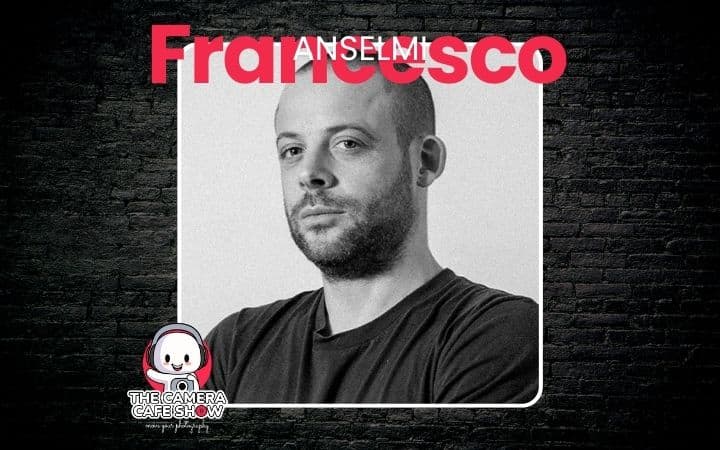
Welcome back to The Camera Café Show! Today, we’re diving deep into the world of photojournalism with an incredible guest—Francesco Anselmi. If you’ve ever wondered what it takes to document the raw realities of our world, this episode is for you.
Francesco is an award-winning photojournalist whose work has been recognized by the Leica Oskar Barnack Award and the Visa d’Or for the Daily Press—some of the most prestigious prizes in documentary photography. His long-term project Borderlands takes us to the U.S.-Mexico border and across Europe, uncovering the human stories behind migration, identity, and the shifting political landscapes of our time.
But photojournalism is changing—fast. In this episode, we talk about what it means to be a documentary photographer today, how the industry has evolved, and the hard truths about making a career in storytelling. Francesco shares his journey—from studying at the International Center of Photography in New York to covering the Greek economic crisis and embedding himself in border communities worldwide.
We also get into the ethics of photojournalism, the dangers of working in the field, and the struggles young photographers face breaking into an industry that’s constantly shifting beneath their feet. So grab a coffee, get comfortable, and let’s get into it!
Tom: Greetings, Francesco, and welcome tonight on our podcast.
Francesco: Hi Tom, for having me.
Tom: It will be a great talk. I'm looking forward to talk a bit about photojournalism with you today. What you've been doing over the past weeks, something fun, or you teach your daughter how to ride a bicycle?
Francesco: Oh, that's fun also. It's totally fun. We've also been doing, now it's more winter season. I will try to put her on a snowboard. Very soon. But there is not enough snow at the moment. We just got the first little snowfall.
The past week I've been doing some presentations. Borderlands, the book. I did the first presentation in Milan and then I traveled to Poland for another chapter of my project about border communities in the European Union. And we are taking a week of relaxing in the mountains.
Tom: Francesco, walk me a bit back when you were younger. When came photography in your life or when did you decide to pursue this, this path of art?
Francesco: It's been quite tumultuous as a path. I came to photography, a bit randomly somehow, meaning during university years. I had a few friends that were passionate about photography, and they transmitted this passion to me, and I started having the camera around. I was studying the politics science at the time. And I was tired; I was tired about those studies. I wanted to become a journalist, I wanted to become a writer, I've always been good at writing. But at one point, it wasn't fitting anymore in that period of my life. I needed to do something more practical. I did classic studies before. Then I went into international studies in politics, science, it was really a personal choice. I needed to combine the study aspect with something more practical.
And I launched really myself into photography. I dropped university and I started, a photography course in Milan. And then everything developed a bit from there. meaning at the beginning, I had no idea what I wanted to do. I had this idea about becoming a photojournalist but was something really connected to some old reference that I had and, and I didn't even know that word didn't exist anymore, or was about to, to end somehow. I had this really Enchanted idea of photographing things and situations and topics, with the idea to change them. And I started working in Milan after this, this first school I did. I started working as a press photographer in Milan. And they started growing in that aspect, in the photojournalist aspect.
And then the next step after that I was trying to go to New York. And I tried to apply to ICP in New York City. I got accepted. I went there. But still I was always with this idea of becoming a photojournalist, really. And then this changed during the years. I've been a photojournalist and sometimes I still am. But…
Tom: You think your time in New York in the International Center of Photography, ICP, it shaped your vision as a photojournalist there in another way.
Francesco: Let's say, tradition of photojournalism, which is an American tradition. And that's what really useful at one point to understand what I didn't want to do. You often, you need to go through things to understand, they're not working for you and that's how it went.
The ACP it's a very, I think now they're changing a bit, but the way the approach is a very photographic approach, and it taught me a lot, it taught me a lot because I still work with the journalistic approach in my photography. That kind of image shaping didn't work anymore for me. And I evolved in the time.
Tom: And very important for you is also doing research before you start a project?
Francesco: Research is everything, yes! My approach is still very, very, journalistically based, let's say, in terms of research, in terms of the person and the places that I want to go to, the people that I want to meet, absolutely.
Tom: Then you went on to cover the crisis in Greece, Francesco. This was by an idea of a press agency you worked for, or this was an idea from yourself?
Francesco: I did my studies in New York City. I live, I stayed in New York City for a while, for a couple of years after my studies, then I moved back to Europe and I joined Contrasto, which is still my agency now. And I was very young at the time. And when you join a reportage documentary agency, , you must work on your identity terms of photography, sure. But also in terms of what the areas are, geographically or thematically that you want to be covering and you kind of want to specialize yourself about. As I was saying, I was very young, I was 27, coming back from the United States. Together with the agency, at the time the agency didn't have nobody in Greece. There was a lot of requests from Greece and for me it was good to move there. I moved to Athens for a few years and that has been the beginning of everything, of facing an internationally relevant topic and having to find a way to narrate it.
Tom: And how difficult is this to move, Francesco, not only for your work, but go to live in another country for four years? And then also work at the same time?
Francesco: It's been tough, but I was young. This has not been a problem. We do this, we want to do this because we love to travel. We love to be around. That's never been a problem in Greece. It's very similar to Italy or it's very close. It's not been a challenge in that terms, the challenge is always about the work you produce, you want to do. And still at the time, I was really into, trying to get to certain situation that I thought were relevant for my work. It was really a lot about action. It was really a lot about what was happening on the ground. And I really wanted the moments, everything became visible. Was it clashes in the street? Was it police? Was it a crisis at coal mines? My dream was to understand, to prove yourself, to push yourself into situations and see how you work there. If it's fitting for you, if you want to do that. Not just if it's fitting. If that's what you wanna do. And photography, it's personal. It really has nothing to do with what people want from you. And sometimes it can be more successful, sometimes less. It's all about yourself. You're doing the stuff you feel for you. This is what driving and what I believe should be driving always photographers.
Tom: Let's talk a bit about Borderlands and your project. And I looked it up, Francesco. And it is because I was reading Burn Magazine online and they did an interview with you. And that is why I stumbled on your work. What motivated you to visit the United States side of the border and not the Mexican side for this project? Tell me about how this all started.
Francesco: As I was telling you, I studied in the United States, then I moved to Europe. But I always wanted to produce work in the United States, which is something I didn't do much when I was studying there, because I was a lot in New York City. And I didn't have many chances to travel around. I was missing it.
In Greece I fascinated by borders and by border related issues. I thought about approaching the U. S. Mexico border. It was really a lot in the media at the time. They were talking a lot about Mexico. I mean Mexico, it's a border that has been narrated a lot. And a few years before I started my project, one of the projects that I appreciated the was by Jerome Sassini, a magnum photographer, and was about the Mexican side of the border. And that book is, it's called The Wrong Side, this is just an example and it's a book I love. But it made me realize how the entire narration is based on the exaltation of the emergency, of the dramas of a side that is wrong and the side that is not. Somehow, I also really wanted to see if that's really the side, and if there is really this big difference between the Mexican side and the US side. And of course there is, but it's not a difference in terms of security I was telling you; the U.S. side of the border is 95 percent Latino the inhabitants. There's no cultural difference. The cultures are very mixed. I really wanted to try to approach the entire things differently. That's not mistake, but that every photographers do try going to Mexico, trying to find exotic, trying to find the criminal aspects, trying to find the migrants in, the most difficult situations. I was kind of sure I could find all these on the U S side. And what was interesting for me is finding this, in contact with the American society.
And I decided to do this first road trip from Brownsville, Texas to San Diego, California. It was an assignment for L'Espresso magazine in Italian, the main social politics magazine in Italy. And I did the entire border in a month and a half. And then a series of other trips followed to the border in the next years where I focused more on certain areas that I was very interested in exploring more. This is how it started. And then of course, this was a fortunate choice for me. Not in terms of the fortune that I had at the job, the work. It was really for my personal growth, because during this work, it became more and more interesting for me. And as I was working, I understood more about border, phenomena, border related issues. At the beginning there was this idea to make a road trip and then many things were coming up that deserved more attention, that I was interested in and get to it. I needed more time. And I started going back to the border.
Tom: You are a photographer that wants or needs first to have good research. You also already contact or try to contact people around this border to possibly interview and to make pictures. How you did that, how you build the trust up with them before going there?
Francesco: I always started with my research. The thing that I love is really to explore the areas where I'm going to work. And I do that a lot with Google Maps. And I am really a meter for meter check how the landscape appears, how it looks because you can already understand a lot from there, if those places are interesting for you. And already from the businesses you see the kind of houses you see, you understand, you might understand who lives there. Maybe something is interesting, I always geographically explore a lot the places where I'm going. And then of course, I contact people before. These are enormous spaces. Moving in those spaces is not easy in terms of meeting people randomly. You don't meet people sometimes for two days, or outside communities. Or to get to meet certain people that you're interested in because they live in a particular place or they have a particular role in these borderlands’ scenarios. First of all, it's important because you want to have a structure for your story and understand who you're including and not. And second, it's important because you must have their availability to meet you. Some people don't want to meet. A long conversation starts where you try to convince them or try to explain what you're doing, and why it's important for you to photograph them. And finally get to them. And this then is combined with a lot of random things and the unexpected that happens. And, that's what I find interesting in being around in the Borderlands. That's combining this structure from my view as an outsider, you're always an outsider in the Borderlands, and the random things that happen.
Tom: But how you get there, Francesco, because you're not from there. You don't know anybody there. How do you get to the people you want to talk to?
Francesco: You make research online, Facebook, the social media are an incredible resource in terms of getting to people. Now it's more different. It's more difficult because social media got abused. Some people don’t trust you when you get to them through social media. But already a few years ago was different. The Facebook era was different. There was a lot of contacts from people, with people that you don't know, and they would answer you. There was much more trust in social media. And then it depends from situation to situation. I also put some announcements in platforms Craigslist in the U. S. to look for certain kind of people in certain areas. And then the people speaks. When you meet one, you start, you explain what you're doing and they send you to someone else. And then this person sends you to someone else. It works this, and it's all about trust and being respectful with people.
Tom: I think it's all about building trust. Because you also talk here about it, you make pictures with gang members, you make pictures with coyotes. I think it goes from one person to another person that building trust and finally getting to these persons.
Francesco: The gangs, I, I found them on Craigslist. This was the only thing that I really found it on Craigslist. Because I was going through El Paso. I wanted to meet gangs in El Paso. I went on Craigslist. I went to the section of El Paso where people go for meetings, meaning for erotic meetings. There is a lot of men going to this. And I abused that section. They put an announcement saying that I was in El Paso from the 2nd of May until the 7th of May. And during these five days, I was interested in meeting active members of the semester team. Possibly Mexicans members explaining why I was interested in meeting them and photographing them. And I got tens of answers and emails. Probably some were fake. And then slowly, slowly, some were real. And we kept this conversation open for a month because I did it a month before getting there. And then finally, I got to two different groups. And when we were supposed to meet, one of the two groups, cancelled the meeting because they were very scared. The other went through. I met with this group members, and we finalized the portrait they wanted to do.
Tom: There ever has been a moment that you felt not afraid for your life, but you are in an awkward position while you were there?
Francesco: Certainly, there's been some problem when we were there and part of the group also start thinking, saying that my assistant was cop. There was some tension. As we were there and they started fighting between each other. We were really hoping that the side didn't think my assistant was a cop and would win this internal challenge in that house. Because we were locked in with them. And it was tense, but then it went. It's always good to have someone that you really trust in in the situation. And there was one guy that I've been writing with for the past month. And we really built some trust. This guy is the guy that basically Defended us. It didn't, nothing bad could happen if you have some trust. There's been a discussion, but if you go into a situation without organizing them and without clear things, bad things can happen of course. And that's why it's something you move ahead. You try to organize ahead. Because you want to really try to understand who you have in front and then you want them to understand you're not a menace.
Tom: I want to talk about this picture you have, I think he's called Santos from the Marat13 gang. It's a very powerful picture with his tattoos put there. How do you go on making this picture? Is he without a shirt anyway? Or you were talking with him a long time before? Or spontaneously you take the picture?
Francesco: Santos is an active Mexican member, a soldier of the MS 13. He came out of prison three weeks before we took that pictures. It was a bit the star inside the group because, when you go inside prison, you grow your ranks. When you go out, you are more important than before. And he was just starting to do some work in a restaurant also in the afternoon, working as a waiter. Cause gang members, they also have a regular life or, sometimes they also, especially when you get out of prison, try to go straight, somehow. And he came in with this white shirt that was the one he was supposed to have later when he would go do work, but he was taking drugs. This work things not work. But anyway they had this fight and then they kind of took off their shirt to fight when they fought. And because he was under narcotics, all of them. And at one point this shirt was all open. He took it out and it was this kind of elegant pants, oversized that he had to go to the restaurant where he works. It just happened. At one moment I was thinking I would not be able to take the images.
Tom: And then there was also a moment that you actually found, while you were driving along the border, people hiding in a bush.
Francesco: it was a couple of Mexican people, of Mexican migrants. Gabriel, the youngest one, I don't remember, was about 20, 24, or something, and he was with his aunt that is older than him. And his aunt couldn't walk anymore. And they were in a bigger group that crossed into the U. S. His house couldn't work anymore. He stopped with her and basically the entire group continued. They were lost in the desert. And they stumbled. We crossed into each other's path. We were exploring those areas next to the border. And at one point, the young guy came out of the vegetation, and we immediately understood it was migrants. Of course, you are very careful at the beginning because you don't know who you have in front. It could be the coyote that is trying to do something or maybe they want to steal your car. But you cannot just drive by. We are in the desert; these are dirty roads in the desert. No one might drive by for days. So, if someone is asking for help, you stop. And we stopped and we helped them. I took very few pictures of that situation, the one that is in the book, and when arrived with her in his hands. And then we helped them to get in touch with some people that could take care of them.
Tom: These are the stories about the people there and then you have the other side of people controlling the border. Which I told you already the picture I find fascinating about the man controlling with drones his own land.
Francesco: The highest point of paranoia. The man that is investing a lot of money, millions of dollars technologies to control his private ranch and land. And this is stuff that you get to research, of course. That guy was already in the media. I found him because I don't remember if Vice News or someone kind of crossed into them. I saw him and I thought I wanted to meet this guy. You really go through everything. You must go really through everything that has been produced over the topic you want to work about, to understand that there's some stuff you might be interested in doing as and to understand that some stuff you really want to avoid. And your path, you do it through it. Everything has been done, you just have to find your way to do it. What is relevant is always interesting.
Tom: And when you think about Borderlands, Francesco, there are many impactful stories and situations that you have encountered for that. Is there one experience there that had a personal impact on you more than other ones?
Francesco: But probably this moment when we met lost migrants in the desert has been really touching, first and what it means. Because it's not easy that something that happens. It's often, speaking, when you get to people crossing, you are with border patrols. This was really an encounter from another planet, because we were alone, they were alone, we were in the middle of nothing. Our path would never cross again. But we were sharing such an important moment where they were, Americans, they call them aliens, the people without documents coming into the U. S., and says a lot about general vision on it. But that day, that meeting was really meeting with aliens, because this, me with these people, we had nothing in common, not our story, not our backgrounds, our education, not our wealth, nothing. And still we were alone and both, all of us, were sharing some risk in that situation. And it's been a strong moment and I'm glad we had the chance to help them and save them.
Tom: Because is this what you did? Bring them, put them in your car and bring them to a nearby community, is something you can do?
Francesco: We didn't have a phone connection, and we could not. Night was coming. We could not abandon these people. Also, you want to know that after we put these people in the car and we took them to the closest community, to a clinic where they could take care of them. And the we put them on the car and we started again with the car in this dirty road, not even 10 meters, literally starting the car, two mountain lions crossed our road. So we've been talking a lot about the fact that these two mountain lions were basically waiting for the night to attack them because they were close to these two lost migrants and the night was coming. It was seven, six 30 night and it was getting dark. And nothing different we could do. These people would not survive. Because at night it's quite cold in the desert. We all imagine the Sonoran Desert as a tremendously hot place, but it can get to zero at night, in March, in winter, or in early spring, it's very cold.
Tom: And more to say, happy side of the story, Francisco, because I saw you also make the picture of a, a quinceanera, the girl who turns 15, you were not invited to the party.
Francesco: We were not invited, we just self-invite us to the party. But everyone wants a photographer at the party. I was working in these days I was working in these communities that are called colonias. These communities are in Texas. And communities that are there since the 80s. And now these communities are the first approach point we can say for migrants arriving to the U.S. Because often they have some relatives in these communities. And it was very interesting to spend time there. And I spent a few days there and one of the things that I stumbled across was this party.
But in general, it was fun to do, especially the first trip was fun to do this. Of course, the research, of course, the journalistic side, of course, the seriousness of doing such a job, but you cannot do something like this if you're not having fun as you do it. Also because of the risk that you're taking. And this is not something we do for the money, of course. The money is very little in my industry. It's not about that. Of course, the commitment is everything, but if you're not having fun as you do stuff, we wouldn't, I wouldn't do this. Of course, I have a lot of fun. Meeting people is fun. Meeting, risking a little bit is fun.
Tom: And you would say most people were open to get their pictures taken there?
Francesco: Yes. I'm not sure this in general, and I'm not saying this happened because it was me. But, The Borderlands, also for the things we were saying before, people have lived in very isolated place, they have very solitary lives. The moment someone comes to your place, you trust him and he wants to take a picture of you. For you, that's a moment an important statement. Now, the photographer is living with that picture. And he's living with a statement of yourself. Saying, this is what I am, this is what I live, this is where I live. And I think this is the main reason people are exposed during this job. I was really feeling a genuine need to make a certain statement. Then in general, I let a lot of freedom to people to be photographed in the way they want, of course.
Tom: Francesco let's talk a bit about photojournalism in general. I think it's you who told me once those photographers, they start or they stop being neutral the moment they decide what to shoot you. You think there is a way to keep neutrality in photojournalism?
Francesco: There's not. The only way is making boring images. Neutrality is very boring also. What it is neutrality? I mean the angle that you photograph something to stay not conceptual but visual; the angle you decide to shoot something, things might look different. And the way you use the lens, you might add or enhance a certain attitude in that image. Or the distance that you decide to, everything is a choice and it's a matter of how you are relating to what is happening in front of you. There’s no way to avoid this. And I see now photojournalists are using this a lot, to say, Oh, you're not a photojournalist. You're, you cannot, you're an activist. You're not, everyone is an activist. One is more activist than a journalist or a photojournalist. You’re active about something, about the need to go deeper into a phenomen, into an issue, to understand more. Of course, it means you believe it's important for people to know more about that specific thing. And you're already taking a position, you're already saying a lot about yourself. This is what I believe.
Tom: What would you say to young people wanting to start out in photojournalism? How to tackle this?
Francesco: There is an important issue in the moment. Our industry is falling apart. For real. Photojournalism is made for the media is made for the newspapers. And there is a way you should because that image must go keep certain information. It must fit the graphic of the newspaper or the front page. I studied that you must never have a subject in the center because that's where the double spread goes, you understand? You understand how that can impact the way you shoot. And in the beginning it was all about wide angles with images as full as possible of things, information. But I started moving to another kind of photography that has very important references and that works differently. And, sorry, now I don't remember the question, the exact question, what, what was.
Tom: The question was for people starting out in photojournalism, What advice would you give?
Francesco: Study, study a lot. Inform narrate. And then work freely, freely. Because now we are not, there's not such an industry that can finance your work all the time. That doesn't make sense to shape your work on that photojournalistic industry because it doesn't exist anymore. And work freely, look for the language that fits more for you, invent.
And books. Books are flying. They're going very well in photography. I was told the other day, I was in Milan, doing my presentation at Meca, which is one of the, probably the most beautiful photography bookstore in Italy, but I will say among the best in the world. And they were telling me things, going Books are flying! You see you have this industry falling down, but then books become beautiful media to vehicle a slow message. Because here is about a slow message in the end. It's not about, I have to show you this immediately because you have to immediately do something. This is a slow message. It's all about interrogating ourself on topics. And trying to have some historic account on what happened and what happened in certain periods, in certain areas. And that's it. And guys, you must know, the phone will not ring every day when you are out of the school. We were prepared. You have to pitch a lot. You have to be strong on topics. You have to start working on things, and then you will get the work. Now you start working on things, you don't get the work. It's even more tough and I see this with my young assistants, few of them are growing. They are good photographers. It's tough, it's tough. We are talking about 30 years old photographers and never, they never had an assignment from the media or from an important media. But they are maybe exhibited in festival and starting to get little local prizes and stuff. But this recognition doesn't go anymore with getting a few opportunities.
Tom: Talk a bit about recognitions, Francesco. You've been twice a finalist in the Laika Oskar Barnack Award and you won the Visa d'Or for the Daily Press in 2019, I think. Talk me a bit about the work that you did that won you the Visa d'Or.
Francesco: Visa d’Or is a prize they gave in Perpignan, it’s photojournalistic festival in Perpignan. It's a very photojournalistic prize, and that's why I'm particularly happy that I won that prize with a certain photography approach. The prize was given to me and to the newspaper Liberation for the work we did together. In the time I was working on the border. Working, producing my personal project Borderlands. I got an assignment, 10 days of assignments that were a little bit in the U. S. and a little bit in Mexico. For a big story about a migrant caravan that was arriving to Tijuana in that period. You see, here we were in the emergency approach. Something is happening, something big is happening. go and cover, you are the photographer that is working there. Go and cover, cover it. And it was interesting to be able to win this prize. Of course, I covered the news story, but with a very similar approach to the way I was working on the U.S. side. And we did this story and it came out we did some amazing work with the journalist I was with at the time. And then the Visa d’Or basically works this way. Every media outlet, newspaper, sends to Perpignan what they think it's the best story they've produced in the entire year. They send in a photographic reportage, and you have, from New York Times to Washington Post to Le Monde to Libération. Usually it's about 30, 35 newspapers worldwide participating with what they believe is the best story they did in the year. And then there's a jury selecting what's the best of the best somehow of that year. But it's a prize that is very related to publications. You cannot get the visa door without being on a newspaper.
Tom: The story you covered there, Francesco, it was with the exodus of all these people moving from middle Latin America up to the border?
Francesco: There was a lot happening, of course, on the Mexican side. Then in the end, it's always, apart from a few situations that I was able to find. it was a lot about action, it was about shelters, it was about people really having hard times and not knowing where to cross the border, what to do and which is always interesting. But it's not where I base my research. Let's say, I don't to go to place. I'm happy to work on assignment on stories this, but for my personal work, I rather go to a place not in the moment where all the medias are. And when I was in Tijuana in the end of 2018, everyone was in Tijuana. People was taking flights from Italy to Tijuana just to cover this story.
Tom: Let's talk about you one moment, Francesco. Has becoming for you a father influenced your work and your perspective?
Francesco: Absolutely. I think it's always like this. It's becoming a father. It's a big change in perspective; in the way you see a lot of things. And then it's a practical change in terms of the time that you have. But, your vision changes, you grow, you become more mature. You realize there are things you did in the past. Speaking, you will not be able to do it anymore. And at the same time, you realize, have a much clearer view on the things you want to do. And you have a much clearer view of how to get there, with much less energy or more. Maybe when you are younger, you have a lot of energy, and then you're, be around for three days, but then maybe it takes you three days to get to something that now you get in half an hour. It’s slowing down a bit. And it’s less time on the field. But when you are on the field, you don't lose a minute. Before, it was a lot of time on the field, a lot of freedom. You cost less, also your life costs less. When you're very young, you sleep everywhere for real. Now after a hard day of work where you have been meeting, whatever, you've been going through whatever kind of nature, you wanna be relaxed. Also, because if you don't sleep the day after, you don't work.
Tom: I was just wondering because now becoming a father, on your personal level, if now you had to do a project with children, would it be different than before becoming a father?
Francesco: I have to say I've never been a big fan of shooting children. And this is something I was quite aware. Quite the beginning, not really the beginning because of course the children are very easy subjects to photograph. And this is a mistake that every photographer does at the beginning, to kind of go to some exotic place and focus on children of these exotic places. But it's never been my thing. And I've always been very careful not to photograph children in my photography unless it's strictly necessary for something that I'm doing or for a message that I really need to bring out. But it's not really this abundance to photograph the children. I really try to avoid them.
Also when I got to certain places where there are a lot of children, you want to get rid of them. They're problematic. They scream a lot. They take the attention. They want the camera. And maybe you have some adult people that you need to concentrate about. And this is really respecting a community. Getting into community and spending one hour shooting children all the time around. What is this? Imagine someone coming to a kindergarten in Spain or Italy, going in and starting shooting. My daughter here, we would go crazy on them. This said, not that I disrespect people that take pictures. You can take beautiful pictures of children. It's never been interesting for me.
And this is something I say often also to students or in workshops or when some people comes with a lot of images of children from their last trip to Africa, I really try to deconstruct this immediately. And, I'm saying we are going in a completely different direction. Don't go to Africa to make images. You are white, why are you going to Africa. We've done it all. We've created an entire historical narration made by us on them. Still referring to that culturally, let's start, building up something different, and I take it very radical and I'm very interested about us.
Tom: And where do you see yourself going future wise, the best place to be for your career and for your family?
Francesco: I want stay in Italy and live in countryside. I think this would be the happy choice that I hope one day to be able to do. And travel wise, photography wise, this project that I'm working on now about the European borderlands is really becoming fascinating. The more I work on it. And I'm also here learning many things, that kind of, I kind of found my fantasy world is borderlands. And this is what I want to do for the next years. I have many places I need to go this puzzle and to see how to put together this European puzzle. That thinking about it makes me feel good. And I think this is a good sign in terms of living life in a good way.
Tom: For your daughter also, she can ride very good bicycle there.
Francesco: Absolutely.
Tom: We didn't touch the topic of gear . The only thing I find fascinating is you worked in Greece four years, and you used only one lens. I
Francesco: And it's always the same lens. I just changed it because Borderlands is made in medium format. It's a 45, that becomes a 35. In Greece I was a bit more wide and I shot and did the entire work with a 28.
Tom: This was going to be my first question now in the quick question round. I don't know if you are good at quick questions rounds, because you like to think and you like to talk.
Francesco: I will be fast.
Tom: ask if you can have only one lens for the rest of your career, which one would it be?
Francesco: 35.
Tom: What's your favorite snack when you're on the road to keep you going?
Francesco: Cigarettes. But just on the road. I don't smoke cigarettes at home.
Tom: Interesting. ? If you could collaborate with any historical photographer, who would you choose?
Francesco: Walker Evans.
Tom: What's the best piece of advice you ever have been given as a photographer?
Francesco: Shoot straight. Straight. Never life be upside down, the world has mountains, camera straight. Because already, you got a lot of in the life, it's a lot of lines and diagonals. And there's not really need to make these diagonals yourself. Stay straight and go where the diagonals if you them.
Tom: Francisco, what is the most unexpected thing you learned from photography?
Francesco: I don't know. Every day I'm learning. I'm learning something. It's such an excuse to mess around with people and in a good way, of course, and to get to know each other and to understand things about yourself, things about others, and peace. It's a good way to be alive. It's a nice dance.
Tom: And then if you put your camera gear down, describe me what's your perfect day?
Francesco: What it would be, not the perfect day. It's still with my camera hands on the field, but I would, I was saying, living in the countryside and then take care of my vegetables. And maybe some animals also, that I would not kill, just keep them and play with them with my daughter. And all this, life of travels, of being around, of seeing many different things, it really doesn't make sense by itself. It just makes sense if it relates to a local dimension where you can bring all these things that you learn. Otherwise, it's nothing, it's just being around and of course, there are many different things, but at the end of the day, what am I doing with all these different things? That's beautiful to be in a specific place you already knowing that all this exists, is already adding much to the way I see life. I really imagine, I imagine life very simply, in the nature, doing sometimes my travels and my trips. And there's always something to bring back. Is it something material? Is it something you learned? Is it something you learned in a far away country and you want to build next to your house in the forest there, a treehouse in a particular way? everything.
Tom: Now, my only last question is cooking skills. How are your cooking skills? They're good?
Francesco: I defend myself. I'm good with the meats. I'm good with the pasta, I'm good with the long cooking meats, tonight we are going to eat some ragu, is the pasta bolognese, the sauce with meat, tomato and meat. Cook it for nine hours.
Tom: You're also an adventure eater when you're out working on projects?
Francesco: Not much. Of course I try things, but eating for me is a comfort zone. At the end of a tough day, also, having uncertainty on what I'm putting in my mouth is not really the best feeling. I go for things that I kind of know, maybe also exotic, but that I know. But there's not space for experimenting also on that side because it goes wrong. Everything that can go wrong. There's many things that can go wrong in the work you do. You don't want to have other things going wrong in the same day. It's bad for something you shouldn't, and being all night in the toilet and saying, I should have not eat that!
It's everything but about the photographic performance. Then it all goes to the photographic performance, and you also understand how to be there when you need to performance. Because it's a performance because you wake up early in the morning, you go to sleep late and devastated at the end of those days when you're on the field, in the field. And I repeat. When you're photographers, remember it's not the same anymore. I just turned at 40, when I was 28 was different. Double running, double energy. Keep that in mind and use the energy you have.
Tom: You see? On this note, I think we can conclude this little talk. Francesco.
Francesco: It was a pleasure, Tom. It was a pleasure.
Tom: It’s been very interesting.
Francesco: I hope
Tom: It's been very interesting getting to know you better and your vision about photojournalism. Because it's a world I don't know nothing about. I only can imagine how hard it has to be. But it's been really, really nice to talk to you, Francesco. I hope you enjoyed it. Thanks.
Francesco: Absolutely. It was really nice, Tom.
Tom: Keep me on the loop of the book. How can I get a copy?
Francesco: You can.
Tom: You have it on your website?
Francesco: I will, you can get it from the editor. But I'm now starting from December 1st, a direct sell from myself with signed copies and one print inside. At the same price of the price you would find, if you order it, but with the print and sign edition. And I'm doing a series of 50.
Tom: Francesco, thanks a lot. Have a nice evening still with your family. A nice meal and please keep in touch about your board projects. We see each other. See you, bye.
Francesco: Bye Tom.
Outro:
And that’s a wrap on our conversation with Francesco Anselmi! His perspective on the changing landscape of photojournalism, the power of in-depth storytelling, and the role of a photographer in today’s world was truly eye-opening.
If you want to see more of Francesco’s work, check out his website: francescoanselmi.com. And if you enjoyed this episode, don’t forget to subscribe, leave a review, and share it with fellow photographers and storytellers.
Thanks for listening to The Camera Café Show, and we’ll see you next time!"*