

"I took pictures also of women given birth. The last woman I photographed giving birth, I was pregnant and I was looking at her giving birth and I was like 'holy moly'! She was giving birth in this fisherman village. They didn't have anything, any supplies. They didn't have an epidural. They didn't have vitamin, vitamin K backs syringes, they didn't have echo, this thing that they to see the baby. It's nothing there. And if something goes wrong, then it all goes down quite rather quickly. I was very nervous that day photographing her, but then everything went well. It was her second child, she was 16. She had the first one when she was 14. And I also keep contact with her. She's also a super nice girl. And thing is that you do this projects, hoping for somebody to react or have some change. But the truth is that nothing happens unless you do something."
Intro:
Greeting everyone and welcome back to The Camera Café Show, you know, the podcast where we brew up inspiration for your photography journey. I am your host… Now, before we dive in today folks, a little reminder—there’s no pressure to listen to podcasts in one go if you see an episode is a bit longer. Just hit pause, go on with your life or chase your dog around the house, whatever you need—you can always come back for more later. Don’t be in a rush.
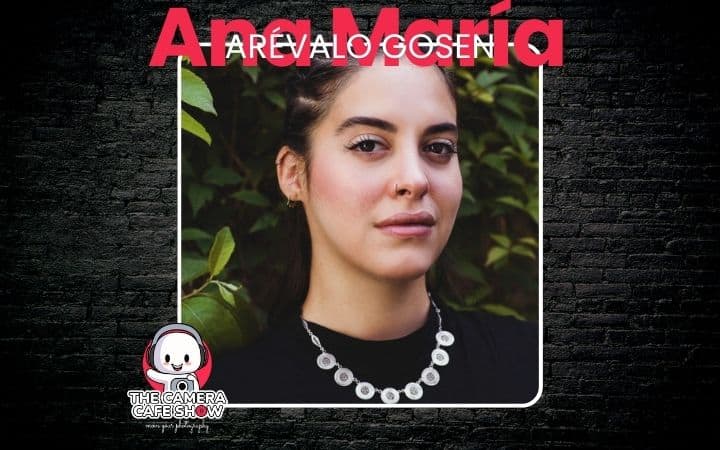
So…Today, we’re stepping into the world of slow, thoughtful storytelling with the amazing Ana María Arévalo Gosen. Ana is a National Geographic Explorer, a Leica Oskar Barnack Award winner, a fighter for women’s rights and one of the most fearless documentary photographers out there today. Ana is originally from Venezuela, but now living some years here in Spain.
In this conversation, we dive into some of her long-term projects that shine a light on hidden places—from detention centers in Venezuela, to teenage motherhood in Central America, to a very personal project, The Meaning of Life, which tells the story of her husband's cancer journey. Ana shares not just how she photographs, but why she does it—with empathy, ethics, and a heart bigger than the stories themselves. And trust me—you’ll want to stick around to the very end of this episode. Let’s just say... it ends on a beautiful note.
Grab a coffee and let’s jump into this unforgettable conversation with Ana María Arévalo Gosen.
Tom: Welcome, Ana, tonight on our show. It's amazing to have you here for a little talk about photography and your life, of course.
Ana Maria: Hi. I am very happy and excited to be here tonight or today, I don't know, whatever you're looking at us or hearing us.
Tom: Exactly. But as we are both in Spain, it's six o'clock in the evening. Ana I think of instead of me introducing you, let's change the role a bit. And how would you introduce yourself the best to someone who doesn't know you?
Ana Maria: As a fighter for women's rights and my weapon is my photography.
Tom: Then, for all those people listening and Ana, didn't mention it, National Geographic Explorer, Leica Oscar Barnack winner. We are talking tonight here with somebody very important in the world of documentary photography. If you have to describe Ana your work in one sentence, what would it be?
Ana Maria: Slow visual storytelling focused on women's rights and environmental issues.
Tom: Ana, let's walk a bit back in time now. I think you studied political sciences but found it boring or too slow for you. What do you think if you had continued along this path? Where would you think you would be now today?
Ana Maria: Oh, surely not where I am now. I think what I felt about political, it's true that I was bored, but it was more I couldn't see the immediate result in it. And I couldn't see the speed and the honesty somehow. I don't know. There's something really raw and honest about creating something with other humans directly with photography, with the tool of photography. And I didn't have that with political science. I guess today, I don't know, maybe I would be working something very much alike, working with an NGO or something like that. Being of service with the other. Used the camera as a tool to be of service of the other. And I guess I would do that with another parallel life. But gladly, that's not the case.
Tom: Exactly.
Ana Maria: I found my purpose with photography and very happy with my work. And lucky and grateful with my path of life and the path I chose or the path that chose me. Who knows?
Tom: We are lucky too, because you have some amazing pictures and some amazing work. We will come back on this later. But then suddenly, Ana, you switch to photography. How did you discover this was really your calling in life?
Ana Maria: I was lucky, because moved, I migrated from Venezuela to France, to the south of France, to a city called Toulouse, La Ville Heureuse. It's a very beautiful city, and I was studying political science there. But I had these feelings, and I was questioning myself and my life. And my decisions and in that city, they have something that's a photo bill festival in small scale, an open air exhibition in containers for everyone to see. And I used to visit it every year that I lived there. And I slowly discovered the power of documentary photography.
I have to be honest that in Venezuela, I didn't know anything about photography. I don't but I was creative, I am a musician and I always liked to express myself with music or with words, I like to dance and to move a lot. And I discovered this documentary photography or this tradition and I was overwhelmed by its beauty and its impact in my emotions and the way that everything was composed. It was such a powerful thing to see, to see a beautiful image for the first time. And I was completely enthralled. And I talked to my dad and my mom and they were, You're not gonna be an artist. What the hell? And it took me, it actually took me a lot of research and convincing from them because I didn't want to do anything without their approval.
I was very young. 20 years old. And Then in the end, my dad said, You can go ahead. And my mom was also on board. And I started to study it basically because I didn't have any idea how to do that. And I was a very bad student. Because I was only interested about documentary photography and photo reportage and, this tradition to be, with the other humans. I didn't want to do any architectural photography, the freaking black of what's named this dark room confusing. I didn't understand why people like that. It was slow. I was waiting for the freaking paper to develop. And everyone was Amazing how the image come to life. And I'm, Dude, I just want to get into the kitchen of the people and, you know, photograph them and get to know them and talk to them and take a beautiful portrait of them. I don't care if it's digital. I was doing that while all the French people hated me a little bit because it was bad. And I did that for about two years. After I graduated, I started to work as a freelance photographer, basically doing what I liked, which was photographing people.
Tom: I guess from all your explanation you never did any wildlife photography.
Ana Maria: No, that it has anything bad, but I shot some turtles not long ago, but it's not my thing.
Tom: You see.
Ana Maria: Definitely not my thing.
Tom: I think that is what is fascinating about photography and with all the podcasts that we do that there is many genres and people always love their genre and they really to discuss it. Yours, documentary photography, Ana, would you say that it is a strong tool for social change?
Ana Maria: Colonialism and extractivism. Let's say that even though, there are images that are super powerful. That we'll still recognize today, from the very old the not the old, but the very founders of this type of photography, I do believe that you have to do it in order to create the change that we need. And you have to do it with a lot of respect and a lot of care. And there are really some, ethical things that you have to do. And when we talk about photography, sometimes you're, Oh, this is boring, ethics of photography. What is that? The ethics of photography is what actually defines how intimate your work is, how respectful your work is and how powerful your work is.
If you have a very good relationship with and transparent and honest relationship with the protagonist of the stories, you are able to go deep. And that's the key to really make a change. Because if you are not able with documentary photography to put the in the shoes of the people that you are photographing, then you are not going to be able to raise any awareness or create any change whatsoever, because people are not going to be able to feel.
And in the end, I believe that documentary photography or humanistic driven photography has to be emotional that's the center of it. And everything about emotion has to do with ethics and how you do it. And now I'm thinking more, after the time and after working for some years in this, I've been thinking about also how do we return what we take to the communities. What do we bring back? It's a tool to create change, but it's also something that you have to question when, because we're creating too many images today, and what are the images that are worth seeing? What are the images that are worth producing and how are you producing them?
I think those are the key questions about humanistic or documentary photography today. It's a very long answer to your question, but I reckon that you need, we need to ask these questions today. They're very important today. It's not as simple as creating change, challenging we're doing with photography today in order to create this change that we want to do.
Tom: Another question I had in my mind. You work on mostly this long time projects where you go to different communities. How you build trust with people that maybe sometimes don't want to be seen with the camera first?
Ana Maria: You don't take the camera first, you listen and you talk to them. I don't know. I work with people I don't necessarily a hundred percent agree to their way of life to say something, but I do go to these places without any judgment. I have a point of view I have, I am my own person. And I have my own values. But I don't go there already judging people. I go there with an open heart and with open ears to listen to their story and listen who they are and also be realistic. Not everybody wants to be photographed and that's also. You have to choose the protagonist of the stories with the mindset that they are going to want to play with you for a long time. If they don't want to be your friends, or you don't want to be their friends, then what's the point of building a long term relationship with somebody you don't like?
Sometimes you're pushing it too much and it's just not natural, if it flows, Then it's going to flow, the trust is going to be built because you're going to become a friend. Is sometimes a confessional friendship. It's not a friendship where it's going to be super personal, but it's going to be kind of an honest. Friendship, an honest relationship where they know who you are, they know what you do, they know what your intention is, they know what you're going to do with their image. You are going to explain a lot of who you are, and your truths, and your point of view, or whatever they are explaining. And you're going to have a good conversation, and you're you can start little by little taking the camera, and I think also building trust means consent, if they want to be photographed and I want to photograph them.
But if they don't want to be photographed, then that's maybe I just talk to them for a little bit to gather more information and then ask them to introduce me to somebody else, but it's, there's no stress, if it flows, then fine. If it doesn't, then just let it go. Find someone else. There's many stories out there. Many interesting people out there that can highlight whatever story you want to tell. I think that's the space of building with people or also people think a lot about this, how do I break the ice and this breaking the ice means that there is an ice to break. There is ice to break. You don't know breaking anything. You're just getting to know someone just be you, ? And see how it goes.
And then also trust, trust your instincts towards the situation. Sometimes we work in explosive environments or effervescent environments where you don't know what's going to happen. And if you feel that the situation is getting tense, then, how much is your image worth? Is it worth your life? Is it worth getting into trouble? I think, going prepared to these places and having the security protocols that you need in order to be chill and work, in peace and then being very honest, and build upon this, everything that I said previously, then I think you have a very solid, to build trust.
Tom: Wonderfully said a bit long an answer, but wonderfully said.
Ana Maria: I'm sorry, people.
Tom: I'm only asking the complex questions.
The next complex thing, when I look through your work and I urge everyone. Take a look at Ana's website. She has a lot of amazing projects, but as always, I have to pick some, because if not, we have a podcast of two hours. Ana, let's start with one project Dias Eternos, Eternal Days. Let's talk a bit about this project. Correct me if I'm wrong, I think it was 2017. You went back to Venezuela to see what is the root cause of the crisis? And then you focused on women in prisons and detention centers?
Ana Maria: As I said before, I left Venezuela and then when I came back, I saw how everything was quite deteriorated and I saw the effects of the crisis in Venezuela taking root. And I thought about doing a project that might reflect what was really. I didn't want to work on the superficial, I really wanted to go deep and see exactly which was the problem, how did we get here?
And then one day speaking, I was taking drinking a coffee with a friend with a journalist friend, and she told me that she worked for this NGO that defended the rights of the people who were detained and taken to this prevent camp. Prevent detention centers, preventive detention centers. It's that in English, preventive? Prisoners for only 45 days. But because of the crisis and because some new legislation that was implemented, they were forced to stay in this detention centers in the most horrific conditions for longer than 45 days, four months, sometimes years. And sometimes they were dying in prison. She told me that there were women who got pregnant because they were overcrowded in this detention centers that they were spending. At their time the men inside the cells and they were getting pregnant. That they didn't have space to do activities. They didn't receive food, water, medical attention. They didn't have fair representation either. Sometimes they didn't know their lawyers.
And I asked her if she could take me to one to see, because I couldn't believe that was happening. And she took me there and the first detention center that I visited was one in Valencia is about two hours city from Caracas. And everything that she said, it was confirmed that day, the women, there was a sale. Not together, but there was a sale was before the investigation office. Of the police they closed to put the women there. They had just skinny mattresses all over the floor. There was 21 year old women, woman in her eighth month of pregnancy. And the first thing that she told me was that she was hungry. Because she didn't receive any food from her family or from the detention center, from the state they didn't have water and it was hot inside.
They only had one small window to let the air come in. And then that same day, I got to know a group of transgender detainees that was being held with the male detainees, because their gender was not being recognized in these detention centers. And they were constantly, abused and beaten by the other. And then that same day I went to see them take a bath, the women. And it was basically an improvised toilet, with cardboard walls the backyard of the police station without any roof. And they were bringing buckets to the place for these women to have some water and could wash. It was the most horrible conditions and their human rights were constantly being violated.
And I was sad and enraged and frustrated about this whole situation happening. Because, first I didn't know about it, but then nobody's speaking about this and nobody's doing anything about it. Also because, I thought before that prisoners were the worst part of our society because they're supposed to be criminals, but it's not. When I talked to these women, they just told me, I remember this, this girl that was pregnant. She told me that she was hungry and she robbed the food. And that case In time and repeats and repeats itself. It's the poorest members of our society who are being held there for an indefinite amount of time in the worst conditions, depending on external help. Because government is not doing anything to protect them or to at least provide basic needs for them. That day and that body of work was the thing that changed the way I see my country. And also I see my region because then I expanded it to other countries.
And it's, it really changed me, it really changed the way I photograph and it's changed the way I understand women and the way I talk to women and the way I talk. We were talking about building trust. And for example, I never got inside a detention center with my camera, with my camera out, that made sense for me. I needed to know, sit with them and talk to them because they were having the hardest time in their lives. I wasn't going to get there and just take pictures. I needed them to understand why I was taking pictures of them in that circumstances, in that condition. And sit with them and also tell them about me, who I am and whatever, that I was living in France at the time and I was interested in their life because I couldn't believe what they were going through. And that's how I understood that building trust is about talking more than taking pictures, taking good pictures.
Tom: To this detention centers? Was it easy to get inside?
Ana Maria: Not easy. It's not easy to get inside any detention center. Of course they don't want to, the governments don't want to show what's happening. Because I mentioned this legislation change. And I kind of used this change of legislation to talk to the local police and tell them that I didn't find what they were going through was fair because the legislation. What happened is that the penitentiary system said that when a detained person was inside these spaces until they were not judged and declared guilty, they were not going to be transferred. And that created that sort of a bottleneck that got stuck. Everybody got stuck inside these places and it created overcrowd and all these problems, diseases. And prisoners were constantly escaping or trying to escape or riots. It was becoming a very violent environment where the local police was not prepared to solve or to handle. And I told them that I found that very illogical and very unjust or unfair. And that's how they allowed me to photograph all these detention centers. And then in the other countries, I have to go through the official channels. And it's hard, it's for Guatemala, I did after Venezuela, I did El Salvador and Guatemala. And in Guatemala, I think I pushed for this access for one year and I sent I don't know how many letters of support or of act requesting access. And they gave me the access to the actual women prison four days before I left Guatemala. I was there for four months waiting. Not, of course, I was working in other things.
But you see, it's hard, hard. I was the first photographer get inside the women's prison after 10 years. They don't let people in. They don't want you to see that. They don't want you to see how they are being treated.
Tom: You ever went back after, Ana, to show pictures to the women you make photographs of and what was the response?
Ana Maria: Sometimes they find me in Instagram and I show them the pictures and they are Wow, it's cool. I kept contact with one of the girls I met who is a lot in my images in this detention center in Valencia. Name is Roxana and when I met her, she had much problems. She had drug addiction. She was depressed. She had a horrible abscess in her stomach that was killing her. She was homeless. And I kept contact with her and I kept following her throughout the years. The last time I saw her, I thought, this woman is not going to make it. Was skinny. She was high. When I saw her last, I was scared. And then two years later, I wrote her and she was completely transformed. She went back home. She stopped taking drugs. She started working. She recovered because her dad was always. Behind her and supporting her. But anyway, that's one of the case.
And then in Guatemala, what I did was a workshop with women inside the prison the of freedom and how they forget about this. I did a two day workshop with them and I took Polaroids and I brought them back the Polaroids. At least they could have that with them. But it's hard to get there and it's hard to share it with them. If they go free and they go and they are released and sometimes, but that's the only way I found to give back to them the material.
Tom: I'm amazed, you can it worked with Instagram. It's a good side of Instagram on this. People do find you.
Ana Maria: Instagram has it. It's good things, social media is very now. Now it's delicate. I don't know how much how long Instagram is going to last. But let's say social media in general has this good side, makes the world a bit smaller, it's good.
Tom: You see, and I think it's also how I found you. It all comes back together.
Ana Maria: I didn't know.
Tom: Ana, let's jump to the next project. Abuelas con 30. Grandmothers with 30. Explain me a bit how this project got along of teenage mothers.
Ana Maria: It's kind of woven into a little bit. Because I was working in the detention centers, I met on some underage girls who were mothers and were imprisoned. They told me that they robbed or committed a crime, whatever, to provide for their kid because they didn't have the means to do it and they didn't have education and they didn't have a family structure that was solid enough to maintain the kid either. And I started to do some research. And I find that Venezuela has the highest rate of teenage pregnancy in the region, in Latin America.
And I also started to think about my own family and my own path. And my grandma had my dad when she was 15. I got pregnant when I was 16 and then I got an illegal, because it's illegal in Venezuela, an illegal abortion and it was the worst experience of my life. I couldn't believe that I went through that, rescuing all these feelings. I was terrified at remembering everything. But I thought this is something that is quite common.
And I started to take a look and see how I could photograph this and if it was something that I could do. And I went to this community. I remember the first girl that I met. And I met her through some acquaintances, some friends of my dad. And I went to this neighborhood called Sisipa in the mountains of Caracas. And she was amazing. I met her and I was in love. She was this black girl with this Afro. And she was 16 when I met her and she had this huge belly. She was eight months pregnant or nine months pregnant about to give birth. And she was tired exhausted, but also very defined. She didn't want me to see her vulnerable. But she was very open also to speak to me and share with me a little while.
I was there and I started to take pictures of her and I love her. And I met her mom and her mom was this Mormon and we started to talk about abortion. And I told her that I had an abortion and she told me Oh, I thought about getting one. But my dad, my mom, didn't allow me and Adrián, who was her partner at the time, also was against it. Now here I am. She had dropped out of high school and all she did was stay at home, waiting for Adrián to come back. Then Adrián comes to the picture and Adrián was 17. And when I saw him, I didn't say anything. I was just seeing him. And I was, You're a bit weird. You're a bit, I don't know, not weird, but I thought don't strike me as the typical Venezuela guy from the neighborhood, like very macho. He was a bit queer and a bit delicate. And his hair was curly, but you see, you saw that he went to the hair salon to make it straight. Then he was very conscious of his physique and I don't know. When I saw him, I was Let's see how the future unfolds.
It turns out that, I kept following them and a lot of other protagonists that I have with them. They had this daughter called Adriangelis, who was most cute girl in the world. And I photographed them until today. And in the years that followed Adrian became Miss La Guaira. He started to wear dresses and put on heels and he started to do all these drag queen things. And of course he had a boyfriend in the end. And Adrian is then got heartbroken because he was really in love with him. Then she got a partner, he's a good guy, but he's double his age, 40 something. Now she has two other kids. I actually spoke to Adrian two days ago. And he's in Venezuela, taking Adriangelis with him and he's going back, he moved to colombia some years ago, he's going back to Colombia to raise Adriangelis by his own. I think that's very brave of him
Anyway basically what I did was to follow them as the main protagonists of the story, the main characters or protagonists. And then I started to also work with some NGOs who are fighting against rate and trying to educate the communities, educate the women and include men in the conversation. I went to different cities. For example, I went to this fisherman city where I spoke with a young fisherman who told me, When you get hair in your face in this village, you become a dad. That's basically a summary of the situation there. I wanted to really have these conversations with the people to understand how normalized this is.
I took pictures also of women given birth. The last woman I photographed giving birth. I was pregnant and I was looking at her giving birth and I was holy moly. She was giving birth in this fisherman village. They didn't have anything, any supplies. They didn't have an epidural. They didn't have vitamin, vitamin K backs syringes, they didn't have echo, this thing that they to see the baby. It's nothing there. And if something goes wrong, then it all goes down quite rather quickly. I was very nervous that day photographing her, but then everything went well. It was her second child, she was 16. She had the first one when she was 14. And I also keep contact with her. She's also a super nice girl. And thing is that you do this projects, hoping for somebody to react or have some change. But the truth is that nothing happens unless you do something.
What I'm going to do now with this project is to expand it to the Dominican Republic, where I am going to actually take more action inside the country. And I'm going to do a local exhibition and I'm going to do a workshop with the girls and I'm going to do a public activation in open spaces, to spark at least some dialogue and thought in the communities and in the country where I work, because otherwise, react. Actually, one reacts.
Tom: I think I saw your post on Instagram about this, that you were looking for cameras to go.
Ana Maria: Please. If you're in Spain or in the Dominican Republic, I'm still looking for four cameras. You have one then,
Tom: You see? Do a good shout out. Sure it will be.
And I think also the project we just talked about is the one that got you into the National Geographic Explorer program? Do you remember how it came to be this?
Ana Maria: The way that I frame this project, what I'm talking about, the more personal part of it. But for an idea, what I did was to frame it as an unintended consequence of the crisis in Venezuela. Meaning that the parents of these kids were leaving the country and they were migrating to find better opportunities, for their family to send dollars to the country or more powerful money. It could be anything giving Colombia pesos. It's stronger than Bolivares. And the parents were leaving these kids behind. And this emotional void of love that was missing and also this lack of family structure was making these kids children. Because they don't have any sexual education, they don't have any family structure, they don't have. It’s very conservative also society and even if we have sexual education in schools, one is actually giving them, and even if they're giving them, some of these kids are not allowed to go to school because they have to go to work. They are accelerating the process of being a teenager, which means kind of being a kid that is in this phase of having, supposed to be having fun, and, screwing around and starting to have the first sexual contact. To become really quickly an adult because they have to work because they have to provide for their family because have other responsibilities in the house. Sometimes they become really quickly the head of the house because they have smaller brothers or siblings, brothers and sisters. And they are overgoing a step forward very fast. And that was the premise of my work, and it was actually. If you saw the migration wave going up, you saw also the maternity teenage maternity rates going up and that was the basic of the base of my project. And that's how I approach Nat Geo and that's how they really liked it because it highlighted human movement and they were interested in human movement at the time.
Tom: And you went to Washington to meet them? At the headquarters?
Ana Maria: Last year. Last year they invited me. That was lovely. Really. It's you get to know people that are doing stuff the most innovative things, they are a step more. You're trying to catch up. You're Wow, what, how are you doing all of these things? Working, you start to think about things differently once you meet them. Because you start to think about, really how to create the biggest impact in society possible. And especially with NGS, I don't know, not geo is another thing, but with the society, the people from the society, they are truly the high, the highest standard and the highest quality of humans possible. They really, really, really are doing an effort into the world a better place.
And I have doubt. And I'm very proud of being part of this, of their exploders. I'm currently working with them in a playbook where I put inside with my friends, with my collective of photographers. I can photograph us all of the process that we do. When we reach a community and how to make this engagement as ethical as possible way that is not boring. I promise, I'm working with NTS to do that. And it's very fun because it's they are challenging me, my ways of seeing and thinking about photography in a way I don't know, that I didn't thought about before. You think backwards, you think about the impact and then the creation, you have never thought about photography that way before. I just wanted to take pictures, now I go much slower.
Tom: But you're also getting older and wiser, Ana.
Ana Maria: Probably, has to do with that too.
Tom: Ana, time goes very quick. I had another project, but I think we have to jump, but I still want to talk about meaning of life. If that is with you, have still some minutes to talk.
Ana Maria: Yes.
Tom: Projects is about other people, but this project is deeply more personal about your husband's cancer journey. What made you decide to document it, Ana?
Ana Maria: It was not much as a decision. It was more a continuation of what I did. I always photographed him and when he got the diagnosed. My question was why not photograph him or photograph us, if you're photographing the good times or times where you're outside or the intimate times, at home where we're all happy and whatever. Not photograph also the struggles and the fights and the hardships. And also I was terrified. I thought that the person that I loved the most was gonna die, and I thought this might be the last images that I take from him. It wasn't a decision. It was more a continuation of what I used to do, what I photographed from him. And then also a protection my feelings and my fears, and I don't know, my panic basically. I took the camera and I slowly photographed him. In a way that it was, I didn't want to show him suffering. But I did want to show him and I want to show him strong and I want to show him. And I wanted to also photograph our love, our deep love, we've been together for a while.
That's what I did. And this body of work also changed everything for me because it was one of the first ones. The first body of work that I did. But I always think about him when I photograph outside, because I think I cannot photograph anybody without the respect and the love that I did when I photographed him. I used him always as a reference when I'm photographing the other, thinking, if photograph Phil with this respect, why not photograph the rest of the world this way too, with this love, with this care and deep respect and honoring them. It's always an inspiration for me, even though it was the most challenging project I ever made. If it's called project, I don't know. It's my life. I photograph a chapter of my life, let's say.
Tom: Because we always talk about emotions and how we can control emotions when we are doing documentary work. But this of course, as it concerns your own family, is a whole new or a whole other level. What, what was that?
Ana Maria: Unrealistic to think that we're going to control our emotions when we are photographing, I don't know, deep suffering or people in the harshest. I'm not going to say I am going to cry my eyes out when I'm with them. But it's unrealistic not to feel, not to have a point and of course, with my husband, with Philip, it was the best example possible. It was super hard to do it, super hard photographing me too, including me in the frame, it was hard. But it was important, it was for my memories also, it wasn't supposed to be out there. At the beginning, it was just for me and my memories, our memories and our album for our family. And then it went out when we thought that we could raise awareness with it. We do campaigns. We take it out every year to do campaigns. Every November.
Tom: What was the hardest moment you captured?
Ana Maria: I don't think I got to it. I wasn't able. I think that the moment that when I received the news from him was the hardest. I was not able to photograph it. But then I guess if I have to pick one that I did photograph I don't know. I think the moments where he's receiving chemotherapy in the hospital and he's feeling very scared and very bad. His hands were swollen and he was feeling very bad. And I photograph him, with his eyes closed because the guy cannot see blood. And he was panicking all the time and very scared all the time with blood in the end. Now he's a professional, but beginning it was very hard. There is an image of him where he had a port here in the heart, where he received the chemotherapy. And there is an image with him with his eyes closed and the nurse putting the chemotherapy inside. I took that picture and it was very, very hard, that moment I'm never going to forget.
Tom: Of course he's fine now, Ana.
Ana Maria: He is fine, he is perfect. He is perfect, we have a little baby called Milo.
Tom: You see?
Ana Maria: He's the cutest monster in the world, who is also identical to the father. He's very proud of that.
Tom: How many pictures you made of Milo already?
Ana Maria: Oh, too many. He's tired of me. He can already say Otto. He's two years old.
Tom: What an amazing talk, Ana. What are some upcoming projects or dreams you're working on?
Ana Maria: I'm preparing to go to the Dominican Republic, and I'm going to spend there about two months. I'm going to give a workshop in Venezuela in March from the 18th the 20th. Then after I'm going to Vienna to make a workshop there with Academy. In the end of April, I think on the 18th is the workshop. It's going to be really cool because it's with production and we're going to go to create stories and go to the field. It's going to be really, really fun in Vienna. And then I'm going to the Dominican Republic, where I'm probably going to also give a workshop there for other photographers. And then I'm going to go to Mexico in July to also give a workshop with Greta Rico, who is an amazing Mexican photographer, also with the Leica Academy there. Some plans for the months to come, but I'm really, really looking forward,
Tom: I'm looking forward to your email in August to explain to me everything how it went?
Ana Maria: For sure.
Tom: Ana, I was thinking to end this podcast in another way because you also told me once that music is another creative escape you have. And you wrote some songs and one of those songs you wrote and sing they are in your website under the Meaning of life. I think it would be amazing if you could just sing for us a little bit about that song and we end the podcast this. What do you think?
Ana Maria: I can sing. Sure.
Tom: Then I say already goodbye.
Ana Maria: Goodbye
Tom: Amazing talk. Thank you very much to be here tonight with me and share all your emotions, your feelings and your work. And let's hear now a bit of the song you wrote for Meaning of Life.
Ana Maria:
“Turn off the light, touch me and kiss me.
Cause no one could ever love me the way you do.
Come on, hold me tonight and never let me go.
Slowly touching me until the sunrise comes.
Tight enough and crashing into you,
Taking me away like you should.
Tight enough and crashing into you,
Feel and touch me like you do.
Here comes the nighttime,
Make it the right time to be with me.
Here comes the nighttime,
Make it the right time to be with me...”
Outro:
And that’s where we’ll leave it today—with Ana’s voice carrying us out in the most beautiful, human way possible. Her photography and words remind me that storytelling isn’t just about showing the world—it’s about opening your heart and letting others in, and sometimes before you even make the first picture. A huge thank you to Ana María for sharing her work, her voice, and her spirit, and her heart with us tonight here. Be sure to check out her work and website for more amazing projects, which you can find back in our show notes.
If you haven’t already, make sure to sign up for our newsletter—it’s the best way to stay updated on new episodes, behind-the-scenes stories, and some extra goodies we’re brewing up. Also, a big thank you to all of you who keep sending in your messages and emails—we love hearing from you!
Now, go out, move your own photography, and I see you next week here for another talk with another wonderful photographer. Thanks for tuning in to The Camera Café Show…adios!