


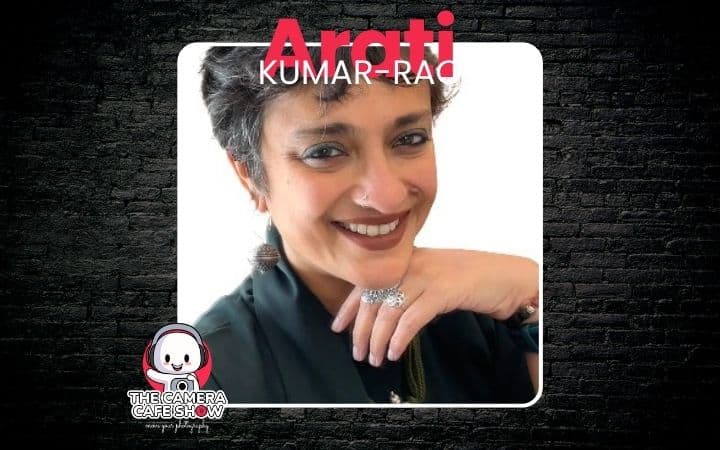
Tom: Greetings and welcome on the show, Artie, it's lovely to see you again. I think it has been, what, two months? I think since, the last time , we spoke.
Arati: I know I did not mean to play hard to get at all. I'm so sorry, Tom, but been a lot of travel.
Tom: It's no problem because I know we photographers are always busy , with something. What I wanted to ask you, because I think last time we talked there was like a problem with pollution, in Delhi. How is the situation now? Because I hear it's not still not very good.
Arati: No, and interestingly, it's not just Delhi all over India. There has been through the winter a quite a big problem with the a QI, the air quality index. We've had quite some bad air all over. It's a combination of pollution and you know, at one point I think even that, volcano that blew up in Ethiopia came by, know. But it's been, it's been a bunch of other things. But we do have a serious problem with not just pollution, but also solid waste management, people burning things locally. So there's, local pockets of bad air. then of course these large swats of pollution that just kind of blows through the country. So yeah, we've had that bit of that issue, but hopefully at some point we will get to cleaning it up
Tom: Let's cross fingers. We will talk about environment in another way today, . Can it be that last time when we talked you were about to jump on a train trip organized by National Geographic for 10 days?
Arati: Yes. I lead these expeditions the National Geographic does where it gets guests from all over the world, mostly the United States, Canada, Europe, and they come to India because this is a train journey through the state of Rahan. The journey starts in Delhi. We jump on the train in Ur, which is Rajistan, and then we go all around Rajistan and end up in Ur, which is a bird sanctuary. And then we get off there and then we take a bus to Agra to see the Taj Mahal and then back to Delhi. So it's 11 day trip. It's awesome. I'm going on one next week again.
Tom: And a lot of good food because , I mentioned this already before to people, but India is really my favorite destination, not only for photography, but also for food. So you have some amazing food on these 10 days.
Arati: food on that trip. You are fed three full meals and you're not doing much by way of walking, you know, so it's kind of, you're stuck in a train. So it tends to quite filling. But yes, good food. India is just, I must say, I mean, I'm not saying this because I'm an Indian, but it's just that I think India knows do food and, I think people thinking that it's all about. Too much spice. That's not quite true. I think we know exactly how to get it right.
Tom: Mm-hmm. I completely agree with you, but, now I suppose you are in Bangalore No. In your home.
Arati: am, I'm back home in Bangalore. Yes, I just got back from the Sunderbans, which is the largest in the world, some incredible luck this time. Incredible luck. We saw a mother Tigris with two little cubs swimming across a hundred channel. Oh, it was just mind blowing. And then we saw two other, we saw a tiger chasing a board. I mean, things that you don't even dream of seeing. We got really lucky
Tom: Yes. Mm-hmm. Mm-hmm. I saw it once and it's still in my mind. It's, amazing. But yes, that's.
Arati: seeing a tiger in the wild in its element. It's a thing of all, you know, these big cats,
Tom: Hmm. Yeah.
Arati: you see, your next one is always like, You know?
Tom: And not only seeing when you hear the this soft, low growl they make, oh, it's amazing. It's thrilling.
Arati: Indeed, indeed.
Tom: I. You did some project, we'll talk later about them across India, on, landscapes. You feel now you are rooted in, Bangalore, Artie, or you like to be a bit constantly on the move?
Arati: No. So I grew up in Bombay, which is now And wake me up in the middle of the night and ask me where I was from, I would still say Bombay. That's, that's very much where I'm from. That's home for me, even though, I've not lived there in 20, no more than that, 30 years now. But still, it's still very much home for me. And Bangalore is my base now. We live here. I do travel a lot, but I enjoy being at home because I have three little rescued cats and, I miss them a lot when I travel, it's really nice to come back home
Tom: Mm-hmm. Mm-hmm. And if we go a moment back to Bombay Artie, how. How were you as, as a little girl you were adventurers or artistic or quiet?
Arati: Oh my gosh. Definitely adventurous. We lived in a very wooded colony, even though it was it was in the middle of this megalopolis, this huge city of Bombay, but we lived in a wooded colony, so there were a lot of ups and downs and there were like little wooded areas and stuff like that. And I was constantly out exploring or riding my cycle and so very much outdoors. Loved that. Loved books. Loved to listen to a radio. I, you know, I had a little radio and I had so a short wave on it, so I would get, you know, BB, C and And at that time, India did not have a whole bunch of channels on tv. We just had one, which was the government channel on tv. So it was quite a treat to be able to hear music and news and on, well, it was B, C then, but it could have been other things too. But it was really to, you know, things from the world. So I used to listen to that. I used to play tennis. So yeah, just, you know, do normal teenage things. Loved reading, yes, and loved writing always. And I also loved photography even then, so always photographs.
Tom: Before that, because you told me also that your parents had a very big influence on you. What, did they give you as a small girl that you think that still shapes you today?
Arati: You know, it's everything. I think what I am today is a very amazing mixture of my mom and My mom was excellent with communication and she. Insisted on us getting our, you know, grammar, English pronunciation, elocution enunciation, the way we'd speak everything. You know, just Right. And so we were always in drama classes or theater or et cetera. That was great because that's I believe that communication is essential to get your story, your point across. And so also writing. So writing was a big part of my legacy that , mom left, and my father introduced me at a very early age to environmental issues because he was very passionate about them. So he would read from this amazing. Farmer who lives in Kentucky called Wendell Berry. He's also a poet and an essayist. beautifully, beautifully. I think some of my favorite poems are his. And he also believes in. A very gentle land ethic, you know, where you Agriculture the right way, not industrial agriculture. And so Papa introduced me to all those concepts very early on in life. And he was also a part of a lot of environmental movements that shaped India's environmental consciousness. And so I was also privy to a lot of those issues. Then growing up as a. Preteen teenager. the combination of my mom's, you know, stress on communication and my father's stress on these issues basically what I'm doing now with my life. So that's where, where I get it from.
Tom: Mm-hmm. But you do drive a car because I think your father never wanted to drive a car.
Arati: I don't, I, so here, I don't drive in India. My father never owned a car. You're right. And I do, my husband owns two cars. So yes, I have I'm a part of the car culture. I do not drive in India. If you've seen India, it's I get. nervous driving in India. I do not drive here. drive in the us but given a choice, I would take public transport. So when I'm in places like Bombay, we only used public transport because that was so good. And it served us so and we used to go very long distances. Driving was just not an option really. It's it was very much public transport, buses, trains, that made sense. And I'm very comfortable with that. Even when I go to the My daughter lives in New York and I love New York for its public transport and just the ability to be not beholden to driving. I just wouldn't want to, I'm not much of a car head at all. So I like which I, which allow me to just take public transport. I love London and New York and Bombay and even Istanbul.
Tom: I think the best part for me in India taking public transport and especially the trains, is that if you want, you can meet so many people.
Arati: Yeah.
Tom: And if you can speak with them a bit, it's, amazing . You can do a 12 hour train trip and never be bored if you want. So it's, I love it.
Arati: Absolutely, absolutely. Yes. I read somewhere or I heard somewhere that. Some country has started something called a human library where you could check out people if you wanted to, where you know you can , speak to them for an hour or something like that. I was just thinking, my God, in India, you just need to step outta your.
Tom: It is always, yes. Arthur, you just touched on the subject that you took already pictures when you. Were younger, I think. Camera from your grandfather, from your father. What were the kind of pictures you, you were really interested in taking?
Arati: So at that time, I would take a lot of you know, wherever we traveled or family, et cetera. Pictures not much thought really into it, the very early ones. But then when I got my first, my own Ds, my own I started being a little more mindful. I took a lot. of, again, it was mostly where I traveled to a lot of nature pictures, which were not very good at that time because I didn't have much of a zoom lens or anything. Architecture, you know, monuments, you know, the stuff that you would normally do when you traveled. That's how I began with my photography. I remember going to lasa, and, you know, enjoying photography there and being so. Confused because the contrasts are so harsh in that, in that light and so on. But, know, kind of bumbling my way through it, but enjoying trying to do some of that photography. Those were the early days. So yeah, I think it was mostly, you know, just the normal kind of shoot, whatever, whatever you. See, I would go to certain places, which my father would've gone to like some environment meet, and there would be some of these very, very well known of India, and I would try to take portraits of theirs and so on. So just like that.
Tom: Artie, so you went, I think you went to the US in the corporate world 10 years and then you came back. Does that feel like a different lifetime now for you?
Arati: Very much, very much. You said it. Was not my first choice. I never really wanted to go to the us but my husband was there, so I did join him there. and I've always wanted to tell stories. I always wanted to do photography, and then I kind of In the US kind of got into corporate life, did an MBA, did another masters, did all kinds of things. And now when I think back I'm like, oh my God, this, that was such a different world. Such a different world. I was at Intel Corporation and have been the worst misfit ever in the history of Intel. It's just so crazy. And I think, but I was thinking about it just the other day and I was oh my God. Don't even know what I was doing, you know, it couldn't have been good for the company though. So it does seem like a completely different lifetime ago, and I'm really glad that did teach me a lot. So I think each of these places I did physics, I did a little bit of corporate life. I did graphic design, I did, various little things that I have worked in. I think they all kind of. Somewhere you use them, you still, all comes back and it's, it informs you see the world. Nothing is wasted. think any of that was a waste of
Tom: No.
Arati: I just learned a lot everything is lessons. So yeah, that was completely different life. I think I've lived several so far.
Tom: It's like a cat.
Arati: Yeah, like a cat. And none of them is related to the other, like physics is not related
Tom: Mm-hmm. Mm-hmm.
Arati: to what I'm doing now.
Tom: No.
Arati: Quite different in their in every way actually. But know, it's just something that kind of builds each thing, builds on the other. So it's a good thing.
Tom: of course. Yeah. , photography, you are largely self-taught art .
Arati: largely self-taught, but I've also had the very good fortune of having now good friends who are excellent photographers. So I've
Tom: Okay. Mm-hmm.
Arati: on, you know, little workshops with them and so on. Like we just go off into the forest and they kind of guide you when you're taking photos. This was like about. 15, 20 years ago. And those were amazing little trips that we used. We would do five, six day trips and I learned a lot from those friends as well. So, yeah, so picking up skills along the way, but largely self-taught. I've not gone to full school or anything. I've not gone to journalism school leader, so everything's just flying by the of my pants.
Tom: But you're doing amazing because look, we are here today for the podcast.
Arati: You are so generous, Tom.
Tom: Well, I know somebody who is more generous because National Geographic, they knocked on your door and you are National Geographic Explorer.
Arati: Yeah, so that's a very interesting story. I quit Intel and I was I was consulting with them and then I quit that also and I said, no, I wanna do this full time. And I know where to begin, so I was kind of just, you know, trying things. But then I realized that what I really wanted to do was to tell. Environmental stories about fresh water of is the most important part of life. And the way we are treating water in this country, in India is quite crazy. And I wanted to tell those stories and so I decided that it would have to be long-term storytelling so slowly and follow some stories over time and so on. So I decided to go off to the largest river basin in the world, the Ganga bra, RO basin, and start telling stories from there. And you know, kind of see where it leads because one story leads to another. So I was planning to do a series of stories and I started. Luckily, we live in a time where we can self, you know, publish because we have Twitter and we had Facebook and we had you know, all those, we, I think it was Tumblr and all that. So, you know, I started my own blog and so on. It was called River Diaries and I was publishing little snippets, longer stories, you know, as and when, certain topics came up and so on. And I was doing that and I was, I think about two or three months into that when I saw one of my stories retweeted by Paul Salopek, who is a national Geographic fellow and a two times Pulitzer Prize winner. And he had retweeted my story and I was like, oh my God, how did Paulik even get to, you know, see this? I was like, couldn't sleep. I had woken up in the middle of the night and looked. Looked at my phone and I was like, shocked, couldn't go back to sleep. I was so excited. And we got to talking and he was on this amazing project where he was walking in the footsteps of the first humans who. Migrated out of Africa and populated the world. So he had stepped out of Africa in 2013 and he was also, he was walking and doing slow journalism as well. And so this was 2014 when he retweeted my story and we just kind of, I thanked him and we just started talking and he was going to come through India. He was gonna walk through India and so. I think it was just an unwritten thing we had. We just kind of figured that when he came to India, I would go pick him up and I'd walk with him. So kind of got to talking and he pushed me. He said, you have to write for a National Geographic grant because of the work you're doing. It's right up there, alley. So write for the grant. And I think it was on the last. Day of the deadline, I kind of sent the grant in and I got the grant. Very grateful for that. They've been really kind because this was just before COVID then COVID hit, and so it's, I'm still doing the grant. It's like I said, I'm a I take time doing it, and it's going to be a book. So, you know, it's, it's a lot of research and field work. So this year you know, I will be again. Working on it. so yeah, that was my introduction to National Geographic and how I got the grant. And it's been wonderful. I've met some really amazing people at National Geographic, the explorers and the staff both. It's been conversations and some you know, just. Collaborations. It's been great and I'm hoping to do more collaborations once this grant
Tom: What an amazing story. Ardi, there you go in just with, a tweet.
Arati: Yep. I owe a lot of my career to Facebook Twitter, old Facebook, old Twitter. This was long time ago, 20 13, 20 14. I met so many wildlife biologists through Facebook , starting 2009 when I quit Intel. so a lot of these people who helped me, I stand on the shoulders of these giants and I'm in. Tensely and immensely grateful to them for the help. They've been so generous and it's been just, it's been really amazing and I think it was, it's all largely because of social media. So I know social media is, and can be really dangerous for a lot of reasons, but the way I have used it and the way it has helped me, I'm immensely grateful. I
Tom: Amazing.
Arati: also came to
Tom: Connect.
Arati: social
Tom: Yes. Artie, before we talk on two projects you did I want to get the feel of the kind of photography you are. If you go to a new place . You are the photographer that goes straight out with the camera or you just walk around first.
Arati: I walk around. I walk around, I talk to people. I do not take out my camera because I. I wanna understand what the place is about, what the people are about. The minute they see the camera, it's, it's, it becomes, it changes the interaction changes. So I do not, kind of the other thing is the difference is, Tom, is that I also write, I'm always there with my notebook or, you know, I'm recording what they're saying. So since I do both. It is, I have to spend twice the amount of time in places I have to go back many times because I keep learning things. And so my first allegiance when I go to a new place is to the story. And so I, Speak to people. I them feel comfortable with me. I spend a lot of time in places. I do go back many times to places for my stories and so it, I don't break out the camera immediately. I do though I'm constantly looking for places, or interesting scenes which might the story, which might illuminate the story. I make mental notes and I think. Since I haven't broken out the camera, I tend to miss a few shots. I know, I know I miss some amazing things, but then I can say it in words and I describe those certain scenes in words. So I have that. But I do then go back mornings, I kind of go. spend time in places. Then I take out my camera and so on. if it's with people, then I spend a lot of time with them, talking with them. First few days, no photography, and then I. When they're more comfortable, when I have disappeared for them and they're like, oh, she's just gonna be That's when I take out the camera. Nowadays, of course, with the phone, it's far less, it's almost, I don't know whether it's more intrusive or less intrusive, but. People don't mind the phone camera as much as these big cameras that we had. I had an Nikon D four and it was like this massive black thing and it just go cch, you know? So that was a completely different you know. KET little fish. With the phone, it's, it's far less intrusive in that sense. And there are some record shots that I take for as memory aids, you know, just to remind me of what I saw, what I might have felt, what I might have, know, what I need to go back to take photographs. So it's almost like a just, you know, some kind of note taking via visuals. So I do that as well, but a lot of times. I go back to places because I also wanna see changes in landscapes. So if I photograph something, for example, in 2014, I went back several times, and then in 2021 I saw that landscape changed completely. And so I took a photo of, from the same place again. So, you know, you have these almost
Tom: Comparison.
Arati: timescale of long term. kind of study of a place. And with landscapes, you need to do that because things change slowly, not very fast. Sometimes it's fast, sometimes it's slow. So if it's slow, then you just need to keep at it. So there's that. Sorry, long winded answer to your question.
Tom: No, because you already answered also another question I had in mind, because. It's not only landscapes, it's of course the relationship that people have with disappearing landscapes also. What is your method of building trust with people you meet?
Arati: I just listen to them. I just sit with Sometimes I don't say anything. I listen to how they're talking with other people. I just hang out with them. I'm yeah, I just spend a lot of time. I think that's what it is. And just hang around, talk to them, talk to the kids kind of just make them feel like I'm not I'm not there. To just take the story, you know what I mean? I really, truly believe in some of these issues and I wanna see how we can find a way to do certain things differently and to amplify certain issues. Because some of the issues, especially in mainstream Indian media. They don't get covered at all. They don't get covered at all. Some people and how they feel don't get covered at all. Most of the time it's what the government has said wanted, or what the corporations have said wanted. That is the predominant narrative and. If you go to some of these places, you see something so different, you hear something so different. You hear how people negotiate the landscape and the landscape changes, how their lives change. And it's so illuminating, really. It's not something that you, that you in a city get to hear at all. for me it's a lot of listening. And it's interesting how I, reason I go to a landscape is very often not the story I come out with at all. The story tends to become something a little different, sometimes completely different because it's a point of view that I have not been privy to before I went there.
Tom: Yes. Then let's dive into. More stories and two projects, arty. A tale of two deserts. Let's start with this one first.
Arati: Mm-hmm.
Tom: The tar desert, I think the northwestern region of India with Pakistan
Arati: Yes.
Tom: something like 260,000 square kilometers to such a very big place, and it sounds like it should be empty, but there is living millions of people.
Arati: Yeah.
Tom: Talk me a bit about, the story. What interested you and what you first found there.
Arati: Yeah, that was the first story. In fact, when I started, when I decided to do freshwater stories somebody I met was an excellent mentor to me here in Bangalore, who works on water issues. Told me, go start in the desert. And I was like, I. Trying to do water stories. He's like, yeah, go to the desert. So I was like, alright. And he gave me a phone number and I landed up in this desert outpost city called city. With this one phone number. And I jumped on a bus to go to this place the bus driver asked me, where are you going? And I said, I'm going to this place. And he said, where are you gonna stay? I said, I think there'll be a hotel there. And they started laughing. The whole bus that heard me started laughing. They're like, there's no hotel there. You're there know. I hope you know what you're doing. I was. Okay. Then the bus dropped me at a, at a tea stall. You know, it was like and a tea stall of that place. And I had this person's number and I phoned him and he did not pick up the phone. And I was like, oops. So then I. Ordered a cup of tea and I was drinking it. And then I called him again, two cups of teas. Later he picked up and then he came to pick me up and I asked him about this ancient method of rainwater harvesting that they had in the desert. And he asked me, how much time do you have? And luckily, I had booked only a one-way ticket. So I said, I have a one-way ticket. I've come here now you tell me. And he was so happy that I had a one-way ticket that he started taking me around, showing me what it takes to live in the tar desert. The tar is the youngest desert in the world, and it is the most populated desert in the world. Having said that, it is a desert. There is very little rainfall, less than four inches in a year. And the primary livelihood of people there is pastoralism. So they're all, you know, sheep and goat farmers, scammer farmers, et cetera. and so he showed me the desert in a way that I would never have imagined. But I also quickly realized, Tom, that. No matter, even if I spent a month there at that time, I wouldn't be able to tell the story because that landscape changes so much with seasons. And what in terms of rainwater harvesting happens. It's, it's a cycle. You know, there's the dry, then the sandstorms, then there's the rain. Then there's the water that stands. Then it seeps down, and then it fills the wells. It. It allows crops to grow. Then they harvest the crops and then you know it again lies fallow. Then again, there's the sand stop, so it's a full year cycle that I had to see. So I called up my editor and I said, I'm not coming back with the story. I'm gonna have to come back here for a year month to be able to tell the story. And I did do that in that year and a half. I went back almost every month to try and record what's going on in that place. that was my introduction to truly slow storytelling and landscape storytelling because the landscapes change every season. And like you said, the way people interact with the landscape changes with the season. So what happens in March is not what happens in May, and what happens in May is not what happens in June. So, you know, you have to be there a lot of these changes to be able to understand , what the landscape means to them, what water means to them, and so on. So it was a fascinating introduction to. To life in a hostile landscape and how beautifully they live with it, as long as they understand how to read the landscape so they know where to find water, they know how to save the water and how to respect the water and so on. And it was also a stark contrast. The reason I say tale of two deserts is because the. Stark contrast is with how the government sees the same place. The same place is called a wasteland by the government and they are trying to force feed water from the Himalayas into the desert to turn the wasteland into farmland and. The places that they're farming are not places where the locals farm. The locals know where to farm because they know they can read the soil, but the farming that is being forced by the government is turning the soil saline now, because it's not supposed to be farmed, it's not supposed to be that much water. Accumulating there. Moreover, the water that they're pushing through canals from the Himalayas, the time it reaches there, it's putrid and it's stagnant, and that is causing malaria. And this place didn't even know a mosquito before, and it's now, the largest incidence of malaria in the States. So various things. You know, there's, that's why I said two tale of two deserts. There's one desert, which lives with the land, knows how to read the land and knows how to survive and thrive in this landscape. And the other one which struggles because you're trying to force your own concept of what life should be at the desert. So you're turning what is a living ecosystem, a lovely ecosystem into an actual wasteland by doing things which are not, useful . So that's the tale of two deserts and over 15 months. It taught me how to read any landscape, actually, because you really need to know what to see, how to observe how to hear. not just with the eyes, it's with, you know, all your senses. And it was just a fascinating and fabulous introduction to slow storytelling.
Tom: What kind of crops they're farming there.
Arati: They do wheat , they do gu bean, which is like this very, very lucrative crop. It's a gum that they, that they need for fracking and all of that. In the US as well. There's a lot of millet and, there's a lot of herbs, vegetables, things that they do, you know, grow with just that one rain. They get one day of rain and four inches. But the way they do that farming, it's, it forms the first two chapters in my book. It's fascinating because it allows them to farm. Imagine wheat without irrigation. don't irrigate at all after that. It's just that one rain, which seeps into the ground and saturates the ground. And so you can do farming with that. And it's amazing. Yeah, so they, there's extensive wheat farming and so these people have gone from begging for food, which when they used to not farm like this, they'd lost this. This is an ancient seven, 800 year old method, but they'd lost it. And when it has been revived, they've gone from begging to. Millionaires, they're repeat millionaires and they're very happy with the fact that they're now self-sufficient when it comes to grains and food grains and vegetables and so on in some of these districts not everybody has adopted it. people have bought into the government's idea of what it, what it is to farm in the village. And it turns out that when there is. No water in the canal, they don't have anything. Whereas these people who have saved water, which was you know, rain rainwater, they have. And so many of these people who relied on the government schemes come to these villagers who have harvested rainwater and ask for water. It's kind of really quite astounding what's happening there.
Tom: We talked about traditional knowledge disappearing, and I suppose then when you meet somebody who can find water in, a desert, must be amazing. And although your, work is about maybe in a way climate change or, environmental changes and landscapes, I think these little stories of how. People still have traditions and you can capture them before they are gone. I think it's, almost like the best part of it. No.
Arati: No, it is in fact, I'm just publishing, it's not yet published. There's a, an article that I was writing where I met farmers who are trying to resurrect rice varieties, which are very. Salinity tolerant drought tolerant. So these are old varieties of rice, which have been lost due to, the advent of Green Revolution, where they have the hybrid varieties now, which cannot These floods, they cannot survive the droughts. They cannot survive saline, soils and so on. So many farmers are finding it hard to, survive. They're going deep into debt because these hybrid varieties are not, are not resilient.
Tom: Hmm. Yeah, of course.
Arati: varieties are, and so they're resurrecting these old varieties and I just am writing that article and it's fabulous to see how these pockets of restoration, whether it's ecological restoration or food security or water security, you know, I think. How to live with the land is ancient knowledge. And they also saw ups and downs and they saw climate change in their own way. Maybe not to the extent that we have now, but, the land is resilient. The people's knowledge them how to be resilient with change and so on. And we listened and we learned, I think the lessons are already there. We need to listen to the right people is what it's,
Tom: artie, let's go from a place that changes slowly, the desert to a place that changes faster. The Sun, Darwin's, we already talked before in the beginning. So the world largest mangrove delta, I think,
Arati: Mm-hmm.
Tom: Between India and Bangladesh where, the rivers meet. Also leaving millions of people on.
Arati: Mm-hmm.
Tom: I suppose there, will be like islands because there are a lot of tides and a lot of
Arati: Yeah.
Tom: , Flowing water.
Arati: lot of little Islands. Yes.
Tom: So you remember the first time you went there with your camera?
Arati: The first time I went there was in the monsoon and it was in Bangladesh. It was not on the Indian side. And I was stunned by the drama, the sky place. And I didn't even look at the forest. I was just looking at the sky because monsoon in Bengal is, I think the. The main character energy all comes from the clouds. It's madness. You just, you look at it and you're like, oh my God. The colors, the grays, the blues, the dark, you know how these storm chasers and like cancers and stuff like that, you know, the crazy weather that they get. like that. And also another thing that I just loved about Bengal In so many ways, it's a photographer's dream, and I personally have been very influenced by Satre, who is an Indian, amazing Indian, who was an amazing Indian filmmaker, and his films have been a huge. Influence on my way of seeing, my way of photography, my sensibilities, everything. Another person is Tag, who is also a Bengali very well Nobel laureate. Amazing stories. And those stories are so ative of the landscape that when I went there with my camera, I was like, oh my God. I'm in a Taggar story or I'm in a Ray film. You know, it was so advocative at that time, 2014 LED lights had not yet come. It was still in candescent lights. Some of them were still you know,
Tom: Mm-hmm. Mm-hmm.
Arati: Just imagine the kind of color that yellow light throws when everything is dark or against the blue twilight, and it was, I was like, wow. Though I did my several stories, first few, several stories were black and white, because that's just the way I thought and I felt, and I just, I felt that landscape speak in those monochrome tones to me. And so I just kind of shot all black and white. But I still love to just notice, you know. A long boat just going underneath this heavy gray skies, a thin long boat going with a single and a lamp. I mean, it's just, it was like I, my jaw would drop when I would see some of those scenes and I'd be like, just, oh my God. You know, these photographs are just so. It was like stepping back in time, I would say. And it was interesting because a lot of these people live so close to the land that they are fishermen, they're farmers, , even the land, you know, it's just so crazy. Like you said, it changes every day. You have two tides, high tide and low tide twice a day. And with that, not just the land that changes what is covered, what is exposed, some silt islands come up. They go down and there are people who use the landscape all these changes and it's. I think I learned again so much. I went back a few times and kept going back because every time I went back I would learn something and I didn't go into the forest to see the wildlife. There's a lot of wildlife. There's the bengal tiger and stuff like that. Until much later just go to the villages and understand was. Going on or kind of go take a boat and then speak to fishermen and try and understand what was going on. How the whole rhythm of fishing in a Tal delta was and so on. So yeah, the fascinating stuff. That's a completely, it was night and day different from the desert. Of course. It was just fabulous. I am
Tom: It's also, I think, a un
Arati: going back. I'm not done.
Tom: I know, I know. Because I follow you on Instagram , and I, know where you are. It's also UA UNESCO World Heritage Site. No. Artie? Yes.
Arati: is.
Tom: Okay. What's the biggest threat now there?
Arati: Several things. Some of it's one big threat, which is not much talked about is house dams upstream, silt, which is what builds these deltas. So the whole title survives. the silt that is brought down by these three big rivers. And these three rivers are some of the silliest rivers on earth. The ganga, the bra magna. coming from these very young mountains, which are the Himalayas, and they bring all the silt down, and that's how the delta is built. Now, if the dams hold back, silt. doesn't reach the delta. And as it is, the sea level is rising because of climate change the delta is not being built, you know, so then the land is sinking, which means that there's more and more ingress of saline water into, places. And so a lot of the fields are getting, saline. So there's a lot of that. There are. Huge. Therefore issues if you are not, if you're gonna lose those mangrove forests, because the mangrove forests depend upon a very delicate balance of sweet water, which is brought in by the rivers and salt water, which is in the Bay of Bengal. And that mix, it's brackish water the estuaries. It's critical to have a certain mix of it. And if there's any, if there's too much salt water, it throws it out of out of balance, and that's what's happening. A lot of, the delta is more saline than it needs to be. That's affecting both the plants and the creatures. And of course, as I said, there's saltwater ingress, so it's even affecting the fishermen, the farmers, everybody. So there's a lot of that happening. The fact that the sea level is rising and is coming in further, there's that happening as well. So yeah, there are issues. As with everything beautiful. It's fragile.
Tom: Cool. Talk me a bit about, not only about people, but Bengal Tigers, because I think the Sundarbans are home to Bengal Tigers. There are the ganji dolphins, crocodiles, and there is a terrapin… which of them you were ever able to see.
Arati: I've seen all of them. Interestingly, the I haven't seen the terrapin. Have I've not seen the terrapin in the Sunderbans. No. But we saw several crocodiles this time. It was from the smallest, like we saw one, which was barely six inches. We saw one which was 16 feet, like huge. Huge guy, old guy, bad teeth. Ugh, bad moss on his face and all that. Oh really bad. But old guy. So we saw everybody in between, lots of them. And we were really lucky to see a lot of tigers, which is not normal. I wouldn't say that's the expectation I would set to anybody going to the cinder buds, but we were very lucky and it was very heartening to see a mother with two little cubs this time. And then we also saw another young sub adult female chasing a wild boar. And then we saw a male, another male. Sitting in water, having a bath. It was just one of those mind blowing trips. Not only that, we also saw other cats, which are there in the suther buns, like the fishing cat and the jungle cat. We saw all those wild cats and we saw lots of otters, which is again, sign of a very good ecosystem. So all of this was really nice to see. This time. We had a great few days, five tigers in as many days as like unheard of.
Tom: I've been and maybe of five days I was in the park. I saw tires twice, so it's not that all the
Arati: See? Yeah. When was this? When were you there?
Tom: This was be before COVID.
Arati: ah,
Tom: But we saw once, very special occasion, a tiger right next to the Jeep.
Arati: Yeah. I know. It's great. I think every single time you see that creature, it's. Jaw dropping, no matter how many times you've already seen it. It's a crazy, beautiful animal. And I would say that for almost all the wild cats, even the leopard and the snow leopard. The snow leopard is beautiful too. Fabulously beautiful. Every time one, it's wow. Yeah. Out. Yeah.
Tom: Ah, now you want to make me travel instead of sitting here doing the podcast.
Arati: Yeah, you should come and we should go together and it'd be fun to take photographs together. It'll be really fun to do that together.
Tom: We
Arati: Yeah. Do come to India.
Tom: What were you using the last time you were there?
Arati: I am currently using a Sony A seven R four with a 200 to 600 lens. I moved from Nikon to Sony simply because I travel solo and I carry everything on my back, and it tends to get heavy to carry that really heavy Nikon gear earlier. But the Sony is much lighter and with mirrorless it's just a completely different ball game. So yeah, I shoot with that right now. And I also have a, an iPhone, which I use a lot.
Tom: The captures of the tigers I saw on Instagram, I suppose they're with your iPhone.
Arati: the Tigers were all with the with the other Sony. The videos are from the what is it? The RX 10, M four. The tiny super Zoom 600 thing. And the reason I did that is because it's so much easier to handle. Because in the boat you're constantly, moving and this massive camera at 600 you're gonna lose everything. It I, you handheld. It's madness. It just goes. So I used the smaller camera for the video. So what you saw, if you saw the video of the. Tiger Cup swimming across. Was from that little Sony camera. It shoots 4K. It's fine, and if it's good light, it's fine. If it's not good light, you get a lot of noise and so that's.
Tom: And I think it's a moment you better use what is the best for the moment before you lose a tiger swimming with two cups.
Arati: I know, luckily it was a three minute, three and a half minute sighting, so they were swimming for three and a half minutes because the cubs were swimming slowly. It was very cute. So we got a lot of behavior, which was really beautiful before and after the swim. And it was just, I didn't, sometimes I feel you don't, you just want to watch this, you don't want to. Figure out equipment and gear and am I getting it right and stuff. You just wanna be in the moment. But luckily something like this, RX 10, M four, you just switch it on and it's pretty easy to handle and it's doing its thing. So it was good. That was good. When we saw the tiger chasing the boar, the whole sequence got done in 10 seconds. So by the time you realize what's happening and you've lifted the camera and you've hit record, I got the last three seconds of the tiger in the channel and coming out and chasing the board. The board was already gone. So the other person, my friend who was also in the boat, he was changing batteries on his camera, so he got nothing. It's it's one of those things that just happens in a flash. And sometimes you get unlucky and sometimes you know, at least you've seen it and you've seen that thing. It was just fabulous to see, Such things give you hope that there is, there are these amazing creatures in these landscapes, and they're still alive and they're still kicking and it's thriving. So good. Glad that the landscape is healthy, the ecosystem is healthy.
Tom: I dunno if I read that there are like 100 estimated
Arati: On the Indian side and a little bit more on the Bangladeshi side. Yeah.
Tom: Yeah. Okay. We will make it there together and you will show me ti No problem.
Arati: Yes. Anytime.
Tom: You said something the other time that often environmental crises that people face come before climate change. It's all about bad decisions are made. due political reasons about land usage How does it make you feel inside .
Arati: I just feel that I wish we had learned lessons because we've been doing this since independence. And it's, it doesn't even matter which party is in power. It's the power part that's the problem because, it's always the bad decisions are driven by short term. Profit or short term gains, or short term vision, of what is good for now, but they don't think about it over time, or they don't think about upstream and downstream effects. So it makes me I don't know what to say. I just feel that it makes me more determined to keep telling these stories because you just. You have to at some point get through, and then sometimes you wonder if it's a case of the person who just refuses to see, he's not blind, he's just refusing to see, or like they say, the person that's hardest to wake is the one who's pretending to be asleep. And so that is the, you wonder if that's the case, but then. What is my duty? My duty is to keep telling these stories and keep hammering at it. It's fine. It's, if I didn't do that, I would be remiss. You would need to keep telling these stories whether or not. The people are listening and you know that the people know that this is right, but they're doing it for their own reasons, whatever those reasons might be. And these stories are repeating all over, not just India, the whole world. It's these bad decisions taken locally or taken on ground. Which come well before climate change. Climate change is sitting on top of all of these terrible mismanaged land use changes. And the people who are living closest to the lands are the ones that suffer . The people who are making the decisions still make the money, so they don't have any incentive to change.
Tom: I think it's everywhere. The same.
Arati: Yeah, it is. It's not like I said, it's not even any one government. All the governments have been like this. They're all beholden to the industrialists. And I keep saying, there's a beautiful saying by Aldo Leopold, where he says that we imagine industry is what supports us, forgetting what supports industry, which is basically the land and ecology and the environment. Until, and unless we realize that we are shooting ourselves in the foot, nothing is going to change because , those people are cushioned by their privilege. I.
Tom: Artie, many of the stories we talked about today, they all came a bit together in your amazing book, margin Lands. Which won some pretty great awards in the meantime. At what point you realize that this work you were doing was becoming, or you wanted to make it a book?
Arati: I didn't want to make a book. I had not even thought of a book, but the publisher came to me and said, why don't you make a book? And I was like, oh, okay. And I didn't do anything for the first two years, and then COVID came and I could travel nowhere. So then I was like, okay, maybe I should go back to the publisher and see now if they still want the book. And they did. So I said, okay, then I'll write it. So that's how I had not even thought of a book. I, it was. Nowhere on my radar. But yeah, I'm glad I am still beholden to that person. My publishing editor, she came to me with the idea and there were a lot of, it took me a while to put it together. And then there was COVID. The publisher got hit pretty badly by COVID, so there was a lot of attrition there. So we had a bunch of hiccups, but towards the end of COVID and 2023 was when the book was born in India and then in 2025 it was published in the US as well. So yeah, I just have to thank both my agent. Got the chance to who came up with the ways to publish it in North America, and my editor here who came to me with the idea of the book in the first place and made it happen. So yeah, I've been very lucky. All of this has happenstance. It's just.
Tom: I see luck is coming back all the time. We are talking rti. when you look now back on all the work you did photographically speaking, what's a threat that connects all the dots in your work?
Arati: What's the thread? I think it is, do you mean photographically landscape? Changes over time. Going back to places it really is the crux of the matter. You can't see, snapshots are not en enough in the kind of storytelling I do , one time. Photographs are not enough. I have to. Show a time series of photographs to show change. So I have to do the same thing over and over again across seasons in a year, across years. So that's how I can show what's changing. It's called slow violence because they're imperceptible changes that happen over time and over geographies. And if you wanna capture that kind of change, you just have to. It's iterative. You just keep going back, seeing the changes and documenting those changes. So it takes a lot of patience and you have to do it over a long period of time if you want to be able to tell that story. I, yeah.
Tom: And not only tell the story because. You are also a visual archive that will be amazing now in 10 years. Artie?
Arati: Yeah, it's I don't know about amazing, but it's, I think, at least illustrative. It'll be able to show the changes, whether anybody wants to see it or not, I don't know. I dunno what, it'll be amazing, but you can at least see the changes over time. Yeah.
Tom: And when you look ahead you are, you feel hopeful. Artie.
Arati: I do. I feel that unfortunately it's going to get so bad that at some point people are gonna say enough, and it's unfortunate that it has to get so bad for us to feel, or let me put it this way, it has to start touching the privileged people. The people with money. When these issues start touching the people with money or the privileged people, or the people who like to live in gated communities and like to live in their bubbles, when these issues start touching them, that's when I think the screaming will be heard by anybody. It doesn't happen if it's people who are dispensable, I'm, it's so sad when you go there and you see there are millions who are feeling the. Pain and are in debt, but nothing changes. But then one time it happens to the millionaires in a city and something changes because they have the clout to make it change. So I think unfortunately until that happens, it's not going to change. But I'm also seeing so many people coming together now to restore landscapes, to restore ecosystems, to work, to create. It's alternative live livelihoods for people who've lost livelihoods and things like that I feel there is a, an awakening. So there is hope. Yeah, there is.
Tom: Good to hear.
Arati: It has to be. You can't be without hope.
Tom: Artie I, we talked a lot about your life and your goals and your projects. You've spoken before how your parents, they shaped your path of what you became now, and you told me that not long ago, you sadly lost your mother how she shaped your as a storyteller. You think when you are out there now working on a story that they are both still there influencing you.
Arati: Oh, definitely. Oh God, definitely. Yes, because my mom was also very good at paying attention to detail. She would notice the smallest, I don't know, moth butterfly. And try to understand what's, what it's doing, where it's going, where it came from, so that attention to detail. Every time I'm out there and I see something small I used to take a photo and send it to my mom. I can't do that anymore, but I still do that because I still take that photo. I still take those micro little things, pay attention to those micro little things. And interestingly, I find very often that. They have a role in the bigger picture. They do, but I realize that I can weave them into the story because it's important to understand how that tiniest little thing also influences an ecosystem. And so that's there. And then of course, papa's words of, the land ethic, the water ethic of how to be in the world for sustainable living and sustainable. He was talking sustainable living long before it became a buzzword in the early eighties, late seventies in fact. So that is also constantly with me, the right living how to actually. Live in the world as if other people matter. Other creatures matter. The land itself matters. Every tree matters, right? they're always with me. There's never a time that I feel I their teachings are always showing me the way.
Tom: And your papa's proud of your work now.
Arati: Yeah, both of them. In fact, it's so interesting. After Mama went, unfortunately I had her phone, right? And the way we live these days, everything is digital and so any of the bank things that we needed to take care of, we needed to go into her phone and see, but also WhatsApp, right? So I could see some of those things and I was just so happy to see that she was. Sending my work to her friends and so on, so I knew that she was, yeah. So that's hopefully they're.
Tom: Beautiful. Artie. Last important question, how you start your day? Coffee, tea, or with chaos? Coffee.
Arati: Coffee. I also ease into my days. These days I do not jump into it. I do not rush into it. I get up and I come, I sit here where I'm talking to you. This is my studio And I'm a news junkie, I'm always listening to news, so I take in the news in the morning and then. Look around my studio surrounded by trees, lots of birds. So I'm, I'm looking at that. Then I go down, get my coffee. So ease into the day. But I get a lot of good work, I think, thinking work done in the morning. So that's a good, that's a good thing. And my camera is never too far because birds are all around and they're always doing something fun.
Tom: I it's been a real pleasure talking with you tonight, sharing your work, some of the stories behind it, I really hope we can continue a bit, our conversation next time I come to India.
Arati: Yes.
Tom: How good is your cooking? Because I like panier
Arati: Oh,
Tom: That will
Arati: my favorite in Indian dish too. I can make something for you. And, but you know what? Palak barrier is a North Indian dish. I'm a South Indian. When you come here I'll treat you to South Indian food, which is not so popular around the world.
Tom: Make let's make something work this year
Arati: I think so. Let's do that. Yes.
Tom: Artie, have a nice evening still. I will see the next Tiger video pictures tomorrow.
Arati: Thank you so much for thinking of me for this podcast, Tom. It's been a pleasure both the first chat we had and this one.
Tom: It's been amazing. a nice evening. Still arty, and we see each other around.
Arati: You too. Take care. Bye.
Tom: Bye.