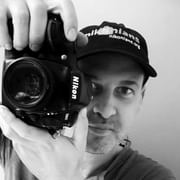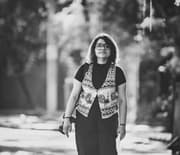


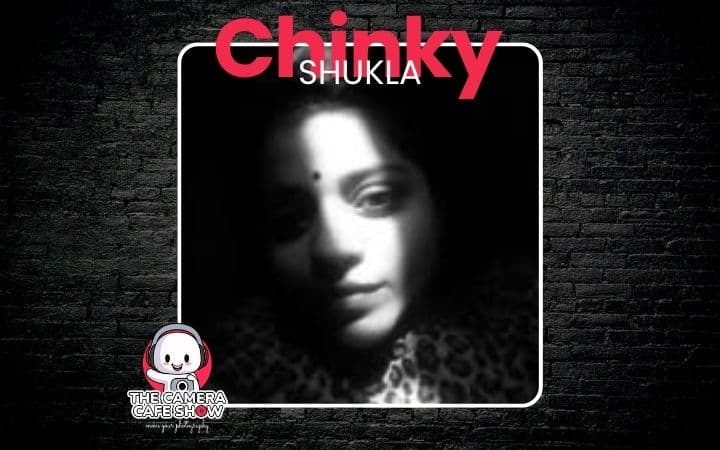
Tom: Good evening and welcome on the podcast, Chinky. It's nice to see you again!
Chinky: Likewise. So good to see you, Tom, and thank you to share my photography journey till now. And especially you are based in Spain and I have read many novels on Spain and it's a place that I always wanted to go, but I'm glad today I got this opportunity to speak to somebody who's from Spain
Tom: You will need to come here then. One day we will make it happen.
Chinky: I would love to.
Tom: Last time we talked since then, and now you've been very busy because you did an exposition in Goa, then you escaped for a little bit to the Himalayas.
Chinky: Yeah.
Tom: Now you were battling again with Delhi's air quality, but let's talk about Goa. How was the exhibition? It was intense but joyful?
Chinky: Yeah, it was very overwhelming, there were people from all walks of life from the locals to tourists, to artists and curators. Like all sort of people came and had a look at our exhibition we were five of us. So we were exhibiting in same space, but we had very different kind of work. , And especially for my work, I felt that a lot of people interacted with the work and, engaged with ask questions about how it happened and what was my experience like. So it was quite engaging. I would say,
Tom: And they energize you or they exhaust you a little bit, exhibitions?
Chinky: by the end of the day, I would say it was a bit exhausting, but at the same time because I was again and again saying the same thing to different people, but at the same time I wanted to do that because the final aim is to create awareness about the work that I do. And that's why the kind of photos that I take, my main intention is to engage and inform the viewer. Once the visual hook is there, then I can take them in the story, in the narrative and tell them how, what happened, how it happened, and explore it further.
Tom: Of course. And later we will talk about two projects, and you can go all in depth a bit more there let's walk a bit back in time.
Chinky: Okay.
Tom: How were you as little girl growing up Chinky?
Chinky: I would say I had a very difficult childhood and mainly in school there was a lot of bullying and especially by senior students and so it was very difficult. But at the same time, I would just bury myself in the books and, try to nudge that away. But that's the kind of childhood that I had, and then I that kinda made me more of an introvert, not talking too much to people, being in my own cocoon but eventually where the help of photography I have started to articulate myself in a different way, if not two words, but two visuals. I'm able to express myself.
Tom: And what kind of memories stand out when you think about family life before?
Chinky: if I talk about photography, my father he has been a hobby photographer. And whenever we used to go on family vacations, he would take photos and it used to be my task to put them in the family album. So that's how I got to know about photography and I got interested in it. But it was when I was in the first year of college that my father, bought a digital camera , and when I started exploring that and taking photos with that camera, it became like a romantic love affair with the medium. Something which I have been doing over the years is that sure that I make one good photo every day.
Tom: So think you studied, I think, English literature
Chinky: Yes, I did.
Tom: At what time you realize that images could maybe give you something different .
Chinky: I have a very bad memory issue and I can't remember many things. Because of that, I wasn't very good in my college, and, photography was one medium that always stayed with me. I would explore places, take photos, and I eventually found that this is the way to go about, to articulate myself in a better way. And I would hide myself behind the camera being the introvert that I was or that I am even now, but a little less than what I was back then. I would hide behind the camera and take photos of people. And that also became like an entry point to know about them, their stories. People would get interested because I'm photographing them, so they would get interested in sharing their stories. And that kind of helped me to break the ice with a lot of people that I've met over the years. And especially working with people who live in remote villages or, communities who are marginalized. For that I have been spending more time talking to them, listening to their stories, then taking photographs. I did a two year course in photography from Bombay and they teach you all, everything from photojournalism to documented photography, fashion, but my inclination from the very beginning was towards photojournalism and documentary photography. I started out as a photojournalist, and then I understood that I like more of slow journalism I spend more time with people. And that's why I decided to let go of photojournalism where I'm shooting protests and press conferences and, doing what the editor is telling me to do. But instead of that rather do more documentary photography and keep it slow and steady, over the years.
Tom: Think before we go to your projects, talk me a bit through gear what you are using nowadays.
Chinky: I use a Canon R five the 24 72 0.8 lens. And I like to be close to people. I do not like telephoto lens that much, because, then there is a lot of space between you and the person you are photographing. So I like to be close and, take environmental portraits. So something between 35 to 50 works best for me.
Tom: Thinking at what point did your new way of seeing things like more slow documentary photography lead you to your first longtime story?
Chinky: I think it was after the Fukushima disaster that happened. I decided to look at the impact of nuclear radiation in my own country. I spoke to the editor of the magazine that I was working with about URA and Porin. And he told me that we were, we do not have the bandwidth to do something of this sort. And that made me resign that job. And I started on my own and, time and again from different jobs. I kept resigning to do these personal stories that I would save up money for and go there and document their life. But to be very honest, in ura, I could not spend a lot of time because it's a very sensitive area and even the NGO, that I worked with at that time had a lot of police cases on them. And so then basically what happened when within a year's time, my photos got published in Hindu San Times.
Tom: Let's talk about two projects today, and the first one we are going to talk about is Jadu Duda, the
Chinky: Yeah.
Tom: jagoda, the nuclear graveyard.
Chinky: Just
Tom: it's a place that not many people outside from India have heard from, really? It's like a remote mining town where they extract
Chinky: yes.
Tom: no from
Chinky: Yes, the extract, uranium and , so many photographers, videographers, influencers have documented what has happened in Dura and the plight of the people there. But still there hasn't been much that's been done in the area, I went there long back and since then I could not go back because of many personal reasons. Also getting some threats from people. Yeah. And then my got hacked. Yeah. So these were some of the reasons why I could not go back to Taura. Yes.
Tom: do you remember the first day you arrived there?
Chinky: Yeah. When I visited ura I was staying in, which is the nearest town, and over there, it was I didn't know anybody, honestly. I had gone there without an idea about where going to. I just knew the thing that this is the place where the, this sort of uranium mining is happening and it's impacting the life of a lot of people. And I have to be there and document that in whatever capacity that I can. I knew that there's this one NGO that works there and there are a couple of national level NGOs that are supporting the problem that the people are piecing and creating awareness about that. I still remember I was sitting in the hotel room and, I messaged one person from a national NGO on Facebook and asked him, I said, can you please help me introducing to Johar, which is the local NGO over there. Then he was like, are you seriously there? I said, yes, I am already close to URA I want to document it, and it would be really wonderful if you could give me the contact of those people. And so he agreed. Before that on multiple occasions, when I texted him, he did not reply back. But that day when he got to know that I've already reached, he decided to share the contact details . So when I went there and I met Mr. Bili and his family , the first question, they al Almi that many photographers come here. Why? And what do you want to do here? And how it would help us. So first one or two days, or maybe three days we were just interacting and talking about all that has happened there . And, then eventually after, a lot of persuasion that please allow me to meet the people and document them and, because it's important. Then that's when the president of Joar, the local NGO, he helped me out and he helped me meet the people who have been directly impacted by it. I met many cancer patients, children with Cerebral pal, and some who died, sudden death also, a woman who have had miscarriages and who have lost multiple children to these cognitive disorders. And there were many such people that I met over , my pediatrics j over there. , Then eventually this project got published in Stan Times national newspaper. the state high court issued Awo motor Cogni the mining company saying that why is this happening to the children and the people of ura? Then because of that, the mining company got shut for a few months and which kind of made them more accountable how they operated because initially it was all the work was done on contractual basis and tailing pond, basically, which is the, where the nuclear waste is stored. It is like an open dump yard and , it's like very close to the villages in ura. Some of the villages are like hardly 20 to 30 meters away from the ceiling pond. And I have photos where you can see that there's a warning that there's a tailing pond right here and you have a house where there are people living. And this is how the nuclear waste has been treated.
Tom: But you took any special precaution you yourself when you were there? Thinky.
Chinky: Yeah, so when I went to, the tailing pond, the new, where the nuclear waste is stored, I felt giddy. And I had a runny nose. And then after that, for almost three, four days, whenever I would lie down on the bed, I would have a runny nose and a very different water or whatever you call it. It used to come from my nose. So I had that problem and I decided that I'm gonna keep all the clothes that I wore there, over there only, and then come back because I didn't want my parents to be exposed to this sort of radiation. And that was my first experience. So I didn't know at that time that you have to be. In exposure nuclear radiation for a prolonged period of time to be affected by it. So I was I wasn't aware of that. But waste at that time, which I you know, I saw firsthand and and that kind of made me giddy. And I felt that, this was something very toxic, and nobody should be living around it at all.
Tom: Talk me a bit thinky about the people there, because there are some pictures on your website, we can maybe in the YouTube video insert some later. I suppose there are some stories that have a bit more meaning to you because I wrote down some names,
Chinky: Yes.
Tom: Lara or Parvati in these pictures. Can you talk a bit about them and how they live there?
Chinky: So basically I would say that for me I just wanted to be with them, understanding their pain, their plight, their agony, and not putting my photography or my myself over there, but becoming one with the people understanding what the community is about and, gaining that trust and to work with them. So basically ache, cope. When I met him for the first time from his facial features, it was evident that he had some cognitive disorder. I went to the school and there were many such students over there . There were way too many children who had cognitive disorder. And so poverty has an enlarged chest problem. There is this person who has half of his faces hanging down. It's a very Goldie story. And it's not just a story, it's the life of the people to which the government has turned a blind eye. The government should become more accountable to the people and compensate them and also relocate them. And if location is not an option, then in that case, see how this nuclear waste can be dealt with too close to these villages. And it's right open. At least back then it was like that. Many people know about this, but still nothing has been done to help the people of Jagoda. I
Tom: How difficult.
Chinky: Yeah.
Tom: I was going.
Chinky: a woman who lost two of her children. To cognitive disorder and it's very easy for us to sit in our own privileged house and talk about them, but it's very difficult for them to cope up with this on a daily basis, because the rain can be nuclear rain, the wind could be nuclear wind. So it's that bad.
Tom: I think you also have a picture from a woman who lost eight children.
Chinky: yes. So she had lost many children because of miscarriages and some of them died because of cognitive disorder. I took this photo almost towards the end of my visit. I had spent like a lot of time with her. She cooked me chicken, we had meals together, and she would speak about her lost children and her family and how all this has impacted her and the psychological impact of all this. We discussed about this on a great length, and only after that I could draw, gather that much of courage to ask her to take a photograph of her, yeah.
Tom: Think, you think that the work you did in Jagoda, it changed you not only maybe as a photographer, but also as a person.
Chinky: Yes. Certainly. It made me more humble and I understood that, there's so many people who are going through such difficult times and, which we are not aware about, living in cities and hanging out with friends or listening to music or doing. Whatever we like to do in that we forget about those people who ha with these kind of problems on a daily basis.
Tom: Then hin after Yahuda. You still had some unanswered questions, I think, and you decided to do a long time project on PO Run
Chinky: Yes.
Tom: Let's try to situate as a bit PO in Western India. It's the place where. They did the nuclear test in 1974 and another one in 1998. 98, where they detonated five nuclear bombs. I think there,
Chinky: Yes.
Tom: and this is where your project started, when Buddha stopped smiling,
Chinky: Yes.
Tom: how was it there arriving? First time in Polk ground.
Chinky: of poker and have been very warm and welcoming from the very beginning. And they have been very kind to me in sharing their stories, in letting me in their houses, meet their children who are differently abled and meet their family members who have cancer. So they have been very kind with me and they have shared the stories without any inhibition and that has led me to take this project on for such a long time. I started it in 2015 and since then I've been going there, but because of some monetary issues, I could not continue then. got a grant from National Geographic, and because of that grant, I that grant helped me to continue this project further. I went there. I met the people that had met earlier, photographs with them that I had taken. And that's how we bonded. I would shoot from festivals to weddings, to funerals, to everything. I have taken photos of over these 10, 11 years,
Tom: but, so we are talking about communities that live very near to where they detonated the
Chinky: Yes. Just like Jadu Coura, these communities also live very close to the cocoran firing range where the nuclear test took place.
Tom: how does the place feel different than Du Hoda?
Chinky: So Jadu Coura is very beautiful so is po in its own way, but the world is very lush green, and you can see those white flowers in some places. And green pad cultivation. So it's got a very different landscape, whereas poco is in the desert. And because of that the landscape is very different. It's arid, dry. , In the twilight time, it almost turns eerie.
Tom: It's also the moment that you took your pictures in your project in Twilight time.
Chinky: just,
Tom: And how the people reacted there.
Chinky: The peer people have been very kind. And they have always wanted to share more about their experience. And, whenever I would go, they would tell me, okay, there's this new kid who's got this problem. There's this just a, yeah, a new baby born with this sort of a problem, and somebody has got cancer, please go and visit their house. So that's how I used to keep going and meeting cancer patients and children with cognitive disorder. So there was this very a newborn baby that I happened to meet. And she was just one and a half years old. And when I met I photographed her, and just within six months when I went there again, passed away. So very difficult to sit with the parents and talk to them, share photos, because even for them, it's very it's very disturbing, at the same time. I met a lot of eyewitnesses and even for them there has been a lot of psychological impact of the test, they have not to forget.
Tom: Because you talk about eyewitnesses, both in 1974 and 1998 the people living there, they were aware that they were going to detonate bombs.
Chinky: Not initially. The, so the whole place was. Now, like a battalion of Army were present in the villages and the villagers were asked to evacuate and take their valuable belongings with them. But only after the test took place were they told that India has tested a nuclear device. And even then they had no idea of what it meant. Only eventually over the years first and foremost, the allergies started eye irritation, eye infection, allergy on the skin, and then eventually started with cases of cancer children with cognitive disorder and disabilities. So followed eventually. Yes.
Tom: Thinking why you choose the title of your project when Buddha stopped smiling.
Chinky: So the first nuclear test that took place, it's, it was Coordin named filing with her. And so the title of my project comes from there Budha stopped smiling because I felt that this is more of a farge to say smiling budha, instead of that it's more appropriate to say that when Buddha stopped smiling, because if you look at the psychological impact or the memory that historical event of that scale has on the people living there that impact will definitely make Buddha stop smiling.
Tom: And when you work on a project like this, think and you return home. You stay with the project when you return home.
Chinky: Smiling. So I usually what I do is I do not look at the photos. some time give myself a break then I have a look at what I have shot and spend time with it and see where the narrative is going because it's a long-term project. And I have photos since 2015. So there are many photos that I've been working with. I just see where are those gaps that I can fill, and for different form, like for an exhibition, it would be different I'm making a photo book also, so for me it's becoming something which is very extractive, it is more of spending time with them. And the memories that I have from all those, silent nights where I photograph the people who have been impacted by it.
Tom: If it's a book, sign me up for the book. I would really like to have it.
Chinky: Sure. Definitely. I am attending a photo bookmaking workshop which is by photo South Asia. It's funded by multi foundation and they are very generous in supporting eight to 10 photographers in making their photo book. I am very soon going to be going to Goa. And over there we have the last leg of this workshop. It's not that easy to get your photo book published. And mine is not a it's somewhere between a documentary project and something which is a little more led. because over the years, my visual treatment has also changed. I always felt that, I, we have the radiation around us, but we can't see it. The psychological impact and the memory of this historical event on the people, how this has impacted them. And so I did some chemical intervention on prints. I exhibited that in Goa last year. And I have also made some photograms. Which are like without the use of camera. And they are done with objects that are found in poker .
Tom: You have a lot of things going. So after stories you did in Po. Run the Wilder World, suddenly got to know your work. I have a small list in mind , but you were nominated for the Laika Oscar Barak Award. You were nominated for the Yop Schwar Masterclass from World Photo, and you became a National Geographic Explorer. So what does all of this mean for you?
Chinky: See more than these recognition, I think it's about creating awareness about, the plight of the people who have been impacted by it. And for me if it's, going to international audience. Then it's also , talking about how nuclear weapons and , I feel it's very important to create awareness about this. It's more than those photos that I have taken. Those photos are just the entry point to get into a discussion, to spark conversation about the impact that nuclear radiation can have on us and we should get scared about this and, tell our government to abolish nuclear weapons and not talk about nuclear war every now and then because it can have a very big impact it can depress many people. Yes,
Tom: hinky after winning all these awards, , you think your work, your photography work has changed or it still stayed the same?
Chinky: I would say the awards have helped me to take this to global audience, to people who didn't know about this. They got to know that there is a place where people are living under the shadow of nuclear radiation. That is something which means more to me than getting these awards. These awards are definitely important because then you go one step further to share the story with a wider audience, and if you see every year, the countries which have nuclear warheads, they're spending a lot of money on developing these nuclear weapons on getting these the nuclear fuel. Even if you look at nuclear energy for that matter, the transportation of nuclear fuel, it can be very dangerous. What if it get gets spilled somewhere? Or what if whenever it is underground, somebody gets in contact with it. So there are all these risk are always involved. Nuclear weapons, , it's a straight disaster. Something which can, have very bad consequences for our civilization.
Tom: Thinking. Let's talk a moment about your marvelous little side project. I think serendipity. What inspired you to start teaching photography To children?
Chinky: Okay. The workshop you mean? Yes. Actually I wanted to do community engagement activities also to involve the community and also have their voice, because there's always a hierarchy between you as a photographer and the people you are photographing. So I wanted to make it collaborative from the very beginning. And even when I shoot whenever I take photograph, I make sure that I tell the people that I'm photographing that what is my intention? Why am I taking this? I take the consent? Would they be interested in collaborating with me. And after they share the story, after they tell me what they have gone through then we together make a photo. Just like that I felt that other sort of community engagement activities are also important to give the ownership to them and give back the agency. To the community that I had been working with for such a long time. So as the children got very interested in a small digital camera that I'd given them, and they would take photos with that camera and I had tutored them on composition, lighting, colored schemes, and all of these things. So they came back with very marvelous results. And one of the, differently abled kid he was back then I think 10 or 11 years of age and he started taking amazing photos, and his photos eventually got in Chennai photo Ali. And they were also published in British Journal of Photography. He's still photographing. He has the digital camera on him. So I hope that maybe he can one day become a photographer, a differently labeled photographer. So no other children were interested and they also interacted, with the images and they were very enthusiastic about working with a camera and taking photos of each other of the landscape, their family. What moved me the most was Sik, who being a differently able kid. He came up with such amazing photos and he understood the technicalities of the camera. On the very first day that I gave him the camera he knew how to delete photos, how to go to the playback mode, how to take a photo, everything just organically learned. And since then, he is been taking photos and so I hope I can make a difference in somebody's life. By teaching photography .
Tom: So this workshop, you ran it with children in Poland.
Chinky: Yes. In the villages of Poland. I started in the school, in the local school. And after that, I did it in the place where I was living. So it was much easier for me because during the school time that they would not get too much of time and, it would be almost like an extra class for them. I wanted them to take photos of their surroundings and tell the story in their own way and however they wanted to take the photos. Yes.
Tom: What did you hope that they would discover through photography? Zing.
Chinky: mainly see they are very young to understand is happening in the region, but at the same time, they know many such children who have been impacted by it. So they are living with that reality and they are the best to tell their own story. Like in, we have ish Oli, who is the son of the president of d which is a local NTO. And I think he is doing a marvelous job Ashish and talking about the problem, which is in happening in ura and taking it to a global level and having meetings and discussions about what is happening there. Like that, I think that, the children of Porin also can talk about this in the coming years and and take the agency,
Tom: . Very nice Ky. Then after documenting. Difficult realities for a long time. You are now working on an environmental project about farming in Nagaland.
Chinky: Yes.
Tom: Just very quick, what drew you to this? Through this story.
Chinky: basically since the very beginning of my career, I've been working on environmental issues. So I have worked on the landfills in Delhi. I have worked where the segregate electronic waste in Delhi and NCR. Apart from that, I have done many environmental projects. that now it's the time to also look at solutions, and I felt it would be great to talk more about this farming method that they have, which is more than just a technique. It started long back around a thousand years back. They make their water harvesting ponds, through which they do the paddy cultivation , and this is all chemical free with indigenous seeds. Climate resilience is a term that we have coined in the past decade or so. But they were climate resilient even before that, so I wanted to document that indigenous ecological knowledge of the people . That's why I decided to go there and collaborate with the people. And they have been very generous and I'm so grateful to the people of Nagaland that they welcomed me with open arms and, I could document their farming method and spend time with them. I have done this in the past one year and I want to go there again. And my intention is to work with the scholars of Al and university so that we can do a research on the zaba farming and if this can be adopted by other villages in other regions, and share this story with the world and at the same time, understand about farming from them because my own personal dream is also to have, my own off-grid farmland where I can have my own vegetables and fruits and, live a self-sustainable life.
Tom: It sounds all very wonderful and I'm looking forward to seeing this next project. Kinky. If you travel in India, you enjoy train or you will take a flight.
Chinky: my father, he's from the railways. He is retired as a railway officer, so I have been traveling in trains for a very long time. I enjoy train travel as, much as I go as much as traveling by flight it's one of the same thing, just that you save some time. But the carbon footprint, if you see is more if you travel by. If I get a chance, then I travel by train. Otherwise I take flight. yeah. But in India recently, indigo Airlines had a major problem and many flights got canceled. And this happened right before my Goa exhibition. And I was at the edge of my sofa seat in the house, and I was like, mama, I don't know if I'll be able to make it to Goa. And she told me, she was like, don't worry, might settle down in a couple of days. And the, and it did. And that's how I went to go. Otherwise it's like very difficult . Yeah.
Tom: Thinking how? How is your cooking? If I come to visit you in daily, what would you prepare?
Chinky: A very good question. Two days back I made fish curry for my cousin, so I make style with coconut milk in it. So I like the Roku Fish. I don't know what it's called in English, but it's called Roku here. And so I like eating fish. It's very light and it's not very heavy on the stomach, I am adventurous enough to make Badani also. Yeah.
Tom: There we go. I'm looking forward to it.
Chinky: your favorite is Panish. Yeah.
Tom: I talked already with Artie Kumar Rao, and her favorite dish is Palak Panier. So we agreed
Chinky: Oh,
Tom: when we go to Deli, she will prepare it for us.
Chinky: Oh, wonderful. That would be great.
Tom: We will make a party.
Chinky: Yeah, certainly.
Tom: Last question, hinky, I know you have three dogs in the Himalayas.
Chinky: Yes.
Tom: Who is in charge ?
Chinky: gypsy, the one we got first the one that we rescued first, she is the leader she would enter the house first. She would eat first and then let the others eat. So she is definitely more pampered but they're all together. They. like each other, and they like each other's company and they gang up against the locals and bark at them. that's the recent problem that we are encountering. Yeah.
Tom: Hinky, thank you so much for today. Sharing your pictures, your stories, and a bit of humanity with us here on the podcast has been, again, a real pleasure to talk to you and I hope we can catch real soon up in India.
Chinky: Certainly looking forward to meeting you in India and in Spain.
Tom: Of course. Good luck still on your next project and we see each other around.
Chinky: Thank you so much. Thank you for your time.
Tom: Bye.
Chinky: Bye.