

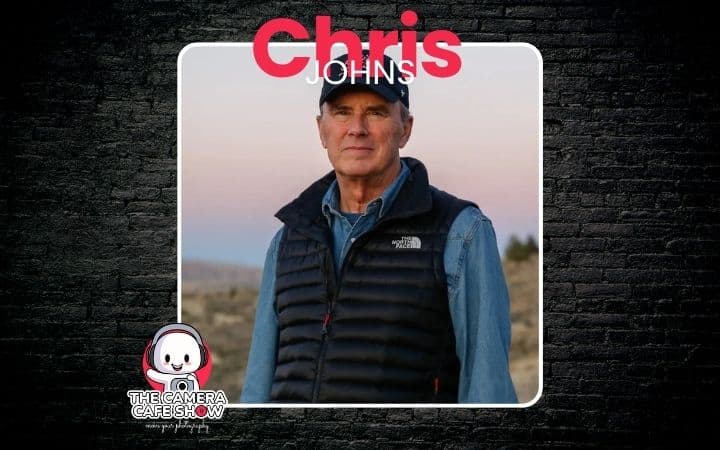
Tom: Welcome everyone. And today I'm sitting down with someone who quite literally has shaped how millions of us see the world from spending years as a photographer in the field to becoming the editor in chief of National Geographic and deciding how stories get told. Chris is a real pleasure to have you tonight here on the show.
Chris: Oh, the pleasure's mine. Thank you for the opportunity.
Tom: Okay. Before we go on, you have to know that I wrote some emails to some National Geographic photographers that I was going to talk to you, so I have some good stories coming on later.
Chris: Well, that's good. We may not believe all those stories, but uh, I'll be interested in hearing them.
Tom: But this is a kids friendly podcast, so it can go wrong, Chris. No problem.
Chris: Well, that's good. I'm glad to hear that.
Tom: Chris, what does a good day for you look like now?
Chris: Oh, a good day for me, uh, is, uh. Waking up in Montana, one of the most beautiful places in the world, Western Montana, in the mountains. uh, a good day, one or two of my grandkids, or all my grandkids are here and we start exploring and, uh, having fun together. it's also a good day as a day when I meet with my students that I teach and see the work they're doing, and we work together on refining their voice. a good day is a time with my wife, uh, and, uh, family and, and a good dog walk. I mean a good, you know, hour and a half, two hour dog walk up up of the mountains. That's, that's a great day. Thanks for asking.
Tom: I come back to Africa in a bit, Chris, but I think you met your wife there in Africa?
Chris: I did, I met her, uh, at the United States Embassy. She was a foreign service officer there, uh, in Ada Ababa, Ethiopia. And she worked, uh, she had several different jobs, but one of her jobs was to help, people in the press who, uh, in the media who came to Ethiopia. And I wanted to go a series of places because there was a, there was a significant war going on that time between Ethiopia and Eritrea. uh, I wanted to go into places where, uh, many people felt we're off limits of the conflict. And she, uh, helped me, she and her boss, who was a great. Africa hand. She and her boss helped me get into some places that, uh, were, uh, places that you could make, you could make great pictures. So, uh, anyway, one thing led to another and, um, yeah, we were married in Nairobi
Tom: Hmm mm-hmm. But it was love at first sight, Chris.
Chris: pretty close, you know, for me at least. Yeah, yeah. Yeah.
Tom: You
Chris: it has been since, thank you. Three children later.
Tom: see,
Chris: And
Tom: if she had been there, I could have asked her in Spanish. This Chris. And she could be very honest with me because you wouldn't understand.
Chris: well, we could do that actually. I'd be interested in that. I'd be very interested in that. That'd be fun. Absolutely.
Tom: For now, Chris, let's walk a bit back. What kind of place did you grow up, Chris?
Chris: Uh, I grew up in the western United States in southwestern Oregon, uh, a valley called, uh, the Rogue River Valley. I grew up in a small town, rural town in that valley. Um, my family's come from Oregon, uh, Oregon and Washington the early 19 hundreds. there's a lot of history of their family there. Um, so it's a place that, um, I'm comfortable and shaped me in many ways. Uh, we had a, we had a small farm and, uh, I loved, uh, raising animals in that farm and planting crops, and I really enjoyed that ag agrarian, uh, life. And so. When I left there to go to university, I was quite certain that I was gonna be, um, a large animal veterinarian. and then through the course of my education, I took a journalism class and then took a photography class at the urging of some good friends such as Dennis Stem. And, yeah, changed the course of my life. I had, uh, several very influential professors university, at Oregon State, and then I went to graduate school at the University of Minnesota and worked for R Smith Sch, who was, uh, an extraordinary man and, uh, that set me off. Um, and going to Minnesota also just opened my horizons tremendously, especially having grown up in a
Tom: Whoa.
Chris: and.
Tom: You went very far in in one moment, Chris, because I was going to ask you first if when you were a young boy, your father, geography teacher, and you,
Chris: my father, yes, that's right.
Tom: you think, that that influenced you a little bit or you, or now when you think back to on it?
Chris: No, that's, that's a very good question. I think. Yes, it did. He, um, he was a geography, social studies teacher was the label at the time. So a little bit of geography, a little bit of history, um, et cetera. Uh, he was in particular, really interested in Native American history, especially where we grew up. And he had a keen sense of curiosity. His father had been a logger. He had come, to the Oregon coast range to cut down big trees and mill that, those big trees in the lumber. my father had worked for him, uh, and, uh, was in the Army Air Corps in World War ii and then came back and went to the University of Oregon. That's where he got his education. My father was a big, uh, influence in me. Uh. Uh, but, uh, I, I, I say that, uh, with a little caution because person who had a profound impact on me was my mother. And part of that was that my mother was a master storyteller. She loves stories, she loves to tell stories, and she was gifted telling stories. And I mean, from the first time I attended school day when I come, came home from school, my mother would say to me, even when I was like six years old, tell me about your day. And we'd exchange what each, or what we'd done, uh, both of us day. And, you know, I think back on that and that's what a gift, uh, from my mother, uh, to do that. She was also very energetic, very animated, when she'd tell her stories, very entertaining. She had, she was funny. I mean, really funny. and, uh, she loved to make people laugh and then of course, tell stories. So, uh, both my parents influenced me in, in different ways, but very positive ways.
Tom: And when you went on trips with them, you didn't, you didn't have a camera still? No, because this came later in,
Chris: That's right.
Tom: in university.
Chris: yeah, my, um, my mother's father a keen amateur photographer. Um, but, uh. No, I didn't. I didn't really have a camera until I graduated from high school. And then it was just, you know, like a Kodak brownie kind of box camera. Uh, and then, um, but you know, my mother in particular was also a painter. Uh, she was an artist. She was, uh, so she was always doing our project. She was always had paintings, I mean, from oil paintings to watercolors. Uh, she was just always doing these kinds Uh, you know, and so there's a certain amount of absorption, absorption you have as a child when your mother's doing that all the time. And the same was actually true for my mother's father and my mother's mother, uh, who was a very, actually probably of every one of the family was probably a, the best painter. So an appreciation for the arts. Uh. You know, I was exposed to at a very early age and, uh, over time especially came to appreciate that.
Tom: Yeah. Nice. Then I. Think, let me remember because you became also of the Future Farmers of America, the spokesperson or the president of of of it,
Chris: Well,
Tom: you went to study photojournalism.
Chris: yes. Yes. Well, that's, um, yeah. You know, when you're in, uh, school as a teenager, uh, you want to, um, belong to something or someone, you know, be part of a, I think. And, uh, I had, I had an interesting thing happen, uh, I was in high school. Um. I was in an honors English class, and I loved to write as, again, that was another my mother loved to do. She was constantly writing and submitting articles to various publications, I loved to write as well. um, anyway, I wrote an essay, uh, for my honors English class, my teacher gave me a very poor grade for it, and I was quite annoyed. And so I went to talk to that teacher. Uh, and, and of course the essay was a reported essay and it was about animal cognition, uh, especially, uh, farm animals. Which, you know, I raised as a kid, I raised sheep. I raised hogs and raised cattle. so, uh, I was, uh, she said that my research flawed. And, and I came back to her and had a special meeting with her and said, actually, it's not, you know, here are the footnotes. You know, there's a lot we're learning about animal cognition. Now, keep in mind, this is in about 19 66, 19 67. So, you know, there's a great deal we've learned since then. But
Chris: she was kind of a stubborn woman. Uh, and I had, uh, unquestionably had a personality conflict and she said, you know, um. You know, you're not listening to me and you're not capable of doing honors English work. I'm removing you from my class to a much lower class. You're not, you're not able to do that work, which like shocked me. I mean, I never had anything like that happen to me before.
Chris: what that did was strengthen my relationship with, um, uh, my classes. I took on livestock management and what we called vocational agriculture. And, and then also what was linked to that was the Future Farmers of America. So I became really interested, in all aspects of the future Farmers of America from raising livestock. I love shop class all my life. I've loved to build things I've loved to build. I mean, I built stock trailers. I built, uh, you know, uh, all different kinds of things in shop. and then, you know, I'd love to build stories. I love to build magazines. I love to build books. um, I had a really. A terrific teacher there, and he took me under his wing and he said, you know, you also have some talent for public speaking. So, um, to make a long story short, I became president of the, uh, Oregon Association Future Farmers of America, traveled all over the state, which was an incredible gift. Um, and also, uh, really refined my storytelling skills and speech making and whatnot. with his help, uh, what was really, as I look back on it, what was really extraordinary about being president in the future from of America was that the course of a year, I held off going to college for about, uh, seven months and. I traveled throughout the state and visited, uh, there were 70 plus future farmer Farmers of America chapters. And I would drive my dad's old Ford pickup truck, uh, to these chapters and stay with families, ranch families, farm families all over the state of Oregon, and listened to their stories and listen to their concerns. Uh, which was a place I was very comfortable in having grown up in a small town and worked in ag, uh, all through school growing up. So, uh, that was, that was an extraordinary gift, and a privilege, to be in those people's lives. And I think ultimately, I mean, a lot of this was planting seeds. I didn't know it at the time for me to become a
Tom: Yeah.
Chris: uh, and to be comfortable and passionate about a career in journal.
Tom: So, Dennis Demmick was your roommate in college?
Chris: That's correct. Yeah, Dennis, Dennis and I were, uh, friends in high school. We were both district presidents in Oregon, in the Future Farmers of America. And, uh, yeah, we were, we were roommates. And Dennis, if I was to say one particular individual who got me into photography, I'd have to say it was Dennis. and that was just a relaxed, thing. You know, we would, um, and he's a very good photographer, so he encouraged me to take some photography classes and, uh, work for the school newspaper, et cetera. And so, uh, yeah, and we've been friends, uh, ever since. Yeah, it's, it's one of the most rewarding relationships in my life.
Tom: Yeah. Well, you have many friends who will come back to them in a, in a moment, Chris, but you graduated school, you went to work for Topeka, I suppose, and the Seattle Times.
Chris: That's correct.
Tom: What, what did working at new newspapers teach you that you think you couldn't have learned anywhere else? Chris?
Chris: Well, uh, I loved working at newspapers. I loved that I'd get up in the morning and I had maybe an inkling is what my assignments might be, but I didn't always know. and even if I had as assignments, something could change in the news. And you've gotta do quick pivot. know, the huge advantage of being working in a newspaper is that you're photographing virtually every day. Uh, and in my case, it was. You know, seven, to seven days a week, uh, and photographing all different kinds of assignments. Uh, the other huge plus for me, especially at Topeka, the quality of the photographers I worked with in that staff. And then a gentleman named Rich Clarkson, who was, uh, the director of
Tom: Yeah.
Chris: who was a tough, hard-nosed guy, but instilled discipline that I certainly needed, and I dare say that some of my colleagues did too. Um, but that camaraderie, uh, that lifting each other, you know, seeing how other photographers worked was, uh, invaluable. Uh, so, um. I love newspapers. There was no question about it. But also wanted to do assignments, where I could spend more time, where I could more in depth photography and reporting, uh, spend more time with the subjects I was photographing, um, which we were able to do some. But, um, you know, I don't, I, especially when I was in grad school studying under Smitty Kuman, I had, uh, you know, he had a great passion for books and he had a great passion for magazines, and I certainly picked up on that. Uh, and loved, especially loved magazines and books too, of course. Uh, so, uh, when I was at Topeka, I took a leave of absence, uh, for, um. For four months. and I'd wrangled a thing where I could be embedded in a hotshot forest firefighting crew, uh, very close to the little town I grew up in. They were called the Rogue River Rough Riders, uh, near Crater Lake National Park. And so it was a 20 man crew in, it was at that point, just men. Uh, and I was the 21st member, uh, and had permission to go everywhere with them, uh, for four months. And we went, you know, all over Oregon, Washington, Montana, Arizona, uh, California. I mean, we went to fires, big fires, wildfires, all over. So that was my, uh, when I got permission to be that 21st embedded member, uh.
Chris: went to the National Geographic I asked if they were just in the story, and it was sort of a test run for me. uh, they said, yeah, paid me a minimal amount of money, slightly more than I was making at the Topeka Capital Journal. but it gave me an opportunity, uh, you know, and I learned, of course, a great deal, uh, quickly, and it was, uh, especially baptism by fire in shooting color because I was to that, really a black and white photographer. Uh, and in, uh, you know, I see differently in black and white than I do in color. There's no question about that.
Tom: Hmm.
Chris: you know, it's, it's a story that I did okay on, but, you know, from what I know now, it's a story I'd kinda like to have back, you know, uh, it, uh, differently and I'd approach it with more confidence because, you know, I in time became much more proficient in color.
Tom: So when you say, Chris, I walked into the offices of National Geographic, you just walked inside with no appointment and who you went to see? Bob Gilker or who was there?
Chris: Oh, that's a what happened when I was in Topeka, um, you know, as a summer intern, uh, you know, who just completed a year of grad school at Minnesota. Um, I got this summer internship at the Topeka Capital Journal, and I was green, you know, uh, the, I think Rich Clarkson took a real chance on me. I mean, you know, small town in Oregon. And, uh, you know, I'd done some work, uh, in, at Oregon newspapers and Albany and Corvallis and whatnot. But, you know, I was, I was pretty inexperienced. Uh, so, uh. For reasons. It sort of escaped me. Clarkson hired me af at the end of the internship and he said, I want you to go to the University of Missouri photo workshop. And I said, yeah, well, yeah, I'd love to do that. I, I actually drove with Clarkson from Topeka to Missouri n Nevada. Missouri was the small town. And, uh, my advisor, uh, at the University of of Missouri workshop was a guy named Bill Garrett, who was destined and did become the editor in chief of National Geographic. And I really liked that guy. Uh, he was, he'd been a picture editor, he'd done some photography, worked at Vietnam for the National Geographic, really interesting guy. A larger than life figure. And I, I, again, felt so lucky that, um. He was my advisor and I had a story, um, on a, on a young couple that ran high school and had a unplanned pregnancy, decided to get married and keep the child, and I documented their lives, for like four days. And, you know, they were very open. It was a terrific opportunity. And Bill Garrett, you know, liked my pictures. He pushed me in ways I needed to be pushed. but that relationship with Garrett, um, remained and grew. and it especially grew when I became editor of National Geographic after his departure. Uh, he and I, kept in close contact, uh, over the years. So he was a big influence on me, through him. And, and at that Missouri workshop, Bob Gil was also there. So I met Bob. Um, but. majority of my time was spent with Garrett because Garrett was, my advisor. And, um, you know, occasionally I would go to Washington um, have dinner or something with Garrett, which again was terrific. Uh, you know, just sit and talk with him and he'd show me stuff. He's just a very open guy who loved photography and loved journalism. So, um, yeah, I, I went through Ilka through the channels, um, and, you know, he didn't seem overly enthusiastic about my, uh, hotshot firefighter story. Um, but you know, he said, well, how much do you make a week in Topeka? And I said, well, I just got a raise, man. I mean, I'm, I'm making 230 bucks a week, you know? he said, well, you know, what if I pay a two 50 a week? And, uh. I said, died in God to heaven. So, um, yeah. So I, uh, I did, I did that. And then, you know, the thing was, that story was, uh, I just loved that story. of course a lot of the characters of the story were friends of mine from high school were on that fire crew. so, um, you know, I didn't do a great job of this story, especially be as I mentioned earlier, because of the transition to color.
Chris: but I came back and to Topeka. But I knew that I, you know, where I wanted to go 'cause I wanted time in my assignments. So eventually I left Topeka and went to work, uh, for a wonderful guy Gary, settle the Seattle Times. And another like Topeka, a great staff of photographers, uh, you know, and we could all. Lift each other and learn from each other. So I was in two very good nurturing situations, uh, early in my career.
Tom: And you jumped from there to National Geographic, or you were freelancing for a while before Chris.
Chris: Well, what happened was, um, I loved working in the Seattle Times, uh, and I especially loved working for Gary. uh, I liked working for Pacific, their Sunday magazine. you know, I did assignments, I did all kinds of things. Um, so, um, but I could see, um. That, that for me to really do what I wanted to do, and again, it gets back to more in depth, longer assignments, uh, with more time, more resources I was gonna have to leave a very good job. I took a leave of absence and did another assignment for National Geographic, uh, a story on 50 years after the Dust Bowl, what had become of the Oakies a terrific picture editor, Susan Welchman and did that story, uh, and then. other opportunities came along and, uh, I, you know, I felt that I was just gonna have to take the plunge. I was going to, uh, you know, hope that I could maybe get a contract at National Geographic. living in Seattle, of course, and, but I was just gonna have to a chance. So I did, I I left the Seattle Times, which was hard, but felt the right decision for me. And, um, then started, uh, proposing a myriad of stories for National Geographic. Most of 'em rejected for good reason. And, um, yeah, I worked, you know, I did some annual reports to put food on the table. I mean, at that point in time,
Tom: Yeah.
Chris: this would've been the early eighties, you know, annual reports were pretty lucrative. a few of those, um, just to pay my, uh, mortgage and then, um. Uh, I mean, worked for Life Magazine, worked for People Magazine, worked for time. I mean, you know, uh, but you know, a again, I was drawn to National Geographic because of time, resources, and reach. I went into journalism to make a difference, and I went into photojournalism to make a difference, to make a positive difference and, you know, national Geographic with its reach and how trusted it was and respected it was by, uh, you know, all kinds of people and bridged all kinds of divides. I was, you know, my eye was really set on a career at National Geographic.
Tom: And all this amazing new work you did in Africa, Kris, this was while you were a staff photo photographer, or you were still contract photographer before?
Chris: Um, that occurred. Um, my first Africa assignment was on the Great R Valley, I mean, a dream assignment. I'd never been to Africa before. Uh, and that was, that was right at the point uh, started talks about several of us, uh, Steve McCurry, bill Allard, and me, and Bill had already been staffed, but Bill coming back on the staff. Uh, and then eventually Nick Nichols, uh,
Tom: hmm.
Chris: another great friend and. Um, great guy. Uh, we started kind of negotiations, uh, because, you know, copyright was important to us. Um, but, you know, there were, there were real benefits to being on staff too, you know, just from a family standpoint and, you know, uh, you know, healthcare and that comes with it. because at that point, yes, I met Elizabeth, my wife, and we had two children, another one on the way. And, uh, they were, they really treated us right in recruiting us to be on staff and to build the staff back up a little bit. So, um, uh, that was an opportunity. I'm really glad that I took advantage of.
Tom: And in those days, this golden era maybe of of National Geographic. What were assignments like, Chris, talk me a bit behind the scenes. You were really three, four months away with a bunch of roll of rolls of film.
Chris: Yeah, I mean, uh, when I did the Great Rift assignment, I was in largely, uh, well, the Horn of Africa, east Africa, uh, Africa. I was, I spent, uh, I worked on it for two years and then, uh, I'd say the total amount of time in that two years I spent there was probably over a year. Uh, so, uh, yeah, I kind of, I got a Kenya work permit. And Kenya residency and worked outta Kenya and, uh, had a National Geographic vehicle and stuff that I drove all over creation. And, uh, yeah, you know, it was great because you got to find, you know, researched the story, uh, and through that research find the story. it really helped you with openness. It wasn't a shot list, it was, how am I gonna hold this together? and where that really helped me was. it made me think more about essays and, uh, you know, the photographers, uh, whose work I'd studied, especially in grad school and the photographers I worked with at National Geographic, know, how to shoot, uh, pictures that were meaningful, uh, and could stand the test of time, that would be iconic images. And, you know, you had the time to do that and it was expected of you, uh, to do that. Uh, and, you know, you really didn't have many excuses because the support was great. Um, I worked with terrific picture editors who helped me immensely. Um, uh, so yeah, you know. Now having said that, uh, as my progressed, most of the assignments. I shot for National Geographic were self-generated, uh, especially as I became a father, because, you know, the time away from your children and your spouse is precious time. And, um, I wanted to do work, uh, substantive work. so I, you know, uh, I proposed stories that I felt passionately about and said, you know, this is how I wanna spend a year or two years of my life. So, yeah, it was, you know, what a blessing, what an opportunity, to be able to be able to do that. And especially as we look now at how the industry's changed and stuff. Yeah, we were very fortunate to be in that era, for sure.
Tom: mm-hmm. Just a, I going to take you just a moment. Back to Africa, Chris.
Chris: Sure.
Tom: you think that Africa taught you, not as a photographer, but a person, it made you change something.
Chris: oh yeah. I mean, Africa me, uh, pulled me in. I love wild landscapes. I love wild places. I, it pivoted me more towards natural history photography, uh, but also in the human context. And,
Tom: Hmm
Chris: you know, this long dance we have as human beings with wild places and the health of those wild places and our needs and the needs of those animals. That are so precious, and so unique to Africa. Uh, you know, I couldn't wait to get up in the morning, but I also was really interested culturally in Africa. where that really sharpened was when I started working in South Africa. And I wanted to go to South Africa for some time, but because of apartheid,
Tom: Yeah.
Chris: of South Africa, that was a challenge. when I did get to South Africa, I got there about the same time that Nelson Mandela was elected president. And to
Tom: Yeah.
Chris: there at that point in time leaders such as Mandela, Desmond Tutu, even the clerk for that matter, It was extraordinary. And for Mandela, after 17 years of incarceration and all he'd been through, um, to come back and say, we, you know, we're, we're not going to be petty. know, I'm not interested in settling scores. interested in building a nation for all kinds of people, for us to come together. And that, um, that profoundly shaped the way I look, hopefully at the world. And then I had the good fortune to meet Mandela and spend some time with him. uh. A story that he told, uh, a wonderful writer. I was working with Peter Godwin, a Zimbabwean. Uh, he told me and Peter, uh, some extraordinary stories. um, Peter and I did a book together Africa. And, uh, Mandela let us use those stories in the forward,
Tom: Hmm.
Chris: you know, which
Tom: Yeah.
Chris: one of the great pleasures of my life. and I had high expectations when I met him, and he exceeded him in every way. And I thought, you know, that's, that's a guy that, um, is incr, you know, he is just incredibly inspiring. So, you know, that notion of kindness, uh, strength though. But forgiveness, really resonated with me. But, you know, the other thing I will say that in Africa, I witnessed a shocking thing. Uh, I mean, I witnessed, I mean, human brutality in some cases, at its worst. let's put it this way, when the Rwanda genocide occurred, I was not surprised.
Tom: hmm,
Chris: I was devastated. I was stricken. But, um, yeah, so, uh, you know, I don't mean to sugarcoat this either. but yeah, it, no place I've worked, uh, affected me nearly the degree that Africa did.
Tom: hmm. Just out of this dark case, this was maybe 96 or 97 when? When this happened? I think. No, 98. 96. 98, something like this.
Chris: Yeah,
Tom: Because I was, I was already, because I studied film school for documentary, and, uh, I did a project, I did my final project with two girls. One was from Burundi, another one was from Rwanda. They were Hutu and Tutsi. And they, they, I, I was, I studied in Bruss in Belgium, and they brought them there and they were, they would be enemies in their country, but they were best friends and they were 17 and they could not leave Belgium. And I did my final work with them and, uh, I got very high grades of, for this work. They really loved it. And the girls never got to see it because suddenly they turned 18 and they took them out of the country, out of Belgium and never saw them again. But
Chris: Oh,
Tom: it was such an amazing experience to go, to go out and to show them around Belgium, take the train, show them things they never seen, and. Tell history. It's very difficult. So I can, I can imagine a bit where you were going through there, huh?
Chris: Yeah, it was, I mean, there are things that happened that I witnessed that haunt me to this day. And I'm, I'm sure you know where the, what happened to those girls and not knowing, haunt you. Uh, you know, that's, know, and that's a part of, uh, journalism. Um, uh, you know, it it, if those things don't. Rattle you. If they don't haunt you lead to leave jour. You need to leave
Tom: Yeah. Okay. Let's walk a bit to what I told you before that I spoken to some National Geographic photographers, and they wrote me emails back. I have to read this because Sarah Lynn was the first one to. Reply and she told me what she told me. Sarah, we both worked at Topeka Capital Journal in the eighties. We didn't overlap for a long time, but we established a friendship that had lasted until today. A Chris was an accomplished and dedicated photojournalist since forever, and he was a bit of a wild man back in those days. Two, ask him about the mischief. He got up with others on the Topeka Capital Journal stuff, especially Jim Richardson. I wish I had more details, but much happened before I got there. But she says, anyway, ask him about your fascination with European fast cars because you got a porch nine 11 that she never saw you driving.
Chris: Yeah, I've had a, um. And infatuation with Porsches. There's no question about that. And, um, they haven't always brought out the best of me from a law enforcement perspective. Um, crashed one actually with Dennis Deek. I crashed one and rolled it down a mountain. Uh, and we both survived. Walked away, uh, without a scratch. But, uh, that was, that was, that was, uh, poor judgment on my part. Um, going, just going too fast, let's be honest. And, uh, and yeah, uh, that was kind of a wake up call. So, yeah, the, you know, I, yeah, there, there's, uh, I guess Sarah's right, maybe there's a bit of a wild streak.