

"I have an arrangement...with the birds. So I have those Rode wireless small microphones, one is connected to my camera in the other one actually is put under the feeder. Not really a feeder, it's just a little platform and I have some branches and things like that around. But when you do that, it's so beautiful, because you're hearing it. I can sort of hear the in-between moments. If you're stay in your house and you hear a bird outside, you hear a call and it's that only what you hear. But if you're listening through a microphone like that, there's a conversation between no one and the bird, it's quiet and you can hear their wings, and you can hear the tiniest little chirps, and it's a whole different conversation. And to listen to that, it's so beautiful!
So I can do this more in winter, in the cooler months, where I can be a little bit more quiet. It's super early in the morning when they come and it's so wonderful to be invited into that world, and it’s just so beautiful and so magnificent to hear this. Because when we shoot stills that's not part of the experience...but when you shoot video, then it is. And I think that's one of the things I fell in love with too, is that well rounded experience of hearing what is going on at the same time. If you hear the call of a woodpecker, if you hear the baby birds chattering, you know, that’s beautiful. Those are really intimate, gorgeous things I love to hear."
Intro:
"Welcome everyone to another episode of The Camera Cafe Show, a podcast where we brew up inspiration for your photography journey! I’m your host, Tom Jacob and behind the scenes we’ve got Richard Clark and Tetiana Malovana giving a helping hand to make this podcast move your photography. You can find all the info about us back on our new webpage. Thanks everyone for the messages, emails and reviews in the past weeks, it means a lot to us and it’s fantastic how the podcast has grown in such a short time.
I hope everyone is having a wonderful time now that Autumn has come, and I am sure many of you will be out to see Nature’s changes and making pictures of it. If you’re out early waiting in your car, then it’s the perfect time to push play on one of our podcast episodes until the sunlight comes through.
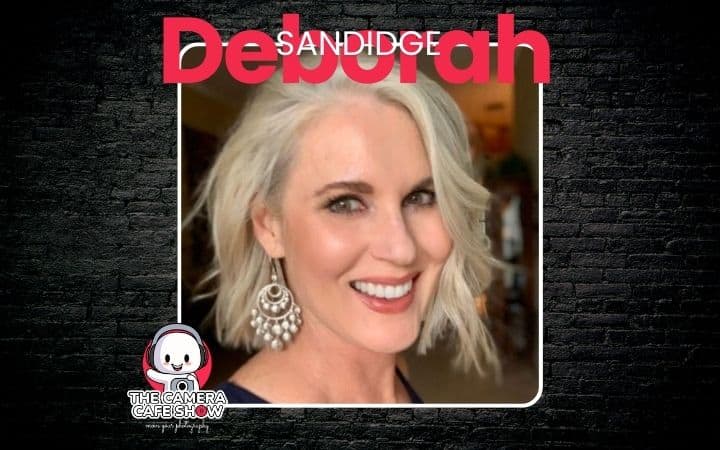
Now then folks, today finally I managed to get a friend and wonderful photographer on the podcast and I am thrilled to bring you a conversation with Deborah Sandidge from the USA. She will need little introduction, but Deborah is an accomplished Nikon Ambassador and well known for her stunning infrared landscapes, captivating long exposures, and nowadays shooting the most vibrant wildlife pictures. She for sure has mastered the art of visual storytelling across multiple genres and finds still time in between to write books, articles for magazines, for workshops, do speaker events or is waiting to see bears pass in her garden…it’s all a wonder we managed to find time to get her on the show! We’ll have a talk about her early days all the way through the current explorations in 240 frames per second video options.
In our talk, Deborah will share a bit of her journey, we have a lot of gear talk this time, including the new Nikon Z6 iii, and some of the artistic philosophies that guide her approach to photography. We discuss shooting bird behaviors, long exposure techniques, and how she stays inspired in a constantly evolving field. Listen all until the end where we explore a bit her thoughts on the future of photography and the importance of embracing all the new tools and techniques.
So then, go grab your coffee while you’re waiting to click pictures, sit back, and join us for an inspiring chat with Deborah Sandidge!"
Tom: Good afternoon, Deborah, there in Florida. How was your day today?
Deborah: Very good. Thank you. How about yourself?
Tom: Mine was very good. It was not so hot, at least today in Spain as the other days. And I was thinking all the day about the podcast today with finally having time to chat with my friend, for years I know you and finally we can sit down for a bit longer podcast talk.
Deborah: Yes, absolutely.
Tom: Yeah, it's great. So for everybody out there listening or watching this YouTube video later. If you don't know Deborah, which I suppose you will know her and if you don't know her you have to click right now that subscribe button to follow her. She's also very interested in spoonbills and night herons.
Have they been behaving lately, Deborah? Have you learned something new about them?
Deborah: The night herons are growing up, they are migratory so I'm looking forward to their return. Slowly they'll make their way up the east coast of Florida. So yeah, they're absolutely beautiful. I've been focused a little bit on the smaller birds that are coming to this area at this moment. So a lot of fun.
Tom: Deborah, I want to go a bit back to say a Deborah from nine or ten years old, you know, when creativity starts. You always been interested in arts and crafts?
Deborah: I was very interested in a lot of different things. I ended up studying studio art and that was interesting with a special interest in photography. And I kind of did the thing where I was interested in Photoshop. So I was working in Photoshop a little bit before I was doing any real photography. So it was learning scripts and things like that. So I was in a good place when I started to move into editing images.
Tom: And picking up a camera, it came from your parents, or it came from an experience, or a book you read, or?
Deborah: The instant kind, which was pretty magical. You know, it's the kind that expels the film and you shake it, and 60 seconds later you have this picture. So, it's pretty magical. My first camera that I purchased was an F100 which is back there somewhere. I kept that. So film photography was really interesting. So that's where it's so hands on and that's what's really attracted to me. So I set up like a little dark room and was developing, and I really liked the hands on approach to doing that. I mean, you saw, you captured, you developed and you brought it to life. And it’s very interesting to me.
Tom: I also had it, I think when I was 12 or 14, in the attic of my parents house, I made a darkroom. And I always tell people, still to this day I can smell the developer. The fluid, how it smells, it never goes away.
Deborah: It's probably still in the skin and the clothes. Yes. So we don't have that issue today. Certainly. Although, you know, it's funny because about the time digital came out, then I started getting really interested in Polaroid emulsion transfers again. So I was taking my digital images. And then transferring digitally to like other surfaces.
And so I was working with it kind of backwards, so putting them on different like glass or that kind of thing. But they were digital images that I turned back into film. Through, I had a day lab, so I was really into it as far as that aspect.
Tom: It's always this debate that people say that have been doing film. Would you ever go back? I don't think so. Not full time because there is just too many advantages. The only thing maybe I would like to see in a digital back is that the image appears a bit more slower just like when you develop film, that you get this anticipation moment. Because now you make the picture and straight away we see it. So maybe they should build a little timer so we see it slower.
Deborah: Oh, I don't know. I'm sort of into instant gratification. I like to see what it is that I captured and I'm so sorry about the thunder. But yes, I like to see that. It's actually inspiring. So I try not to really look a lot when I'm shooting. I don't really look at the pictures. But sometimes I'll look at like the action and think, Oh yes, I want to do that, but I want to do it this way, or try something a little bit different. But it's so fascinating to have that option to review images.
But as I'm shooting, I'm mostly shooting video, I may not do that. Sometimes with stills I will, especially like with the long exposures. I want to make sure I was guessing that exposure right. You know, it's like five minutes. Okay. I calculate correctly?
Tom: No, it's very good because people, for example in wedding photography, it's heaven sent, they can see directly what they are doing just in case something went wrong.
Deborah: Yes.
Tom: Deborah, then came along Nikon Ambassador. You remember the moment you got the call or the email?
Deborah: Yes. I remember being invited and it was so tremendous. I had done a lot of work for Nikon over the years, so I was very grateful. And as I still am very excited about it. Because when I was at USF, that camera, that if you had, a Nikon camera, right. You were it, that was the camera you know, and I continued to use it and it was just so interesting to me. So to be invited into the Ambassador Program was a huge honor and a privilege. And I'm very, very grateful and I'm thrilled to represent the brand and continue to do this in so many different ways.
So that's evolving as we move through different social media and speaking and just shooting. But I love the technology and I love the creativity, but I love the technology and marrying those two is just been absolutely fascinating.
Tom: It's always fascinating waiting with what the engineers come up for the next model.
Deborah: Yes. So my last assignment I was invited to work on the Nikon Z 6 III, which is our newest camera and is so phenomenal. I was very excited. And it's really given this camera, working with that Nikon right out of the box, I hadn't seen it. I didn't know anything about it, but working on this and it was just exciting and has some features that I am excited about. It has a 240 frames per second, used for slow motion and you can capture things just instantly. Exquisite behaviors or actions and things that you wouldn't ordinarily be able to slow down, you can do that. So it's fun. I thought that was a really interesting feature and it was a cool camera. So yeah, I love working with it.
Tom: Deborah, I see you're very excited about the gear and we dive straight into the gear question. As a Nikon Ambassador, your backpack will be filled with nice cameras and lenses. What's nowadays in your backpack when you open it? What do you take to go outside?
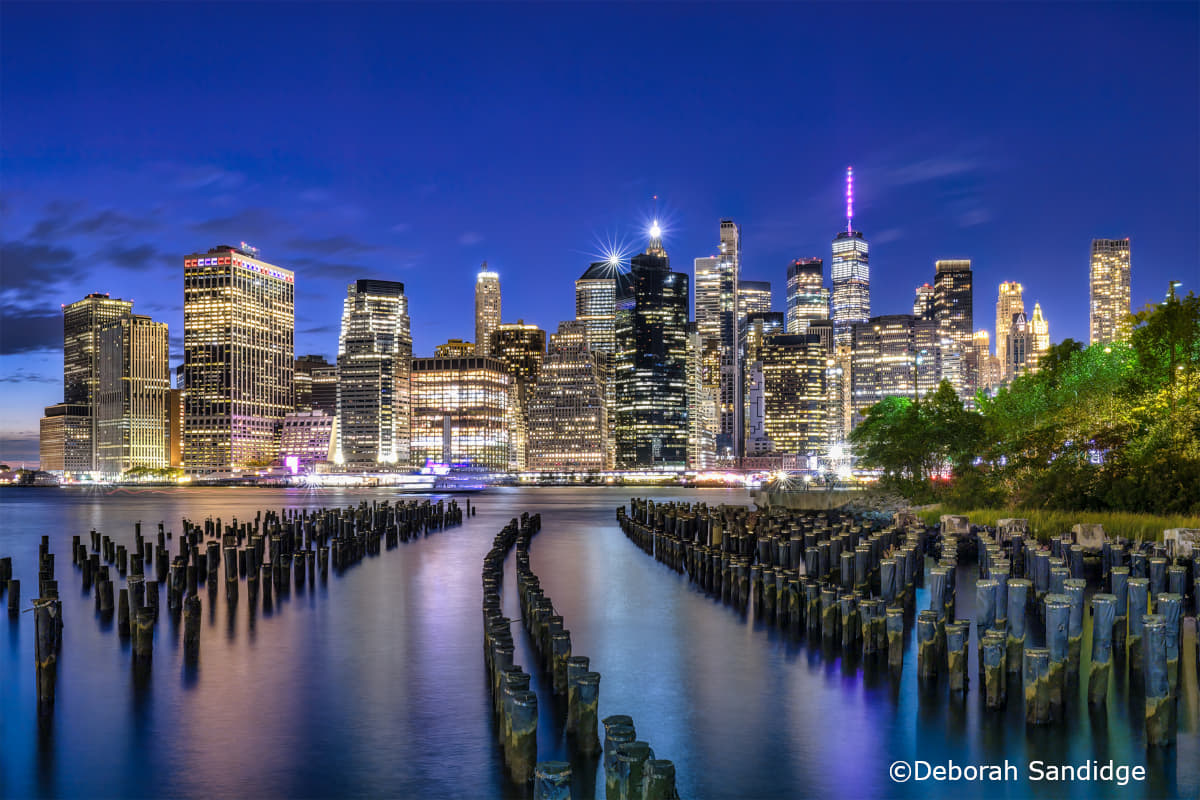
Deborah: Okay. So that's a great question. What do I take to go outside? So it depends on what outside is. So if I'm going to shoot landscapes in my camera bag I will have a 14 to 24 millimeter wide angle lens. I will also have a 70 to 200 millimeter. I'll have a body plate so I can shoot from portrait or landscape orientation. I will have a little bag or maybe a big bag of filters. I carry a 3 stop, a 10 stop, a 15 stop, a 20 stop reverse graduated neutral density filter. And what that does is hold back light at a certain part of the frame and also just a regular grab. So those are the filters that I carry, that I enjoy working with as far as landscapes.
You'll see this as far as gear, have a tripod and tripod head with the heavier gear. I use a Wimberly, which allows for flexibility for the lenses are fairly heavy. So you have to be strong enough to work out and carry those. But so, yes, I have 2 different packs for landscapes and cityscapes travel. And then something different for the bird photography.
Tom: It's not exactly traveling light. No, never I do. No.
Deborah: What you carry is what you're going to be, you know, carrying through. So I do have to think about that. It's sometimes it's destination, like for going to the beach. I can just throw my gear on a rock and not worry about that.
If I'm going to be walking long distances so I need to think more economically as far as weight and what I'm going to do. But generally it's just the one lens and one camera, you know, maybe an additional one. I'm basically going to be shooting with that 600 millimeter F4 with a built in teleconverter that pretty much gets me. All the range that I need to get.
Tom: I don't have the 600 millimeter. So you can handhold it or you have it on a tripod?
Deborah: Yes. You can handhold it as with some of the 800 millimeter, it's a lot lighter. This 600 millimeter because it has the built in teleconverter. So you're reaching at 840 millimeters. It's a heftier camera. You can hand hold. I've handheld it. And a lot of people just do that exclusively, but you have to be used to it.
You have to understand the dynamics of the weight and be able to shift that weight and so it's balanced. I like to use the tripod in a Wimberly gimbal. So the gimbal will have that entire flexibility on how I need to shoot. I've even shot birds in flight with it, so but I can hold that. And it's not a problem, but I make sure that I can do it. So I do make sure, I stay healthy and eat right and be able to do this.
Tom: And go rowing. I think you row, no Deborah?
Deborah: Yes. I love to row. Probably over three and a half million meters. So I like to row. And I really like doing incline hiking, I use a treadmill with an incline. And so I do that every morning. So basically, yeah, I have to stay in shape to do it. Yes.
Tom: I'm not worried you cannot lift 800 millimeter.
Deborah: No, I got it.
Tom: Deborah, the apart from being the Nikon Ambassador and you follow what they bring out. What was your point you decided to go mirrorless? What you were most excited about?
Deborah: We had talked about that. So I was very embedded into, I had a D 5 and a D 850. And then Nikon came out with the Z 7 and it was really pretty exciting. I think it was a big production. We all went to New York where you got it, it was so exciting. And then with the magics, after you use this camera for a bit. And then you're looking at, you're reviewing them and you're comparing them and you realize, Oh my goodness, this is pretty mind bending here. So we've got some incredibly sharp detailed images. That made it so easy to step into the world of mirrorless. I think some people are still holed out, because they have the gear and they're invested in the gear, but now it can be a bridge camera.
You can get mirrorless camera and there is an adapter so you can take your lenses and use them. So I did that for a while I had a 500 millimeter. And then we started getting to the point where we had these beautiful lenses. I couldn't resist. And that's an interesting thing because I started out, I had a 200 to 400 and I could use a teleconverter, but that's all I had.
So when I did my early bird shots, I was limited to that, but I loved it. It was just so beautiful, just as peaceful now as it was then. But now with the new gear, if being able to shoot video. I think that is so made it tremendously different and highly addictive working with the idea of video and seeing what the camera can do and creating these things that people respond to. They also feel what you felt as you were shooting. It became very important. It’s just like they want to see that, they want to be a part of that. Maybe they're just artists or nature lovers or bird photographers also, interesting to share that and have that connection with other people.
Tom: Video is a big part in mirrorless. We will come back a bit later. I remember when I asked this to Moose Peterson what he told. He said no more clackety clackety clack of the shutter.
Deborah: That is so true and it’s funny because you can turn it off. So when I’m shooting , I can be completely silent. So I was shooting with some of my friends and they had no idea. I had already shot, I was recording video. And they didn't even know because it was so obscure, I'm shooting, but not making the sound. So when is she going to start shooting? But I was done already. I already got a really cool video. I was excited, but I prefer that.
So when I'm out and shooting, and I have other people shooting who have the very loud, I really feel it before it was just accepted. So now when I go out, I'm pretty stealthy and a lot of other people are too. And I think that's one less thing to deter the wildlife, something to make them uncomfortable. This doesn't do it.
Tom: Deborah, now you touch wildlife. I think we can describe yourself as a multi genre photographer. As travel, landscapes, infrared, long exposures. And let's say now very active in nature photography. What is it that draws you inside nature so much now?
Deborah: So I think there's something about nature, where you have this connection and it's a feeling, it's you have this deep respect and a reverence for nature and when you're shooting and you're seeing this. And I think part of it just sort of takes you away. I mean, you are so involved in what the action is of whatever you're shooting. Maybe it's a wolf, maybe it's a bird. In my case, I adore the wading birds and I can anticipate their actions. They're going to do a thing at a certain time. So I'm waiting for that with the camera. And when it's successful, when you've done something like that, there's a real sense of accomplishment and then you get to share it, you know, because all these things sort of live there in your camera until you present them to other people.
And I think that's a great connector, that other people like this, other people get to know you from that. So really, when you're sharing a picture, when you're sharing a video, you are sharing a part of yourself and a part of the world beyond that.
Tom: And there is a part in your nature photography that let's say brings it not only to photography, but in trying to get to know the bird or the animal you are making pictures of better. Maybe you come home and you start looking online and you start reading and there is also this part in your nature photography?
Deborah: Yes. I think that's interesting thing. So there's a new bird or a new behavior or something I didn't realize. I would say the last two years, we're back into the bird photography as far as the wading birds. And there were things that I didn't notice before that I noticed this year.
It's just so interesting. Like the great egrets in the time frame that they are breeding, their colors get amazing. They have this green around their eyes and these really long bridal veil of feathers. So there's physical changes that happen to the birds to attract mates and also behaviors, which are so interesting.
There's a captured, it was an anhinga on top of a pole, and they alternate their wings to attract other anhinga's. I’ve briefly seen that but I hadn't captured it yet. So it was something I really wanted to capture and I was able to photograph that. So there's a lot of things that they do and other people say, I've never seen them do that. That's so interesting. How is it that what are they doing? And you explain this, this is part of this action.
And it really brings you in touch, closer to nature. And there's always something different. The little birds out of the last photographing where the night herons, which are the black crown night herons, and they were so adorable and they're fearless. They don't mind, they'll come right out in the open and they're beautiful to photograph. And as they were learning to fly, I was able to get some really fun flight shots. And then they totally changed because they look nothing like the parents. I was like, Oh, why is that they look so different? And then so you learn more about nature and about the world and how things work in that world. But it's exciting and it's different. And there's always something new.
Tom: Let's get a bit back to the video capabilities. Because it's always interesting for me, that if you are long time like we are doing photography. You remember when came out the first cameras with video, very poor video. And the photographers, they would say, No, but this is not something for me. I'm a photographer. I'm not a videographer.
And this changed completely now. I mean, so many people are using now this video capabilities in a whole new creative way. And I see you too. On Instagram, you have a lot of videos. So I think you also really moved into this creative side of video. No, Deborah?
Deborah: Yes. Absolutely. Was taken by certain actions, especially with the wading birds. I had been shooting a lot of pictures and a bird pretty far off and I just like, Okay, well, let's just set this up and see what happens. This is not hard. I think there's a mindset where you've done photography for so long. It's really hard just click a button, you know. And actually it’s very simple.
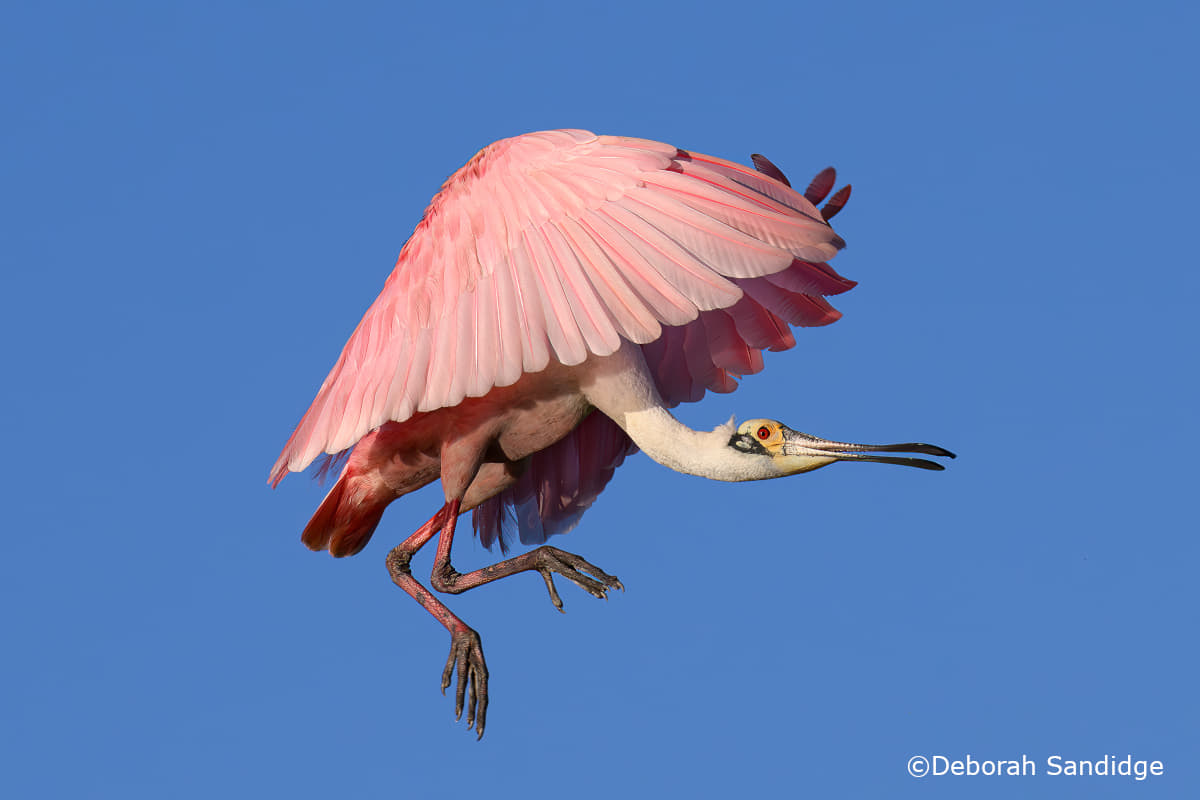
But I had put it over on video, which I had been photographing smaller birds, but to do the bigger birds and now have them so close, with the lenses. I watched this bird and I was shooting against the light. So it was backlit and this bird was shaking her beautiful pink feathers. And there was feather dust just going over and there was bokeh bubbles. And it was so incredibly magical. And I just was holding my breath. And I couldn't believe that this just happened, that I captured it. So I literally got goosebumps. And I went back home and I reviewed the picture. So that's it.
I don't think I shot any stills after that for a while. This is what I want to do. I love this. I love this aspect. And it's what it is because I'm shooting 120 frames per second, with a new camera 240, but I was shooting at 120 and slow this down and pose.
So if a lot of cameras are set up to do maybe 30 or 60, which is 30 - 24, very cinematic, but it doesn't freeze the action enough for that bird activity. 120 frames per second. it's really you can get a lot of this beautiful action. And then when you slow it down, maybe that action existed in a time frame of like five or six seconds.
But then when you double that and you see all the in between moments and that’s the part that gets me every time. It happens so fast! I mean, you saw this bird, it was preening, it was doing this, but when you slow it down, it's a whole new world. It's absolutely beautiful. And it just stole my heart and I felt, this is absolutely beautiful. I want to be able to do this again.
Of course, after that I was completely hooked on a spoonbill. I mean, how could you resist a big pink bird? They're just tremendous. And they have these goofy bills. So there's a part of them that is exquisitely beautiful. And there's a part of them that is so goofy when they fly. It doesn't seem possible because of their shape.
And then now, over on, we've had a lot of hurricanes. And it's displaced some of the wildlife. So we actually have flamingos on the east coast. I have been shooting some of the wild flamingos on the east coast of where I live. I can access it through a boat. And that's a whole other rig. But it's beautiful. That's what led me to the video world. I think that's a totally different story, but it also supports the stills. So you have some stills and maybe you want to show videos. People can soak it in on a still, but then they can experience it with a video. And those are the things that are exciting.
Tom: I think it's really, really magical. Like you told, we can have a five second piece of a film and with slow motion, we can stretch it. And it becomes something totally different. This five seconds of film.
Deborah: It does, it really changes the whole dynamics and you could appreciate what happens in a fraction of a second. But like a long exposure, you know, it's over time. So it has its roots where I love long exposure, so it has its roots, that convey what happens over time things. So, yes.
Tom: That I think every genre we want or every genre we shoot photography, we want to master it. What's until now, the biggest challenge you had in in nature photograph?
Deborah: I would say finding environments that are going to lend itself to what I like to do I very much again want the viewer to feel like they're there at the moment, that there's nothing else, there's no other people. There's nothing. I mean, it's just an experience. It's really difficult to do that.
If you're shooting this generally, there's other people around and other people have different goals. They want to shoot and they want this or that. So I don't think that there's any like heavy obstacles. It's just being able to get out there and show up. And while you have that opportunity always like it to be more quiet, but for a lot of people this is social experience.
I do carry the earbuds that I could connect into my camera to review this. And cause I really like to share that sound. Sometimes it's not always possible to share that moment. So in the drone of normal existence, like shooting the birds out my window, if I'm shooting a video, well, you've got the pool sound, or the air conditioner or the street, or cars on the street. So it's a neighborhood where I live. So getting that quiet environment, that's a hard obstacle. So often I'll record sound of separately to do that. I love to collect sound. So I will do that. I'll find a spot where you just like you hear crickets and then maybe you hear a few cardinals or different birds that call. And I'll try to record when it's beautiful like that. I'll just record that with my camera, not worrying about the video, but just having that sound and being able to put that together. I really enjoy that. Bur for a lot of people, it's a social experience. So they're excited or they have those cameras that make a lot of sound and that's hard.
Tom: Well, talking about sound, I think you are the one who puts sneakily a microphone in your bird feeder or your bird bath. I don't remember one of both.
Deborah: I did. So yes! I have an arrangement with the birds, so yes. So I have those road wireless small microphones in the wireless, one is connected to my camera in the other one actually put under the feeder. It's just a little platform and I have some branches and things like that. But when you do that, it's so beautiful because you're hearing it. I can sort of the in between moments. So you hear them, If you stay in your house and you hear a bird outside, you hear a call and it's this you hear. But if you're listening through a microphone like that, there's a conversation between one other bird, it's quiet and you can hear their wings, and you can hear the tiniest little chirps, and it's a whole different conversation. And to listen to that, it's so beautiful!
So I can do this more in winter, in the cooler months, where I can have a little bit more quiet. And super early in the morning when they come and it's to be invited into that world. And it’s just so beautiful and so magnificent and to hear this. Because when we shoot stills or even that's not part of the experience when you shoot video, that it is.
And I think that's one of the things I fell in love with too is that well rounded experience of hearing what is going on at the same time. If you get the call of a woodpecker, if you hear the baby birds chattering, you know, that’s beautiful. Those are really intimate, gorgeous things. I love to hear.
Tom: I almost imagine you at night when you go to sleep you put your airpods in and you have the sound of the crickets to fall asleep.
Deborah: Yes, I tell you, by the time I fall asleep, I don't hear a thing. It's just early days, getting up and going. So when it happens that the spoonbills return to this area, which generally in March they come back, but I start going out earlier. So I usually start because it's different birds that come to different areas migratory birds.
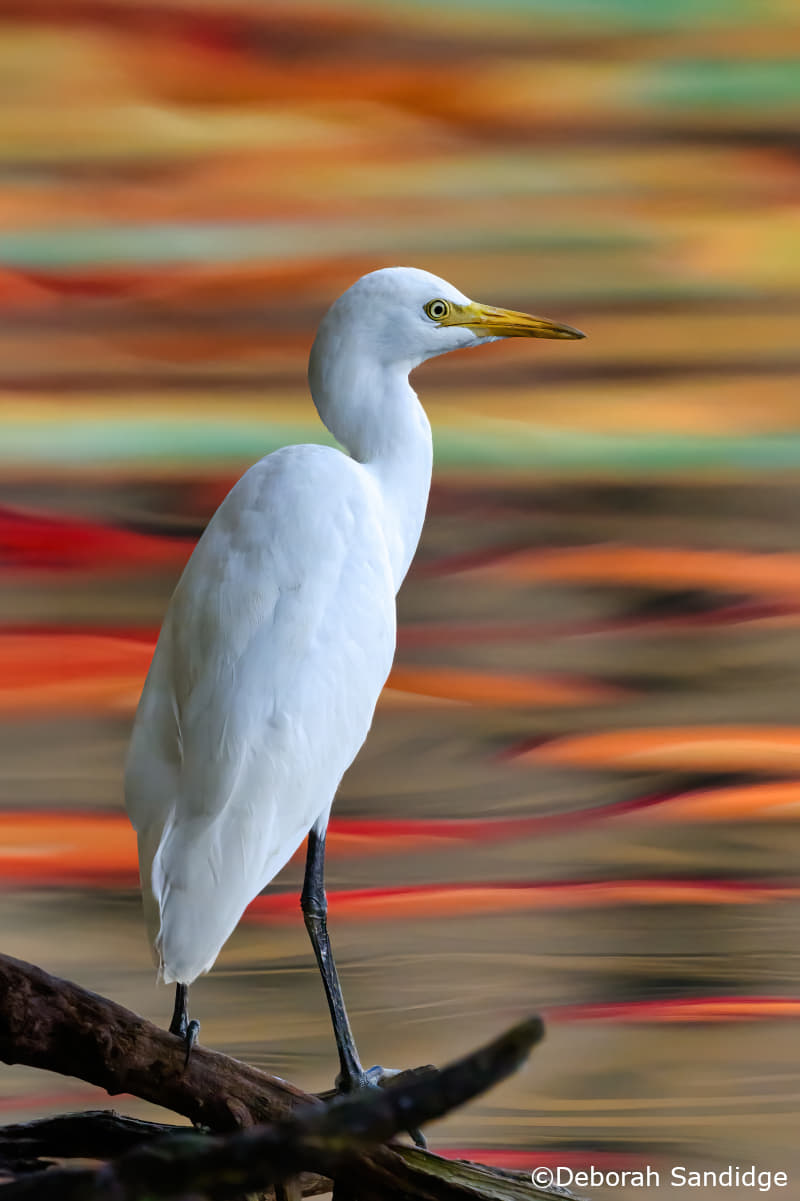
We had hooded mergansers that come. They're so beautiful. I had a blast with these. This was in December. They came and it wasn't a glorious area. It was like a retention pond. It wasn't like some magnificent place or park or something. And I set up a camera and was shooting, but it's almost at night. So that's where the low light capabilities of camera really, really come in. And there were reflections that were happening from buildings and from passing cars and of course the birds couldn't see it, but I could from my angle. So I'm getting like I'm shooting 20 frames per second and the colors are just like kaleidoscope on top of the water. And then there's a bird. So you're not just shooting bird, you’re shooting all these magnificent reflections. And I was shooting video and I had stopped when I saw that. I thought, Wait what just happened? How could the colors change that fast? Red car, blue car, green car. So as the reflections were cast on the water, it was able to capture this.
That was such a blast. So I continued to try to do that. And it was one of those perfect storms of the water level needed to be high. The light needed to be sort of diffused. So it wasn't super harsh in one area. I wouldn't get those beautiful reflections. But I did that over and over and I got all kinds of crazy pictures. They're mergansers, they're hooded mergansers, but they're beautiful and they're fascinating to watch.
I had never seen birds like that before. So there's all kinds of environments and things that happen that are so interesting to draw you in.
Tom: If you're just in the right place at the right moment and you have your camera of course with you.
Deborah: Yes. So also a friend told me this. She said, You've got to shoot a video. You have to do this! And that's the nice thing about photographers, they're always texting each other say, Hey, we've got this situation. There's birds here. You need to come here, come over here. We'll shoot this. And everybody's connecting with everybody because everybody wants it everybody else to succeed. And that's really pounded in photography and the bird world. And you answer questions, you volunteer. So it's a beautiful community and I wouldn't have found out about the birds had my friend not mentioned them.
Tom: You see.
Deborah, let's talk a moment about something else. I really enjoy seeing your pictures. It's the long exposure ones. I remember the scenes from the beach with I think lifeguard houses standing with all these fluffy long streak clouds. Talk me quick a bit through what that is. What is your process there to capture them?
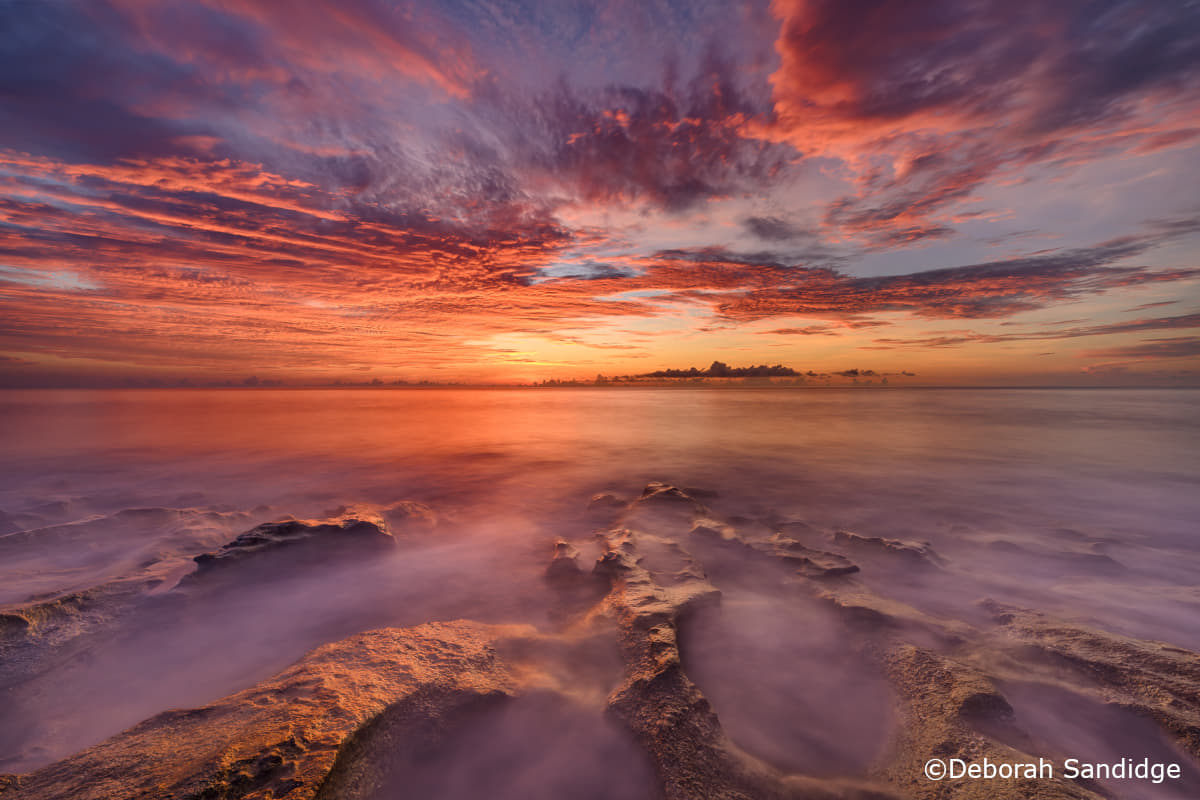
Deborah: Well, those are fun. That is down in Miami beach. I've shot there many, many times. That's a fun target, rich place to shoot because there's so many different things. Like when I go to the beach and I'm shooting sunrise, I'm not shooting at sunrise. I always start an hour before. So that's where to me the beautiful light is. So I had framed up one of the lifeguard stands and it was pitch dark, but I have my tripod. I had a cable release and I knew from experience with the clouds and being that dark, it was going to probably be about a 4 minute, 5 minute exposure time, it's just set that up. So I didn't need any filters because it was totally dark. Also noted that the lifeguard tower was illuminated from the city lights behind me. So that light was falling. So over time there will be enough light gathered on the lifeguard tower plus the illumination of the impending sunrise. So we've got sort of the blue hour. If you saw that photo, there's the blue with this at the horizon line. But yet we have these amazing pink clouds that were in the sky.
The idea was that to illustrate what happens over time. And so shooting that getting prepared for that shot. And my history with long exposure, I felt comfortable to that, you thought was going to work out. And again, this is where you always double check. But when you see the back of the viewfinder, cause you don't know you're shooting for 4 or 5 minutes. And a lot of my long exposures live in that realm. So you don't really know. I mean, the clouds may do something fantastic and that's what you live for. So yes, that's what happened.
I looked at the back of the camera and I was just, Oh my gosh. I'm so grateful that things come together like that. And so I do love that. So starting an hour before it changes the dynamics of the shot, you're not shooting at 120 for the second or that kind of thing. You're shooting 4 or 5 minutes and over time. The picture will evolve with the clouds with the light conditions. And that was one of my favourite pictures. So thank you for mentioning that.
Tom: It's an amazing picture.
Post processing wise. You have a lot of work on them? It's something you enjoy post processing in Photoshop? Or working, seeing your image come more to life, so to speak?
Deborah: Yes. Obviously when I was experiencing that, it wasn’t the result. You and me are experiencing things in seconds but this was a four minute type of thing. So yes. So once it was done, it was, there's only a very small adjustment. So I do enjoy that since I had sort of started out with. I always thought that Photoshop had interesting tools and things that you could do and certainly to nudge the image more towards what you need to do any corrections or anything. I always try to make sure the camera's level, you know the first thing so anything less that you can do definitely have that horizon grid for those that type of shot. But generally there isn't. So it's like most photographers, there's going to be probably contrast adjustments, perhaps saturation. We do have the wonderful tools like the linear gradients or the radial gradients, things like that that you can use to control light in certain parts of the frame. If there's any noise, it isn't unless you're shooting really rough conditions. But then you have that option and you do have that opportunity. Photoshop is really enhancing their tools, obviously, to be more user friendly, but also have more control.
So, yeah, I don't mind. It's like reliving the experience. I put on some good music, just work it that way, so seeing the long exposure shots then when I do that, it's always nudges me. It's like, Oh, this is okay. So next time I'll do this, so it's an inspiration that happens.
And so I actually take notes, I have notes, go back and it's like, Okay, I want it. Okay. That's the note I wrote. I'll try this next time. There's something that I want to do or be aware of. And so I think that long exposure is really fascinating because it's part of an exploration, it's creative. There's a lot of different steps and you can do different things here. Certainly I think it can be really fun and that's what I love.
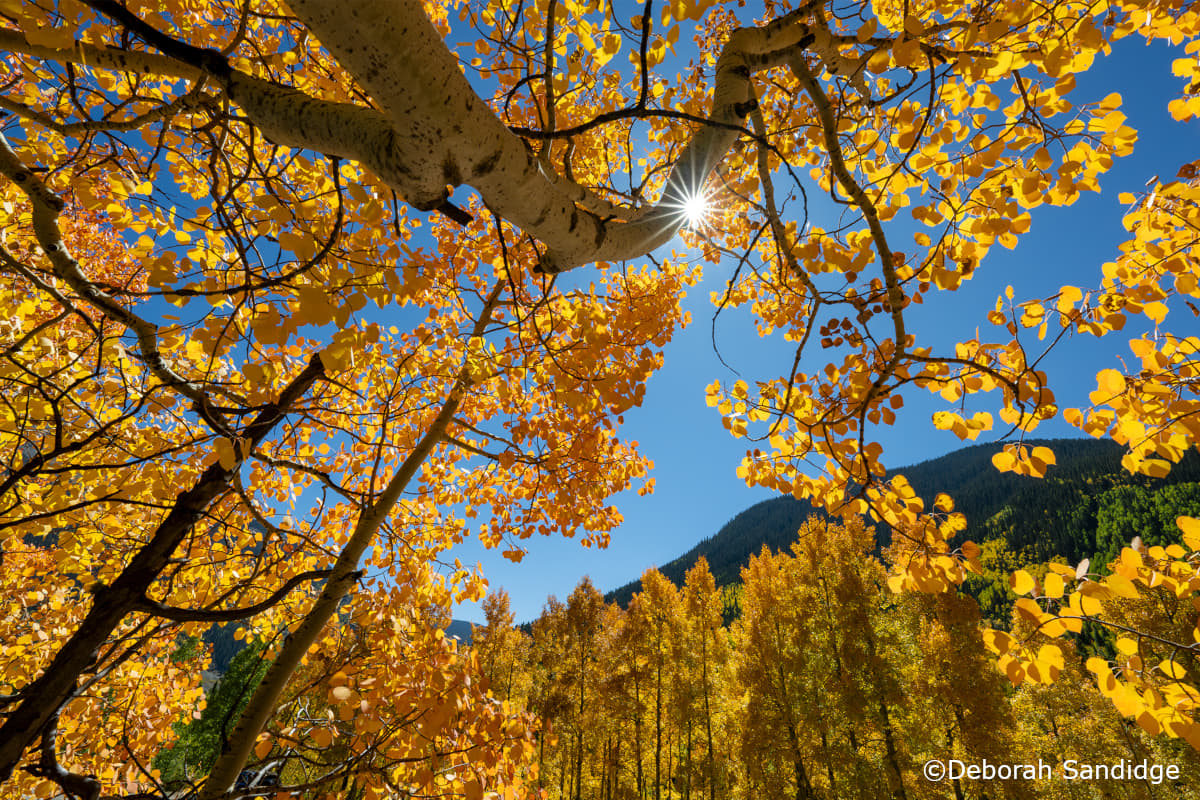
So one of the things I was working with when I was working with the daytime shots, that's when you really have to dig in and into resource the neutral density filters. Thought, Well, what would happen if I did like a long exposure, multiple exposure. That would be fun. So getting this where you're building on a certain, when I actually got to the point where I did it. It was neat. So the clouds, instead of having like this one stretched out action, like you saw in the Miami beach. So the clouds had this evolution of like a rolling effect. So we had this real sense of motion, but the way the clouds were moving that day. And again, that's independent of any other day, but that day that I tried it, I really liked the effect.
So I love the blend idea, the multiple exposure, long exposure putting things into video. You can shoot a time lapse, but you could actually merge all those images together and get like a time stack, people call them. So there's a lot of different things that you can do, I love long exposure. I think that it's just a world that's so untapped and it's interesting to see. So that's one of my favorites.
Tom: Then you did a lot of infrared, travel photography, but travel, I think it's based on landscapes. But portraits, how are your portraits, Deborah?
Deborah: . You know, so I wrote a book on infrared. I don't know if you know this. And it was a lot of fun to do, because it was for a company called Wiley. They do textbooks. In this book they have specific ideas on how it should be structured. And so I really wanted to cover the basis. So definitely, landscape was my primary objective in the book, but also I did include a lot of portraits and things like that. There's something because the infrared sort of penetrates like a millimeter or so into the skin. It really has a different effect.
So you'll see fine art photographers using infrared for portraits or weddings or different because it gives it an aesthetic. It's an ethereal, beautiful look. So but my love is landscape. So that's primarily what I would do. I love the seascapes. I like great time photographing out in the Palouse. So anytime Palouse out at West here in the United States, it was absolutely gorgeous. So there's a lot of things that are interesting in color, but then when you shoot that same story in infrared, it's beautiful. But basically is in black and white, it changes the dynamics of the story. And it's really quite beautiful.
Tom: There you would say that you have found, now when maybe you are editing your pictures, that you have found your own style, so to speak?
Deborah: Oh, I think so. I think other photographers gain inspiration from other people, but definitely retain your own style. I think that is just so innate. I wouldn't know how to shoot any other way. So it comes from the heart. That's how it ends up. So I would only be able to portray things in a certain way. And if I saw something that I thought was inspirational, it still has your take on it. So yeah, so your style develops. From your soul, from your experience and how you see things.
Tom: And you have seen your own development throughout the years. When you look at maybe Lightroom and you see pictures from years back and you see and now you think, Oh my god, I don't know why I edited like this. And now it I do it all different
Deborah: Oh, that's a fun question. So it's a two part answer. So what I was looking I just think it's a bird photograph. It actually was one of the first photos that I had put out. And it ended up that's one of the things that Nikon noticed. They love that picture. And I still really connect to that picture. I wouldn't have shot it any other way. And I really had thought about how the approach was to it. And I still love that. That is great.
Then we get back to the world of like the fuzzy HDR pictures that you want to tear your house. Like, why, why are we doing this? It really takes me back. It took all the shadows out. They were so hyper. So yeah, I think we all did that because we were super drawn to it. It was like a thing, we all did it. We looked back and it's like, Oh, what were we thinking to do a proper HDR? I mean, there's a good way and a bad way, but the bad way was really so attractive back then.
Tom: Well, we all learn Deborah.
There are any new techniques or genres of photography or you're exploring now maybe?
Deborah: Well, I'm really intrigued because of working with the Nikon Z6 III. It had the 240 frames per second capability, which is twice what I'm used to with my Z 8 and 9, I was really, really intrigued by that. And I have a lot of things that I want to turn into opportunities to do with that particular camera.
Cause a lot of things went super slow motion. I'm really excited about going in that direction. I don't know, I just kind of follow my intuition. There's things that I'll do. And then I think, Oh, but if I did this, or it's dug in deeper. I shot this woodpecker out the window. You see a whole picture of a woodpecker, a whole bird. They're beautiful. This one was large. So at zooming it, it was really tight. But I wanted to even go tighter. I was afraid he's going to fly away. Shooting video in the Nikon cameras you have this DX crop mode, which gets you like literally insanely close. But I wanted to be even closer and I wanted to have this in slow motion.
So the woodpecker, how they collect food is fascinating because they use their beak, which is interesting, but they also use their tongue and you can see this action. So I've recorded several of them, a couple of last year, but then I want to be like up close. Just the head of the bird and into this action. So there's always something. So it's my goal. My goal is just to get really close, but also super slow. And I can't wait to explore that a bit more.
Tom: I was going to ask you, Deborah, if you ever in your career had like a creative block? But hearing you, I don't think you ever have been blocked. You always find something new to do.
Deborah: I think that you can get stuck in certain, when there's not enough activity. Like towards the end of this birding season, I was really wanting to photograph birds, but there's a point where they just leave and you're down to your last wood stork or something.
But.. No, I'm not ever bored, but you're right. No, there's always something that I want to. I have like a master list of things. And really the trick is just being able to find the time because I want to get back and do some landscapes. So it's on my list.
I want to work more with video with landscapes. I only did some this year, but I really wanted to get more into the long exposure. I adore time lapse, anytime I can do that. So I need more Deb, that is more time!
Tom: Deborah, apart from photography, you also do workshops seminars. You wrote a book, as you told, you write for magazines. It's a bit the same question I asked Moose Peterson. You think that having the ability of making a good picture and having a way with words opens a bit more doors to have both of these capabilities?
Deborah: I believe so. And if Moose observe that, he's a very talented and wonderful individual. I'm proud to know him and certainly amazing for what he does so prolific. But I would say absolutely, yes! Working with in writing a book, that was huge.
So there's a lot of things, that back years ago when I did that, lot of doors open. But being able to talk about your work. And I think that's essential for any photographers work, but being able to talk about it is really important. So that's how other people learn. So writing a book, that was a huge calling card for the future.
Definitely was able to do that. When I did the first article, it was actually written by someone else, but being able to communicate with that person, explain what I was doing and having that and then writing articles. Yes, it's just absolutely a big part of communication. So would say that is really important.
If you can speak about your work, that's where it's at. You can be a good photographer, but really being able to market, being able to speak about your work it's also very important.
Tom: So you also enjoy the writing part.
Deborah: I do. Actually I got so into the photography part because I wanted to do the videos. So it's hard to juggle. I would say it's really hard to juggle everything. So writing is super important. So that is part of what I do. And part of my job, basically. So anytime you do something like a social media post, that involves discussing what you did, how you did it, how someone else can do it, and you're really giving a really short story on how this image came to exist and why you might want to try this idea, too. So there's the writing part is essential, absolutely.
Tom: And let's say years from now, Deborah, what you want to achieve with your photography? Or how do you want people get impacted by the pictures you made?
Deborah: I would say that it's really important to be able to reach other people and show them and illustrate ideas conceptually. The photography is changing so incredibly dramatically fast and how we give information, exchange information is also light speed.
And so I would say just staying with the times, being ahead of it, like this whole AI things. A lot of people are just doing a lot of finger and craziness in the beginning. But the thing about AI is really staying in front of it. It's not coming. It's already here and it's not going anywhere.
So staying in front of it, understanding that the tools that will help us as photographers and working towards. How that will work interact with you as a photographer or as a person. So those things are evolving. So I think it's really important to stay with it.
And so the cameras are changing, so interesting. The cameras are really evolving. So people who had red cameras. Now Nikon has acquired red cameras. Now typical videographers now really merged into. So that's going to change. So I'm really excited about that. These things that are changing and being a part of it. So I would say embrace change, ride the wave, keep going with it and staying in front of all the things that are happening in the forefront. And I think that to me is very exciting.
Tom: To close off this interview, Deborah, sell me the Z6 III, please. Give it it the best shot that I buy tomorrow.
Deborah: So you'll be experiencing a camera that has phenomenal low light capabilities. So if you're like me, and you want to shoot when it's almost dark, whether it be night or just beginning of morning, it has super low light capabilities that make it exceptional. So that's different from some of the other cameras that we have.
Now, it has the video capabilities. This has the DNA of the Nikon Z8 and the Z9 as far as the video part. So that's phenomenal. So anybody who's reaching into a camera and wants to work with the video aspect will have those features. You will also have that 240 frames per second, and that's at 1080. So you'll be able to just work with this. It's not hard. You know, I think basically there are only three basic things to remember about video. Everybody should step into that world. So it's a very desirable camera and I think it reaches a market that is very accessible to everyone. So yes, but especially for the 240 frames for a second.
Tom: There we go. Deborah, it's been an amazing talk. I see, because I'm looking on the screen, we are already talking for one hour and I think we can go on one hour more about many different things,
Deborah: Absolutely.
Tom: Keep it for next year and we will do an update episode. Thank you very much for joining us here on the podcast tonight. And it's been an honor for me to finally talk to you.
Deborah: Well, it's been a pleasure and honor and thank you so much for your time and your thoughtful questions, and I'm grateful to have a part. Thanks so much.
Tom: Thank you, Deborah. Have a nice day still there, whatever you're going to do and enjoy it. We keep in touch and I see you later.
Deborah: All right. Thank you.
Tom: Okay. Thank you. Bye.
Deborah: Bye.
Tom: Bye.
Outro:
"That's it for today’s episode of The Camera Cafe Show! I hope you enjoyed our talk with Deborah into this ever-fascinating world of photography, going from long exposures to wildlife and beyond. I promised you a great episode and I think we delivered…Deborah's passion and expertise truly shine through in every image and her words and I hope you found inspiration in her insights.
As always folks, if you enjoyed this episode, make sure to subscribe to The Camera Cafe Show on your favorite podcast platform and leave us a review, which is super easy and quick. Also, be sure to visit our brand-new website to stay updated with our latest content, upcoming guests and subscribe to our newsletter. Thanks for tuning in, keep exploring, and remember — every great photo starts with a little passion and a lot of creativity! Until next time, keep those shutters clicking and keep on moving your photography!" Adios