

Greetings and welcome back to The Camera Café Show — your photography podcast where we pour a hot cup of stories, stir in some wildlife, and serve it with a dash of inspiration this week! I’m your host Tom Jacob, with Richard Clark and Tetiana Malovana brewing things up behind the scenes.
Now, let me ask you this: what happens when a wildlife photographer had an idea to try take a fun picture of a badger wandering down a quiet English street — and it ends up winning the Wildlife Photographer of the Year People’s Choice Award? Well, today’s guest knows exactly what that feels like.
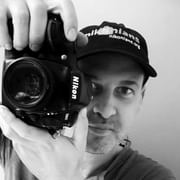
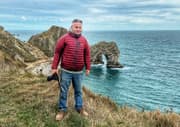
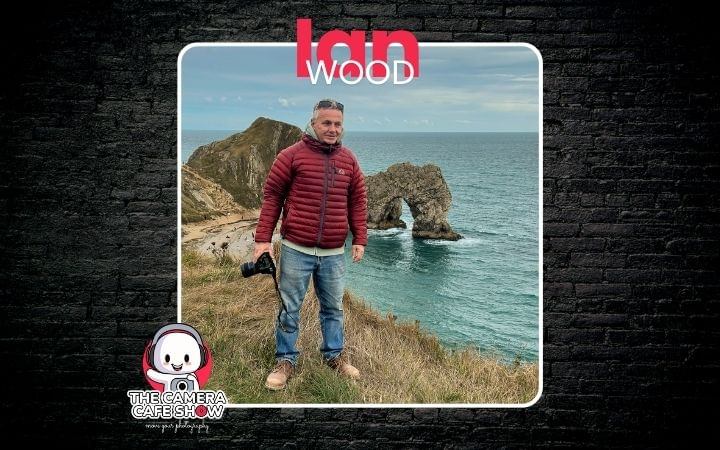
We’re sitting down with Ian Wood — a photographer, writer, conservationist, and all-around adventurer. Ian has spent decades telling wildlife stories that matter, from working with the Orangutan Foundation in the rainforests of Indonesia to raising awareness closer to home as an ambassador for the Badger Trust. Along the way, he’s met and worked with some incredible people — including none other than Jane Goodall herself.
In this conversation, Ian shares how photography can become a powerful tool for conservation, why humor and positivity matter in the face of environmental challenges, and what it’s like to balance life on the road with life back home. There are laughs, there are moving moments, even a bit of poetry and then of course plenty of stories that will inspire you to see wildlife photography — and its impact — in a whole new way.
Time to press play, lean back, and let’s dive into the magic of stories, images, and conservation with the incredible Ian Wood.
Tom: Good evening, Ian, and welcome on the podcast. It's nice to see you and it's wonderful we have a little time for a chat about photography and life.
Ian: Likewise, Tom. Very very nice to see you again.
Tom: I'm happy to see that you survived the heat wave in the UK.
Ian: Wow. Do you know? 'cause I spend a lot of time in the tropics, but my ideal temperature is in the thirties somewhere, so it's still not quite hot enough for me yet here. is complaining, but that's the British for you.
Tom: Ian, you photographed some of the most majestic animals on the planet. But I know you also have a soft spot for a little gang of swallows that live in a barn. What's more entertaining to watch them, or a group of orangutans?
Ian: Oh, well I wouldn't like to distinguish. I think that would be very swallows or orangutan. now I take pleasure out of so much wildlife and I've only been living here about two years and I've got, we call it the swallow barn. And so they you know, usually sometime in April when they leave, sometime in you know, late September, October. And it's an utter joy to have them here. They're on their second brood now, so , they're on the nest and in a probably I think got about a week left and we'll have another four or five swallows. They've had five swallows already. it's such a joy to watch them because it gives me a unique opportunity to get to know them and study their behavior. The idea was that when I bought the house, I bought the house nearly a bit over under two years ago, and I had about a week of having hundreds of swallows every evening at sunset, hundreds of swallows would come and fly by the farm yard, and they'd come in one stable door and out the other stable door, and it was just utterly spectacular. And then they left for Africa It was really a waiting game for them to come back. I've made a little hide while they've been away, up in the rafters of the swallow barn. So you can sit and watch them and observe them and photograph them at quite clo close quarters and also on their level. So that's the idea really is not just for photography but to have the pleasure in studying and observing an animal. And they're so spectacular. They're, they're on their second brood now. The first brood of five fledged about a month ago. When they come out, first come out of the nest, they have about one or two days of flying lessons in the barn before they go out the doors. the entire time in there when this happens. And it's just beautiful because you've got mom and dad teaching them to fly then at some point they have to do that first flight outside. And this year was just unbelievable. So they had about two days of flying lessons. And then mom and dad cajole them, cajole them, and then out they go out of the stable door into the, into the world. And what happens is there must have been about another 50 swallows from the local area that come and meet them. And they have a crazy fly just in the immediate vicinity. And they normally come back and land soon or come back into the swallow bu because they're, you know, they're presumably tired. And then by the following day, that's it, they're just off all day. There's such a to watch them fly. So yeah, that's the thing is to partly photograph them and from this hide up in the rafters, but yeah, just to observe them and get to know their behavior more. We still know they're one of those animals that we still don't fully understand. And I like that with an animal. Like we still don't fully understand how they find their way back to the exact each year. And I like that in a, with wildlife, you know, as much as we study stuff that there's still an awful lot we don't know.
Tom: I think Ian, that was the best opening we ever did in the podcast. Amazing.
Ian: Haha.
Tom: Ian, let's walk now a little bit back, because before all the awards, being published, conservation projects, your books, I think to remember your photography journey started with not such a great camera and a walk in the jungle? Tell me a bit how photography started for you.
Ian: Oh, a terrible, terrible film camera. I wasn't into photography at all a, you know, about as basic a film cameras you can get, but I've always liked nature. And I was having quite a long wander in a rainforest in Sumatra. And I was kind of hoping that I might find orangutans, but are actually a quite an elusive subject. And was a long walk. Like I'm talking like many, many days. And I think on the penultimate night we still haven't seen any orangutans, but we were camping in hammocks under trees and I had three or four Indonesians with me. 'cause it's a long walk. You've gotta carry, you can get all the water from the streams and rivers, but you've gotta carry a quite a lot of basically rice and eggs live on. yeah, I think it was the penultimate night. So we weren't that far back from civilization. And I was in my hammock between two trees. And above me there was, I think 12 orangutans and I just observed them and there was, there was a nest of an orangutan, reasonably close, and there was a male and a female orangutan, and he had a look over with his big cheek pads and he actually broke off a stick and kind of threw it down at me, I think. I think he did. He did want me to be observing his amorous intentions. And so I took some dreadful, dreadful pictures and it's such a magical. Experience on this tiny little And then you know, obviously in those days we then got the film developed and we, and waited and they came back and they were just in the trees really. And anyway, I showed them to a, talking to a friend who knew far more. I knew nothing about orangutans at that point. And I told him about the experience and he said, well, they won't be orangutans because orangutans are one of the most solitary creatures on the planet. You don't get 12. And I said, no, no, I'm pretty certain they're, well, not pretty certain. They're definitely orangutans. And I showed him the dreadful pictures, which were just about good enough to show that they were definitely orangutans. And he was it. And anyway, we looked into it and, they are one of the most solitary creatures on the planet, apart from the mom and baby, which is a
Tom: Yeah.
Ian: from when the male and female come together to mate, they only come together for about 10 days. And then , the female. Parts company with the mail and that's it. They're back to their solitary But about once a decade or so in Sumatra, you get conditions where the fig trees are all fruiting at the same time and there's an abundance of fruit. at that point, they will, they will come together. So it was just completely lucky and it was just such a beautiful night just being surrounded by orangutans. Nearly all of the forest. I mean, this is a long time ago. This is. I'll be showing my age here, but it's probably 35 years ago. And nearly all of the forests in Indonesia were intact then. I mean, you rainforests. But they were just starting, it was the very early stage where they were starting to take the big trees they were actually spoke to some people out there. They would use water buffalo and four of them would get paid a dollar for days. Really hard work to get cut down one of these big trees and take it out. and I had a very naive idea that maybe we could pay them to not take the trees. was really the I mean that's obviously completely naive, but That's where it all sprung from originally.
Tom: So you're completely self-taught in photography, Ian
Ian: Yes. Yep.
Tom: What was it, what you had inside that you, that you told to yourself, I have to make this work. I want to know more about this photography thing?
Ian: Well, it was just the thing of seeing what was happening with the, those early days of logging and it being such a special place. So the idea was, well, maybe we can pay them not to do it. and I knew, first of all, I'd need better photos because, you know, maybe we could take there to see the orangutans and the amount of money, you know, we could the people not to log the trees, which I mean, obviously life is not as simple as that. So I learned bahasa, ' cause I thought it'd be useful to learn that and got a better camera and went back out there and got some substantially better pictures than the first time. But trust me, that wasn't hard. If you saw the first set of photos.
Tom: Yeah. And you're also a very good writer. I read some of your stories, I think they were published in BBC Wildlife, the Guardian, the Telegraph and after you shifted more to towards visual storytelling in photography form only.
Ian: Exactly. I really was writing was my main thing. I used to do quite a lot for the Guardian and Telegraph in England and other places. Lot about conservation issues. the telegraph seemed to suddenly think I was an expert on Indonesian deforestation problems and carbon trading. I actually pitched them blind with something, which is quite hard to pitch to a major newspaper. Normally they don't an answer you, but I pitched them an idea about the revolving around carbon trading and deforestation in Indonesia. came up in his inbox exactly as the main environment editor was about to do a feature on it. And so he replied almost immediately. And I got my first commission for the Telegraph. then I did, I did actually have a reasonable amount of knowledge about the subject, then I just, yeah, I just got more and more and more commissions from them. So they, that's I used to do a lot more writing than photos, I did a fair bit of supplying words and photo packages. But over the last, I struggled to think when I've last written something, to be honest. I wrote a, there's a pitch for a film that they wanted me to write. And I wrote a poem about badges, but I do writing now. It is something that I would like to go back to, but I'm mainly doing it by visual storytelling. Yeah.
Tom: Also that brought you in contact to do collaborations with some incredible organizations, Ian. There is one name that really stands out because you work for the Orangutan Foundation, you brought out this fantastic book, and somewhere along the lines you met Jen Goodall. What's the story there?
Ian: Wow, if we start with the Orangutan Foundation. So my naive idea of learning Indonesian, taking better pictures and taking people to see the orangutans and paying the loggers not to cut the trees down. it wasn't too far into that though. I realized that was incredibly naive and that was never gonna work. So I contacted, I thought I got a partner with an NGO that is you know, already working in that part of the world. I of the major orangutan NGOs, and there's a one called the Orangutan Foundation. Uk, so they're based in London, there were two things in particular I liked about them. One was that their work was really, really conservation based, and they seemed to be doing an incredible job actually protecting forest and empowering the local people. But the other was that I asked for their set of accounts, and the other was that their money, they raised nearly all of it, went to the projects in Indonesia. So Ashley Layman, who runs the Orangutan Foundation, has been a good friend of mine for oh, a long, long time now, and she's never taken any salary from it. She's worked unpaid. They just got two staff in London and then they've got about a, I think about a hundred staff in Indonesia. what I did is I, we just had email correspondence with Ashley. I said, look, I'll come and see you. We photograph some of the projects were due. They were having a few problems at the time. There was, when they were doing fundraising initiatives, they were kind of what in their description, lazy journalists were saying orangutans are gonna be extinct in five years, you know, and this is two or three decades ago. And we could do some positive. PR that, you know, they're not gonna extinct. And, so I'd never met Ashley and I said, I'll come, I'll let, I'll come out then. I flew to Borneo. Now it's a lot easier to get to Borneo In those days you flew to Jakarta and then you got a plane to Semarang. And then there was one flight over there called Indonesian Air Transport. What one of those planes that you didn't really want to get on, you know, an old propeller plane with so the way of getting there. And I went to check in for the flight and they said, there's a problem with a propeller. It can't fly. And so I text Ashley, I've never met her. Remember I text her and said, there's a problem with a propeller. I can't get there. And I got a message back saying, okay. I thought that's a bit of a short message come halfway around the world. So I said, what shall I do? And it came back saying, get hotel. And I thought, my God, this doesn't sound very, very, sure was I gonna get on with this person. And anyway, I went and had a coffee and I was just looking. For someone to stay really. And the someone came and got me from Indonesia and Air Transport and said, the propeller's fine. We've, we've got a new rubber band and we're taking off in half an hour. So I messaged Ashley and said, it's fine. I'm on my way. I'll be there in an hour and a half. And I get another message about saying, okay. anyway, I landed in Indonesia and I bought her a bottle of wine. And alcohol is highly illegal in that state. You're allowed to bring it in as a foreigner, but it's
Tom: Right.
Ian: there for decades. So I bought her a very nice bottle of wine. And at dinner I got that out. We went to see lots of projects and we clicked quite quickly. But at dinner, I got this cold bottle of out and Arra. Ashley said to me, oh my God, I thought you were gonna be, I was gonna swear. Or actually what she actually said, I thought, said I thought you were going to be really boring. And at which point I got my phone out and went, what? I traveled halfway around the world.
Tom: Haha.
Ian: It was never intending to run trips, Tom. It was the last thing on my But that became a regular fundraising thing. And then obviously some people you click with and then lots of people started saying. Will you also go to see mountain gorillas? Can you take me to see mountain gorillas? So I said, okay. And I started a mountain gorilla trip and I, there I partner with an NGA called Gorilla Doctors. And Jane was in Gombe Stream where she first studied. I wasn't running a trip out there. I have done trips there an occasional one, but I was out in Gombe Stream photographing the chimpanzees and. Jane was arriving a couple of days later and I'd, I'd agreed to meet her and I was, I was nervous about meeting Jane 'cause she's a absolute legend for me. And if any of your listeners know Goby Stream, it's on the shores of Lake Tanika, one of the largest lakes in the world. It's, you know, it's so, such a big lake that the waves, if they're too big, you can't get a boat out. But it's got shingle, it's like a beach. And I walked along the knock on the door of Jane's house, feeling quite nervous. And she opened the door and put her hand out and said, oh, you must be here. And I'm Jane, do you know, that sums up for me because she's achieved so much and she's, she's such a beautiful, beautiful, humble lady. I think she's really one of the most special people of, you know, of our times. Well, and actually to our times, .
Tom: Very well so. She also has this long term vision for her work. You think that we are finally seeing some effects of this, Ian?
Ian: I think definitely. So her Roots and Shoots program, she was flying over Gombe Stream. I mean, I lose track of time, but it, I think it's at least 25 years ago. And she realized it's only, it's a very small forest, and she realized being encroached on, and when she came up with the idea to start Roots and Shoots. She realized that you've gotta get and those children will grow up and they will be in positions of, you know, maybe like teachers or educators or even into power. And that's definitely happening. So meet people. You know, all over there's a guy called Idy who is the, what, kind of one of the main men in Gombe Stream. And he, I think Jane met him in a, I think he was a teacher in a school, and she met him. And now, you know, he, he's heavily involved in that. So I, I think that is definitely happening. And I mean, what we need to happen is that those people end up going into politics, don't we? Because I think that's the change that needs to happen.
Tom: I'm going to talk about UK politics in a moment, Ian, hold on one moment. I was going to ask you for the Great Apes project I think you raised like in 10,000 pounds?
Ian: Oh, from the prints. Yeah. So we, the limited edition prints in that first year of COVID, because I would normally, in the October being taken two groups to Indonesia, that would've brought in, you know. I mean, was several thousand pounds and I couldn't do it. And it, I also had the luxury of time because I was flitting, me, all over the world. And I suddenly had the luxury of about a year where I didn't leave And so there were a few ideas and we, so I did a range of limited edition great aprons, and David Attenborough the first edition of a mountain gorilla, Jane Goodall, the first edition of a chimpanzee, and Ashley Lehman, the first edition of a And we auctioned them off and they, yeah, they did about 10,000 pounds. And then we sell the other prints that have just devalued by my signature for a lot less, and the NGOs get 25% of that. So it was my first foray into the world of limited edition prints actually. And we had an exhibition in a gallery in a St. Leonard's on Sea. And. kind of, the world was kind of open again, but a bit strange. I can't remember what the rules were. I think people were allowed in the gallery and everyone had to wear a mask. But originally the idea was to auction off the ones signed by Sir David Attenberg, Jane Good, and Ashley Lehman. And a big event in London. And I think we would've got a lot of money for them, but we couldn't do that because of COVID.
Tom: Wow. Yeah.
Ian: to back out of it and postpone it. I think it was Ashley Lehman from the Orangutan Foundation. She was like, no, you can't back out. You just, we just do it. we ended up doing an online auction. That all came down to me to figure out you would set it up then how you would publicize it. But no, it did well, yeah.
Tom: Yeah. It did very well. Yeah. Now, we can walk a bit back to the UK because some of your most important conservation work is now unfolding in your own backyard, I think, Ian. Let's talk a bit about badgers, rewilding and the wild world of UK politics. First of all, congratulations still, Ian, your picture No Access won the Wildlife Photographer of the Year, the People Choice Award, and it steered up a bit of conversation. First of all, tell me a bit story behind the picture.
Ian: Well, the picture was taken in St. Leonard's on sea, where I mentioned the gallery was, 'cause that's where I was living. So that was before moving. I now live in the countryside in another part of England and I lived down the end of a dead end street and was a. There were lots of foxes around. I mean, foxes are doing very well in places. But I started to see badgers. I started to see the first one. I was actually walking home from the pub quite late one night. I was walking down the street. There was a badger walking towards me on the pavement. and I was just gobsmacked obviously, 'cause I'd seen badgers in the countryside, but they're an elusive animal. You have to be careful how you try and see them in the countryside. And then as I was coming down, it kind of walked off the pavement, which when the road walked past me this was only about two weeks after moving in. And so I started spending a lot of time looking out there. there was a badr set in a bit of no man's land. Reasonably close to the house. So shortly after dark every night, would be one or two badges that I would see somewhere in that road. The Badr set was kind of right at the back of it in a kind of. Like a dip between two roads that no one could ever get in. they was on scraps that people had left out for the foxes. I was spending a lot of time photographing the foxes. Mostly using camera trap technology, but you know, so I can get unusual pictures of them and I'd made a little watering hole reasonably close to them. I had a bit of land opposite my house. A tiny bit of land that was quite near where they would come up. And it was just a bit of scrap land, so I put like a kind of big watering hole in so that in times of drought, the foxes and badges and hedgehogs of somewhere to drink. And the spinoff was that it was a great reflection pull. So I would often set up a camera there and then it came to try and get better and better pictures of badges and foxes, more and more unusual pictures. So I was experimenting with fisheye lenses and backlighting them and in the pouring rain and then. The idea for that photo I, the badger walking down the pavement is quite an unusual shot. I would to get an occasional picture of that when, 'cause that happened every, you couldn't really say exactly when it would happen, but it did happen every now and then. And where that picture's taken is very close to my house on that. It's a white wall with a lamppost and I would get an occasional shot there. Is that thing of trying to improve your photos and trying to have ideas and I put that graffiti on the wall and it's the stop the coal logo. I thought if you get looking at the stop the cold logo, walking by it we could do a lot in terms of publicity of the budget. Carl. And get a very unusual image. So that was where it originally came from. And then obviously your best work. I do enter in some of the competitions and so when that got on the People's Choice shortlist, was quite a thrill. And you obviously get invited to the award ceremony in London, which really is like the Oscars of wildlife. I felt very underdressed. Most people were in tuxedos there. And there was a lot of media when it got onto the 25 shortlist. We did a lot of media and I would always. Subtly try and talk about the bad of color. 'cause a lot of people in England still think that the badger color is finished and then you wait, there's about two months and it's ly down to the public and you wait to see who's win and 60,000 pictures. All 25 pictures are incredible. I wouldn't, if they were neutral pictures and I'd never seen them before, I wouldn't have There was one, there was some wolves in Yellowstone in winter that I actually contacted the photographer and liked his picture and said, oh, I, I'll vote for yours. and you don't really know. Also, I was largely beyond contact for most of January. I was in the Falklands, south Georgia and Antarctica. And so my ship got back to a schwar kind of a week before the competition closed that I realized there'd been quieter stir happening on social media surrounding it. Badger lovers, particularly involving the Badger Cult. know, I had, I mean, too many messages to even respond to tens of thousands of messages. well, maybe there is a bit of a buzz happening. Jane Goodall did help me a little bit. So I got in contact with her 'cause she's very likes British conservationists too, and said, is there any way you can put your social media channels? And she said, absolute pleasure. And did that almost immediately. And then I was in a little town, I was getting the bus from Achille to Argentina in Patagonia. And I, there was no phone signal. And I got to, we've got this petrol station in this tiny little town called Esperanza, and there was wifi there. And I checked my phone and there was a message from the natural history that natural History Museum saying that I'd won it. And you know, it's a thrill.
Tom: Yeah, I can imagine. So how, long up front you knew that you won Ian?
Ian: You know that you've won about maybe a week because you've got a lot of PR to prepare for, History Museum are incredible. You've got their whole de and press department behind you. And back to England slightly early. I was, my partner had come out to meet me in Patagonia and we were having a little wander and we flew back to England on the, I think it was Day that it was being, we got back to England and it was the day that it was being announced. No, it had already been announced by the time we landed, but it was crazy before leaving because suddenly there's all sorts of interviews. Because I remember I did a interview for BBC News in my hotel foyer in Patagonia, and then I got to the airport to check in for the flight to Buenos Air and did ITV news at the airport and then landed in Madrid on the way back and there were two more and then got back to England and there was just a crazy For about week. It was, yeah, it was, it was bonkers and it was a really good opportunity to try and talk about the badger call. Some me. It is quite a political issue in England and so I would do some interviews and then I would listen to the interview and it would just be and Woods won a picture of a, with a badger. Sky News were incredible and, Quite a few other media, Alex. So it really raised the profile of what's happening with the Badger Call and I become for the Badger Trust out of it. know, they were struggling at that point of how do you keep getting the message across, particularly 'cause when labor came to power whenever it was last year, you know, it was in their manifesto that they would end the call. So a lot of, a lot of people thought it was
Tom: Right
Ian: And I know from being an ambassador for the Badger Trust, like when they've had their government meetings you know, the government doesn't like that kind of publicity 'cause they do really care about, you know, votes and, so getting a publicity about the color again, really, really brought it to the head.
Tom: Winning would be an amazing experience, but then everything that concerns the badgers, it sounds a bit like a more frustrating experience for you on a personal level, Ian
Ian: it, it's been and still is incredibly frustrating. And to be honest, like really up, really upsetting. You know, we, what we've achieved with the Orangutan Foundation in Indonesia, like on side of the world, protecting habitat there and not, and then empowering the local people to protect it. It's like beautiful, inspiring. And I get back to England and one of our iconic species we're, we are literally sending them to the brink of extinction that they've killed nearly a quarter of a million now. And there's the government's own scientific advisors say you shouldn't be doing it. and now I know what's happening in, they're called defra, that the department for. Whatever it means anyway. It's the government that deals with wildlife and the countryside. Now I know actually what's happening in government and how they're making these decisions. Like you couldn't make it up. It's so frustrating. It's yeah, but I think that's a Jane Goodall quote, actually. She says something about a misquote, but it's something along the lines of know, that if you think we're going to lose the battle, we won't give up. We'll just fight you harder.
Tom: Yeah. Let's talk a bit about something more uplifting Ian. You love to travel. Let's talk a bit maybe about the highs, the lows and what changed along the way. So you're traveling around for decades already with your camera, has the way that you travel or that you see the world changed?
Ian: Well, yeah, definitely in a, in a few ways. I mean, one of the things that traveling over a long period of time is that there were a lot less humans everywhere wasn't there, and the. Nature was a lot more intact in a lot of places. but it was interesting when COVID first hit, I'd got back from Gombe Stream actually and didn't really know what was happening in the world. And when I landed in the Middle East, you know, in transit there was a lot less people and the white people were wearing masks and I was used to Asian people wearing masks. So I realized something was happening. Anyway, I got back to England and I only had 10 days in England and I was supposed to leave. I was guiding a group of people on a complicated trip to India, and I love India. We were, we were going to tigers, which I do quite regularly, but then we were going up to see rhinos and then across to see lions. So it was a reasonably complex trip. And when I couldn't go because of COVID, I inside. If my clients are listening to us, I do apologize because to them I have to say, oh God, so sorry, we can't go inside. I was going, oh my God, I don't have to go to India. I could stay at home. And that was a real turning point for me because that made that's insane. That is, I never want to feel about that. About travel. Travel. You should be feeling, I'm lucky, I'm fortunate, I'm excited. And it was a And so now I very rarely travel anywhere between like late February and mid-October. I want to be here in England and I wanna on what I'm doing here, wildlife, but also very much photographing. On my own patch without traveling, know, halfway across the globe. So it's made more, I definitely travel less post COVID. And I tend to do it just, you know, in a, like a burst in wintertime. But I still like the, there's that sense of adventure of heading off somewhere is I don't think I'll ever grow outta that.
Tom: What's one country you happily get lost inside?
Ian: Well, I mean, Indonesia, I've been very. It's got 25,000 islands and there is places with still good forests and I really like my marine life. And so I've been fortunate to travel all over Indonesia and I always go back there every year. So that's my next trip back there in I'm tending now. Well, I mean, nearly always going back to places that are already been at some point, but so many special places there that's the country I know, I know best I suppose. But know, exploring, you know, the, the excitement of going to places that you've never been before also Falkland South Georgia and Antarctica until this January and that was just, you know, the going somewhere like that is obviously incredible 'cause it's just such different habitats, so many, you know, different species that you've never seen before.
Tom: And a different suitcase to pack also, I suppose.
Ian: Yeah, I traveled very light there though actually. The it was. It was, I have done extreme cold. I like, quite like extreme cold. I've been to see snow leopards and things and I really looked into it, and you don't, you need a lot less clothes than you would think going to Antarctica. traveled pretty light because yeah, my partner was meeting me and Patagonia afterwards, and we were going on a bit of a road trip for a few weeks. So yeah, you know, fuer base layers and some gloves and a decent coat and like cold weather, clothing. Technology has come on a lot over the last isn't it? I used to hate the cold Tom. I used to absolutely hate the cold, but I do quite like, I think now it's when trip that involved both. So year I go back to the Galapagos in January, which is, you know, tropical. And then afterwards I'm going to meet a friend in Yellowstone in the middle of winter, which will be minus 25 or something. So then packing becomes a bit challenging. .
Tom: Now we talk about cold. I was thinking about gear. Let's geek out a bit about gear. Ian, what was that first camera you used, and what are you using now?
Ian: The very first film camera was an Olympus. Can't remember even. What model? I've been a nick on user. Since then, I mainly at the moment am U am using a Z nine and a Z seven with quite a wide range of lenses. I do like the Z nine on its firmware update. A couple of years ago, auto capture appears on one of the menus and it's mind blowing. It turns you, I've done a lot of work on camera traps before, where you are setting up, you know, off-camera flashes and a movement sensor and it's complicated. Auto capture turns my nick on Z nine into the most amazing camera trap. It's got different for size and speed, and you can blank out areas so that an animal just comes into one bit of your image. So I use that a lot. I a fair bit and I do, and even my phone is certainly a certain percentage of pictures are taken on that.
Tom: Now you say GoPro. I think we had this discussion when I talked to Brian Matthews, since we both are divers. You were in the Galapagos, you used the GoPro there, or you used a full cinematic rig?
Ian: No, I used just a GoPro the last time I was at Darman and Wolf.
Tom: GoPro only?
Ian: Yeah, just a GoPro in an underwater casing so that you can go deep. But I, I never take my underwater rig anywhere. It's, I. The casing is 20 years old and so it's, I think it was a D 300 in it, which still works and it's still a good camera. Actually I did use it about three years ago. Went up to the Hep Ties for basking sharks and seals and I took it out there with me and it still worked remarkably well. Actually, I can't remember what it is at eight megapixels, but it's so heavy and cumbersome to get it on a plane with all my other stuff. the case, 'cause it's a huggy fought case. I think they're made in Belgium. They're one of the best cases. It was several I looked into eBay it when I moved and I think it was worth about pounds because obviously it only takes that camera. And I like to be,
Tom: Okay.
Ian: lot of the time underwater is a bit of a time off for me. It's often when I've come out of the forest or something. And I like to be free there. And the GoPro for. is incredible. I mean, just mind blowing what it can take. But actually my best about five or six years ago was taken on a GoPro. The actual picture was quite dreadful quality, but you couldn't have got it with any other camera.
Tom: Which one is it?
Ian: It's of, I dunno whether it's on my website, it's of a, it got reported a lot. It was like an orangutan selfie story. I basically, you know, you can set your GoPro up on a, you can make a WI wifi network to your phone. I'd put it in a forest in Indonesia that I spend a lot of time, and I know orangutan's gonna come through there and I'd put it on the floor, on its super wide setting I might be able to get some nice shots of an orangutan, you know, with the trees towering above it on this super wide thing. that. If an orangutan found it's not food, they just pick it up and it down again. But a baby, well not baby, probably about a 2-year-old orangutan, picked it up and was incredibly curious and it the forest it was, it, i kept staying within wifi range. I took, I think I took 4,000 pictures because it was pointing at other wildlife and it was pointing at itself. And so, and then I thought it was gonna go out a range, but it ultimately dropped it and I managed to retrieve it. it's quite interesting actually for people that trying to sell their images. was still doing quite a bit of work for the Guardian then. So the Guardian took it immediately and they let me write it. And we have a newspaper in England called The Sun, and if I can sell it to them as the first mass market one. I sold it to them and we did an interview. I was. I was still in Indonesia. We did an interview, which was all, you know, they didn't even get the name of the national Park, right? They got my name wrong. It was like a shocking article around it. But what it did, because it was the sun, it went viral. So it ping ponged around the world. And I had 37 inquiries over the next few days from and newspapers around the world. I think nearly everyone approached me in the same way saying, we haven't got a budget, but this will be great exposure. so
Tom: Yeah. Yeah. I know,
Ian: a, polite email back saying, look, I'm very sorry. This is my living. So without a budget, it's, it's not possible. And everyone, apart from one Israeli magazine immediately came back saying, no, we have got a budget. Interesting. .
Tom: Let's talk a bit about your workshops, Ian, because you bring people to the farthest corners of the world, but I think you mentioned to me that you want them to be small and very focused. What you want people walk away with when they go with you, except from having good pictures on their memory card.
Ian: Well, I want them, you know, I, I say in some of my pre-trip info or when people are first. about booking them, you know, on the first inquiry that when they work best, they're a group of friends sharing an incredible experience together. And I've been lucky most of the time that's, that's how they've turned out. And so that is my aim, that a group of like-minded people have shared a really, really, really special experience together somewhere. And actually, my, the way I kind of view photography is that if you have that kind of experience together, you increase your chances of getting better photos anyway. so yeah, you know, getting good photos out of it, but really having, you know, like incredible wildlife encounters with a group of that have, you know, like wildlife, like nature, wanna have a, you know, some fun together, but also to leave inspired. So. The ones that come to say the Borneo project, they see that what's been achieved out there? And there's over a hundred thousand trees being planted and you leave going, everything's fine in the world. it's very easy to lose heart with conservation because, know, it's, it's in our faces. You know, it's just reading something about how much the insect population has declined even And it, you know, it, it keeps coming at us, but I think you've got to find the positive as well. And actually Ashley Lehman, I. She had a saying many years ago when I first met her, that has always rung true. And she said, look, we can't win the war, but we can pick the battles and we'll fight 'em to the death. And that's kind of the, that conservation thing where you go, well, look, we can't change the whole world, but we can do a bit somewhere and we can make a genuine difference. think, hope that when people come on and most of my trips, they get a good insight into that as well. And lots of them have gone on to things for the, for the NGOs in their own right.
Tom: Oh, okay. So that's the best part of it. And what's, what's for you the most challenging part of running a photo workshop, Ian?
Ian: God...all the different cameras that are out there now. You know, being in the middle of nowhere without any wifi and there's a camera, and I know my way around quite a few cameras, but you know, someone turns up with a, know, the latest model of another camera and it's like, well, there's the exposure computations not where it is. Where is it? And you can't Google it 'cause there's no internet. And the person's getting frustrated and then you find out, oh, well they now put it on a ring on the end of the lens instead of a button. So I, I would think that is dealing with technology.
Tom: They always say that herding us photographers is like herding flees. It's very complicated. The same for me with getting photographers on a podcast is not so easy as you might think, because we all have something else to do. You get time for yourself on your photo workshops, Ian, to make pictures?
Ian: I do more importantly, I suppose, it gives me the luxury of going back to places again and again and again. So, if you take the Orangutan Project, it's actually quite hard for me to photograph orangutans now. You know, I've been photographing them for the best part of 30 years, and so it's tr trying to get a photo that I'm happy with. I'm, I'm really happy if I get one per trip now, which on the first trip I was probably after about 30. But it. It lets me, it allows me to go back and back to places, but I very much learn from photographers that are on the trip. Actually, I love that saying in life, unencumbered by experience and you know, like at the beginning of possible, isn't it? And you look at, you look and what's the point in taking a photo in that light? And then you look it up and it's, and so it's like a, you know, it's a two-way learning process. feel on another tangent, I do constantly feel I'm at the beginning with my photography. I dunno whether you can relate to that.
Tom: Yes. Yes, I can relate to that, I mean, it's such an amazing art form and there are so many things we can do with it. I enjoy hearing about conservation and you actually can bring change with a picture, Ian, that is amazing.
Talk me a bit about the book, how the book came to be and where people maybe can buy a copy.
Ian: So the orangutans world was 30, was it 25 or 30? This is where I'm so useless on time. 'cause I know this autumn, it's 35 years and I'm not sure it was either 25 or 30 years of the Orangutan Foundation. They wanted to do something to mark the book, mark the, Anniversary. And, Ashley and me had spoken about a book for a while and I did talk to some publishers and then, you know, the amount of money you make if you go the conventional route and because of the Orangutan Foundation and their, you know, their membership and their online thing, we thought, oh, we'll self-publish it. And, Ashley was very instrumental in it. She did a, an awful lot of it. And it wasn't just my pictures. We used some of my pictures. We used all sorts of people's pictures, particularly some of the Indonesian people that work on the projects. Or there's a friend of mine in that's one of the guides called Baton photographer, and he's been photographing out there for, you know, all the time. So we used some of his images and Brian Matthews, I know, I can't remember the name of the image, but I think he won one of the wildlife photography awards or that many years
Tom: Hmm. Yeah.
Ian: an incredible expression. We used that possibly some other ones from him. So it was a, it was like a collection and then we, got quotes from lots of people. So it's got some inspiring quotes from some well-known people and some not well-known people. yeah, if you want to buy it. The fir, I think we're on the fourth print run now. Also, every goes to the Orangutan Foundation. And you buy it from the Orangutan Foundation, which is orangutan.org. Do UK or Google Orangutan Foundation UK. 'cause confusingly, there's the American Orangutan Foundation or just Google and you'll find it
Tom: I will have it in the show notes would be much easier.
Ian: Cool.
Tom: Ian, for a bit a fun question. If you could be Dr. Doolittle for an hour, what's a question you really want to ask the animals?
Ian: Oh, well, so many the moment I want to ask the swallows two questions. I. Okay, the first question is that the, when they first, the brood first leaves the swallow barn and they have this crazy fly with all the other swallows that in the area, I want to know, they communicating to them and saying, look, about two or three months, you got a hell of a journey to mate. And the other thing I wanna know is how the hell they find their way back to my exact barn from Africa. So I'll direct those two swallows, but I'd have a few questions for badges as well.
Tom: What's the most unexpected wildlife encounter you ever had, Ian?
Ian: Oh, this is a good question. Unexpected. Some bears are incredibly elusive animals. in 30 years of spending time in forests in Indonesia, got a glimpse of one in the distance in the forest, like a glimpse just to see it was a sunburn when I was out there last October. We were coming upstream on one of my orangutan trips, I looked ahead and went, there's a sun bear. And then it was a long way away, so I've got my binoculars out just to check. And it was a sun bear and it was just literally on a branch right by the river. And so that was, yeah, absolutely. to see it like that. Yeah, definitely unexpected.
Tom: So, Ian, you saw bears, you dived with sharks, you lived between badgers, but what's the most dangerous dish you ever faced on your travels?
Ian: Oh, probably humans, I think. Yeah.
Tom: I talk about food, haha
Ian: Oh, food. Haha
The most dangerous dish. I dunno. I like, I really like, know, Asian food and hot, spicy food.
Tom: Okay.
Ian: I would say chicken on a dive boat in the deep south of Egypt. That made me very ill for about six months.
Tom: And what's the signature Ian Wood special dish you serve with the gold Guinness?
Ian: My specialty dish is something called a lentil loaf that whenever I cook it for people, they always ask for the recipe for it. And it's so easy. I've not got a recipe for it. You just make it up. You just boil a few lentils and it's leftovers of whatever vegetables you've got. And then you put a bit of cheese in and couple of eggs. It's always different every time. But that is that seems to be the specially specialty dish that I'm famous for amongst my friends. Sounds
Tom: Okay.
Ian: You know it? Lentil loaf.
Tom: Well,
Ian: Tom, I will cook it for you.
Tom: I was going to ask if there is a pub near with a steak and Ale pie, just in case, haha.
Ian: We could, that could be arranged. Haha. Yeah.
Tom: Ian, maybe to end our talk, you want to read the poem you wrote about badgers?
Ian: I can read the poem. Yeah. have to my own website. Gimme one second. I hope it doesn't make me cry because that would be awful in terms of thinking my own poem is moving. But a bizarre thing happened in, when I just got back from Patagonia that I wrote this poem then I was so surrounded by the badger issue and then I read it to someone else. Just like, just in the midst of that, when I was very upset about the whole thing and my own poem made me cry, which sounds highly egotistical. It probably sounds awful now. Haven't haven't heard it for a while. the whole poem.
Tom: Yeah, go ahead. Of course.
Ian: Okay. It's called, it's called a plea for badges beneath the ancient oaks, they roam in dappled shade. Their quiet home by moonlight's glow, they weave and play. Yet now their kind fades. Fast away. A quarter of a million souls have bled for fear and folly. Cold and bred blamed for a blight they did not spread. Marked for death where science pled. The rifles crack the bodies fall. A crime against the wild, against us. All a sacred species, fierce and free, reduced to ghosts in memory, yet proof stands. Firm. No guilt to bear the trials. Tell the studies. Swear, no justice found in senseless death. No healing from a stolen breath on Britain's hills on England's land. Once rich with life by nature's land, will you not rise? Will you not fight? Save the badger from the night. Not one more mother left to grieve. One more set left bear to leave. Let mercy guide, let wisdom lead, let kindness root so no more may bleed. The cow must end the mo. The wounds must close before the last of them. Heaven knows fades from the fields they've always known. And England stands ashamed alone.
Tom: That's amazing. Yeah.
How you feel?
Ian: I didn't cry, thank God. I'm annoyed about the badge of issue, the most cross I've ever been about it. But I'm, I'm, I'm gonna use that to, Flight going. I'm, no, I am angry because it is senseless, it's political, it's senseless, and it's nothing to do with there's no reason for it. We've also spent 60 pounds of taxpayers money doing it.
Tom: I think in this day and age when you hear things like that, it's, I mean, it's incredible that this still goes on in the UK.
Ian: Yeah. Well, you know, we're supposed to be a nation of wildlife lovers and lots of people do, and then, you know, we can't, we do that to one of our own species and it's, it's very arrogant then to lecture other wildlife. When in your own, your own backyard. You lose all credibility, I think.
Tom: Maybe next year we can do an update podcast and we will see if any, maybe some more positive news, Ian
Ian: Yep. There is positive stuff happening on it.
Tom: And I think that farm you bought once in Spain, I think we need to have that too for the sequel.
Ian: Well just rent it.
Tom: Yes.
Ian: I'm not buying a farm in Spain again!
Tom: Ian, it's been a pleasure talking to you. I really love your positivity, your sense of humor and your willingness to change the world. I really admire all the packages that you are, Ian Wood.
Ian: Oh, thank you ever so much. That's very kind of you, a, it's been an absolute pleasure to, I love your podcast. I must admit, before you invited me on it, I, never listened to it, but I listen to everyone now. It's so nice to get an insight into different, because we, know, you are a photographer too. A lot of us deep down think we're a because, you know, we're, it's wildlife's photography. It's quite a lonely thing a lot of the time, and you don't really know, you know, it's you all stumbling. It's like when you, when I do a talk or when you described me at the beginning and you mention all these magazines and newspapers and awards and things, I listen to that sounds quite impressive, but that it's not how I feel. You just around trying to an odd image and, seeing what we can do. And so it's lovely getting an insight into other Ns that are trying to do the same thing.
Tom: Yeah. There's always the person behind the camera that I'm interested in.
Ian, have a lovely evening. Still maybe have a cold Guinness. I might have one too. Let's stay in touch, I might be in the UK in Autumn, and we will have your lentil bread and a steak and Ale pie. What do you think?
Ian: perfect. The swallows would've gone, but the foxes badges will still be here.
Tom: We will find something, Ian, have a nice evening and we talk soon. Bye.
Ian: Bye!
And that wraps up today’s journey with Ian Wood — what an inspiring and heartfelt conversation. From the rainforests of Indonesia to the quiet lanes of England, Ian’s stories remind us that photography is about connection, conservation, and sometimes… fighting the good fight for species that can’t speak for themselves.
A huge thank you to Ian for joining us, for sharing his experiences with us tonight on the show.
If you’d like to see more of Ian’s work, check out his projects, his conservation efforts, and the book via the links in the show notes. Trust me, you’ll come away inspired.
As always, don’t forget to subscribe to The Camera Café Show wherever you listen to podcasts, leave us a review if you enjoyed today’s episode, and share it with a friend who loves photography and wild stories.
Until next time, keep your batteries charged, your memory cards ready, and your hearts open to the wild. I see you next week for another wonderful talk with another..well, make that 2 photographers, next week. Adios!
See you next week here at the Camera Café Show with another amazing talk with another inspiring guest. Until then, keep your coffee hot and keep framing the world in your own way.