

"Usually what I have them do first is I'll have them lay out their outfits that they brought that's multipurpose. It allows me to see what they're gonna wear. I can understand where in the studio I'm going to shoot and how I'm gonna light it and whatnot. But also gives me an idea of who they are and how they wanna portray themselves. And the makeup artists and the hairdresser are usually in on that conversation also. We can come to an agreement, how we want to portray her, how we want her to look, how she wants to be. Usually, we start with that. And then what I'll do is I usually start photographing them in either most covered up outfit or least favorite outfit because the pictures are always better as the session goes on. I usually save her favorite outfit for last, way I know she, those pictures are gonna rock matter what."
Intro:
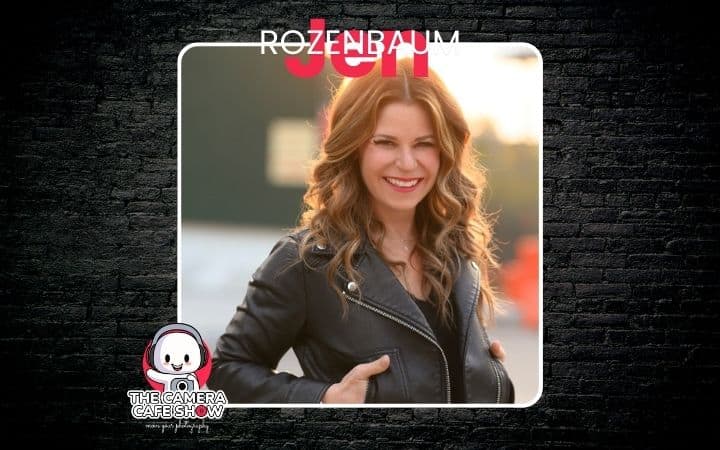
Welcome back to The Camera Café Show! And today… we’re talking boudoir, badassery, and being shamelessly feminine—with none other than Jen Rozenbaum. Now—full disclosure—Jen was fighting off a snuffy cold during this chat, so if her voice sounds a little extra sultry... that’s not just her boudoir energy, that’s also DayQuil working overtime. But cold or not, she showed up with all her signature sparkle, humor, and raw honesty.
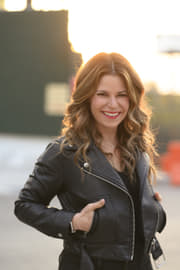
Jen is a Nikon Ambassador, author, podcaster, and one of the leading voices in boudoir photography today. Her work is bold, empowering, and filled with personality—just like this episode. We talk about everything from starting a boudoir business in her bedroom back in 2008, building confidence in women (sometimes using the word fart to get a laugh), to how she uses photography as a space for vulnerability and strength. But we also go deeper. Jen shares her journey through breast cancer, her divorce, and what it really means to rebuild your life from the ground up. From photo therapy to real therapy, we get honest, we get raw—and we have a lot of fun along the way.
So grab a coffee (or maybe something stronger), and join me for this incredible conversation with the one and only Jen Rozenbaum.
Tom: Good evening, Jen, and welcome on our podcast tonight. It's wonderful, we have a little time to talk about photography and live.
Jen: Thank you so much for having me.
Tom: It is a pleasure and I was looking very much out to this conversation about you because I love your way of life. I love your positivity very much. I'm following you every day on Instagram, all your reels, I watch them. My boudoir photography is not getting any better, but I try to follow them.
Jen: Thank you. I appreciate it.
Tom: As we as this, the first time we, we really talked, you and I, let's break the ice a bit. Tell me a bit. Tell me the last good joke you ever heard.
Jen: Oh my gosh. Oh, that's a tough one. I don't think anyone's told me a joke in a while. I'm gonna need to change that. Actually, I went to go see a comedian recently who told some very, very funny jokes, but other than that, I don't know. I can't think of a joke somebody's told me. Send me some jokes, guys. I love to laugh.
Tom: I will ask it again in the end of the interview maybe.
Jen: Maybe
Tom: A light bulb goes off. Jen, you build yourself a strong personal brand around empowerment and self-expression. How would you describe your philosophy in a short sentence?
Jen: I think, my business motto has really always been helping women be shamelessly feminine in whatever way they wanna show up for that. I think over the past couple of years, it's changed a little bit due to my own life circumstances. I think now it's much more about seeking joy and being free and just doing what you wanna do without any self-judgment or worrying about judgment from others.
Tom: And what's one thing, Jen, that people always get wrong about you?
Jen: Physically, they always think I'm tall. Everybody always says to me, You are sure! I'm I know they think that. I guess I have a big personality, I should be really tall. But I think what people don't understand about me is that I am very public with certain things, but I'm also very private with certain things. Oftentimes when I see people in person, they think they know me or they know everything about me. And the truth is, I have a whole part of my life that I really don't show on social media that is very private to me.
Tom: It is very important. If we have time, we will come back to social media later because you are really a star in this. I think we all take a little bit of example of how you work there. But now let's go a bit back. Jen. Let's walk a bit back. When was the moment that you thought that from shooting? Maybe as for a hobby that you thought that maybe photography is something you would to pursue?
Jen: I have a small problem. My problem is I don't know how to do anything as a hobby. I come from a long line of entrepreneurs and it was a very short period of time. I really should not have started my professional photography career when I did. 'cause I really wasn't ready for it. Now that I can look back and see that but in the beginning it was a great way for me to make a little bit of extra money, get out of the house.
I had a young child, and I was another one on the way, and it was a good opportunity for me to just be creative and be around other adults. I took that opportunity. Things sort of fell in my lap that way. I'm not sure I would've gone to pursue the business aspect of it as fast as I did. But I really only had my camera a few months before I started charging for sessions. I'm embarrassed and also proud to admit.
Tom: There was a moment then that sparked this interest that you told that I leave everything behind it. I want to be a photographer to do this boudoir photography.
Jen: The for the boudoir? It was the first time I ever did a boudoir. Another photographer was doing one and she invited me to help her. The truth is I had a better camera than she did. I had an Nikon D 700 at the time, and I had a better camera than her, she asked me to come help her, mostly I could bring my camera in case she wanted to use it. It really had nothing to do with me, but it was a boudoir shoot. It was two sisters. They were being photographed separately, of course. She asked me if I would help come and, keep one sister busy while the other one is being photographed and whatnot. And I did some photography that day also, and I just saw the reaction that they had to it, and I was just this is it. I love this. This is what I wanna do. And I did. I came home said to my husband at the time, I said, I wanna be a boudoir photographer when I grow up. That's what I wanna do. We immediately changed part of the house. It was my master bedroom into a studio, my basement into an office, and I started a business and I had business starting a business. But sometimes that's the best way, you don't know what, you have to just kind of jump in with two feet.
Tom: And when was this? Which year was this?
Jen: Was in 2008.
Tom: And when we start out as photographers, gender are always these initial struggles that come with, with this life. You had a particular struggle that you had in the beginning with being a photographer.
Jen: Interestingly enough, my struggles at that time really. Came more from life than photography. Photography was really an outlet for me to escape the struggles. I would say the only thing I really faced photography wise in the beginning was the fact that I was the typical mom with the camera.
I was nobody would take you seriously 'cause you weren't, were self-taught, or you didn't really know much about business and whatnot, but I wasn't really afraid of that. I said, I came from a long line of entrepreneurs and I knew enough about starting and growing businesses that part of it didn't really intimidate me.
Tom: And if you could go back a moment to the pre photographer, Jen, what would you tell her?
Jen: I would tell her she's gonna be in for a wild ride. I think we can all go back and tell this to ourself. It's a long, but it's a very interesting road.
Tom: Jen, I think it's an interesting choice being a boudoir photographer. Because if you would decide to say that, let's do wildlife or do landscapes. Each arm has its own difficulties, but budiss even a step higher because you work with people and it's not weddings you work intimate with people. How you came to go straight to boudoir photography?
Jen: I think that I've always been interested in psychology. I studied psychology. In college I studied psychology and art, which is basically what this is. I don't call myself a photo therapist. And even though I'm not a therapist, there is a therapeutic aspect to what I do. And oftentimes, not all the time, but oftentimes, depending on how open the subject is to it, and I feel it's. It's the type of photography that you could really make a difference with, and that was really important to me. I felt if I was going to leave my kids and I was gonna take time away from home, that it needed to be something that was really meaningful and important to me. And boudoir really fit into that.
Tom: And just to start out Jen, you want to start a boudoir business. You make pictures of one friend, and then how you get to all the other ones. It looks to me the most difficult step to do.
Jen: Hard back in 2008 because. There wasn't really social media back then. Then how could it be easier than it is today? But the truth is the market was not saturated back then. I was one, maybe only two people in my area doing it. And I was a member of a group of women who were getting married on Long Island and it was a big chat board, almost sort of a forum online. And I did what I used to call The cool girl principal where I offered a free shoot to a couple of the girls that everybody looked up to. Did I know I was developing an influencer program before there was such a thing. I found the influencers and I gave them free photo shoots in exchange for them posting it. And then my first year in photography, I had a hundred something clients. My second year I had 300, almost 350 clients. It was, it worked. It was, but it's easier than it is today. Today is hard. If somebody's starting a business today, it's a little bit hard to get noticed. It's a little bit more saturated, not just in the industry, but in social media. That much more creative and that much more out there.
Tom: You think, Jen, that boudoir photography is sometimes a bit misunderstood, or what would you wish that people saw in a different light about it?
Jen: I wish that people would know that women are usually not doing it for somebody else, but doing it for themselves. It's a moment where women can really take a minute and let go and appreciate their bodies and their self and all that we've been through. Because the truth of the matter is matter who you are, woman or man. But, since I only work with it doesn't matter. You're going to go through things in life, whether it's illness or relationship struggles or fertility issues, or even just becoming a mother or changes in your body. Women go through many different changes in their body. To take a moment in time and just appreciate your body and, decorated by dressing up and enjoying who you are, even if it's only for a few hours. It's not a space that we normally live in.
Tom: I think you mentioned sometimes Jen, that boudoir is not about sexy pictures. Boudoir is about confidence.
Jen: I always say that boudoir photography is about the experience. The photo, the photographs are just the souvenir, it’s you exuding that confidence that day. And when you look at the pictures, can you look back and go, oh, I felt really good that day. That woman lives. She's still here somewhere. We very quickly lose as women. I said, after we have kids or life changes or whatnot, we tend to lose ourselves. It's nice to recognize somebody and go, Oh, she's still in there. I see her.
Tom: Jen, and what are some ways you help tap women into this, this confidence when they stand before you.
Jen: I think that one of my gifts that I have is that I can just make people feel comfortable by being silly and being honest. Really relating to them. And it's part of why I put much out on social media because they do feel they know me before they even come in. I take pictures of myself, boudoir pictures of myself. I have shown lots of vulnerable pictures through my surgeries. Because I can put forth that vulnerability, they can come in and be vulnerable as well.
Tom: And if somebody's really nervous, Jen, what is a good tip there?
Jen: They should be nervous. If your clients aren't nervous, then you are not gonna make a difference in their life. It's like jumping out of a plane, by skydiving.If you are not nervous, then what's the point of it? You're doing it because you're nervous, because it's scary, because it's out of your comfort. And why do you do that? You do that to grow and to learn and to push yourself. This is the same type of experience. On the ground, but it's the same type of experience where you should be nervous because it means something to you and it's going to change you. If you just come in, I don't really care about this. Then it's not gonna make an impact.
Tom: You talk a bit, Jen, boudoir photography for you is a bit therapeutic maybe.
Jen: I said, I don't a photographer, I'm a photo therapist.
Tom: And to be in this genre of photography, Jen, what drives you every day to do this? What's the best part of it?
Jen: I think the best part of it is just marrying all the things that I love. Business empowerment, creativity meeting people, connecting with other people. It's everything that I love kind of meets up in one place.
Tom: I think you wrote a book note and about 60 recipes for that.
Jen: That's, yep.
Tom: It's a long time ago maybe, but I think I saw this book a cookbook for poses.
Jen: For boudoir. Because photography is just a recipe, ? You have the different ingredients and that goes into the final recipe. Now, everybody might have the same ingredients and their recipe might taste a little bit different 'cause they put in a little more of this or a little bit less of that. But that's really just what photography is in my mind. It's just a recipe of figuring out what ingredients you need to take the shot that you want.
Tom: Have you ever had a moment when you show the pictures to a client that they completely caught you off guard with a reaction.
Jen: You mean good or bad?
Tom: Good. I don't think that is a bad,
Jen: I will say 99.9% of my clients have really enjoyed their photos. There's always that one little sliver of people that get nervous and can't get past it. But clients, it's interesting. I think everybody always thinks, Oh, they're gonna cry. They're gonna be. Oh my God, and cry. Always that. It takes them a minute to get used to what they're seeing. They don't always recognize that sexy woman. It takes a minute or for them to get comfortable.
Tom: Jen, let's talk a bit of gear. Nikon Ambassador. You remember how that came to be?
Jen: When I was first discovered by the industry, I didn't really even know there was an industry and at first they were what do you mean you just do boudoir? Nobody does that. That's crazy. But I started making some connections and of course I met the people from Nikon along the way and they were lovely.
And it was a little controversial because of what I do, is it something that Nikon can show and how we do that? And then in 2017 I was diagnosed with cancer, breast cancer. I was doing a lot of work around that and Nikon was very moved by that, and they came to me and they said, We're really just very interested in working with you. My first speaking job after I finished my treatment was with Nikon at CES, that was in January of 2018. And after that, they asked me to be an ambassador and I was just blown away. It was wild.
Tom: And how did it feel to suddenly talk in front of an audience about photography, Jen.
Jen: I started really doing that around 2011. I was doing it for a little bit, but it's interesting because I'm very introverted. People don't believe that about me, but I'm very, very introverted. I have a very hard time speaking in front of people. If you asked me to give a speech at your wedding, I would probably curl up and die. But if you asked me to get on stage in front of 2000 people and speak about photography, I don't have a nerve in my body about it. I love it. And I have much fun doing it.
Tom: Because you also have your own podcast, and a podcast, maybe thousands of people will listen to it, but then suddenly you see all the people sitting and then you have to just remind yourself that it's about you're going to talk about something you love and it'll come all back.
Jen: You’re right. Or the guy in the front that's sweeping. There's lots of going on in the audience that people don't realize. When you're up on stage and you see everybody, there's people talking to each other. Are they saying good things or bad things? Somebody walks out of the class, you're what happened? Maybe they just have to go to the bathroom. But it's very funny to see the dynamic and all the thoughts that you have while you're speaking of trying to figure out what's happening in the audience.
Tom: It's just an amazing experience.
Jen, I don't do much gear talk, but there is one go-to lens you use for your boudoir photography nowadays.
Jen: I do, and I am probably gonna get a lot of flack for it, but use the 58 millimeter. I use it on with the FTV adapter. I just love that lens. I don't know, I'm a creature of habit. It's very hard for me to change lenses, change cameras, even though it's exciting. When Nikon comes out with a new camera and I get my hands on it, I'm always excited to try it. But I'm a creature of habit. I do what I know, and it allows me to be more creative and kind of frees my brain up. But I know if use something else once or twice, I'm fine with it after that. But I don't know, there's something about that 58 millimeter. I just love it.
Tom: I didn't look it up, Jen, but I suppose now you changed to mirrorless everything ?
Jen: Yep. I have a Z 6 3 which is very exciting. I have a big shoot coming up with that on Wednesday. I have Z 50 and Z 30, Z 5. I have all the things.
Tom: You have all the collection.
Jen: I have all the things.
Tom: Why are they not in the back? That we can see them all standing there.
Jen: The same location as them now, unfortunately. Here I have this, hold on. We'll get our little plug in. Let's see.
Tom: Z 63.
Jen: Yep.
Tom: Are you going to use some of the of the video capabilities there?
Jen: I'm gonna try it. I'm not really a videographer, I don't wanna pretend I know what I'm doing. It's complex. But sometimes I do shoot some video of some things that I'm doing, we're gonna give it a little whirl on Wednesday. We're gonna see what happens.
Tom: I am looking forward to this.
Jen: Me too.
Tom: Jen, you saw any change by changing from DSLR to mirrorless?
Jen: Oh for sure. The it's a game changer as far as business is concerned. And as far as the moment is concerned, definitely taking less pictures per session, which is wonderful because every bit of extra that you do requires more calling, more decisions. Shooting mirrorless is a game changer because you can see what you're doing before you do it, before you take the picture. It's amazing because you don't have to take as many pictures as you usually take. Less pictures means less time, less time calling, less time editing. It's But also creatively you can really see what you're doing and it just, I don't know, it allows for a lot more freedom.
Tom: Let's talk a bit about this other thing we need in photography, it's not only the camera, but it's the light. And, as with all genres, we need it for to set the a mood and an emotion, I suppose it happens, the shoot you're going to do. But what's a good start kit to get into boudoir photography with lightning?
Jen: That's a great question. I love any of the kits from Westcott, any of the, if you're gonna do boudoir. I love the constant lights. It makes it really easy. What you see is what you get because you're working intimately. There's not flashes going off everywhere, it's just very simple. Have a lot of flexibility with the different soft boxes that they have and the different versions of lights that they have, and they sell kits that are very affordable and super easy to set up.
Tom: I'm still getting my head around this boudoir pictures because I did some, but just to have the good order, Jen. Somebody comes to you in your studio, they have an appointment, what's your starting point? You start with making pictures with the clothes on or how? How it evolves to shooting.
Jen: Usually what I have them do first is I'll have them lay out their outfits that they brought that's multipurpose. It allows me to see what they're gonna wear. I can understand where in the studio I'm going to shoot and how I'm gonna light it and whatnot. But also gives me an idea of who they are and how they wanna portray themselves. And the makeup artists and the hairdresser are usually in on that conversation also. We can come to an agreement, how we want to portray her, how we want her to look, how she wants to be. Usually, we start with that. And then what I'll do is I usually start photographing them in either most covered up outfit or least favorite outfit because the pictures are always better as the session goes on. I usually save her favorite outfit for last, way I know she, those pictures are gonna rock matter what. That's my mindset, but it really depends, per client and I really try to get a good read on them.
Tom: And for the poses, Jen, you already discussed with them what poses they want of what they or they just give you carte blanche.
Jen: I am the posing boss. Basically what I say to them is, look, the best pictures don't come from the women that we perceive as the most gorgeous, or the tallest, or the thinnest or the blos or whatever it is that we perceive. The best pictures come if you just listen to me and do what I tell you to do. As weird as it might feel, as much as it might be uncomfortable, just do what I tell you to do and you're gonna look fabulous. And that's it. That's the only trick.
Tom: You see
Jen: Usually when they come to me with poses, they're I wanted a picture like this, I practiced in the mirror. I'm, No it doesn't work like that. I'll say, do that. Click, click.
Tom: Very interesting because I thought you had maybe a sheet where they could choose the, the pose from.
Jen: No because not every body works in every pose. Have you ever had a subject come to you with a picture of somebody else that they and they say, I want a picture like this? That's fine, but this model is a hundred pounds and five nine. She's a genetic freak, really.
You can't compare yourself to models. It's not the same thing. I am only five two, I can bring a picture in of a model and say, I wanna look this, but I can't. It depends on proportion, it depends on height, it depends on all the different things. I always say, I don't copy poses, but I'll use them as inspiration for a pose that looks good on you.
Tom: And then you tell your best joke that you forgot now, and then they are all ready to go.
Jen: Usually we just use silly words fart or something silly. It makes them laugh, but then we have it.
Tom: Jen, it's to talk a bit a moment about your breast cancer journey.
Jen: Sure. Of course.
Tom: I think a lot of women, they don't openly talk about breast cancer or certainly not in the early stages. While you decided to be very vocal about your journey. What made you decide this.
Jen: Before I got cancer, I remember being in a place in my life where I felt stagnant. I wasn't really sure where I was going, what I wanted to do, and I wanted to reach more women. I knew I needed to reach more women, and I remember at night praying or manifesting whatever words you wanna use, but just putting it out in the universe that, show me the way, show me how I can reach more women. Show me how I can make a difference in this world. That's what is important to me. Wasn't the fame or the recognition or anything that. It's how do I make women feel good? How do I reach more women? And then I was diagnosed with cancer and I was that's not quite what I meant.
But that's what was given to me. I said, I have a choice. I can either look at this it's happening to me, or it's happening for me, and I'm gonna choose for me. And this is an opportunity to reach more women that I couldn't reach just with my photography. And if I turn up that opportunity, then it's just disease. Nobody wants disease. They want purpose. It gave me the opportunity to put purpose behind my disease.
Tom: And can it be Jen, that the emotional after math is even harder than the treatment in itself?
Jen: A hundred percent. I wrote a book about that, about life after breast cancer. Because after you beat cancer, the world sees you a different way. The world says, Oh, you must have this outlook now that their whole life has changed and everything is great and you're just happy to be alive and you are alive. But you don't really feel alive. At least I didn't. And I'm finding a lot of other people really relate to that. You try to get back into your old life. And you're in a square hole. Everybody treats like you should just be the same, but you're not the same person. You're just not. How could you be better or for worse?
I found that I was very depressed after my treatment. Very depressed. I had for the first time in my life, suicidal thoughts. It took me a long time. And I think sometimes I'm still working on it seven years later, to find myself again. I went through, I finished my treatment at the end of 2017 and I had surgeries up until 2020, I think was my last surgery. I think my last surgery was 2020 or 2021. I was still going through a lot of that, up until about 2022. I had my ovaries out, which is really part of my whole, I don't wanna say treatment, but the whole plan. I was still going through a lot and I was going through a divorce at the time, that was a horrific divorce. And you just feel leveled. Life just got me for a few years.
Now it's 2025 and life is good. But I still live, of course, with that fear of cancer, every, every pain, every sniffle, every, mark, you're what is? What does this mean? It's still stressful, but there's a different joy in life after cancer, but you have to find it. It just doesn't automatically show up. You have to ask yourself who am I? What makes me happy? Where does my joy come from? And it's not always what you think.
Tom: Jen, if we have somebody listening now, maybe that goes through a struggle of their own in, what would you say to them?
Jen: Listen, I am a big believer in running towards the pain. I have always said this. I say it to my kids, I say it to my employees, I say it to everybody that will listen. The only, and I used to have a therapist that said, that used to say this to me, The only way great change happens is through love or pain, and most of the time it's through pain, to be honest. You can run from pain, you can curl up in a ball. I made a decision. I wasn't gonna curl up in a ball with my cancer. I was going to do X, Y, Z. That's what I wanted my cancer journey to look. I'm not saying everybody has to be that way, but what are you going through in your life? Divorce, you're going through bankruptcy, you're going through change of job, you're going through motherhood is a big change. Are you going through breakup with a boyfriend or a girlfriend? Whatever it is? Your parents are aging, your kids are obnoxious. Whatever it is that you're going through, truth is that you have to run towards the pain because that's how we change. That's how we grow. And there has never ever be a success story without struggle. It's just impossible. They make documentaries about all these amazing people is because they have a story to tell. Because you've never seen a documentary about somebody who's created or done something amazing in this world, and they're Oh, I'm normal. I grew up in a normal house and nothing bad ever happened to me, and I'm totally fine. That’s boring. People do not succeed like that. People have success because they've been pushed to a limit in other places of their lives, they know they can survive these things.
Tom: And I'm pretty sure that also cancer shifted your priorities, Jen.
Jen: Yeah, everything that was important became more important and everything that was not important got less important.
Tom: I was going to ask you, was there something before that you stressed out about and now totally not anymore?
Jen: Most things. I still live a very stressful life. I'm not gonna say I don't have a stressful life, but just the little things, who cares? My kids will come home and be I lost something. Who cares? It's just a thing, we'll replace it or we won't, or whatever. Who cares? ? Or even as far as friend won't talk to me anymore because blah, blah, blah. Cares? She's not meant to be in your life. You don't wanna have stress in your life that. Don't lose sleep over it. It's not worth stressing over. I think that does change your perspective a bit.
Tom: Jen, photographer, author, speaker, hard worker, advocate for women. You're still finding some new sides of yourself now these days.
Jen: For sure. I'm a mother of teenagers now, that's another whole ballgame because I'm a single mom. And I wasn't for many years. That's a new side of me that it has been a really, really interesting journey. Especially with my 15-year-old 'cause he's a boy and we're very, very close. We talk about a lot of hot topics, sex and drugs and all the things that are going on for teenagers. That's a whole crazy world to navigate. Daughter's in college, which I don't understand because I think I'm in college still, it's very weird.
But I am turning 50 this year, that's a really big deal on that. One of my goal this year is to sort of talk about that and to talk about the journey of turning 50 and what it feels and the things that I'm facing. I see myself aging, we've been all been on social media now for 15 years. There's that. Memories pop up and you're oh, I used to look young and aging is a tough one for women. I used to talk about infertility and I talked about marriage. I talked about motherhood in my career. I've talked about cancer, and now it's really talk about menopause and yourself again when as your kids get older and leaving the house and all the changes that we go through with that. It's wild that I could say that I'm here, but somehow I am.
Tom: You are also an advocate for women, finding their own voice. What's the best way somebody can start stepping into their own power?
Jen: Oh, that's such a tough question. The truth of the matter is this is gonna be a real vulnerable moment if you're ready for it. But the truth of the matter is that. I think I was an advocate for it for many years because I couldn't do it in my own world. I was in a very abusive relationship and part of that kept me very small in my marriage. Maybe not out in the world, in my marriage it did. And, at the time, photography was really a way for me to escape my life to say, understand that this is all in hindsight, I didn't really understand it at the time. But I feel more myself when I am at these conventions and I'm doing photography than I ever feel at home with my husband. It's a very strange dynamic. And I think that there was a period of time where I really shriveled a bit because I was wait a second. I just spent all these years empowering women and I'm in an abusive relationship. How did that happen? Because the truth is I didn't know, and it's such a wild concept because I believe I'm smart and I'm educated and I am independent and I am strong. And when my therapist first said to me, I think you're in an abusive relationship, an emotionally abusive relationship, I was what? Are you kidding me? Come on. I'm not stupid. She said to me, Go home and Google what is, what is an emotionally abusive relationship. And I Googled it and it was 15 signs, you're in an emotionally abusive relationship. And I had 17 of the signs, I was. Oh my God, what is happening here? The truth of the matter is I went to his therapist and I gave her 200 bucks and I said, I only have one question for you. I don't need you for the whole hour. I have one question for you. I said, am I in an emotionally abusive relationship? And she said, you are.
And why am I telling you this? Because I think that I didn't realize I lost my voice there. I didn't realize it, and then I quickly felt I was in a box and I needed to get out. A lot of reasons, not just that, but I end up filing for divorce. And what's interesting is after that, I picture myself in this box. And then after you get divorced, the lid of the box comes off, but you still stay ' cause it's where you're comfortable. About shrinking yourself and making yourself small. And again, maybe not in the photography world. Photography world, give me a place to really be me. Just I give the same things to my clients, a place for them to be them, but in the real world. I think I'm still working on finding my voice again and finding my power and figuring out who I am. It's such a gift, it's another chance at life, but it's really hard to do at this stage of life.
I would just say to women, long story longer, I would say to women to be patient with themselves because. Finding your voice and finding your power isn't always about being loud, and it's not always about being on social media or standing on a soapbox. Sometimes it's just a very quiet process that goes on with yourself, within yourself, it when you feel it. I know when I'm in my power, I feel it. There's a special feeling to it. When I am out of alignment, it everything's out of alignment. And I think finding your power and finding your voice isn't a hundred percent. It's not, Oh, I found it. I'm good now. It's you waver in and out. It ebbs and flows. And if you find yourself in a situation where you're feeling that feeling of something's not here. I'm not feeling myself, I'm not, I don't find my voice here to question what that is.
Tom: You have it, it makes totally sense. I'm just getting my head around it. You dropped this and I was not ready for it, I was just listening, Jen.
Jen: Sorry, I don't mean to shock people, but I think it's something I haven't spoken about really. And I think it's something I'm ready to open up about a little bit more now. I was very worried about it. There's certain things I wanna protect my children from, of course. They're older now, they understand what's happened and what's going on. I think about this a lot and I think part of what has kept me from talking about it is that I don't wanna make it about my ex-husband. It's not about him. It's about me and my healing and my journey and my discoveries. It's not about him at all really. And that was part of that really held me back from talking about it. 'cause I didn't wanna talk about him. I don't want him and his energy in my space. But if I can turn it around and say, it's really not about him. It's about how you recover from that and how you move forward with something like that. It's the same as all the other things that I've done and all the other things that I've through. It's just a different circumstance, but it's the same resilience or that same, you know, need to not curl up in a corner and die. How do you fight that?
Tom: And you think in your case, photography has helped you throughout this process a bit? It changed your way of making pictures or photography?
Jen: I think for a bit of time, and it might even still affect me now, it's been a little hard for me to be creative. I didn't have the bandwidth. During Covid, I had separated from my husband in July of 2020. It's Covid, the kids are home and everyone's dying and you can't go anywhere. It was just a crazy time. Obviously everybody knows that the photography studio was shut down, that was very difficult. But during that time, I don't really think I had the same bandwidth to create and to be free with my thoughts. Because I was bogged down by trying to heal and single parent and figure it out financially. And still dealing with things physically around my breast cancer. Photography at certain points has shown up for me as the only way I can express myself and heal. And as other points I've had to put the camera down and just say, I have to really focus on me now. I'm now starting to really get back into that.
I think if I'm being totally honest, post. October 7th was a little hard for me as I am Jewish and it was a very difficult for me. Unfortunately I caught a lot of negative feedback from the photography industry which was disheartening. I need a little step back. I need a little breather. I need a little bit off, I need a little time to process all of this. And I think I'm in that place now where I've processed a lot of it. And I'm ready to start finding the joy in it again.
Tom: And you made any long lasting friendships with all your photo shoot you did, Jen?
Jen: First of all, with plenty of clients, but I have two very, very special photography girlfriends. One is in Oregon and one is in Utah. And they were in my first creative live class years and years and years ago, and we are still very, very close. I just saw one of them this summer and last April we all took a cruise together and we try to get together at least once a year. They are my ride and dies every day. I talk to them for the most part. And of course shout out to my friend Benny. He knows who he is. He's my photography husband I call him, who helps me with all my stuff when I need it. But of course it's been very, very, very special friendships that I've made. Some friends in Dallas I have that I talk to quite a bit and all over the country and all over the world. I'm very lucky a friend in Philly. I feel I'm gonna leave people out, but you all know who you are out there, that are my special VIPs, my little rosebuds.
Tom: And your kids. Any interest in photography?
Jen: My son has some interest in it. If he could sit long enough to pay attention, he's busy with sports and girls and school and all of that, but he has shown some interest and actually he got a very good eye. I think one day we'll pick up the camera together.
Tom: You see. Then after this, let's do a funny round of questions. Don't think too much. But everything has to be possible.
What's the weirdest or the funniest thing ever happened to you in a photo shoot, Jen?
Jen: Oh my gosh. This is stupid. But there used to be, in the very beginning of my career, there used to be this shot that everybody loved, where it was a girl would lay on her stomach and she would take a thong, she'd be wearing a thong and she'd attach it to her heel.
Tom: The heel, the shoe.
Jen: That! And I was shooting with a woman. She requested it and her underwear was way too small for her, it was pulling back, what do you call those things that, a slingshot, ? I pull it back and I put it on her heel. I take the picture, and then when I go to take it off, it slips out of my hand and it whips her. I was, Oh my God, I'm sorry. I was mortified. It was terrible. We're not doing that anymore.
Tom: You scratch that off of your list of your pose list.
Jen, if you weren't a photographer, what's the most ridiculous alternative career you see yourself doing?
Jen: I would be a fashion designer. Crazy, fun, sparkly cool stuff. It's what I really wanted to do, ironically, and I don't know how to dress myself, but I'm wonderful dressing other people. I always look a sob though. I dunno.
Tom: What's a guilty pleasure? You refuse to apology for
Jen: Pickleball. Do you guys have pickleball in Spain?
Tom: No idea. Pickle ball
Jen: Pickleball. It's the growing sport in America now.
Tom: Describe me, what is pickle ball?
Jen: It's ping pong and tennis have a baby. You play on a court, as big as a tennis court, you play with a pickle ball, but it looks kind a wiffle ball. And they're paddles, not tennis rackets. And usually you play doubles. Some people play singles, but they're very young and athletic. I'm not either of those. I have a partner and. You play another set of people and you play pickleball, and I don't know how to describe it other than that. You're gonna have to look it up, but trust me, it will be in Spain soon because it's taken over the world.
Tom: You have a picture of yourself playing pickleball. I can insert this now here
Jen: I don't.
Tom: Jen, you have a dog, ?
Jen: I have multiple dogs.
Tom: You have multiple dogs. I thought you only had one dog called Tex.
Jen: I do have my doggy named Tex, and I have a new dog named Teddy also. She's a little Parmesan.
Tom: If they could talk for a day, what would they say about you?
Jen: Oh! That is a hilarious question. They would tell you much about me. I'd be embarrassed. Would tell you that I'm the best cuddler ever and that I spoil them rotten and that they have me wrapped around their fingers. They're a little paws. They just love them much.
Tom: Last one. Jen, what's your favorite karaoke song?
Jen: I don't do karaoke. That's a hard rule for me. Hard rule. I will go to karaoke and I will laugh my butt off when you sing, but I have such a bad voice, I will not expose anybody to it, ever. I will not sing karaoke.
Tom: I was going to ask you to sing. There goes my question.
Jen: I will not, because you and everybody listening way too much.
Tom: Jen, you have the joke or we don't have the joke?
Jen: Don't have a joke. That's terrible. Oh my gosh. I don't know. In my house we tell a lot of really dirty and stupid political jokes. It's inappropriate.
Tom: I think for this podcast, better not.
Jen: Exactly. My son recently told the dirtiest dad joke in front of my parents. I thought I was gonna crawl under the table and die. My dad never laughed hard.
Tom: Ah, kids. We have to love them?
Jen: You have to because you made them
Tom: We have to love them.
Jen: What's your other choice?
Tom: Jen, quick, I will cut this out, but now we say bye. Don't go away. Still wait until I tell you can go away.
Jen: You got it.
Tom: Jen, it's been an amazing talk. A really funny talk. I think we talked more about non photography things than photography, but everything has to be possible. I think there is only one way to do this, and that is to call you back at the end of the year or next year, and we have another talk and we talk about photography,
Jen: You got it.
Tom: And you think about a joke.
Jen: I know. I'll have a joke for you by then.
Tom: Then you have it then.
Jen, thanks a lot for giving us your time, and I will watch out tomorrow for your new Instagram reel. Your pictures amazing and for your inspiring story just told here tonight.
Jen: Thank you. Thank you so much for having me and listening and being open to all the different things that I had to say.
Tom: My pleasure. I see you around. Have a nice day still, and take very good care of yourself, Jen.
Jen: You too.
Tom: See you. Bye.
Jen: Bye.
Outro:
And that’s a wrap on my conversation with Jen Rozenbaum—photographer, speaker, author, cancer warrior, and one of the funniest, most honest humans I’ve had the pleasure to chat with. From her early days building a boudoir business out of her master bedroom, to becoming a Nikon Ambassador, to opening up about her breast cancer journey and personal life—this episode reminded me that photography isn’t just about pictures. It’s about people. Huge thanks to Jen for bringing her heart, her humor, and her whole self to this conversation.
If you enjoyed this talk, hit subscribe, leave a review, and definitely check out Jen’s work online—her images are stunning, and her Instagram reels? Instant serotonin boost. Thanks for tuning in, and I’ll see you next time on The Camera Café Show!