

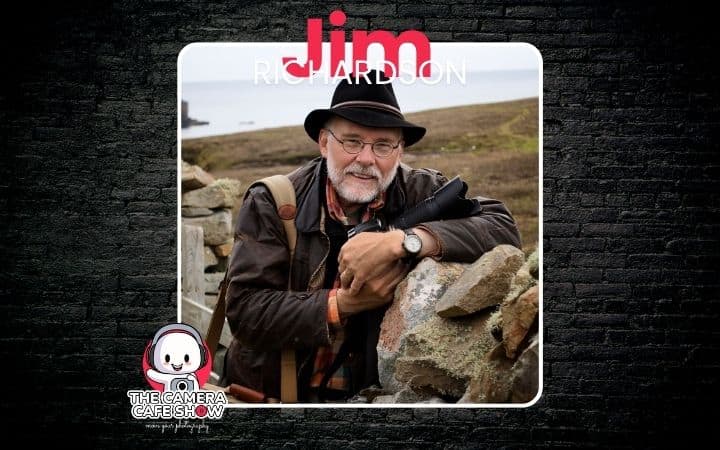
Tom: Welcome, Jim, on the podcast tonight. It's a pleasure to see you again and have a little chat about photography and maybe also a bit about your life.
Jim: This sounds like fun, Tom. Thank you for having me here.
Tom: My absolute pleasure, Jim. It's great to see you. So your wife is absolutely okay with this interview. She told me you can do it.
Jim: Oh yes, I think so. Yeah.
Tom: Okay. Very well. Now, Jim, as later I know, we will talk a little bit about Scotland. I thought I have the good start because it's evening here and I will have a weed dream of hospitality and have a little whiskey here. I think you might have water where you are, but there you go
Jim: That's, that's a good idea. And as I happen to, I happen to have a little bit of Highland Park from Orny. Yes. That's a good thing to do. I can't think of a better way to start a podcast.
Tom: and you want to know, you want to know something? Very coincidence, Jim
Jim: Are you kidding
Tom: Highland Park. I am drinking the same.
Jim: 12-year-old?
Tom: Yep. You see? Dragon legend.
Jim: Remarkable. Remarkable. Yes.
Tom: There you go. We might not have the same taste in photography, but we do in whiskey.
Jim: Yes. Yes. This is, this Highland Park is the mess of Rodger dig bottling a there were only about a thousand bottles of this, you know, and so it
Tom: Ooh.
Jim: that neolithic 5,000 year old archeology up there in Orny National Geographic. So, yes, it's a, it's a, has a special place in my heart. Yeah.
Tom: I can imagine. And it'll have a special taste, Jim, talking about whiskey. Let's say, because , you made some shots about whiskey distilleries. You've got somewhere a good story that you say, oh man, I was in this whiskey distillery and this happened.
Jim: Oh. You know, I think whiskey distilleries are always a little difficult to shoot, you know, because, because you have to, if you, if you wanna do the good stuff, you wanna do the pot stills, you know, They're always a little dicey about letting you do that, you know, because, well, there's alcohol in the air, you know, and they're kind of, they're kind of shy of sparks, you blowing up, you know? So there al there are always a little dicey, but I tell you one time I was at Kalila on the coast of Isla, you know, the and you're looking out across the sound over to the Isle of Jura and I was I was about to panic because, you know, the lighting levels were odd and I had to get special permission to use my flash units in the in the thing. But eventually, all of a sudden, you know, I'm in there, I'm frantically trying to pull all this together and out the windows, beautiful, puffy white clouds start floating over. thought, you know I must have done something right with the gods today because all of a sudden here is this scene, you know? And it is, it is a beautiful side. I think it is the most beautiful view from a stillhouse in Scotland. distinction?
Tom: Sounds great. Yes,
Jim: And the, and
Tom: I.
Jim: is, you know, Kalila, I like Kalila, particularly as a whiskey because, well I liken it to taking, you know, you take a sniff of. I think I like it to taking a sniff of jet fuel, that's, that's, that's, that's my idea of a, of a good whiskey. This something that smells a bit like somebody is doing asphalt roofing of a couple of you know, and all of that. So yes, it's, we are strange lot the people who like this kind of
Tom: Yeah. Yeah. And you like the really pity whiskey too.
Jim: Yes. I've really, I've really been kind of drawn to those things and you know, the weirder the better. I'm just, I'm pathological in that way.
Tom: But sounds good for photography, Jim.
Jim: Well, if you don't like odd things, I don't know what you're doing. Being in photography, you know.
Tom: Of course. Yes.
Jim: Aren't we always looking for the, for the for the unique and The outstanding and in some way surprising stuff? Yeah.
Tom: Yes. I will come back to this, Jim, because I read in an interview of you once that you say you have to become an expert in something incredible.
Jim: become an expert. Yes. You know I am I'm dubious. I know photographers who say that they don't want to do any research and they, they just want to go and experience the place, you know, just fresh. And I never want to do that. I want, I want to, I want to know something, you know, and you know, one of the things I want to know is, am I really doing a fresh picture here or am I just repeating cliche? You that's one of the things I want to know. I wanna be armed a but I also, you know, I want to, I want to be involved with the place. I want to know it on multiple levels. I want to Historically and culturally and what there is be seen there. And, you know, it's, it's a terrible feeling. And I've experienced many times in my photographic career to realize that I was standing in front of something and I didn't really realize that it was you know, I should have been, I should have been paying more attention. I didn't see it, I didn't see it in the right way. You those things that you just, they, these are the things that eat at you years and decades later. You know, that,
Tom: Yes.
Jim: it was, here it was. And I wasn't smart enough to do it, to write.
Tom: Mm-hmm. But this not only enriches your photography, Jim, it also enriches the whole travel experience.
Jim: I think so, yes. I mean if I'm going to go take a trip someplace, I, really relish the months leading up to the, to the trip. The readings, know, the research, the the whatever, you know. And you know, if, I mean, as an example, if I was going out to the well there, we're gonna talk about Scotland again into the Outer Hebert you know, to realize that all those lighthouses were out there, were built by the Stevenson family, and that they've got this rich history and a story behind them and all that kind of stuff. And then to realize that, generations of the Stevenson families did that stuff except one guy, and that was Robert Lewis Stevenson, wrote Treasure Island and all, and he was the black sheep of the family, know, and so and so. Anyway, to me that makes the place richer to just to know where you are and where you are relative to history and relative to all the culture that has wrapped up into that place. And, and then sometimes, you know, somehow or another that, that makes the photography richer in one way or another. always makes the stories richer,
Tom: Mm-hmm. Mm-hmm.
Jim: the photography richer, I think.
Tom: Mm-hmm. I will ask you later about National Geographic, but I think it's also what they are after. No, I mean, it has to be first, a good story.
Jim: Yes. Yes. I mean, and my photography throughout the years has always, almost always been story driven. I started out as a photojournalist doing black and white newspaper photography back in the seventies. So yes, that was always story driven. You know, you were always coming in and getting your daily assignments to go out and try and make pictures out of pretty mundane stuff very often. there was a but knowing the story was always essential if you were going to somehow make it work, know, make it bring something of meaning, you know, and come back with something that the you know, frankly, that the caption writer. Could make something out of as well. And would be writer. But you know that Yeah. That there was, there was something there. There was something there.
Tom: Jim, let's walk a bit to, the beginning, because you grew up on Kansas wheat fields and you went all to National Geographic covers, which is quite a journey. You still sometimes shake your head at how far photography has brought you.
Jim: Yes. You know, I mean, it was it was a great door to have opened, you know? Yeah. I had no idea that's how it would work out when I was growing up on the farm and I was borrowing my dad's camera that he found in a pawn shop somewhere in between Kansas and Oklahoma or Texas, you know, Had no idea of that. It was just cool stuff to do when I was a kid. know, to try and make pictures out of things and photograph photograph my dogs or the ducks on the pond or chess pieces, lit
Tom: Huh.
Jim: floodlights. You know, I mean, just all things. I experimented with trying to, trying to photograph through a microscope to photograph, you know, the little, all those little organisms. Just all that kinda stuff. It was great fun to explore. I never really thought it would be a career though. And in fact, you know, it, wasn't really until I was a senior in college that I got a job with a student newspaper that it really started to bear fruit,
Tom: Mm-hmm. Mm-hmm.
Jim: Yes. To become a viable future for me. You know? And then, and then even then, you know. I worked for newspapers for 15 years, you know, which was, which was, you could say it was honing skills and paying dues, or however you want to, you wanna think of, but it was learning and it was, it was always fun,
Tom: Hmm. Yeah.
Jim: I, the, I didn't see that as sort of the, you know, paying dues so that I could eventually get to National Geographic because I didn't ever think I wanted to work for National Geographic until about the 1985 or so. And I started the newspaper work started wearing on and I had, I was redoing things. So when that happened though, and I started in with National Geographic, it came at a time in my life in which I was I could see
Tom: You?
Jim: up. Opportunities to photograph subjects that I really wanted to get involved with, I wanted to learn about, and National Geographic, bless them, photographers be real journalists, you know? And as a, as a photographer, you could write story proposals and would pay attention. You know, a lot of magazines, that wasn't the case at all. a lot of magazines, photographers weren't meant to have ideas, you know, or to think the photographers were meant to turn knobs and to carry lights and take other people's ideas, ideas, and do things with them. And with National Geographic, you could take your own ideas. do something. You could be a real, you could be a real journalist. And that was a, that was the great thing about that. So,
Tom: Mm-hmm. Because if I recall correctly, Jim, it's not like Bob Kris that he went with all his portfolio under his sweaty arms to see what Bob Gilker was going to say. I think you just phoned Tom Kennedy when you were, when you went and you asked if they had a job for you there, and it went from there.
Jim: actually I did. Yes. I mean, that is how it happened. I left the newspaper. I fall, they were doing a buyout. I signed the buyout papers. I came downstairs. I got 15 minutes after I signed the papers to leave the newspaper. I called Tom Kennedy. I said I said, Hey, Tom, I'm now an actual freelance photographer. Let me know if I can help you out. And he said, well, you know. I liked what you did in that small town in Kansas, have a story on Atlanta. Do you want to have a go at that? And I said, okay. Yeah, sure. You know but, and this is, this is the important thing, while I did, I never went this sort of the portfolio route by then I had, I had done I had done a book of photography. I had won numerous awards. I a lot about photography. I'd been in multiple magazines, time, Newsweek, life, New York Times, all the rest, you know, that kind of know. So I was a known quantity, you as if Tom was just kind of saying, oh, hey, here's somebody on the phone. Give him an assignment? No. I mean, he knew, he knew who I was and I knew who they were. so this was not a this was not a leap of faith on either of our parts. It was a, it was fortuitous, I will say. Yes. However, I didn't exactly set the world of fire with what I did on that assignment, so it was a couple of years later until I really got another assignment that did work out well.
Tom: Huh.
Jim: that kind of set, that set the mold,
Tom: Hmm. Yeah, I was going to ask you, Jim, because you might feel a bit intimidated when you walk inside and you have all these photographers that, what was the story? That, yeah, that. What was the story? What was the story that cemented you there, into this group, you think?
Jim: Oh, it was the Colorado River.
Tom: Okay.
Jim: Colorado River, yes. And, it came to me by an odd route. They already had a story going a couple was photographing the Upper Colorado, and it turned out that they had a lot of sort of nature photo nature pictures. And the editor, you know, they showed that this, the nature pictures and the editor was clearly dissatisfied with what they were doing. And so the assistant Kent Berstein called me and said, could I, could I go out and, you know, fill in, fill some holes, do some issues frankly, you know, do some, do some water issues, you know. And I said, well, let me look at it for a couple of days and I'll get back to you. And I went back to him and I had written up a document and I said, I sent you a document. And I said, you're doing the wrong story. I was, I went, I made bold. I just said, you're doing the wrong story. There the upper Colorado does not make sense without being in relationship to the lower Colorado. It's the, , one of them is where the water come from and one of 'em is where the water goes and where it
Tom: Mm-hmm. Mm-hmm.
Jim: what all the issues are about who gets the water. what the issues are about. And so here's what I think you ought to be doing. The next day he called back and he said okay, the story's yours. I said, so, well, what What about the couple, you know, and all that, and they said, don't worry about it. Go do the noise. So they basically just started on the story again. And, but what it was this was not a grand adventure down. What I proposed and what I, what we ended up doing was a water issue story. not a grand adventure down the mighty Colorado.
Tom: Okay. Mm-hmm.
Jim: You know, let's, let's go get in our, in our boats and go over the rapids and stuff like this. We did do some rapids pictures, but, secondary. And when it was almost, you know, something we would not do because it was more recreational than this, no, this was about water. This was about water in a dry land. And a precious, valuable commodity that gets fought over in, courts, you know and squabbled over for the last 150 years and makes fortunes and is hugely important. That's what we wanted to the pictures about, and that's how the story came out. And with that, doing that story that way, that then led to a lot of other water stories that I ended doing. So it was a, it was a gateway and yeah, I did a good job on it, on that. Yeah, I did, I did a way better job on that than I had done on the first Atlanta story.
Tom: Mm-hmm. Mm-hmm.
Jim: it just told me also that I should not be doing city stories. I don't understand cities, so, but send me out to do a water story and I'm pretty good.
Tom: There you go. This was which year, Jim.
Jim: Let's see, I think we started, I think we ran the Colorado River in 91, and I think I did most of that work in 1990, maybe a little bit in 1989.
Tom: Okay. Okay, so this is a bit late into, because, you know, national Geographic before was spending very good money on photographers to get the story back. Robert Madden, he was tough photographer before then Bob Christie came in the eighties. Then you walked inside. How, was National Geographic in, that day? You still, you still got weeks and weeks for assignment and there was what, there was money to burn or it was less already.
Jim: Right. No. That was then, say by 1990 or so, they were beginning to if I, in rough numbers here, that they were beginning to drop off the staff photographers and add more and more freelance work or contract photographers. And then eventually it got to be all freelance and contract by the story. So all of my stories, I had a contract for the story, not a, not a contract. Like I'd have a hundred days of work a year or something. So but on those, on those stories, in that era, 12 weeks was a common
Tom: Okay. Mm-hmm.
Jim: weeks in the field and on like this, you know, you could almost always. Go back and you'd do a final show and somebody would say, well, I don't think we quite have the Mexican border part of that. And I'd say, well, okay, well, I think if we have, if I have two more weeks, I can get that done. So you, so you now, you've done a total of 14 weeks in the field, you know, and this is at a time in which getting three days from Time Magazine was a big deal.
Tom: Okay. Mm-hmm.
Jim: You know, people didn't do now, nobody else ever, I don't know anybody else who really ever did 12 or 14 week assignments.
Tom: Mm-hmm. Yeah.
Jim: it was just out of the reckoning of any other sort of assignment work in the, in the world of photography. I may be, I may be ignorant there of how some of the European magazines worked, but I doubt that they
Tom: No.
Jim: commitment.
Tom: No.
Jim: Yeah. It was really a exceptional.
Tom: Hmm. Now you talk about magazines, Jim, how long you worked for National Geographic? 30 years. 30 odd years.
Jim: My first story really was in 84 and then so about 35 years. Yeah.
Tom: so if you worked such a long time for, them, Jim, can I say that maybe you are familiar of what they want in, a picture way and you go out and you shoot the pictures in the way, you know that. They are going to like it and maybe different for another magazine.
Jim: Cer certainly the context that certainly the context that the photographs are going to appear in would make a difference. That's right. That's, exactly right. Certainly when you, when I would propose a story to National Geographic one of the things I was, I was doing there making sure that the architecture of the story idea was such that it was photographable and I had, an idea of how it could be, how it could be photographed. I think it's, I think it's more correct to say that if you are, if you, let's put it this way, if you are the director of photography at National Geographic, moment in the success, photographic success of a story is when you decide which person to put on the assignment.
Tom: Hmm. Okay. Yeah.
Jim: that you're going to expect a photographer. To come in and alter their outlook or alter their style to story. But you want to find, you want to find the photographer who can do this story naturally and well without having to, you know, try and fit somebody else's stylistic So it, so the critical thing if you're the director of photography is you find that person to up with this story and the structure of this story in a way that everybody's, everybody's happy.
Tom: Happy. Hmm.
Jim: that the, that the outcome is you don't, oh, hell's to pay,
Tom: Yes.
Jim: because all of a sudden everybody's, nobody's happy, you know, the. The pictures aren't coming out as expected. The story is going off skewed in some other direction. The writer is wondering, why are we, you know, why are we doing this? And pretty soon, you know, you get to the halfway show and nobody's happy and they fire the photographer and they assign another photographer or some such thing, you know? Yeah. You just don't want to go there.
Tom: No. No, no.
Jim: But it, but it's and besides the fact that, I mean, it's expensive, it's expensive for everybody when you fail, when the photographer fails or when the director of photography fails or whatnot, you know,
Tom: mm-hmm. Yeah. Yeah.
Jim: know, a lot of money has already gone into it. For basically.
Tom: Nothing.
Jim: we would say, an Unpublishable story, you know? Yeah. So, and as a freelance photographer, so you get a contract for each story, and we always kind of figured, you know, you could, you could survive one mediocre story and they'd still come back, but two mediocre stories in a row. No, they're probably gonna, I mean, yeah, because there's, there are plenty of people out there. I mean, there were just lots and lots of talented people. That's what I always know. That's where all are the sort of, the existential fear in the field would come from was, you know, that here I am doing this story and I'm going, you know, they could have assigned Bill Allard. or they could have assign assigned, they could have assigned somebody, Jody Cobb, assigned somebody good, but they assigned it, assigned it to me, and here I'm about to fail, you know? panic. So there was always, there was always that, you know, and maybe there are, maybe there are photographers who have such an ego that they really do believe that they can do no wrong. I'm afraid. I'm not one of them.
Tom: You ever had a moment there, Jim, that you thought, what on earth am I doing here with the camera?
Jim: Oh, yeah. There's a fair amount of that.
Tom: Okay.
Jim: A moment. Yeah. So I can remember the first, that first Scotland assignment, you know, that it seemed that I was constantly. Getting up in the morning, sitting at breakfast, reading the Scotsman or whatever newspaper was, and I had missed something yesterday. You know, somebody had some great picture, you know, of some event that I should have been at, you know, and I missed it. And it was just day after day after day of that kind of sense of doom, that, that it, I was somehow screwing it up. Yeah. So,
Tom: This was before you tried Haggis for the first time.
Jim: no, I think I tried haggis fairly early on. I've ne I've never been, I've never been part of the anti haggis crowd.
Tom: Okay. The,
Jim: Aren't you? You'll, you'll have to explain to somebody who's watching here probably what the heck haggis is, but yeah. Yeah. Exactly.
Tom: I have this because the podcast coming out next is with a girl from Scotland, so she explains it. There you go.
Jim: . you can, you can never go wrong with a, with more guests from Scotland. There you go.
Tom: What I was curious also still about Jim, is gear, but not cameras. You, I think you told me that you were happy when Fuji Vel Via came out and Koda Chrome was passed. Why?
Jim: Better color.
Tom: Okay.
Jim: That's what it, what we all, we all figured out pretty quickly that there were a few people who hung on to Kodachrome, know, but no, Fuji Chrome was better. It was just richer color, you know? And it also gave you a longer window, shooting window every day. Kodachrome was pretty finicky about light, you know, so that's why everybody was out there shooting in the, at hour in the morning, and the golden hour at Sunset, you know, because Midday Kodachrome looked pretty bland, and you could go out and shoot pictures at midday if you wanted to, but they didn't. They never got picked for the story. That's
Tom: Okay.
Jim: Everybody would say, oh, that's a perfectly good picture. bad the light wasn't better. You know, theoretically you would have plenty of good pictures that were also shot in great light. So you see if you could have a subject that was perfectly fine and the composition was good and all that, but, so great, you know, so Fuji Chrome gave you a bigger window
Tom: Okay. Mm-hmm.
Jim: of lighting and it was more, it was more saturated. The greens were better. Some things like this, there would still be some times when Kodachrome might look better, but not in just, you know, eight times outta 10. Fuji Chrome was where you wanted to be. it wasn't just me. Just within, within a year, pretty much within a year or so, everybody was,
Tom: The,
Jim: was making that transition. And that was Fuji Chrome, VE Via, Was ISO 50.
Tom: 50. Yeah.
Jim: And the other, the other thing about it was that in with Kodachrome, and this was the learning curve, you know, it was with Kodachrome, you always underexpose Kodachrome. So if you're shooting Kodachrome 64, you always put your meter on 80 you always wanted to underexpose it. And if you're going to bracket, you know, you'd, you would bracket darker. and, and the colors would get richer in there. They would be harder to separate for the printing, but colors would get richer. And you had photographers who just made, oh, they made their careers out of under opposing Kodachrome, you know and Vel V wasn't that way. And initially people had a hard time with Velva because they kept trying to underexpose like they'd been doing on Kodachrome and it didn't work. Shadows would block up and everything like this. So. Velva was ISO 50. And it became evident pretty early on that you just set your meter at 40 And so and that cured a whole lot of it. It just opened up shadows and it's, it kept, its, it kept its saturation, but it came to life. It came to life. was it. So
Tom: I think Steve Urry, he held on to the last.
Jim: he did, you know, and I remember talking to him one time about that, about why he never shot any zooms. You know, he was always shooting prime lenses and he was, by the way, and he was always shooting prime lenses that were not extreme, you know, no 20 millimeter lenses in his, in his photography. shot a 180 sometimes, but I don't think he ever shot a 300 much, you
Tom: Mm-hmm. Mm-hmm.
Jim: but a lot of the 50 85, 1 0 5, 20, 28, I think a 24 would've been a stretch for him. And I asked him about that and he says, you know what he said, just, I want the perspective of all my pictures to have a classic I want them to have a long shelf life. I don't I don't want the pictures to have the photographic technique overpower the subjects. And he was very wise about that. And since he had already done so much work on Kodachrome, I think he was wise to just stick with it. And he, it had a particular color palette. And that what it means is that from the beginning of his career to his end. All those pictures hang together. You can take a picture from the beginning and set it beside a picture from 40 years later, and they go together on the page just fine. So, he was, he was wise. He was very wise that way.
Tom: Yeah. Tim, let's talk a bit quick about projects, because you did some environmental projects, big global things until small community cultural projects. Let's talk a bit first about Cuba in Kansas.
Jim: Yeah.
Tom: Yes. Because I know you would like to talk about what drew you first to the story and did it change over all this period of time you were there captioning it.
Jim: Sure. So just to let you know that Cuba is not in, no Havana, there's no Cuba is a little town of about three, well, it was about 300 people when I started out on the Great Plains of Kansas. It happened to be near my parents' farm. so I was still in the newspaper. was just, I was about 24, 25 years old. I was enamored by Andre Cartier, Brison, and w Jean Smith and those people who'd done the, those classic projects like country Doctor or Cartier Barone doing the countryside of France, you know, everyday life, every day stuff, every day, you know, newspaper photographer and I wanted to do some pictures that had more lasting value that would had that were not so. Ephemeral because they were tied to news. And so I went back and I started photographing rural life where I had come from. and I eventually, I settled into, well, I started out photographing weird stuff you know, rattlesnake hunts, you jumping contest and everything. And eventually decided that they were all unique and bizarre. But they didn't have a connective, the connective tissue of a story. So settled on this town, Cuba, and I started nothing but photographing there, you know, this is I was still working at the newspaper. So this was a spare time project basically. but I would go there whenever I could, festivals and whatever. And I, got into a, an pattern, if you will, of understanding the place. It's, came from there. I understood the people , understood their motivations., And I suppose now in the, in the large scale of things, I never really had a story there. I didn't go in with the idea that I was doing a documentary project about some oppressed culture or, you know, one of those kind of things. So I was basically just going back and taking pictures of everyday life. I suppose, if anything, I thought I was photographing the death of a small town, you know, of photograph, document it before it goes away, kind of thing. Well, the, they weren't dying very fast. You know, it's kind of inconvenient for a documentary photographer, you know, when the when the subject doesn't fulfill the expectation. But eventually what I did do was to come to understand that the project, this took several years understand that the project was about community and about the building of community and, , how groups of people can build community, what they build it out of, how they how they find meaning in their lives, particularly UBC, because this is a, this is a dirt poor town out in the middle of the Great Plains. You know, it's dusty streets kind of stuff, you know? There. This is not French villages. It is not, you know Oxford and England. exotic. There are no beaches. There are no mountains. There are, there's nothing of all that kind of stuff, you know, that photographers are typically drawn to, you know, so nothing like that. just everyday stuff, you know, wheat harvest and drinking beer with your friends and the dog who lives down at the gas station on the corner that the old men play cards in every afternoon. You know, plain, simple stuff. But for me, the great, the great thing about it was one was to, is to come to understand the business of giving up objectivity and becoming a subjective part of the story. So becoming a, becoming involved with it and coming to understand. I trying to understand the people on, their view of life, not my view of life projected on them and as a tool to measure their lives, you know? become, I became part of, you know, for instance, I bought a tuba and started playing with the city band. So it was, it's a big step. It, it is giving up this idea that you're a fly on the wall observer who knows everything, and you get to make judgements about people. So that was, that was the big thing. And by doing that, it transformed transformed the photography. Eventually, it became evident that other people were seeing things in that photography. So I was winning awards at the pictures of the year competition, the world understanding contest three times. American photographer ran it. That was the, it was the largest story they ever published in American photographer, like 50 pages or so. So other people were seeing it and making it was making connections with them. but it never was the kind of thing, you know, that for instance, I, it was a, it was a finalist in the Pulitzer, but it was never gonna win a Pulitzer because was no news value, you know, there. It wasn't about anything that you could peg a news story to. it was just life, you know, the kind of stuff that you would, you wouldn't write a history about, but you'd write a novel about it. Yeah. People doing everyday things, you know, but the important things of life, you know, you know,
Tom: Hmm. Yeah.
Jim: growing up and falling in love and getting married and having children and that kind of stuff, which is hugely important.
Tom: Because you, I mean, Jim, if you did this,
Jim: a decline in population because people seem to have forgotten how to grow up, fall in love and have children.
Tom: but then Jim, you saw all of this because I think you, if you do this 30 years, you would have seen born somebody and getting married and then
Jim: yeah.
Tom: you Yeah.
Jim: You see people go through their lives. Yes. you see irresponsible young man trying to ride his horse into the cafe on Saturday night. You know, who then, who then gets married, who then comes to be a standard of volunteer for every time something needs to happen to, has his who then sees them graduate from high school and he goes to their wedding. You know, so. Yeah.
Tom: There you go.
Jim: that kind of progression of things. Yes. It was very very important, very important. Even if you have just a few touch points in people's lives the that people, people develop in their lives and that sort of, aspect of it. Many documentary projects are cross sections. You know, you go one, space of time, even if it's a few weeks, it still is a slice of time. It's not the same thing as you get is when you go back for decades.
Tom: Yeah, of course.
Jim: been there going there for now, oh, this is like 50 years since I started there.
Tom: And you've made, you've made it to honorable citizen, you've got the keys to the town hall, Jim?
Jim: I do. Yes. It's hanging on the wall someplace. Yes. Yeah. That was, that was, that was quite something for me, to Yeah. Have them, have them welcome me into their lives as a, as a regular part of their lives, not just, not just an outsider. Yeah.