

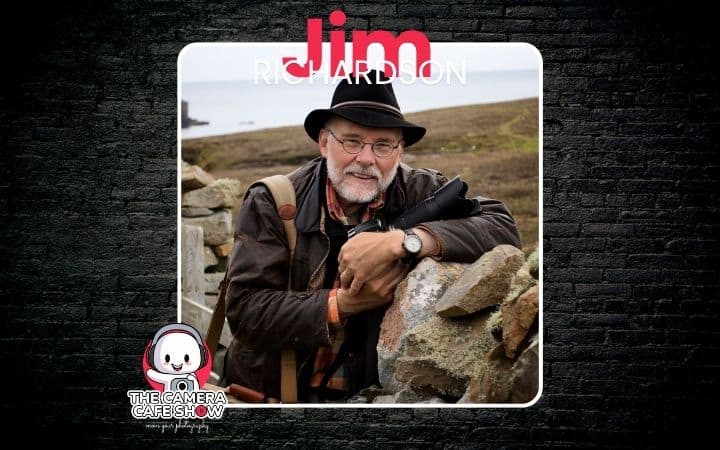
Tom: Jim, let's move a bit to here to Europe. Let's talk about Scotland just a moment again. So, a place you returned time and time and time again. What is it about Scotland that capture your imagination?
Jim: Well, I think, I think I probably found that I liked. I liked the culture. Yes, I did like the whiskey, but I liked the culture. I liked the people, I liked the wildness of it. Scotland developed this sort of unique unique culture, you know, kilts and, bagpipes and all those highland clan kind of markers, of their, of their culture. What I found really though, I think was that I, as I went further and further out to the edges to smaller islands, to places like Orny, we were talking about at the Orny and the, and the archeologists who were digging back into history 5,000 years ago. I actually made connections with the rural people very much like I had made connections with the rural people back here in Kansas. And yeah, while they tend to have more lighthouses and they don't have many grain elevators, you know, it's, it's still the problems of life are very much the much the same. but what I found, what I really found were people who were intent upon creating, creating lives for themselves and meaning in their lives their own of their own devising and as opposed to simply Ed adopting the. The common culture the current age, and making their lives about that. So you would find these people out on these, on these little islands who were you know, just total oddballs. You know, I remember I remember Simonson, a farmer who discovered a neolithic tomb, a 5,000 year old tomb on his farm, he eventually trains himself to be an archeologist and the tomb himself.
Tom: There you go.
Jim: Yeah. A farmer.
Tom: Mm-hmm.
Jim: You gotta admire somebody who will train themselves to be an archeologist so that they can excavate the tomb they found out in the pasture where their cows graze, you
Tom: But this is the same farmer that, he found it, he closed it up again, and then he started 10 years later on it.
Jim: there were regulations about excavating such things. And he had to, with the aid of an archeologist, he had to find a loophole
Tom: Yeah.
Jim: they didn't come back and he or he alerted the authorities. But they didn't, 20 years later, they hadn't come back to excavate the tomb. And he found a he found a loophole, in the law and that allowed him to do it. And he did a really good job. You so it's a, it's a fun, it's a fun story. I found lots of those kinds of stories, these kinds of people on traditions in their lives, carrying on, finding, finding meaning in unconventional ways of. Finding it pathways in their lives that didn't depend upon mass media mediation,
Tom: Mm-hmm. Yeah.
Jim: know, that unique, unique paths. You know, and then, you know, of course they're part of the Celtic world. And, you know, one thing about the whole Celtic Fringe, you know, which involves Ireland and Scotland and Brittany and Galacia and Cornwall and all that kinda stuff is these were people that generally knew how to have a good time. You know, so, you could always, you could always depend on finding a pub someplace or another, you know, where somebody would be doing something,
Tom: Mm-hmm. Mm-hmm. Kim, was there, was there a place or a story that got better with repeat visits? Maybe something that you missed the first time?
Jim: That I missed the first time. Yeah. I mean in Scotland, Yeah. I think there were, I think there were things that I wish I had, I wish I had gotten better, you know, there were people who I photographed just once, Bu, Johnny Buchanan, who hauled sheep out to his, to the island of PAE you know, and I got to photograph him once and Chi, and he's gone now. And I wish I had gone back more. You know, there were lots and lots of people who, you know, I either I didn't make the opportunity or I didn't have the chance to. To really explore more. And I and I wish I had, I wish I had done that or been able to do that. So I'm glad to have got the pictures that I do. of
Tom: Okay.
Jim: was that opportunity, but you just always have the feeling. And that's what I, that's what I learned in back in the little town of CIC Kansas is that by going back, going back, the subjects get richer. You know, you depth emerges, you find, you see more, and one of the, I suppose, I don't know if I had, I adopted this or if I discovered it or somebody else taught me this, but my assumption always ended up being that if I, if I wasn't finding a picture in some place. It wasn't the subject's fault, fault. I needed to learn to see, to learn to see the place. And some of that was just pure technical stuff. You know, if I, if I needed to learn to do lighting better or I needed to, I needed to a technique that would allow me to see the place better and make, and make better pictures. But generally, you know, that if I wasn't finding pictures it wasn't because I was in a boring place. It was because I was a boring photographer and I needed to, I needed to get better.
Tom: But Jim, you are also the one that always says that if you want to be a better photographer, you have to stand in better in front of better stuff.
Jim: I think that's a corollary of what I was just saying and be, and I said that because I eventually, initially said When we were teaching a series of travel photography workshops for National Geographic Traveler, and what I wanted to tell people was, photographers don't think you're so clever knob turning. Don't think that you can take a boring subject, you
Tom: Hmm. Mm-hmm.
Jim: make it interesting simply because of what you know about f stops and depth of field and all those other clever things we do as photographers put as at least as much work into finding interesting subjects as you put into all those clever things you do with your camera,
Tom: Mm-hmm. Yeah.
Jim: you know, and it, and it, you know, you have to do both. you absolutely have to do both. You have to do it all. You don't get to kind of, you know, just settle in on one technique for making pictures. You have to do it all. But, you know, I could say, you know, yes, I am a better photographer when I'm standing on the edge of the Grand Canyon I'm standing in front of a carwash. Yeah.
Tom: Mm-hmm. Yeah.
Jim: know? Yes. Subject matters. And I don't think we get to separate out the photographer from the things that they in front of, they choose, they the, you know, at least as much of what makes a photographer is the subjects that they decide to work on. You know, they what they do with the camera and what they do when with their, with their, with their technique. And you see, you see a big range. You see, you see photographers who are just, hmm, they're fairly adequate photographers. They're probably fairly good, you know, photographers, but they find, they have brilliant insights. They find subjects, they find interesting subjects. They have, they have great insights, you know, and then you have photographers who are just, and I've seen a number of these who are just absolutely brilliant makers, they're boring people and they, and they use this incredible talent nothing subjects. You know,
Tom: Yeah. Yeah. Mm-hmm.
Jim: I have much more respect for the for the, for the mediocre photographer who finds, who says something through their photography than I do for the person who does just these brilliant looking you know, the sort of the cotton candy of the photographic world, you know? I don't have much respect for that.
Tom: Now you say confections, Jim. Another thing I wanted to talk about is the project feeding 9 billion.
Jim: Oh, yeah.
Tom: Then it's very much about human and the need and the scale. But how, because this is not an easy subject to put in pictures because you have on one side you have to show the scale that is maybe maps, data, aerials, whatever. And then you have this individual lives of, of farmers. How you had, how you had this in your head the first time. When, how, how to make this work.
Jim: Well, that was, that was a collaborative effort really on that particular story. Now, I've done a year where I think that I've done a number of stories about various aspects of food and agriculture, farming, GMO foods, all the, all those kind of things. But this particular story, the one that you're mentioning, feeding 9 billion was a collaborative work. I, with Dennis Demmick, who was my photo editor at National Geographic for a great many stories and with whom I did a number of the agriculture stories. And that came about specifically because, I grew up on a farm and Dennis grew up on a farm and He understood agriculture, he really understood and he understood why it was important, you know, and it was my job then to see, oh, well how could you take these important things and try and make pictures out of them, you know? And we were aided by a happy circumstance is that we had a hard time getting some of these stories sold, then the new editor came on at National Geographic Magazine, Chris Jones, who had been a photographer who had worked in Topeka with me back in the 1970s at the newspaper, had gone on to be a staff photographer at National Geographic, and then was pegged to be the editor. the editor, not, a photo editor, editor, E editor. And the happy circumstance was that Dennis Dimick and Chris Johns had been roommates in college
Tom: Okay.
Jim: and Chris came from a farm. So he understood agriculture. In fact, he had been the state FFA when they were in college together,
Tom: Okay.
Jim: Future Farmers of America. had been the Oregon State FFA president. So all of a sudden we had an editor there who also understood food and agriculture stories. And all of a sudden some stories that had, we had done a proposal on eight years before could kind of come out of the wood and come back into currency and we'd end up getting the story done. So then. Dennis really did the architecture of this feeding 9 billion. And he comes up with the basic architecture of it is that, is that we will explore this from the mega big scale to down to the human scale. And for that, he assigned two photographers. The one of them was George Steinmetz who did all the aerial photography, you know, flying with that parachute and a engine and a propeller on his back, you know, and all George Steinmetz, who's brilliant, he would do the large scale stuff. He would photography of the large scale of agriculture in the world. My piece of it was, I was going to do portraits. I'm gonna bring the farmers to life. I was going to do portraits, I'm gonna do a series of portraits of farmers around the world. And we determined then to do them all in ex, pretty much exactly the same way. You know, all, you can say it this way, with a 35 millimeter lens vertical frame from about five feet away, showing in the background where they lived, you
Tom: Mm-hmm. Yeah.
Jim: woman harvesting potatoes in the high Andes with the Andes in the background and the woman harvesting rice in Bali, you know, with the palm trees in the background. And, you know, so in other words, the point was that all of these pictures would, it would be a typology. All these pictures would be very much the same. And what would vary would be the setting and the people. And we would light them. Because what I wanted to do there was I wanted to give them the sort of treatment, a little bit of the treatment that you would give us a CEO
Tom: Mm-hmm. Yeah.
Jim: you were doing, corporate portraits,
Tom: Head shots. Yeah. Mm-hmm. Yeah.
Jim: you wanna, you know, you sort of, you know, them a little bit. You wanna make, you know, honor them, you know, and that was important to me and to all of us on that story, because so many times when we start talking about these everyday folks around the world, many of them in the third world, They become stick characters. You they become interchangeable cyber of a cartoon character of what we mean by a third world farmer. know, we don't name them and they very often, we don't even see their faces. You know, they aren't somebody, they don't, they aren't particularly they're just interchangeable pieces in a, in a vast system we don't really know much about, you know? So I didn't wanna do that. I wanted portraits of people and we're gonna name them and we're gonna, we're gonna do everything we can to show them at their best, you know? And they were, they were fascinating people. And the, and they, and the essential bit of it was that all of these people are highly knowledgeable about growing food in their particular place. know, the woman up in the high Andes planting potatoes at 14,000 feet really knows what about. Same with a doing, nuts in Africa or in Kenya or Ethiopia, or the woman in Bali growing rice or the, or the guy, you know in China, you know, out there, you know? Yeah. All
Tom: Hmm. Yeah,
Jim: folks are highly knowledgeable actually. You know, and that was meant to be an antidote to this idea that the way to serve the world's food, solve the world's food problems is just have them do it like we do it here. You what they really need is what they really need is our smarts and our tractors. then they'd be okay. You know? Well, and it's just not this case, It's much more
Tom: No,
Jim: than
Tom: it's much more complicated.
Jim: all about.
Tom: Mm-hmm. Tim, I need, I need a signed copy of the picture of the. Of the woman in Ukraine withholding the cabbage. I love this one.
Jim: Alexandra Alexandra. Oh man. I tell you, if you're a photographer and you find the Alexandra's of the world you really don't need to be a very good photographer. point that 85 millimeter lens at them and she smiles and bam, you know, picture's made. You
Tom: Yeah,
Jim: great. She was a great character. Yeah.
Tom: she loves amazing, happy smiling. Yeah. What's, what's the biggest thing you learned about food and farming with making this project, Tim?
Jim: With what? Say that again.
Tom: With making this project? What's the biggest thing you've learned about food and farming in the world?
Jim: Complicated. You know, it's really re I mean, the whole. The World Food System, it's the biggest single human enterprise. It occupies 50% of the habitable land on the planet. I mean, you know, it is just it is the biggest single environmental impact on the world. It involves more people. It is, it is hugely complicated. There is no simple answers. You know, so I had to give up this, these convenient ideas. Oh, if we were just all used, went to organic food, everything would be better.
Tom: Hmm. Yeah,
Jim: and it's just not that simple.
Tom: no.
Jim: is hugely complicated. So when I, when I try to talk to people about this, one of the things that I do is I try and keep the complexity. You know, as storytellers we very often want to simplify the story, bring it down to a single, a single point you know 'cause people continually ask you what's the answer? worst part of that, what I just said was and what's the answer? Well, there is not a answer. there are lots of answers. There are lots of human knowledge, lots of systems, lots of complexity, lots of history, lots of culture. You know, we don't get simple answers. that's one of the things I do in any of the presentations I give about that subject is I don't simplify. I make it a point to try and just. Address as much of the complexity as I possibly can and tell them, you know, you're still getting too simple of a depiction of this. You and I know that's not what people want. They want simplicity. I just have to kind of say, sorry. Can't go there.
Tom: Mm-hmm. I think it's what it makes very interesting for me, Jim. Hmm.
Jim: No. Good.
Tom: Yeah. Mm-hmm. I wanted to talk about more things, but I think we have to catch up another day. Only one thing, only one thing more, Jim, I think you've seen photography going from film from darkroom film to digital and now to iPhones. You think fundamentals of good photography have changed?
Jim: Not really. And I know that's a, I'm stepping out on the on the gang plank out there over deep waters when the AI world is coming on. And there of photography that are absolutely gonna be transformed by AI and have al already been transformed by things like Photoshop and, and digital and other. But I think, you know, also the, the fundamentals of good photography is good photographs are interesting. They are interesting. and if you can, if you can tell interesting stories through your photographs, you're probably going to find an audience. I mean, that's, that's the, one of the great things that I find on Instagram is this instant access around the world to a fantastic number of hugely talented people telling interesting stories about stuff I don't know anything about. And they make me interested. there's the guy in England who does those cool videos of Thatching roofs, you know, and there's, I mean, you know, you know, I mean, all those people who are doing all those fascinating things that, and I just fall in love their storytelling and what, and what they're telling me, and whether or not that is still pictures or videos or stories or whatever. I'm not, I don't really care. I think the, the basic, the principle of this all is photographers. Is I think it, perhaps used to be that photography was about technique. Photographers had to be these technological experts because, you know, it was, it was really difficult. anybody who's tried to make good black and white prints in the dark room knows that. It took you a while to figure out how to, how to do that. You know, I think photographer's main skill now is finding eyeballs, you know, is taking images and finding the, finding the audience and having something having something to say. then I think that's a, that's a good pattern. I came through, a part of my photographic career was in the stock photography world. And there was an era in the eighties and nineties when people were doing just miserable pictures, stock photography, pictures of executives shaking hands, and all those kind of things that got used in pathetic ads around the world. And they were, they were just awful. Awful. All of that is easily going to be supplanted by ai. Yeah, fine. Let it, let it go.
Tom: Yep.
Jim: I think also fundamentally, remains a connection. There remains an umbilical, if you will, between reality and the power of a powerful photograph that reality imbues a photograph with a power that cannot be replaced with pure graphics I don't think is replaceable. I don't, I just don't think so. I mean, I know I'm getting fooled all the time by AI pictures on screen, still, when you find people telling real stories about real things, it's recognizable and it has a power that all of the graphics in the world simply don't have, So in that regard, I find myself rather bullish on photography, whatever, the mode, whatever the mode. And I see plenty of people out there with their iPhones, me included, you know, are finding it just a super uber liberating way to bring the joy back into photography
Tom: You see?
Jim: our lives hoisting camera bags
Tom: Yes.
Jim: around across the planet.
Tom: You know, if Steve McCury shoots with iPhone,
Jim: I would imagine, does he now?
Tom: I have no idea. I ask you
Jim: I you know, and I haven't, I haven't talked to him for a while, but I can't believe, you know, I can't believe there's anybody on the planet who doesn't pull out their
Tom: exactly.
Jim: Pictures of their, whatever they're eating that they want to make other people jealous Or,
Tom: Exactly.
Jim: And let me show you some pictures of my dog, Tom. How
Tom: Mm-hmm. Yeah.
Jim: It's life.
Tom: It is life.
Jim: Pictures should be about life.
Tom: Mm-hmm. Tim, what's the oldest place you ever slept while on an assignment? Uhhuh.
Jim: Oh, gee. I think, I think that would probably, might well be out on, in TJI Kastan and I, I wa I was there on the day in the life of the Soviet Union, and I remember that we got done with the, this was one of those things where we did 24 hours of shooting. We started at midnight and we ended at midnight. And after I was done with that, I went outside of the hotel I was kind of wandering around I was feeling very full of the, wonder of the encounter in the world, you know, and I remember that I went outside and there was a nice sidewalk and trees in a park. And there was a, there was a bench there, and I remember just kind of laying down on the bench, Thinking what a, what a blissful thing it was to be there in this strange, strange place encountering all of this. And the next thing I knew I woke up and the sun was shining on me. And I thought, you know, I suppose somebody could have come along and robbed me. But They just walked on by,
Tom: Mm-hmm. This was with.
Jim: was in Duch Bay. Duch Stan
Tom: This was without whiskey.
Jim: what a dumb guy
Tom: This was without whiskey.
Jim: that was, that was without whiskey. Yes,
Tom: Okay.
Jim: Exactly.
Tom: Jim, what do you think? Photography, what? What's the greatest gift it given you personally?
Jim: Oh, it's just been this key to unlock all these places. You know, I am, you know, if you look back behind me, back over there, you see all those, all those boxes each of those boxes are the different National Geographic story. And each of those boxes there are about 21 of those boxes are from film stories. And for each of those stories, I shot about a thousand rolls of film. So yeah, they're, they're pretty full of an incredible number of places. For each of those stories, I would've photographed two to 300 different subjects, you know, and so, yes, the photography has been incredible. Door opener, magic carpet reason explore, to see, to try and interpret and try and share. and
Tom: Hmm,
Jim: That probably has been overall the biggest thing for What a what a blessing it was.
Tom: hmm. And friendships maybe. No, Jim,
Jim: Oh, of course. Yes. How else would I be able to call Nick card? Archeologist in Orny, Scotland. A friend, you know?
Tom: of course. Tim to round this up. I'm going to read it because this comes from your block.
Jim: Oh.
Tom: It says, today my mind is absorbed in the long climb up. Scalic Michael, that remote crack isolated in the Atlantic of the coast of Ireland there. Celtic monks found their solace in spiritual is isolation 1,400 years ago. I've never been on Skal Michael, though I have come close four times each time I was torted by high seas. So Jim, if you ever make it up there, you are looking for a spiritual connection or you want to toast with a whiskey in the hand on all the advantages you lived.
Jim: I'm not sure there's a difference between toasting and seeking spiritual inspiration.
Tom: Okay.
Jim: I, I simply do think that if you ever, if you ever get to those places, depending on your, depending on your state of mind and your openness, you know, there is an opportunity to reach to reach back and trying to make a connection. For instance, with those monks. Who sat out there the year on that isolated piece of rock, you know, trying to understand the world. And you can share, you can share a moment with those folks pretty easily. I,
Tom: Mm-hmm. Yeah. I hope you make it one day.
Jim: I do too, actually.
Tom: Mm-hmm. Jim, it has been an absolute pleasure talking to you. I will catch up with you another time because there is, there were some things I wanted to ask, but I'm going to run in trouble with your wife if we go over time, so let's, let's make it toast for an excellent episode, Jim.
Jim: Thank you so much, Tom. It's been a, been a, been a pleasure and the, and the Highland Park didn't hurt.
Tom: No, no, no. It was very well, it went very well down, Jim. I will cut this out, but wait a moment. If we say bye, have a nice day still, Jim
Jim: Thank you so
Tom: and
Jim: having me and my best to everybody here.
Tom: I will, I will give my greetings to the family. You do the same and we see each other around. I see you.
Jim: good.
Tom: Bye.
Jim: Bye.