

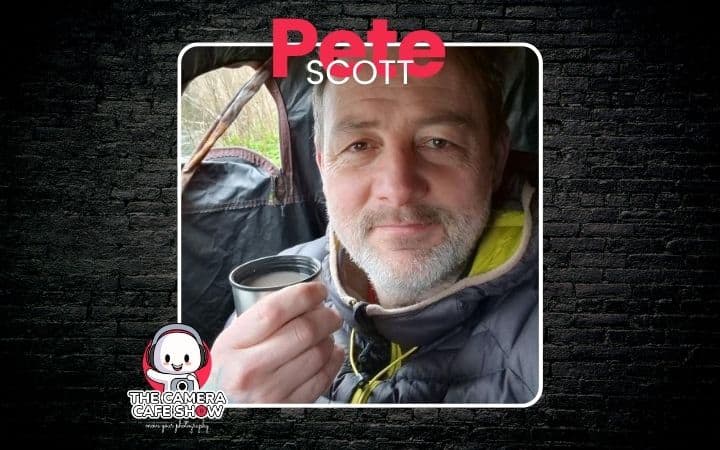
Greetings and welcome back to the podcast where we brew up inspiration and sit down with amazing photographers to talk about their journey, their passion, and some stories behind their images. I am Tom Jacob and this is the Camera Cafe Show.
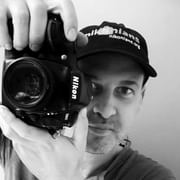
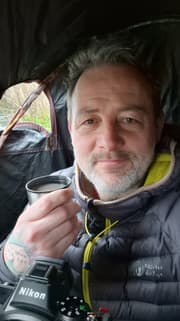
Today, I’m joined by Pete Scott, also known online as Naturehawk — a wildlife and landscape photographer based in Dorset, UK. Pete is living proof that you don’t need a photography degree or a professional label to create stunning, meaningful images. His love for nature, endless patience, and deep empathy shines through in every frame — whether he’s tracking fox families at dawn, windy ridges with puffins or quietly waiting for owls in the woods.
In this episode, we talk about how his passion for wildlife began as a kid, what it takes to photograph fast birds like kingfishers and swallows, and how wildlife photography taught him patience, ethics and more about himself than he ever expected. We’ll also talk some gear, badgers, wildlife walks for his YouTube channel and encounters that changed everything.
But Pete’s story goes well beyond photography. He’s also the founder of AIM, a volunteer initiative that renovates homes for families with terminally ill children — completely free of charge. His quiet dedication to both wildlife and people is something that stayed with me long after this conversation ended.
I really enjoyed this one — and I think you will too. Let’s dive into this conversation with the amazing Pete Scott.
Tom: Good evening, Pete, and welcome on the podcast. It's a pleasure to see you again.
Pete: Hi Tom. How's it going? Yeah, really good to see you again mate.
Tom: Pete, before we dive into anything wild or with feathers, I think we have to talk a moment about this heat wave
Pete: Yeah,
Tom: How are coping with it there in the south of England? Want to change your lens for a bucket of ice?
Pete: That would be nice, wouldn't it? Well, I'm originally from near Manchester, which is further north, and we normally get wet, colder weather there. I. You've probably, you've probably heard the cliche that it always rains in Manchester.
Tom: Right.
Pete: the south coast where we get the hottest weather the driest weather. of got used to, I've been down here 20 years now, so I'm kind of getting used to it. But we've had an extraordinarily long dry spell here with quite high compared to Spain, but for the uk. Yeah, it's been quite hot down here. The is brown. There's no green grass, so Yeah.
Tom: Any impact on the wildlife?
Pete: Yeah. I think, yeah, there's, there's quite a big impact actually. The, well, seems to be less active, certainly in the day, so , to make the most out of any photo shoot in the heat. You have to go early or late. Dawn dusk. Definitely. Because during the day, just like us humans, wants to be run running around in 30, 40 degree heat, so all flying
Tom: I think even here, my camera will melt for the moment if I take it out between 10 and four o'clock. So
Pete: I can imagine, right?
Tom: it's it's way too hot. Pete, I was thinking to start this off, if wildlife could vote, you would say that a fox would make the best prime ministers.
Pete: Ooh. Wow. That's an interesting question. I'm not, I'm not sure it would, but I would definitely vote for it. Yeah. Yeah. I think, I think there may be a few policies that I. Most, a lot of people wouldn't agree with, but that's the way nature it?
Tom: Yeah. Yeah. But let's talk a bit about you . You built your photography life around your day job, not the other way around.
Pete: Yeah.
Tom: How has that shaped your vision or what you create? Let's say you have a lot of passion, but you don't have the pressure.
Pete: Yeah, there's, there's no pressure at all for me, Is really nice. You know, I can, I can kind of go out and en enjoy it 100% with no pressure. can imagine a professional photographer is that added. Of pressure to find the subject, needing to find an interesting shot or, you know portion of video to get paid by presumably, or, or to sell something. So, yeah, I think it would be nice to be a professional photographer. I mean, it's a, it's a dream job, surely, for anyone interested. In this, in this activity. But I think at the moment I've got another career at different day jobs, let's say, think I've got the best, the best balance at the moment. All my out with a camera with no pressure. Yeah, I think I'll take it at the moment.
Tom: What surprised you the most when you start learning photography Bit?
Pete: Well, when I first started I was actually into landscape photography and astro photography my focus on wildlife photography hadn't really kicked in. Then I was completely focused on wildlife and nature. As I have been since I was a small boy, I got at a primary school by this amazing teacher who just instilled the, you know, that really childlike wonder in birds and insects. had, we had all sorts of invertebrates in the classroom used to go pond dipping in the woods and watch. He, we'd bring back all these caterpillars and we'd put them in a, like a mesh cage and watch pupate, and then turn into beautiful butterflies and moths. And it was, it was so engaging and so and that's stuck with me all through my adult life now, that wonder in nature's never gone away. And now it's kind of morphed more towards primarily birds and. But yeah, I love everything nature. So the, so the landscape and the astro photography was completely different lands, I, looking back now, I think landscapes is quite benign, is there are very few real highs. Unless you, unless you're really lucky with the light. You know, if you are, if you are a subject, let's say a building or. A valley with mist or everything. I think if you've got beautiful light, you can get that dopamine. Hit that, wow, I've got this, I've just captured this amazing image. Astro's completely different to that I think in respect of you can create the image by using different techniques, et cetera. So you can make something of quite a benign scene really, where you think nothing's going on, and you can, you can conjure something magical out of that. And then wildlife is just a whole new, pardon the pun animal.
Tom: Hmm. Hmm.
Pete: are, there are virtually, every time I take the camera out, I get this massive high because something unexpected happens. And that is really, that is really the hook that keeps taking me back out with the camera into wildlife is not knowing what you're going to see, not knowing subject you'll see and what kind of activity might be, doing. . So yeah, there were unknowns in. Wildlife photography, I think the highs are so much, so much higher most of the genres, my opinion anyway, from my experience.
Tom: But photography wise, you remember the moment that you thought that? Hmm, this is really interesting. I should invest more time in it.
Pete: I think there's been a few of those. Tom, to be honest, a few of those moments where I. You know that light bulb's gone off astrophotography I would say that was getting the first image of the Milky Way at night when that, when the camera lit up on the back of the screen and you can see the Milky way much better than you can with your naked eye. That was a big the first time that happened. And I think shooting landscapes one of the, one of the favorite subjects to shoot locally for me endorse it is Kaf Castle, which a lot of people have seen the of the iconic misty morning shots of the, of the Castle ruins. And that's, that's always a wow factor when you, when you, when you've got the right conditions with some really gorgeous light as well. And then go, just going back to the wildlife, I think what surpassed all of those other things was my first intimate encounter with the fox. And it was, it was on a, it, early morning there was Jew covering the whole ground. There was a, there was a slight mist, but it wasn't foggy. It was just a really atmospheric morning. And it was before the sun came up I saw this in this long grass and she was hunting. She could see her ears were up she kept doing that. And I was just sat quietly in this grass. 'cause I'd only just kind of arrived and it was within five minutes I saw the fox in the distance and my heart started beating really, heavily because. I wasn't, wasn't expecting a to see a fox. I didn't know I was actually out to photograph birds. But, and then I was watching this fox for about 20 minutes hunting, and she caught avol and because all the,
Tom: Mm.
Pete: the long grass that she was going through was covered in Jew, all a fur was drenched. And snout was covered in bits of mud where she'd been in and out the grass caught this hole. I was all the time, I was getting photographs of her and she trotted, she trotted back off and I thought, oh, only if that's the last I'm gonna see of her. as I watched her only about maybe a hundred meters away, a little Fox Club came out to greet her and she to the Fox Club. And then, I mean, that wasn't the end of it. She came, she came back towards me. I. And then she saw me. She probably smelt me first, but she came back some beautiful head on shots. And then came to maybe within 15 meters of me and just stood there watching me while I was lying in this wet grass as well, taking photos of her. And I just remember kind of pinching myself. is magical. This is incredible. I've never experienced this before. And that was probably wow factor for me with the wildlife photography, that first Yeah.
Tom: Yeah. Talking about having a connection with nature there, Pete.
Pete: Yeah, absolutely. I certainly felt a and I wasn't expecting it. And that's that massive high that I was referring to earlier and that Let me come back to the foxes in a moment. But I wanted to ask you, Pete, if I'm correct, I think you started 2015 only or something like this really with, photography. Yep.
Tom: So it's, it's only 10 years and you are making these amazing images. I want to ask what you would say to somebody that says, no, it's too late to start photography in, in my life.
Pete: Yeah, well, absolutely. Never, ever too late. it can be quite a really, really learning curve. I can't imagine really with the advent of. Digital cameras or even the modern DSLRs. You wouldn't have to up photography for long before you become quite adept to it, especially if you, if you do a bit of research and you, and you practice and practice and practice and then, you know, ask people's advice. If you, if you're not kind of reluctant to do that learning curve is really, really rapid and you can learn an awful lot. So I would say, it's never too late and it up a whole new world for you, and it doesn't really matter which genre of photography up either. And there's, there's nothing to say. I'm, I'm a big believer in dipping your toe into all the genres. If it's something that you want to do, I think you can, you know you can cross over. The different genres quite easily it and I didn't know anything at the start and I've taught myself everything. so yeah, it's, it's heartily recommend and ages of. No consequence. You're never would say.
Tom: No, you're never too old. And that is done. Maybe the technical side. I think most people can catch up with this rather fast.
Pete: Yeah,
Tom: But then we have the other side, like in your case, I come back to the focus that you almost have to build that. A relationship with them to get the best images. What would you need the most, Pete? Like patience maybe, or knowledge.
Pete: no, you've just said it there. Patience. is the number one thing that you need for photography anyway. Yeah. It And people, people say that you need patience. And I've seen a lot of wildlife photographers, they haven't got the patience when you're, if I've been for two hours, see they're getting itchy feet. They want to go and have a look or wander And it's, it's, it's very tempting to do that. But I just experience time and time again, going out. sitting there for hours on end. There are very few times when you'll come away with no images, but high of those times that have gone out and sat there, whether it's on a riverbank, you know, in a little portal hide, whether it's just in some long grass waiting for foxes or in a woodland, wherever it may If you sit there for long enough, then the wildlife will. Turn up, something will turn up and something will catch your eye and you'll get some images and you may even have most amazing kind of connection or with something. Yeah, absolutely.
Tom: And to come back to the Foxes. One moment, Pete, they are. Urban or you go out in the county to find them or is it always the same family of foxes or not?
Pete: I've got three families that I visit regularly. Two of them are out in the countryside and one of them is an urban family close by So there's a nice mix. And I would say the urban foxes tend to be less wary.
Tom: Yeah. Mm-hmm.
Pete: certainly not trusting, but they're more used to seeing people and humans and noise. So they're a little bit more tolerant to people than the actual wild foxes out in the countryside. far more, distrusting, I would say have to, you have to kind of spend a bit more time with those and be more patient, getting their, gaining their
Tom: What's it about birds that keeps you hooked on them, Pete?
Pete: Oh, Tom, I mean. What, what's not to like about birds, but the, just the range and diversity of, even in just in the uk the bird life is, there's something for everyone, isn't there? There is, is a bird for everybody. You know, some people like Kingfishes, some people don't like them. Owls, warblers, know, the list goes on and on. And the thing is, they're so. They're so widespread. matter where you go, you're gonna bird. So I just think it's a, they're, they're perfect subjects for wildlife photography. In any habitat. You can usually find some kind of bird and, you know, 'cause they're, they're all specialists in their own little field and they're habitats. So you're kind of covered wherever you
Tom: Yeah. I think you have a soft spot for kingfishes and owls. No, Pete.
Pete: Yeah, I think you're right there, Tom. Yeah. Yeah. amazing, aren't they? I mean, I.
Tom: Well, Kingfishers, I see one regularly, but they're way too fast for me, so I have to ask you how you approach them. You just sit still in a hide for an hour and wait until they come to the right place.
Pete: Yeah, that's exactly it. Yeah, there's, there's you. I mean, you can get lucky walking down the river, or if you're walking, you know, around a lake somewhere, you can get lucky and see them. But to extend your chances, I. Of getting some decent images and doing it regularly. You this, the patience gets back to the patience again. You've just got to You don't necessarily have to have camouflage, but you have to be sit. You have to sit still, and you have to be quiet, you have to still sit there for a long time. If you know, if you know, you know that there are kingfishes on. Say it's a stretch of river or a certain lake or a pond, then you're not really struggle to see them because they are very active. They cover quite a you know, their territory's usually around a mile or so, and down a river. Yeah, you, you gotta be really unlucky not to see one, but to get the photograph like you say. It's quite, tricky. So look for, look for kind of overhanging branches for the purchase. and position yourself where you are not right next to 'em. But you can, you can focus on one with your camera, whichever lens you've and then just sit it out really and cross your fingers. Yeah,
Tom: And owls is the same.
Pete: no, owls a bit different, aren't they? It is it, one of the things about the hours is knowledge. Knowledge about their habitat. If you can find out where they are there is, there is some kind of crossover where you do have to kind of go to that vicinity and be patient. usually barn will come out at dusk and You know, they'd be flying at dawn too, before it gets too light. you can kind of down that window of opportunity. So you're not, you're not set out for eight hours. You know, you could go for two hours in at dusk and two hours at dawn, and you've got a good chance of seeing barnell if you, if you know that they're kind of breeding there or roost in that area. The well. The other main ones are the toney, which are just super difficult to find. They are the most abundant owl in the uk, but always the hardest to find 'cause their is fantastic. One of the best tips to find a toney owl to wait through the autumn or the winter in the autumn, and you'll hear the males calling for a mate. So if you can Call it out. And that's the TWI call. that you know are not too sure about the owl calling the traditional TWI through, that's the to owl and the mail will call for a mate to attract a mate around that time of year. And you should know then that if you go and sprint, if you in that vicinity your photography, come springtime, you may even see the toenail chicks. Branching out on the branches and they'll be calling too. So yeah, there are and ways of finding the toney. And then the other main one that we see in the UK is the shorted out. Usually word of mouth can help you there. If somebody, if you can see somebody on social media that people have taken a photograph of them or just. You know, from other bird watchers or photographers where they're, where they're, where they've kind of turned up, then that's probably the best way for the short as well. 'cause they're, they're kind of migrants as well. But there's certain areas that they come back every and you can, keep returning to that place and hopefully get a shot of them. Yeah,
Tom: I will watch yours on Instagram because the few times I saw owls, I had not, a camera. As always, it happens and,
Pete: Yeah.
Tom: but beautiful animals.
Pete: Yeah.
Tom: Beautiful animals. Pete, let's talk a bit about maybe batches and politics. Just a moment. I know you and I discussed this already a bit in the past about. Fox hunting and batch calling in the uk. I want to ask, what's the situation now? There Is there, is there some kind of change happening?
Pete: No, sadly. Sadly,
Tom: Mm.
Pete: the status quo at the moment is it's a real worry actually, because the scientific body of evidence, I. For the UK's magical, which was brought in initially, well, it was brought in to try and stop the spread of bovine TB tuberculosis. But there is a mounting body of evidence that states that bovine TB is not spread by badges. It's spread by. From cow to cow, dirty conditions, et cetera. And the the government, were, we were all hoping that when the new labor government came in, would take this body of evidence and act on it accordingly end the call. But they've just heartbreaking, they've just agreed to extend the call.
Tom: Mm.
Pete: gonna be another a hundred, 200,000 badges possibly killed when they don't need to be. It's heartbreaking to think of that really one of our most iconic species in the uk, and it's been persecuted and it's being driven by the government and it's really, really sad.
Tom: You think photography can play a role there somewhere in, conservation of it. Speed.
Pete: Well, it certainly can for the public Tom. I think the more, the more exposure of the, of the, of the wonderful life of the Badger, you know, videos and photographs of them when they're. Playing in their clan by their, by their That can only help, but I do fear that it's just fallen on deaf ears with the kind of the, the farming community or the dairy community and the government, which is where, which is really sad, but we uphold can we? And I think we, Continue to put out this body of work, whether it be still or videos of just how wonderful they are as animals.
Tom: What's the best encounter you had with badgers, Pete?
Pete: Well, I've had, I've had few compared to the foxes. I've had few. Special encounters with badges. But I remember I was coming back from an astrophotography shoot one morning. It was still dark and I was driving along this country lane and I could see this badr in the distance. So I stopped, I stopped my van and just waited there and just saw it walking up this little country lane and it the way. It probably, probably walked about 300 meters towards me. It just, it was this real dead straight road and I could see it from a distance and I just watched it all the way come towards me. And it didn't, didn't have a wildlife lens on me at the time 'cause I'd just been shooting the stars and but I remember it was in the, in the headlights and it just came trotting up and I had the biggest smile on my face. 'cause I wasn't, again, I wasn't expecting that. I wasn't expecting to see one. And it came past and I was looking at it through the wind out the side window. Just went past the van. Yeah, it was magical. Truly It's like my experience with owls, no camera, but, Yeah. How many times have we said that though? When, you know, when you unexpectedly see and you have no, no camera with you? Yeah.
Tom: Yeah. What gear are you using nowadays?
Pete: Well, I'm a nickon shooter, so I've still got my old astro camera body, which was the D seven 200. Again, a fantastic camera and that actually I shot landscapes with that one as well when I first started. So a really, really capable DSLR, that one, and very inexpensive. So anybody starting out who would like. To get A-D-S-L-R and, but they're just so by how many, know, different manufacturers. There are different models. The Nick on D seven 200 is a, I highly recommend that as a, as a starting camera. brilliant. Fantastic. So that's camera. I shoot with a Z eight at the moment for my main camera,
Tom: And you have all the range of lenses.
Pete: Yeah, I don't, I don't have that many actually, Tom, I've only got a select few. I've got the 600 mil F four, which is the, just the big beast thing. Amazing knee, sharp lens. Then the 500 mil pf, which is, my favorite lens 70 to 200, and then I've got two. Too wide angled and a and a smaller 35 mil nickon, F1 0.8, again, sometimes I shoot astro with that one 'cause it's great for low light. Yeah. But I try and keep it simple. when I on a photo show, I always travel like, you know, take a tripod. Now just a small rucksack. With some batteries and a flustered coffee and that's it really for me. Yeah.
Tom: Well, I see what you wear because I will come back to it in a moment because I watch your YouTube vlogs and you film yourself
Pete: yeah.
Tom: You take very little equipment.
Pete: Yeah.
Tom: Pete, I want to touch a moment on something else that is not photography, but I find very amazing that you give your spare time, your tools, your knowledge, and your skills to family with terminally ill children. Tell me a bit about this in initiative that what you, what inspired you to start this?
Pete: Well, I was doing some work actually at the time, children's hospice that catered for. Dorsett, families endorse it in the county that I live in have children with life limiting illnesses or terminal conditions. And I was always inspired by things like D-I-Y-S-S, which is a TV program in the UK where a group of trades people go to a really deserving family, a really. A family who need needed help, whether they fall on hard times or again, they've got children with really, really difficult or conditions, and they'll completely transform the house. They'll take the family out and put 'em in a hotel for a, maybe three or four days, and they'll do all of this work on this house to make the house more habitable, easier to live in, new kitchen, new bathrooms, et cetera. And I was always inspired by things like that. And unfortunately I'm not very wealthy, so wondered how I could kind of incorporate something like that maybe help these families that I'd encountered at the Children's Hospice. So got in touch with maybe a dozen other builders and tradespeople and. Put this idea to them to maybe help the fa these to slightly modify the home on a smaller scale to this TV program, just to help them to maybe care for their child a bit, a bit, make it a bit easier for them do it all charge. Absolutely No cost involved whatsoever, except maybe for the materials that we might use and, at the time, all of the people that I suggest this idea to were kind of really on board with it. And they said, yeah, well, we'll help you. is a really inspiring idea. that was how it all started and we got, the first family contacted me for some help and just went from there. And I've been doing it for about eight years now. So that.
Tom: What did you feel af after you finished that first project?
Pete: Well, it was profound, Tom. It was a profound feeling satisfaction, and joy really. She was she was a young girl who was completely reliant her mother's care. She can't even feed herself. She couldn't dress herself. She's basically sat in her wheelchair all day or on the floor, or, well, she can't, she couldn't move herself. So her mum was a full-time carer and she was a single mother, and she approached me and asked me could we kind of create some more storage space in our house because. All of the condition that her daughter had required so much medical equipment and medicines, and she used to get all of this delivered for like maybe two or three months at a time. So she'd get a bulk delivery and it was all sat in a living room. So that was impacting on the family life in the evening, during the day that all this medical equipment was piled up in the lounge. And, know, they couldn't really get away from it. It was just in the faces all the time. So she wanted some space creating where they could store this. we took out a, a small bathroom that was under the stairs. ripped it all out and created some storage space. Where all of the medical equipment can go. She was just overjoyed. The mother was so and so happy that we'd done this small task, but made a massive difference. And yeah, to see the joy on the face was, well, it's, it is, it's hard to really. It's really hard to describe, but it was there.
Tom: So to be clear, you are giving all your free time there.
Pete: Yeah, any of those projects. It's all done in time. So the photography takes a backseat while these projects go on, to get all of the materials donated if we can. Free of charge.
Tom: Okay.
Pete: If we can't get 'em free of charge, then they only have to pay cost price. There's no, no charge at all. And then all labor's free. Yeah, think just a small act like that, Tom can make a big difference to some lives.
Tom: Yeah. Mm-hmm.
Pete: And
Tom: Ah, it's wonderful. You are caring.
Pete: I think, I think I would sum it up as I would like to live a life of purpose rather than live a life of profit. And I think if the, if more people thought that way, the world would be a much, much better place I would say.
Tom: You are caring about animals and about human beings Pete, that's wonderful.
Pete: Yeah, I think, I think there's not enough of it in the world at the moment, sadly. And the more, the more care we can put out there, the more love,
Tom: Yeah
Pete: I think it's, it's needed. It's badly needed.
Tom: and people will have to wait for the YouTube version to come out, but you have a wonderful t-shirt on today, Pete, for this. Pete, you seem to me like a very nice, quiet going guy. And I think it's also the same when I watch your YouTube flocks. It's more like, let's say a walk with Pete and some photography than all of the hectic YouTube videos I see where somebody wants to make me buy another. Piece of camera gear or, or whatever. So I very much enjoy looking because I can even watch them or not watch them or just hear you and just make a walk in nature. So I suppose this is all the setup that you had in mind, not to make them this way.
Pete: I think so. I didn't really have a grand plan to be honest, Tom, so I hadn't, really structured any kind of style of video that I wanted. It came naturally. It's basically just with me. Yeah. Yeah. And I think doing a calm video lends itself to nature photography, doesn't it? A hectic video, it's gonna your, on your subjects. So I think it's just, it was a natural progression, I think. Yeah.
Tom: It makes you smile when you see yourself back on video, Pete.
Pete: Do you think? No, definitely not. I don't think you ever get used to it, do you, Tom?
Tom: No. Mm-hmm.
Pete: I'd rather have a living, another living creature as my subject rather than me. I. For sure. But I
Tom: I know.
Pete: regarding the YouTube vlogs, can be a, a good way to impart a little bit of knowledge maybe, or a few tips for aspiring photographers. I know I up a lot of information from watching other vlogs over the years, other YouTubers. But it's not, I'm not a, an avid. YouTube watcher for following nature photographers. Really, I'll just now and again I know there are plenty of really, really good ones out there. better than my vlogs, but I think just that gentle or visiting a certain area and sitting down and just discussing, you know, the process or what I was hoping to see. And then just given a little bit of information, not too much because nobody really wants to be bombarded. little bit of information now and again can always other people, can't it?
Tom: Yeah, for sure. Well, I'm hoping that I'm doing this with the podcast, to give people some new ideas or some new inspirations and that's all I can hope for.
Pete: Yeah.
Tom: Pete, Dorsett seems to give you endless inspiration, but you just came back from Scmr Island. So I have to ask you, how were the puffins.
Pete: Wow. Oh, if you've got any interest in birds at all, then 100% recommend visiting Scoma as well as being if you're slightly introverted as well, and like to avoid crowds of people. Schumer is this stunning small island with a huge, bird population. I mean, it's, it is a real jewel in the crown of seabird There was something like 70,000 breeding pears of puffin thousands, thousands of breeding OTTs razor bills, and the, one of the most surprising things to me was manx Shearwaters, which just a little bit of background about manx shearwater. Basically, they. They feed all day out at sea and then they come back at night and go into the boroughs similar to the puffins, and they come back at night so that they're not being attacked by the GULs. is, there's just this constant struggle between during the day the puffins are out. sand deals, but they're coming back to the boroughs all of the time and back to the island and the GULs are just waiting for them, you know, bla black back gulls and they're just constantly trying to get the food off them. And not only that, once they, once the puffins lay their eggs and have their chicks, are after the puff links as well. So, you know, there's a constant survival. Battle for survival on the island, but the max shear waters do it differently. They stay out to sea during the day come back under the cover of darkness when all of the goals are tucked up in bed at night, and then they hit the boroughs at night. It's amazing. So you think 70,000 puffins is a big number. Breeding pairs of puffins. We've got something like 80% of the world's max shear waters. On Schumer. I mean, that's a mind blowing figure, isn't it? It was, I'm trying to think of the actual number now. It might have been something like 250,000 pairs. might have got that wrong, but it's, it's a just enormous figure. But 80, about 80% of the world's make Shearwaters are on that one little island. And then going back to the owls. I didn't know this. I knew there was shorted owls on there, but while we were there, we were told by the guides there were 11 breeding pears the island. Which was amazing. I only saw two, well, apparently there were 22 birds there. That just shows you how
Tom: Mm-hmm. Mm-hmm.
Pete: they are, that we only saw two of them. But yeah. An amazing place if anyone ever likes to the crowds and has got passion for seabirds, then scoma is the place to go.
Tom: And how long time you were there, Pete?
Pete: We had three nights there. I went with two other photographers, two other, wildlife photographers. And you can go for a day trip. You know, the you there and you'll arrive at about nine in the morning, and you have to leave by about four. So you're missing the best light, really. So the best thing to do is to book there. There's one building a, with a, know, maybe about eight, seven or eight rooms that you can rent for two or three Yeah, that's what we did. And so you can go out for dawn and dusk and get the best light as well. and sunset light. It's just, it's an amazing place. Truly enchanting. Yeah.
Tom: What was the best experience you had there, or your most rewarding shot that you made?
Pete: I. Well, the most rewarding shot I think was I was, I was hoping to get shorted hours, which it did. I got an amazing, amazing photograph of it staring right down the camera. But what surpassed that was going back to the, going back to the accommodation, it was quite, again, talking about the heat wave. It was, it was a hot, sunny day and there was a few swallows flying up and down the track. invertebrates and I sat down and I just thought to myself, oh, I'd love to get a swallow image, head on
Tom: Wow.
Pete: a, taking a fly or, you know, a morph or something. I managed to get one. So that was, that was definitely the most satisfying image, kind of right there in front of the lens. Mouth Just about to swallow this invertebrate.
Tom: I saw the picture on, your Instagram
Pete: Right.
Tom: Very good. Very good. Yeah.
Pete: Very difficult to get Tom.
Tom: I can only imagine.
Pete: Yeah.
Tom: People always say that when I do macro
Pete: Yeah.
Tom: they say it must be difficult.It's not very difficult. I will do a podcast about it in a month about macro. But I mean, following a swallow and then also have the fly in focus, man, that is hard work.
Pete: it was a fluke that I got on the fly, but 'cause I was only focused on the bird. It just so happened that just about to take it. So that was good. was lucky. It was a lucky shot, but it getting that lucky shot, I also had about a 1,500 unlucky shots deleted, so yeah, I put the time and effort in.
Tom: But there you go. Luck and patience we need and then it all comes together.
Pete: Yeah.
Tom: Pete, is there something that you learned about, not about animals, but you learned about yourself now with being a photographer from being behind the lens?
Pete: Wow. That's quite a question, Tom.
Tom: Something new about you that you discovered.
Pete: Do you know what? I think certainly with the, certainly with the wildlife photography, I've, I've realized that I certainly mix with the natural world better than I do with other humans. I think. always been quite, I am, I am quite insular I like my own company and I just think it's the perfect, it's the perfect hobby for me. I don't need to be with people don't think. I never get that craving, but I do. I do crave isolation. Outside. yeah, that dawned on me quite quickly actually when I started wildlife photographs. and I think I realized that I've got a lot of empathy for the natural world more than I thought I Yeah. And patience. You got to have patience.
Tom: I made you think there for a moment, Pete,
Pete: Yeah. Yeah.
Tom: I will ask something to end this more easier. What's something simple that made you smile this week, Pete?
Pete: Well. What's happened? I'm sure something did happen. I saw another photographer's Instagram and I don't, I don't sit on Instagram a lot. I'm not, I'm not a big Instagram. Watcher, but somebody up in a banana suit to go to hospital for a chemotherapy session, and that really, really made me smile. That was so nice to see 'cause she looked so happy and excited about it. Going to hospital to get this horrible treatment that's gonna make her feel ill. But she was so excited 'cause she got to wear this banana costume. Yeah, it was amazing
Tom: Yeah. You have any projects going on now? Building projects, but with families?
Pete: there. There's one that I am currently looking at sadly this family lost one of their children. Not too long ago, and they wanted to do some modifications. They were, they were gonna have a lift put into the house 'cause the boy And sadly passed away. So some initial preparation work that had been done to where the lift was going. They now wanted that, putting back to how it was before they were gonna get this list lift installed. So that's the next project. And then I've just received another email this week regarding another family, which I'll go and have a look at and see what they need doing. So yeah, there's two currently.
Tom: You are a very busy and a very good man, Pete.
Pete: Thank you, Tom. Yeah, very busy for sure.
Tom: Pete, I think we can end this wonderful talk we had. I really hope that maybe this year if we can, if I can make it to uk, we can catch up for a beer somewhere if you find half an hour to talk with me in your busy life, and it would be amazing.
Pete: that would be great.
Tom: Pete. Thanks a lot for our talk tonight.
Pete: Thanks
Tom: Be in touch and I hope to hear from you soon.
Pete: Thank you so much, Tom. Really been a pleasure.
Tom: I see you around Pete.
Pete: Cheers. Bye.
Tom: Bye.
I hope you enjoyed that conversation with Pete — I certainly did.
From foxes to owls, from the cliffs of Skomer Island to quiet woodland hides, Pete’s love for nature is something that really comes through in every word and image. And beyond that, the work he does through his AIM initiative is just extraordinary. If you want to follow Pete, you can find him on Instagram and Threads under @naturehawk — and I highly recommend checking out his YouTube channel too, especially if you enjoy a slower, more thoughtful take on nature photography.
As always, you can find the full show notes and all links on our website, and if you’re enjoying The Camera Cafe Show, you know what to do — follow us on Spotify, Apple Podcasts, or wherever you like to listen. And while you're at it, leave a little review — it helps others discover the show.
Thanks again for tuning in, and until next time, get outside, bring your camera, let your curiosity lead the way and move your own photography. See you next time for another wonderful talk with another wonderful photographer. Adios!