

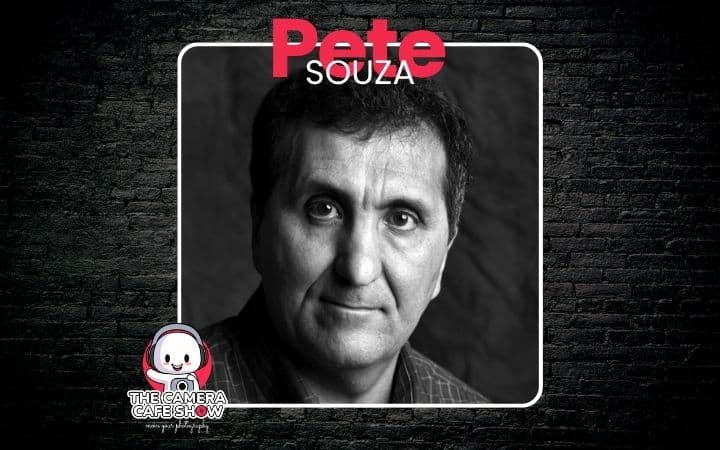
Tom: Today on the show we are joined by a man who arguably has one of the most unique resumes in history. He has twice been a presidential photographer and now a bestselling author, Pete Sousa. Pete, thank you so much for giving me your time and coming on the show tonight.
Pete: Yes. Thanks for having me. Appreciate it.
Tom: It's my pleasure. Let's start directly speed with my question Pete. You describe the current administration as looking at a set of a reality TV show with a lot of stage pictures while when you were photographer with Barack Obama, as you told, you were documenting for history. You stated that your comments on Instagram, they're not political, but you want to show from the inside how the US presidents, you made pictures of, Reagan and Obama, how they upheld dignity in the office. Pete, is there any need for a 999-seat new ballroom, and what exactly have the people lost with demolishing the East wing?
Pete: Well first I've probably changed my mind on saying that I don't make political comments. 'Cause occasionally, occasionally I do now. And in terms of the reality show, I think what I meant was that mean I think the White House photographers are still documenting for history. It's that what he does is a reality show. meaning that, like when he has a cabinet meeting, it's not really to discuss policy, it's to bring the Press Corps in the entire meeting. So that each of the cabinet secretaries can go around the room and he praise upon their boss the cameras capture that moment. that's just a little bit more of what I was referring to. On the East Wing. There's a lot of history in that building and there's a process for a president to make renovations to the White House and they should make renovations to the White House when it's needed. And no doubt there were some renovations that were needed in the, in the East Wing, but to like completely demolish Wing of the White House without any notice, without any permission I think is not right. mean the, it's not his house. own that house. He has temporary custody just like every other president has. And they all have little changes here and there, but they go through a process to make those changes. and this is just one guy thinking he can do whatever the hell he wants and doesn't have to talk to any of the historical committees that are set up. doesn't have to talk to the Park Service, national Park Service. So I was very offended by that. As were more so that. People that used to work in that building. And I and I have heard from both the Obama people and the, and the Reagan people that worked in that building, which is usually, you know, it's, it's associated with the First Lady staff. I mean, the West Wing, the opposite side of the main White House is where I spent most of my time. The East Wing the First Lady's office and kind of like the events, planning offices, visitor's office, it's where the public entered the White House on the public tour of the White House. There were some substantive. Office related to the president, the Office of Legislative Affairs was also in that building. The military aids, the president's military aids. They had their office in that building. So I think, you know, it to just tear it down was wrong.
Tom: Michelle Obama. She told that , we never saw it as our house. She told that the West Wing was where was work to do and the East Wing was more where life unfolded and more in a light pace.
Pete: Yeah, I think what people should realize is the people that worked in the East Wing. We're the ones that planned all the events. You know, whether it was Rose Garden event when the South Lawn, like for instance when Pope Francis came and they had more people attend that state arrival than I think any other event, they planned that whole event there's a state dinner, that planning takes place in the East Wing, you know under the auspices of Mrs. Reagan's social office, the visitor's office. So a lot of, a lot of, I mean, I'll, the only thing I'll disagree with Michelle on is there was a lot of work that took place in that, in that building as well. than obviously what. president was dealing with in terms of substantive policy and death situations in terms of Afghanistan and
Tom: Yeah. But you have some fond memories maybe of Nancy Reagan or Michelle Obama there.
Pete: Yeah, I mean both presidents mostly when they went over to the East Wing, it was to utilize the family theater. There was a, maybe it was like 80-seat theater where they could watch movies. They would watch the Super Bowl, you know, some live big live events like that. And a lot of, a lot of good memories surrounding the family theater. And also he you know, certain more personal events. I mean, the one picture that seemed to make the rounds when this all happened was a picture of president Obama running down the hallway in the East Wing with their dog, Bo. And it was that was actually the first day they met Bo before he became part of the family. They were, it was kind of a, it was a meet and greet with Bo, you know, so it's and then also because this was where visitors entered the White House to begin their public tour. were always photos lined up and framed from past presidencies, you know, going. the as far as existed. And I had a couple pictures from the Reagan days that were part of that exhibit. One was not even of the, of the Reagans, it was of my photograph of Princess Diana dancing with John Travolta at a state dinner.
Tom: Pete, let's, let's walk a bit to your own live moment. You have two granddaughters, Pete.
Pete: I do,
Tom: Yeah. Can I ask, how old are they?
Pete: One turns three next week and the other one turns six in two weeks.
Tom: You see? Then it's perfect for my question I have in mind. What's more difficult getting a candid picture of the president of the United States or your granddaughter to look at the camera? I,
Pete: Well, I have to admit, the a period of time, they kind of both get used to me. President Obama, of course, know, I was there every day for eight years. So he kind of just I wouldn't say he forgot about me, but I mean, my presence was not really noticeable to him. You know, it was just, I part of presidency. I was always in the room, so it was, you know, it was just expected that I would be there. that's, you know, when you're photographing your granddaughters you wanna be part of their life much more so than when I was President Obama. I'm not, you know, interacting with him. All the time. Whereas with my granddaughters, I sometimes am, there's a funny, my, there's a funny video that I the other day of the almost 3-year-old. She thought I was taking a picture of her with my iPhone, I was actually on video and she was like, no pictures. No pictures. So I guess they're more challenging in, Pete, before you were. Chief photographer of the White House and before you, brought out all the books, let's go a bit back to when you were younger. I think you referred to a picture of Jack Ruby shooting Lee Harvey Oswald, that showed you the power of a still image instead of all blurry TV footage. This was maybe the moment you realized that photography had potential or there was something before that? No, I think that I was eight years old when that
Tom: I.
Pete: and was watching live TV as Lee Harvey Oswald, who assassinated President Kennedy was being booked at the jail in Dallas. So I'm watching this live on TV and like a whole commotion and you see somebody out front and you hear the announcer say, you know, that Oswald had been shot, Oswald had been Like, I'm watching it live, and I'm like, I did not see what just happened. Like. What is he talking about? You know, Oswald has I didn't, I was watching it live and I didn't see anything. And you know, this is back in the day when there was no instant replay. So he was watching the video live and I was like, what the hell just happened? And then it was the next day in the newspaper that my local newspaper published the photo by Bob Jackson of Ruby Shooting Oswald. And it was clear as day. see the gun, you see him pointing it, you see Oswald reacting. I was like, holy you know, for an 8-year-old kid to see this is what happened. It, there was something that I think stuck in my brain about that situation. I don't know that it manifested itself right away. I mean, it's not like the next day I said I was gonna be a photographer, I went out and got a camera or, know, it wasn't until. T what, 11, 10 years later, 11 years later that I my first photography class. So but I think that was always manifested deep in my brain about the power of a still photograph.
Tom: Mm-hmm. And then you went on to work, Pete for small newspaper in Kansas. Yeah.
Pete: That's
Tom: And then you walked over to the Chicago Tribune. Can it be that your name is somewhere there in, , in this team that won the Pulitzer Prize in 2001. For gateway to gridlock. You were there.
Pete: yeah. So that was a staff award. It was a public Pulitzer Prize for public service and the Chicago Tribune, the. Wanted to do 24 hours in the life of the air airline, airline industry. My aspect of that was we, I was based in DC for the Tribune, Washington dc and my role in that is myself and a reporter from our Washington Bureau. We spent the 24 hours at the FAA flight Center, if you will. You they're in charge of like the entire flight control management across the country. And so I had a very, very little part
Tom: part.
Pete: Pulitzer, I think one, I think one, I think I had one photograph. That was part of the entry by the staff, you know,
Tom: Okay.
Pete: I don't usually, you know, call myself a Pulitzer Prize winning photographer. 'cause like, I didn't, it wasn't based on my photography. It was, it was definitely a staff, the whole award.
Tom: Because I see you have a lot of awards in the back. I was looking if I see one there standing.
Pete: is like a little,
Tom: Okay.
Pete: I have it there. Up there.
Tom: Very well. Then Pete comes 1983 and you started to work for President Reagan. How came that about? Was it something you, a job you sought to do?
Pete: Never. So 1 of the, you know, as I look back at my career, you know, there's always been these lucky breaks. And this was when I was in Kansas, I had interviewed with the director of photography at the Kansas City Star. And she didn't hire me. She hired somebody else, but she kept track of my career, which I, you know, I didn't know. I, and then she became, hired as the White House photo editor. So when they, when the White House had an opening to add someone to the photography staff, she. my name forward, unbeknownst to me. And you know, I got a call asking me to interview for this job. So that's how that came about.
Tom: And you were happy and delighted to do it straight away, or you thought about it?
Pete: must be, you must have done some research. So I, at first I was like, you know, I was not really a fan of Reagan's I was hesitant. Things were going really well for me in Chicago. I had only been at the Sun Times for like, a little over a year and a half, I was doing really well, and this was just kind of out of the blue. And initially I told her I wasn't interested and then I think I went home that night and thought about history and I, and convinced myself. would just, I had a conversation with myself. I didn't really talk to anybody else that, what difference does it make, whether I was, you know, a fan of Reagan's or not. Just I thought this would be a unique chance to document a presidency from the inside. And, you know, and I thought at the time, this is, this is like the only opportunity I am ever gonna have, you know, in my life to do something like this. So why not do it? So I called her back and said that I would, you know, change my mind. I would love to interview for the, for the job. So that's how that came about.
Tom: So then you walk inside the first day or the first week, Pete, how you build up trust with the president and the chief, the chief of staff. Slowly or.
Pete: Slowly, slowly. And, you know, look, I didn't know Reagan coming in at all. I had never been the Oval Office before. It's a very intimidating to do for the first, the first time. I mean, I tell, I, you know, my recollection is it took me six months to really even get comfortable that, you know, I could just suddenly walk in and hang out and photograph and the, you know, somebody wasn't going to kick me out. You know, you're, you know, a news photographer, you come in for. Two minutes or five minutes and then you get kicked out and that, you know, that didn't happen. So that it was all very overwhelming, you know, for sure the first six months. And you know, I think I have a knack for being what I call invisibly present. Just, you know, trying to hang out not be a nuisance. And I'm not there directing what's happening, you know, I'm there as an observer, I'm not a participant. And just, there's just a certain rhythm to learning how to do that over time, I think.
Tom: Hmm. Is there a difference, Pete, between Reagan, very formal, always in a jacket, sitting at the resolute desk and I think President Obama was a bit more open to this. Is there a difference in the way you can shoot pictures of both of them or you? You, this is just who they are and you make the pictures in the same way?
Pete: Yeah, I think it's the latter. I think they are who they are. You can't change, change who they are. I think because of the way you phrased it, I think, you know, president Obama was just for pho photographer documenting history. He was, you know, he was a better subject he wasn't as formal all the time. You know, he was younger, he had a young family. It just was a different era. that's not to say anything negative about Reagan a photography subject, but he was just a more formal guy. That's just the way he was, you know?
Tom: Mm-hmm. And what is this story? Because you, I think I heard you telling a story of a picture you missed of a baseball throw in the rose garden
Pete: Yeah,
Tom: because No film in the camera.
Pete: yeah.
Tom: This was the only time it happened.
Pete: Yeah. You, I mean, I think it's probably happened to every photographer that. Shot film back in the day. There was a, you know, that happened to everybody, but like, you don't want it to happen when you're photographing the President United States when it's a situation that may never happen again, and you're the only photographer there. And, you know, and that's, that's what happened. And, you know, you never forget something like that. You, and you certainly don't make that mistake again.
Tom: Mm-hmm. Mm-hmm.
Pete: I'll tell you one funny, the one, the one the one the one thing that happened to me with President Obama that I probably have never shared this before, is I don't know what made me think this is, it was it was a campaign event. In Madison, Wisconsin and Bruce Springsteen was there. He played a couple songs before the camp Pain Rally and President Obama came out and I had this idea for the picture as it was happening to get them embracing with the state capital in the background. So I had my wide angle lens you know, all set. And I the shutter and nothing happened, and I was like, I was dumbfounded. I tried it again and nothing happened. And so I had to switch to my other camera, which had a telephoto lens. But I couldn't fit the entire capitol in the background. You know, it was of a shot. And I didn't know what the hell had happened until president Obama started speaking. I look back at my camera to see what the hell was going on, my, this happens occasionally now with the mirrorless cameras. Somehow you know, just bumping my body or something. The shutter switched to self-timer mode. So it was like, set for 30 seconds, so it was not gonna click until 30 seconds after I pushed the button. But I couldn't figure that out in that brief second, you know, of what had happened didn't hap that hasn't happened again. Same.
Tom: Okay.
Pete: thing.
Tom: You see technology. But the picture I wanted to ask you, Pete, is the one with Reagan, Nancy and Michael Jackson, what they talked about.
Pete: Yeah. I couldn't remember you know, I've thought about that. I don't, I don't even remember. They were, the Reagans were arguing, not arguing, but they were there. There was Mrs. Reagan was not upset, but questioning something that was going on, you know? and it, if you look at my take and we should let your viewers know, or your listeners know that when you're the official White House photographer, every single photograph gets saved. You know, you don't delete anything and. So in that particular situation, if you, if you look at my contact sheet, my proof sheet I think the very next frame the, you know, there's, there's all smiles. So whatever they
Tom: Okay.
Pete: whatever she was upset about or disagreeing, you know, last, you know, but it, to me, it's such an odd photo. It's a funny photo because of the expressions on their faces. And then Michael Jackson is between them, you know, in the background. And he looks like part, he looks like he's part of the wallpaper, you know, like like eavesdropping on this conversation between the Reagans. So I think it's kind of a funny, odd photo that, you know, you know, given who the revelations about Michael Jackson and given, iconic status as a pop star I, it's gonna, you know, so that photograph is, let's see, 16 what is it 40 years old or It was taken in 1984, I believe. So that's 16 plus, like am I doing the math right? Or is it
Tom: Yeah. Yeah. Yeah.
Pete: So like even like, you know, 50 years from now when people are learning about Michael Jackson, now look at this photograph and go, what the heck is going on? You know, plus he's wearing that, know, blue Quin suit and he is got the what, one white glove on and it's like, who is this guy?
Tom: But this Pete, to understand, this is the picture that got picked for publication.
Pete: No,
Tom: Who,
Pete: no. It didn't, it didn't get picked for publication. It, I'm trying to think when, you know, the first time it may have been published was when I did my book. You know, I did a
Tom: okay. Mm-hmm.
Pete: on my time with Reagan and I included it in that book. I don't know that it had been maybe at the end of his presidency when magazines were doing like sort of year end somebody, we allowed some, a couple of photo editors from outside. I know a Life magazine and a US News and World Report. They came in and looked through our proof sheets and then selected some photos that maybe had never been seen before. You know, this was back in the eighties during Reagan. I mean, it wasn't like it became during, you know, the Obama administration. We weren't making public photographs every day or anything like that. It would, it would only be if, you know, there was some historic private meeting that took place, you know, and the administration would want a public release, a photo. Would we, would we make photographs public? So it was, it was a much more rare occurrence that we would pub as you call it, publish, usually meant, giving prints to like the wire services. them to send out. That was a fairly rare occurrence. So I, this Michael Jackson photo, I don't think made an appearance for years, until years As I recall, the same actually Diana photo, know, princess Diana photo, which has, you know, been you know, thousands of times. It wasn't, it wasn't released publicly for quite a while.
Tom: Hmm. I was wondering why they would not take the smiling pictures, but there you go. I think this one has much more charisma. Pete, let's go a bit to President Obama 2005. I think the Chicago Tribune they assigned you to follow a year then Senator Obama first day meeting him
Pete: Yeah.
Tom: was a great experience.
Pete: Yeah. So it was so there was a guy named Jeff Zeleny who's now a correspondent for CNN the time. He was on the Tribune staff as a reporter in the Washington Bureau of the Tribune. And it was more that he came to me and he said, Hey, I'm thinking of pitching this project. To the Tribune on trying to document, you know, Obama's first year in the Senate. And maybe we do, we spend a lot of time with him and I'll, I'll do a series of maybe three or four you know, extensive articles throughout the year. So it's not like, you know, like a news situation. It's like gonna, you know, publish something tomorrow. It's like we're gonna spend some time with him, and then each story will have kind of a theme. And he asked me if I was interested and I was like, yeah, of course. Well, in order to do that, I needed to get access. Right. You know, so I kept emailing and, discussing this with his communications director who would not really commit to it, you know, and I kept pestering him. really wasn't until the day before Obama was sworn in as senator that Robert Gibbs, his main guy said, yeah, okay, meet us' at this hotel morning at this time. And you know, that was the first time I met Obama. So that first day was kind of a ceremonial day.
Tom: Hmm. Yeah.
Pete: came to town, you know, they stayed in Chicago. They lived in Chicago, but they came to town that day. And so I got to meet, you know, his family, saw the kids. very ceremonial day, and I just kind of tagged along with him. And then over the course of the next, you know, few months, I would pop in and out for a day. Or maybe there was,
Tom: Okay.
Pete: he was going on a trip and I'd ask if I could go on the trip with him. And so that's kind of how that all started. And he, understood, you know, what I was trying to do, which was like, I don't wanna, I don't wanna direct him in any way. I just wanna be able to tag along and photograph whatever happens. And he was, I mean, I think I noticed right away how. How comfortable he was with having somebody like me, you know, kind of tag along and not get, you know, a lot of times you first meet someone and you're trying to do a photo story on them, they kinda like, not, they don't know how to behave. They, almost behave differently. They're so aware of the camera and for whatever, for whatever reason, he was not like that. He just felt completely at ease that, you know, I was in his private space taking, taking photographs. I mean, again, part of it is just, I have a knack for being able to do that. But also I think it's a testament to who he is as a person comfortable his own skin and comfortable with having somebody tag along like that,
Tom: mm-hmm. How long it took him to call you, Pete?
Pete: Like 30 seconds. He doesn't
Tom: Okay.
Pete: Names, you know,
Tom: Hmm mm-hmm. So when he became president of the United States, Pete, I think it was him himself, who suggests you should be the chief official White House photographer.
Pete: I don't know how that all came about. You'd have to ask him for sure. I mean, I did. So I remember about a week after he won the election I emailed Gibbs, and the, somewhere I've got a copy of that email and I just said I think I said something like, fYI, I'd be interested in the job. That's all I said. Like, and like, I didn't need, you know, they familiar with my work, they were familiar with the way I worked. You know, they were familiar with what I was like as a person. And so I didn't need to, you know, submit a formal application. I didn't need to submit format a portfolio. It was like, I just wanna let them know, put it on their radar that I would like this job, you know? That's that. And that was about it. So then, you know what happened after that? I can't even tell you for sure. Like, obviously he discussed, you know, Gibbs discussed it with and, you know, ultimately he made the decision, yeah, I wanna, I wanna hire Pete. But how that all came about, I don't know.
Tom: Mm-hmm. But they were already all. Clear that you wanted to have like a total access and I think you told that the president gets it.
Pete: yeah, No, and he writes about in his memoir actually that I asked for access to everything. And he like he felt he could trust me, he felt comfortable. knew I mean, he had seen me work for, you know, years. So he knew, not that I was with him all the time, but I was with him quite a bit, you know over the, over the years before he became president. So he sort of knew, you know, how I. I if you will. And you know, and we're from more or less, I mean, he's, he's, he's younger than me, but, you know, we, he surrounds himself with a lot of the young people. You know, a lot of the people for him were younger, so I was like more of the same generation than some of the people that worked for him. And I think, you know, I think he appreciated that.
Tom: Or maybe you think he was aware of the pictures that Yoichi Okamoto made , from President Johnson that maybe he wanted his presidency, to look a bit like this in pictures.
Pete: You know, I'm trying to think if I ever mentioned Yoichi Okamoto to him. Ok. Okamoto was L J's photographer. I don't remember. I know I did mention to him at some point. Jacques Lowe, who is not the official White House photographer, but documented Kennedy's six months, or first a hundred days or something for one of the magazines, either life or Look, I forget, but had, you know, the, had pretty good access. I know I talked about Jacques Lowe. I'm not sure that I ever mentioned Okamoto to him.