

"And then he would turn, or it would turn around and it would look at everybody. It's been like that every time they liberated! And when it is preparing to jump, to fly, suddenly, three or four condors appear from nowhere. And they're like they come to fetch that condor and looking like, ahhhh….and then they disappear. And it's an enormous bird. It's not like a very small bird. It's enormous bird. They appear from nowhere and they disappear to nowhere. And every time they were liberated, that thing happened. And you may say it's magic. And it is magic. I do want to see this world with magic."
Intro:
Greeting! And welcome back to The Camera Café Show — the podcast where we brew up inspiration, creativity, stories, and a fresh look at the world through the lens of today’s most fascinating photographers.
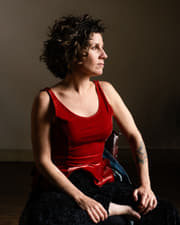
Today, we’re heading south — all the way to Argentina — for a conversation that’s part photography, part philosophy, and totally one-of-a-kind and talk with the amazing Sofía López Mañán — an Argentinian photographer, National Geographic Explorer, and one of the 2024 Vital Impacts Grant winners for her current project (a work focused on bees in Argentina, we’ll come to that).
Sofía’s approach to photography is anything but ordinary. Her projects — from documenting the relocation of elephants from a closing zoo in Buenos Aires, to working with magnificent Andean condors, to her multi-platform exploration of “Nature” itself in her work ‘El Libro de la Naturaleza’ — go far beyond the camera. For Sofía, photography is a way to explore philosophy, rituals, and our complex (and sometimes broken) relationship with the more-than-human world.
In this conversation, we talk about being part of the story rather than just an observer, how she builds deep connections with people and animals, the role of humor and surrealism in her creative process, and why photography isn’t about taking an image first— it’s about listening.
This one is less “gear talk” and more soul talk — a thoughtful, beautiful ride through the mind of a unique voice in documentary photography today.
Tom: Welcome tonight on our podcast Sophie from Buenos Aires in Argentina. It’s a pleasure having you here and talk a bit about your photography.
Sofia: Thank you very much, Tom, and hope we’re gonna have a beautiful night.
Tom: I am sure we are going to have a wonderful discussion today, and as I know you a bit and you like to talk, Sophie, let's say if I make this secret sign, you stop talking.
Sofia: Yeah. Okay, perfect. Haha.
Tom: Let's start. Last time we talked you were going to do a project with honey bees.
Sofia: Yeah,
Tom: How is this going?
Sofia: I am still working on it actually. I think photography… I'm gonna jump to something else, but I believe, I do believe that photography, just it's a means. I really enjoy investigating and learning. So learning about bees, it's nothing that I can do in a month or two. It's been like six months and I'm still learning a lot.
So there I am trying to understand how bees work and how and when, when it's not only about bees, it's about how. Through beekeeping. We can have, or at least in Argentina sovereignty, political, economical sovereignty. So it's really interesting. So I am truly enjoying it.
Tom: I'm looking forward to it. I know, Sophie, you don't strictly define yourself as a photographer. I think you define, or you use photography as a tool to communicate. How would you describe yourself?
Sofia: Oh, I live from my curiosities. I think I'm an artist. People sometimes think photography just separated itself from the art. Like, no, I'm not art, I'm photographer. No, photography, it's art. It's a means of communicating. Photography has nothing to do with reality. Reality is a construction. So I do include photography as a means of communication, but I truly think it's more art.
Tom: Very well said. Sofia, you have been recognized internationally, you have received many international awards, you are of course, a National Geographic explorer. You have held exhibitions in galleries, you have been published in various magazines…If someone never heard of you, Sophie, and he or she asks, what do you do? What's your most favorite way to answer the question?
Sofia: Today I'm a storyteller and I work with environmental and social slash political conflicts in Argentina.
And I'm an artist. I'm an artist as well.
Tom: And then you try always to challenge the way how we see nature and conservation.
Sofia: Absolutely. This was a very tricky question. Depends who asks. Some people want you to answer: I'm a documenter. And I say, if you understand me that way, I would say I'm a documenter. But no, I'm, I think, I ask myself a lot of questions. I do work with storytelling. I do work with philosophy and mythology and I tell things related mostly with environmental things and problems and ideas we have. I'm a Myth Buster, I consider that myself.
Tom: Let's walk a bit back first, Sophie, so people get to know you. You studied fine art, you have a degree in fine art, and then you went on to study photography. Why?
Sofia: Yes. Oh, do you want the real answer? I don't know who's gonna be listening, but when I started fine arts, obviously my parents were very anxious about the idea and once when I finished, they said, what are you gonna do? Are you gonna be a teacher, a school teacher? I was like, nah.
So, I said, maybe if I study photography, I could be a journalist. And then I went into journalism, and I was like, nah, I'm not a journalist. But I did study because I thought that it was gonna be a way out for living. Actually, it has become a way to live, but it hasn't been that easy as I would dreamed it would be when I was a kid.
Tom: I think you're clearly fascinating by learning. Sophie, you studied a lot of different things from art to anthropology.
Sofia: I am still studying anthropology. I'm still studying is the relationship between humans and non-humans. So, it's actually understanding not the non-human and not how you observe. So it's a really interesting trans relationship across relationship study. So, you have biologists working there, vets, it's really interesting.
Tom: And where comes all this from? Curiosity? Curiosity from always trying to learn?
Sofia: I think I've always been very curious. My obsession, I would say beautiful obsession with understanding our relationship with the environment started when I was working at the zoo, I used to work at the Buenos Aires Zoo. When it closed the Buenos Aires Zoo, maybe five years ago. It closed the doors and they said, we're gonna send all the animals to new places different and free.
And while I was working there, I received a lot of messages, people asking where are they gonna send the animals? Are they gonna send them free? And are they gonna free all the animals? I was getting all these messages and working with caregivers and biologists and vets and politics, all in the same area. I got really interested in how we observe the environment and how we construct ideas through how you construct ideas about it.
So, I don't know if it's very clear, but actually once I started working with things related to nature, I started studying how we observe and asking myself questions about how we observe nature. So, there it comes on anthropology as one of my studies.
Tom: And research is also a very important aspect of your creative process. You typically investigate a subject before creating your work Sophie?
Sofia: It depends. If if I'm being hired and they would ask something short, I would take a long time. So it's never short. And if I'm not hired and I'm doing it for myself, it takes decades. There's not a, I've noticed, I never reached to an answer. I reached to more questions. So it's more like a process rather than projects that start and finish with an answer.
Actually the project with the bees has been here for six months. I've been working for eight years with Condors, and I still learning with that. Sometimes the project just says, go, I don't want you anymore, continue with something else. And you keep on studying. But yeah, I do have a very strict research for that can help me conceptualize images afterwards.
Tom: I see you keep going on about projects. So, we are going to jump straight into the projects, and for everybody listening, of course, we cannot go over every project that Sophie made, but I urge you all to check out her website. She has some amazing, amazing work. We will touch on two or three of them. And the first one, let's do Mara, the elephant.
Sofia: Yes.
Tom: When the zoo closed, she was going to be transferred, or she was transferred to a sanctuary in Brazil. How did you became involved in this Sophie?
Sofia: Well, as I told you, I used to work at the zoo and I've been working for four years before Mara left. It's very important that Mara left during the pandemic, or in the beginnings of the pandemic, when everybody was very anxious about the idea of leaving our houses. And whilst my contract was finished, they considered, I had a really nice and close relationship with veterinarians and all the team that was traveling, and they said, okay, we want you to go because we know that you know how to work around others.
And it is a very sensitive theme, everyone was very worried that the elephant does not die in the middle of the trip. So you have to know how to move yourself. That's why I went with them on those travels.
Tom: Right.
Sofia: Actually, I did two travels. I did with Mara and then one, you haven't seen that one with Pomina. And once I did one trip, the other was like, oh my God, I forgot that it was so long the trip. And it hurts, your body aches. I think it was the most intense trip I ever did, and I did it twice. I forgot the second time.
Tom: Because we are talking how many days here road travel?
Sofia: It is five days, but you travel to elephant speed, so it's 3000 kilometers, but you go only at 80 kilometers per hour, with an elephant that you stop when the elephant needs to stop. That would be when elephants need to be to eat, or you need the to clean up the space, so you don't have like, oh, we're gonna stop at a hotel. It's just if you stop at five in the morning and you leave at seven, you have two hours to sleep in the car, when you can sleep in the car, and you go again traveling at elephant speed.
Tom: And this sanctuary, what I have to imagine by this one in Brazil?
Sofia: It's very interesting, it's more than photography, it’s to talk about what people are expecting to see and what actually people see. So we talk about sanctuaries. I have always problems with the word sanctuary because we are imagining something like Buddhist style, like a free sanctuary is another kind of captivity, that it's better, that it has animal welfare. That elephants can do things that would be proper for their species. That would be like walking, grabbing leaves from the trees, grabbing grass from the floor, having their own time. That would be a sanctuary. Then they put the name sanctuary and people think they're free.
No, they're not gonna be free in in Brazil, but they're kept in captivity because those elephants have lived most of their lives in captivity. So they do have like problems with their feet. They need to have like medical things, and they have close relationship with humans. They have always had a close relationship with humans. What essentially actually adds as well is, in this case, in Latin America, is elephants having relationship with their own species. In the United States, maybe a zoo would have like 30 elephants but in Latin America, if you had one elephant was enough, like, oh, you had an elephant!
So, that elephant couldn't relate with another from their species. But in this case, in the sanctuary, they do create groups and I think that is the most important thing to give them, to give them a proper life.
Tom: And while you were traveling with Mara, you were in another car behind them?
Sofia: Yes. I would do the pictures once they said, okay, we're gonna stop. We have to put some gas. It was very nice because the car with a truck with Mara would stop at the gas station, and people would be like, and even though you wouldn't see, you can't see the elephant, they wouldn't open the door, but people would take pictures of the cradle, of that big box, even though they wouldn't see the elephant inside. But there was an attraction just to know that there was an elephant inside. It was like the thing with the cat, that when the cat is inside the box. So say there's an elephant inside this box, even though you can't see an elephant, people take pictures of the box. So that was a time I would do pictures.
Tom: Is there a particular moment, Sophie, in the trip, that you remember very well?
Sofia: I do remember, oh, I'm trying to remember. I think most mainly more about Mara. It was how you get transformed as a group with the other species and you start the trip with all your thinkings and thoughts and anxieties, and then you remember, you start like in a weird meditation when you are walking at an elephant space all the time and you notice that everybody's there for the elephant. No one is here for their own exhibition, their own ego, and you are just there as a group enjoying her traveling to a new space.
I do remember from the three liberations when I was there, is when they've opened the door and the first relationship they had with their trunks and they would touch the soil. And I do remember Pomina, she was the other elephant that she lived in Mendoza. Mendoza is like a desert here. And she would live like in a space that it was three meters down. And when she was trying to go out and suddenly it started raining, like pouring rain and she would take her head out and she took like nine hours to get out of the cradle.
But she would take the head out and it was like pouring over her head and she would grab like a piece of cane that was on the floor and she would start playing with the water. And it was, I think she has never seen something like this. She's lived in the desert all of her life. And I do remember that moment and I try to describe it and I do remember it. I see it. So there is a moment when you notice and you think of yourself like, wow, they're discovering something new. So even though you're not an elephant, you can imagine yourself discovering something new and that moment of terror and enthusiasm and terror and anxiety, and you're like, wow, I'm with you.
I'm with you. And yes, it's been transforming those moments when you, it's not about me. It's not about me, that's the most important thing.
Tom: I think we can talk then about what we discussed one day, was that people try to project human emotions onto animals.
Sofia: When do they not try to protect human emotions on animals? People call my son to a dog. We treat our own dogs the little sons or daughters. We are always projecting our needs, our desires, our fantasies, our luck of love, our need to be recognized to the other. I really like what Scott said, Scott is the one of the owners of the elephant sanctuary. He said, once Mara is out there, please don't call her. Don't say, Mara, look at me! And inside you're saying you're craving like, recognize me Mara. Look at me and notice, and please forgive me. And it's always about me. And what he said, don't call her. Some people were actually like, what are you saying?
And it's interesting once you're out there, even people that are listening to this, is try to actually observe how you treat your own pets and to see how much of us is in there and how much we are projecting.
Tom: Why you think we have this need to do this, Sophie?
Sofia: I liked that philosopher that said something like it's always about how we are looking to animals, that we look at them as, how do you call it…like humble, they're humble. They don't have any anger or envy. So we look at them to forgive us and to like us, to notice that we are here.
I think it's mostly about, it's not you forgive me, but I want to know that I'm forgivable. I want to know that I'm lovable. I want to know that I'm okay. Like people when they grab a dog, like, I wanna touch it. No, don't touch it like that. Let's give the dog space for it to come to you. They need to love me. Why? We need to be loved. But this is not a psychology podcast, but we can talk, we can talk about this as well, because from the other side, there's not gonna be an intense rejection.
Tom: Of course.
Sofia: Except for cats. That's why people don't like cats. They say cats…cats are weird. Yeah. But cats are simple. They don't like you sometimes and they feel you're shitty. I do love cats. Cats are honest.
Tom: They amazing animals! And Mara, she's okay now? You have some kind of contact with the sanctuary still?
Sofia: I do have contact. Wow, Mara was amazing. The change she did I think the first day she arrived, she started, because you don't open the doors that fast, but when the doors opened, you have to imagine yourself it's like a plant, you start opening small doors until you get accustomed.
So, the first door opens, then the second door opens, and then you're gonna have some elephants coming near you. So she would see them on the other side. You have to see, you don't know how she's gonna react to the other. She's like, basic on that. She doesn't have any social relationships or skills. So the second day she started making all this humming sounds and she got together with this with other elephant as if they knew all their lives.
And they wouldn't start to stop touching themselves, like with their trunks and walking along and making all these rumbles all the time. And people would say, we've never heard this, those rumbles before. We've never seen Elephant interact like that. Some people thought they knew themselves before, when they had to come all the way from Hamburg. They came to Latin America back in the seventies, and maybe they shared some time together before. So, Marta not only she changed the color because elephants have the color of the soil in the zoo, she was gray and now she's red. But her relationship, her stress yeah, she's another elephant. Absolutely. She's an old elephant. She's like a grandma elephant. But she's a happy grandma elephant now with all whining with her legs, but she has her own space and time.
Tom: Wonderful to hear. If you send me some pictures, we will put them in here later for everyone to see.
Sofia: I will.
Tom: Sophie, let's jump to the next animal and your next project, the Birrd King. What inspired you to start this project?
Sofia: Ah, I love condors. I know people will say, condors are, it's the biggest flying bird you have, you're gonna say, no, it’s the albatros. But this bird is big and heavy and it flies really high and it's, for all Latin American communities, it's always been a sacred bird and it's still a sacred bird. So we can relate with animals from biology.
And here you feel about our importance. In our culture, it guides our souls to heaven. It says it sends our prayers to heaven. And I started working with condors because I really loved working with the people around the condors. I had the most weird and amazing things happening while working with condors. You can say it's spiritual. Yes, it's spiritual, but I think that's what makes sense when you work with a project, it's pouring your heart out.
So, I started working with condors and I've been now for eight years. I still consider myself working with condors all the time. They need me because one doesn't divorce himself from themes, you stay in touch with them, but I think I, I've learned a lot, not only from them, but, and observing them, but from the people that they give their lives for them. So it's been, it is amazing actually.
Tom: What surprised you the most about this condors, Sophie?
Sofia: I don't know if it's because their size, but when they're gonna be liberated,… why are they gonna be liberated? Maybe they fell because they've had some poisoning, that's another theme, or because they have lead bullets inside. So they have to go to rehabilitation, and after then they have to be liberated.
And in each liberation, there is a ceremony that's gonna be guided by the indigenous community that lives in that area. And you have this crate, this big box where the conduct comes inside. You have to imagine it, it’s 1.20m, it'd be like this size, and it's 2.50m wide. This is for the biggest condors.
So, when you have the ceremony, they open the door and you're like observing there, like, ahhhhh….and it would come out and it would open the wings and the feathers like that. And then he would turn, or it would turn around and it would look at everybody. It's been like that every time they liberated! And when it is preparing to jump, to fly, suddenly, three or four condors appear from nowhere. And they're like they come to fetch that condor and looking like, ahhhh….and then they disappear. And it's an enormous bird. It's not like a very small bird. It's enormous bird. They appear from nowhere and they disappear to nowhere. And every time they were liberated, that thing happened. And you may say it's magic. And it is magic. I do want to see this world with magic. Biology obviously is a nice cosmovision. It's really important, but it's extra magic that it's, I can't explain.
And I've had so many dreams with condors. A lot of people do, and then you start thinking like, if you don't believe in this. It's weird. It's pure magic.
Tom: Because in the indigenous traditions, they see condors as a sacred beings, guides between worlds, I think. Did working on this project Sophie change you how you see them?
Sofia: Absolutely. I always thought that working more with biology. You know, the nice thing about this project is that it's not only about conservation, but it's about culture. You can't think about conservation if you don't think about culture. If you have a seed that's been extinct and I give you back the seed, Tom, and I said, plant that seed, and if you don't use that seed or that plant, that is gonna be out, it's gonna be extinct as well. So, culture is very important because you need to think our relationship with those other beings. It's your relationship with them and I was working with those points of views together. Biology and satellite things and GPS and radios and blah blah, blah, and culture.
And you can think indigenous, yes, but we as white people or European people, we need to create our cultural relationship as well. It's not about only indigenous people that depend on it, it's about us as well that even though maybe I'm like a mixed race because we're not Europeans, we're not, sometimes we're at least me, I'm not indigenous, but I'm not European, we're mixed race. It's grabbing all these things and trying to create culture.
I think that has changed my point of view of the way how I actually work on projects. It's not about a bee now, it's about how we relate with the bee. Can we change our culture relationship with bees? Can we see them differently? Can we be amazed? That's, I think it's so yes, it has, it has changed a lot.
And, sorry, and the last thing, it's about ritual. The rituality, the honoring, it's about honor, most of it. Now we are having in Argentina, as everywhere in the world, we are having a lot of fires and we are having really enormous fires in down south in Patagonia and the importance of honor. And you, you learn it, I do make a project with photography or whatever, but you learn from it so that it guides me a little bit.
Tom: Because this project really has two parts, no? Because we, as in Western science, we analyze animals through biology while in the Indigenous cultures, for them, it's a part of a spiritual world. So in doing your project, you have to show both of these sides.
Sofia: Absolutely.
Tom: You find this a fascinating part?
Sofia: Absolutely. I think, and again, I'm not saying I'm against science, I am a science person, but there's a, but science is a cosmo vision. When you see an animal, you measure the animal, you try to observe, but you're not part of it because you're observing from your yourself or where you are from where you live.
And other communities, they say, oh, I don't measure the animal. I don't know how much they weight. I don't know a lot of things, but I do know things about them because I observe. So, I know where they go, how they go, and I think it's important to honor them. You can understand a sunset, but if you start crying in a sunset and you get like emotional, that thing, it's not about science.
Tom: I'm always fascinated by your picture of the girl in a laboratory, I think, with a little baby condor, and she’s not showing herself. The condor in a box with a light. Tell me a bit about that.
Sofia: Ah, this is the thing. There it goes. Now, but what we’re talking about here is mostly science. Condors when they're born in captivity, when are they born in captivity, because sometimes you have a couple of condors in zoos that can't be liberated, because several reasons, but they would have an egg and sometimes they wouldn't take care of the egg. So, the egg is raised and taking care off in captivity. When the condor is born, you can't… you need to raise it without having human interaction. So, what they do is build puppets like a female and a father condor, so that the condor learns how to see a female condor and a father condor and not human hands.
Tom: Amazing.
Sofia: And why female and father? Because condors raise chicks, both parents they raised the same chick. So, one time a mother would feed them, the other time the father would feed them. And that would be a way of taking care of the baby. But this is a chick that in two months is like this size, like a big turkey with big legs. And the puppet would be like this small now while the baby is enormous. And so it would have no imprinting nor human relationship. So the condor will relate to a human only when they have to perform medical things. Then a human would get inside the cage, and get in touch with a condor and they have to grab him, so that the condo would relate like you are not nice. No, you're not nice. You are a predator. So they need to understand that you are predators.
We are not domesticating a condor. We don't need them to like us. So yes, so that's the way, that's why they're being born with puppets. Also Macca when born in captivity, they also use puppets.
Tom: Which animal do you mean Sophie?
Sofia: Like the Macca, it’s like a parrot, a big parrot. Those red parrots. Yeah. The Maccas also use puppets to be fed. So avoiding human imprinting.
Tom: That is so very interesting. What's the closest you got yourself to a condor, Sophie?
Sofia: Well to baby condors, I got as close as my computer, like nothing, like 20 centimeters. But the other day I was walking, while I was down south, having a hike and I saw the biggest condor. It wasn't an old condor, it was like a juvenile condo, adolescent condor, and it flew over me, like two meters above me. And you are between, like happy and intense, because is a very big animal. And you have to imagine that their beaks, their beaks are so big and so strong that they could open leather. Like, it's not just like, oh, what's a nice little bird? And they have really strong muscles in their necks because they have to go inside a carcass, to like, open things up…it's just…I like them, but two meters, it's a little bit too, too near, I think, haha.
Tom: Do you have any idea how many condors are left in Argentina?
Sofia: Oh, now I don't know. They're vulnerable. I think we did have, in 2017, we had really a massive condor death due to use of lead bullets and toxics that are used to pet control, which are used illegally here. It's legally legal and in Argentina and in Chile because you can't, condors they don't understand countries of course. We do have one of the biggest condor communities, whilst in Venezuela they're extinct, in Ecuador there's only a hundred left, in Peru and in Bolivia, they're more vulnerable. So here we do have stable and big communities, even though they're maybe 4,000 condos, they would say like, huh, 4,000, not so much, but that’s a stable group.
Tom: And if you talk about, lead bullets, Sophie, I suppose this is because farmers shoot animals, and the condors eat those animals after?
Sofia: Absolutely, yes. It's not because they're shooting condors, it's because they're trying to control pumas. I think it's happening everywhere. Our relationship with the wilderness is always complicated. And whilst we grow the borders of our lands, you’ll create houses and have pets and sheep to keep. Obviously you get pumas. So, they're trying to control the puma, so they kill them with lead bullets. I think in Europe they are forbidden, but the use of lead bullets in Argentina, they're not yet banned. It's a big problem because it's not only about condors eating the bullets, but also other animals that eat dead animals.
Tom: Sophie, let's jump to the next project a moment. We will make this short, but I think it's your biggest project yet, ‘El Libro de la Naturaleza’ (The Book of Life). You spent many years working on this project, and I think it questions how we define us humans, nature. What inspired you to start this?
Sofia: It was while I was working in the zoo and I thought…I have to be honest, when I was hired, I thought all the animals were gonna leave at once, like a big Noah's Ark. Like, okay, we are gonna close the zoo and we are gonna send like 2000 animals in a month, but that doesn't happen like that.
And people were very anxious to know what we were gonna do with the animals, like, the giraffes, what are we gonna do with them? With the elephants. You should send me the elephants, I have a space here. You should send the elephant to my space. And I was, while I was understanding that it's not that easy to move an elephant around or move a zebra around or anything, it's what is our idea of nature? What is our idea of wilderness? That was the first question.
Well, everybody's asking for freedom and free. Are you gonna free them? Free? Why are we talking all this time about freedom? Well, only 10% of the whole world is actually free, that would be not intervened by human action. What is freedom? So, I started first investigating that question. I started with that question, what is freedom? And while we're asking this, what do people think when we say Nature? And I've opened like a Pandora's box with that question. It wasn't that simple at all.
So that's the project, and actually this year we're gonna have a book coming out of this big, long study.
Tom: Which places you visited for this project, Sophie?
Sofia: Hmm. Actually, I haven't visited that many places. That's a nice question. I did work with museums and also because I really enjoyed having this question being made by science. I did work with some anthropologists, biologists and museums in Argentina. But mainly because my work was about how we construct nature, I considered that I had to construct that nature.
So it's what have I created and what I have documented. I made a survey very simple. Asking the people to say, is this nature yes, or no? Only three images. And I had like 40% of the answers saying that nature is where humans are not present, where nature is not human intervened. So, it's nature but it’s different from humans. But then from the answers of the survey, they considered that a white baby would be less nature than an indigenous baby, that cows are more nature than the meat, that a chair, a wooden chair is not nature. So it's always about us and our relationship.
So one more time, it's us fragmented from environments. So, we are not part of it, we are the bad people. We are the ones that we shouldn't be here. Like we are seeing the other through the eyes of guilt.
Tom: Right.
Sofia: There was a philosopher that said, we're talking about climate change here… when you think about climate change and you're not seeing it, you're not feeling it when you're breathing, so it makes us separate it. We have to think about climate change, but we don't feel ourselves part. It’s like climate change is an idea. It's nothing. It's not happening to my body. So, it's fragmented. I think it's changing at least from our thoughts from responsibility to being, that would be the difference.
Tom: So you let me know when the book comes out?
Sofia: Absolutely. I think it's gonna be in June.
Tom: Very good.
Sophie, if you go out to shoot pictures, you are the photographer that straight from the first day shoots the pictures or you first talk with the people or your subjects, and see what is possible.
Sofia: I, yeah…it depends on the time and what I have to do and for whom. But if I do have time, that's how I prefer working. And the classic that I will walk with my camera hanging rather than shooting because I need, I believe that I don't, it's not about them trusting me, but I also need to trust. You need to create and build a relationship, even though I'm very anxious and I will do things from the first day, but I need to create a bond. I don't do the projects alone. Projects are built together.
Tom: True.
Sofia: If people are confident that they feel safe and I feel safe, then we feel like enjoying creating. It's much better, mainly because I truly enjoy staging images, so I need people to understand what I'm gonna do and give me their, okay, do whatever you want.
Tom: Now, I think when you say this, you have to explain me again about the tiger on the bed picture.
Sofia: Oh, the tiger was different! I didn't have to explain, but that image was…I'm gonna take fantasies out of the images now, but that was made at a zoo in Argentina, that now closed, that had a lot of tigers and lions. And the owner he wanted to show me that the tiger was domesticated.
So he brought Natalia, the name of the tiger. He brought Natalia into the house and Natalia was enormous. She was very big. And he would liberate Natalia throughout the house and she would walk around and I would be taking pictures. Something that usually happens while one is taking pictures is that when we are doing it, I forget about everything, that's not good. Sometimes I forget that. I could be in danger. You know, like there with the tiger over here, you take taking pictures and Natalia would jump on the bed and he would feed her chicken wings. Then for a moment, she was standing on the bed while she was being fed with chicken wings. She was enjoying it. Yes.
Tom: Do you have an idea where she went after when the zoo closed?
Sofia: I think she's still there. It is…it is very complicated and very expensive to move animals around. Mainly if they're captive animals that they can't be liberated. You can't free a tiger. You can't free a lion. So you have to know in what other captive area they could go, but you’re talking about a 150.
Tom: Wow.
Sofia: So it's always about, and this is a very controversy talk because sometimes extreme biologists, they would say: would you spend millions and millions of dollars moving 150 tigers that are not going to be raised or bred? They're like dead for biology. Or are you gonna spend millions of, millions of dollars on tigers that you have free in nature living?
Today you have more captive tigers than freed tigers. So, there's always that controversy.
Tom: Right.
Sofia: And people enjoy animals with names. So, you say it's Talia, it's not any tiger, it's Natalia. So it's always a controversy. What happens is there's not enough money to move 150 tigers and lions. So they're still there. I don't know in what stage they are. And I think they were gonna reopen that zoo because they need money coming in. So it's very complicated. What you can avoid is them having pups, but you're gonna have tigers and lions for a long while still.
And teaching people to see animals and standing inside a tiger cage, thinking it's like the tiger King, he was like our tiger king from Latin America. He still is. So yeah, it's controversial.
Tom: Sophie.
Sofia: Yes.
Tom: To end our talk almost, let’s go from photography to film. You completed your first documentary film?
Sofia: Yes.
Tom: How was that experience?
Sofia: I…it was, it was terrible. It has been the most frustrating project I have done so far. What do you think? The nice thing about photography is that when you start a story, I can give myself the opportunity to change my ideas while I'm working. Like, oh, I love Tom, but the third day, I say, I hate him, Tom. So stories can change, and my narrative can be built once I finish and it can change all the time.
Well, film does not work this way. People I know knew that, but when I started working, I went with my heart. I need to fall in love with a story while I'm making it. Documentary most of the time is having an idea and you have to work over an idea.
So it has been frustrating because we built a project, that when we had it, we saw it for the first time, was horrible. Most of the story is about the Japanese migration into Argentina. So we built this story about Japanese that had to live here after the Second World War, travelling to Argentina and so on. But we saw it with our Latin mind. We Latins, we enjoy drama and very intense emotions, and Japanese people don't have that. So, once we made all this project and we build it, we had nothing of what we expected it to be. It’s due to our own projections about what we think how Japanese should be.
So the story had to change. What we did is, make it a story about Japanese migration, observed through the lens of two Latins. Actually it was the most honest project I've done because everything that went wrong is in the project and it's part of the project. So that has been my first documentary film and I've learned a lot from it.
But it did really good in festivals in Latin America. I think because it's simple story and an honest story, and it worked.
Tom: And you see, as long as you learn new things, it’s all good, Sophie.
Sofia: Absolutely. It's always about learning. No?
Tom: You see how amazing our art form can be.
Sofia: Yeah,
Tom: We can do wonderful things with it.
Sofia: Absolutely.
Tom: Sophie, I think I know the answer, but if you want to come back in the next life, which animal would you like to be?
Sofia: Ah, you going to think of a condor!
Tom: No.
Sofia: No?
What am I gonna say? What are I gonna say?
Tom: From the sea.
Sofia: I'm gonna say a shark.
Tom: Ah?
Sofia: Nooo…Ah, I love octopus! You were gonna say octopus?
Tom: Yes!
Sofia: Maybe I’d say octopus yes. But maybe I wanna be a more humble animal that nobody cares about, that they're not important for us. Maybe wanna be a small fish, a very small one, but I don't know the name and nobody cares less.
Maybe I wanna be that. A very small bird that nobody cares about. And yeah, some people say, I wanna be a horse, I wanna be a lion. I would be an elephant, blah blah. Maybe I wanna be an insect. A small one.
Tom: I'm sure you’ll pick the octopus when it comes that day.
Sofia: Maybe I do. Haha. Please give me the octopus. I do love octopuses though.
Tom: Sophie, if you weren't an artist or a storyteller or a researcher, what completely other different career would you love to try?
Sofia: I want to be mountain guide. That would've been my first career thought though, I always thought I wanna be a vet, but I would be crying all the time, like grabbing all the animals, like I would've been the best vet ever. Better a mountain guide and I wanna be, hopefully in the future, a beekeeper!
Tom: Sounds good.
Sofia: Yeah.
Tom: I was imagining when you come home from school, and you tell your parents. When I grow up, I'm going to be a mountain guide.
Sofia: My parents wanted to kill themselves all the time. Every time when I was a kid, I told them I wanna go to Bolivia or go to these other places. I wanna take care of these monkeys that live in a sanctuary. And my father was like, how are you gonna take care of yourself? My parents suffered so much with me, so much, because all the time I was like I wanna be a master diver and work as a diver in the sea and they were like, stop it, stop it with that. Stop it and do a career. Okay. I'll be an artist then. So, after that they said, okay, we can't control you. Do whatever, do whatever you want. Haha.
Now even though I'm not a dive master, I do dive, and I truly enjoy diving but I truly enjoy working in the mountains too. So, I've not done that as a career or even though I don't make money with that, I think I do it because I enjoy it.
Tom: Sophie, what’s the funniest moment you experienced ever while working on a project?
Sofia: I don't know if funny…
Tom: It needs to be funny.
Sofia: It needs to be funny? Okay. Okay. It's funny, it’s an anecdote, anecdotes are not all the time funny, but…maybe it was two years ago, I went to work down south with a community that works still with an artisanal fishing technique.
And what they do is, they dive down with a compressor on the boat. A very old boat, and a very cold sea. And the guy would say, do you wanna go down there and start harvesting? I would say like, yeah, okay, because I'm a little bit unconscious in things sometimes. They would make everything ready for me to dive like that, and say, if you smell something weird, don't worry, don't worry, nothing's gonna happen to you, it’s the engine. And when I was gonna jump, a whale comes along, big, enormous whale, and he said, you jump along, nothing's gonna happen.
So I jumped and I was like breathing through this little tube hose towards the boat. And the guy on the boat, while I was there in the water looking down and maybe anxious, and he would say, okay, when you go down, it's like 15, 20 meters. Nothing is gonna happen with the whale. But if it does, you just have to let yourself go, because maybe that whale swims along and it could grab your hose.
So you just have to let yourself go..and you're like, ahh! And when I was going down, obviously anxious…nothing happened. And my friend, the journalist that was there alongside me, she even was given like a little knife, just cut her hose off in case if you see that the whale come along. So, maybe it wasn't the funniest, but it was a weird, hilarious moment! Haha. I have all the images of the knife and the whale coming along. So, yeah, sometimes working like this has weird absurd anecdotes like that!
I do have more moments like that. They're long but very funny, like running in the middle of nowhere and they say: stop running because jaguars, it's jaguar season and you're a meat for them and you’ll attract them if you're running. Haha. So I do have several anecdotes related to that. I could write a book about it.
Tom: I think we should have a coffee or a beer someday and listen to them!
Sofia: Absolutely.
Tom: Sophie, thank you so much for this very interesting talk. I love your energy. We talked about photography, we talked about nature, we talked about human relations. Very, very interesting all. Thank you for coming on the podcast, let’s keep in touch and I look forward to see your book and your next project about bees and honey.
Sofia: Thank you, Tom. Thank you everybody that's gonna be listening and I do thank you. And I am sure you’re going to be the octopus. Yeah, just made a prediction!
Tom: I know. Haha. I see you around Sophie. Take very good care.
Sofia: Thank you so much.
Tom: Bye.
Sofia: Bye-Bye.
Outro:
And that brings us to the end of this conversation with Sofía López Mañán — a true artist, explorer, and observer of Nature and the sacred in the everyday.
Her work reminds us that the world isn’t something to be captured — it’s something to be in conversation with. From bees to elephants to condors and rituals in the forest, Sofía invites us to see photography as a slow, respectful way of learning to pay attention.
If this episode resonated with you, be sure to check out the shownotes where you’ll find links to her projects and watch the work with bees she’s doing right now through her Vital Impacts Grant on her Instagram feed.
And if you haven’t already — give us a follow, leave a review, or subscribe to the podcast. It helps us bring more stories like this to your ears.
Until next time — thanks for tuning in, keep your eyes open, your camera ready, and always, move your own photography. I see you next time for another wonderful talk with another wonderful photographer…adios!