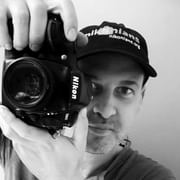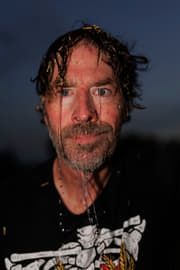


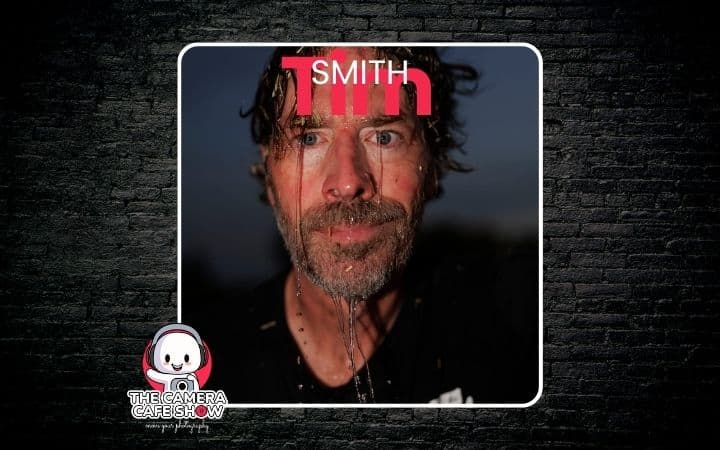
Tom: Good evening. Well, good midday to you Tim, on the podcast. This is a pleasure to see you and we have a nice talk about photography and your life.
Tim: Thank you so much. I appreciate being here.
Tom: I know we are going to have an amazing talk, Tim. So I think you told me you are always a bit nervous. Before any talk, but you did some pretty big photography show talk, so you have a , a secret ritual, or you just dive in headfirst.
Tim: Diving in is part of the ritual, but I definitely in recent years try to psych myself up a bit and I try to break the ice. I kind of go full into acknowledging that I'm a pretty socially awkward person and pretty introverted, and I kinda let people know at the beginning of the talks just to kind of, so they can expect that. And if they're nervous in the crowd, they can be nervous along with me. always joke that I have the most boring name in photography as well and try to just ease things up, with humor as much as I can to get into it.
Tom: Because your next talk, when will it be?
Tim: That'll be in just over a week in Bucharest. Yep.
Tom: I'm sure it's going to be amazing. You will put something on Instagram of it or somewhere.
Tim: Absolutely. I'll be posting from there
Tom: Okay. We will look forward. So Tim, if later there is time we will talk about your latest project or the one you are doing now, A harvest story. But if I would join you for one of these prairie shoots, what would be an ending up on my plate to eat after I spent my life before a combined harvester?
Tim: Oh, I mean, I mean, if you're coming out to the prairies during harvest, then I think supper in the field is mandatory. I mean, so you know, when Harvest comes around. Everything the farmers do revolve around that. So even on the Hutterite colonies and that, you know, where faith plays a central role in their lives harvest, you know, the men are in the combines, whether there's church on you know, they have to get those crops off the field and they don't come home for dinner. And same with, you know, all the farmers around here. You eat dinner in the field, sometimes you eat it in the combine, so you can just keep going or you take a break. And my favorite thing during harvest is to join the farmers in the fields and eat there. So any kind of harvest or a meal out in the field is a good meal to have. definitely be welcome out here for that.
Tom: Mm-hmm. It sounds very good. It sounds very, I saw the wonderful little video you sent. Ah, Tim, you are, you are. I mean, you are crazy. I admire you a lot.
Tim: I, it's fun. There's something about it. I just, I being out there and being connected to the land in that way.
Tom: Mm-hmm. We will, we will talk about it. Let's walk a bit back. Tim, how did photography end up in your life?
Tim: Yeah, kind of. I don't know, like a lot of people, like I grew up, you know, with my parents' cameras you know, they just had a couple simple, you know, little cannon range finder film cameras and my dad kind of taught me how to use that. And I grew up skateboarding and you know. I loved taking photos of my friends and my surroundings. I just kind of, I just liked the feeling behind the camera whenever I was injured, you know, because we go through injury skateboarding. Then sometimes I would have the camera along and take absolutely terrible out of blurry photos of my friends and that. But I loved making photo albums. I just loved kind of capturing these moments that seemed really special to me as a teenager. And that's kind of how I got into it. I had no idea, like I think I was like 22 before I even clued into the fact that people actually make a living doing this. Like even though I poured through my dad's and my grandfather's National Geographics and that it never clicked, that this is actually something that, you know, people do as a profession.
Tom: Mm-hmm. Mm-hmm. And then you went on to study photojournalism.
Tim: I did. Yeah, I started out at a university studying basically like a political science degree, and kind of followed a friend who told me that they were going to photography and journalism school. And that was kind of my first clue in like, oh, you can, you can actually study this and make a profession out of this, and things like that. Yeah. So after a couple years of university, I switched over and went to journalism and photography school.
Tom: Mm-hmm. Your, I mean, your son, I think you told me he's now in university,
Tim: He is, yeah.
Tom: but when he was little, has being a dad influenced a bit that you are looked for more closer to home local projects?
Tim: Absolutely. I mean, I feel like so much of my life and so much of my journey in journalism was just kind of flying by the seat of my pants and based on economic circumstances and family circumstances and things like that. And, our son young. And it really seemed like projects close to home made the most sense. When I decided that I really wanted to invest in projects, it was already a burden and an investment of time. It was important to me that I could have something close to home that I could go back to. It was also realistic too, like it beyond, you know, the idea of not being away from home for long periods and things like that I, a project where. I could be the best at it, where I could be kind of the authority on it rather than going to another part of the world to tell a story that there are people already amazing jobs at.
Tom: And you don't miss birthday parties, and you don't miss football matches.
Tim: Exactly. Yeah.
Tom: So I think we, I think we don't discuss this enough sometimes on the podcast how important family life is or how difficult sometimes it is to have a personal project, but also try to run a family or keep your family. So,
Tim: Honestly, kind of part of the myth and the scam aspect of journalism and photojournalism idea that you have to go all in and you have to be all encompassing to do good work. And I definitely bought into that when I was younger and I stressed about that and. It's so important that you have your own life that you're involved in that you know, way more important. I love my work. I'm passionate about my work. I'm, I love the communities I get to go into that, but that's me hopping in and out of other people's lives. And yes, they become friends and they're part of my life and stuff too, but I absolutely have my own life outside of that. That has to be lived as well.
Tom: Mm-hmm. Mm-hmm. But then of course, we will talk , in a moment about this with all your projects. I mean, , you only need two things. You need time and you need trust, and all this doesn't come from today until tomorrow, so. There is time to do both things slowly and, good. Also, Tim, I think you told, or you joked sometimes you were socially awkward.
Tim: Yep.
Tom: Do you, do you think that actually helps you in, your photography projects sometimes times.
Tim: I think these days it does. I think, I think embracing that and embracing my introvert, if that's a word I helps. I think when I was younger, I didn't recognize it. I saw it as a liability. I wished that I was more extroverted, that I was more, you know, type a outgoing personality. But now I see the benefits to how my brain works and how my emotions work and things like that. I do think specifically for projects like the Hutterite project and the Cancer project I did in that. Being quieter and being like working slowly and letting the subjects kind of take the lead in building trust and not rushing people and things like that. I think that has definitely helped me to build more meaningful relationships and in the process has helped my work.
Tom: mm-hmm. Yeah. So you started out, Tim, and you're still working in this fast paced newspaper, photojournalism.
Tim: Yeah,
Tom: When or why did you feel the need to start working on a more slower kind of journalism or projects?
Tim: it was a variety of reasons. I mean, part of it was to push myself to a new level, to create. A body of work that was more informed and deeper. and also is very much it's an antidote to, you know, the life as a daily newspaper photographer and assignment photographer. You know, I had an editor in Edmonton who used to joke that a long-term project meant we got a couple hours to work on it. You know, everything is so, the turnaround is so quick, you know, even when I'm lucky to work on an assignment, you know, where I get to go out for a week or two, you know, still that's, it's, it's really quick. And even that's rare. Most of my stuff is, you know, a day here, day there, you know, are a few assignments in a day. So I really wanted to working at something at my own pace without the limitations of editors asking when the work would be ready, deadlines, things like that. And. The, just gives me the freedom to make mistakes and back and and to learn, and I've learned so much that way. Let's, let's jump into the Hot Ride project team, because if not, I think we don't have time to put all thing, because course.
Tom: I urge everybody look on his website. He made a lot of very, very interesting projects. But the project you, I think you are most known for that is published in numerous magazines, has galleries. You had many expositions. Your work with the hotter rights. But before you start, maybe Tim, give me a global idea of who the hotter rights are.
Tim: Sure. So the Hutterites are a Anabaptist group who grew out of the Radical Reformation in the 15 hundreds. They're spiritually similar to the Mennonites and the Amish which are larger groups and often more well known around the world. at this stage, the Hutterites only exist in Western Canada and the northwestern States. And they range around 50,000 members at a, on approximately 500 colonies throughout North America. One of the big distinctions between the Hutterites and say the Mennonites and the Amish, and there are many distinctions, but one of the most. Or the biggest one is that the Hutterites Practice community of Goods, they believe in communal living and everything in the community, from the work to all the property is shared amongst all the members of the community. They're, they're actually one of the most successful models for communal living in modern Western history.
Tom: What do you think is the biggest misconception that people have about their communities?
Tim: Oh, I mean, it's the same as everywhere where it's, you know, we are, you know, communities, groups of people are just reduced to simple tropes. And I get that's how our brain works. You know, and that's a great tool for solving certain things, but when it comes to group or groups of people, it can be problematic. So whether they're romanticized or denigrated, they are often reduced to this idea of old fashioned, simple. and it just reduces the complexity of their society, the breadth and the nuance of their society. So I think the biggest misconceptions is just reducing it to these simple old fashioned ideas.
Tom: Mm-hmm. Mm-hmm. I think it's just what I find very interesting about them.
Tim: Mm-hmm.
Tom: What's the. What's the main difference between them and the Amish, for example?
Tim: Sure. So like I said, the communal living, so how everything is shared amongst the members. Another key difference between them and say the Amish is the HU Writes embrace technology, especially that, makes their work more productive. So, you know, in the past that meant, you know, using vehicles and, you know, brand new farm equipment, all the best equipment and that, and obviously just like the rest of the world now that, has grown into computers and smartphones and social and, you know, all the, all very similar things to we use in, to what we use in the outside world.
Tom: mm-hmm. And they can, all of these tools, they can use them freely without being frowned up in the community. Or they use some of them only in their closed family circle.
Tim: There's, there's different limitations to say in the outside world and between the different groups and the different colonies. Again, going back to that nuance, there are different kinda levels of how much outside worldly influence when it comes to technology is allowed. So there is no one community where I could say this is, you know, the model, there are, there are distinctions between the different cons communities, whether they're more liberal, more conservative but pretty hard not to have some kind of connection to the outside world for doing business in that. So it's you're to find a community that doesn't have you know, some kind of technological in terms of like computers and, you know, internet connections to the outside world. Absolutely. It's one of those things that is debated amongst, you know, elders and ministers within the communities of how much to let in and what's too much and that, so there's constantly discussions and, within the communities of what's too far.
Tom: Is there something valuable that you learned yourself from that way of livington? Maybe something that you think we are missing now in our society?
Tim: Yeah, absolutely. I mean, in my own life I can think of a variety of things, but I think. The big thing that I learned from their community is the importance of connection. Whether that's social connection and community connection amongst each other, their connection to the environment just in how much time they spend outdoors and connected to the land around them. I think these are all things that we are losing in mainstream society. It was really evident during the COVID pandemic, you know, how important connection is with our communities, with our families, with each other and the HU rates. Display such, you know, amazing connection in that way. How they eat together, they work together, they, you know, they celebrate together, they mourn together in really beautiful ways. And really that would be my big takeaway, that if people could something from their way of life and their communities, it's just this importance of community and real connection.
Tom: Mm-hmm. You took your son with you to see them on your work. Really?
Tim: he'd, he'd come out from time to time. Yeah. It's been a while since he's been out there, but yeah, he used to come out.
Tom: Mm-hmm. He also had to skin chickens or
Tim: No,
Tom: alone?
Tim: He'd, he used to, you know, play in the sandboxes
Tom: Okay.
Tim: playgrounds with the kids and things like that.
Tom: So Tim, let's go back with your project in the beginning, I think you told me it was the dear boy, dear boy community, and you were really there for a newspaper assignment for something else, and you found women in tending a garden.
Tim: That's
Tom: What made you go back and turn it into a project?
Tim: Really it was just this fascination of a world that felt different and very foreign to me, but was right in my own backyard. And it was the, just this craving to learn more. I think, I've heard it said before that journalists are really just, you know, still children. Like we curiosity of young kids and I absolutely feel that the camera for me is a way of, you know, seeing something cool going on, you know, across the road or wherever and having a method to join in and to say, I wanna see what's going on. What are you guys doing? This looks interesting. you know, the Hutterite communities at Dear Boy like that checked all the boxes. I thought it was fascinating. And just really wanted to learn more. So I just kept going back.
Tom: But you had to ask permission first, I guess, to somebody.
Tim: Yeah, absolutely. So that day in the spring of 2009, when I came across the women gardening, I first asked their permission whether I could make some photos for the local newspaper and, you know, have having a wonderful afternoon out there with them. I approached the head gardener after and I said, who should I talk to if I want to come back? And she pointed me in the direction of the minister's house. The minister there is Tom Hofer. And that was my introduction to him. And I kind of, I kind of up and gave my awkward. Speech about why I'd like to come back and photograph and we had a few discussions over weeks. He came into the newspaper office once and I showed him some of my work and I was out there a few times and everything happened slowly. But he kinda laid it out that he doesn't necessarily condone or approve of it, but at the same time, the community has nothing to hide. and I just kept looking for opportunities to be able to come back out. I read everything I could find about how to write society, how to write history, found out about certain events that might be interesting, and use those events as a way to come back into the community and start getting to know people.
Tom: And can it be, I written in an article that he told you if you're not nice, he will put you in a car and bury you in the field.
Tim: Yeah, the best thing about Tom, I mean, he's, he, you know, he is a conservative minister and you know, he is responsible for the spiritual, you know, growth and wellbeing of the community and, you know, heavy is the crown, in, you that burden of, managing the spiritual affairs for the community. But he has an amazing sense of humor. You know, he's always joking with me and yeah, years later he said that on that day that I showed up and asked him I could photograph there, he briefly thought about just burying me in my car somewhere in the backwoods and telling anyone who asked that he had never heard of me.
Tom: So Tim, I guess you start this and you say, let's try this a year or two years, and now it has been, I think 15 years
Tim: I know. Yeah. It's been fif over 15 years now, which is ridiculous.
Tom: what has been until now, the best part of it.
Tim: Honestly, every, any day that I get to spend out in the communities as challenging as it can be sometimes as dealing with rejection can be sometimes the days that I get to spend out in the community, single one of 'em has been amazing. Just being able to join in the activities and document them and sit around a table and, you know, argue over politics or, you know, laugh and share a meal and just build these relationships. I don't take it for granted and I'm, I'm happy every moment that I'm out there.
Tom: Hmm. I'm pretty sure you made also some long lasting friendships by now. Tim, there
Tim: Yeah.
Tom: you remember, let's say the first moment that somebody introduced you as a friend and also not as a photographer.
Tim: That's a good question. I don't know if I remember the first time, but I just, I mean, I love, I love the relationships. I have some friends at a couple communities that just took part in a 25 and 50 kilometer race a couple up at Riding Mountain National Park, and I was there photographing the event. Not so much working on my project or anything, I was just up there photographing the event for the newspaper and got to see my friends and see them race and cheer them on as they did this incredible 50 kilometer run through And I got to share photos with them that they really enjoyed. It's, it's just really special, relationships and getting to check in whether, and not just because I'm interested in a photo or something like that. Just because, because we're checking in on each other's lives and we're cheering each other on, and they've been amazingly supportive about, you know, supporting my exhibitions and things like that. So a really
Tom: Yeah. Cool. Very nice. Mm-hmm. You think also maybe once you start friendships and it gets maybe a little bit easier, they sometimes test you, but in a good way of making you do things first.
Tim: Yeah, I've more new communities in that too, but also you know, the HU Rights are very work oriented and they're very hard workers in that too. And I don't want to be the. You know, a photographer out there not help. I mean, I feel like I spend enough time out there not helping out, you know, they're doing hard work in the fields or whatever, and I'm, I'm there with my camera, you know, hard work. But I, love to help out. I've been asked to help out for certain things. You know, back in the day, the Minister Tom again with that sense of humor I was vegetarian at the time, and the first time I wanted to photograph them, butchering chickens and geese. He it over and he said. If you help, you know, clean the butchered chickens in the morning, you can photograph in the afternoon. And he was absolutely testing me just you know, can this guy put in any actual work or is he just, you know, some guy with a photo, with a camera. so I did it. I worked with him in the morning and, you know, stood beside, you know, the women and the boys and that who were cleaning the chickens and listened to them sing. And then I photographed all afternoon and it was amazing.
Tom: And how was that experience as a city boy?
Tim: Yeah. I'm always trying to earn my prairie cred, even though here, you know, on the prairies for, I mean, I grew up on the prairies, but in a big city. But I've lived here in Brandon, a small city, right on the prairies, you know, for 17 years now, almost 18 years. So I feel like I'm earning my cred, but I absolutely want to earn that, that rural life cred, the farm cred in that. So of put in some work that makes me feel like I am, you know, earning that in the community and, you know, feeling more connected to that than I'm happy to do it.
Tom: Okay. Yeah. Talk me a bit about the pictures that was published in National Geographic.
Tim: Sure.
Tom: What's, what's the, what's the story there behind it? Because there is also a bloody knife somewhere in the picture.
Tim: Right. Yeah. So that photo was from branding at 40 Mile Colony in Montana back in 2023. It was a colony that I had wanted to visit for years since I heard about it. They have the biggest ranching operation of any Hutterite community, and it's real cowboy country down there. So different from, you know, prairie farming where I'm from, where it's more agriculture based more like crop farming in that. And yes, we have cattle in that, but it's not like ranching. And this is real, you know, cowboys and cowgirls and horses and huge ranches and cattle spread out through the foothills Wyoming. Absolutely beautiful territory. And I was invited or allowed to come out in 2023 and document branding for four days or so. and it was. an absolutely incredible experience. I mean, the work, you know, we were up at, I was up at three 30 in the morning driving out to the community get there for four in the morning and then, you know, work would start right away with wrangling up the horses and things like that. And then they would work till, you know, usually late afternoon, early evening, dinner time or so. And then the young people would play volleyball well into the evening, get a couple hours sleep, and then you're up again the next day. And there was all these other communities coming out to help out 40 mile. And yeah, it was just incredible and chaotic and difficult and an amazing experience.
Tom: Mm-hmm. You wrangle the cow yourself,
Tim: Not that day, that day I, or those days. I stuck. Pretty much behind the camera other than you know, and trying my best not to get in the way of the women moving with the razor sharp scalpels. The women and the men riding horses lassoing the calves, and you gotta watch for, you know the mums, the mother, cows who, you know,
Tom: okay? Mm-hmm.
Tim: to protect their calves. So sometimes they'll charge you. And then you've got the horses moving around, the cattle, the ra, the red hot brands. It was just absolute chaos. But the way it all works so uniformly and almost musically together was phenomenal. So I spent my days, you know, winding in and out of everyone, trying not to get in the way as much as possible, and trying to document it as best I could.
Tom: Mm-hmm. And then of course, then there is all these delicious homemade food somewhere, sometime.
Tim: yeah. Pretty much all day long. When you're out in the field, it's amazing how much food they bring out there. And so you would break for lunch, you'd have breakfast and dinner at the community, but there would be lunch and snacks out in the middle of the foothills where we were branding and drinks and beer and yeah, it was great to take those breaks. 'cause you needed it when you were working that hard.
Tom: And you still get, because people in all these communities I, with all the expositions you did, and so they will, most people, they will know about your work or what you are doing. You feel you are getting Now, maybe you go to a new community, you are getting less rejection than before or,
Tim: I don't know if it's less, but maybe it is. It's, it's definitely easier to connect with new communities now because the Hutterite communities are also connected. even if I am approaching a community in Saskatchewan or Alberta or Montana and that I can usually find a through line. I can say, oh, do you know any communities in Manitoba? And they'll say, oh yeah, I know so and so at Pine Creek. And I'll say, I know so and so at Pine Creek. And we have a connection there. And I have people here who can kind of vouch for me that, you know, people can, you know, reach out to Dear Boyne or to Baker or wherever and say, Hey, you know, what do you guys think of this Tim Smith guy who wants to come and take Things like So that definitely makes it easier. It doesn't mean I don't deal with rejection. There's still communities that, you know, are very shy about being photographed in that, but thankfully there are many communities out there and, you know, rejection is just part of building a project.
Tom: Mm-hmm. And what's a moment, Tim, maybe in the beginning that you saw and changed the way that you see the her rights?
Tim: Oh, that first day I think definitely was one moment. You know, that first day out at the Garden at Dearborn. And I really didn't know a lot about Hutterite communities. but I did have, I guess my preconceived ideas, you know, knowing that they live apart from society and that they're very religious. And I think I assumed that, you know that they may not be as technologically savvy as say I am. And that, not that I'm very, but I remember that day working in the garden and Christian pulling a cell phone outta the dress in her pocket and taking pictures of me working. And I thought that was fascinating. I was like, oh, you have practically the same cell phone that I have and obviously use technology as much as I do. And kinda learning that and seeing that really challenged my preconceptions was important and crucial, and really piqued my interest.
Tom: I think you also, I remember, I think I saw two pictures of an elderly couple. I think she has dementia and he's sitting beside her and he puts her in the bed. This is all very strong moments to be there, Tim, with them.
Tim: Yeah. I mean, those kind of moments in any community, in any project are really the moments that you strive to be there for. Because you're wanting, you want that level of intimacy because you want, you know, my goal in my photos is for viewers to feel what I feel being in that room. I want them to be brought in just as I wasn't to be touched by this moment of, you know, John helping Ruth eat her lunch and put her into bed for a nap. And just the love that he had for her and how he would devote his day to caring for her, you know, and the toll that takes on him too. And you know, these beautiful moments like that need to be shared with the world, I think. And. I just felt so special being there and being able to document and being trusted to document moments like that. And I hope that the viewers really get brought in to that and they connect to moments like that in their own lives.
Tom: And what about wedding stem? You were in a wedding.
Tim: Yeah, I've been out to a couple weddings at Dear Boyne and they're beautiful. And there's a lot of misconceptions I guess, around dating and marriage, within the hutterites. And dating plays out very similar to the outside world. You know, men and women meet and if they like each other, then they start dating. And if they get married, then it's, you know, a traditional wedding in a church on the community. One big difference is the woman always marries to the groom's colony. So that can often mean moving to a different part of the province or even to a different province, or down into the US or vice versa. So that can be you know, a big change for young women getting married as well to move to a place that they've never lived before and that, so there's a lot of emotion around weddings, you know, world, you know, there's the big changes that are happening, and then obviously the excitement and the love and things like that.
Tom: hmm. But you are very good then in capturing all these emotions. That's why I am, why I am asking it. Hmm.
Tim: Oh, thank you. I think it's, it's literally just a process of being there, taking my time and making a lot of mistakes.
Tom: Yeah. And learning every day.
Tim: Yeah, absolutely. Yeah.
Tom: So then you had, you had, you made many exhibitions, maybe, you know. In which counter this has been exhibited? The project?
Tim: I'm really lucky in the last few years that it has been exhibited quite extensively and I never expected this when I started the project and I never even knew this would be an option. And I just love the opportunity, but it's been exhibited pretty extensively in Europe, you know, multiple exhibitions in Germany and Italy Austria. It's been to Finland and it'll be. Going to Romania very shortly next week. I've been lucky to take part in photo festivals in Korea, Australia, the Emirates Co devo and then obviously more galleries throughout Canada. Was just down in Florida for an exhibition earlier this year. so you know, I try and stay busy with 3, 4, 5 exhibitions a year if I can. that's a process in itself, just trying to, get those exhibitions and things like that. But it's been an amazing experience and I love every bit of it.
Tom: Mm-hmm. And on a smaller scale, you printed copies and you brought them to the communities.
Tim: Yeah, back in the day I used to print more. I remember printing a whole, you know, big photo album of prints for Dearborn Colony at one point. And that these days, again, because of how we all work and how connected we are, usually I'll share the photos digitally. But I try and share photos as much as anyone wants in the community. It feels like a very small ask in terms of what the communities and the people are giving me. So anything I can share with them, I'm happy to.
Tom: mm-hmm. What's. In all of this 15 years, what's the moment that stood out the most for you? Tim?
Tim: Oh man. really hard to narrow it down
Tom: I know.
Tim: but I can think of a few, any moment, like you mentioned, like watching John take care of Ruth. Those intimate moments like that have been amazing. Photographing the funeral and the wake for Susanna Woolman was very moving being allowed into the community at that time. And then knowing that you have the trust of a community. I remember back in 2010, so only like a year and a bit after I started the project, sleeping as terribly as I usually sleep. Which means waking up at the drop of a hat at around three in the morning my phone buzzed and I thought, oh, that's odd. Who's texting me at three in the morning, tried to go back to sleep and it buzzed again. So I got outta bed, checked it and. Two different people from dear Boy had messaged me to say, just thought you should know our shop is burning to the ground. it was three in the morning and there was a tragedy in the community where they were, they had a big fire, they were losing a building. And two people thought to message me because they understood that as a documentarian I might be interested in this moment. And it was the first snowfall of November. And it, I like dressed so ridiculously quickly. I dressed so stupidly, I threw on rubber boots with no socks. dress properly for the weather 'cause I was just in such a hurry to get out there. And it's about a half hour drive drove through the snowstorm. I thought for sure that by the time I got there everything would be over. And to get to, dear boy, you drive up. The two 50 and you come over a crest and go down into the Vo River valley. And I remember going over that crest and just seeing an orange glow across the valley the fire and knowing that it was still going on and quickly got to the community and spent the rest of that night documenting the fire and the efforts to it. And then just spent that morning, you know, had breakfast at Tom's house and, you know, we sat around just talking about what had happened and catching up and things like that. And yeah, that was, was a, know, it was a tragic and unfortunate evening, but it was a special moment that they had thought to let me know about it.
Tom: And they all rebuild it afterwards.
Tim: Yeah, they built they moved the carpentry shop and they built a brand new machine shop that's beautiful and
Tom: Mm-hmm. Mm-hmm. So Tim, 15 years working on this project, but of course you have done some other things in the meantime too. Again, people please check out Tim's website, and I think we have a little moment to talk about now, your latest project. Jeff,
Tim: Sure.
Tom: tell me how did it start, Tim?
Tim: Again, like a lot of my stuff, it started kind of organically. It. You know, after 17 years of documenting the prairies, I photograph a lot to do with agriculture and pretty much every harvest I'm out in the fields in some capacity, whether it's in how to write communities, doing assignments around farming or just working on my own work around farming, photographing aspects of harvest, the people, the machines, et cetera. And in the process of being out in the fields, you know, I try to get in close. I'm very much a believer in, you know, getting as close to what you're photographing as possible. I really want to feel it in me. I want to feel like I'm a part of it. And last year it occurred to me. Instead of focusing on the people and the machines and the landscape, I really wanted to zero in on chaff, all the byproducts of, you know, grain and production are discarded and spit out the back ends of the machines. And I saw something beautiful in that. I always loved being, you know, enveloped in it and getting filthy and decided that I wanted to try and tell the story of farming through this very specific work that felt more, the freedom to play with it and create something a bit more art based and less documentary, even though it, the process of making it still feels very similar to my documentary work. So I just went out to the fields and I started playing with things, adding flashes and multiple flashes and gels and know, exploring, balancing the light and just getting. As develop or in, the chaff and the dirt and the rocks and everything as much as possible to try and tell this story. So I started that last year, and I've been back out again this year. I told myself at the end of last season that I was done because it really takes a toll on the body. But this year I was like, no, I gotta go. I've gotta go back out. And I've had an amazing time being back out there.
Tom: What does it feel like being in the in the storm of the chaff?
Tim: Oh, it feels amazing and horrible at the same time. It's chaotic. It's, I ha like I'm. Trying to change settings on the fly while walking and sometimes running beside, beside these giant machines. Trying not to cripp over or trip over the stubble. Trying to change settings where I can barely see because my goggles are filled up with sweat or I've got, you know, canola, chaff in my eyes. Trying not to choke on all the chaff and not wearing masks or respirators. And just you get filthy, you get, you get hit by rocks, you get covered in dirt, you get covered in chaff that sticks to you and itches and, you know, takes forever to get out. My house still has chaff from last year. I find it in the house and it's just such an absolute mess, but it just, I don't know, it soothes something in me. It quiets my brain and it makes me feel connected to. This amazing work that farmers do and to the land and what it provides and things like that.
Tom: Hmm. But how hard is it to, let's say, create beauty in what looks a complete mess and disorder?
Tim: I think for me, it's easy and I think that just might be because of how I feel, how my brain works in that I feel, you know, like I'm very connected to the idea of chaos and disorder. I feel like my like chaff going in a million different directions at once and trying to find some sort of organizational beauty within it. something very calming for me about being out in it, even. Even if it's frustrating and I'm coughing and can't see and trying to make adjustments and things aren't working and I'm tripping over things and that just very calming about it. Just being out there with the machines and doing my thing and trying to. You know, play on what works and doesn't work.
Tom: Mm-hmm. And how you would describe in words, the sound or the smell when you are there walking behind it.
Tim: The sound is always loud because of the machines. The smells really depends on the crop. You can have that sweet kinda humid smell as it starts to get dark and you feel the humidity come up in the canola or the barley of the wheat. And you can smell the land, you can smell the soil getting kicked up, you know, when they're harvesting, you know soybeans or pinto beans right down close to the ground. I just love all those aspects. And then the, you know, you're out in the, you know, God's country in prairies, you know, seeing. You know, the beautiful sunsets and twilight and watching the coyotes come outta the fields and the hawks pick off mice and things like that. Like it, every aspect of it is just so beautiful to me. I love it.
Tom: Mm-hmm. And a little mention, you are not covering your camera with nothing. It's basically just a tool. It's not going to be very happy with you, Tim.
Tim: I don't know. I guess lots of people ask that, and maybe I'm an idiot. But I feel like I barely protect myself, so why am I gonna protect my camera? I mean, I grew up skateboarding and to me it's like a skateboard. It's a tool. You use it's meant to get beat up put through its paces. And that's how I think about it. And I haven't had any issues. It's worked great.
Tom: Mm-hmm. Tim, , you said before that your personal projects, they are like a kind of antidote to deadlines. How you personally, how you see the future of this slow paced photojournalism in the world where now publications are shrinking.
Tim: Oh nah. I think photojournalism and documentary photography seems to be at a better place than ever in terms of the breadth of work being produced or at least as a good place. But just, you know, the diversity amongst the people that are telling the stories and the stories that are being told is growing And I think that's so great. It's unfortunate that it's happening at the time where the economics of the industry. You know, are getting worse each year. I really, you know, I don't know how to justify or make the two things meet the, I'm lucky that I've been able to support myself for 20 years making a living from journalism and photography. It hasn't been easy and in a lot of ways feels like it gets more difficult every year. But the, my passion for it grows every year. I love what I do, even with the politics of it and the frustrations. The passion for it is still there and still lights a fire under me. And especially for that slow work. I mean, that, really the sweet spot for me. And, you know, if I could spend all my time. that kind of work, then that's what I would do instead of having to balance that with everything else I have to do. But for me, that really something in terms of being able to tell the stories properly.
Tom: Mm-hmm. I think it's working out beautiful for you, Tim.
Tim: Thank you.
Tom: So Tim, after 15 years on this project, you still see it as a photography project or now as a relationship with magnificent people that just happens to involve photography.
Tim: That's a good question. I mean, I guess both, but absolutely the latter. You know, it is that it is a relationship that I cherish. and it will be that I was told that I couldn't come back to any communities tomorrow, then, you know, I would want to hold onto these relationships. If I was told I couldn't photograph in the communities, I would still be there to hopefully take part in field day and to, you know, witness harvest and to, you know, share meals and laugh and share, you know, stories from our lives and that Absolutely. But it's also at the moment, still very much a photography project that I hope to hope to continue
Tom: Continue.
Tim: as long as I'm on the prairies to some aspect, every year's a bit different depending what other projects I'm working on but I absolutely hope to continue it while I'm here.
Tom: I look forward to that team. So soon you will be off to Romania for yet another exhibition. You have a big photo show next year when you're traveling for these exhibitions. Then what's the first thing you look for in a new city?
Tim: Honestly, probably is the skateboard parks. I bring my skateboard everywhere I go and, you know, that's always been my introduction. I've been doing it since I was, you know, 12 or 13 years old. And I get really excited to see the new skateboard parks or street spots to go check out in new places I get to travel to. So that's really a great introduction to the communities I go to. there's that connection to. skateboarding. It's where I have a community wherever I go. You know, I got to go to Baghdad in April and spent two weeks skateboarding with the local community there. And it was phenomenal. And, know, we didn't speak the same language and that, but we connected through this shared love that we have. And love being able to touch down anywhere in the world and kind of find that community.
Tom: Mm-hmm. You just amazed me, Tim, because I thought you were going to say, I'm going to look for a good coffee.
Tim: I like coffee's great too. And yeah, restaurants are absolutely a part of it. And I, and I love just walking around. I spending hours on my feet exploring the communities and getting to know them.
Tom: Mm-hmm. And what's a comfort food that will always bring you back home to Manitoba?
Tim: Oh boy. Manitoba Comfort food. That's a good question. I mean. I wouldn't say that anything, you know, that's the beauty of America and Canada. We're such a melange of amazing foods from around the world, thankfully. But, if I had to choose a comfort food for coming back here, it would be just something from out on the prairies, like going out to the colonies for a meal and that, and it doesn't even matter to me what the actual food is. To me, it's like that ani DeFranco lyric where what's more important is the person that I bring, not getting to the same restaurant, eating the same thing. it, to me it's about the, know, the act of eating together and sharing that.
Tom: Okay. But it better be something good if have to walk in front of a harvest. Combiner, Tim.
Tim: Right. Well, you know, on those days, I'm, I a end up eating so much dust that I don't need much else except a lot of water. I get pretty full from that.
Tom: Tim, last question. What is something unexpected that photography has brought into your life?
Tim: Hmm. Let's see, I'm gonna take it in two different ways. Negatively, I'm gonna say stress. idea, I think I like, I remember growing up, you know, you always heard, find something you love doing and you'll never have to work a day in your life or whatever that quote is. And that's true. And then there's also the flip side is kinda like, find something you love doing and you will pour. All of into it, and there will be no distinction between your personal life and your work life. And it will consume you and cause you a measurable stress, especially within photojournalism and journalism. And it will break you in really painful ways, and you will, your will grow and you will lose people and it will take you outta your own life. And that and I've learned from all of that. and then, you know, positively, it's just, it will give you so many beautiful moments and it will reaffirm the beauty in this world and how lucky you are to be in it and how fleeting it is. And I really cherish that. I don't take that for granted. it reaffirms every day the importance of connection, the importance of dialogue, who have different beliefs, different values, different lived experiences. We all need so much more of that these days. It's okay. We can disagree on politics. We can, you know, disagree vehemently on certain things, but we have to also try and find common ground and and find those connections. I don't know that there's another way forward.
Tom: What a beautiful ending for a podcast interview. Tim,
Tim: Thank you. I, it is been amazing. I, hopefully I wasn't too awkward. I.
Tom: It was, it was, no, it was great. I was just thinking that we are talking about Pat. Pat. If you ever listen to this episode, let it go on record that I already told him 2027, the Far North Photo Festival we have to go, but he's still, he's still thinking about it, so I still have a year to convince you we should go.
Tim: I'm there. I mean, the festival looked incredible. And yeah, everyone I spoke to said how amazing it was. And you know, pat does amazing work at everything he does, and I would absolutely love to be there. It would be great to meet up there.
Tom: I'm sure, and let's see, in the next year I can round up some more Canadian photographers and we do a big meetup there.
Tim: Yes. That sounds great.
Tom: That sounds great. Tim, thank you so very much for giving me your time, for sharing a bit insights in your work, but also in your life, which I find very, very interesting.
Tim: Thank you so much. I really appreciate it. It's amazing to be a part of it and
Tom: Mm-hmm. We will stay in contact for sure.
Tim: Definitely.
Tom: One thing, Tim, I will cut this out, but don't go out now and we say bye. Okay.
Tim: Yeah, no problem.
Tom: Have a nice day still, and I see you around Tim.
Tim: That would be great. Sounds good. Have a good evening.
Tom: Bye
Tim: Bye.