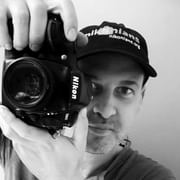


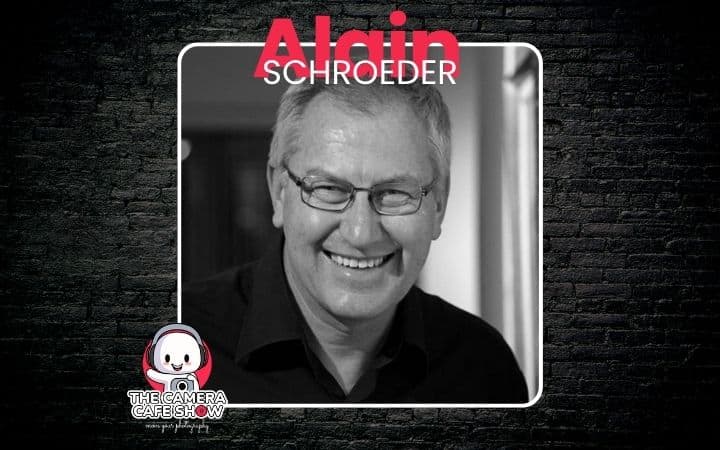
Tom: Good evening. Well, good midday to you Alain and welcome on the podcast. It's a pleasure to see you again , and we have a little time for a chat about your photography.
Alain: Thank you. Thank you very much.
Tom: How is life for the moment in New York? Because I think you're only there for a few days now.
Alain: Yeah. Yes, I have some family problems, so I had to come back. I was in Indonesia, and so I had to come back . And in a few days I'm going to Poland to a festival because I'm invited I have an exhibition there with plastic. And then, I will go a few days to Belgium and so, and then I come back here.
Tom: And now you mentioned Belgium. Of course, I'm very happy because finally. You are from Belgium? I am from Belgium originally.
Alain: yes, I know.
Tom: So we have this in common. Belgium has a lot of surrealist streaks. We have Magritte, Delvaux or even Tintin. There is like a Belgium way of seeing things inside you that you carry with you?
Alain: Oh yes, definitely. And also, you know, when I was studying photography in Liege and the same time, or before I was going to the library all the time, you know, like the
Tom: Mm-hmm.
Alain: honestly, I had I had seen all the surrealistic books about painters. funny because 1 way I did photography was one day I asked the girl there okay, I've seen all the books about paintings, you know, even renaissance, everything. there is nothing left. What can I, you have something else for me? And she said, yes, I have like German graphic design and Novo Graphic. And I said, yeah, okay. And it was only about photography design. And so that was really important because I loved it.
Tom: Okay.
Alain: But I really like surrealistic painters. Like my favorite is Dali, like really? And Magrid of course. But Dali for me is like a total genius.
Tom: Mm-hmm.
Alain: I cannot even believe he did what he did. So it's so amazing.
Tom: For the record, Alain
Alain: Yeah.
Tom: I live 15 minutes from Figueras where is the museum from Dali. You ever been here?
Alain: me. Yeah. Yeah. You told me last time. I was there like two years ago. Yes,
Tom: Okay. Okay. Okay. Okay. Okay.
Alain: you know, the best place, I mean, I don't know if you're interested, the best place to see a lot of paintings of Dali, because, you know, you go to the museum because it's so expensive. They have one, two oil paintings, oil paintings. But if you want to see a lot, you go to St. Petersburg in Florida. There is a foundation, I forgot the name now, but they have like, I don't know, maybe 50, 60 Dali paintings. It's, it's amazing.
Tom: Okay.
Alain: It's, to you, when you see it, you cry. It's so beautiful. And so all the paintings in one place, it's absolutely amazing.
Tom: Mm-hmm. So we have to meet up there or here for a coffee one day and go to see it. Allain Allain. So you spent your youth in the library learning about photography, then you stumbled into sport photography, then you started your own agency, and later you went into deep personal projects. You, when you look back, you see this all as different careers or it's, or it blends into one continuous journey of Alan Schroder.
Alain: Well, I, you know, in the beginning I had no idea that I would do all these things. I remember that when I was I think 21, 22 years old, I didn't see a very good future. You know, I was in Lih, the city in and you know, there is no work there. I, I didn't know what to do. I, in fact, I was working for a few years in cafes and restaurant, you know, like a waiter. and honestly, I didn't know that I could live, taking pictures and so, well, yeah. The, start was the, sports photography. So that gave me the idea that I could make a living out of photography. And so the rest is you know, added you know, when you know that you can make money by selling and doing pictures, then you try everything and finally you achieve your goal. And my goal when I was young, when I was a student in yen in photography, was to do reportage, you know, stories. that many years later, I had the career of like 40 or 45, 45 years. Very interesting. But, it's only the last I would say 15 years that I'm really doing what I to do in
Tom: Mm-hmm. Mm-hmm. And if we go back also when it, when it was that you went solo hiking to Afghanistan.
Alain: That was I did it two times. The first time was 74 during my study in Saint Luke, Lih. It was after the second year of photography and, you know, the, after the third year you have to present like a big project. And so that was my idea to do something interesting to show at the end of the year because, you know, I mean, it's possible. I,
Tom: Mm.
Alain: was, you know, when you are young, you are not, you want to be photographer, but you're not so good. Even if you're good, you're not so And so to make something out of Lih in the seventies. For me was difficult. Okay. Now I would, I would really love to go back in 74 with my camera. Now, it would be amazing. honestly, I didn't know what to do. So I thought something unseen could be more interesting. For the school?
Tom: Mm-hmm. And you made some pictures that you're still proud of there now? Yeah.
Alain: yes. Oh, yes. Because oh, yes. I, and the funny thing, I won a few contests with pictures I shot
Tom: Okay.
Alain: Okay. I the year, you know, some contests, you, it's free. The years of shooting is not important. Yeah. So I had a few, and I had the feeling that you know, how do you say that in English? Like, something changed in the way I was seeing things. in French they click, you Suddenly. Oh, yes. You understand something. so I had a few moments like that when I was shooting in Afghanistan. And when I showed that to my teacher, when I came back, he had the same feeling. He said, yeah, I see that here and here on these two or three pictures. You are another photographer. You learn something from your travel. So that was very Yes.
Tom: Mm-hmm. And when you went back the second time, you think you were, you were better.
Alain: Well, the second time I didn't work so much because the first time I really, the goal was to take pictures. The second time was more in a travel,
Tom: Okay.
Alain: So I took a few pictures, but I think, yeah, the best ones were the first time in 74, the second time was 77, 78.
Tom: Mm-hmm. And you're thinking now of going back to Afghanistan or for the moment, not.
Alain: I went back in 2015 and I wanted to go back last year or two years ago. So it
Tom: Mm-hmm. Mm-hmm.
Alain: But so there was like a window like two years ago, the Taliban where like trying to look good. so there was a window and but you know, because of my personal family,
Tom: Mm-hmm. Mm-hmm.
Alain: And now it's a little bit too late, but yeah, maybe I definitely, if there is another window I will go.
Tom: Okay. Yeah. Let's go a bit back to your sport years Allah, your tell your famous tennis. Playing years. So I think your career, it started almost by chance No. To, get into tennis, photography. And then from one day to another, you start to be published in magazines, the cover of magazines, you doing big tournaments. You remember the moment you had there that you said that, or maybe I can make a life out of this.
Alain: Yes. So the story of that is that I'm playing tennis. I mean, now not so much, but I was playing tennis a lot, and I had a friend and he, one day he said, and I didn't know really what he was doing Living. And one day he said, listen, we have a problem. You probably know that we have a magazine and we don't have any photographer because I don't know what happened. I know that you are a photographer, so could you help? And I said, I'm sorry, but no, I cannot tell because I'm not a sports photographer. I have no idea how to do sports photography. And second I don't have the equipment. And so the next day he came back, asked me again, and then he said, listen, we have all the equipment. And so I had, I could not refuse another time. so I said, okay, so let's make a test, because I thought, you know, with the test, maybe it would not be so good. And then, okay, I am out of this problem. So we made a test and I remember clearly with Bernard Olo, which at the time was the best tennis player in Belgium. And okay. I, so it was analog, you know, they, so
Tom: Yeah. Film.
Alain: yeah. Film. They gave me a 300 millimeter, was four, five, and an Nik icon with a motor drive. so I took pictures, I dunno, a few roles. And then we processed them and I saw that on maybe 20, 20, 25 frames out of 36. the ball in the picture. And they were so impressed because for some reason the other photographers, they didn't get the ball because, you know, when you know the sport, a big advantage. they were so yeah, like amazed. So they said, okay, you are hired. And so they said, if you want the next in a few days, literally it was one week later, there is a tournament in Toronto, Canada. I want you to go there. And then after that you go to Flushing Meadow. You know, Toronto is like the preparation of,
Tom: yep.
Alain: Flushing Meadow. And so I said yes. Okay, so I went to Toronto. I took pictures. Bork was there beyond Bork,
Tom: Mm-hmm. Mm-hmm.
Alain: Ulis. So that was my first encounter with these guys. And it was very easy at the time, they were interview on the court so you could come very close, make portraits, and, so it was very interesting. And then after that I didn't come back. I went to New York for the first time and I shot that was 79 and I shot the flashing meadow second year
Tom: Mm-hmm. Mm-hmm.
Alain: So, and I, at the time, I was shooting Kodachrome 64 and 25. And in New York you could process like in one day. around 42nd Street. I don't remember in that area, Midtown, was one lab and you could bring your stuff in the morning and the evening you your films back. So it was like safety because you know, you my first assignment and you if you have good pictures.
Tom: Yeah. Yeah. Mm-hmm.
Alain: So it was very interesting.
Tom: You ever had a beer with them also? All? Huh?
Alain: If what,
Tom: You ever had a beer with a tennis player?
Alain: Not really, but no, not with McEnroe or Borg already. That was, you couldn't approach them. I mean, on the court, but not outside. But I remember that I did an interview with ILI Nata. He, so he's from Romania. He was an excellent tennis player at the time. Like amongst the best. Even at the end of his career, but he was married to a Belgian girl. Woman. so he spoke French. so I asked him like I went to the locker room, I mean, and I said, listen, I'm from Belgium, can I make an interview? Oh, yes. Come. So he invited me in the locker room. So we made the interview sitting and like, I dunno, half an hour, 45 minutes. then you know, I had the, like a re yeah. Recording machine, how do you call that? And with cassette, you
Tom: Cassette. Yes. Yes. Yes.
Alain: and so okay. I was so happy and proud. So I went back to New York. I had, like a lunch in my usual place, as you say, And so I put the recording on, I mean, next to me on the floor. Okay? And one guy came the, i was at the counter, One guy came, he pushed me. He said, oh, I'm sorry. But he took, in fact, he was a thief, so he took everything, okay? I realized that, so remember, we are in 79, so it, New York was very different than now. Now it's safer. And I was midtown and I said to the, to the owner, listen, they, these guys, they took my cassette and. And they were like outside, you know, like a gang, six people, you know, like, Hmm, okay, what do you want? Huh? Like, really five, no 10 meters away from the entrance of the restaurant. And so the owner said, okay, give the cassette and you can keep the rest. throw me the cassette so I could use the interview.
Tom: Okay.
Alain: So yeah. Interesting. Beginning in as a journalist.
Tom: Mm-hmm. Mm-hmm. Well, maybe better this than your camera gear.
Alain: Yes. Yes.
Tom: So, and then before we go over to projects, then you founded your own agency reporters for how long time you ran this?
Alain: Yeah. So that was like much later I was a freelance photographer for I think 12 years. And then with a friend also a sports photographer. We thought it would be better to have an agency because honestly, already at the time, the magazines were trying to put a lot of pressure on us. And so in fact, one day we met, we met in Italy doing a story. And so when I see him, I asked him, did the magazine send you, I mean, you means they pay everything like the plane, the hotel, the food, et cetera. And he said, no. And you, I said, no. yeah, okay. We are FUCK. So they really, they didn't say anything. So they just waited. And because we were not so bad. So we, with our own money, we invest the money to do stories left and right in different countries and then. For them, it was very easy. You slides on the, on the light table and choose the best ones, and that's it. Only price of one color picture. And so maybe I had to, he had to, but it would more or less cover the expense. So it was not easy. And so we decided if we, if we have an agency, if we work together, so then it'll be not so easy for them to push us. Know, so why we immediately after that trip I mean one week later we start the agency. was very fast because we then we start to look for like a house, like a warehouse. So we asked another photographer who was more specialized in politics to join us. so we started at three people. We started reporters in that warehouse three people, and one year later we already, I think we were like between 20 and 23, something like that.
Tom: Mm-hmm. Mm-hmm.
Alain: very, very fast. It was honestly, you know, I understand what golden years means. because you know, we were, honestly, we were very anxious to invest and to buy this warehouse. You know, it,
Tom: Yeah. Yeah.
Alain: a big step. So, we didn't know if we would be successful, but it was beyond our dreams. Like you
Tom: Mm-hmm. Mm-hmm.
Alain: I had to call like a friend who was a journalist. And I said, listen, if you want, you please come with us and you have to manage all the calls we are receiving for assignments to get pictures because we cannot do everything at the same time. he came then an assistant, then we had to buy like drawers, you know, to you so it was yeah, it was impressive. Nothing to do with what is happening now
Tom: Yeah, I can imagine. Yeah, of course.
Alain: So,
Tom: And then Allah, you sold your share of the agency, and then you went on to do all these magnificent personal projects.
Alain: exactly. Yes. that was like more or less years ago now, that I decided to sell my shares. And so reporter reporters, it's, it's still existing, but I think it's not doing so great because the market is really nobody's buying any pictures and the people who are buying, they have no money. So it's really And yes, and then I start to travel around the world, the world doing own, Yeah.
Tom: Now all this has been very, very difficult because you did so many amazing projects.
Alain: Thank you.
Tom: I picked three, but I, it took me half an hour to decide there. Now, before we start to talk about your project, just to give listeners a sense of how decorated you are in awards, and we are not talking even about all the expositions you ever did. It's, I think, impossible for me to keep track. But you've won multiple World Press photo awards, top prize at CNL Top Prize, Istanbul Photo Awards, honors from the British Journal of Photography, Nikken Awards, published in many magazine, national Geographic, Gail Paris Match. If I have to go through all of this, we will have to do a podcast separately for all of this, but amazing work. A
Alain: can I,
Tom: i really enjoy it.
Alain: can I tell you one thing
Tom: Tell me.
Alain: So, during my whole life as a, let's say, professional photographer, only did a contest once. And with pictures that I felt were very strong. they are, they are on my website. So it's in India on the GaN Ganja River.
Tom: Yes. Mm-hmm.
Alain: people are, you know, they have like a dead baby they, you know, it's a cremation, but not for the babies. had the baby and they throw,
Tom: Throw it. Yes.
Alain: in, okay, in black and white. And I have the series six pictures. so I thought that was really strong and I've never seen pictures like that. Even now till never seen so these kind of images, okay, let's it was the contest for national journalist in Belgium. And I honestly, okay. I thought, wow, I'm going to win this. I did not. And so I was. I was not happy, let's say that. And I said, okay, I'm never going to do any contest again. And that's what I did. I, you know, that's what, the la the next 30 years, I did not do any contest. And so I think when I was like doing my own project, you know, the contests were starting to be bigger and bigger. And now there are a lot of contests everywhere. And so it's more easy to get an exhibition. You or, and then you get an exhibition. So I went into that. And so probably that's the way, that's Now I did so many contests because I want to catch up
Tom: Yes. No.
Alain: in a way.
Tom: Good for us, because then we can see it. Let's start with the first one. I picked, I picked kids jockeys.
Alain: Mm-hmm.
Tom: I think it won first prize in world press. Photo for sport category.
Alain: Yeah.
Tom: You, go ahead. Talk me a bit about this project.
Alain: Yes I, what I remember clearly is how I discovered that, you know, when you take the plane in Indonesia, to go from one place to the other, one island to the other, at the time it was 2000, I don't know, 18, 19, they had like a magazine, you know, a flight magazine with, you know, like tourist stuff or different information. And they had the picture with kid jockeys. I mean, what I saw was an article explaining that there were racists with jockeys, but young, very young, and with one picture. And so usually what I do is I take a picture myself of the article. that in the file and years later when I'm in the country, then, okay, I'm in Indonesia, what can I do? So that was the case. So that's how it started. It was very, very difficult to have precise information even when I was in Indonesia. So I went to sum Sumbawa, but it was not the right time. I mean, I was a little bit too early. I was two weeks too early. And so okay, I did something else and I came back and then I went to shoot the story. And the first day I thought, oh my God, this is going to be a disaster, because nobody was on the racetrack. Only a few trucks with a few horses. No spectators. And you know, the racetrack is like from the middle age, so everything is rusted. So you think, no, it's impossible. I, okay. And I was very close to go home, like, okay, no, I'm not going to stay here. It's a waste of time. then I thought, oh, maybe you should come back tomorrow. And In fact, because it was very difficult to take pictures and even good pictures, had to work really hard. Like I had to try to find the special angles shoot from the ground, put my camera in the trees, you know, I had really to be creative. And so at the end okay, then I was, maybe, I was lucky because it was not only the race, it, there is also a lot of tradition on the side, like, they have a shaman, is doing like, let's say prayers to wish good luck to the kids. And then the kids are going to the river with the, with the horses to wash them, I didn't know. Also amazing. mean, there were a lot of different things that I had not anticipated at first. So it, at the end, it was really interesting. And the funny thing is when I won World press, the, one of the jury member, he said, oh, I thought you were younger. And I say, why? And he said, because the point of views are very different than usual. shot at this level. from very different angles. he thought, usually that's the sign of a young guy. And I said, no, no. I was on the floor to I put my camera in the tree. So yeah, I, did a lot of efforts to get all the images.
Tom: Mm-hmm. And your decision to turn this into black and white, it came early on already, or?
Alain: No, the first day. Yeah. The first day because you know, they're supposed to start at 10, but they started at 1130, to finish at five, six. They finished at three. And so at that time, you know, the,
Tom: The sun. Yeah.
Alain: yeah. Like in Indonesia at that, And you know, they have like a black hood. Some of them. Or some of them a helmet. And so it was completely black and yeah, it was, you could not work with that, even with Photoshop, you know, it was not natural. And so I tried black and white and it was work, working really well because then I mean, the difference between the black face and the rest, you could I mean work on it to
Tom: Mm-hmm. Mm-hmm. Yeah.
Alain: it's very technical, but to make it simple, you could make it work. So it would look natural. the good thing is it was very dramatic, you know when I switched in black And so I thought, yes, this will be better for the story.
Tom: Mm-hmm. But these kids are, I think they're between five and 10 years old,
Alain: yes.
Tom: but they wear a helmet, but then they go barefoot and they have no protection. When the first race you saw, you were amazed or you were concerned?
Alain: Well, you know, the first race, I didn't realize that you know, they have no saddle, huh
Tom: Huh.
Alain: and all of them are barefoot and half of them have like a hood and half of them have a helmet. Yeah. So, no, I was not paying attention too much in the beginning, but after that I've seen a few kids fall And so yes, then I thought, oh, yes, that it could be really dangerous. And I was told that years ago they had like you know, some kids were seriously injured and yeah. So, but that's the way they do it, I've seen also some kids a little bit older or maybe between five and 10, but, you know, a little bit stronger.
Tom: Mm-hmm. Mm-hmm.
Alain: they would not make the, I mean, they would be the last, on every race because they're too heavy. The, the horses are really small and not so strong. So
Tom: Mm-hmm. Hmm. Mm-hmm.
Alain: have like, yeah. Little kids on them.
Tom: But to clear, to be clear, Alan, this is this the do only in the, for a festival,
Alain: yes,
Tom: it's a spectator sport.
Alain: yes.
Tom: Okay?
Alain: You know, the people like it. I mean, in the beginning they are no spectators. but you know, the idea is to get to the final, so the best horses will get to semifinal and final. So the whole process is like one week. Okay. Every seven days except Friday because they, it's a day off because they're Muslim. And then the last day it's like full, you know, they have like a small, I mean, stadium, no know, stairs.
Tom: Mm-hmm. Yeah.
Alain: but you could see, I would say 300 people, men. I mean mostly men. And the women would be on the side of the track because the women are mostly the mother of the kids. but in the stance you would see men betting, you know, money was going from one to the other, and they were go, they go crazy with that.
Tom: Mm-hmm. Mm-hmm.
Alain: that's yeah, I have seen the same thing for co fighting. You
Tom: Mm-hmm. Yeah.
Alain: it's another kind of let's say sports. So. But I think what they enjoy is betting, you know, not sure they enjoy the technical side of the race, but making money. That's, thing they enjoy.
Tom: I, that's why I ask, I was wondering if money was involved somewhere.
Alain: yeah.
Tom: Mm-hmm. Hmm. You ever had a chance to talk to the kids themself, ?
Alain: It's difficult because, you know, one, it's in the middle of nowhere the nobody speaks English, even the adults. I was lucky to find one like one truck like food truck. guy was from Bali, and,
Tom: Okay.
Alain: had been in the in the tourism business and he spoke English. And that was very helpful because at, I was asking him a lot of questions all the time, you know, and he told me that you know, the, I. Oh, next to his truck, he had a few tables and he said, you see the man and the kid there, he's a shaman. And so he's going to do like some rituals. If you want, I can ask him and maybe you can go with him. And I said, yes, Because otherwise there is, not possible to communicate. I mean, you say hello, how like you smile and that's it. You cannot ask any questions. because of him, I knew all the details, I mean all the interesting details. So I went with this guy who is a shaman then he told me that the kids would go to the river, you know, like day to bathe the horses. Really interesting pictures. told me also that they would go to the sea at the end of the tournament. And so your question, talking to the kids, no, it's impossible. Because I mean, this guy was working in his truck, so he could not me. And honestly, that was also the beginning of my series, you know, and so I didn't have a fixer at that time. Now, if I, if I would do that story, I would probably take a fixer. I mean, somebody at least who can translate you can you can learn a lot of things. You can make more interviews. And but at the time I had no fixer. So,
Tom: Well, talking about Fixer is perfect to go into the next project I picked because it's not a fixer, but it's somebody who will not leave your side there. Kim City in North Korea,
Alain: yeah.
Tom: How you ended up in North Korea, how difficult was it to get there?
Alain: in fact, easy, I mean easy. There is if you are patient, know, I again, I remember clearly how I get, I got the idea to go to North Korea. I won a contest in Germany, Felix Sheer, which Contest. I won the photojournalism category. And one guy won the category in fine art with a project in North Korea, you know, taken with you know,
Tom: Mm-hmm. Yeah.
Alain: and white, blurry, you know? Okay. so of course we met and I asked him so like you, same questions. Is it difficult to go to North Korea? How would you do it? Okay, give me more details. And he said, you go to Beijing, you call this guy you tell him what you want to do and he will arrange everything. And so more or less, that was the case. But I said, I want to go as a photojournalist. I don't want to go as a tourist and then take pictures. You know, I want to, I want it to be very clear that I'm a photojournalist. I'm coming to make a story. And so I decided it to be TaeKwonDo. So they know that I have a camera all the time, and that's what I do. So I don't want them to say, Hey, what are you doing? You're taking pictures all the time. What is it for? You know, it can go wrong in those countries. And so that took me like a few months, you know, back and forth with that guy to have all the confirmation that I would go as a photojournalist. And they know that I would shoot TaeKwonDo. then on site in North Korea, I had 1, 2, 3 people with me all the time. The
Tom: Three fixers.
Alain: Well, yeah, for zero, I mean for free. The driver of the car, the, his assistant or I don't know, and one guide, like official guide who spoke English so we could communicate. Yeah. Three people all the time.
Tom: So you three people all the time watching you.
Alain: Yeah.
Tom: I think with the camera in your hand, it's bit like a mirror. No, you are watching in the camera, but they're watching you.
Alain: Yes. And one day I was on the street, I was taking pictures on the street. not allowed to I mean how can I say? They would drive you around in the car and then they would say, okay, now you can get off the car and take pictures. Okay.
Tom: Mm-hmm. Mm-hmm.
Alain: I, you have no choice. You do what they tell you to do. So I took pictures and. Then to go back to the car, the car was waiting maybe, let's say a hundred meters away. on that strip, normally it's not a place where you should take pictures. But they didn't tell me, you know, they tell me, okay, take pictures now. You are allowed. So I took pictures of the people on the street. Okay, you wait five seconds, okay? One guy out of nowhere came to talk to my guide, blah, blah. And I, it was a lady, I mean, she was a lady. And I said, oh, so this guy saw me take pictures, it's a problem. said, yes. You should not take pictures here. But it's okay. Don't worry. You see? So
Tom: Mm-hmm. Mm-hmm.
Alain: the time. So that was not one of the three, that was another one in the street, you know, like I don't know who. So
Tom: Mm-hmm. Mm-hmm.
Alain: But the good thing is they don't realize how can I say? They don't realize what you are doing, you see? So sometimes they say, yeah, take pictures. And in fact, I see was so interesting, like out, you know, I, we were in the car, okay? So I asked, can I take pictures from the window? Like, out of the window, they say, yes, okay. I opened the window. And so I was really paying attention because it's very easy. They drive you everywhere, and so you can you can frame, I mean, it's
Tom: Mm-hmm. Mm-hmm.
Alain: than walking and what you see is really interesting all the time. And so I had a lot of good pictures from the window, you
Tom: Mm-hmm. Mm-hmm.
Alain: and, but they don't realize what you're doing. So an long as you don't, like they say, you cannot crop the leader. You
Tom: Mm-hmm. Mm-hmm.
Alain: his face or, you know, mean, things that I would anyway, I would not do. But so for them, that's very important. Otherwise, when they say you can take pictures, they think that what you will see is according to what they want you to see. But you know, you are photographer, what you frame is different. Sometimes the way you frame it, you shoot in black and white or color, it'll give so a different atmosphere. So in fact it's, it didn't bother me that, I tell you one thing. So it was, the 70th anniversary of the creation of North Korea. Okay. And. I was there as a photojournalist, but I have, I had no credential for the parade, you know, the military parade. Okay. That's, you know, that's photographers like ape, you know, all these So I could not do that. So they thought, oh, let's take this guy and let's go far away from the area. So, yes, that's what they did. So come, we go in the car, we go, we're going to visit some cemetery. Okay. So we were on like a, like, how can I say? Like a hill. Okay. you had all Pyongyang there, and then at 10 o'clock and the sky was blue, you know, no clouds in the sky. Okay. o'clock, boom. I said, what is that? And they said, oh, it's the canoe. the beginning of the festivities. Oh, very interesting. What happened? You have so blue sky suddenly because of the canoe, you have like a cloud floating on the city. My god. It's, it's the best picture I ever shot in North Korea because that's totally surrealist. You can try to do it again. There is no way, you never will go there in the on a day like that. You would be at the parade, right? in fact, they think okay, no, he cannot see the military parade. It's not good. They bring me to a place where I shot an even much better picture, you
Tom: Mm-hmm. Mm-hmm.
Alain: what I mean is they don't understand what we photographers are doing. So. There is always a way to show the country through our eyes, and so they can
Tom: with limits.
Alain: Yeah. They will not succeed to, to block us.
Tom: But you don't think that they did like a background check on you to see what work you did already, Al or something?
Alain: Oh, maybe. Yeah. Maybe they check. But when I left, you know I was told that they could check my camera and I was prepared like, oh no, this picture, no this, no, but they didn't do anything,
Tom: No. Okay.
Alain: no nothing. And yeah. And then after that yeah, now for many years, yeah, after that was the pandemic, you know, so for the last five years, you can, you could
Tom: No.
Alain: enter. now you can go back. so I probably will go back one of these days.
Tom: Mm-hmm. And the food, how is the food there?
Alain: It's like South Korea,
Tom: Okay.
Alain: great. Not bad. I don't remember. Like a little bit Chinese Korean food. Yeah.
Tom: Mm. Okay. Then let's walk quick to the last one. I want to talk about before time runs out, grandma Divers South Korea. Now we go to South Korea.
Alain: Yeah.
Tom: How you found this story?
Alain: That's, that's funny. So I was I was in the Maldives. Okay. You see how things sometimes go? I mean, yeah, sometimes I'm thinking, but this time I was not thinking, so I was in the Maldives in I think January. Okay. I was looking for a cheap flight. And I saw, oh, I don't know why, but really cheap. And so I had no idea. I mean, my goal was never to go to South Korea, so I didn't know anything about the country. I just took the plane. I arrived in shorts, but it was minus zero degrees. It was snowing. Okay? So I had to buy some clothes, okay? And so I visited UL and South Korea, but it was really cold, like minus 10, almost every day, minus 10, minus 15. so I thought, okay, may, let's go to Jeju, island you know south, a And so I went there. I arrived at the airport, and I was waiting for a bus. And honestly, I saw, I have the picture. Not a good one, but. One that's I mean, what, let's say grandma divers walking in front of the, of the bus station. You know, I was alone there, And probably it's close to the sea, and she was with, she was pushing like a supermarket cart, like a
Tom: But with the wetsuit on everything.
Alain: wetsuit on
Tom: I dunno.
Alain: Yeah. And shoes. And so I thought, what is that? Huh? okay, then I did my homework and I realized that it's an important part of the, of the island and so and so, yeah, then I tried to take pictures at the time, but you know, it was still March, and the weather was not good. So they were not like working. You could see them, but I mean, picture wise, it was not interesting. And so I came back in like six months later in September. I was not lucky. Means that at the end I was very lucky. was not lucky, not lucky because they had like a hurricane and so they were not diving, the weather was very rough. So the condition were not good. And so, and for once I thought I'm going there one week, or I dunno, 10 days, and then I leave. So I had a plane ticket, you know, I a plane ticket to leave Korea, which I never do normally. And so the weather was bad. They were not diving. And so I thought I have to make pictures the second time. then, okay, what to do? And I bought like a black backdrop in the city. I hired the fixer. So I explained him that I would like to take portraits and we have to, with the, with the black drop, to their houses. I mean, you know, they have like small houses along the sea where they rest when when they work, the personal house. And so, okay, let's, let's try. And so that's what we did. And when we started the first date, it was so windy by my backdrop was going everywhere. And so at one, at one, at one point, I said, maybe we should take the pictures, in front of the wall of the house because it's a, it's a volcanic island stones. That means that those houses they use to protect themselves when they go fishing made with those black rocks. Like one on top of each other. So it's, it's interesting and I thought maybe I should do that because the wind, if the wind is blowing, et cetera. So the first, the first shot I asked lady, okay, can we, can we try in front of the wall and then in front of the backdrop so I can see the best, then decide the to do for the rest of the series. And she was very nice and okay, we tested then I had like a few seconds to decide, with the wall or go with the black backdrop. And I decide the black backdrop. And it was the best idea because you know, you are not distracted by anything. started to shoot and it was raining, I had an umbrella. And but the rain, you know. It's not good, it's not easy to work, but the rain was like on the wetsuit. So it was so interesting, for most of the pictures, I have water on the wetsuit the rain. So yeah, in fact, everything went wrong. So means that at the end you have good pictures, which is very often the case when everything, yeah. When you start a project and it's going nowhere. you have to oh, maybe this could be interesting if you are patient, if you are perseverant, consistent, then maybe you get a good result at the end.
Tom: Mm-hmm. And how long it took, you were there a week to make these pictures
Alain: One week. Yeah,
Tom: week,
Alain: a few days I did everything in, I think three days, three or four days,
Tom: and they were very willing to, for you to take the portrait or.
Alain: well, yeah, because, because of the fixer, the fixer spoke the local language. South Korean language and then the language of Jeju. So it was a young guy, so he was able to speak with them. knew also, you know, the cultural way to approach them. And, and very often I had the feeling that he was impressed by them. So he was, you know, I asked, I said, ask them to come now, huh? Yes, but wait a little bit. I have to ask. Wait. Ah, yeah. Okay. Okay. Okay. Yes. I'm going to ask, you know, like,
Tom: Respect.
Alain: respect and, in, I'm very respectful, but you know, it's okay. Ask them to come.
Tom: Mm-hmm. Mm-hmm.
Alain: I, in their culture, it was more not so direct. Okay. But when they were there. they were very they didn't want to be photographed, so it took like, they would stay 30 seconds, one minute. And so it was again a problem. But in fact it saved me because I had to find a solution for them to stay there. And what I found is, okay, ask them to take off the mask. You know, like, it was like an intuition, you know? I didn't think about that days before I had the problem, okay. How to solve it. And so took off the mask. Okay, now put the mask on again. Okay. Take the mask off and okay. The hood, you know, like the hoodie put the hood on, and some of them had the gloves, and so you could, you know, you could see. were doing like that, so let's say they would they would be, oh yeah, we have no problem. I can stay here two hours. my picture would be not
Tom: Not the same. Mm-hmm.
Alain: the same. Yeah. But because of the fact that they didn't want to stay long on the
Tom: Mm-hmm. Mm-hmm. Mm-hmm.
Alain: that and it was the best thing to do.
Tom: Mm-hmm. And you know that many traditions around the world, they're, they're slowly a bit fading away.
Alain: Mm-hmm.
Tom: You had a bit in mind to show this work as like a preservation or like more a celebration for what these women are doing.
Alain: Both in the beginning you know, I shoot a lot of things like that, like tradition, even in Belgium, you know, in Belgium I did ban, Yeah. I did Le de, you know, the marches
Tom: Yes. Yes.
Alain: Vilonia way before the, they were unesco. And then also I did a lot of procession in small villages in on Flora in Flanders, I a little bit everywhere. The good thing is you had only photographer all the time, so it's perfect. You don't have, you know, it's not the carnival ese where it's a zoo.
Tom: Thousands. Mm-hmm.
Alain: So it's really And so I like traditions and yes, I like it because it's, it's always under. Under evaluated, you know, people, they don't appreciate those tradition enough. So, and some of the, some of them are really interesting and, you know, really old, like 500 years old or, you know, in some small villages in Flanders, they do the same thing for the last 700 years, the same thing. And they are no tourists, only the local people. it's, it's very interesting. The one let's say, side effect is that by showing that the next, the next time there will be more tourists. So. What to do exactly. I don't know. But I didn't show many of these images yet, you know, that I took in Belgium. I keep them for me so nobody knows and it's fine.
Tom: Well, you have on your website because I saw them, but
Alain: Oh yeah. But not a lot. on my computer.
Tom: Mm-hmm. Mm-hmm. Secrets stacked away, like secret, all your notes for your next project. And has there, has there been, because you should sometimes a bit more sensitive or difficult project. Has there been a project that left you with more an emotional memory? Or, or something you can shake?
Alain: Well now in Indonesia I was shooting a very a very sensitive project, so like more photojournalism, heart photojournalism, so, I cannot talk about it, but, see it next year. yes, that's what I've seen there is beyond, beyond everything I've seen before. So it's sometime it's tough of,
Tom: Mm-hmm. Then I will call you next year and we talk about it
Alain: yeah. Okay.
Tom: and we, and we will have a talk. So, Alan, quick photojournalism. Now you bring this topic up. I think this has changed a lot because magazines, they're dying. They're, they're dying, and now. People to get seen. Well, they have to use maybe social media like Instagram . Although it's not really a bad thing because these days you can really focus where you want your work to, be seen. I think it gives you also a bit more of creative freedom. No.
Alain: Yes, but you see, like you're talking about Instagram, but like I would say 5, 6, 7 years ago, I don't remember. One of my friend told me, you have to be on Instagram because it's a good way to show your work to other photographers. So I started at that time but now Instagram is like a market. So I don't, I didn't post anything for the last two years now, you know, I thought, okay, maybe I stop one month. Now it's two years and I'm not going back. So, because it's, it's not the way I wanted my work to be seen. Okay. But as you said, there are many other ways. So now the way to show your work is there are a lot of contests, like all over the world, and some of them are really oriented for towards photojournalism. And so if you are amongst, let's say, the shortlisted stories series, then you have your work exhibit, you And so, and even better, you know, it's in many countries like Spain, France, Italy Estonia Brazil everywhere, like India Malaysia, you know, there are many countries who are very active. So that's more in interesting and now very often people call me like, you know, through because they've seen my work in a, in a festival. I'm going, I told you I'm going to Poland. do anything there. So even I didn't win the contest. They, one day the director sent me an email I would like you to have an exhibition at our festival if you agree. And so how it started. And,
Tom: see?
Alain: like a few, literally a few days ago, same thing. People from Italy, wanted to have an exhibition with my pictures living for that, you know, like the mummies.
Tom: Yeah. Mm-hmm.
Alain: And so it's a, it's a new way of showing your work. honestly, Instagram, I don't even look at Instagram. It's so I'm, I'm very sorry to say that, but, it
Tom: Not all.
Alain: idea, but, I think your idea is, is much better, but then Allah, with so many contests going on, is your wife helping you out to remember when to send what, No, no, I,
Tom: do you remember Everything,
Alain: yeah,
Tom: okay?
Alain: yeah. But you know, it's a lot of work, so I am, I am, you know, some, sometimes my friends are asking me, but you have nothing to do. You are retired. You have nothing to do. I said, I'm working almost as much as before, like now for Poland, I have to make a presentation. So I'm working on that. It takes not hours, it takes days Put things together. And you see now there is a new trend. Some, it's not the case in Poland, but some festivals, they ask you to make a presentation with video. Okay?
Tom: Okay.
Alain: So that means that now when I'm shooting, I have somebody who is film filming me And plus, sometimes I, you know, I take the mic and I explain what I'm doing it could be after that have to edit that and put it together. But, so now I'm learning a new a new As a editor, you see, have a course in, when I go back to Belgium, I have few days of like full course, eight hours per day, few days to learn to edit to edit video. at, it's very interesting because you learn new stuff, but it's, it's work. I mean it's you are not on the island doing nothing, is very boring, but
Tom: . What's, what's the most funniest thing that ever happened to you , on an assignment?
Alain: Oh, funny. I, I don't know. Really funny.
Tom: You made people laugh somewhere with something foolish. You did?
Alain: no, I cannot remember something funny, but I mean, the most interesting was certainly the story living for death. I shot in VEI because tradition there is amazing. I mean, I was there to shoot rituals. You know, what they do is they when it's time for the funerals, they kill a lot of buffaloes poor pigs, you know, so it's a little bit bloody. So I thought that was it. Okay. But then the guy from my guest house one day showed me pictures of like mummies standing, smoking cigarettes. and he said, oh, yes, we do that. Not far from here, but now it's not the right season. It's only in August. but yes, so we take the corpses, we clean them. And we take pictures with the family and then we put fresh clothes and we put them back in the coffin and put them back in the, let's say the, yeah, the house, And so I said, okay, I want to do that. I, so I, again, I came back later and so that was, yeah, really amazing because I've never seen something like that in my life. Even in Mexico, you know, they have also tradition surrounding death. It's not as strange and as interesting, I yeah, that was it lasted two weeks. I had to go every day. I had to drive with a motorbike for one and a half hour in the mountains. And I, every day I had a meeting in a small, like. not a cafe, it's a place where the guy was serving tea or coffee. And so I was so happy to have something to drink and he would tell us every day, oh, you can go this way or follow this guy. He's going in the right direction. And so it was another 40, 45 minutes with the motorbike in, the mud, on big Stones. I mean, it's, it was really, I love that story because I had a feeling I was so far away from,
Tom: Modern world.
Alain: modern world. Yeah. It was so interesting. Yes. Yes. Already ulai in the main city, you feel you but then one and a half hour in the mountains, then another hour. More seeing some amazing tradition. That was really I loved it. Yeah. So it's you know, it's now photography. It's more, it's a way of life. It's a more than just taking pictures. It's, you know, it's the, it's the way you live every day. So you, you think, and you breed, photography.
Tom: And after so many years now on the Road Ale, , what means home for you?
Alain: Well, honestly it doesn't mean anything. You know, have very few things, so yeah, for now my home is here in New York, but it'll be soon, so then it'll be, I don't know where
Tom: Wherever you are.
Alain: exactly. Yeah. it's, you know, it's the traveling all the time is an amazing way of life. I mean I. I, you know, I, when I was 18, I discovered Afghanistan. Okay. But at that time, 74, you had no internet no even no guidebook, you know, lonely Planet was not even there in 74. The guy who, started Lonely Planet, , he went to Afghanistan as well at that time, 74, 75. And he had the idea over there to make a book we couldn't find any information. You would speak with the people. So those experiences we're so strong that one, I pushed my daughter to travel. I literally yeah, taught her how to travel and she loved it. Now, and Yes, it's, it's so, you learn so many things. I mean, it's the all the time, all the time. and much more interesting than the school because you don't forget what you see, you
Tom: Yeah. Mm-hmm.
Alain: you study because you have no choice, you study. But if people ask you, what did you study 10 years ago? Oh, I don't remember. But I remember almost
Tom: remember?
Alain: On the road. So it's a great way to yeah, to go around the world.
Tom: Yes. To go around, and I'm grateful for it because I can see all these amazing pictures of you allele. I really,
Alain: you.
Tom: really enjoy it. To end this allele last question, how you prefer your Belgium waffles with cream or with sugar
Alain: It's, it too much trigger, so, well, I prefer
Tom: Fresh?
Alain: Way Cream fresh. Yeah, maybe. But I prefer Belgian beers. That's honestly, You know, sometimes in some countries I remember in Singapore I paid like 13 for an Orval. we, which is maybe a little bit too expensive, but you know, sometimes you need to what, in French we call in Madeline the Post, just to remember
Tom: Yes.
Alain: you come from. And honestly, when I go back to Belgium, like I will go in a few weeks I will be there. I always go back to a cafe, next to the reporters. We used to go there all the time. It's like a cafe, you know, like from the seventies. Nothing has for once.
Tom: Okay.
Alain: and still they have the music of the seventies. And so it's great to eat like a stoo or sauce or you know, like the, or something like that. So that I really enjoy that more than a waffle,
Tom: And then I hope really we can, maybe we can catch up one day in Belgium. That would be amazing for a beer For now, I will take contact again next year. You will tell, talk to me about the new project that you have going on
Alain: Yeah. Yeah.
Tom: And I thanks a lot for coming on the podcast today. It's been an absolute pleasure to have you here. And have a nice trip to Poland.
Alain: Thank you very much. And yeah, see you next year. we speak about the project.
Tom: Excellent. If we don't have a Belgium beer before somewhere, who knows?
Alain: Yeah.
Tom: Have a nice day still ela. I see you.
Alain: you.
Tom: Bye.
Alain: Bye-bye.