

Welcome to The Camera Café Show — the podcast where we brew up photography with a purpose, and sometimes… a dash of wanderlust with no return ticket.
I’m your host, Tom Jacob, and behind the scenes keeping the stories sharp and the audio warm are Richard Clark and Tetiana Malovana.
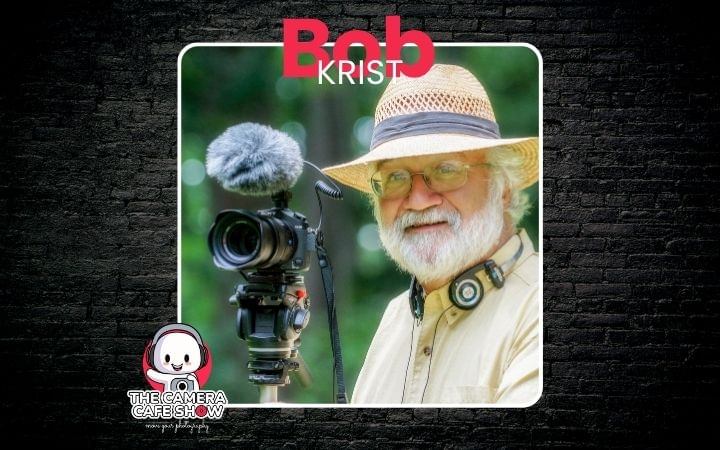
Today’s guest is one of THE great storytellers of travel photography — Bob Krist. For nearly four decades, Bob traveled the globe on assignment for National Geographic and National Geographic Traveler — bringing back stories and images that went far beyond the postcard view. From tiny fishing villages to bustling cities, he’s captured the world in ways that made readers feel like they were right there beside him.
But here’s the real hook: Bob isn’t here to talk with us about Instagram likes or chasing your influencer status. He’s here to remind us what authentic travel photography is all about — slowing down, connecting with people, and creating images that last far longer than a curated feed.
In Part 1 of our conversation, we talk about Bob’s start in photography, his years at National Geographic and how he had to wipe his knees before entering Bob’s Gilka’s office, what it was like chasing light and human connection on every continent, his move to NG Traveler’s magazine with some amazing stories and why he believes the art of “real travel photography” still matters today.
And trust me — you’ll want to stick around for Part 2 next week. That’s where we dive into how the digital age has changed travel photography forever. Bob also shares more unforgettable National Geographic stories from the golden era of assignment photography, opens up about a personal journey, and talks about how he reinvented his craft through video now and publishing books. It’s a mix of wisdom, honesty, and plenty of behind-the-scenes tales you will enjoy.
This two-part episode is also where we shared the most laughs during an entire interview — so be ready for it!
Pour yourself a cup, settle in, and let’s journey together — this is Part 1 with the legendary Bob Krist.
Tom: Good evening, Bob, and welcome on the podcast. It's great to see you again and to have a little talk about travel photography tonight.
Bob: It's good to be back with you, Tom.
Tom: Bob, before we start, this interview is approved by your wife, Peggy? She told you we can do it?
Bob: Yes.
Tom: I don't want to get in trouble, Bob.
Bob: You won't get in trouble. Don't worry. She's she's very she's very open-minded and understanding. As long as I don't talk smack about her, I should be fine.
Tom: Okay. We will try to avoid that. Bob, can I call you Bob or do I have to say Sir Krist, because I think there was a voodoo ritual somewhere, you were knighted?
Bob: Ah, yes. That was that was back in hills of Trinidad back in the early eighties. I was working on a travel story for Islands Magazine, which was a magazine that did coverage about different islands all over the world. And we were in Trinidad and the writer was very interested in the occult. And some voodoo in Haiti on a previous assignment, and I wasn't too anxious to see it again. But she kept putting out the word that she wanted to see voodoo. she kind of caught a case of the vapors and left before the assignment was over. And one night at my hotel, I got a knock on the door and there were three guys that said, you, Deon, that wanna see voodoo? And I'm like, well. And they said, come on. And they just took me up into the hills, the of Lavante neighborhood above Port of Spain. And you could hear the drums going, you know, before you could see it. And there was just this little almost open sided garage with these guys drumming who proceeded to drum. For the next eight hours without stopping. It was, it was amazing. At one point a woman in the audience kind of fell into a trance and she picked up a, a machete and she was swinging it around and she was casting spells on people. And then she pointed at me and they dragged me to the middle of the circle and they pushed me down on my knees and she had the, the sword above her head. And was long before they started killing and dismembering journalists. So I just kept saying to myself, she's not going kill me. I mean, that would get her in trouble, but I wasn't exactly sure. But I locked eyes with her and ins and, you know, it was fight or flee. And I decided just to stay and lock eyes. And instead of hurting me, whatever, she just came down and like knighted me on each, on each shoulder. And then they dragged me back and. And was know, just like I was terrified. I was, you know, shaking I, it was a gamble and I wasn't sure if it, if it would've paid off. And finally in the morning when the sun rose and people kind of came out of their trances, there was a guy there, the guy, one of the guys that brought me, I said, what happened there last night? And he said, well, you were accepted by the God Shago. And I said, okay. I said, would rejection have involved? And he said, you don't wanna know, man. You don't want to know. So I think that's probably the scariest thing that has ever happened to me because, you know, I did soft cultural travel. I wasn't a war photographer or a conflict photographer, that was about as deep into a culture as I wanted to get at that time. And again, it was a different world I think. Now I would've been screaming running from there because the rules are a little different there. There seem to be there seem to be a lot less when it comes to handling journalists these days. But in those days, I don't know, maybe I was young and naive, but I thought, as long as I keep her eyes locked with this woman, I'll be okay. So anyway it worked. Okay. here to tell the story. So it had a happy ending.
Tom: And you felt some of that luck that it brought you throughout your life.
Bob: Yeah. Yeah. You know it's funny and a lot of people don't want to admit this, whether they're photographers or not, but luck a lot bigger role in all of our lives, and I think we'd like to acknowledge Now you gotta, you know, there is, there is a certain aspect of the harder you work. The luckier you get , but, you know, there's certain, certain points in a career where something happens as opposed to something else. And that opens up a door that may not have been And I remember one of the first times I went down to the National Geographic and I showed my portfolio to the then assistant director of Photography, Kent Berstein. He was looking through my pictures and he said, well, he's, he's a, he's quite the he's a buster. You know, he loves to bust your chops. He said, I've always said it's better to be lucky than good. So, but you know, I've, I've taken a lot of insults like that in my career, but he meant, you know, he, we were, we're very good friends to this day. So, But I thought, wait, that's, that's a left-handed insult if I one. Well, left-handed compliment,
Tom: Now we are there. Bob, let's walk a bit back because before all the riches, the fame, the assignments, there was acting and a year living in London as an actor. So how exactly does an actor end up with a camera and goes to National Geographic?
Bob: Well in college the theater was my first love. I was, and philosophy major and a theater minor. And I really wanted to be an actor. And I had auditioned for a local professional theater company that had gotten a grant to tour Europe. And I got into the company. So they had a grant from the National Endowment of the Arts to tour Europe. There were, there's a, there used to be an English language theater circuit in western Europe called the Ery Circuit. Ery Theater in Amsterdam was the Home. And then there was like one in Paris and one in Vienna and one in Berlin. And so, I was saving up for a stereo at that point. but I decided I couldn't, you know carry a, a turntable and speakers all over Europe, so I bought a camera instead. So we got over and we got into Amsterdam. We lived in a house, a communal house. This is in the early seventies. one of the other actors was a pretty good photographer and he kind of took me under his wing. And, you know, acting is mostly night work. So during the days we'd wander around these beautiful European capitals taking pictures and trying to meet girls. And that's how I first got my interest in photography and travel. You know, it was, was a lot of fun wandering around Paris with a camera and you know, seeing all these great things. And I developed quite a taste for it. And I did that for about, a year, and then I kind of moved to London for another, almost another year. The tour was over and I thought I could it big in London, and I did make it big as a pub bartender and a grill chef. I did one Guinness commercial and I did one fringe theater thing. I was unable to find a British girlfriend. so after that I came back and I finished up my degree. And then I spent a couple of years in a couple of I. regional theaters in San Francisco, in Berkeley, California, and in Philly. And in 76 there was a big recession here in the States our funding and I was broke. I went home to live above my parents' garage in Fort Lee, New Jersey, which is right across the Hudson from Manhattan. And I was gonna hit the auditions. And the kid that grew up next door to me was an English major, and he turned out to be a reporter at a local paper. And he said, we're looking for photographers, you know, and at that point I had done travel photography. I had done head shots of beautiful actresses. I had done tra, you know, all my travel stuff. I said, well, you know, I've never done any news photography. And he said, yeah, but you know, it pays $140 a week. I. And I said every week. Okay. So I put on my best suit and I went down to Union City, New Jersey with my pictures of actresses in Europe and head shots. And the editor was like looking at it saying, what is this? You know, he said, he said, but you know, you, it's clear that you have no experience, but you do look very professional in your suit and tie. So I'm gonna give you a three week tryout. So he gave me a three week tryout and I was thinking three weeks, three times 140. That's pretty good money I could, you know, during my first. Three weeks. I had the luck, you know, there was a major fire. I was on my way to shoot a high school basketball game. And I saw a column of smoke deep in the heart of Jersey City. And, you know, I'm an actor and so I'm thinking, what would an actor do? What's my motivation? Would he go to the high school basketball game or where he followed the smoke and the sirens? And I followed the smoke and the sirens and they were, you know, passing old ladies out of burning windows. And I, and I had, I was right there and I was, this was like more reality than I had seen in my previous 24 years of living. My hands were shaking and I'm taking these pictures and I go back to the, to the office of the newspaper. And one of the old timers said, well, how'd you do kid? I said, I don't know. There was ladies, they had to rescue this lady out of the flames were everywhere. And he is like, give me the film. And he loaded it up and I had page one and like a whole page spread of pictures on the inside a couple other things happened to me. During that three weeks. So when the three weeks was over, the editor was convinced that he had the idiot savant of spot news photography, you know, on his hands. So he hired me and I was gonna stay just long enough to pay off my credit card debt. but I got kind of hooked on it the whole process. And I ended up staying at the paper almost five years. and I kept saying, I'm gonna go back. I'm, I'm, this is great research. All these characters I was meeting would be great, you know, for my acting, you know, to inspiration and stuff. But I slowly got more and more hooked on, on the storytelling and the whole thing of, other people's lives. But I wasn't a news guy. My instinct for news is to run the other way. When I see bedlam, I wanna run away. I don't run towards it. So that's a kind of a disqualifying aspect if you're a news photographer. And I had traveled and I wanted to travel. And in those days if you were an award-winning newspaper photographer, you could get an appointment with the director of photography of National Geographic. And I had won Northeast News Photographer of the year or something I went down there and with my pictures of fires and stuff like that. And I was very confident, know, because I was five years into it. And I was Northeast News photographer of the year. And I go and I'm sitting in the enter room of Bob Gil's, Office, and he's got a little sign outside the door that said. Please wipe your knees before entering. And I was like, whoa. Okay. So I go in there and he tears my tears, my portfolio apart. You don't, you know, I had no color. It and white, he said, you know, and everything. But I had remembered doing some research where he said that he needed story ideas. He used to say that he was up to his eyeballs in talent, but only ankle deep in good story ideas. So I wrote up. I was an English major, right? I wrote up 10 story proposals him that I pitched, you know, pitches and they were all exotic French, Polynesia all these things, Papua New Guinea, all these exotic places I wanted to go. And he's flipping through 'em and he is like, why would I send you these are, you know, this is a good idea, but you, why would I send you? And at the very bottom was a pitch. Back in the day national Geographic used to do these state profiles of each state in And I wrote this proposal, the New Jersey, nobody knows. He actually had to do New Jersey and he said, you know, I can't give this assignment away to the more experienced photographers, so why don't you take New Jersey and see how you do? And that's how I got my foot in the door with National Geographic. I had a flawed, debut my dear friend Mikey mda, who was several years ahead of me in experience, and also a boy. He came in and between the two of us, we finished off the story, but it was the beginning of my tenure down there, and it lasted about, I hung on for a good 37 years or so So but again, you know, as you say, it's luck, and preparation. Luck and preparation. Luck favors the prepared. So I'm a great believer in luck and like Mike says photographers are paid to be lucky and that, and that's kind of true, but luck favors the prepare. And so that's always been my approach to try to prepare, do as much hard work as possible, and then you just kind of leave it up to the forces of the universe to help guide you know.
Tom: Talk me more about Bob Gilka, because then you have the pictures or you think you have the pictures, and you have to go to present them. You felt nervous every time going inside?
Bob: Oh, yes. You know the Geographic isn't based in DC and I was based in the New York area and then later in Philly for most of my career. And I used to just get stomach knots and kinds of stomach problems every time I had to go down to the geographic, because the place was just dripping with pressure and there was always these famous photographers around, so it was a very stressful thing. Now, Gil Guke was a guy with a, an ex, a crusty exterior and kind of a tough gruff guy, but he had a, he had a heart of gold underneath and fortunately. took a shine to me. So he helped me early on and everything. But I used to say after my first projection session, when you and your picture editor, sometimes the director of photography, you go up to the editor and chief's office and you project your tray of 40 to 80 slides for the story, and yay or nay. So it's a, it's a very existential experience. And I, and I like to say that I don't fear judgment day because I've been through a number of projection sessions at the National Geographic, and nothing could be worse than that.
Tom: Haha.
Bob: You know, give me, give me eternity in hell over the displeasure of a geographic editor, you know!
Tom: And how was National Geographic in those days, Bob? How much freedom you got there to do your thing?
Bob: We had a lot of freedom and we had a lot of money. You know they didn't, they didn't, they took away the two classic excuses that photographers always give you. I didn't have the time and I didn't have the money. Well, now the time they have the money. You just have to give them the kind of pictures that they're looking for. So my first kind of encounter with that was like on my New Jersey story, I wanted to do a thing about how New Jersey was like this transportation hub. And there's this one section of the New Jersey Turnpike through beautiful Newark, where you get Newark Airport, you get Port Elizabeth, you get the New Jersey Turnpike, the busiest road in America, all, and you can get it all in one frame, but you gotta kind of get up in the air. So I called the my picture editor saying. I have permission to hire a helicopter? It costs $800 an hour. And she, and she was really gruff and she said, honey, if you wanna, you wanna hire a helicopter? Hire a helicopter. If you wanna hire five helicopters, hire five helicopters. Just bring back the pictures. And I'm like, well, okay. Okay. I understand. You know, I was coming from a newspaper where if I supersized my fries at McDonald's, I had to have, I had to have permission and triplicate from the editor to, to spend more on lunch. And then, and then here, all of a sudden you're in a place where it's like, well, you know, now that has changed. They, that has changed severely since those days. And I understand now under the latest ownership, Disney that things are very, very, very tight. And that whole, that golden age when the I think when I started working for them, they had. 14 million subscribers, and I don't know what they have. When I, when I stopped, it was down to two and a half million, and it may be lower even now. So those days, those days are over. And they were starting to end even as I was coming into my own. I think the six, the sixties and the seventies was the, the halian days there. By the time I got there in the early eighties, things were starting to crank down a little. And then, and then I kind of segued when my wife and I started having kids, I missed my youngest boy's. Well, I made his birth, but I had to leave on an assignment. And I him when he was like three days old and I didn't see him again until he was four months old.
Tom: Yeah. Hmm.
Bob: That wasn't working for any of us. So at that time national Geographic was launching a second magazine called Traveler Magazine, which was more, not so much photojournalism, it was travel photography. It was, it was something they launched in answer to the readers requesting, what can I do when I go to these fabulous places? You know, the would show you the way of life of the people who live there. But they, everybody always wanted to know, well, what, which hotels are good and what restaurants and what can I do? So they launched this travel magazine. So that was shorter assignments. They were two and three weeks. And I went to Mr. Ilka and I said, you know I would really like to try this Traveler magazine 'cause I'd like to be home more. And he said, you know, there's a lot of kind of friction between that magazine and the main magazine, and if you jump over there. You might have trouble getting back in with the yellow magazine. And I said, well, I'd rather risk that than risk my family. So I kind of went over to Traveler and I did books. And so most of the, most of my years, the first five or seven years were for the regular magazine and after that I was mostly doing traveler assignments and I was very happy for that. It was, it It was a lot easier to maintain a family, you know, I think I'm probably one of only three or four of the cadre of maybe a hundred photographers of my general age group down there who are still with their. initial spouses, you know so it's a, it was a, it's a tough career marriages, but it a little easier to handle because the time away from home was more reasonable. not three or four months, you know, so the not as great, but that was okay, the money was actually better because they had additions all over the world. There was a French edition, a German edition, and every time it was before again, all our rights were stripped from us, or, you know, we would get paid another 50% of what we initially got paid. So a traveler assignment was worth its weight and gold. It was, it was wonderful.
Tom: I think, Bob, you told me that there was also a sign somewhere up that said, we publish pictures, not excuses. You ever came close to find an excuse for somewhere they send you?
Bob: I never, I never technically blew an assignment. I always came back with something. Yeah. That sign was above Dan Westergren iMac and his, we published pictures, not excuses. I never blew a whole assignment. I disappointed them on certain assignments I'm sure. But nothing I ever did was so bad that it was Unpublishable or you know, so I was kind of steady Eddie that way. Had another picture editor who I worked with over the years who was a brilliant guy named Bill Black. he was the photo editor at Travel Holiday. and he explained to me once, he said, you know, I use guys like you and Michael Melford and everything because I know what you're gonna shoot, and I know you're gonna bring home the bacon, but I know what it's gonna look like before you come in. said. But I use you so I can take risks on Antonin Ville and these other artist who blow one out of every three assignments I give them. But the one that comes through is brilliant and original. So I was a little, I was a little upset by that, you know? But in the end, you know, we all have our roles to play and, and my role was the concierge supplier of really good, solid storytelling imagery. I wasn't brilliant, I wasn't mercurial, but anything I shot was publishable. So Bill built his stable with some horses that he could really depend on. And then some superstar horses who, if they didn't fall in the mud, would be ahead of everybody, but they fell a lot, you know?
Tom: Yes.
Bob: So we all had our, we all had our roles to play in the, in the stable of a picture editor. And I was one of those I like to say concierge suppliers. I never complained. I never called. I was sick. I was, I had a, I. I had I had emergency eye surgery in Italy on one assignment. Nobody ever heard from me back there. I just handled it. I did the job and and I handed in the pictures. So my thing, whereas some of these other photographers and I, this is, you know, this is truthful would only travel with their masseuse and needed a first class seat for their dog and all this other kind of stuff. And I'm like, really? You paid for a massou, a traveling masseuse and first class for a dog? And it was like, yeah, well, yeah, we paid for that. You know, so that I was not one of those, I was the quiet guy who just got it done handed it in and hoped that they had a couple more assignments to give me.
Tom: I am very proud of you, Bob. I had to almost closed the interview if you told me you took first class seats for your dog.
Bob: No, I never, I never I never rated that kind of star treatment.
Tom: And rolls of film. How I have to imagine this, how many you brought? You brought all your film rolls in the beginning or they send you more when you needed them?
Bob: You know, you kind of had to travel with what you wanted, like when I went to Iceland for them in the mid eighties. It was really hard to ship stuff back and forth from Iceland. So I would go out with like 300 rolls of film. and that would last me for, you know some months and, you know, you had a big bag of it and you had to get it through X-ray and everything like And then you'd ship it back in these little boxes. They'd give you these yellow boxes. And before there was FedEx, there was DHL or air freight. And so you'd be shipping, you'd shoot 25, 30 rolls and ship it to the geographic. You wouldn't know what it looked like. You wouldn't know if you had blown the assignment. You wouldn't know anything. they had a department down at the old Geographic called film review and their job was not to. Judge your pictures other than to look at them and say, the exposure's fine. The focus appears to be fine. There's no sand in the shutter, you're not scratching the film. So we've got it. The film looks good. Your picture editor will tell you if the pictures are any good, but we'll tell you that your cameras are working or not working. I had one assignment where I shipped the film down and they said, you know, your camera two got a piece of sand early on, and every picture that you shot with that camera for this, it was a 10 day road trip across Pennsylvania. It was a, it was a short story for traveler. They said One of your cameras, nothing that came out have this big major scratch across the middle of it. But fortunately I shot two cameras and I tended to overshoot. And the editor looked at, he said, you got enough? the other camera. I'm not even gonna tell the editor you had a problem with your other camera. We'll just show what you got and nobody will ever tell the difference. So you know, there was a certain and suspenders type of, you know, you'd shoot it on one roll, you'd shoot it on another roll, or you shoot something on one camera. You'd make sure to shoot it on the other camera just in case something like that happened. That's the only time. That ever happened to me. The other thing that happened to me was when I was up in Iceland for the, for the main magazine back in 86, I shipped a role, and this was the role that we finally got to photograph the president of Iceland. It was the role that contained like a six hour helicopter trip across Southern Iceland and beautiful light, and it never made it to Washington. And they, and it was shipped by Iceland Air Freight and Iceland Air said, oh, it was stolen at JFK airport. And we're like, and then I'm like, oh my God, I gotta go back and reshoot this. And it was getting near the end of my time. And you can't guarantee six hours of beautiful light in Iceland with a helicopter. And, you know, to repeat that. And finally, some guy in Spokane, Washington, who was on a fly fishing trip finally unpacked his fly fishing gear. And there was this orange box. That said, national Geographic, and God bless him, he shipped, he forwarded to the geographic, and that was my shipment. It had somehow gotten mixed up with his fishing gear. And so they found it after six weeks. And, and a lot of those pictures did make the final layout. They would've been hard to duplicate. thank God I'll never forget, I think I sent him like a big bottle of champagne or something because he could have just as easily looked at it and tossed it in the garbage, but he forwarded it to the geographic and he saved my bacon. You know, luck.
Tom: You see luck, it comes back all the time. But , and I think we discussed this already once Bob, that this was film and at the end of your day you close the box, you write some notes and you go to the pub but then came digital, and that was a whole other beast.
Bob: There, you know, there digital giveth and digital taketh away. You know, and what happened when you're on the road for long-term jobs, you try to have some semblance of a life. And when you were shooting film, would come back, you'd write your captions, you know, tr that you can remember, match it to the role of film. You'd usually number 'em and everything. And at the end of the day, you'd throw your shot film in a bag and you'd go off to the pub or you'd go to the movies, or you'd read a book at dinner and stuff like that. And you had a life, a little bit of a life on the road. But once digital came in. Now Wow. The luxury of knowing that you had it all there and stuff, but you had to now back it up and put all the captions in on each picture and stuff. So we became like digital monks. When you're traveling, you shoot all day and you're and renaming and, and making copies all night and your life on the road. You didn't have a life. So I'd like to, I'd like to refer to us as digital monks because but I, you know, I don't know. You talk to more photographers than I do. I don't know anybody who would trade the peace of mind of knowing what you got with digital for the lifestyle of throwing film in a bag and going off to the pub. I wouldn't go
Tom: No.
Bob: As much. As a, in a, as a pain digital is to, wrangle on the road. Just to have that, just to see the pictures and everything is so reassuring boy, the insecurity of shipping 30 rolls of film to a magazine like The Geographic, where 50 of the world's best photographers are also shipping their film, and you don't know what you got. That was, anxiety. That was, that was real anxiety.
Tom: Well, it happens a bit the job, because this Sunday, by the time this interview comes out, the people already listened to it but I spoke to Graham Watson who shot for 40 years, all the big bicycling tours, Tour de France, the Giro and everything in between. He was very happy with digital because he was not like you. He had to develop after each race his own film still.
Bob: Oh
Tom: Then make pictures, cut the slides, send the slides off. He said, once digital came, five minutes on the computer, I send it and it's done.
Bob: Yeah.
Tom: He was very happy for this.
Bob: for the news guys, it's, it's incomparable for news guys. I mean, you know, all these stories, these classic stories. I don't know if you're familiar with a Scottish photographer named Harry Benson. Yeah. Yeah. Yeah. Harry was, you know, would part of the Fleet Street got before he broke out as a famous life photographer. He was part of the Fleet Street gang fleet Street being the British tabloids and stuff. And the famous, the famous Harry Benson story is they were shooting The Beatles in Bahamas, press trip and all the London guys were there. And they were coming up on deadline and the plane was leaving and Harry said, oh, chaps, I'll, I'll take the film. I'll take the film to the airport. I'll, I'll shuttle it and how he is alive or how he lived through this. He took everybody's film, he drove to the airport, he threw theirs in the ocean and only shipped his back. So he had the exclusive. Now, why they didn't kill him? I don't know. But those, that kind of thing doesn't happen when you're shooting digital and transmitting yourself. Harry tells that story or he told that story quite proudly and I was like, dude, you know, you're happy to be alive.
Tom: Bob, let's talk a bit about another part of the podcast, real travel photography. Because in the age we live now of Instagram and everybody wants to be an influencer, a lot of travel pictures, it's me, me. What you think, people are losing out a big part of travel photography with closing themself to only showing themself?
Bob: Yeah.
Tom: What does it mean to you? Real travel photography, Bob?
Bob: What it means in a nutshell is that when you're, when you're traveling with your camera, it should be about the people who are there. It's not about you. But unfortunately, thanks to Instagram and selfies and influencers and stuff, travel photography has become, call it vacation photography. I, you It's more about, saying, Hey, look at me. I'm in a cool place. Isn't this cool? And it's like, you're, you're, you're fomenting FOMO in your viewers instead of informing them about the culture that you're supposed to be covering. I see this a lot. You know you know that in the last 10, 12 years, I've become very interested.
Tom: In video.
Bob: Yes, in the film world now documentaries. And I see this all the time in the so-called travel videos on YouTube. They're not travel videos, they're vacation videos. the, our host, our influencer, you know, saying, well, now I'm here and boy, this is really cool. And they'll, they'll go through a whole country and they will not turn around and photograph somebody in the, in the from the country. It's all me, me. And I think that whole Instagram shooting for the gram, it has caught onto the point where. Well, you know, it's one of the reasons I think where you find these antit tourism demonstrations. It's, it's part of a, a thing now, you know, where tourism is, instead of be being a, an enlightened reaching out to learn about another culture, it's like, how much fun can I have at my Airbnb and how cheaply can I travel and how many, how many selfies can I get? You know? It's a, it's hunting. It's not it's not real encounter. And I think, you know of course the, the economics, I think of why we have these demonstrations in Spain and places is more about. The lack of affordability of local housing for the locals because everybody's their houses and made 'em into Airbnbs to get the tourists over. I think that's the primary reason, but I also think that the selfie mentality contributes to that, to that thing. So you're, you're reaching the point now where, where you have countries that used to welcome tourists are saying tourists go home and we're reaching a critical point with that and so. In my own way with the, what I, with my films and what I try to kind of preach to travel photographers is stop looking for travel notches on your belt and start doing slow travel and really digging in. Like, I often say, you know, people are always asking me for travel advice. Like, where should I go in Italy? I want to go to, I want to go to Rome and Venice and Florence. And I said, well, would you like to photograph Italian life or would you like to photograph other tourists making pictures? And they're like, what do you mean? Well, if you go to those three cities, you are gonna be part of a mob of Instagrammers getting their shots of them in front of the Trey Fountain and the, the Roman steps or the Spanish steps and stuff. But if you really want to capture. Italian life and, and see plenty of beautiful churches and art and everything. You go to the second cities Torino, bologna, where you got a half a chance of seeing Italian life being lived
Tom: Yeah.
Bob: rather than this kind of Disneyland attraction of the world's great sites. Now, I know there's a certain irony in a guy like me saying that because I've seen all those places, I've photographed all those places before they became crazy. And so it's very easy for me to say, oh yeah, you don't wanna do, you don't wanna do the great sites. Take it from me kids. And I realize the irony or the, that I'm advocating something that I did, but that's. just strictly the luck of when you were born, you know? And I was born early enough that travel had not become entirely commodified, but I think for people to have real encounters, they've gotta slow down. They've gotta really stop worrying about notches on their belt. And this is what I'm doing with my films now, you know? I spent five weeks in a little town in your country, your adopted country, Spain, too many people go to, everybody goes to SAVI and all these other places. We were in her red, the La Frontera last winter. And I hardly heard another American accent. I heard English of course, in German, but we really dug in and did stories on the sherry industry, on the flamenco, and really became part of the town. And these kind of experiences, these kind of encounters where you're really documenting the people and you're really digging. I think they're deeper than. You me and my gram in front of the Spanish steps and stuff. So I, my, if I have a cause now when a young photographer or somebody even my age who asks my travel advice, I'm really trying to recommend people to slow down, look at the second cities, look at the countryside, and really try to have the experience that travel is supposed to give you. Not this mad dash for Instagram likes, but a but a real encounter with people who are different than you and. And, you know, you see the, the surface differences with culture, but then you see all the universality of, of mankind. You know, wants a better life for their kids. Everybody wants to spend time with, everybody wants this and that, but you know, whether they wear who wigman mask or a Spanish hat or whatever. So you see the common humanity, and I think particularly for Americans, it's really important because. W as a people, we have become very xenophobic, very fearful of what's different. We travel and cruise ships with thousands of people, and it's like, you know, like these capsules and stuff like that. And you see what's happening over here now as a result of that. So I think it's, I think it's important that people drop their fear, especially, you know, as a European you don't, you don't see this because has always, you've always had to take in other cultures, you, in Belgium I you're surrounded by four different languages and everything, but over here you drive 2000 miles and they're still speaking. What passes for English sometimes here in Maine. I'm not sure what the accent is. You know, I can't get that from here, you know? But I think it's important for Americans especially to get out, get away from the groups, get in, and, and boy, it's a wonderful experience I think still people are open to visited by Americans. I don't know how much longer that's gonna last quite honestly. But it's something I really recommend for Travelers is to, to not travel in groups, to travel. And yes, you'll be a little uncomfortable and in the beginning and stuff, it happens to me at the beginning of every assignment, I got into Herath with my wife and I was like, can't speak a word. This language, I can't even order the right beer. How am I ever gonna do this? And by the end I was like. Oh, how could I leave my friends, my friends at the, at the sherry place and everything, and I, I, I tend to fall in love with every place I So my wife will tell you, I've come back from so many places saying, honey, we're gonna move there. And she's like, got three 3 kids here in school. We can't move to New Zealand. Oh. But it's so beautiful. And she lets me rant on a little, and we moving. But I tend to do, after I spend a little time, I tend to fall in love with where I am. There are a few places that I didn't, but there are far many more places where I said, oh, I could live here. I'd, I'd love to You know?
Tom: Well, if you come now to Spain, Bob, at the moment this week, the bulls, they are running in Pamplona. I can take you there and you can run!
Bob: No, my running days are over. I never did that. And by the time I maybe could have done it. I was too old. And I'm not one of those daring guys. I did a, I did a documentary because one of the first things, one of my earliest experiences overseas, interesting that you bring up bulls because it's fascinating. One of my earliest travels overseas, I was still on the newspaper and I kind of gave myself an assignment. We had a little money. Peggy and I went over to Portugal and we spent a month in Portugal and I was in this town called Villa Franca de Chira,
Tom: Yes.
Bob: and they were. I was in this dusty square and they were kind of putting up like blockades and everything all around the square, and I was like, what's going on? And of course, I couldn't speak the language and I didn't know what was going on. I couldn't ask anybody. And in those days, we're talking now the eighties. I. English was not widely spoken in Portugal, so I couldn't ask what was going on. Well, what was going on was they were blocking off the town square and they were gonna release a bunch of bulls that everybody was gonna run around in front of. And of course the bulls come rocking out and I'm like, holy smoke, there's no escape, you know? And I'm kind of shooting, but I'm frozen in my tracks. And finally, I'm, I scrambled over a wall. I'll never forget this. This was the days of metal lens hoods. I had a 24 and a 1 0 5, my two cameras, and those lens hoods were squashed 'cause I was. I just leapt up this wall and I clawed my way up and I was like, and these guys are running and pulling things off the bull's horns. I'm like, you people are crazy. So by that. And I went to a Portuguese bull fight the unarmed forts at the end, they challenged the bull to run in and they jump on him. And have been fascinated ever since for 40 years about what a guy unarmed to. Have a bull charge in them. And I finally went back to the Azos and I did a whole documentary about the And I got that out my system and it's, it's one of the films that I like the best. And it's been doing pretty well in film festivals. basically the story of one of these fors, you know, and how the, how the bullfighting culture comes tied in with the, cult of the Holy Ghost things that go Azores and stuff. But it was a 40 year fascination. 'cause I almost, you know, I killed that first time. And I, and I wanted to know why would anybody volunteer to do that? So one of my long term questions, now I pitched that story for 30 years to magazines, but everybody said, oh, bull fighting, bull fighting. Oh no, it'll never, but they don't kill the bull over there. So finally when I doing my own documentaries and I started funding it myself. I was like, you know what? I'm doing that story. I don't care who doesn't like it. And it's done pretty well in the film festival. So yeah, but I would never run before the Bulls in Pamplona I did, or anything like that. I, that's why I'm fascinated with people who would, what, the makeup? Why do they do that? My instinct is for self preservation, but there's a whole thing about pride and macho culture and all this other kind of stuff that I strive to understand.
Tom: Yes, but not with a 24 millimeter. That is way too close for bulls.
Bob: No! I'm behind the wood wall with nice long tele photo!
Tom: Exactly. Exactly.
That’s it for Part 1 of my conversation with Bob Krist — I hope you loved it as much as I did. Bob’s stories are a reminder that travel photography isn’t just about the destination — it’s about the people, the light, and the little moments that stay with you long after the trip is over.
If you enjoyed this, don’t forget to subscribe so you don’t miss Part 2, coming out next week, We’ll be diving more into the changing landscape of travel photography in the digital age, more unforgettable NatGeo stories, a new found love for video documentary and travel work these days and some personal reflections from Bob himself through life. In the meantime, you can check out Bob’s beautiful images, his books, his recent video work and more on his website at bobkrist.com.
Thanks so much for listening to The Camera Café Show. I’m Tom Jacob, with Richard Clark and Tetiana Malovana behind the scenes. Until next time — keep your eyes open, your shutter ready, and maybe… take one less selfie and one more story. I see you next week for part 2 with Bob Krist!