

“Every day, after they've spent all night looking with their huge eyes, and because these huge eyes are so energy intensive, what the spiders do is they let their eyes break down and they use the energy of their eyes. They break down the proteins and everything from their eyes to feed themselves during the day, and then at night they build their eyes back up, all the different enzymes and proteins, and so they can see again. And just imagine that sort of commitment to getting your food is just...Whoa, really amazing little, little creatures!"
Intro:
Greetings and welcome to another episode of The Camera Cafe Show, your go-to podcast for all things photography, where we bring you intriguing conversations and captivating stories from photographers around the world. I'm your host, Tom Jacob, and today, I am so happy to have a very special guest with us Dr. Will Hawkes, an esteemed entomologist from the UK, working at the Swiss Bird Institute and by chance he is also a passionate insect macro photographer.
Will is here tonight with us to share his extraordinary journey and shed some light on this mesmerizing world of tiny insects through the lens of his camera. With a nerdy love for all insects, Will has dedicated his life so far to unravel a bit the mysteries of these tiny creatures and the wonderful journey they make as they migrate through our countries (and I bet you didn't even knew they migrated, right?). Get ready to embark on an tiny exploring adventure as we talk about the beauty of insect life and the importance of visual storytelling through macro photography with Will...let's get rolling.
Tom: Good evening to the bug doctor, now back in the UK. How are you tonight Will?
Will: Oh, I'm amazing. Thanks, Tom. I've just spent the day at the Natural History Museum, identifying flies. It's been the best day.
Tom: Identifying flies...I thought I saw a tweet from you with a collection of flies from 1750 or something like this. They were real flies kept in a book?
Will: Exactly. That was how they used to collect the specimens by pressing them in books, like you'd press flowers. And so there are these beautiful flies from the 1700s, but completely flat.
Tom: I think we'll have to do a podcast one day about the Natural History museum. It will be amazing.
Will: Absolutely. There are so, so many stories to be told from their collections.
Tom: So Will, an entomologist. Talk me about that moment when you knew you wanted to become an entomologist, when you knew you wanted to study all these little insects.
Will: I don't remember a time where I didn't wanted to be. My earliest memories are involved going around crawling in the garden, finding the smallest of creatures and being able to grab them and hold them and look at them. I've always loved it. Ever since I was little, I've wanted to be an explorer, going to places, finding new things and new behaviors and studying insects has been certainly my dream life. I love it.
Tom: And over the past weeks Will, work wise, what have you been doing?
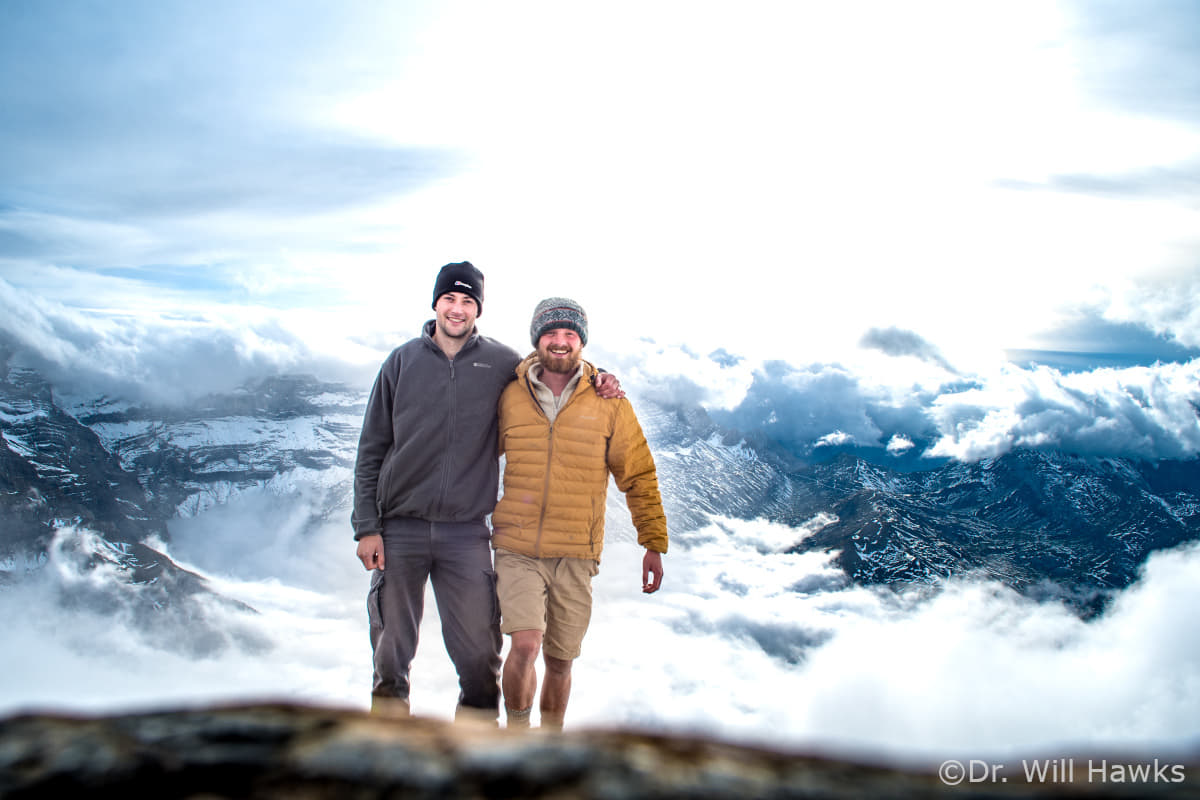
Will: I've had a really exciting few weeks actually, Tom. So I think about three weeks ago I was in the south of Spain because my job, which is at the Swiss Ornithological Institute, so the Swiss Bird Institute, we're studying insect migrations. And to do this, we're putting up radars on each side of the Straits of Gibraltar, to monitor the insects moving from Africa to Europe. So I was down in the south of Spain, catching these insects, and finding the best place to put the radars. Then I came back from that after a brief foray up into the Sierra Nevada mountains. I was about 2,500 meters up and and just walking along a ridge line and there were all of these insects just out on the snow.
And so all of these insects, which are all migratory species, have been migrating northwards. And then for some reason, maybe a cold blast of air robbed them of their energy, and they just dropped down onto the snow. And so the snow was littered with these cold little flies and aphids. So I spent the whole day walking very slowly, identifying them all, because it's a really important record to have them 2,500 metres up. It's really amazing! And then now I'm in London at the Natural History Museum working with Erica McAllister who is the best fly person in the world. She's the fly queen and we've been identifying lots of flies together and it's very nerdy, it's really, I love it so much, just surrounded by my people.
Tom: I can hear the passion in your voice Will. So, your PhD, your findings that flies actually migrate throughout Europe. Give me a bit an insight if, I was, you know, if I was a hover fly living in Sweden. My life would go how?
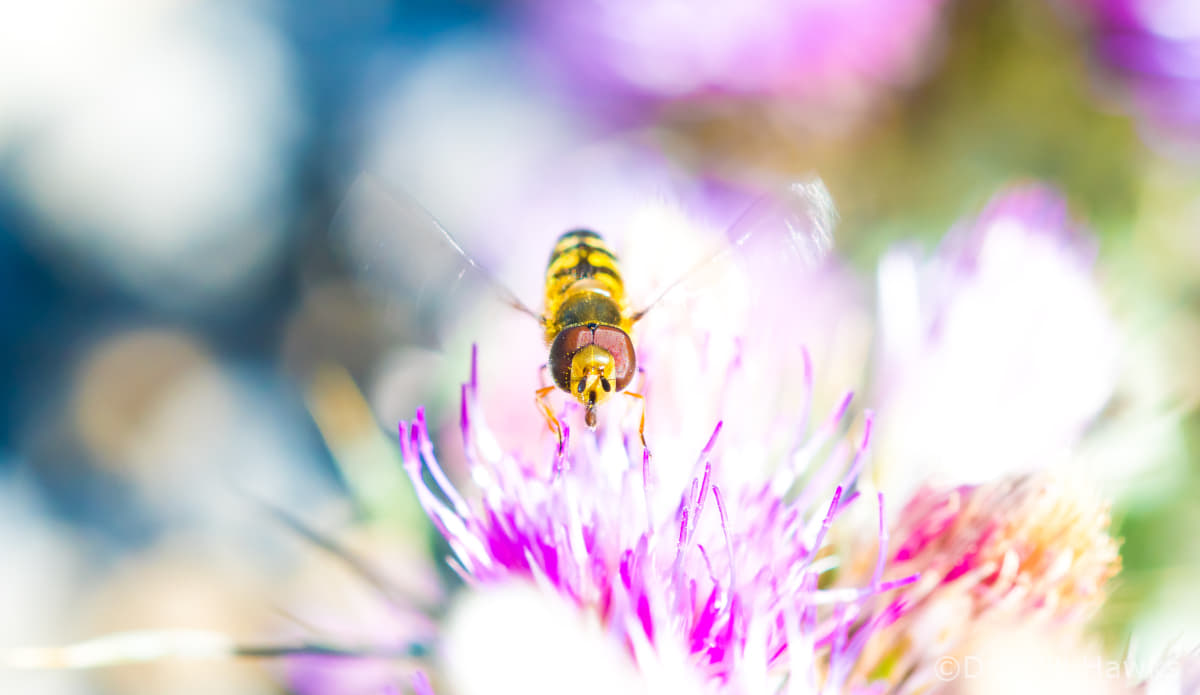
Will: Okay, yes, so if you're a Swedish hoverfly, say from late summer and the little maggoty larva, the young, the child of the hoverfly, you're sat on your leaf, you're eating aphids, but at the same time you're taking note of the weather pattern. So if it's getting a bit colder day to day, if the light levels are reducing and you're taking all this information on and all this information will change your entire body. So it will cause a shift in your genetics to make you bigger and stronger and increase your ability to see your flight performance when you become an adult, which is amazing.
The bodies of the other flies change this way. Because they need to migrate and because they need to escape the really harsh northern European winters.
And so when you stop being a larva, this little maggot, you change into this beautiful marmalade hoverfly and with orange and yellow and black down the back. And actually, you'll be a female at this point, because only the females complete the migration. And so they get up, and they fly up into the sky, and then they take note of which way the wind is going. And if the winds are blowing south, which is the way the hoverflies want to fly, then they'll hop onto these winds and be blown south. This is the fastest way for them to travel. But if they're blowing in the wrong direction, then they'll know this and they'll just sit down and wait for the winds to change. They can find which direction they want to go in based on the sun in the sky. They use the sun as a compass, which is really amazing. My friend and colleague Richard Massey, worked out that the hoverflies know where they want to go. And they can, as the sun moves across the sky, can track where the sun is in relation to where they want to go.
So they've got this tiny clock in their heads as well, it's amazing. Now that little hoverfly is flying south, across the plains of Europe, and then all the way through the Pyrenees, which is where I studied them during my PhD, and then down to the Straits of Gibraltar, we think, and then maybe some of them will overwinter there because it's quite mild weather. But we think that quite a lot of them will actually carry on the journey right to sub Saharan Africa, which is ridiculous.
This animal's about 20 millimetres, 2 centimetres long, yet she can migrate from Sweden to Senegal, which is thousands of kilometres. And then she'll spend the winter in Senegal. And then her children will then start the migration back up northwards and they migrate northwards in a series of generational hops. Each generation will migrate about 100 or 200 kilometers northwards, find a good place to lay their eggs with lots of wildflowers and food around. And then they'll lay the eggs and then the adults will die off. And then the children hatch and they will never, ever meet their parents. They'll never meet an experienced migratory individual. So their entire migratory behavior, where to go, how to get there, what cues to use is all inside them is the genetic information, which is really quite amazing. And we're starting to think that the DNA which is passed on from the parents to the offspring actually contains a lot more than just what the animal looks like. It might even transfer behavior or even memory as a certain form of it. It's a really exciting field and to be in, and I love it, and these hoverflies doing these huge journeys is the most remarkable of journeys and lives.
Tom: I mean, it's so remarkable. I think of every 100 people listening to the podcast, I think only two people, they will know that flies migrate. It's amazing. They’re are very, very tiny insects.
Two questions come to mind Will about them. First, why would they have it built in their DNA to make this journey, and second, why is it important we know they migrate?
Will: So the reason that these flies and other insects like dragonflies and butterflies migrate is to remain in an area which has enough resources for them to reproduce, for them to keep having children. They will migrate to an area which has loads of resources and then when these resources run out, if it gets too hot or too cold, then of a resident insect, say a type of solitary bee, which will just hibernate, the migratory insects will just move on again and they'll find a new place. So compared to a sedentary insect, they can have far, far more children and be far more successful. That's the reason why they migrate, just to be sure they can keep having children all year round.
And their importance is actually huge, but misunderstood from a human point of view, and maybe more than misunderstood, we just don't know anything about it. So part of my research was to go to these places where we see a lot of migrants, then identify every single type of insect there was moving through and on migration. Before I did this research, we thought that it was only really the butterflies or the dragonflies, you know, the monarch butterfly is a well known migrant. And then maybe the globe skimmer dragonfly is kind of well known. We thought these were the most common creatures, but when I did this research, we found that 90 percent of all migratory insects are the flies. And we didn't really know anything about what these insects did, but through this research, we've worked out that almost all of the insects are pollinators, which is obviously very important for all of our human crops.
And the importance with the pollinators being migratory is that they can transfer genes from one population of plants to another population of plants, which a resident insect couldn't do. And this allows the health of the plant populations to be improved hugely. Also from a climate crisis point of view, if we're experiencing more droughts, then the insects could transfer the genes from a plant population in the south, which might be more resistant to drought, to a plant population in the north, which isn't resistant yet, but by the insects moving these genes, they can become resistant far quicker, which is really incredible.
So many insects are also decomposers. And so they'll break down all the organic matter, which could be just rotting away, and so they're very important for reducing disease in that way, because it stops all this rotting happening. And perhaps most amazingly, is that all of these insects have nutrients in their bodies, which they move across the world. And the nutrients that they have in their bodies, are things like phosphorus and nitrogen, which are elements which are really vital for plant growth. And because so, so many insects migrate, we think about three and a half trillion insects migrate over just southern England every single year, which is huge number.
All the nutrients in their bodies could be really helping the plants get a boost of nutrients in, say, the early springtime, and allowing the plants to grow, and improving the soil quality, etc, etc. That sort of thing is just really, really fascinating to me, because we don't really know anything about it, but it could be absolutely vital.
And that's not even talking about the impact it has on all the larger animals. So many, types of birds are insectivorous, they eat insects. And because insect migrants have so many children, they're really, really abundant. So things like the cabbage white butterfly, the marmalade hover fly, the red admiral butterfly, these are all very common insects, but they're all migratory. So all the birds are eating them and relying on the insects as a food source as well. And the flowers are relying on the insects to be pollinated. These migratory insects are perhaps most underappreciated but vital part, or one of the most vital parts of our ecosystems. And I feel so, so lucky to be able to study them and tell their stories.
Tom: Now we touch a bit the subject Will of climate crisis, what you think should be our main worry if we don't reverse things a bit soon.
Will: So I think our main worry will be the impact of these insects declining. So there was a paper that in the last 50 or so years, there's been a 97% decline in migratory hoverfly species, which is an unbelievable amount. And this could have impacts on the amount of pollination that happens. Also, these hoverflies are pest controllers, and so they all eat aphids, which destroy crops. And so without these insects, these pest species could get really high in number and obviously having a lot of impact on our food security. And so obviously that's a really big worry that all these ecological roles we call them, the pollination, the decomposition, etc, go as a result of these insects going. But what is really nice is that these insects are amazingly resilient, although we've seen a huge, huge decline in recent years with the planting of more wildflowers from councils and local governments from people being more interested. We've really been seeing some insects recovering, which is amazing because they have so many children, right? If we give them the space to grow, to be safe, then we can really help them increase and then us as humans can benefit from their ecological roles.
Tom: So there are going on some innovating conservation strategies there in the UK, Will?
Will: So, in a way, yes, people are becoming more in touch with nature, I believe. They're realizing how important nature is for things to make your head feel better or protect the local wildlife. We're seeing in the UK a lot of local councils planting wildflowers on roundabouts or on the sides of streets. And it's amazing actually seeing all these little animals are just making use of it and taking advantage of us helping them. There's a very rare butterfly called a large blue butterfly and it was reintroduced because it went extinct in the UK. It was to a part of western UK to a tiny little area. And then there is an impetus, a project to put wildflowers all along the sides of the train tracks. And then, this butterfly, which we thought would just stay in one place, suddenly has dispersed right along these train tracks, because there's loads of food for it, and it's the same for migratory insects.
Of the most important conservation strategies to help these little migrants is to connect, give them a connections across the continent. The way that we can do this is to put wildflowers on farmers fields, because farmers own the most land. And so by putting wildflowers all along the edges of the fields, then it can be a really beneficial pathway for the insects and really important for the farmers because it allows to be pollinated and all the amazing ecological roles to be filled.
Tom: And are there some insect species more vulnerable than other species Will?
Will: Yes. There's a lot of insects which sometimes seem a bit like evolutionary dead ends because they rely on a very, very specific type of flower, and they can only get food from that flower. Or they rely on one specific sort of tree, which has one specific sort of sap running out of it. There is hoverfly that relies on this, and without that tree, then that hoverfly would go extinct. Because it's found this niche, so it doesn't have competition from other insects. And that's what it needs to survive, so some, certainly, are very vulnerable. Ones which aren't so vulnerable are the ones which are relying on us. So, we're planting loads of broccoli, lots of other vegetables, these insects are eating them. And so, we're giving them loads of food, and so those insects are doing really well.
Tom: Let's get a bit onto the gear question Will. We all see your images on social media or on your website, with amazing macro photography shots. What equipment are you using nowadays?
Will: I am using a Sony camera. I'm using a Sony A7R IV and I really love it. I've only recently got it, I moved from a Nikon D500, which I absolutely loved, but I decided to go mirrorless. I love how light it is, and I've never had a full frame camera before, and yeah, it's so powerful. And I don't think I'm making the most of it, but it feels like there's so much room for me to grow with photography using this camera. Most of my macro images are taken with a Sigma 105 F2.8 macro lens, which I love. I also have a 24 to 70mm which I use for landscapes. And I love how versatile it all is because I've also got a tiny little pancake lens so I can throw the whole camera in my little running backpack. It's so light and I can run and I'm not missing anything because I've got this amazing, incredible camera with me, and just the portability with it all. I'm truly in love with it.
Tom: And how does photography helps you in your own field of work, Will?
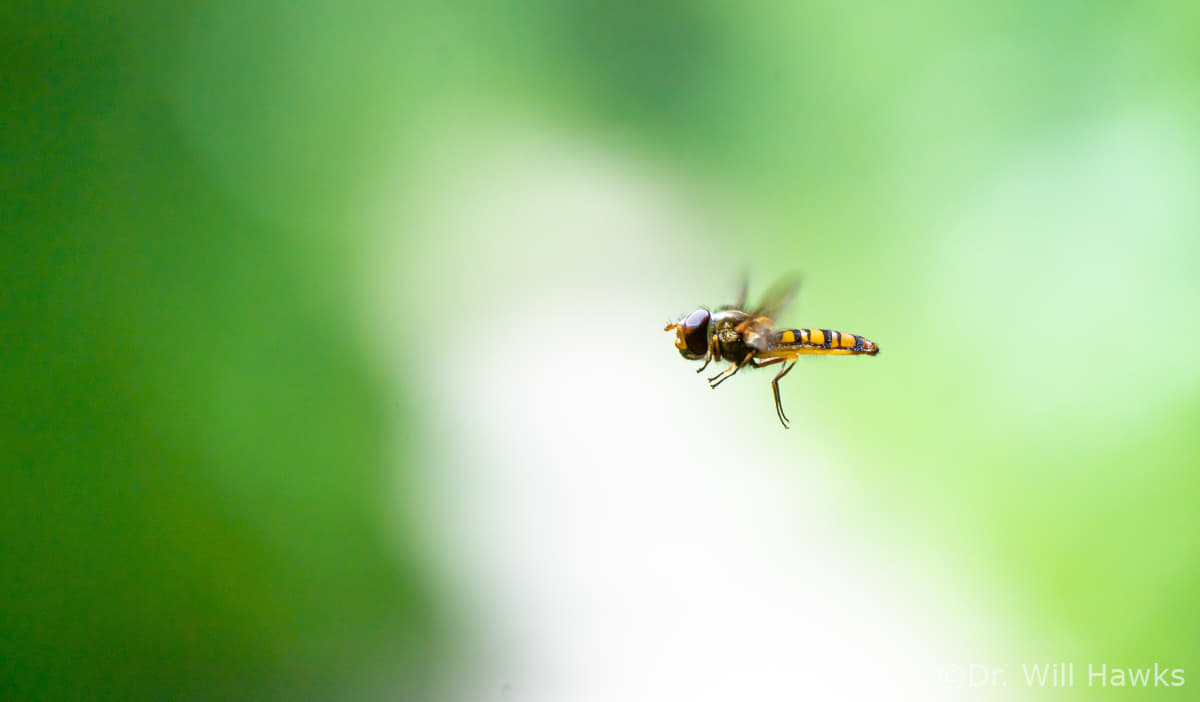
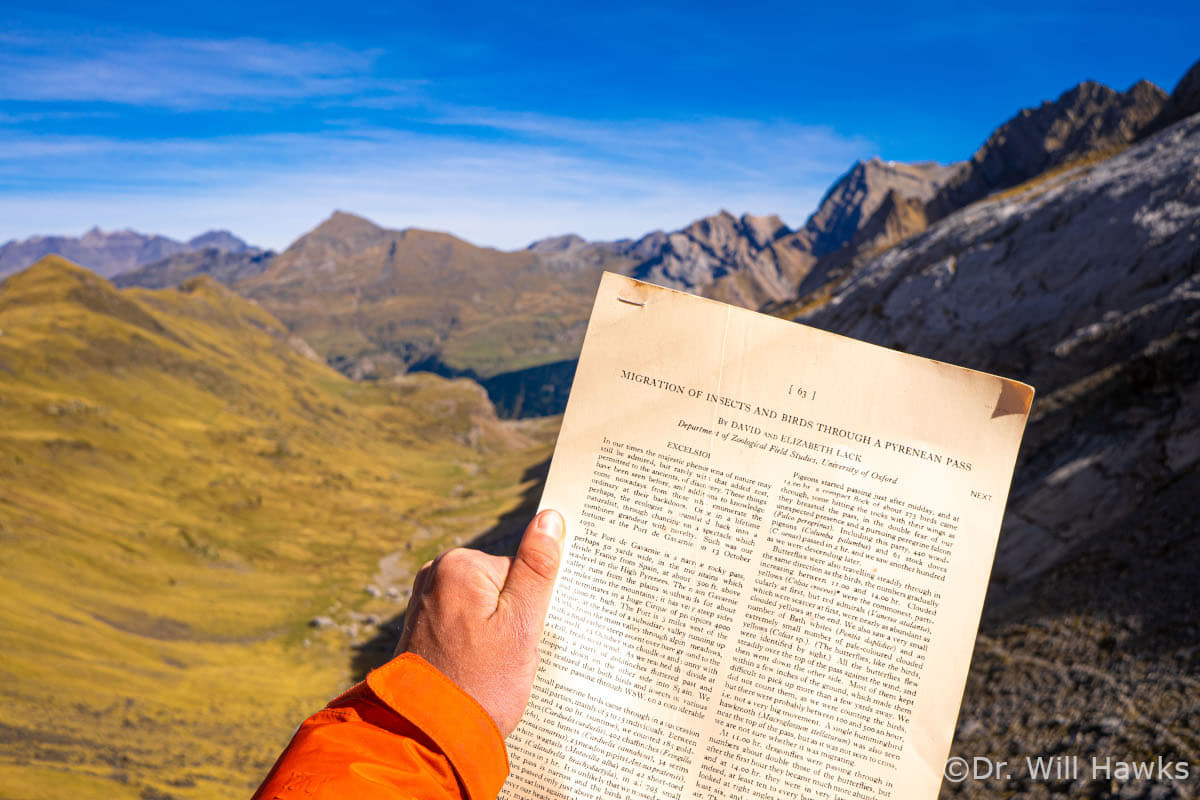
Will: So, for me, I love having my camera with me because it allows me to obviously take the photos and then use those photos as way explaining to people and telling stories about the insects. I've got a photo of a hoverfly coming over this mountain pass, and it's flying past some thistles and hoverflies are small creatures as they're migrating, but in that same image, there's a, a tiny, tiny little fly, a grass fly, and it's about 1.2, 1.3 millimeters long. It's absolutely minuscule, but it just shows how tiny the insects are that migrate and by having that image it can really portray to people the size differences because otherwise it might seem a bit arbitrary, you know.
And we're all creatures as humans and so I love having my camera with me to share the stories. It's also really important for making sure I identify the creatures properly by taking a good photo, I can take these record shots and be sure that I'm not missing any of the identification features. I kind of see my camera as a way of facet of storytelling. I really love it for that.
Tom: We told in the podcast already many times that the main drive of a photographer should be passion, no matter the genre you do. You think in this genre, macro photography, your passion are clearly insects and by being an entomologist, you already know their behavior.
How important do you think is this skill to get good macro pictures?
Will: I would say it's my most important skill. I think, my most important facet of photography is not the photography itself, it's knowing about the subject and the knowing about the insects. My hero is a French entomologist, a French insect studier from the early 1900s, called Jean Henri Fabre. And his whole life was just sitting and watching insects and writing books about them. And he wasn't someone that collected loads of insects and ripped them apart and looked at their insides. He was someone that look to their lives and how they moved and how they interacted. And that's what I've done with my life is just watch these insects and it just allows me to be in the right place at the right time for the photos.
So, for example, there are some little wasps called Oxybelus uniglumis, a spiny tailed digger wasp, which is a really, really beautiful little creature with big blue eyes and a long, well, not very long because it's only about eight millimeters long, but its end of its tail is really spiny and really spiky. And this creature will go off, and this is a bit of a gruesome story, but she will go off and find a little fly, which she wants to eat, or at least wants to bring back to her nest. Then she will sting the fly, paralyze it, and then fly it back. But the fly, she can't really grab it with her legs, and so she'll stab into the fly with her tail, and then carry, which is the spiky tail, and then she'll carry it right back to her nest. And then they run along the ground, uncover her nest, which was covered in sand, and then dash inside.
Through knowing this I can wait by the nest because I know she'll come back for it, and I know that this behavior will happen, which is really exciting. But I also know from watching them and reading books and knowing the subject, that the reason that she'd cover up her nest was because that there's another sort of insect, a type of fly, is called a satellite fly. And that little fly wants to find out where the wasp's nest is, so it can dash inside and lay the fly's own eggs on the wasp's children, so the fly can eat the wasp's children. It's so brutal and bloodthirsty, but by knowing all these wonderful little lies and stories, it allows me to get that split second advantage of when to take the photo or to be in the right place at the right time. And, yes, there's so many parts to photography that have been improved from my sort of love and passion for insects.
Tom: It's an amazing world, I'm always in awe also myself when I take macro pictures because, even if I know a bit what could happen, then they change their pattern and they surprise me. They do different things sometimes and you end up running behind them to get the picture.
Will, give me some tips for people starting out in macro photography.
Will: Yes, definitely. I think my number one tip would be to learn to love. I mean, I'm sure if you're wanting to get into macro photograph you already love insects, but learn to love them, read about them and spend time watching them. Be okay as well with missing almost every shot you take. I seem to miss a lot of shots of them. But I think passion and really taking an interest in these beautiful little creatures is my number one tip.
Be determined and patient. I tend to not really plan my images, I have sort of idea of a photo that I might want, or I might want to take a photo of this species. But I've found that with insects you can never truly predict exactly what they're going to do. You can make it a little bit easier for yourself, so if you go out in a bit earlier in the daytime, you can catch the insects when they're not quite as active, because often in the heat of the day they're so fast and they barely ever stop.
There are these types of bees, male solitary bees, so not bumblebees and not honeybees, but these little solitary creatures. And lot of the males don't have anywhere to sleep. They don't have any nests to go inside. So what they'll do is at night, they'll go either onto the stems of plants and they'll use their teeth and they'll grab on. So if you get up in the morning, you can take photos of them as they're clinging on to the stem still fast asleep, and that's really sweet. Also there are some species which will go inside flowers which close up overnight. So they have these lovely little flower sleeping bags, and if you know this you can maybe mark the flower, see them go into the flower at night and then mark it and then come back in the morning, just before it opens. And you can get photos of these gorgeous little animals sleeping inside flowers. But I think that also just comes under the heading of knowing your subject. I think with macro photography, that would be my most important thing.
And of course sharing the stories afterwards, so everyone gets interested in these insects!
Tom: I'm going to throw this quick in here Will. Apart from possibilities you just described of getting shots of solitary bees in the mornings, me personally, I love to go out in the midday. I love when it's busy, I love when they are feeding, I love when they are hunting and it gives a bit more of a kick. I just to throw this here inside because people ask me sometimes. My macro working schedule is midday!
Will: Yeah, definitely! It's so exciting at midday, you can see all, as you say, hunting is just like the Serengeti. There's huge robber flies coming in and bees and these insects fighting over territories and mating. Midday is a very exciting time for an insect photographer.
Tom: You touched a moment storytelling before Will. How important is visual storytelling in your field? Maybe to raise awareness, as photographers can raise awareness about nature. Maybe instead of taking only one picture, make a whole story about it?
Will: Yeah, visual storytelling, almost any sort of storytelling for the insects, I would say is hugely important because as an entomologist and someone that loves insects, I think our most important conservation tool is spreading interest and spreading the wonder of these little animals. And this could be knowing that a tiny little marmalade hoverfly that's in your garden or a cabbage white butterfly has just traveled thousands of kilometers to be there, and we have no idea that these things are happening. And being able to tell these stories and to make people interested is so important, because without interest there isn't any passion.
David Attenborough, the great man, said recently, "What you don't know, you cannot love". I think that's so important.
And as photographers, we have this wonderful ability to share snapshots in time of beautiful animals and plants. And by bringing it out there, I don't know, on Twitter or any social media site, or telling your friends or family exhibitions, it allows more people to be interested in nature. And this can only have positive impacts, getting more people fascinated, because you're not going to want to destroy something that you love.
And so I think this visual storytelling is, well, I sort of feel it's almost the most important thing that we have in the world, is to be able to tell stories. Make people feel something, make them inspired or excited or sad even, and making people feel emotions through telling stories or your photographs, is really important. It's quite a magical thing, I think.
Tom: It’s very important. We have to help them a bit. But just like taking pictures, you have to find also your own voice of how you describe your photography. I grew a lot as a macro photographer just by learning about insects to the point you become like almost obsessed, even though later I forget many details when out in the field, I guess I am like a child. So I kind of make my social media posts funny and it's my way of making people stop scrolling and maybe start to love these little animals.
Will: Yes, definitely. I think it's such a great thing to do! Just already sharing the photos themselves is so important.
Tom: Will, photography-wise, is there a moment or is there any species that you really wanted to get a picture of?
Will: Yes, I think I've go two stories here. There's one, a photo that I had wanted for so long and then there's also an animal that I really want to take a photo of. Say, the one that I had almost planned out this image. There's this lovely creature called a longhorn bee, and it's a bee with which are longer than its own body, and when he flies the antennae stream behind him, and he looks very majestic. He lives down in southwest England, in the Cornish coast. I had this image in my head of one of these little species sat on his food plant, which is this bright yellow kidney vetch, with out of focus other flowers like, the pink, sea thrift behind it. Then a bit of its habitat, which is the blue Cornish sea and the soft clay cliffs. I had this image in my head and a couple of years later really, one day, everything came together perfectly. I'd arrived a little bit earlier in the morning to this place where all the bees were living, and just by chance there was one of these gorgeous longhorn bees just sat cleaning his antenna before flying off, because they use their antenna to smell and to sense all these things. So he sat on the kidney verge, with the pink purple sea thrift behind him, the blue Cornish sea, and the soft clay banks. It was just one of those moments where everything had aligned, and I really, really enjoyed taking that photo.
And the animal which I most love, love to take a photo of, is one that is a little bit scary for some people, but I think that they're fascinating enough to win over your fear. And they're called an ogre faced spider. They don't live in Europe, they live in Indonesia, and I think they also live in South America as well. They're these really remarkable spiders. I mean, all their legs would fit in your palm, but probably only just. So they're pretty large spiders and instead of building a web to sit in, they make their own web, almost like a net, which they hold in their hands, or their legs. Then they sit over the paths of an ant path or a termite path, which insects are using during the night. And they loom over the path and when an insect comes along, they throw the net down and capture the insect. They have these huge eyes which are perfect for seeing in the dark and I would love to take a photo of the spider. If I could get it actually throwing the net and catching something that would be incredible.
And they have such an incredible life history as well, or story of their lives. Every day, after they've spent all night looking with their huge eyes, because these huge eyes are so energy intensive, what the spiders do is they let their eyes break down, so they use the energy of their eyes, so they break down the proteins and everything from their eyes to feed themselves during the day, and then at night they build their eyes back up, all the different enzymes and proteins, and so they can see again. And just imagine that sort of commitment to getting your food is. Whoa, really amazing little, little creatures!
Tom: And I think that's only like 2 percent of what we know of insects Will, and this is already so amazing. Imagine all what we still don’t know about them.
Will: Exactly! I was talking about this today even. We were talking about how many species are known and how many aren't known. So know that, we've described 125,000 species of flies, which feels like a lot of flies, but a recent paper has come out predicting that just one single family of these flies, contains an estimated 1.8 million of them. So just one family could contain 18 times the amount that we actually know about of all types of fly. It could be in the region of 10 million or more fly species in the world, and we only know 125,000 of them.
This is why it's so important to have things like museums and people interested, it's because then we learn more. And if we don't know what these species are, we don't know what they can do, how they impact their natural ecosystems, how they can impact us, and also we don't know their amazing stories. a
And these flies can turn up anywhere. There's this one type of midge, which lives in a cave in Croatia, and it lives almost a kilometre under the ground. It's a troglobite, which means cave liver, and it never ever leaves the cave. And it's the only animal in the world that lives purely in the cave but can also fly. And we thought that these little midges must have developed something to help them in these situations. Maybe they've got big antenna to sense, I don't know, the echoes, or maybe there's some sort of sonar system to help them move around. But what they have is far less elegant. What they have is just really, really long legs, and so they fly around, and then they crash into the wall, and they realize they can't go that way, so they go a different way. And it's even more incredibly every single one of these midges is female, they're all women, and so what they do is that they just clone themselves, it's called parthenogenesis. And so there are no males, there's no sexual reproduction in these species. It's just incredible that life has found a way to live far under the ground, and doing well through it. All these different stories to tell, I love it so much.
Tom: Will, as an entomologist, so tomorrow, let's say you find this new species of fly. You can actually name them, so you already picked a name for it?
Will: If I did find a new species of fly, I wonder what I would call it. So it's not the done thing anymore to name it after yourself. You’ve got to name it after something around. Um, maybe you can name it after your partner. Would I do that? Maybe, see how I'm feeling at that time. Or you can name it after how it looks or a famous person. Hmm, I wonder what I would name it. Maybe name it after my dog. I really like my dog.
Tom: That's a great option.
Will, share me your most memorable moment or the most memorable encounter you had while studying insects.
Will: Oh, I think there was one day when I was studying insects in Cyprus. I was right out on the very tip of the panhandle of Cyprus, so the far north east. I was were watching these migratory insects as they were coming from the east and so they were crossing many kilometers of ocean from the Middle East to Cyprus. And one day there were just so, so many of them. It started off by hundreds and then hundreds of thousands of these big dragonflies arriving, and they would just swarm all around our heads. They were eating the smaller insects like the hoverflies and there were loads of butterflies, loads of swifts and swallows, eating everything. Just this cacophony of life, in this one little area.
And then, about 1 o'clock or 2 o'clock, things just stepped up. There were so many. We calculated that every single minute, in every metre squared, there were 6,000 insects, 6,000 insects per meter per minute coming through this area of Cyprus! This equates to, I think it was, 11 million came onto that tiny little 100 meter wide area of Cyprus, that one day. And a lot of these insects were stable flies, or stomoxys, and they're a type of fly which has evolved to suck the blood of big mammals like us, or cows. They only do it once, they're quite sensible and quite nice about it, because they only do it to give their children the protein meal they need. But there were millions of them, and they're all attacking us, so we had to hide behind car doors and we had to shelter because there were just so, so many insects. The skies were darkening with them. It was yeah, unforgettable!
Tom: At least you had so much sense of hiding in your car, I imagine it would be very difficult standing outside there while they fly around.
Will: I must admit Tom, I wasn't actually hiding the car. The rest of my team was. I was still outside trying to catch them and count them and getting bitten all the time and feeling like, oh, I could just let this one bite me because then her children have a meal and feeling guilty if I brushed it off. True love, Tom.
Tom: True love and passion and being a little bit of a nerd.
Will: Yeah, absolutely!
Tom: Will, I have one closing question about insects that sometimes pops in my mind.
You know, when humankind, when somebody someday would be so dumb enough to push that red button and start a nuclear war. They always say that cockroaches, they would survive. Would they actually survive and be able to reproduce?
Will: So, if there was a cockroach right under a nuclear blast, I don't think it would survive. But I don't think it would have to be so far away to actually survive and reproduce. There's a story around this. There's the Bikini Atoll, an island chain out in the out in the Pacific, a few 3000 kilometers east of Papua New Guinea and New Zealand. And in the 1940s, it was used by the Americans to test nuclear bombs. It was completely erased, but very soon after this, dragonflies returned, they were migrating through and they came and settled onto the island. They probably are part of a route that goes right across the Pacific, which is waiting for us to discover.
Insects are so resilient. They're so remarkable. And you only need a few of them to survive, and they can survive anywhere. I think, even if this nuclear blast killed all of us humans, these insects, I think, will be fine. And they'll find a way to bounce back, which gives me so much hope for the damage that we're currently doing to the insect populations. Because just a little bit of love, and a little bit of passion and interest in these little animals, they will reward us hugely by gaining in their number and then providing all the vitally important ecological roles which as humans and the rest of the natural world rely upon. They're really amazing, remarkable little animals.
Tom: They are really amazing Will. So everybody listening now, next time you find a bee in your house, please don't kill it. You take a glass and you put it outside and help them a little.
Will: And take a photo!
Tom: And then take a picture of course.
Last question Will. What's the name of your dog?
Will: Eire, which means snow in Welsh. But then I also have, Wren, and also Una. And Una is blind and deaf, and she was born that way, and she's so capable, it's so nice. She can just go around the garden, finding her way.
Tom: So you have to find three new kind of fly species to name Will.
Will: Exactly!
Tom: Will, it's been an amazing talk. Thank you very much. I've learned again a little bit more, and I wish you the best in your findings. I hope I will see one day a fly with your name on it or one of your dog's names on it!
Will: Thanks, Tom. I really love being on this podcast.
Tom: Thanks a lot Will and all the best for now. See you soon. Bye.
Will: Bye.
Outro:
As we wrap up today's episode, I hope you've been as much captivated as I have by the fascinating stories that Will shared. From all these little delicate details of insect life to the importance of visual storytelling, there's much to learn and appreciate. Will has shown us the beauty and wonder, if you care to look around in your garden, that surround us every day.
If you enjoyed today's episode, don't forget to follow and subscribe to us on all your favorite social media platforms to stay updated on upcoming episodes with photographers. And you know, you can find the show notes back on our website and know more about Will and his bugs!
We are leaving you today with a quote from Thomas Eisner, a German-American entomologist and ecologist, who said "Bugs are not going to inherit the earth. They own it already. So we might as well make peace with the landlord."
So now grab your camera, step outside, and see the world through new eyes. Until next time, keep exploring, keep capturing, and keep moving your photography. This is Tom Jacob signing off from The Camera Cafe Show. See you next time!"