

"I mean, most of the time, there just wasn't anything I could do. You know, it's not, it wasn't in my power. I don't know how to put in a, you know, an IV thing. I'm not qualified to do that. But whenever I could help, I certainly wanted to. Like those, some of those moments stay with me in a more visceral way, I guess. Like when there was a mass casualty incident. Like there would often, it would be very calm for a while, just a few casualties, and then it would be absolute chaos to the extreme. And it, yeah, I think it all just became a bit of a blur in my mind to be honest.
But I distinctly remember the one time that there was a little girl who was very badly injured. I think she would've been about seven or eight. I just remember her eyes so wide. She was bleeding everywhere. She had multiple gunshot wounds in her chest. And I was taking pictures of Katie Petri, this Australian paramedic, she's like 27 or something. Anyway, she was treating the little girl, and she needed, obviously she needed to get into surgery as soon as possible, she was in a terrible state. This kid didn't seem like she was going to make it. And there weren't other medics around to help her because there were so many casualties. There were people on the floor screaming, not enough people to help, and me feeling useless. And yeah, it was tough. I really wished I'd had some training at that point."
Intro:
Greetings all you photographers and specially this week, if this is the first time you listen to us, welcome to The Camera Café Show, the podcast that serves up strong coffee and even stronger photography stories…and sometimes… a bit of adrenaline. Today we’re going on a wild and deeply inspiring ride, both on foot, horseback or motorcycle with someone who quite literally stumbled first into photography — and ended up being a renowned photojournalist documenting wars, refugee crises, and riding horses as a cowgirl in the American West or across Mongolian deserts.
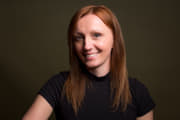
Meet the incredible Claire Thomas, originally from a quiet Welsh village but whose work has taken her to some of the most complicated corners of the world — from war-torn Iraq and Ukraine to the refugee camps, to quiet moments of ritual and resilience across the Middle East, where she’s spent much of the last decade living and working.
Claire’s journey into photography began almost by accident — a photo she took while traveling ended up being published by National Geographic. That moment lit the spark. Since then, she’s covered major conflicts, worked with NGOs like Amnesty International, Save the Children, Oxfam, Doctors Without Borders, she works with UN agencies, and publishes in leading international publications. Claire has used her lens not just to witness the world — but to try and change it. As to show how far she will go, she shares her haunting project on the wives and mothers of ISIS fighters who were left behind, and how one of her photos even helped, through a GoFundMe page she setup, a young girl, Maya, living with an uncurable rare skin condition in her home in Iraq, which we will talk about in this episode.
Claire’s sharp, compassionate, funny, and not afraid to talk about the hard stuff — from losing press access in a war zone to the emotional weight of bearing witness while doctors trying to save lives on the frontline while she must shoot pictures…to her needed Zen moments, her love of horses and photographing while galloping across open plains.
Claire is sharp, honest, funny, and deeply committed to storytelling with meaning. This episode is equal parts powerful, insightful, and quietly human.
If you're interested in the soul of photojournalism — this one’s for you. Let’s dive into this wonderful conversation, with Claire Thomas.
Tom: Good evening, Claire, and welcome on the podcast. It's a pleasure to have you here. It's been a while since we last talked!
Claire: It has, it has, and a lot has happened since then, actually. Yeah.
Tom: A lot has happened and why it's been so long? Because you just came back from
Claire: Mongolia.
Tom: Mongolia.
Claire: It was an unexpected trip this time. I hadn't planned to go in March. I'm going back in October, but I wanted to go in winter, so decided to just go last minute and it was wonderful. It was really beautiful.
Tom: I was not going to ask you about it because I so want to go!
What are the three best things for you of Mongolia, Claire?
Claire: Oh gosh. I think the nature, the landscape. Okay. Landscape. Horses and people, and the eagles.
Tom: Sounds great.
Claire: But no, I honestly, I think it's, it's the people. I love the people and just the space, you know, its actual space, but it gives you space in your mind as well.
Somehow when I'm in the city, I get migraines all the time. I don't have a lot of energy. And as soon as I'm out in the countryside, I feel very energized and inspired and more like myself. And it's, yeah, it's really nice. And we're staying in these families homes, so not like we're getting the most sleep, I probably have, usually have more sleep than I would there. But it's just such a privilege. I don't know. I love it. I wake up every morning there and I can't wait to get outside and see what's happening, how much snow has covered the ground overnight.
I mean, there were a couple of days in the last trip where we woke up and all of the sheep were covered in snow. The horses were trotting around with snow on their backs. It's quite magical, really?
Tom: It sounds amazing. And horses, of course, we will come back later to your passion for horses, Claire.
Claire: Yes. Oh my God. I think the horses are what took me out to Mongolia in the first place. And yeah, they're just fun. They're really good fun to ride. You know, they're much smaller than horses in America and in the UK, but they're sturdy. They're no frills. You know, you just get on and go. It's push button almost.
I take guests with me on my trips, and one of the things I love the most about taking people, is being able to teach them how to ride. And we always make sure we have horses that are quite quiet. They're not too crazy. And it's just, its great fun, you know, getting people to not just learn how to ride in a basic way, but you so, you know, do a little faster, keep up with the hunters and have a gallop or a canter. It's really good fun.
Tom: Yes, but then of course they have to shoot pictures at the same time also.
Claire: Well, well, if we're going, if we're gonna ride at speed, we typically would just take our phones rather than our big cameras. If we're gonna be shooting, then we would take our cameras, but really just ride at a walking pace. I mean, I always try to shoot while I'm riding and then, you know, I get really good shots. Some of my best shots I think were taken from the back of a horse.
But if you're gonna be galloping around, I did break two cameras doing that in Mongolia a couple of years ago, I tried to go a little slower. If I've got cameras in hand, I try.
Tom: Claire, let's walk a bit back a moment, if I remember well you were, you come from a small town in Wales?
Claire: That's right.
Tom: And you are a very, or you were a very picky eater. I'm sure your mother had you sit down at your table until you finish all your food.
Claire: How do you know that? Haha.
Tom: I can imagine it, haha. But then your work has brought you all over the world. As a small girl, you were also already that relentless or not, Claire?
Claire: No, I was quite shy growing up. I think it's quite a surprise for my parents that I've ended up traveling quite a lot. I blame my brother really, I think. Yeah, I have an older brother, he's three years older, and he was very very adventurous and I always wanted to copy him and, you know, be as cool as him. I mean, I grew up around horses. I got my own pony when I was 11 for a short time. And it taught me to be independent. I was very independent, and I just wanted to be around my horse all the time and ride to competitions.
And we happened to have a horse that wouldn't, well, we weren't good actually. We couldn't get her onto a trailer. So, like, I wanted to go to shows, but my parents weren't really horse people and we couldn't get her on the trailer, so I'd have to ride to the competition, local competitions nearby. But, you know, I had to ride along a dual carriage way to get to the local shows for show jumping and things. So I was very determined. I've always been like that. I guess that's, serves me quite well, that if I want to do something, I'll find a way.
Tom: Sounds a good start.
Claire: When I was growing up, my brother started to travel quite a lot, he would go to, went to Australia, he was going all over the place. So that kind of gave me the idea that I would like to explore as well. And yeah, I think I remember going, actually the first place I traveled to by myself was Spain. When I was 15, I went to visit a friend who was living there, gosh, I can't remember where, Alicante somewhere, I guess near there.
Tom: Right.
Claire: I really wanted to go and ride horses out there with her. But didn't want to let me fly by myself, but I succeeded. I did manage, and again, it sort of, it, you know, it's nothing that special, I was greeted at the other end, I didn't have to go anywhere on my own. But, it all adds to the sense of adventure and independence.
Tom: And then somewhere along the lines, years ago, you packed up your things in summer and you went to be a cowgirl on a ranch in Wyoming!
Claire: Mm-hmm. Yes!
Tom: I can imagine you there, Kevin Costner like in the Yellowstone series?
Claire: Oh gosh, that was a, yeah, that was a good series. Yes and no. I mean, there were things that we, me and my wrangler friends can relate to, but no. The ranch I worked at is a guest ranch, so not the real deal, like in Yellowstone, we didn't have cattle, we just had horses. But, you know, for me, it was authentic at the time.
I loved it. It was a turning point in my life in so many ways. And I got to go there, because I was at university at the time, so I was able to get a student visa to work in the US for the summer. And I found this ranch through a Scottish lovely girl that I met in London. Anyway, she told me about this ranch. So off I went, and it blew my mind because it's in such a beautiful spot. You fly into Jackson Hole and you see the Grand Teton mountains, part of the Rocky Mountain range. Stunning scenery. I'd never seen anything like that. And then of course, the ranch was, it's quite small. I went back last summer. I hadn't been back in a few years. Just to visit, and it's really a special place to me. It'll always be my second home.
I ended up spending seven summers working on the ranch there, and it funded a lot of my travels over the years. I would work during the summer, then I would travel across parts of Africa and then with horses in many places.
Then, I started teaching English in Spain, and all of these things kind of led me to where I am in indirect ways. I mean Wyoming, I think is where I began to have a passion for photography. I am not sure how exactly. I knew that I was taking pictures with a small camera, and we were, it's a guest ranch, so people are coming from all over the world to ride with us for a week. So they would come and we would take them out in wrangler per group kind of thing. I saw some of them with these big cameras and it just piques my interest. I never thought of having a proper camera, I loved seeing the results.
You know, actually it's sort of come full circle. One of the guests, I'll never forget her, from my first year, 2006, my very first year working at the lazy LB it was such a transformative experience at that time because I had to sudden, I had to very quickly get strong. I thought I was quite tough when I went. But no, I had to get physically strong just to be able to work on this ranch. And, you know, we had 90 horses. We had a lot of work to do, to care for them. Anyway, one of the guests was a lovely American Japanese lady called Konu, and she had a very good camera and she took pictures of all of us and shared them.
And I couldn't believe these pictures. They were beautiful. She took one of me that I really liked. She captured moments that I had never actually noticed myself, you know? And she showed this whole new world to me, and so she inspired me to think about photography in a different way.
Anyway, she came on my tour to Mongolia!
Tom: Ah. Way cool!
Claire: Yes! And it was just such a wonderful experience, and I couldn't wish to travel with a nicer person. She was amazing. She's like a celebrity in the Mongolian mountains now. They all loved her, so, yeah.
Tom: It's a really full circle then.
Claire: Yeah. Yeah. It was quite special.
Tom: Claire, I think your journey into photography, it started when they published a picture of you, of a camel besides the pyramids. No, something like this?
Claire: That was, that was it. That point, you know, I liked photography as a serious hobby, it started to become more so, but I had no idea if or how, you know, to make it a job. How do I make money out of it? And yeah, I submitted it to National Geographic, your Shot, you know, the community, I guess.
Tom: Yes, I know.
Claire: Yeah, and then they asked for the file to publish. And I mean, talk about a confidence boost that really, that did it for me just to see one of my pictures in National Geographic. It was an absolute dream come true. Still is. And so that was the moment I said, okay, fine. I'll just, something needed to happen for me to bite the bullet.
And, I, you know, I took the licensing fee and I used it to move, I basically then moved to the West Bank. And I’ve been there for a while now. So, there's a bit of a leap there from like photographs of tourist destinations to photojournalism. But that was kind of a longer transition as well.
I knew that I wanted to do something a bit more with a storytelling edge with my photography. Again, I didn't really know how. And then to be honest, I think I watched a movie and I liked it. I mean, , I can't really remember, but I do remember watching the movie Bang Bang Club and I thought, that's what I want to do. That is exactly it.
So, you know, again, I think naivety was kind of thing, an advantage in some ways, because I didn't have any idea how difficult it is to succeed in photojournalism nowadays. But I, again, I was determined. I thought, I thought I could, I could probably do this quite well, and that's when I reached out to lots of photojournalist to ask for some guidance, and I found Jason Tanner, a brilliant Welsh photographer, he's been helping me ever since.
So with his guidance and his advice, I started to produce photo essays. I didn't really know how to tell a story with pictures, I had no idea, but I figured it out step by step.
Tom: So you studied international politics, I think, Claire, and then you say, no, let's, let's try to do photojournalism.
Claire: Yeah.
Tom: You dove right straight on into this. What was the hardest thing to learn in the beginning? With no knowledge of photography by the way neither.
Claire: Do you know, I just, in the beginning. I think I didn't ever have any expectation editors replying to me because who was I, you know, I was so new to it all, so the rejection wasn't so hard to swallow. In the beginning I didn't expect to not be rejected, but also living in, I spent a few months in the city of Hebron in the West Bank, and there were many stories there and quite a lot of media interest from there.
And the people were so friendly, so open and, and very keen to share their stories with me. I didn't need a translator, it didn't, mean, I was lonely, I guess, in some ways. At that time, I didn't, I really just didn't feel like I knew what I was doing half of the time. But I just loved the journey and then I felt like I was telling stories that meant something to me and I was getting quite a lot of work published. Which, was surprising really. But one of the hardest things for sure, perhaps more so now to be honest, is accepting rejection. It’s hard not to get disheartened by just part and parcel of the industry. You have to just, you know, one editor says, no, thank you. Go to the next one. I mean, it's just great. If you get a ‘no thank you’ that’s great, you know, but most of the time you just don’t get even a no reply.
Tom: In pitching, how good are you in pitching, Claire?
Claire: Okay. Pitching, yes. Perhaps pitching was the hardest thing. Yeah. I am, I'm good at coming up with ideas for things. I'm not so good at selling them. Haha. Pitching was quite difficult. It still is quite difficult. Yeah. That's like an art form in itself.
Tom: I know.
Claire: Because it has to be something very punchy. Editors are busy. They don't have time to read all the pictures they're sent, I understand that. But yeah, pitching was not easy. So again, I had a lot of help from Jason with that. I don't think I could have done it without him, to be honest.
Tom: Claire, what do you think are some misconceptions that people have about photojournalism in all the realities of your work?
Claire: Well, one of the things I think people might not necessarily realize is the juxtaposition of life when you're, you know, if you're living in a conflict zone, for example, like I was living in Iraq and we would all be covering the conflict in Mosul and, you know, it was devastating. It was heartbreaking.
But there, there was such a surreal contrast between the work we were doing in the day and what we were seeing during the evening. You know, I mean, we were just like an hour or two hours from the front line. But by evening we were going to, like cocktail bars. It was such an odd, odd contrast, a huge juxtaposition.
But even within the battle you know, you imagine it to be constantly scenes of suffering, tragedy. And lot of the time it was, but aside from that, like a block away, you would see like children just getting dressed up in their Sunday best to go to the mosque and like the bombs that are going off in the background, just carrying on with daily life.
Like, it really, I was quite taken aback I guess by the resilience you see of people. And like when, when you see the absolute worst of humanity, you very often see the best and. You know, we were in the heart of it. The last few weeks of the battle, I stayed in Mosul for a few weeks with that medical organization.
Tom: Yes, you told me.
Claire: I was documenting their work, which was remarkable. We were in Mosul, the battle was, you know, maybe a five minute drive away, or 10 minutes to the front line. And there was an Iraqi family next to the base where we were staying. It was just an abandoned building. My God, they were, they, it was just like an ordinary, hospitable, lovely family and they gave us such a warm welcome every evening. They would insist that we all go over and sit and like, watch tv, eat dinner. It was odd.
Tom: I imagine.
Claire: So, yeah. Yeah, I'm not sure other misconceptions. It's definitely all high intensity stuff. There's a lot of, you know, there's a lot of downtime. Yeah, it's a full range of emotions, I guess.
Tom: Can it be, Claire, you were also, while in Iraq, working as a photography consultant for the United Nations?
Claire: That's right. Yes. I stayed on after the battle ended, quite a lot of journalists left, and I was tempted to leave as well, like most people moved on to where the battle was going to continue against ISIS in Syria and other places. But I mean, by then for me, Iraq was home. And I just fell in love with the place, the people, and I was quite settled anyway, so I thought I'll try and stay. Cover the story of post-conflict, you know, and the aftermath and the rebuilding and recovery. And I managed to get a contract with the United Nations Development Program, and I ended up working with them for almost two years.
It was great 'cause it was a contract, so I could do freelance photojournalism projects as well. But I loved working with UNDP because it was such a fascinating insight to see how a country recovers, or a city. Most of my work was in Mosul, but they sent me to other parts, Western and Baghdad, just document like their projects, wherever they were working in areas affected by ISIS. So yeah, it was a privilege, you know, I got to see, I mean, a lot of the time I would be photographing empty rooms. You know, that have been re rebuilt.
Tom: Yes.
Claire: But they also wanted me to tell the story of the impact. So how did these projects impact the people? So, if there was a new school, I would go and, you know, photograph the children a classroom and talk to the teachers, talk to the students, make a story out of that. And perhaps the most interesting was the homes. People, a lot of people lost their homes, you know, in most so they were blown up. And so, UNDP was restoring their homes and like talking to people about that was, that was really moving. And they also had these cash for work initiatives where they were paying teams of locals to remove the rubble and then, you know, clean areas.
And a lot of those teams were women. They had quite, they employed a lot of women. And it, for the women, it was, for most of them, it was their first time ever having a job. So they loved it because there was a community spirit. They were all involved in, you know, rebuilding their home and making a better future. And you know what, it's doing really well. I went back to Mosul last year, it's a beautiful city. It's a very special place where the frontline was, it was eerie. I'd been wanting to do this for a long time.
When the battle ended, we would, we were so close to the front line where the, it's called the TSB, the trauma stabilization points, the field clinic, which is an empty abandoned storefront, essentially anything that's sheltered, where they can put a medic, of medics, and a stretcher, that would be the TSB. And it was so close to the frontline that we could walk from the clinic to the frontline. But there was a section where ISIS still had control over this last section, and we couldn't get to the river. You could see the river. The river was like the end, the end zone. The Tigress River divides most, so ISIS were up against it. They couldn't go any further. It was the end, but they were cornered anyway, so we couldn't that as far as, because it, they declared victory before they'd completely eradicated.
Tom: Yes.
Claire: Then ISIS, they carried on for a while, but there wasn't, they couldn't regain control of anything. Anyway, so I went back last year and retraced those steps, and it was haunting actually just to, you know, walk in that same street. We went back to the field clinic in the last place, which was in a butcher shop, and there were meat hooks everywhere. So I went back and had a chat with the owner of the butcher shop. It's working now where the frontline was. There's a fish market. It's life, you know, it's really, really come back to life and all its color and people are smiling and they're so happy to see visitors come. They're really welcoming to tourists. They'd like to have their picture taken. Oh God. I just, I love it. It's a, yeah, a special place.
Tom: To be sure, Claire, you worked with the medics on the front line, right?
Claire: Yes.
Tom: As a photographer of course.
Claire: That's right. Yeah, so it, it was an organization called Global Response Management. I think they changed it to Global Response Medics or something. I don't know they changed the name, but it was all thanks to this guy, Pete Reed. And I'd met Pete, who's this, you know, tall, blonde American hero kind of man. Everybody knew him, and he'd set up this medical organization, and it was taking international volunteer medics together to sort of embed with Iraqi forces medics. Because a medical organization can't be, they can't be armed. And it just wasn't safe to be close to the frontline without them.
Tom: Right.
Claire: That's why, I don’t know, Pete, I think he saw that there was a gap in care. People were sort of escaping across the frontline, but then they had to go quite a distance to get to a medical facility and, and a lot of people were just, weren't able to make it. So he wanted to go and, you know, fill that gap, which he did.
And it took me a long time to persuade him to let me go because, you know, he was like, we've got, we've, we've got enough photographers or we've got enough photos, we don't need another one. But anyway, eventually he agreed to take me. And yeah, it was, it was life changing because until that point been, I didn't have that kind of access. And so, then you end up, especially because I'm a freelancer, you know, if you're on staff, it's a different gig. You know, they've got security, they've got access. It's hard as a freelancer to compete with staff reporters, staff photographers.
So anyway, yeah, until that point, I'd been focused more on like the military efforts, so I would go with the military units, wherever they would be going to the front line. And sure, I mean, it's an important part of the story, but it missed for me, it was just missing the human element. You know, like we're just showing soldiers shooting, but I'm not seeing who this is, who's affected by all of this. So, I certainly got an insight into the human cost of it all.
And it was, it was devastating. Oh my God. It's, yeah, it's, it still haunts me, but I don’t know, I felt like, I did feel like I had purpose then. I felt like my work was important. I was doing something that really meant something to me, you know? And I gave the pictures to, obviously gave access to the pictures, to the organization, so they were able to show donors and, you know, whoever, this is what we're doing here.
And they were really, I've never seen people so composed. It was, it was absolute chaos. And these female medics were just so calm, just saving people's lives. Like a normal afternoon, you know? Yeah. It was special.
Tom: Because I have to imagine that there will be a lot of injured people, a lot of blood, children needing attention. And I talk to more photojournalist and there, I suppose there comes a moment, Claire, when you're making pictures, that you say, I have to put down the camera, I will help, or just the contrary, this is not my job here, I need to document this?
Claire: No, I mean, I really do think that in those situations, like if you can help, I think we all, we all should, and I think most people would. I mean, there most of the time, there just wasn't anything I could do. You know, it's not, wasn't in my power. I don't know how to put in a, you know, an IV thing. I'm not qualified to do that. But whenever I could help, I certainly wanted to.
Tom: I understand, yes.
Claire: Like those, some of those moments stay with me in a more visceral way, I guess. Like there was one time where there was a mass casualty incident. Like there would often be like, it would be very calm for a while, just a few casualties, and then it would be absolute chaos to the extreme. And it, yeah, I think it all just became a bit of a blur in my mind to be honest.
But I distinctly remember the one time that there was a little girl who was very badly injured. I think she would've been about seven or eight. I just remember her eyes so wide. She was bleeding everywhere. She had multiple gunshot wounds in her chest. And I was taking pictures of Katie Peti, this Australian paramedic, she's like 27 or something. Anyway, she was treating the little girl. And she needed, obviously she needed to get into surgery as soon as possible. She had her intestines were out…she, she was in a terrible state. This kid didn't seem like she was going to make it. So, and there weren't other medics around to help her because there were so many casualties. There were people on the floor screaming, not enough people to help me feeling useless. And yeah, it, it was tough. I really wished I'd had some training at that point.
Anyway, Katie was going in the ambulance and I said, look, can I come with you to help? Is there anything I can do? And she said, yes, come. So I left my camera in the clinic. And when she got in the ambulance, I didn't even realize that in the ambulances, there isn't anything, there's no supplies. There's not even a stretcher or a bed. It's just a, it's a box, a hot box. Because it's like 45 degrees out and it's just a bench on the side. So, we're sitting there and she's holding the kid and we're speeding to the hospital. The streets are all in pieces. So, you're bouncing all over inside this ambulance, you can't see out there's no windows. And the kids stopped breathing Katie said, okay, she's got in a very calm way, she's got a collapsed lung. I'm going to have to do a needle decompression. Can you hold her? She just put her on my lap and she's so calm and we're thrashing around in the back of this ambulance. And then she just popped a needle into her chest, like it was nothing. And the kids started breathing and I, I was just in shock.
Anyway, we got her to the hospital, dropped her off. I don’t know what happened after that. We had to, every, you know, person was needed, with the ambulance. So we rushed off. I suspect perhaps that child didn't make it. But yeah, there were a lot of moments like that.
Tom: It is a hard life, a hard, a hard path, sometimes that you chose, Claire. It can be very rewarding, but that moment it's very tough.
Claire: Yeah. But it's such a privilege, you know? And I always try to remember that, that it's not, it's not, it was my choice. It was my choice to be in that situation. And, you know, and I think it's so important that we all look after our, look after ourselves and look after our mental health. And I felt very supported while I was with the medics.
We were, it was it was like a very supportive atmosphere, especially with the women, but also the guys. It helped a lot. It helped to process the things that we were seeing every day. Because it was extreme. So, you know, we would, we would kind of debrief and we would cry. I remember getting back in the ambulance with Katie. We both started sobbing. I said, oh God, you're an angel, you're my hero. But yeah, I'm not good at like suppressing my emotions and I think that kind of helps me to, to process everything. And I, so I didn't leave that experience feeling like, okay, I'm a mess mentally, you know?
Tom: Yes.
Claire: Of course, a little, everything affects you in a way that you might not know at the time. I did go home after the battle ended, and it was officially over. I thought, okay, maybe now's, you know, a good time to go back to Wales, have some time in the countryside, to decompress. And I actually think it was probably the worst thing I could have done because, it was just too much of like a reverse culture shock, I guess.
Tom: You have maybe too much time suddenly to think about things.
Claire: Exactly. And things nobody likes to talk about. Nobody wants to hear you talk about the horrors of war, you know, and war that we are part of, we're contributing to. And I, and at that time I felt passionately aggressively, passionately perhaps that everybody should talk about it. Everybody should know what's going on.
And I remember making a slideshow of a hundred pictures and I was like, everybody I know needs to come and see this slideshow of a hundred pictures of this war. And it didn't go down well. So, anyway, then I went back to Iraq and I felt much better and it, that that was the right thing to do. And then, I stayed for, you know, two more years.
Tom: Claire, let's talk about another little girl, because I urge again everybody, to check out your website, because you did so many things and you covered so many humanitarian crisis’s, but I just have to pick some for the podcast. And it's always difficult, but do please check out her work. It's amazing and deep, true from the heart.
Let's talk a bit about Maya, the girl with the butterfly skin, Claire. How you found Maya, or how came that to be a story for you?
Claire: So, through Facebook actually, but actually it was before that, so I don’t know if you saw, one of the most powerful pictures I think I took in Mosul was of this, this baby Solomon.
Tom: Yes.
Claire: He was a month-old baby and he was acutely malnourished, on the brink of death for sure. The Sunday Times published that. Anyway, two years later I had a message on Facebook from a Iraqi doctor, a Iraqi pediatrician called Mohamed, and he was just asking, he sent the picture and he was like, did you take this picture? I said, yeah, that's mine. And he said, oh, you should probably know that the kid's alive.
Tom: Wonderful.
Claire: And I didn't expect the child to be alive! So anyway, the doctor had, he'd been treating him at the displacement camp for those two years. And so, then the Sunday time sent me back, it was like a week after I'd left Iraq. I left in June 2019, and then I got this message from Mohamed like a week later.
Anyway, so I went back in August to meet Suleman. So that's how I got to know Mohamed. Then we became friends, and I think it, gosh, it would've been a couple of years later that he posted on Facebook about this little girl, Maya.
He sent the post to me and I honestly couldn't believe. It was a short video clip of a little girl I mean, she looks like she has burns all over her body.
I'd never heard of this skin condition, Epidermolysis bullosa. And so he was raising money to get some medical treatment for her. There's no cure unfortunately for her condition. It's genetic skin disorder. It is horrific, but you can treat it with some pretty basic stuff like gauze and saline just to clean the skin.
Anyway, so I said, sure, I'll help you. And then he asked me if I could help him raise the money because in Iraq it's quite hard to start a fundraising campaign and get received transfers internationally.
Tom: Right.
Claire: I said sure, I'll try. I made a GoFundMe page and I just, I didn't have any pictures, right, because I hadn't actually met the child, so I took a screenshot of his video. I posted that, and I think I raised about $300. I said, look, I'll just get the cash and I'll bring it to you. So next time I went to Iraq, gosh, it would've only been like a couple of months later, I think I was going for another story wanted to meet Maya.
So I went, I took him the cash and then I went to meet her, and I got to know her parents and I asked if I could take some pictures of her, and I said, it might help raise some money. I don't know. But they were happy. So I took a picture of her and it, oh God, it just was, it was really hard to see her. I mean, it already, living in a displacement camp all of your life is tough.
And she's Yazidi, her family were displaced by ISIS, so she, yeah, I guess she was born into displacement. And in the camp, it's basic, you know, you can't get, there's no access to proper medical care and she's restricts for movement, so she can't go to school. She just sits there and she's in pain all the time.
Anyway, I took these pictures, then I attached them to the GoFundMe campaign I posted it on Facebook. I was in Ukraine at the time, and I think I was on like a 12-hour train journey or something. So, I just did it on my phone while I was traveling. I fell asleep and I woke up and I had like 7,000 pounds.
Tom: Amazing.
Claire: I couldn't believe it!
Tom: I can imagine!
Claire: People were so generous and it just reminded me of the power of photography, you know? It was, yeah, it was quite moving.
So we raised about 10,000 pounds and then I went back and took the cash, gave it to Mohamed, and then we made an agreement with the family where we would take supplies each month for her treatment. Oh, and the other thing was, we asked her like, is there something you would like to have to, you know, make life a bit easier? And she got a photo on a phone of a little powered car. 'Cause she can't move around. So, we bought her one, you know, not expensive, and we took it to the camp. That was lovely to see her zooming around. But it, you know, it was not just a toy, it was something quite special.
Tom: Amazing Claire.
Claire: And so, I've been going back to see her every time I go I visit, and her family and…she's not doing too well, to be honest. The treatment helped, but it has to be ongoing for life. I just saw on Instagram though today that there's some, some new treatment available for her skin condition. So, I'm gonna look, into it, but it's very cruel. Just, ideally she would just leave, you know?
Tom: Yes.
Claire: But she has a big family, but the only way is to get access to like full-time care. Because it's too much for her parents even to provide the care she needs.
Tom: And she knows you now when you go there?
Claire: Yes! She knows me. Yeah. And we always take little gifts.
Tom: Nice.
Claire: Things like, you know, coloring books and stuff. But last time, she was too busy playing a card game, you know? She was active. But yeah, it's tough. And I think she suffers more in the summertime when it's really hot. It's not easy. And for her parents, I think it's difficult for them to understand that this is something that doesn't have a cure. Or any way just make it go away, that she'll have this for life. You can treat it. There are others with the same condition, but it's like, it's an aggressive treatment and you have to be super consistent.
It's not…it's not easy. So, yeah. Awful situation, isn't it? It's heartbreaking pictures.
Tom: When was the last time you saw her?
Claire: Last summer, I think.
Tom: Okay.
Claire: Yeah. So I need to think, oh yeah, July 2024.
Tom: How old is she now, Claire?
Claire: I think she's 11.
Tom: Right.
Claire: I think she was 10 when I met her. Yeah. So, she's little and I don't think she's ever gone to school.
Tom: I suppose not.
Claire: She can't, she can't do anything. It's awful.
Tom: Well, Claire, give her all the best from us here next time you go.
Claire: Thank you.
Tom: Claire, now, another project I have here noted down somewhere, you’re your project: ‘The Women ISIS Left Behind.’
Claire: Yes. Yeah. Gosh.
Tom: Talk me a bit about this project, about the story.
Claire: Yeah. That was fascinating. So, I worked on this project for few organizations, Amnesty International, and then partly just on my own as a freelancer. Because it was interesting because it's hard, and of course we're meant to be, or we, you know, as journalists we must be always objective, but it's hard not to carry your own, you know, idea of on your own prejudices.
So I sort of expected to meet women who were not nice, not good people. But I couldn't have been more wrong, you know, I mean, whether they were pretending, whatever, but the vast majority of these women they felt like they would say, actually, we are victims too, you know? And it gave a much more nuanced impression of what life was like for the residents of Mosul. When ISIS came, it wasn't black and white at the time. ISIS came first and made promises of a better future.
Tom: Right.
Claire: They started rebuilding roads and then, you know, it quickly turned to you're either with us or we kill you. And so, the women would explain how their sons, fathers, husbands, brothers, they joined so that they could feed their family. And, you know, they didn't necessarily support them. So yeah, it was difficult.
And another thing I found quite interesting about doing the story was, when I did it for one of the organizations, the pictures needed to be anonymous, right? Without showing any identifiable features for, you know safety of the women themselves, of course.
Tom: Of course. Yes.
Claire: But many of the women didn't like that. They were like, what? We don't have anything to hide. Why don't you want to use my real name? Why don't you want to show my face? It was very interesting.
Tom: Amazing.
Claire: But, you know, sometimes you have to make the judgment on their behalf. They might not be aware of the potential risks of being, you know, published and them being branded as ISIS wives.
So, it was very good that we didn't show their faces in all cases. But yeah, it was just very interesting. They were just, you know, ordinary women come and have a cup of tea. Let me tell you about, you know, my dark history of the history. They went through hell too.
Tom: Right.
Claire: What I never got to do, and I think it would be interesting. I wanted to get inside the mind of, or like to really have an in-depth interview with an active ISIS member. But I'd, I'd never, I never actually interviewed an ISIS man. I photographed them, saw them bad situations, but yeah.
And of course, for the women that they left behind, they faced a very difficult future because they couldn't reintegrate into their community. The people around them wanted to, if not kill the women, then kill the children, because they were like, they are the blood of ISIS. We don't want them here. I mean, it was so complicated.
Also, how do you close these camps? Because of course there are displacement camps. I mean, I think some of them, still have people there. I'm not sure to be honest, but I think there are some where there are still some people ISIS affiliated families, with nowhere to go. They can't go back.
Tom: Of course.
Claire: So, it's, I mean, rebuilding livelihoods and communities. It's insane. And of course, oh golly, you just reminded me about Syria when I went there with the Sunday Times Magazine, gosh, was that last? 2023, in Northeast Syria. I went with Christina Lamb to do a story about the British ISIS brides. There were several of them, and that was very, that was very heart wrenching actually, especially for the children, because there are lots of children in these camps. They didn't do anything wrong.
Tom: This project of the ‘British ISIS Wives’ is the one that got you the Photojournalism Award from Amnesty International, Claire?
Claire: That's right. We won the Outstanding Impact Award because I mean, thanks to Christina's wonderful article too. One of the women we interviewed, she had been taken to Syria when she was 12 or 13 by her parents. And they were killed, but she was still being held as an ISIS member, but she wasn't, she was a child when she was taken. And now she has a child. So, what an awful situation, and the UK was refusing to repatriate them. They'd committed no crime. And I think this, the article shone enough of a spotlight on their case, that they eventually got repatriated.
Tom: How wonderful.
Claire: Hmm. Yes.
Tom: Is it sometimes hard to find women, or they are very open to tell their story?
Claire: In that situation, they really want to tell their story. The Iraqis to be honest, I would say it wasn't that hard. People were keen to share their story, I guess because, you know, they really believed that they hadn't done anything wrong at all. So, they wanted people to know, their situation. So yeah, it was, and of course I always work with a fixer. I couldn't do anything without a local fixer. They don't get enough credit. They were brilliant. You know, you can't do the work without them. So it's really, it's their job. You tell them, you know, ‘Hey, I want to photograph and interview several women in this situation’.
You know, it's a team effort, but of course we don't, I don't speak the language. So there's a lot of responsibility on these fixers and, you know, generally young people who have very good people skills. But, you know, during this conflict in Iraq, like many of them were just getting started, they had no experience but they were brilliant. I was very lucky. I worked with several male and female and I still work with some of them now.
Tom: You have to learn the language a bit, Claire, you live in Egypt!
Claire: I know! But I still don't speak Arabic.
Tom: That was going to be my next question.
Claire: I've got no excuse. Do you know what I do every day? Instead, every morning with my coffee, I'm on Duolingo learning Spanish! It's easier. It's easier. And I love Spanish. I really love Spanish. I mean, I can still only say like, where's my suitcase? Where are your tickets? But, you know, it's easier then Arabic, let's say.
Tom: Next time you come in Barcelona, I will give you a quick refreshment course in Spanish, no problem, haha. So, Claire, we talked about horses, but you also drive a motorcycle. Tell me again why you decided to learn to drive a motorcycle?
Claire: Again, my brother, I think he, he got me interested in motorbikes, I didn't have my license or anything. I knew I wanted to get it, but when I came back to Iraq, I didn't feel particularly safe at times taking taxis at night.
Some of the taxi drivers at that time were not, not great. And so, I thought I just went to the market and bought a little motorbike and thought, I'll just figure it out. I'll just learn how to use. And then a friend of mine, he helped me. I had done like my compulsory bike training in the UK, but it was so long ago, I didn't remember. Then of course, I fell in love with having a motor bike and I kept upgrading it. I had still a small bike, a Honda, oh, CB, CBR CCB 400, oh God, I can't remember. Anyway, it was a small bike. But it was quite powerful, and I loved it. Every morning if I were going to the UN compound, like I couldn't wait to get up in the morning just to ride my bike to work. And I, yeah, just so I, it stayed with me.
I mean, not the bike, but my interest in motorbikes. Some of the best riding I've done was in Spain, sure. I did a day off road riding there. Loved it. I recently, gosh, not recently, a few years ago now, the BMW 2 day off-road training in North Carolina or South Carolina in the USA.
Tom: Cool!
Claire: My God, it was so hard. I don't feel like I was quite ready for that. I'm not an experienced motorcyclist. It was really, really hard, but I loved it. It was great fun.
Tom: You see, I think most of your things in life, Claire, they come from not knowing. I mean, you don't know photography, so let's look it up online and let’s become a great photojournalist. I have no clue driving a motorcycle, so I just buy one and then I will figure it out!
Claire: Exactly. Haha.
Tom: It all works.
Claire: It does! I'm doing that now. I'm trying to make a documentary and I don't know anything about it.
Tom: Interesting.
Claire: But I really do believe that sometimes not knowing the difficulties ahead is perhaps a good thing. I'm maybe being naive for as long as I can, but it's, yeah, it's a challenge! I mean, I do like a challenge, that's for sure.
Tom: Claire, you worked a lot with NGO’s also. I don't have my list here, but maybe you can sum them up a bit. I think Amnesty International, Oxfam, Ward Child, what else?
Claire: Yeah. So many. Save the Children too. I've worked with the most of these NGO’s by now.
Tom: What do you think is the best way to help them, in your case?
Claire: I think…they really depend on having good visual content. That's how they are able to, you know, spread the message to the donors, this is what we're doing. Without that, it's hard for them to show what, you know, the impact of their work. And so, photography is really important and I love working with them. Actually, you know, as a photojournalist, very often what editors are looking for is story that is not necessarily positive. You know, they always want something tragic, suffering, you know, because these are important stories to tell, of course. But it's, you know, it's tough after a while only do those kinds of things. So, when I work with NGOs, it's nice to show something a little more, a little more positive. It's, yeah, it's always a, well, it's a nice experience to show their work through photography. I really enjoy working with them.
Tom: So, Claire, let's say Amnesty International. They knock on your door, and they ask you for work, or to work for them, or how it goes?
Claire: Yeah, well, I spent most of my time in the beginning, when I was just starting out, sending emails and introducing my work to all anybody I could. Any communications department, any NGO was interested in contributing to.
Tom: I see.
Claire: It's, yeah, you have to be very, very persistent.
Tom: I know.
Claire: You know, to really pinpoint ones that you want to contribute to. I was lucky when I was based in Iraq, because there were so many NGO’s working there, they constantly needed documentation of their work.
Tom: Ok. Of course.
Claire: Then, after the war ended, I was one of very few photographers who remained living in the country. So, at that point, I was lucky I was getting asked, you know, I didn't have to chase editors for work. They would come to me because, you know, they got to know that I was based there. I had a visa, I was well connected. But yeah, no, it's otherwise it's just a game of writing emails.
So, you know, when I first started, I mean, I'm always writing to new NGO’s, just finding the contacts. It's half the battle, it's very time consuming.
Tom: It is.
Claire: Who do I send my portfolio to, you know? And then just write an email with a link to the work and I would love to contribute, you know, that kind of thing. Yeah, that's how I started to get into it. And of course, there were parties, so I got to know people. Well, they weren’t necessarily throwing parties, but, I mean, it was like on the weekends. Everybody would get together at one of the houses of an NGO or a journalist. It was just, you know, that's just what there is to do.
And so, I got to know the staff members of the various NGO’s, and it was easier if you can make a personal connection rather than just, you know, being on the end of the email chain. It's tough that way.
Tom: Well, that’s good information, Claire. I think the most difficult always is to find the right person inside the organization to send your work to.
Claire: Yes. Sometimes I would just send emails to like the general email, address and ask who the contact person is. Who should I reach out to in public affairs, communications you know, that kind of thing. And then just keep pursuing it. But it's a slog. Like, I mean, I had been reaching out to Oxfam for years and I couldn't get through to the right person, and then I eventually found who the right person was, and then we started to connect. But yeah, it's not easy.
And because it's not consistent work either. So, for me as a photographer, find that all the different things I do, if I was to focus on only one of them, it wouldn't be financially viable. So you have to diversify and kind of pursue all avenues and then it tends to balance out.
Tom: I understand completely.
Claire: I mean, certainly if you're based in a place like Iraq, but golly, if you're just like going out producing stories and pitching, it's very tough to make it a living that way nowadays. Really tough. I mean, I can't even get my expenses covered to do a story. I'm going to Ghana next week a story about witchcraft and women accused of being witches. I pitched it to several media outlets. They agreed that they would like to go ahead and publish, but they couldn't cover the costs of me going back there finish the story. I started working on this maybe like 13 or 14 years ago. And I just didn't, I wasn't a photojournalist then, so I didn't know what I needed to get, but I just took some pictures and I've been wanting to go back ever since. I applied for a grant to cover the costs, and I got it. But otherwise, you know, it's a tough industry.
Tom: Or you can start by giving Spanish classes privately maybe.
Claire: Exactly. Oh dear, yes!
Tom: Claire, one question, almost the final question in my mind. You have such a passion for horses, but still no project or no work made in Argentina?
Claire: Oh, I know. Oh, God. Don't! It's at the top of my list!
Tom: Haha.
Claire: I need to improve my Spanish first.
Tom: Okay.
Claire: So yes, next year, maybe. Maybe next year is the year. It's just that. It's far. I don't travel so well these days. I feel old. I get jet lagged. It takes so long to get over the jet lag. I went to Wyoming last year and oh my God, I don't, I don't think I got over the jet lag the whole time I was there. Oh gosh. But no, it, it'll be worth it for Argentina. I'm going a hundred percent. I can't wait. Yeah, the Gaucho’s!
Tom: You have an idea in mind what you want to do there, Claire?
Claire: I just wanna ride!
Tom: Ok, haha.
Claire: I want to ride horses as fast as I possibly can, but no, I don't know. I don't have an idea of like a route or a company. Of course, I want to go and take pictures, do a story, maybe spend some time on a horse ranch. But so far, I haven't pinpointed a place. I mean, I want to go to the Welsh speaking villages, that’s a dream. Just out of interest, why are they there? They still speak Welsh. They speak better Welsh than me. Oh, so fascinating! I can't wait to go. I have some contacts there that I'll reach out to when the time is right.
Tom: Sounds good already, Claire.
Claire: These days, I'm basically living in Mongolia. I feel like I'm there a lot, but it's, I love it. You have to come!
Tom: I know I have to come! I have to see it. But now thinking about Mongolia, I'm thinking about you, as a picky eater and food. I'm not going to ask about Mongolia, but I'm going to ask you, what's the best meal you ever had on an assignment?
Claire: Oh, haha. Rice and beans?
Tom: Haha
Claire: Oh, wait, wait. I got it. I mean, in Iraq, all the food was brilliant. I love it. I love the Iraqi foods bread, the falafel, you know, chicken, everything. Even if you go out into the middle of nowhere and a teeny tiny village where you would think perhaps, you know, the food isn't going to be great. Always brilliant because, I don't know, everything is freshly cooked. Even the bread is fantastic. Egypt, not so much. Yeah, not so much. It's not my, it's not my favorite food. It's fine.
I struggle a little bit with the food in Mongolia. I'm getting more used to it with time. But last year I took my husband to Mongolia for the first time. He's always wanted to go. And we were going to the Siberian taiga, on the border with Russia, to see the reindeer hurdles. And it’s a huge expedition to get there. You know, you have to fly, then you drive for a few days off road, then you get on a horse, and you ride into the forest, and you get there.
I work in Mongolia with local guides. They're like very good friends of mine now. They're absolutely fantastic tour guides. Buggy is the woman's name. And so, we get to the taiga, and you know, we're eating reindeer meat and drinking reindeer milk. That's really all there is. They don't have access to vegetables, they can't grow it.
We took some flour with us, and then in the morning, I mean, Buggy of course, they'd packed all the food for us. And we wake up and she's there with like a of you know, freshly brewed coffee, a freshly peeled mango!
Tom: Oh. Wow.
Claire: Oh my God. It was very funny. We're camping but because of the guides I work with, we eat very well. The local food is great too, but of course it is often horse meat, which was, you know, mentally difficult for me to digest. But it does taste quite good.
Tom: A new thing for you Claire.
Claire: Yeah. Haha.
Tom: You're getting better. I mean, your parents will be proud of you.
Claire: Oh, yes!
Tom: Claire to end our talk today, you know Margaret Edward, the poet?
Claire: Mm-hmm, yeah.
Tom: She said something like, that in the end, we will all become stories.
Claire: Oh.
Tom: Meaning that our life is like little stories written in a book, and our family or friends, they can come back later, when we are gone, and they can read about it. What would you want to see when people open your book? What would you, professionally speaking as a photojournalist, what would you like people to find there inside?
Claire: You mean what kind of pictures or what would they find about me?
Tom: Both.
Claire: I would hope that…they find I was a good person and that I worked in a respectful and sensitive and very compassionate way. That I had, you know, a good connection with people. That's a tough question, by the way, but a very nice one.
Tom: My other questions was about you and being a picky eater, but we are working on that now every time more.
Claire: My God, haha. That's so funny. I'm really, I'm awful. I'm so bad. Like everything in Egypt, I don't like it. It's embarrassing. I need to be in Spain. Delicious food.
Tom: I am sure we will meet up one day here, Claire.
Claire: We'll have to make it happen.
Tom: I'm sure we will make it happen.
Claire, thanks a lot for our, I was going to say short talk, but no, for our long talk, but it's been a wonderful way to spend my evening with you, talking about photography, life, photojournalism, and all the stories you brought to the podcast. Thanks a lot.
Claire: Thank you so much. Thank you. It's been a pleasure.
Tom: It's been my pleasure. I will look out where you're going to Ghana next week! I will see something on an Instagram reel. And let's do a Spanish class maybe one day.
Claire: Yes, sure, but it's very bad, haha. I'm very basic, but I love it.
Tom: We will work on it. Claire, have a nice evening still there in Egypt.
Claire: Thank you very much. All right, perfect.
Tom: I see you, Claire. Bye.
Claire: See you soon. Bye.
Outro:
And that’s a wrap on our talk with Claire Thomas — photojournalist, motorbike rider, horse whisperer, and all-around unstoppable force of storytelling.
From documenting trauma centers during wartime, to creating lasting humanitarian impact through her photography, to raising thousands of dollars for Maya, the little girl with butterfly skin — Claire’s journey reminds us that photojournalism isn’t just about taking pictures, it’s about making a difference.
Claire, thank you for your honesty, your laughter, and your stories. And for anyone listening — be sure to check out Claire’s incredible work on her website, which we’ve linked in the show notes. Trust me, it’s worth the scroll.
And thank you to all of you for your continued support, your kind messages, and for hitting play each week. Don’t forget to sign up for our newsletter if you haven’t already — and as always…go out and move your own photography. I see you next week here for another wonderful conversation. Adios!