

"Even if you're taking all the precautions, even if you know what you're doing, you can still get into a jackpot with 'em. You know, you might be simply walking along a trail, and you come around a tight corner and boom, mama Moose just happens to be there with her calf. You know, there's no way you could know that, but doesn't matter who you are, you could be in trouble in that situation.
Same with a bear. Different ways to behave with different animals though. A moose that's acting aggressively, the best thing to do is run. You want to run away and try to put a tree or a car or whatever you have between you and that moose, because moose are herbivores. they don't have the predator-prey instinct that something like a bear would have. Do that, and you might be able to save yourself a good thrashing. Now with the bear. The last thing you want to do is run."
Intro:
Welcome back to The Camera Café Show — the podcast where we serve up inspiring stories and useful tips for photographers of all stripes. I’m your host, Tom Jacob….helping to pour this all into a wonderful new podcast episode.
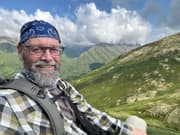
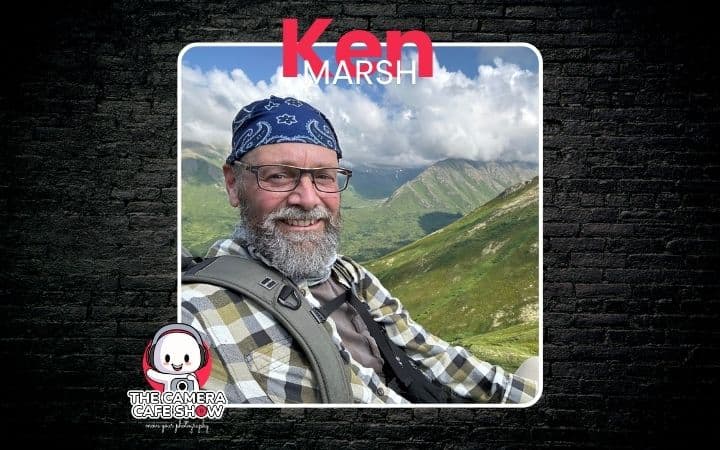
This week, we’re heading way up north — to Alaska! — for the first part of a special two-part mini-guide to wildlife photography in the Last Frontier. And who better to guide us than Ken Marsh — lifelong Alaskan, wildlife photographer, journalist, and one of the best storytellers you’ll ever hear.
In this first part, we dive into Ken’s life growing up in the Alaskan wilderness, how he transitioned from hunting to photography, and how his years working for the Alaska Department of Fish and Game shaped his understanding of wildlife behavior. We also cover common mistakes photographers make, gear recommendations, a few unforgettable close calls, and how to prepare yourself — and your camera bag — for the Alaskan wild.
And hey — don’t forget to hit follow or subscribe on the platform you're listening from. It helps others discover the show and keeps you in the loop for next week’s Part 2 — where we go even deeper into specific seasons, locations, and wild encounters across Alaska.
Let’s get into it with the wonderful Ken Marsh.
Tom: Good evening, Ken, or better said, good morning there for you. All the way up there in the north in Anchorage of Alaska.
Ken: Good morning! Good to see you, Tom, and good to talk with you.
Tom: Nice to see you again. It's been a while since we last talked. I think the last time we talked you still had some snow there. How's things there these days?
Ken: Well, you know, we're having a very unusual spring up here. In fact, we've had a very unusual winter altogether. But it's definitely spring here in the lowlands of south-central Alaska. All of our snows already gone. It has been for pretty much so for the month, about 15 degrees above normal, or above average 15 degrees Fahrenheit, I should say, above average up in the high country.
We still have plenty of snow, but it's definitely an early spring and we're starting to see migratory birds return already, in fact. So, time to get out and start shooting!
Tom: I don't want to start directly with climate change topics, but it's definitely different than other winters there now, Ken?
Ken: It is normally, in fact, I've just had my snow tires pulled off my truck today and got my summer tires on, and that's, three weeks to almost month ahead of time. Normally I wait until end of April to get that done so the roads are clear you know just, just good pavement and dry, and really not icy or snowy at all. Now it's Alaska. Anything can happen.
Tom: Right.
Ken: Here in south central Alaska as late as mid-May, but like I say, with temperatures, hovering 15 degrees Fahrenheit above normal. It's looking like spring here.
Tom: Time to start your photography already with spring in the air, Ken. Before we go deeper into this interview, there is a lot of tourism nowadays in Alaska. What's the funniest thing a tourist ever asked you there?
Ken: Well, this is kind of a, kind of an old joke now because it's, it's been, it's something that happens in a reoccurring type since, but people hear about the bears and they worry about bears and bear confrontations. They're afraid they might get attacked. So, we tell them that you need to take some sort of protection.
Bear spray is what we recommend for most people. And most people know that that bear spray is something that if you get into a confrontation with a bear and it's attacking you or just getting too close and, and behaving dangerously, you wanna spray that bear with the bear spray. Every now and then you get a tourist, somebody from the lower 48 or elsewhere, who equates bear spray with bug spray and they wanna spray that pepper spray on themselves, and you don't wanna do that. So yeah, every now and then you'll have somebody who will ask you, do you spray it on or…No, no, no, no. Don't spray it on, spray it at the bear because that stuff will put you down. That's some very powerful capsicum that can spray.
Tom: Uhhuh Uhhuh. Haha. Well, I have it in my list to ask you later some nice questions about bears Ken.
Ken, your parents they moved to Alaska when you were four, so you grew, basically, you grew up in Alaska.
Ken: I have, yeah. I grew up in Alaska. We moved up when I was four years old in 1966. So, I've been up here almost 60 years and have spent my life here in the outdoors largely. I was basically born with an innate love for wildlife, birds the outdoors in general. So that's been my life.
Tom: What's your earliest childhood memory of all this nature? You remember that, Ken?
Ken: Oh, yeah. My first, I guess when I first realized that I liked wildlife. The memory goes back to, I was probably only three years old, maybe four at the oldest, we were actually in a store, there was a book, with a picture of a raccoon on it and on the on the cover, of course, we don't have raccoons in Alaska, but I didn't know that I was just a little kid.
But I saw that, and I had to have that book. And I remember asking my parents for it, and they didn't have a lot of money then. And, you know, they kind of, kind of put me off, but I was so adamant about it. By the time we left the store, we had the book. And I still have that cover somewhere. I wish I would've thought to have brought it with me here to share with you today.
But yeah, I was, I was very young. I can remember seeing still in California, back when I was three, four years old. I remember, encountering hummingbirds and cottontail rabbits and pheasants and things like that. And just these pictures are in technicolor, you know, engraved in my mind. It's something that I've never forgotten, and I just gone and run with it in my last 60 years here in Alaska.
Tom: Now we talk about books. Ken, you also wrote a book. You see yourself like a writer who likes to take pictures, or a photographer who likes to write?
Ken: I would say, I would say a little bit of both, Tom, to be honest with you. you know, to back up just a little bit. When I was young, and Alaska was a much, it was a bigger place with fewer people it seemed, than it is now. And of course, we still don't have a lot of people, but back in the day, my parents didn't have a lot of money and we actually lived off of the wildlife that my father hunted. We would eat caribou and moose all winter long by, they would hunt in the fall and know, up the steaks and roasts and make different things, sausages and stuff like that out of it. And that's what we ate all year round.
So I grew up in that environment and I channeled my love of wildlife into hunting. I was actually a hunter and a fisherman, and I enjoyed that too for, many, many years. And, eventually, when it was time to grow up and graduate college and everything, I ended up graduating with a print journalism degree from the University of Alaska Anchorage. And with that degree, I ended up getting hired at Alaska Magazine as outdoors editor. Much of the material that I covered as outdoors editor was hunting and fishing related. In fact, prior to that, I was actually a professional trapper for a couple of years out in the bush just below the Alaska range north of Chetna. I spent a lot of time outdoors doing that.
But to answer your question about where I'm at now, would say kind of been there and done that. As far as the, the hunting and fishing, I'm not saying that I won't ever do it again, I haven't picked up a gun or a fly rod or anything like that in several years. Instead, I'm using a camera and I'm getting a lot more satisfaction really, just personally, this isn't for everybody, but for me, I get more satisfaction out of actually photographing wildlife and wild places than I do in, in actually hunting or killing anything like that. So, it's kind of nice to capture them and walk away knowing that they're still out there and maybe I can go back and find them and take pictures again.
By the way, that reminds me, when I say ‘shoot’ an animal, I'm sure you understand what I mean. As a photographer, I actually have a friend who is a retired game warden. He was an Alaska wildlife trooper, and he and I were driving to actually go take pictures of brown bears in McNeil River.
We had a long four-hour drive from Anchorage to Homer to get to where we'd take the plane and I said: Hey Bob, I shot a Kingfisher the other day, and before I could get another word out, Bob says: Ken, you know, I'm a retired game warden. And, you know, I don't actually enforce the law anymore, but I got to tell you, I can't condone you shooting kingfishers. That’s not legal. I said, no, no, Bob, I'm talking about shooting with my camera, not with a gun. So anyway, when I say shooting, that's what I'm talking about, of course, is shooting with the camera.
Tom: Haha, no worry! Ken, you think that your previous skills in hunting, can now come in practice with your photography?
Ken: Absolutely. I learned so much about wildlife behavior and of all the various species that we have here in Alaska from moose and caribou to dall sheep, bears, and small game too. I learned a lot about how to approach wildlife, how to get close, where to find them, their habitats. So yeah, that definitely helped me gain an edge as far as photography goes today.
Tom: And then Ken, after your job as a writer for a magazine, I think you moved to being a spokesperson for the park rangers, the Alaska Troopers?
Ken: Yeah, that's, that's right, Tom. Yeah, I was with Alaska Magazine for about nine years then was a freelance writer and photographer for, about three years after that, and then came back into the private industry. Actually, I was a fishing columnist for the Anchorage Daily News for years. But after that, I embarked on a long career with the Alaska Department of Fish and Game as a public information officer for, first the Division of Sport and Fish and then after that for the Division of Wildlife Conservation. Finally, I ended up, when I retired a few, just a couple of years ago actually, I was with the Alaska State Troopers as a spokesman, so, yeah.
Working at the Alaska Department of Fish and Game was very educational, especially as a spokesman who had to cover interactions between people and wildlife. We get a lot of visitors up here, a lot of tourists, a lot of people who are just enamored with Alaska and its wild places and its wildlife, maybe they don't know a lot about how to interact with wildlife properly. Because of that, we get a fair number of bear attacks or even moose attacks every year that can be real scary and occasionally fatal.
And I had to deal with those as a public information officer dealing with the media, speaking to news cameras and print reporters and just the public. So very educational for me while I was working to educate the public.
Tom: And nowadays, Ken, when you are out shooting, what's the most common mistake you see photographers make there when they try to capture wildlife pictures?
Ken: Well, maybe getting too close and being too aggressive in approaching wildlife. We had a fox in town. That animal was probably around at least nine years until it finally lived out its lifespan, but it had a kit prior to its death, just a year or so ago, which has now taken its place. This fox could be found on any given day in the same area, and it became well known to wildlife photographers locally. And people would show up and take pictures of this fox who was getting very accustomed to people. You could get pretty close.
However, what I would see frequently, would be new photographers who would get excited. They would see the fox maybe at a distance, and instead of stopping and maybe sitting down and just letting the fox behave naturally and come a little bit closer, they would actually pursue the fox and all they would get would be the tail end of that fox running away and jumping across the creek or getting on a log and running across the creek.
And then you probably wouldn't see the fox for the rest of the afternoon. In fact, I've stopped photographing down there just because was kind of amateur hour. You get a lot of that and it's just kind of frustrating you know, to be present when that's going on. And you don't wanna say anything because you don't wanna, you don't wanna presume that you know more than others.
But it can be a little bit frustrating. And that's the thing I would say I see most often with especially new wildlife photographers.
Tom: Then you're talking about the fox here only Ken, we're not talking still about a 1000 pound moose.
Ken: Oh, I'm talking about both for sure. Tom. Yeah. And moose especially coming up here in about a month, well, a little over a month moose start calving up here around the third week of May continue calving well into June. And there is nothing more protective or overprotective of it's young than a female moose, a cow moose. And we have terrible attacks, sometimes fatal attacks every year because people either intentionally or just accidentally get too close to a calf maybe wanting to get a picture of something like that. Maybe the mother isn't even visible. You don't see her 'cause she's off in the brush feeding or something, but she's aware of that little calf and what's going on. And when somebody gets too close, suddenly she charges out of the brush and yeah, you know, that moose might weigh 800 pounds, close to a 1000 pounds. They can swing those hooves and with deadly force. And then they don't stop. Once they've knocked somebody down, he'll keep on kicking and stomping until they, they feel like the threat has been neutralized. Then they get that little calf and say, come on, let's go. And, you know, they leave then it's too late for the hapless photographer.
So yeah, definitely with moose, or any kind of large wildlife. And, as far as smaller wildlife, you know, even, even anything down to ducks and grouse and songbirds, you can get too aggressive and too close and you're just gonna up either spooking them and they leave the scene and you don't get any pictures or, know, heaven forbid, they're guarding a nest of babies and they end up leaving and abandoning the nest or babies or something like that. So yeah, getting too close, is something that you see over and over with all species and, something that, well, that I certainly try not to do.
Tom: While you were a park ranger, Ken, you ever saw this happening? An direct attack by an animal?
Ken: Oh yeah. Well, as far as actually being on site and witnessing that, oh, I guess I've seen some close calls, but I usually, I was called in, in the aftermath after something like this happened, I'd be called to the scene, and then that's where I would get the information from our biologists about what happened and what the message was that we needed to relay to the public.
You know, that hey, somebody was badly injured today when they encountered a moose at close range and got too close to the calf, you know, trying to take a picture. I believe there was one just last spring down near Homer, which is a popular place for people to visit for wildlife and scenery these days here in Alaska, about a four-hour drive south of Anchorage. This was a photographer who was trying to photograph a moose calf in just the classic case. But that's, that's what I would do is, you know, after a bear attack or a moose attack or something like that, I would have to stand up and tell people, here's what happened, here's what we can do to avoid this and stay safe in the future.
Tom: I can imagine. I've never been in Alaska, but I think I will walk behind you when I'm there!
Ken: Haha. I appreciate that. You know, I don't put myself above anyone else either. It is not difficult to get yourself into a situation with our wildlife up here. Even if you're taking all the precautions, even if you know what you're doing, you can still get into a jackpot with 'em. You know, you might be simply walking along a trail and you come around a tight corner and boom, mama Moose just happens to be there with her calf. You know, there's no way you could know that, but doesn't matter who you are, you could be in trouble in that situation.
Same with a bear. Different ways to behave with different animals though. A moose that's acting aggressively, the best thing to do is run. You want to run away and try to put a tree or a car or whatever you have between you and that moose, because moose are herbivores. they don't have the predator-prey instinct that something like a bear would have.
Tom: Right.
Ken: Do that, and you can, you might be able to save yourself a good thrashing. Now with the bear. The last thing you want to do is run.
Tom: Wait with the bears Ken. I have a bear special planned later on.
Ken, you photographed some of Alaska's most iconic wildlife. What's or which animal has been the most challenging until now to get pictures of?
Ken: Well, there's probably, there's, I could probably name several, but, probably the most challenging so far has been timber wolf. And have a lot of wolves up here, but, you know, relatively speaking, but you don't see them very often. And when you do, you know, it's often at a long distance, and it's difficult to get close to them and in the right position to get decent photographs.
I had a situation at McNeil River in 2023 when I was there photographing brown bears, where there was a white wolf. A white timber wolf had been cited in the area. And was really frustrating. You ask about, you know, what's been the most challenging animal. What they have is, McNeil River is a camp that's run by the Alaska Department of Fish and Game, and they keep people in a confined area so that they don't go that area and get in trouble with bears. When you go out to photograph bears, you go with a guide, a fish and game guide, and they know just how to go and where to go to find bears and keep you safe.
So, in the morning you have your breakfast and everything before the day starts. And that's what I was doing. And one of the first things I needed to do was go up to the restroom. It's a, you know, just an outhouse that they have up on the hill, while everybody else was down at this kind of main area, having their breakfast. So, I go up there and I'm not the kind of person who takes very long when I do that sort of thing. I was gone maybe five minutes and I come back and everybody in the camp was just all a buzz. Oh my gosh, Ken, you miss it! There was a timber wolf that came right into camp!
I'm like, oh, you got to be kidding me! I've been looking to get pictures of Timberwolves for years. And you know, I'd got a couple before, but nothing that was very good. And here these people are showing me the back of their LCD screens. It came right up here; we’ve all got pictures of it!
And I'm like, oh, I leave for five minutes, and this happens! Well, that's not the end of this story. I figured, well, what are the odds of ever seeing that wolf again? You know, I missed my opportunity. So, I have my breakfast, and finally I got tired of listening to everybody talk about the beautiful pictures they got of this wolf. So, I picked up my camera and I went ahead and put the 500 millimeter lens on with a 1.5x extender, because I was going to go out there and just sit down and take pictures of songbirds because there were all these beautiful songbirds. It was spring migration time, and the willows were alive with singing songbirds.
So I went out just to kind of get away, get by myself, and, oh, just kind of cursed my luck. And I sat down with that big giant lens and pretty soon a couple of the guys that had seen the wolf before came out, I think they felt sorry for me or something, they came and sat down with me and just started talking and we're having a nice talk and everything, and I was taking the picture of the occasional bird when suddenly one of those guys looks up and his eyes get big like this. He says, there it is! And I turned around and that wolf was maybe 20 feet away. It had reappeared, this big white wolf, and it was so close. I had the equivalent of 700 millimeter with my lens. All I could get was a quick headshot, and then it was too close. All I could see was a blur because it was, it filled up the whole screen.
The good part of it was I ended up getting a nice headshot of that white wolf after all. But if I would've had any idea that that wolf was going to show up that close, which never happens, I would've had a wide angle lens and would've got some great shots. So that's frustrating.
Tom: I imagine.
Ken: But a fun story!
Tom: And this was an albino wolf, Ken?
Ken: No, our timber wolves up here have a wide range of colors. I think they're technically called gray wolves now, that is what the biologists call them. But they can be any color going from black to gray to kind of a tawny brown and oftentimes in some of the more arctic regions in southwestern Alaska to white. But even here in South Central too, you will see almost snow-white wolves sometimes too.
Tom: I think they're amazing animals. What other animal is high on your list to get a picture of there, Ken?
Ken: Well, now this one…I may never get it, this is a tough one, but a Wolverine. You know, people get pictures of them, you know, getting to be in the right place at the right time. You don't see them often, and when you do, they don't sit still for long.
They're a member of the weasel family and they're always on the move. I mean, they're going this way, that way up on top of a stump, sniffing around back down again, and then boom, before you know it, they're gone again. They can cover miles and miles of country in a single day, whether on snow or during the summer or fall time. So yeah, Wolverine would be very high on my list. I would love to get into a good situation with one of them, one of these days.
Tom: Good luck Ken. Now, let's talk a bit about gear.
Ken: Okay.
Tom: Ken, I suppose you started out with a SLR camera, but nowadays what you're using?
Ken: I did start out with an SLR, actually, a film camera back in 1979. My first camera was a Cannon AE one film camera back that my mother gave me for my graduation. So that's what really got me into photography way back and today, I still shoot Canon. I've stuck with Canon all this time. My main camera is an R5 and I've got the 500 millimeter/4 lens with the 1.4 x extender, and I have a 100 to 400 zoom lens that I also use between both cameras. And I do have a wide-angle lens, a 17 to 35 millimeter, that doesn't have a whole lot of application for wildlife, but it's good for landscapes and occasionally incorporating wildlife into landscapes, which is something that I wanna work, work on doing more of.
Tom: This is something you might want to go into more landscape photography, Ken?
Ken: Well, I'm gonna work on it this year. You know what I've done, Tom, is I've done something, something a little different, something experimental since I last spoke with you. I actually bought a small trailer one of the little teardrop type trailers. I just bought it recently. What I’ve planned to do is, is use that trailer this summer to head up the highway and go, you know, travel throughout Alaska and Northwestern Canada, spend time in some of these real scenic places and try to do more landscape and ultimately incorporating wildlife into those landscapes. That would be my ultimate goal.
But yes, learning to do, you know, more landscape composition and you know, just everything having to do with that. I think if when a person puts that together and we have a number of great photographers that do that. Art Wolf who you spoke with recently is a master at that sort of thing. Yeah, that's what I would like to do next. That's on my list and what I hope to start doing here one day.
Tom: And you see, it's a perfect intro now, with your new trailer, to move over to the second part of the podcast to inspire a photography trip to Alaska.
It will depend on the season, of course, we'll talk more in depth later about this, but if someone has only one week, what's the best place they should go for their first time visit, Ken?
Ken: Well, I, you know, it's going to depend a little bit what they want too. If they're wanting pictures of young wildlife, you know, they'd be looking at Spring if they're wanting pictures of magnificent bull moose with great antlers or caribou, that sort of thing, then they're talking about Fall. And if they're talking about brown bears fishing for salmon, well, they're looking more like, you know, mid to late summer. So it would really depend what exactly folks are looking for. Alaska is such a big state with so much variety environmentally climatically wildlife distribution wise as well.
So you really kind of define your passion and what it is that you, or what you would like to capture. And once you've defined that, then you can better choose the season that would be most appropriate for you.
Tom: Right. But like a place like Denali Park is not always a sure spot to go to?
Ken: Well, Denali, I would say, is a pretty sure spot to go in all seasons, depending on what you want. Once again, people these days are going in the Fall, because in the Fall you get the gorgeous fall color, you do get the moose, they're in the rut and they have those big, beautiful antlers along with the caribou.
You've got the brown bears or grizzly bears up there feeding on berries and such. With those beautiful Fall backgrounds. The mountains are often capped with white snow. And yeah, Fall is a very beautiful time to go to Denali Park. However, you could go there in the springtime here in, oh, probably another month or so, and you might be able to get some pictures of the moose calves, you know, taken from a safe distance, as we mentioned before, moose calves birds with little chicks birds, nesting of all types. Caribou with calves, bears with little cubs. So springtime, you know, can be good as well.
Winter can be probably the most difficult time to go visit a place like Denali or many remote parts of Alaska, whether they're parks or just wilderness, be difficult because of weather. Snow very frigid temperatures, just wicked weather in, in general. Also, wildlife can be more difficult to find at times in the winter. The bears, of course, are generally hibernating and you can't see them. You can still get out there and find moose, although if you wait too late, if you wait until December or afterwards, the bulls have lost their antlers it's hard to make a real attractive image of a moose without those majestic antlers.
So, anyway, long answer to a short question, but that would, that would be my response.
Tom: And then of course, before we get there, we need to pack our bags and we have to bring our gear, Ken. What are some essential things a photographer should bring when he goes on a trip to Alaska?
Ken: Well, a wildlife photographer will, of course, the photography gear kind of goes without saying. I think most people would know that you'd want at least one long lens. It might be nice to have a good telephoto, something like a 100 to to 500 type of a lens as well. And maybe one more wide-angle lens.
Could be something like a 70 to 200 or something like that. Or you could try what I have, the 17 to 35, if you want to try to incorporate more of the landscape.
But anyway, that kind of goes without saying. You want to have a good camera bag too. Again, I think most people when they come, are going to be aware of that. What is a little bit more important to underscore would be proper clothing. It doesn't matter if you're here in May, or depending on where you're going, even in July or September, you need to be prepared for cold weather or inclement weather. It can snow, like I say, in in mid-May, and depending on where you're at, if you're up in the high arctic or, or if you're at a high elevation, it might snow in June. So you want to be prepared for cold.
You also wanna be prepared for rain, especially in the fall, we get a lot of rain here in South Central. And places like Denali Park, you get a lot of rain in the fall. A beautiful bluebird day is rare. It's absolutely gorgeous when you get those days, but so often it's rainy. So you wanna be prepared for that. You get some wonderful moody shots, but bring your rain jackets, bring your lens coat cover for your lens and, and camera to keep your equipment dry and safe. Hand warmers, I always have hand warmers. Doesn't matter the time of year. I keep a couple of hand warmers in my bag so that if I find myself in a situation, I can pull that out and warm up.
And good footwear is also important, depending on where you go, you might want to have something like hip boots or chest waders or just good leather, hiking boots. In any case, I would recommend something that's going to be waterproof, even if it's only knee high.
You wanna dress in layers up here. So, if you're having a nice warm day, you could have something like a t-shirt or maybe a, a long-sleeved sweatshirt type of thing, but then if it starts getting cooler or the wind kicks up, you're up on a high ridge, maybe wanting to take pictures of dall sheep. You can always pull that out of your pack. Something like a little a down jacket or a down vest with shell, you can put over the top of it in case the weather starts turning wet. So basically, you need to be prepared for just a little bit of everything.
And of course, there's the bugs.
Tom: I was just going to ask you about them.
Ken: Yes. Bugs here are a consideration too, Tom, especially June. June, I would say through September in most places, because in June you start getting the mosquitoes and mosquitoes can be maddening up here. I mean, they get in your eyes, you have trouble breathing without 'em going in your mouth.
And of course, at the same time, if you don't have bug spray to put on, not bear spray, but bug spray, they'll be all over you, you know, biting you and sucking your blood and leaving these itchy welts and stuff. So, you want to be sure that you have good bug protection. In the fall, in September, we have what they call White Sox up here locally. They're a type of little blackly and those things actually take a little chunk of meat out and then you get this big welt with this little scab in the middle. That is just, yeah, be prepared and try to avoid that. People here like head nets to avoid those. They are small, tiny, they can get through your clothing, and they like to get up under watch bands and very aggravating.
So be prepared for bugs.
Tom: I was watching the other day in an old episode of Michael Palin travels; I think it's called from Pole to Pole. He started up in Alaska and he was going to go all the way around until coming back up on the other side in Russia. And on day two, in Alaska, he was going to visit bears in the river. I think it was late spring by the look of the footage, but he had just had to leave the place. I mean, there were so many flying mosquitoes that they just blocked out the screen of the camera man, it was insane. He was all the time moving his head and his hands. Very funny!
Ken: Yeah, it can get that way! I remember one time not having any bug spray with me. I'd gone up in the side of a mountain after some caribou, I was coming back down later, the breeze we had had before, that was keeping the bugs down, that breeze died and suddenly I was just completely, just kinda like you just described, just mobbed by all these bugs. I was a young guy back then and a little swifter than I am today, and I would run to get away from the bugs and when I'd get tired, I would stop and fall down on my face and put my rain jacket over my face and just kind of catch my breath and you could just hear 'em hitting the fabric, it sounded like rain hitting the rain jacket, all those bugs. But yeah, it's…it's crazy!
Tom: So the best way, there is no other way than bug spray, I suppose.
Ken: Bug spray is the best way that I've found. I know there's been some experimental gadgets out there where people can carry them along and turn their battery powered and you turn 'em on, and I've heard mixed results on those. I think DEET bug spray is or bug lotion. Either one, is probably the best bet.
And also, for people that are particularly sensitive and going into places where there are a lot of bugs yet, head nets can be great. Wear long sleeves and head nets. There are many times in the summertime where it'll be a warm day and you know, you want, you'd really like to be out in shorts and short sleeves, but I wear long pants and long sleeves just to protect me from the bugs.
Tom: Crazy really. Haha
Ken: Yep!
Tom: And what are some of the biggest challenges of photographing wildlife in in Alaska, Ken? Directly to mind comes maybe the costs it will involve.
Ken: Yeah. Cost and yeah, just getting there. It can be so remote. You know, Alaska, we've got a limited road system here in the south-central region in the interior in southeast Alaska, which we don't talk about as much as it deserves to be, as talked about as any other part of Alaska. But it's temperate, rainforest, completely different type of environment than what we have here. And they have no real interconnecting highway system to speak of. They do have the Alaska State ferry, and people can drive onto the ferry and go from community or village to village and see some neat things. We have wonderful bear photography down there as well.
But yeah, it's that remoteness. It's getting to places like McNeil River that you know, require a long drive and then a very expensive airplane flight. Last spring, I was photographing migrating birds coming in the springtime and nesting birds up out of Nome. And places like Point Barrow in Alaska, all the way up north. Fortunately, in both of those cases, they're both accessible by regular jet, you know airliners. You can, you can go up and sit down on a 727 and visit those communities.
But so many other places in Alaska that you might want to go, to photograph wildlife, you're gonna need to fly a bush plane or you're gonna need to float a river. Or if you're young and hardy you know, you might be able to hike in places. We have some good trail systems that go back into the back country. Of course, for long hike ins, it's gonna limit the camera equipment that you can bring along because you're gonna also need to bring along sleeping bags and tents and food and, and all of that.
So that would be the in a word, the biggest challenge would be Alaska's remoteness.
Tom: And renting a car and driving is feasible, or you just take better the bush planes?
Ken: Well, you certainly can rent cars and you know, explore the road systems. The thing about the road system is it's so, it's so tempting. You know, you just kind of drive from point A to point B, oh, we're gonna drive from Anchorage in our rental car to Denali Park. Well, that's nice, it's about a, oh, a three or four. That's probably more like a four-hour drive. Going from that point A to point B, you're gonna pass a lot of really beautiful country with a fair amount of wildlife, but you're probably not gonna see a whole lot. You know, you'll see the mountains and the lakes, and you can get some landscape and if you're lucky, you might have a moose sitting out or standing out in a lake or something like that. But as far as hardcore wildlife photography, it's gonna be difficult to get, going that way.
Once you get to the park, you're in good shape. You know, now you can get on one of the buses and go deep into the park and they will stop at the various wildlife sightings and stuff. But yeah, it can be done. I guess I would recommend, if you want to visit Alaska that way and you're hoping to see a lot of wildlife, I'd recommend maybe looking into renting a motor home or a trailer or a camper of some sort. Maybe a camper and taking your time, you know, get up out of away from people, you know, drive a hundred miles north of Anchorage and beyond. Find a good place to pull over and camp either a campground or, you know, sometimes you can find other places, and maybe spend a day or two in a place that's very interesting, that seems to have a lot of wildlife.
You know, if you're seeing a lot of moose tracks, or bear signs, or what have you. Or you just got a beautiful background that, you know, if you happen to get something, walk into that, you could get some nice stuff. Spend a day or two in places like that and really get to know the place a little bit and you'd probably enhance your chances of seeing wildlife that way to at least some degree.
Tom: Sounds a great way to explore though.
Ken: I was just going to say the Denali Highway is another place. It's becoming more popular, but it's not part of Denali National Park. It's the Highway connects the George Parks Highway, which leads up to Denali National Park. It connects the Parks Highway which goes from Valdez up around Fairbanks. It's mostly just a gravel road and it goes through some real nice wild habitat unpopulated with you know, good chance of seeing moose, brown bear, caribou even, and tarragon, that sort of thing. That would be a good place for people to explore as we just kind of discussed with a rental car.
Tom: And what's your take Ken, on guided tours for wildlife photography? It's better to do those or just explore on your own.
Ken: I would say people would really enhance their chances of getting good wildlife photographs and encountering wildlife in a safe manner by employing guides, you know, do your due diligence as you're shopping for wildlife guides, wildlife viewing guides, whether they be bear guides or something else. Do your due diligence. Check out their reviews. If you can find people who've actually gone with a particular guide or outfitter you know, get their take on, Hey, did you have a good time? Was it worth the money? Was it worth you know, what was the time of year to go? And also talk directly to the guide about that. When would be the best time for me to come up and, you know, go with you on a tour to find bears or moose or caribou or whatever it is. Guides will know where the wildlife is. So, you don't have to worry about spending your first week just trying to figure things out and then end up having to leave about the time you figure things out.
The guide already knows where those the wildlife is going to be at any given time. They can take you to them. They're going to have the tools and the knowhow to deal with wildlife and keep you safe. So, I couldn't recommend a guide more highly. I think that would be a real good idea for anybody wanting to visit Alaska, especially for the first time. Go with a guide, a reputable guide, and go that way.
Tom: Ken, let's walk a bit quick through the seasons in Alaska and which photography opportunity you could encounter. Let's start with winter. You have all this stark beauty of the mountains but it's challenging. Any good wildlife encounters you can find during wintertime?
Ken: Well, in my region here in South Central, out of Anchorage, Dall sheep actually start going into rut their breeding season in November and December. You can actually drive south of Anchorage a short distance, less than 20 miles, probably more like about 15 or so, and you start getting into Dall sheep that actually come downright close to the road. And you'll see these big, you know, the rams with the big horns, these big white sheep actually chasing the ewes and the ewes, and the lambs will come right down, close to the road. And you have some wonderful wildlife photography opportunities there.
So, you, you have that, you've got moose year-round, you've got those in the winter as well. And the bulls will keep their antlers until, oh, usually around the first week of December for the bigger ones. Occasionally there'll be moose that actually keep their antlers through December and even into early January.
So, there's always that possibility. Yeah, you've got moose, Dall sheep. Caribou, if you want to go up north, we don't have any really right around here. You need to go up into the country north of Anchorage. The problem with the Denali Highway in the wintertime is it's not plowed; it's not maintained in the wintertime. So once the deep snows come, the only way you can pass and explore would be with a snowmobile. And there is at least one lodge up there that caters to snowmobiles, a remote location off there. You'd see red fox, wolves, good possibility of maybe wolverine, that sort of thing in the wintertime.
I guess surrounding it all in the wintertime, the landscape is always so beautiful in the wintertime, and you've got the Northern Lights is always a possibility. If the weather is right, you can get some gorgeous images with the northern lights at night. So yeah, there's plenty to do in the wintertime.
I guess one thing that I would, as we talk about the times a year, to start making your plans early, always plan ahead when you are gonna visit Alaska, in other words, you want to be planning a year in advance is not too early. Because lodges and these various wildlife guides and birding guides, photography guides, they fill up fast. For instance, you wanted to go up and photograph spring migration up out of Nome or places like that, you really need to make your reservations for next spring about now, or if they're not taking them quite yet, just as early as you can. We waited last year until 1st of November to start making reservations for June, and we were too late in most cases. We were able to just get into a bed and breakfast for one place, and we just barely were able to get a car rented, because everything else was rented. It wasn't the ideal car, but at least it was something. That would be my takeaway for all seasons is if you're planning to come to visit Alaska for wildlife, start making your plans a year in advance if you possibly can.
Tom: Very good advice there.
Ken: Mm-hmm.
Tom: Then we move into spring when nature is waking up it, Ken. What's this the best time for…maybe migratory birds?
Ken: Well there's a lot going on in the spring. I'm trying to think, when I went to McNeil in 2023, that was actually in early June that was quite springy. The songbirds were out. We had migratory waterfowl coming in, and this is along with the bears. In the springtime, say May and the first half of June or so, those are good times for like baby animals, you know, the moose calves that we stay back from, the bear cubs, again, we keep our distance, but we can get some good opportunities with them. The bears aren't going to be feeding on salmon yet. When I went to McNeil there in 2023, in early June, they weren't feeding on salmon, but they were gathering out on the s flats of Mick Creek and the McNeil cove there, I think we counted as many as 18 bears. It looks like a herd of cattle out there, and it's all brown bears feeding, so that's a good spring opportunity. The problem with McNeil River is you have to win a lottery to actually go there. So, you actually register with the Alaska Department of Fish and Game, you buy what's essentially a lottery ticket for $25 if you win, well then you're in. If you don't, then you might wanna start to consider doing this ahead of time. You might wanna contact some of the bear viewing guides and bear photography guides that we have in other parts of Southwestern Alaska who can get you to similar situations in the springtime. So, yeah, there's plenty of opportunities in the spring too.
Early in the spring, it can be a little bit drab color-wise. Dull as far as everything's kind of brown and, you know, it hasn't greened up yet. That can be a little bit challenging color-wise. And remember, your moose don't have their antlers yet. They've got little buds starting to form, but all things to consider, I suppose, oh, I would say spring is probably the best time, absolute best time for migratory waterfowl because they're coming in droves, just as shorebirds too. They're in their full breeding plumage. The males are just gorgeously colored and they're very active, you know, on the breeding grounds.
And you can get a lot of great opportunities for migratory waterfowl and shorebirds in the springtime places like Cordova, in lower South Central Alaska places in Southwest, and of course Nome, which I've mentioned a couple of times, all great places. Creamers Field out of Fairbanks is a very popular place in the springtime for migratory waterfowl. And right here in Anchorage, if you come to the big city, we have places right here in this city that offer wonderful waterfowl and birding opportunities and pho photography opportunities. Westchester Lagoon you can walk to from a major hotel in downtown Anchorage. We've got Potters Marsh in South Anchorage that has all kinds of different types of waterfowl from swans to you know, name any kind of Pacific flyway duck or goose. We've even had some occasional rare birds like ducks from that are usually associated with Asia. So yeah, there's some good opportunities in spring if you want to plan to come then.
Outro:
And that’s a wrap for Part 1 of our Alaskan adventure with Ken Marsh — photographer, naturalist, and master of fox tales and wolf near-misses.
From growing up surrounded by caribou and moose to photographing bears, birds, and the breathtaking landscapes of the north, Ken gave us an amazing window into what it really means to understand the wild before you ever lift your camera.
Next week, we’ll be back with Part 2 — where we dive deeper into Alaska’s photographic seasons, prime wildlife spots, hidden gems, and even a bit about local food and culture. Trust me, you don’t want to miss it.
Until then, check out Ken’s work at Wild Country with Ken Marsh (linked in the shownotes), and if you liked this episode, leave us a review, follow the podcast, or send us a message.
Thanks for listening — and as always, move your own photography. I'll see you here next week for Part 2 with Ken Marsh. Adios!