

Greetings and welcome back to the show!
If someone had told a young girl from Long Island that one day people would be exhibiting her photographs of family life, New York streets, and wild disco nights, she probably would have laughed.
Thankfully, she kept taking pictures anyway and has the negatives to prove it.
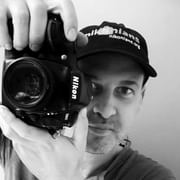
I am Tom Jacob and this is The Camera Cafe Show.
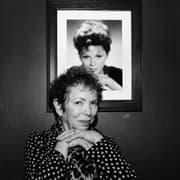
Today folks, I am joined by Meryl Meisler — a photographer whose work has become a colorful and deeply personal time capsule of New York life. Best known today for her street photography and photographs of the '70s disco era, Meryl spent decades documenting the people around her, never imagining that these everyday moments would one day find their way into books, galleries, and museum walls.
In this first part of our conversation, we go back to where it all began. We talk about growing up on Long Island, receiving her first camera, the influence and importance of family, discovering photography, and finding her way through the streets, neighborhoods, and dance floors of New York during the 1970s.
Along the way, we visit Studio 54, Paradise Garage, family gatherings, and the everyday moments that would eventually become some of her most beloved photographs. Because while this is certainly a conversation about street photography and boogie nights, it is also a story about curiosity, memory, and the simple act of paying attention to the people and places around us.
And next week, in Part 2, we pick up the story as Meryl's photographs begin their unexpected journey from boxes of negatives to books, exhibitions around the globe, and a whole new chapter in her photographic life.
So grab a coffee, settle in, and enjoy Part 1 of my wonderful conversation with the amazing Meryl Meisler.
Tom: Today we're heading off into a version of New York filled with disco lights, wild nights, and unforgettable characters, and we talk with somebody who was really there. Meryl, it's a pleasure to have you on the show today.
Meryl: Nice to be here. Very nice to see you too. I'm very delighted to be on the show with you and to be invited
Tom: Meryl, you were recently in Ireland. Your wife is from Ireland, and I was going to buy a Guinness, but I didn't find one, so I will have a little whiskey. It's the best next thing I could find to do this interview
Meryl: And I'm having, and I'm having a cup of coffee from-- I'm talking to you from Woodstock, New York today.
Tom: So who talks more, Meryl? New Yorkers or Irish people in a pub after two Guinness?
Meryl: I do think Irish people talk more. There's a lot of Irish in New York but they definitely, as they say, have the gift for gab or friendly conversation. They're good talkers. Or maybe they're on par. They're definitely are vocal and friendly!
Tom: Do you feel at home there in Ireland, Meryl?
Meryl: I felt I could be at home in Ireland, It was a treat 'cause it was a vacation, but I felt like it was very livable and familiar also a little exotic. I felt like I could fit in there.
Tom: Nice. What's one thing that in your life, instantly makes your day better, Meryl?
Meryl: Oh, what makes my day better? A good night's sleep. Breakfast.
Tom: Haha.
Meryl: The basic nutrients. What makes my day special when I am photographing and I feel like I'm in the groove. The act of photography definitely lifts me. But there are many things that make me happy. The sun, having a roof over my head, to have a family, to everything. It's an appreciation of life.
Tom: You are good at cooking?
Meryl: Am I a good cook? Is that what you're saying? No, I'm a-- I- you could eat with me. No, I can fend. I am not known for my cuisine. I wing it on my own. I'm okay. I'm okay. My wife Patricia is a better cook, but she likes my food too.
Tom: You see, it works out for you.
Meryl: It works out. I'm not the chef extraordinaire in any way. Are you a good cook?
Tom: Yeah, I have to say I'm a good cook, yes.
Meryl: Okay. What's your specialty?
Tom: Any kind of of Spanish food if you like it.
Meryl: Oh,
Tom: If you things like paella, I can make it, no problem.
Meryl: I'm coming over!
Tom: All right, haha.
Meryl: You know what? I am better than I say that I am. Okay? I'm okay. I have my things, but I'm not extraordinary. We can't all be gifted everywhere in everything.
Tom: No, very true. We will meet up sometime in New York and we will do a cooking contest, Meryl
Meryl: Or Spain. I'll come to Spain.
Tom: Or Spain? Yeah, fine, come on over!
Meryl growing up , in Long Island, what kind of girl were you? You were quiet or you were dramatic?
Meryl: I was a very-- I was a good kid. I was really easy to raise, not a troublemaker. Definitely got in less trouble than my brothers. I was a good girl. I was a good girl. A nice Jewish girl from Long Island. Haha. I was really, honest. Stole once, got in trouble. Did my chores, tried to make peace. Have made lifelong friends that I'm still friends with.
Could I have done better in school? Yeah, I could have done better. I think I could've done better. But I was a good kid.
Tom: What you remember most vividly from this time?
Meryl: Oh, what do I remember most? ... Oh, even though there was friction between my parents, it was also very loving. They did divorce later on, but they were actually very loving, loving family and loved their children very much. I liked our house. I liked my friends on the block. I fought with my older brother when we were kids, but then became very good friends.
How close we were to my family who lived in the city still. My aunt and uncle, cousin, and then my grandparents. We'd go to them every weekend or they'd come to us. The block was full of kids my age. We had a little North Massapequa Girls Club. I'm still close with these people. They may live in California, they might live Wisconsin, but we're still best friends even if we don't see each other. I just have work in a show in the Long Island Museum, further out in Long Island, and two of my friends who I've known since, one since third grade and one since seventh grade, they came with their husbands. And both of them, I was their bridesmaid at their weddings. I didn't knew at the time how fortunate I was to have a very enriched childhood. I was in a class for children who were gifted, so I had a very progressive education in elementary school.
Tom: Nice.
Meryl: I'd say wholesome childhood,
Tom: Lots of humor also in your family life?
Meryl: I come from a heritage of humor, yes. My family and my friends, there was a lot of laughter, a lot of really good humor. And later on when I photographically-wise, when I was introduced to the work of Henri Lartigue and how funny his family pictures are, that's immediately what I wanted to photograph, that I really... the people I knew in my life, my parents and their friends and the family, they really had a great sense of humor. Even if they're gone, they were very funny people. Or with a real zest for life, even though that was not always easy.
Tom: But you come over very joyful. We are talking five minutes and I like it already, Meryl.
Meryl: Oh, thank you!
Tom: It's going to be wonderful. So let me remember...your grandfather, he was, or he liked photography, but you lost all the pictures then from your uncle also, but you have the ones of your father....?
Meryl: Okay, this is my dad, Jack Meisler. No, the photos are not lost. I have, just yesterday, I have albums by him, physical albums
Tom: Ok.
Meryl: And have his negatives. And just yesterday, 'cause I'm straightening things out, I just found an envelope just full of his early negatives. So I have his photographs, or many of them. My father's father, Murray Meisler, I did not see his photographs that much during his lifetime. And when he passed away, my father got his camera. We don't know where his photographs are. It was almost just the act of photographing was enough. But I have his cameras, and I gave some of them to my nephews, and that was part of it. But there were a few photographs. But it was definitely his creative, something that gave him pleasure. And he had emotional difficulties , but there was something he did in how he communicated with the world. Something he enjoyed. And even my uncle, my father's older brother, Leo, Al he was always photographing. And when he retired and they moved down to Florida, they threw away a lot of their pictures. It's okay. So it wasn't always precious that my father did put his work in albums and did save his work ... Some of it was thrown away, but I seem to have a whole lot of it. And it's really good.
Tom: Nice.
Meryl: His work is really good. It has definitely my style. Very straightforward, just what's important to you or encouragement that he was interested in photography.
Tom: When it started for you, Meryl?
Meryl: At age seven, I received a present from my parents, for my birthday, a little film box camera, and on it says, "The Adventurer." And I used those to take pictures, photographs of my little brother who, in his diapers, getting his first haircut, my friends the kids on the block, parents, auntie and uncle on, going on school trips. The same kind of things that pop, and later on my sweet 16, things, same kind of things I still photograph. So that's when I started taking pictures. And I recall going with that little camera when my grandfather took my brothers and I to the Bronx Zoo, and I remember thinking, "Oh, look at the light on the lion," capturing the light and hoping my grandfather would notice that it was special. I was conscious of the light on the lion.
But it wasn't until I was going on to graduate school, col-college, I was taking photographs like people do, vernacular photographs of things in their lives that they wanna record, that I took a serious introduction to photography class.
Tom: This was in the University of Wisconsin, no? That you took a class with Cavalier Ketchum.
Meryl: My undergraduate education, I went up to Buffalo State College up in, Buffalo, New York, and I became an art education major, but I didn't take photography. But when I was going on to graduate school, I took a introduction to photography class at the University of Wisconsin in Madison with the Professor Cavalier Ketchum, and I was, yeah, and I was inspired because I had seen the Diane Arbus show the year before, and I just thought it would be interesting on how to I'd like to learn how to use a real camera, yeah, rather than taking pictures with... then I was using Instamatic, and sending it out.
Tom: And what he told about your pictures when you showed him?
Meryl: What did my professor talk about when I showed him?
Tom: Yes?
Meryl: Initially, I was not a photo major, so I wasn't his chosen few people. Someone else that just kept attending class. And initially I shot photographs around Wisconsin, and he would point things out and suggest which to develop. When I came back my first semester and I went home, inspired by Lartigue photographs of his family, I started photographing myself, and friends, and developed a film, made contact sheets. I remember him looking and he goes, "What is this?" I said, "What do you mean what is?" "These places, these homes, I've never seen anything like them." I said, "This is where I come from. Our homes look like this." And he pointed out some of the funny things that, humorous things that I did, with my friends, how we posed them. But he also talked about the environment, what was in the photograph what you show in the background. Because he had lived in New Mexico for many decades, I think, and he photographed the people of Hispanic community who come from other countries. He said that when people come over, they have objects that kind of talks about their lives and their culture and their heritage, and to include it in the environment and that showed up in my photographs as well.
So I became much more conscious, though it seems I was initially from the start conscious of designing the whole landscape, the interior landscape. So I didn't know that I had an unusual upbringing or people with a different sense of style than other places. And it encouraged me to continue doing. I would do more self-portraits, photographs of friends, family, and they were initially interior photographs, but of people I've knew and loved my whole life. Some of those I just saw last week. They were like my first subjects or their parents. So very sweet
Tom: All these people, they said there comes Meryl again with her camera?
Meryl: Oh, sometimes, especially when in my family, it's like my mother would say, "Enough with the pictures." Haha.
Tom: But it's nice, Meryl because by doing this, you have all these memories of them now.
Meryl: Yes. And everyone like, cousins that are in the pictures, friends, they get a kick out of it. They say this is really nice, that in all the series of different series of my photographs, who has found themselves in a picture or found someone they knew, they all like them. No one came back, "Why'd you take that picture? Take it down. Don't put my name in it," or, "I'm gonna sue you." Everyone's very pleased. It brings back happy memories. I certainly wasn't laughing at anyone. We were laughing together. So it's very sweet. Even strangers who have found someone they know said, "Oh, you really captured my uncle so well," and that's really nice.
Tom: And what they say when they remember this '60s and '70 hairstyle they had, or the clothes? Haha.
Meryl: It's just style, and it'll come back again. It's just a style. It's amazing!
Tom: It's wonderful to see, yes, haha.
Meryl: Styles come and go, and they come back again. And if anything they were just living their lives and doing it with this flair!
Tom: Yeah, that's right
Meryl: I tend to photograph people who are expressing joy, showing confidence, in a good moment. So they're looking good, they're looking good.
Tom: Meryl, then you came back from college, you went to New York and you started a photography class with Lisette Model?
Meryl: Yes. I never lived in New York City, but my dad's business was in New York City, in Manhattan, so obviously I had family in the Bronx. But in 1975 I finished my master's degree at University of Wisconsin-Madison. I could have gone on for an MFA, but wanted... Lysette Model was alive and well and teaching at what we call Parsons, the Ashton New School, and I wanted to study with her. I brought a portfolio of my work and was admitted into her class. At the same time, a distant cousin of mine whose family owned a brownstone in the Upper West Side, and one of their roommates was going away for a while, so I sublet her room. And as soon as I moved to New York City, I knew I fit in there. It was right for me. I always felt like home. And again, could see myself in Dublin, I could see a lot of places, but I feel very fortunate that I feel very much at home in New York City and with the privilege and the fortune to also have a country home, because the city is intense and it's nice to have a change. I've been very fortunate, but if I had to choose one, live in my little apartment in New York City, get rid of all my stuff. I'll send it to you in Barcelona.
Tom: Haha. But Meryl, I think Lisette, she told you, you had to show your pictures to John Szarkowski, at MoMA, and you didn't do it. What held you back?
Meryl: When I went on the first interview with y portfolio, and there was a big line of people, there were photographs of my Long Island friends and family. One of these pictures, and I can send it, I'll show you which, she picked it up to show it to everyone in the line, applying to be in her class, and said, "You should show your work to John Szarkowski." And I never did. I, then and now, I'm actually shy. I need to be outgoing, and you can be shy at the same time, and I guess I wanted to be handheld into that. I never showed my work to him. Yes, I have regrets. It would be a dream to show my work in a place like MoMA someday. So I'm looking forward to it. Lessons learned. It's when someone suggests something, do it. But I guess I probably wanted to say, "Would you introduce me?" But I didn't do it. I didn't do it.
But however, that positive reaction by someone who admired so much, who only said very positive things about my work, always talked about the story in it, the image, about the technique or do this kind of lighting. It was everything just set me on my path to keep going.
Tom: A great story Meryl.
Meryl: And I did only one class with her, but it was very important to me 'cause it set me on with confidence that I was like, "This is how I like to photograph," and going after the things that attract me. Okay. I did take other classes ever since, it would be like how to do lighting, how to do this. It's like they didn't interest me. They didn't interest me. So I did not pursue photography as the way I supported myself. It was always my art form. But I certainly would welcome it if I knew no matter how I took a picture of somebody, they'd end up coming out funny, because that's how I saw. I saw funny. But I also never stopped.
I'm glad because you get rejections and maybe just stop. I continued, and I showed work, mostly photography with mixed media, and discovering later on when I retired that my pure photographs just unto themselves, straight pure photographs, they're delightful and they're historic, and people find themselves in them now, and I have so much to go through! Very lucky.
Tom: But now you jumped all over the exciting part. You jumped over the disco years, Meryl. So you met Judy Jupiter on a bus.
Meryl: Boy, you really did your research. Thank you. You did.
Tom: Haha.
Meryl: You really read through things. Yes, in 1970.
Tom: You hit all the legendary clubs, Studio 54, Paradise Garage, Les Mouches, Copacabana. What Judy brought out in you in those years?
Meryl: I met Judy Jupiter on-- I was in, in New Orleans. Okay, I'm gonna go backtrack. I can remember exactly today, February 14th, 1977, Bob Adelman, a photographer I was taking another class with, said there was gonna be this big party at the Copacabana. And I the Coyotes Hookers masquerade ball, and I talked my way into it. I wrote to them, said I... And I showed up in a costume, and I-- it was my first big disco s- experience, and I loved it. I it. And I photographed the n- away. from right after there, maybe a few days later, I went to Mardi Gras 'cause I was invited by a photographer named Michael Smith, had-- was showing at International Center of Photography, traded work with me, invited me to see Mardi Gras. On the way back on the bus, I met Judy. And we-- was first was to take pictures for some men's magazines 'cause I th- she thought she would G- a good subject. And we disco- she had a c- a crush. She met somebody on the bus who was a bartender at CBGB's, and so we went to visit him at the bar. We we... I had come back from this-- I'd gone to other kinds of clubs before that, but when I went to this disco thing at the Copacabana, I knew I loved this. And so we soon very much that we both like going out. And so when the disco scene started exploding, sh- she initially called up publicist for Studio 54 and said we went in, and I showed them contact sheets and got us on the list as photographers. We never published anything, we had a ball, and we would-- and event- and the doormen liked us, and so would often let us, let the, let us in. if they didn't, there were just so many clubs to go to. So I think we discovered the dis-- I would say we discovered the disco scene together. And we're still friends. We are still friends.
Tom: Yeah
Meryl: A- she would... I- is more flamboyant than I am, and so I would help her make her costumes, and I'd wear... you dress thematically anyway, but I'd be a little more subdued. And inspired by another photographer whose work that really inspired me when I was in studying photography was Brassai, his photographs of the nightlife in Paris. And when I was going out, I'd go "This is my Paris of the '30s." I knew I was doing... And so I, inspired by Brassai, I'd want my camera along most of the times. I wish I'd done it all the times. I didn't go, done it all the time, but many times And I, and it's, as legend has it, I really didn't show that work until decades later, nor did I even know it was that important, 'cause there were so many of the disco era. There were a lot, there were a lot there. And so I was very pleasantly surprised to, to discover that mine own flair.
Tom: So there,
Meryl: somewhat-
Tom: there were a lot of photographers there outside in, in clubs shooting pictures
Meryl: There were a lot of photographers in the clubs because the paparazzi, it was a big scene, I was never, Rarely the only one there. And it was a lot looser than it is now. When I'm photographing now, I need to get permission. It's more pri- Private. Then it's I don't think it... I didn't have to get my name on the media list or be approved Or it's just my style that I would ask people permission because it's just my comfort level. It was very open to, it seemed to be very open to photography. I don't think I was ever I don't think anyone ever said, "Put the camera away," or "Lock it up." And then again, people would dress to go out and to be seen. So there are a lot, there, there are a lot of photographs of that era And guess mine were a surprise. Here's more
Tom: Were there moments in in, in a club or a disco, Meryl, that you say, "I have to capture this because nobody is going to believe this"?
Meryl: I think every moment. I'm not-- educated person. I know in my s- and especially since an admirer of Arbus saying, her famous saying, and besides that, not that you can't photograph everything, but also I'm taking pictures of, 'cause if I didn't photograph, nobody else would see it. That's always both things are in my mind, though I am inspired by that. And to re- to remember and also to honor it as it's happening. But I seriously didn't know it was so good, that my work was so good, that it would have meaning now afterwards. 'Cause when you're working photographs, you feel like, oh, it's now, it's old, it's o- old news. You didn't put your work up on Instagram about the holiday yesterday. Oh, it's old news. But it's not. Photography gets better with age, it seems. it's not a competition. A good photograph seems to stand the test of time and have, and strengthen, 'cause you can't make up the past either. So I, I think e- every one of them I felt like I was definitely in a special time and place, my time and place and worthy. And if you're shooting film ph- which I was then and I'm back to doing now, you're much more selective. Of course then there wasn't digital photography, but if even a roll, you choosing medium format, they did have 220 film then, meaning you could have
Tom: Yeah
Meryl: on a roll, and now it's only 12. It's also finance, just finance and also just being more selective.
Tom: Other people were very happy for you to see you with your camera to, to take their pictures?
Meryl: I guess if you're out and, if you think about your own life, how many times has a complete stranger come up to you and said, "May I take your picture?" I think I... Me, so few. f- even now, so few it happens. So if you're g- you're, you're out on the night and you're dressed up and you're feeling good you're grooving and someone notices, notices that, us- more than not, people say yes, unless they don't. And sometimes they say no, and I respect that. And in our voice respected that. People have a right to privacy
Tom: is there a night that stands out to you, Merrill? A night that sometimes you remember that said this was a great time, this was a great moment?
Meryl: I would okay, and it's because of my photographs, and so you're talking about the past? I had a great night two weeks ago, but I would say in 1977 there was a big blackout in New York City, and the world, there was a lot of... It was dark, things shut down, there were riots, there was this and that, two weeks, around two weeks later, Studio 54 was o- open again and it was a birthday party for a politician Bella Abzug, who was a female politician she was a congresswoman at one point, and it was her birthday party, it was her 57th birthday party, and I thought she was so old. So we have this dark perior- dark, literal darkness, and to be in this event, and it was filled of interesting people. 'cause she was a feminist, journalists, star-studded as well. You're walking, there's Andy Warhol, and there's Bella Abzug, and there's Shir- Shirley MacLaine and there's William Shatner of Star Wars. That was a r- that was fun. That was a very special night, and I have the photographs to prove it.
Tom: Meryl, this is all with flash in this time. How you learn to shoot with flash?
Meryl: I do like to shoot with straight on flash. I don't-- Then and now, I, it's like natural light during the day, but in nighttime, in the dark, flash, ouija flash, Arbus
Tom: Yeah.
Meryl: It's straightforward. I would try many different styles, but I keep on coming back that I, I know how to bounce it, I know how to do contraptions, but I like the way the light folds around the person and shapes and be able to predict how the background will look. Yeah when it's successful, I think it, it gets it.
Tom: Looks good. Yeah.
Meryl: it. It's sharp. I prefer it that way rather than boosting the ASA or ISO.
Tom: zo. Mhm.
Meryl: Though it is
Tom: Ja
Meryl: nice when you have your phone that you can just be anywhere and it just seems to magically figure it out. It's amazing. Okay. I like the look. I like the look. I like how it renders The human form and every detail. I was a, professionally before I became a school teacher, I was an illustrator, so I have an eye for detail, and I like how the flash
Tom: Yeah
Meryl: out the details and the forms and the costumes and the backgrounds
Tom: Yeah. Now you bring up teacher. I was going to ask you w- what made you become an art teacher?
Meryl: Originally, gonna go really back when I was a freshman in college, and I was... I'm of the age that most women became teachers, nurses, things like that. And I was a freshman in college, and even the first week they gave you a test, like an aptitude test, what you might, interests you might be, and it said the arts or education. And then I was taking- introduction to education, introduction to psychology, all, all these introduction class. And I took an introduction to art for non-art majors And even though I took all the classes, I did very well in school, when the art said to me, afterwards he said, "Did you ever think about becoming an art major?" My heart beat. It went I, it pounded. I called my parents, and at that time it was, ca- making a phone call was very expensive long distance, so we'd call 11 o'clock at night or Sundays, and I said I'd, "I'd like to become an art major." He said, "Under one condition, get a teaching degree so you can always make a living." I did. I was
Tom: Te digo
Meryl: to teach. I was nervous to teach. And when I went to went on to graduate school, I was accepted as a art education major, then I switched into straight art with drawing, me- illustration being my major. I became a teacher because a freelance illustrator, you do the work and you're always waiting for the , check to come in the mail. Your bills came more steady than the check. And then at one point I, from s- '78 to '79, I did get a grant where I made a living as a photographer for a program called CETA, C-E-T-A, the Comprehensive Employment Training Act. In the United States, it was a program called W- the WPA in the, during the Depression, where artists were employed do public art. This was like the WPA of the '70s, and I was employed by the American Jewish Congress, to ph- to document Jewish New York, to help make an, one of few artists making an archive, and also to explore my own family roots. I also, it was the first time I had a regular paycheck coming in, and I, it was very flexible my hours. I had to count things. It was great. I liked having a regular paycheck. And I also needed to do community service work, and I chose to do teaching because I did have this teaching degree, but I was nervous to teach. When CETA end- ended and I was on unemployment, I didn't want to just go back to freelance life because I'm one of those... Everyone's different. I liked the security of having a steady paycheck, and so I used my experience from teaching at CETA with a portfolio and started teaching in the public schools initially for two years, four days a week. That was means part-time. And United States, you don't have healthcare unless you have unemployment. It's like there was no healthcare, no unemployment, no anything like that, no sick days. And so I then I became a full-time teacher because I wanted healthcare, building up toward a pension like I have now, all those things. And so that's why I became a teacher. You make a lot more money doing other things, but for... I'm, I personally wanted that stability, and then I also it interesting, and I found in it as well.
Tom: Yeah.
Meryl: I was a very good teacher
Tom: But no more disco nights than Meryl.
Meryl: They slowed down. disco nights sl- slowed down. also became involved relationship. My girlfriend Patricia m- moved to New York begin a life together. I said, "I'll be let..." And I was, we- we're still a couple. We're a married couple. So it, getting up at in the morning to teach, plus being in a new relation... In fact when Patricia first moved to New York or when we were dating, she was living in San Francisco at the time, would go clubbing, but I was on a date, so I didn't bring my camera. So I, even though I went to the Mud Club, I don't have pictures of that. But I didn't know I was making an ar- a something, an archive for the world. I didn't-- I just knew that I was going out during the-- going out at night and bringing my camera because this is fascinating. So it slowed down. I was working, and I was in a relationship, and then there was an epidemic called AIDS. So it did, it just changed for me. Doesn't mean other people didn't go out. I also didn't said, "Oh, I'm in my 30s. Do I wanna be the old lady in the disco?"
And that wraps up today’s episode of The Camera Cafe Show folks.
How was that for a conversation so far about photography? I never met Meryl before our talk, but I can honestly say she genuinely stands out as one of those people who immediately makes you feel comfortable. Warm, funny, curious, and full of stories, she is exactly the kind of art teacher I would have loved to have had in school.
And perhaps that's also part of what makes her photographs so special. Whether she's photographing family gatherings, New York streets, or wild disco nights, there is a sense that she genuinely enjoys people. Her photographs never feel distant. They feel lived in. They feel like they were made by someone who was part of the moment rather than simply observing it from the sidelines.
Next week, we continue the story and discover what happened when decades of photographs, quietly stored away in boxes of negatives, began finding their way into books, exhibitions around the world, and a whole new chapter of Meryl's life.
If you would like to see more of Meryl's work, learn more about her books, projects, or upcoming events, you can find everything back in our shownotes.
And of course folks, if you enjoyed this episode, have a look at our website and don’t forget to subscribe, leave us a review, and follow us on any podcast platform or on YouTube.
Until next time, keep shooting and keep on moving your photography. I see you next week here for Part 2 of this wonderful conversation with Meryl Meisler. Adios.