

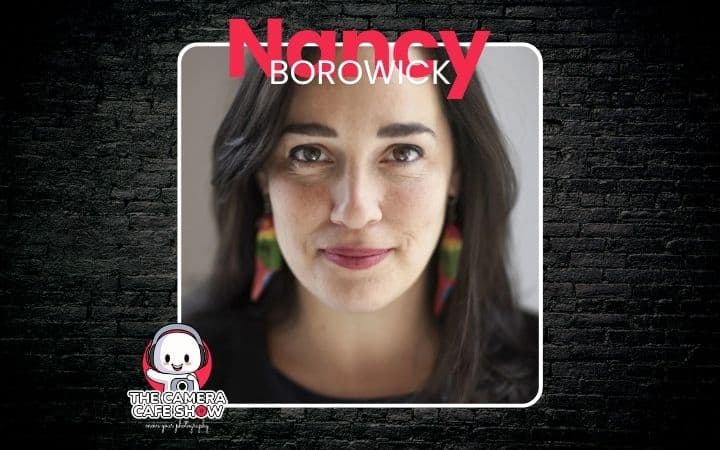
Tom: Welcome on the podcast today, Nancy. It's a pleasure to see you.
Nancy: Same. Same with you. Feels like forever.
Tom: Yeah, yeah. So what crazy things have your boys been up to with their new haircuts lately?
Nancy: I mean, just looking, looking so good. they've been very busy. You know, , my big, my older son Levi, he's just, you know, obsessed , with soccer, football, and my little guy Gus, thinks he's a chef. So he's been stealing all of our kitchen tools and squirreling them away and making me pretend soup every day, which I don't hate, but, so, you know, they're working those haircuts like that. I don't know.
Tom: This is the, this is the little one I saw with the giant pieces of kale walking around in your Instagram post.
Nancy: My kids are good eaters. Even when I buy things, like, it's not so easy to get that special kale here. And I got it on a different island and I was prepping it for myself, and they both came into the kitchen. It was like bedtime. They were about to brush their teeth, and they were like, Ooh. And like, just grabbed a piece and started munching. And I was like, I, you know, I'm not gonna fight them. Yes. Eat this kale!
Tom: Amazing.
Tom: If this had been another kind of podcast, I'd ask you how you did that, but okay. We will talk about photography today.
Nancy: I think, well, I will tell you, I think it's, they think I'm cool and they like same things I like. Right. I
Tom: Mm-hmm. Okay.
Nancy: Yeah.
Tom: Nancy, you are so cool that you said that Goofy is in your DNA.
Nancy: Yes,
Tom: You actively pursued the art of fruit cutting and towel shaping.
Nancy: Fruit art!
Tom: I had so hoped you had one now there to show me.
Nancy: no, I, well, when I, whenever I make anything that's like pretty with fruit, it gets eaten very fast in this house. and I'm a mom of two young kids. I don't have time to make pretty animal shaped towels. It's already and I still my coffee, so I'm just trying to manage my own expectations, which, another goofy thing, I mean, I don't know. I've just been, I don't know. I'm just like that embarrassing mom with a camera. Now that's who I am
Tom: Mm-hmm. Okay.
Nancy: and I've accepted it.
Tom: Mm-hmm. I have a question for this, but we will do it. We will do it later. So, Nancy, let's go quick over geography. You are from, New York, then you went to live in Guam for some years, then back to Brooklyn, and then now in St. John.
Nancy: Yes. Now in St. John, which is an island, it's part of the US Virgin Islands. There are territories of the US in the Caribbean.
Tom: Mm-hmm. So this was a conscious decision to anchor your family there in a more slow kind of beauty.
Nancy: Yeah. You know. I will forever be a New Yorker. I think, like I'm currently wearing all black. I just, I feel like there's certain things you can't shake. And at my core, I'm a New Yorker. But after living in Guam, my husband and I realized that a slower pace life in a warm, beautiful climate is sort of the dream. And like the end of the pandemic, we were sort of itching to try something this again, but this time with kids. And so we moved down here and this has really become our home. I mean, I also get off of the island quite a bit, which I think helps. But I've really started, I mean, this is home, which is. Which is when I was a younger photographer, I feared the idea of being like, kind of planted somewhere, but there's something very stabilizing about having like a real home base which I maybe in my adulthood appreciate more.
Tom: And if you say, I will always be a New Yorker, what do you mean by that?
Nancy: I think, you know, well, you'll never see me wearing like florals, so I just like, I dress in
Tom: Okay.
Nancy: in black and maybe that's photographer also, but I as chill as I would like to be. I still get very frustrated when people are walking too slow or driving too slow or things aren't efficient enough.
Tom: Oh.
Nancy: But I has taught me to slow down and has taught me the value in, you know. Just go in with the flow. But like I, you know, I can't say I've found like my favorite bagel down here or my favorite pizza 'cause I'm a snob about that because the best ones are in New York because of the water. So the water in New York makes bagels and pizza the best in the world. And it's a fact.
Tom: There you go. Okay. I just learned something new.
Nancy: Yes.
Tom: Let's walk a bit back to New York for a moment. Nancy, how were you as a little girl? You were adventurous, bringing things inside the house. Little animals or, you were just very good girl.
Nancy: You know, I was, I was the good girl. I, so I have it on good authority that I was a little bit of a tattletale. Do you know what that is? Yes.
Tom: Yes. I know it was going to be my question,
Nancy: I think it's be,
Tom: how you came to be that.
Nancy: think it's because I, and maybe it's 'cause I'm a middle child, but I just, I wanted fairness for everyone and everything, so, and it wasn't, 'cause I felt the injustice for myself, but I just wanted everyone to be happy. You know, and maybe it was me defending my little brother against my big sister. Maybe it was my big sister and I doing things together and not, I don't know. There was, there was just a dynamic. So I just cared a lot about other people feeling accepted. And I was really, I was a pretty creative kid. I definitely like, had a wild imagination. I didn't bring things into the house, but I did go out into my, I had a big backyard with woods and I would go out and like, make potions with all the berries and twigs that I could find. I don't know, I think I definitely like. You know, lived to the beat of my own drum And that I think was a direct result of my parents just being like, wonderful, supportive, people. Yeah,
Tom: And even so your mother, when the teacher phoned and she told that you were at that hotel in the classroom, she was laughing with it.
Nancy: I mean, that's what I heard. Because it, when I, here's another example. My parents were lawyers and if we were sitting at the dinner table and they were talking about a case, and my sister, it's funny now she's a lawyer as well, but they would they'd be discussing a, case or just like an talking about anything. It wouldn't even be a case. They'd be talking about plans for the weekend and sometimes it would become, not an argument, but a heated discussion. And I would get so overwhelmed by the tension that I felt that I would start crying and leave the table. And I think again, it was, I just wanted everyone to be happy every everyone to And you know, it's, it's hard to look back at myself when I was little now as an adult and now having kids that because just see it through such a different lens. hindsight or,
Tom: Yeah. Well,
Nancy: 2020 or whatever they say.
Tom: mm-hmm. Then , you grew up, Nancy, you picked up a camera, I think in high school you studied anthropology, you studied photography, and your parents being lawyers, they were. Good with you telling them you wanted to study photography.
Nancy: they were, I my parents, you know, they didn't, they didn't grow up with a ton and they were very smart and worked really hard and they truly, I mean, I remember just growing up, them just wanting us to be happy and do things that brought us joy. And, so when I graduated college and was a little bit lost, but knew I wanted to do something with photography, I didn't know if I could make a career out of it. My parents were like, look, we wanna give you a fighting chance, so, you know, like we will support you for a little while and help you you, get your feet planted and see if this is something you could really make. out of which is such a gift. Like, mean, to not have to worry that I couldn't pay my rent was tremendous because it allowed me to be available for every kind of job that came my way.
Tom: And to focus. Yeah.
Nancy: Yeah. Even if it meant I had to take, I had to take a train from New York City about 45 minutes north to their house to borrow their car, to shoot an assignment two at the end of the day, break even, you know, it still, I to, I got the, I got to do the assignment. I got to have my name and my work published
Tom: This was the assignment of the hotel.
Nancy: That wa was that my
Tom: You had to make an assignment of.
Nancy: Yeah. It must have been. I mean, I did that a bunch of times, but yes, I had met an editor from Newsday on Long Island, and she asked me if I had a car and I said yes, which was a lie, but I knew I could figure out how. I didn't wanna give her an opportunity to not hire me. And about meeting her at the end of my time as a student at ICP at the International Center of Photography, she called and said, I want you to head out and, shoot this hotel. We're doing like this thing on hotels. And I said, of course. And it was a very boring assignment, but I worked really hard and I what I did the best that I could. And she was happy. She was really happy she started calling me more. it's,
Tom: see?
Nancy: to think that was like maybe. 12, 13 years ago now.
Tom: Mm-hmm. And all thanks to the card of your parents.
Nancy: Oh yes. Yeah, they were, they were, it was, I was so lucky. Like, it's so funny though, 'cause those assignments paid like two 50 an assignment and I, know, I probably spent like 50 to a hundred dollars on gas and then it was the train ticket. So like I mean, but it, you know, I had a little bit of a security net, which allowed me to do that and,
Tom: Yeah. Yeah,
Nancy: my, and get experience. So that years later when the New York Times came knocking, was like, had a system in place. I knew how to, I
Tom: I'm ready.
Nancy: resourceful and I had, you know, a lot under my belt at that point.
Tom: So you mentioned already Nancy, you started ICP and I, if I, if I remember well, you wanted to do a. A project about a family in the Bronx, but then you change it to do the work about your mother because her cancer returned. You had a mentor there to help you to make this like more emotional personal project.
Nancy: Yeah. . I had a few teachers at ICP, Alison Morley, t Levitt, and Nadia Rie, who are sort of the like three women who were some of my teachers and Nadia Masri who's an amazing photo editor. She's a out of Germany. She was in New York. And she encouraged me. I remember just being like. I started this one project on this family, but pretty quickly it was the beginning of the school year. When my mom got her diagnosis, I was like, I am having a lot of mixed feelings about being in school when she's sick. Like I wanna be there with her. And we kind of came to the conclusion that maybe I could be photographing her as a way to spend more time with her. And was, that was what it was. I didn't think it was gonna, I didn't know what it would be. I was still kind of developing as a photographer, developing as a storyteller, it was such a gift to get to not just spend that time with my mom, but to get to work on that project while I was at school. Because I would come back from every shoot with my mom and have, you know, wonderful teachers and my classmates to not just be supportive, but give me feedback. You know, I would really. As
Tom: Mm-hmm. Yeah.
Nancy: personal project, the very first personal project I ever worked on, and I didn't even know what a personal project really was. You know, I was just sort of going through the motions .
Tom: What did your mother say when you, when you told her you wanted to make pictures of her in this time?
Nancy: I was really lucky she was, I mean, they, she knew, my dad knew, my whole family knew that I love photography and that I wanted to be a photographer. And, she, was sort of like, I mean, if this is, if this helps this, if this is, if this makes you happy, if being if being able to spend time with me, and do this kind of, you know, project is meaningful to you, then I'm happy to be a part of it. I love getting to spend more time with you. She was like, it might be kind of boring, but like then that's, of course she would be like, it would be boring. But like, I, it was the
Tom: Mm-hmm. Mm-hmm.
Nancy: spent time with my mom in a way that, you know, it wasn't just me being her daughter. I was there as a documentarian. I was there as a caregiver and I was there as a young I mean, maybe not even a young adult. I was 25. I don't, I think I'm a, an adult at that point. it this really time together that maybe in the moment I didn't realize that we were really getting, because I was like, oh, this is the A class project. Like, that's what I'm thinking about. Plus she never, she was very funny about how, not funny, but she always gave the impression that her treatment and that chemotherapy and all of that and what she was going through was not a big deal. then that was the first time I really got to see it in person. Like see her in her, in her hospital chair, having the infusions and seeing her reactions to all of that. And it was devastating and terrifying. And I was almost, there were moments when I was upset that she hadn't let me come sooner because she would go alone. she was like, it's just, you know, another thing on my to-do list really. And she was strong and. Brave and all of these things, but it's okay to be scared too. And I just, I wanted to be more involved. That was the moment that I was like, I need to be more involved. So working on this project while I was really allowed me to wear all the hats at the same time.
Tom: Mm-hmm. Mm-hmm. Well, you wear a lot of hat because before Nancy, we go to the family imprint. I want to know a moment, you also went to Africa, the Ghana tap project where you built, where you built a tap for, the village. What you had to do to get all these funds to make it there.
Nancy: okay. So I was 22, 23. Fresh out of college. Idealistic and naive, and I had just done an internship in the photo department at Glamor Magazine in New York City. And it was, it was really cool. I got to learn about the industry. I got to learn that I wanted to be on a different side of the industry. I wanted to be photographing. I didn't wanna be edited. I was just, I was so close to being in the photography world, but not necessarily in the part that I wanted to be at that time. And I finished up my internship at Glamour and was like, I wanna do something else. I wanna teach photography, I wanna live abroad. And a friend had just gotten back from. Living in a, in a small village in Ghana. He was about to start medical school. So he was working with a clinic and it was like all those stars aligned. I was like, I wanna go to this village, I wanna teach photography. Like I just wanna do something completely different. 'cause I was kind of finding myself. And so he connected me with the organization and I ended up going out there and teaching at the Triumph International School. And I fell in love with the community. I fell in love with the kids. I love teaching. And before I left, after a few months, I said, okay,, I'm headed back to New York. Is there something I could raise money for the school to give back? Because I feel like I've just been given such a gift in this experience. And oh well, like they didn't have easily accessible clean water. On the the school was or where the home was that I was staying. And so I was like, oh, yeah, sure, I could do that. I, yeah. I think sometimes that idealism and that, or whatever it's good. It's good because it doesn't, me now might've stopped early in the path. I been like, this is un impossible. You know, like, I can't do this but me. okay, I could raise money. Like, I heard it would be like six, $7,000. I just felt really motivated and so I came back to New York. I started volunteering with an organization called Charity Water. 'cause I was like, I need to learn how to build a well, and this is an organization that did that so. I started volunteering with them, and simultaneously I thought to myself, okay, I think I could maybe do a popup exhibition. Maybe I could get people to buy my prints and that money could go towards this project. I hadn't figured out how I was gonna build the well, but I figured let's just get that money first. So I did a pop-up exhibition at a, or no, first I had a, an event at first, I had an event at my friend's bar in New York City, and I like collected, you know, donations. I reached out company that works in, works with like growers in Ghana and was like, would you don. Candy bars. And they did, and my friend donated wine and I was really, it was really piecemeal, but like it came together and we raised a couple thousand dollars, but I realized I needed more. And she said you could, the gallery upstairs you could talk to them about doing a popup show. That's right. That's what came second. And they were like, they have a show was coming down, another show was coming up. They basically had like one or two days in between if I wanted to. Do a popup show that did not put holes in the wall, that did not leave any trace. And I was like, I'll do And I ended up printing my photographs and then buying like these cheap window mat frames that were already like prefab. And matted the photographs and I taped them to the wall. I went to FedEx and I was like, oh, I need an artist statement. I was like, you know, I've been to galleries and I was just kind of making, it was very budget, but like, I was making it work. I was gonna do, I was gonna find a way to do this. And I made an artist statement that was like feet tall I printed out at FedEx and taped to the wall and then invited everybody I've ever known. And it was a really successful night. I raised another couple thousand dollars basically by the end of those two events plus a smaller popup exhibition at a frame shop. I raised about $11,000, which was. Amazing. I was like, I couldn't, I honestly was, it was the moment that I realized that my photographs could teach people, but also could make, could bring change. Like, it seems so to me now, but I
Tom: it.
Nancy: know what that felt like until that moment. And it was encouraging. I was like, this is the kind of work I wanna be doing. And ended up going back to Ghana that next year going back to my village and talking with them about this project and pulling together a team to oversee this well, and, oh, is another moment when it's probably good. I didn't know what I was doing and I was naive and all those things. There were a lot of speed bumps. I, you know, I didn't know what I was doing and it took about more years and a lot of heartache and a lot of. Beautiful new relationships to make it all come together. And the well was fin they finally hit water. They dug a couple of times. They finally hit water. Early when I, when I was actually a student at ICP. So my friend that worked at the school contacted me and she was like, they hit water. The well is being built. And they sent me photos and I was like crying in class. It was, it just felt like, okay, like they deserve this. I saw it through and then the next the next year I was able to go back to Ghana and see it in person. And it was real special.
Tom: I'm so proud of you, Nancy. I saw the little plaque with your name on the Well,
Nancy: my God. I know. It was, ugh. It was just, it was so cool because kids were coming to school with water bottles to fill up, water to take home. Because not only was it like. Clean water. It was like good water. Like they were, like, it was really the villagers were coming, the kids were, have to walk a mile to get water. They could like do their homework after school. Like, it was just a change. I got to see it bringing real change and it really, I just, I learned so much in that whole experience and shaped, I truly, it has shaped my path, you know, like I came back from that trip and was like, I like when I saw the, well, when I was working on the well and then, you know, I was like, I need to be not just, I wanna be doing photography in a way that like brings, change can be a catalyst for change, but like, I need to, I need to, once, you know, you're that's, it makes everything else feel a little superficial.
Tom: Yeah. Yeah,
Nancy: Mm.
Tom: You see?
Nancy: me
Tom: And with this, I think we bring back memories. Yeah.
Nancy: about that stuff in a long time, though. I am still, I'm friendly with some of the, students over Facebook, which is wild. 'cause they're old enough to be, they're in university, they're going off to do their own things. It's like, I'm a proud, mama.
Tom: Yeah. Who knows? They'll become photographers too. Now Nancy, all thanks to you.
Nancy: oh, maybe. I hope so. I hope they pay it forward and do, and I think they are. They're all doing great things. I'm really to see what they've been up to.
Tom: I am sure. Mm-hmm. Mm-hmm. Nancy, then building trust is always this main focus you need in your stories. Let's talk a bit about the family imprint, because then you have to suddenly build trust in something, in a very intimate place, your own family. But I think you told me that the project chose you and not the other way around.
Nancy: I mean, yeah, I was, my mom had been, you know, sick on and off for 20 years with breast cancer. You know, I was like, after ICP she had some clear clean scans and I was freelancing. I was, you know, trying to get my you know, my feet wet in the industry and I was really focused on me, you know, my life, my career, and so was the rest of my family. Everyone was doing their own thing. But not too long after I finished ICP. I think it was within a year, maybe a little bit more. My mom had another recurrence with breast cancer, so her third time with the disease. And, but you know, she got the news and was like, okay, I know I'm a professional. I'm like, you know, I've done this before. And just got right into treatment and I wasn't thinking about photographing her. I was busy. I would, you know, and she was like, you live your life as a mom would. She was like, you live your life. I'll take care of this. Nothing to worry about. and so I was, I was I was picking up random jobs in New York, photo related, some non, I was a substitute teacher. I was just, I was in my twenties just figuring it out and I get a call from my dad saying he wanted to him and my mom wanted to take me out to dinner. My brother and I, my favorite restaurant and I was like, oh, okay, cool. Like we scheduled it and I didn't think much of it and it was called CAFE or of the Best. And we met there and you could tell that something was off with my parents. And I remember very having this fleeting thought, like, it must be bad for my mom. Some, they must be about to tell us something. I did not expect the news to be about my dad. That my dad not only had gotten a diagnosis of stage four pancreatic cancer, but that it was inoperable and terminal. dad was a black and white kind of guy. And so he said it just like that. And I was in, I mean, we were in shock. Obviously it, I actually just found out about a friend of mine who's. friend of mine whose father recently died of pancreatic cancer and, we both just kind of looked at each other and we're like, it's like getting hit by a bus. Like, it just, you don't know. You hear cancer and you're scared and then you Google it and then you're really scared because it's one of those diseases that comes in fast and furious and people, life expectancy is not often Good. So I mean, still in a state of shock, I remember thinking, I like need to spend time with them. I need to be with both of them. And, 'cause my dad was immediately in treatment and he actually had said to my mom, do you think Nancy would photograph me and tell my story? Which is like, typical for my dad on brand, for my dad. My dad is, was a storyteller and so, my dad and I were super close and so. She said this to me and I was like, he could've just asked me. But of course, of course, like there's nothing more important in this moment than
Tom: It,
Nancy: with my parents,
Tom: it made you cry, Nancy, this,
Nancy: This
Tom: it made you cry when he asked it? Yeah. No. The news note when he asked you if he, if you could make pictures of him or it made you feel very proud.
Nancy: oh no. It made me feel very proud. I did, I think, I think me, it immediately gave me a purpose with my parents in this moment because I felt pretty helpless. I have no medical experience. I just didn't feel like I felt very helpless and all I wanted to do was feel helpful. And so maybe if I was photographing them and being with them and I was advocating for them, and I was just focused on them, it gave me. Agency. It gave me something I could be doing in a meaningful way for them, and I could be photographing And in some way I knew that would help me because I remember it being cathartic when I photographed my mom. It helped me understand what she was going through in a way that I think I didn't realize at the time, but afterwards realized was helpful. And so I knew, I was hoping that would be the case again. But also I was living in the know what this, I, this news was just, it was a whole new reality that, you know, nothing, everything else kind of fell away because this news just was so insane. Same time for stage four cancers. Like that's, I just, I think I spent a lot of time being like, really universe looking up at the sky, like, real? I don't know. I was in my late twenties and like, things were so good. Then this happened.
Tom: hmm mm. Mm-hmm.
Nancy: Yeah.
Tom: And then you had to go, or you had to spend again, time in your parents' house,
Nancy: Yes.
Tom: Back to live with them.
Nancy: which was, which was a funny because I wasn't living there full time, but I was basically, I was going up for days at a time, and I think it was, at first they, it was really fun because, I mean, it was, they were just so thrilled to have me around. They like, kind of like, what do you want for dinner? Like, what are we doing today? And as like their daughter, I loved it 'cause I hadn't had that kind of one-on-one quality time with them in years. But I, you know, a lot of their daily activities in life revolved around treatment , and existing after and before treatment, you know? So I wanted to make sure, I think I was. I had some experience at this point working as a photojournalist professionally, and so I kind of knew how to be in a situation and be shooting and working on, like, I think I started to treat photographing my parents like it was some sort of assignment and I think subconsciously helped me be there with them, but also, like I said, gave me purpose. And so I just wanted to be documenting things. But, so at times it was hard because they were constantly talking to me or looking at me or doing things with me, and I was like, you know, be a little bit of a fly on the wall. I wanna observe what this experience is like for you, even though this is like so weird, you know? And I get it. It was a dance, but more I was there, the more it felt, it became less novel and they just got used to me being there and we kind of figured out the dance we were doing.
Tom: But Nancy, more, I think as a project in the beginning, I think it's more you want to document everything. What is still possible to document maybe? No.
Nancy: yeah. I think I am like a hoarder by nature. I am nostalgic. I have a really hard time getting rid of things because I attach meaning to meaningless things. That's just in my genetics. It's always been that way. and when I was with my parents, I, it was very, I was very aware of the fact that I had no idea how much time we truly had, know, treatment seemed good, but like that could change on a dime. I wanted to document everything. I wanted to hold onto everything. Of great value and of little value. I just needed to hold onto everything. And so I was documenting them. I was recording our conversations. I mean, like, I don't even remember some of these conversations, but I would have my phone recording because I would feel something, I'd be like, we're having this important conversation. What if, what if I don't remember what we're talking about? I remember, and like, I was just like, was anxious about losing them and losing all that was a part of them. But I also had, you know, people in my life who had been through this before, who had shared, you know, shared either regrets that things that they wish they had done or things they had done, and I had this wealth of knowledge, you know, kind of to pull from. And I'm so grateful for that because. remember those conversations, because of the recordings that I remember, the heart of what they were about and the words they actually used, that it's been, this December will be I, , I've lost track of time. This December is December 20, 25 and my dad died in 2013, or yes,
Tom: years.
Nancy: 12 year for my dad and 10 years for my mom, or sorry, 12 years for my dad and 11 my mom. And I remember them so and I have their words. I referenced their words like in my own adulthood. Like, it just, I didn't know, I couldn't have known how much of a gift photographing them and creating the book and doing all the, going through the motions of creating this project would be in my life. A plus later.
Tom: Mm-hmm. Mm-hmm. Nancy, of all the amazing pictures, you know, there is the one with your father and your mother in the chest sitting next to each other. You have this one where your, I think your father's doing like a, like a silly dance in the kitchen, and you have the one where your father puts his hand on her back in the swimming pool. There, do you call any other silly moment , that surprised you , of your father while you were, while you were shooting this?
Nancy: My family truly leaned on humor. I mean, we've always been that way. And humor was, you know, laughter is the best medicine. Humor is like what kept us going. And many moments, like so many silly, like. So many moments, many of which I documented. Some, you know, happened so quickly that I like couldn't have, but like, I don't know, like there, I mean, those are just some of them. we my dad was cutting my mom's hair. It was about to fall out and so he decided, he helped her shave it. the next thing I know, they're like holding pieces of the hair, like as like eyebrows and like deer. Like they just, the spontaneity
Tom: Mm.
Nancy: a emotionally delicate moment, you know, these beautiful moments of and joy, you know, against the backdrop of fear and illness and death, contrast. I mean, was so clear, but at the same time it was like, no, there was, there was a lot of joy and maybe that joy was highlighted because of the circumstances that felt more meaningful because we knew that these moments were fleeting. I look back, I think back and I don't know, things that could be so depressing and sad, like were also so funny. like that moment where they, I have a picture of my parents sitting in the bathroom on the phone with their doctor getting news about their most recent scams. And that's like a very scary phone call to get. And a lot of things were going through my mind watching them, like, are they both getting good news? Are they both getting bad news? Like what if one gets good news and one gets bad news? Like, I don't know how, like I was, you know, going through all those, the situations in my head. And then I remember having this realization that not only are they taking this important phone call in the bathroom, but like you can see the toilet paper and the stack of magazines and like, it just seems so mundane, but also hilarious and light. And that's truly kind of how they dealt with their diseases. Because I mean, at the end of the day, like yes, it's terrifying and it's sad and it's, it's mostly out of your control. So what do you do with that time? And I think because both of you know, my dad's parents died when he was young of cancer. My mom's, my mom's dad died when she was young of cancer. And they had lost people that they loved and they understood that life. You know, that in words of my father, you know, we're not promised every day
Tom: Yeah. Longevity.
Nancy: we're not promised. Longevity. Yes, exactly. so they had this understanding and I think because of that they really shared that lived that with us and made it easier for us to be on that train too, with them. .
Tom: If you hear this quote of your father, Nancy, while you were making the pictures in this year you were shooting the project, you think you said yes to more things than before you would do.
Nancy: Yeah. I mean, dad kind of said those things my entire life, but when your, when your dad is cheesy and is like life is a gift and you're never promised anything, you kind of like roll your eyes and you kind of like, yeah. Yeah. Okay. Okay. I definitely was grateful for things and all of that, but it carried new meaning during this time, and I definitely lived my life. I don't think about it every day, but I definitely made major choices and decisions in my life because of his words and her words, and. I, say this to people, you know, often my parents didn't make it to 60. They almost got there, right? They were 58 and 59. a kid, I always thought life was like zero to a hundred and that was naive. Obviously most people live to a hundred, but I was a kid. Kids are naive. and then when I lost my parents, I thought to myself, okay, life is one to 60. yes, that's, doesn't feel like a lot of time, but that's twice as much time as my dad got with his parents. You know, like his parents died when he was just a kid. So like one to 60. work with that. when I was finished shooting this project, I think I was just over 30 and I thought, okay, this is my midlife. If this is my midlife, what am I doing with the rest of my life? I just turned 40 and I. The time, the ages and the timing. Nothing is lost on me. My mom was first diagnosed with breast cancer at 42. I've been vigilant with my and my healthcare for the last decade, and I will continue to be, but I also have kids now, and I live as much and as long and as well as I them. It's definitely experience thinking back on this project now as a mom, before wore the hats of daughter and photographer, and now it's daughter, photographer, mother retrospect, you know, all those things that come with life and, you know.
Tom: Mm-hmm. You were there, the day your father passed away, Nancy.
Nancy: Yeah. We were, we were at the hospital. The days leading up to him dying was, were strange because just, a few days earlier, he had, he had a collapsed lung, and so he was in the hospital and they were treating that, but there was never a discussion, like he wasn't gonna go home after this. It was gonna, he was gonna, they were gonna treat him for that. And then he was gonna go home. And when I was at the hospital with him, I had gotten a request to shoot a wedding in California. It was a friend of a friend and I knew them. And I really wanted to do it. It was a midweek wedding and I was gonna try to find someone to fill in because of what was happening. And my dad was like, oh no, you will, you go, you go do that job. Like you will not cancel a job on my behalf. That was like, who he was. And the doctors were like, yeah, he is like stable. And I was like, okay. And so I went, it was a Tuesday . I flew home on Thursday, but I didn't actually go to the hospital immediately. I was like, oh, I'm gonna spend the night at my house, my family's house, and then I'll go on Friday morning, like, what's the rush? I get there Friday morning and he's in the ICU in the intensive care unit, and he was no longer awake. He was no longer eating. he had kind of taken a turn in the last like 24, 48 hours which you know, like, I don't know why I didn't realize just how bad it was. I think we were always holding onto hope and the attitude was always like, you know, we have more time. We have more time. Even though we knew that we were sort of on that like borrowed time and. I'm in the ICU with my mom, and we go into the hallway and we find the attending doctor and we ask, you know, like, when do we think he's gonna be coming out of the ICU? I don't know, just sort of trying to get a read on what was happening. And the doctor, we didn't know this doctor, but the doctor looked at us and was like, he's not be leaving the ICU. Like, he, he's dying. And I remember being like, what? Like this week? And the doctor's like, yeah, like maybe this weekend. Like, and the doctor said it kindly, but I was like, hold the phone. Like, oh my God. Like no one, no one had ever been that frank with us. And looking back, I'm like, he had stage four pancreatic cancer. had been living. For almost a year that is longer than most. Like did I think was gonna happen? It just kind of hit me in the face and, I was like, oh my God, should I call my siblings and tell them to get here? And the doctor was like, yes, you should. And I was like, oh my God. Like, it just, we were so surprised. And I remember fluctuating so many emotions in that moment because I felt so angry that no one had been so with us. And so, blunt even, and being mad at myself for not realizing that, of course, like he has stage four terminal cancer. He's in the ICU. Like it's, it's, it's happening. So I called my siblings and I was like, you guys need to get here like now. And he, know, it was a quick but slow process, but he died about. Two days later, maybe less, I don't remember when you're in the hospital in that kind of moment, time is, time doesn't mean anything. he was on morphine and we got moved into the like, palliative care ho like end of life hospice programming at the hospital. And the nurses were, gosh, they were, they're a gift from God. They were so wonderful and so empathetic and so supportive. And we just didn't, we knew this was coming, but we had no idea what it was gonna look like or what it was gonna feel like, or where we would be, or, you know, we didn't have anything with us. Like, it just, it was surreal. And, but he was hooked up to all these machines and we could see that things were slowing down. And it was just a matter of time. I swear he, people say this, but he waited until everybody that needed to be there was there. Before he took his like, final breath. and it was, I dunno, just, you think, you think like watching movies about death, like really give you a sense of what it's really like and it's so not I'm also grateful, like he was on morphine, so it was kind of a quiet death. It was, it was calm, it was controlled. We were together. You know, when you're watching someone you love die, you get to this place where you're just, you just want them to be out of pain. You want it to be over. Because they change, you know, my dad didn't wake up, you know, after he was in the ICU and we couldn't, he couldn't talk to us, but we could talk to him. And we, you know, the feeling of grief was very prevalent, but it wasn't new. We started, we started grieving. We felt like, you know, I think I started grieving long before he died, so it wasn't like, suddenly I'm feeling grief. It just was this overwhelming sense of sadness and relief and unknowing and anger and also purpose. It was like, okay, we gotta, we gotta figure out like what we do next. Who do we tell, who do we call? Like who do We started Googling coffins, like, we're like, what does one even do in this moment? Yeah, I didn't take a ton of photographs at that
Tom: You were able, I was going to ask you if you were able to take pictures the last two days.
Nancy: I took a few, mostly of his hands and But like, I think, 'cause I didn't know what to do, like, I didn't know I needed to keep myself busy. I made friends with the nurses. I walked the hallways a lot. Like moment he actually died, , I don't know, one of my siblings was with me, but I was in the hospital kitchen getting some lunch and someone came running and was like, you have to come now. Yeah,
Tom: The time we do this interview today, I think it's, this will be like two weeks away
Nancy: yeah,
Tom: That they.
Nancy: yeah.
Tom: You are doing something special on the sixth and seventh of December for them.
Nancy: I always try to do like a little thing. My siblings and I are not together, so we can't do anything together. I do like a little nod to them. So my
Tom: So,
Nancy: little things
Tom: my mom.
Nancy: joy, I try to do. You know, she loved having a coffee in the morning and reading the newspaper. she loved our dog, so I like to spend a little extra time with Einstein, my dog. Sometimes I listen to music she liked, like James Taylor. My dad, loved the sunset. Like it was something that he would like pull over. We'd be in the car and he would pull over to the side of the road and be like, look at that sunset. He just loved it with a passion. So I feel like on the anniversary, on his anniversary, well I'll, that sunset will carry new meaning. Sometimes my siblings and I will send each other pictures of the sunset on that day. 'cause they just, for some reason, the sense it always just feels so much more vibrant that day. I'll probably eat some blueberry pie or like something that, like my dad loved, just like this little nod. and it's kind of something that now that my kids are getting a little older. They know about Grandpa Howie and Grandma Laurel, but obviously they didn't meet them. So I think age now where they can take part in a little bit of the tradition and get to way. That's, I think maybe this year will be the first year that they'll kind of
Tom: Mm-hmm. But what would be better than getting to know them, Nancy, by your amazing book you made? Well, let's say it's, it's a scrapbook of your family.
Nancy: Yeah. My 6-year-old
Tom: What?
Nancy: came upon it not too long ago and was like flipping through and I was like, oh I like wasn't anticipating trying to talk to him about this in this way quite yet, but he was just kind of curious and he was like, oh yeah, grandpa Howie's dead, and Grandma Laurel is dead. And I'm like, he knows this and he is just saying it. And I'm like, I don't know if he really knows these people are, he doesn't know them, right. Like he. doesn't really know what death really means, that makes sense. I mean, does and he doesn't. He's still learning how to like, identify his emotions, right? Like, so it's, we're early in that stage. But yes, the book, this gal right here,
Tom: Show this beautiful book.
Nancy: can you see its texture? This is like the thing that I'm most proud of. This textured So this was all your idea to include more things than only pictures in the book. Yeah. I mean, I had a
Tom: Yeah. Yeah.
Nancy: book could look like and I had a great collaborator. Her name's Bonnie Bryant. She's a book designer, photo book designer. And we met through a mutual friend and just kind of bonded. And I said to her, I was like, I need help. Designing this book, but also like, this is my story, but this is like our book. So like how do we make it special? And part of the, including all these items, and like nostalgia in the book was when we cleaned out my parents' house, our family house, we found all these like clues and treasures that kind of spoke to the history of our family and the cancer chapter in our life was just that. It was a chapter, it was a final chapter of my parents' lives, but it wasn't, it didn't define them. And there was so much more to my parents than their diseases and family, you know, it had layers and. People would have often asked me, you know, how are you so positive when you talk about your family and your story? You know, it's such a devastating reality to have to live through. And it was, but my parents lived with joy and passion and when I started to uncover these things that my parents left behind, these notes, they wrote to each other the photographs, the memories, I think I better understood why we are the way we are as boic because of who my parents were and how they raised us and our family. So I really wanted this book to be a scrapbook 'cause that's in my DNA as we've talked about. Wanted it to be about more than just the cancer. It was bigger than photography. It was about our family story, you know, that's why there's not even a photograph on the cover of the book. a, it's a scan of a needle point that my father made for my mother.
Tom: Nancy, the project, I think it says , it's been exhibited in over 100 cities.
Nancy: Yes. That is probably 80% due to the fact that it was, I won a World Press award for the project and they tore the exhibition
Tom: Show it, show it.
Nancy: Okay. I'm only showing
Tom: Show your prize there.
Nancy: it. Look how shiny it is.
Tom: Look how nice. Mm-hmm.
Nancy: So yeah, it exhibit and, but I also, when I published the book, I had this dream of, I really wanted to get it out there. I didn't care if I made any money off of it. I just wanted people to have it because I felt like it was the most honest, full telling of the story. So I. remember I posted to Facebook and was like, I wanna take this book on the road. Where should I go and who's gonna help me get there? And a bunch of people wrote back to me, a lot of my friends in Europe, and I said, okay, I'm coming to Europe. Where should I go and can you help me throw an, can you like, help me throw a party? And I got enough people writing to me saying, yes, come to come to Berlin, come to Switzerland, come to you know, Sweden and Amsterdam and all these places. And I said, okay, I'm gonna, I will get myself to Europe and then we'll bop around. And I went to six cities in two weeks and had an exhibition in Berlin. Had book talks in all the other cities just. It was so cool because I got to reconnect with a lot of people I hadn't seen in a while, but I also got to share the story in this form that I was so excited about and got to like, see people touch the book and look at it and spend time with it. And I got to meet people who I didn't know who shared their stories with me. And I got to have that human connection about something so difficult, but something so human and real. it, it was such a special experience for me. And I, you know, whenever I get the opportunity to share the story, whether it's giving a talk on stage or popping up at a library, is just, you know, it's me hustling to make these opportunities. I do it less now 'cause I'm just being a mom and working, but it's such joy. Because I feel like people get to know my parents and they were awesome and my parents taught us so many gonna, I'm giving a talk in April and then I'm giving another talk in the one in April is to have a group of pharmaceutical organization companies that are looking to with people in a more authentic and human way. And I'm excited to share
Tom: Okay. Yeah.
Nancy: experience. And then in the fall I'm gonna be speaking at a caregivers conference. It's bigger than photography and that's what I've always felt. It's like about being alive and realities of and being a parent and being a daughter and facing illness. And lots of other things. Of course.
Tom: Mm-hmm. What did your parents, when, I think it was a New York Times when they wanted to publish the story your parents. What they thought of this.
Nancy: You know, they were surprised that anyone like cared, you know, like what they were, like, like cool story. It's not unique, but they, said, you know, if this is important to you and this is important to your career, then of course we, you know, like, do we have to lose? And it was really wild because when the story was published, they published it in the, in the national paper in the US on a Friday and then. published it internationally in the international paper on that following Sunday, Monday. I don't think we could have anticipated just how many hundreds of people who reached out to us on every platform imaginable. You know? And when you're going, I've said this so many times and it's, it's just so true when you're going through something like this, like terminal illness, and even if you're not the patient, you're like the family member or the caregiver, it's, you feel so alone. 'cause it's your life, it's your reality and your life, and you just feel you can't, it's just you. And in this moment, I think we were just, we've never felt less alone. You know, we felt like we had the world. Supporting us, sharing with us, empathizing with us. It just was a really surreal experience I'm so glad my parents got to experience it. They got to feel they died to feel like their story had them and That's what I know.
Tom: Yeah. Hmm. We are having an amazing talk. And I, Nancy, I wanted to talk about also the lost mother stone, but I don't know if now we have much time because I wanted to talk also about the dogs.
Nancy: don't we, I mean, we could always, we could. I mean, we could do this again. We could do a part two.
Tom: Yes. Maybe we can do a part two because I really. Enjoy how you talk and you did so many amazing things.
Nancy: Oh,
Tom: But the dogs, anyway, I'm very curious about the dogs. Tell me a funny moment that happened in the dog show.
Nancy: okay. I found the dog show because I had photographed it once or twice on assignment for Newsday, that newspaper that I started out with New York City. And after my dad died, I sort of withdrew from the world a little bit. I was trying to process this new I was struggling. And my editor from Newsday called and she was like, about three months after he died, she said, you know, I know you're going through a lot right now, but the dog show has come to town and I know how much you enjoy that. Do you wanna, do you wanna do the assignment? And I said, yeah. Thank you for calling. And I went and I photographed it and I swear it brought me back to the land of the living, just being with the dogs and the joy and the color and the sparkle, and just being in my element with my camera and dogs are so healing. So it was, all of those elements just brought me so much joy. The following year when my mom died, I, same thing happened. I kind of withdrew from the world a little bit. I was grieving, I was trying to figure out what was next. And my editor called and said, do you wanna shoot the dog show? And I said, of course. You know, I saw what happened last year. I needed that. I needed that therapy. I shot it and I realized that I felt so much joy being around these dogs. I think at the same time I was feeling like there was a hole in my heart. You know, like my parents had just died. I was officially an adult orphan, according to, you know. rabbi. It's, you know, I guess that's like a term. I think I started to look deep, more deeply into the dog show, thinking to myself, well, these people, you know, they spend their lives raising these animals and showing these animals and like, I'm just so curious, like, if these are their, these animals are their family, maybe I can unpack that a little bit more. Also like, it was just such a, it's like a visual buffet, you know, like there's so many express silly expressions and there's, the clothing is amazing and sparkly and there's so much politics and drama. You know, there's there dogs, you know, behaving badly on stage, pooping when they're not supposed to poop. it's. Jumping up for treats when they're supposed to be posing. I was just fascinated with it. So I followed up with one of the, of the women that I met at the show, and I convinced her to let me come spend time with her in her, pack of golden retrievers in Philadelphia. you know, selfishly, I think I just wanted to roll around with puppies, but, I think that's okay too. It's okay to photograph things that just for the joy of it. But it kind into its own project and it's, I call it a long-term project 'cause I started it in 2016 and then I moved to Guam and then moved back to New York and then pandemic happened and I had children. And now I live in the Caribbean. And it's, so, it's a, it's an ongoing long-term project, but it's,
Tom: Mm-hmm. Mm-hmm.
Nancy: the dogs will always be here, will always be here. Mine is literally. my leg as we speak. I think it's actually, it's like the perfect ender because he, I think, wants to go out Here he is. This is Einstein.
Tom: There he is. Ah, I didn't see him last time he was sleeping.
Nancy: yeah, he just woke up from his like many hours nap. Yeah, just pure joy. and and light. Yeah. Actually, I'll story. I recently met a
Tom: I,
Nancy: who had heard about my project on my family and then had heard about my Lost Mom project, which is about women who have had stillbirths. And I said, well, I also photograph dogs. And she looks at me totally. She just gives me this look and she goes, dogs. And I was like, no. I was like, I see where you could have come to that conclusion. But no, very alive dogs. Sorry. She looked at me In all seriousness. That's what I was trying to say. and I sometimes joke too, that I'm, I'm a thrill at parties because when people ask me about my work, I just launch in, you know, give me the invitation, I'll tell But yeah, maybe you gotta be I think what also gives you a lot of joy Nancy, is mentoring. And before I forget, two days ago, I was talking to Sarah Lynn and she gives you a lot of greetings back. Mm-hmm. Love her.
Tom: Yeah. She's amazing.
Nancy: She's been a,
Tom: So
Nancy: great friend. Mm-hmm.
Tom: If you mentor other photographers, now , you think it actually helps you sustain your own professional curiosity and growth.
Nancy: Oh gosh. I love mentoring other photographers in various stages of projects and their careers. I think it just, it life can be mundane and monotonous and repetitive, and it's when you're not in like a place, like a big city where you're surrounded by other photographers, it's, I find it hard to keep that creative spark alive and exciting. So when I see that other people are excited about their own projects and excited about digging in deep exploring projects and stories it gives me inspiration for sure. I just recently got back from the Eddie Adams workshop where I'm a team producer, which means I help the students find their assignments, but I also do a lot of other things. And that's, I saw Sarah there actually. And I always leave that weekend feeling so inspired and motivated because I, this profession can be very lonely. It's very much like a one woman show, one man show. and it's when you have opportunities to get together and be with like-minded people. 'cause we're all a little, all of us photographers are a little we can be together, it's just, it's like just being with your people and feeling connected in a world that can feel so disconnected. Yeah.
Tom: mm-hmm And it's a weekend. You don't sleep a lot, I hear.
Nancy: Yeah. No, I've been, I've been going, I was a student there 10 years ago, years ago, and I've been going back as a producer basically ever since. And I used to not sleep this time. I think I was like calling it at like 3:00 AM is early really. But I'm an old lady now, so
Tom: While you need to be responsible, you have two kids, Nancy?
Nancy: I mean, when I'm at the workshop, my students are my kids. I always make sure they're fed and that they're happy.
Tom: Mm-hmm. Mm-hmm. Mm-hmm. Mm-hmm. Mm-hmm.
Nancy: Yeah.
Tom: And nowadays on the island, Nancy, you are doing amazing lifestyle pictures.
Nancy: Yeah.
Tom: see a lot of happy clients laughing. So I'm wondering, you are secretly recruiting them to make the first indoor football league on St. John.
Nancy: Yes. I, it has been it's been really fun kind of establishing myself here because the main work that is available here is like lifestyle and family shoots. I've never been the kind of photographer who was like, I will never do that. For me, it's all these experiences. If someone wants to pay me to photograph them, yes, please, and it's another tool in my tool belt, I think. And you never know who you're gonna photograph and what connection that's gonna become for you. That's always been my and experience. Doors have opened because of things, you know, family shoots and connections have been made and as it turns out, family shoots and lifestyle shoots. pay a lot more than journalism, and I have bills. It's like, you know, but I do those jobs so that I can also then make time to work on more meaningful projects. So it's kind of a catch, it's, I'm just trying to out this current chapter where it's nice to to be working, but also be home by bedtime. My kids are young and time is so, yeah.
Tom: And they want to play
Nancy: And I wanna play football all the time. All the time, which I sound like I'm complaining. I love it and I love playing with them, but I'm tired and so I, and I've, so we make it work. We have, you know, it's Friday, so we have tomorrow morning, bright and early, and then a, and then a birthday party, then a nap. And then some photos that I shot this week. That's my
Tom: Nancy, we just saw Einstein a moment, 14 years old now.
Nancy: We think
Tom: If I would pass him my microphone. What would he say about you?
Nancy: she shares her treats with me. I am. It's, she works all day. She doesn't snuggle with me enough. No. He is my shadow and I talk to him all day, or I used to talk to him all day. a little deaf now, so he doesn't listen, he used to listen. His ears would be like, oh.
Tom: Mm-hmm. Mm-hmm.
Nancy: When I first got him, I used to pull up a chair next to me and he would sit in the chair, so I would be editing and, he'd be sitting there watching me and, he's just the best boy. I'm very lucky. I hope we have
Tom: Ah,
Nancy: years
Tom: very nice.
Nancy: That's why I have him.
Tom: Of course.
Nancy: of him on my water bottle.
Tom: Yes, you showed me last time.
Nancy: He is my muse.
Tom: So Nancy, before we go out, remember you told me you were going to send me your best recipe for a salad, I think,
Nancy: No,
Tom: because this is the best thing you could make.
Nancy: said a salad, but then I said also make a really good Herby Turkey meatball. Healthy,
Tom: is the one,
Nancy: delicious.
Tom: I'm looking forward to that, Nancy.
Nancy: I will send it. I'll send it and you will love it. Please, please love it.
Tom: I will do and I will tell you how much I like it when I told you we spoke to Pat Kane. I spoke to Tim Smith. We are going to the far North photo Festival
Nancy: I checked it out.
Tom: spring 2027.
Nancy: okay. That gives me time. I gotta find a way.
Tom: You have to find a way and it would be amazing to go.
Nancy: I know. It looks amazing. I mean, the pictures I saw looked, I've never seen a festival like on ice, block walls before, like, wow. So
Tom: Yeah. We will have a good time,
Nancy: Yeah. We'll make that
Tom: Nancy, thank you so much for sharing your time and a bit of your, let's say, vulnerability with me today. I think to remember your mother, she's told something like the people you love, they live inside of you.
Nancy: Because already a
Tom: So I think,
Nancy: you are. That's,
Tom: and I think that you ensure that your parents and so many other people they live on through your lens , it's a very powerful legacy and I thank you for that and yeah, for sitting down with me today.
Nancy: Thanks for letting me share all that with you. It's been so nice. I feel like it's been so one-sided. I didn't ask you anything and I know it was We'll, we'll save that for another time. It's
Tom: We'll save it for part two.
Nancy: Yeah. No, this was this was a real pleasure. Thank you.
Tom: Now go to play soccer with your kids and I'm waiting for the recipe of the meatballs.
Nancy: It's on my list. You will get it soon.
Tom: Very well. Very well. Have a nice day still, Nancy, and we'll be in touch. I see you.
Nancy: Okay. Same.
Tom: Bye.
Nancy: Bye.