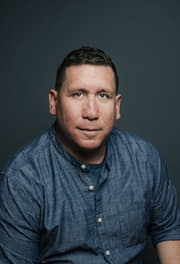


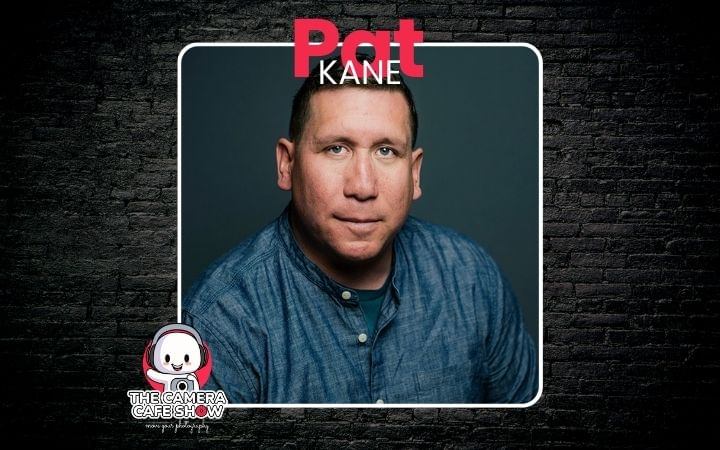
Greetings and welcome back to The Camera Café Show — the podcast where we brew up photography with a purpose, …and sometimes… shaken by the cold, stirred by the stories. I’m your host, Tom Jacob, and behind the scenes are Richard Clark and Tetiana Malovana, keeping everything warm and focused for this talk.
If you caught Part 1 of our conversation with Pat Kane, you already know this is a photographer whose work isn’t just beautiful — it’s vital, especially in a world where conservation isn’t just about nature, but also about us — preserving our cultures, our communities, and our connection to place.
In this second half, we pick up right where we left off — diving into Pat’s National Geographic story, “The Last Trappers”, where we discuss history, past and future of this trade, his latest “Caribou Conservation” project funded by the Jane Goodall Vital Impacts Grant 2024, and why he believes Indigenous storytelling is essential for the North’s future. We also talk about co-founding the Far North Photo Festival in Yellowknive, what it’s like to build platforms for other voices, being a photography mentor to indigenous youth to inspire them…and yes… tales of braving –40°C with five battery packs tucked in your jacket, a camera in hand, and a silent prayer to the shutter gods it keeps on clicking.
So grab your warmest cup, settle in, press the subscribe button on your podcast player, and let’s jump back into the amazing North with Part 2 of my conversation with Pat Kane.
Tom: Let's jump into something different, the trappers. I know last time we talked, it's very fascinating because I think this was the commission for National Geographic?
Pat: That's right. Yeah, it was my first National Geographic story first commission story. and it was, it was interesting. It was awesome. I'm glad that they reached out and put that story together. Yeah.
Tom: So let's talk about a tradition that is slowly disappearing now.
Pat: Yeah.
Tom: What drew you into this story, Pat?
Pat: Well, I think it's, it's an interesting one because I actually did a story about trappers in 2010 2012. It was my first, after I left the magazine that I worked at for seven years, I went freelance I did a story about trappers because was always interested in this activity that seemed like nobody does it anymore, but I was living in a place where a lot of people do it. there I heard there was a community of Yellowknife by the Arctic Circle where it's some of the best fur trappers in the world. So like the best quality, but also the most skilled trappers. so I went up there to work for, I think it was for a Canadian Geographic at the time, I did a, a small little photo essay about this and about their ability to trap first. I was always interested after I did it and I was like, I hope, I hope I get the, an assignment like that again. 'cause I'd love to go back. And then National Geographic contacted me several years later and with this story, and I think the story really is about. Indigenous trappers how that the industry that they work in is fading away. And the reason that it's fading away is because of, you know, advoc advocacy groups that are anti fur, animal cruelty and these kinds of things. And I totally understand it. You know, I, ethical treatment of animals is like I think everybody is in favor of that. But the thing, when you look at it in a really close and a specific part of the world, you start to understand that, oh, maybe it's a little more complicated than should just ban fur trapping and like, know, go back to just synthetic clothing and all this other stuff. so I was really interested in like the. The story from the aspect of the indigenous trappers and how it's impacting them. So I have some friends who, are tr they trap part-time. No, I don't think anyone's really a full-time trapper anymore because the prices of fur are low because of all the, know, anti fur sentiment that's out in the world. There was a time where fur was like the most popular thing ever and people were making really good money. And that's this industry started
Tom: Sad. Mm-hmm.
Pat: you know, back in, you know, when Canada was becoming a country, the Europeans the British, you know, they would come over and they would say, you know what? Fur hats are in style. Beaver hats were all the rage back And so what they did is they would hire indigenous. People to go and to trap the animals because they were the only ones who knew where to go, how to do and how to get it to market. And so that's what happened. That's how the industry actually started, was not from indigenous people, from white people from Euro, from And so, you know, over the years, that an indigenous tradition of trapping because they're just doing it so for so long, over and over again, and they had the expertise. And so now you get to a point in time where that industry is kind of being taken away by white people, by Europeans who are putting bans on things, and even by Americans and Canadians too. But because that industry is unpopular now, I. That they're just gonna say, you know what? We're gonna stop and all the indigenous people that we're doing well are now going to suffer. And so that's seeing. And so a lot of my friends who are trappers, you know, they can't do it full-time. So they do it in the wintertime mostly as a part-time where they make a few dollars to do this. And it's, it's kind of sad because a lot of them want to be out on the land. They love the fresh air that they get. They love the skill that's involved in trapping. It's very hard work. It's like you have to be out in minus, out in minus 50 degrees, setting up these little traps in the, but in the woods. And you're driving a snowmobile and your face is full of snow and it's, it's crazy. almost every day the, for, you know, several months. And so, you know, just watching how hard people work for just a few dollars, it's, it's hardly worth anyone's time to do it. And I think that's what the, you know, anti fur lobby wants is for that to happen. But it's really sad to see this tradition is so rooted start to disappear. it, to me, I think there's an injustice there. It's like, who is, who is, has the moral authority to make these decisions behalf of other people, And you could say that with many industries with like, you know, farming with oil and gas even all these kind of like industries that are, know, I. Harming the environment or animals. There's people on the other end of that are actually, know, living a life, sustaining their themselves, sustaining their families, through that work. And so it's, it's a really interesting dynamic and conversation to have, just to see like how, yeah, how are, who makes these judgment calls and why. I have a friend who traps quite a bit and he lives on a remote little cabin in the bush. And you know, to him it's like, and his wife, you know, this is a way to, know, also reclaim of indigeneity, It's like continuing on these practices so that their children can learn how to do them. so also that they're not how to work in a mine in, you know. Another extractive industry there's not a lot of opportunities for work here
Tom: Yeah. I was going to ask you if there are many other options out there.
Pat: Yeah, I mean, there are not a ton, and especially in like the smaller communities, there's only, know, work for the government. So you're either working for your town or village, or you're working for the territorial government or you're working for the federal government. there's not a lot of industries around, except for diamond mining a big one, and even those are starting to close now. A little bit of tourism, but for the most part, people are, you know, there's not a lot of options. So actually one form of employment that's sustainable rooted to their culture and to the land. Keeps people out of trouble. It keeps people from falling into substance abuse. So it has all these really positive social aspects to it. That I don't think a lot of people who are against fur or any other kind of industry like that really understand, unless you see it, unless you get the stories of the people who are actually doing it. Geographic story, that was the point, was to put a face to, the people that are working on the side of the industry and hopefully, you know, there's some at least some sympathy or empathy for them. And
Tom: Hmm,
Pat: some understanding comes along with that too, to say, know what, maybe we should think a little bit harder the next time we want to just close or to rally around a movement no real impact on, you know, someone who lives in a city, you know, thousands of kilometers from where these practices are actually happening. So it a really interesting story and I got to spend a lot of time on the land, you know, having tea after snowmobiling for several hours in the bush, setting up your trap. There was one point I was walking up to, you know, past my hips in snow, dressed to go set a trap with one of the guys. And man, it's hard work. It's like, I can't believe it. And I wish they made a little more money than they do, but that's how it is too. That's, that's, that's and that's the world. And you can only do so much. And I hope stories like that help, change people's opinions a little bit.
Tom: But at least I suppose they were happy that you came to visit them and had somebody to talk to.
Pat: Oh, for sure. had, I have, I have really good friend now who we had just met kind of doing this and he's an excellent trapper and he's a great guy and you know, he invites me out every once in a while to go to go check a trapper, see what he is up to. So, yeah, it's it's fun and it's great to, for them to like see that, oh, you're not just doing a story that's about let's close the industry or like, let's just talk about fashion or like what, you know, celebrities fur or not wearing fur today. It's really about the people at the ground level and and what they're doing. Yeah.
Tom: This reminds me of, I think you told me that wintertime is the great equalizer there. The fur, you will use it just to survive, not because it's the fashion in other parts of the world.
Pat: absolutely, absolutely. There's a lot of, people not just indigenous, you know, or Eurocentric, as well that wear fur because it's, it's, it's really warm. It works, know, there are gloves, moccasins like jackets and hoods that are all come from fur just because the quality is really great and it keeps you warm. And some of this synthetic stuff out there, it's, it's, you know, it's terrible. It doesn't work. And so you can see why people, why people love it. And also it's beautiful. It looks amazing and, you know, the meat from the animal goes to feed. know, either people or dogs in communities or, and things like that. So the meat is used and the hides are used for clothing, and that's how it's always been. glad that people, at least in the north and other arctic regions still do it because it's not just fashion, it's, it's very functional. Yeah.
Tom: To keep you warm and your camera, I'm just going to drop in a bit of gear here Pat,
Pat: Yes.
Tom: You shot Nikon before you moved to Fuji. Your camera ever hesitated in minus 50?
Pat: Yeah, it did, especially on that trapping story. 'cause I was out minus 50 and we're in the winds and on a snowmobile and we're, it's blowing and it's, it's crazy. so it only worked. I was using Nikon at the time Nikon eight 50, the battery, the batteries on those are amazing. They work great. That's why I really love using Nikon in the winter. it stopped, the shutter started to slow down after maybe hour, an hour and a half, two hours. you're on the land when you're trapping maybe for four hours. about halfway through, that's when your shutter starts to really go really slow. So you just gotta keep it warm. I put my camera in my parka
Tom: Mm-hmm.
Pat: the wind doesn't get into it and the elements and also the snow. But yeah, Nikon batteries are really good, but it started to seize up. After about two hours. And the Fuji, I haven't really tried, too much yet in the harsh cold, but I'm interested to see how long everything lasts there too.
Tom: The batteries, you keep them warm also I suppose?
Pat: Yeah, so the batteries, I'll keep, I'll, I'll wrap them in. They're like little, little pocket heaters. I dunno how to describe it. You know, the ones that you like,
Tom: Yeah.
Pat: so you put inside your glove. So I'll wrap the batteries in those and then put them in my inside my parka pocket. They'll always be, they'll always be pretty warm as well. and then for, I put those on my camera, the outside of the camera too, just while I'm holding it. keep it a little bit warm too. But it's funny when you, know, you look at your camera after four hours of being in that cold and your camera, which was black before, is now white because it's so frozen. kind of funny. So I always have two cameras on me when I'm, when I'm doing that kind of stuff, just in case
Tom: And any precautions for the lenses, or they are fine outside?
Pat: the lenses are good. You just have to be careful with the condensation. from cold to warm, so if you go into a cabin or a tapey you just gotta be mindful of that. Usually I'll leave the camera outside and I'll just take the battery out then switch it when I'm inside. But if I have to go inside, I'll put plastic over it just to keep it from getting condensed and then water gets into it and it could be a of a mess if you're not careful. but other than that, you know, people always ask, you know, how do you keep warm? Or like, what do I bring? How do you keep your camera from seizing up? And the truth is, you're not outside for more than, I mean, four hours is a long time to be outside in that cold. Really outside for more than an hour Because it's, it's dangerous one. And it's uncomfortable. And so people would rather be inside by a nice warm fire having coffee or tea instead of being outside for that long. But again, you're not outside for that long just because it's it could get, it could get kinda sketchy if you are, So you gotta be careful.
Tom: And of course you don't want to show this all seasoned weather trapper that you are called while he's without gloves doing something outside.
Pat: Oh, that's right. I did a, I was using a drone during that shoot when that National Geographic and it was minus 40 or so, and I had to take my gloves off because, you know, to touch the screen or whatever. And I didn't have touchscreen gloves. And after about 30 seconds, my fingertips were just almost purple. I. It was so cold. I was like, I gotta put this, I gotta figure this out. So
Tom: Mm.
Pat: put on gloves pretty quick after that. Yeah,
Tom: The switch to Fuji is because it's smaller, it's lighter? It's more your style now?
Pat: yeah. I actually, I bought the Fuji an XT four when I was traveling. So me and my wife traveled throughout Europe and Southeast Asia for about seven months, years ago. And I didn't wanna bring my heavy Nikon, so I bought the Fuji XT four, and I fell in love with it. It's really just small. unassuming the colors I really like. They're not, they're not as I As Nikon. So it's a little more, it feels a little more like film. In a way it looks a little more like film and you have to, it's slower too, so you have to like kind of take your time a little bit more, which I find kind of suits how I, how I shoot anyway. I started to really appreciate that. And the more I used it, know, the more I was like, I think I'll go in this direction with Fuji. so now I bought an XT five, which is it's essentially the same camera except the megapixel is like almost double. It's a 42 megapixel as opposed to a 26. so it's, it's a great camera. I really love it. And it's small and it's a mirrorless too, so you can do things like, you know, put the shutter on silent, which is very, for me. Especially if I'm in like a intimate moment or wildlife is around or that kind of thing. big, you know. shutter that a Nikon has or another DSLR. but is really, really great. I really I'd like to get something heavier at some point, but I'm, I'm happy with using what I have and it, you know, I'm shooting for, know, big magazines and newspapers with that camera, and it's totally fine. So people who are like the most expensive, camera, you don't.
Tom: No.
Pat: Yeah.
Tom: You are making excellent work with this camera. Pat,
Pat: Thank you.
Tom: The reason why I found you, the Caribou Conservation Project, you got the Jane Goodall grant by Vital Impacts, and I'm going to throw this just quick inside today. I spoke to Ami Vitale and I could book her for December because she says, sorry, sorry. I'm so very busy. She's always doing something. So in December she will be on the podcast. Wonderful. Yeah.
Pat: Ami is the best. She the nicest person you'll ever meet. And I mean obviously like one of the best photographers in the world. But she is so gracious with her time and, you know, I consider her a mentor and, you know, we've met a few times in person and she is so lovely and wonderful. And yeah, this these grants that she is, you know, giving out to people is so helpful and I'm so happy that I'm recipient of one of them.
Tom: Talk me quick about this, this project path.
Pat: So it's an environmental photography grant and. This is a story that I've been wanting to kind of work on for several years. In the Northwest Territories there's a herd of caribou called the Bathhurst Caribou. It's like a very specific caribou like a, an area that's very specific. It's close to where I live, around Yellowknife and a little bit north. So in the, I think it was the 1990s, the population of this herd was half a million, so 500,000 or so. And today there's less than 6,000. So there's been a population decline I think like 98% or more. And it's one biggest declines of a species that people have recognized in like decades. And, you know, it's, I think it's an endangered species now, and it might be a critically endangered species if it continues in this, direction. so. I think it was 2015. A lot of the communities or the government, indigenous governments said, you know what, we're not going to hunt the Bathurst caribou anymore we want the population to go up. But the population hasn't been going up, and there's scientists and researchers that are not sure what is going on. what I can gather is they think it's a mix of a bunch of factors for this decline. One is climate change. is mining and resources. The other one is the increase in predators like wolves and grizzly bears. the other one is illegal hunting and also over hunting of other caribou around, so they think that it's a combination of these things of why that's happening, but there's no real, like, smoking gun or like, there's no one thing that is, that is causing this, that people know of yet. So there's a group of indigenous researchers that go out every year now and they study the caribou and they are using a mix of traditional indigenous ways of studying and also western science. So they'll, go out by, you fly into this little camp on the barren lands and the barren lands like the tundra where trees. There's just water and, and lakes around. So we'll fly there, up a camp, and then by boat around, you know, these big lakes. is called Quinto Lake. So you'll boat around there and the researchers will get out and walk and there's no, there's no helicopters, there's no tags, there's no, you know, what would do is they would get in a helicopter, go and chase the caribou, you know, shoot them to you know, put them to sleep with a and then go down. They would put a tag or a collar on them, and then they would do studies from there. That still happens, but the indigenous researchers don't do that. What they do is they say they do as the elders do, or they do as hunters do. So they actually walk the landscape for kilometers and kilometers over Esker and outcrops and hills and until they see caribou. And then when they see caribou, the caribou. They'll look at signs of, you know, is it a male or a female? What is the health condition based on traditional techniques that I don't know. But they do, like, you know, they can tell if a Carib is healthy just by looking at it for, you or for example, or how it's walking. So they'll look at health signs and then along the way they'll also find, you know, maybe artifacts or trails or other, you know, I. Other things that can help add to this collection of evidence that they put together and at the end of the year they'll put a report and be like, we counted this many caribou. Here's what the health is, here's what we think is happening et cetera, et cetera. they started doing this in 2016, I think 2016 or 2017. now this is their year, or sorry, ninth year that they'll be doing this. And it's an amazing program and the, you know, they're only now starting to get real results. It'll probably take a few more years to get tangible scientific data from it. so that program is kind of what I'm covering, and the way, I'm, I'm interviewing photographing people in these communities. Just ask them what their connection to caribou is. Because caribou is really, it's about food for one thing, but it's also about, you know, the spiritual connection that people have to that they've lived alongside for thousands of years how this decline is impacting their way of life, their culture. You know, there are kids who have never seen a caribou before, which in a place where there used to be caribou, you know, running through the landscape right outside people's houses. so people's relationship with caribou. And so I'm fascinated to see how that is impacting them and what they think is the way forward on, you know, helping to the population back up as well.
Tom: Because the project is almost as important about caribou as about cultural sur survival, no?
Pat: Yeah, for sure. I think actually this project is less about wildlife more about people.
Tom: Hmm,
Pat: of my work is like that. Like people ask me if I'm a wildlife photographer, a landscape photographer, I say I'm, I'm neither of those. I'm I'm a people photographer I am interested in people's relationship to landscape and wildlife. actually a terrible wildlife photographer. I don't have the equipment, I don't know where to go. Landscapes is a little bit easier because at least it doesn't move. But I'm also not great at that. I do excel in telling stories about people's connection. To both of things, and that's what this is mostly about, I think, how are they're being impacted by this decline. what does it look like? How are people getting food now? What are some of the problems that people are running into? for example, there's a road that you can only access in the wintertime to drive to the diamond mines. And the diamond mines use these road to bring equipment. so it's, but you know, every ever seen Ice Road truckers, the
Tom: Yeah.
Pat: it's kinda like that. So it's all these big trucks taking things along the ice to the mines, but indigenous people can access those roads to go hunting. And so what we're seeing now is a lot of people, using it and a lot of caribou. Not a lot of them are Bathurst, some of them are, and those are, that's illegal. but there's also a lot of wastage of the other herds around and. People are like, that's not good either. So there's a big, a bit of a crisis of like, you know, this, the diamond mind isn't probably the problem for a lot of that. It's the access to the diamond minds that are creating this issue of over hunting and wastage. So there's some poaching and things like that need to be figured out. And so that'll be part of the project too is, you know, showing people's In both good and bad ways as well.
Tom: If I do a project in Spain, I can be sure that if I travel one day, two days, they will still speak Spanish, but in your case, they will speak another language. So let's say you travel two, three days to another village, another town. You use a local guide there, or a fixer or somebody goes with you? Or are people very open when you arrive there with your camera alone?
Pat: yeah. Yeah, I think so. I think one reason is because I've lived here a long time, like I said, going to another community is just kind of like going to another part of town. It's like another neighborhood, even though it's far away
So people know, people know who I am for the most part. If people don't know me, then I'm usually with someone, a friend in the community or a fixer or a That will introduce me to people. And it's not a lot of people don't speak English, so almost everybody does. Even like the elders will speak a little bit of English. There are some that don't speak English at all, and they're very old, like a lot of those are in their eighties or nineties. but a lot of people are bilingual, so they'll, they'll languages. But yeah, I think to your point, it's like it's to be an outsider. Like I even consider myself an outsider. So to be an outsider to go into any community, I always see it as a big privilege. And it's a way to, I don't try to tell people's stories. I just try to like amplify the stories that are important to them of the time. So I'm kind of there as like at their service in a way. That's how I see it. Anyway, I'm there to. a service, and my service is storytelling through pictures. Sometimes that's hard to get across to people. They think that I work for the newspaper or I work for CBC or something like that. But once I explain to people and like, no, I'm doing like a project and it's gonna be like an art project,
Tom: Hmm,
Pat: oh, okay, I understand. I understand that a little bit better. but people are so giving of their and so proud of where they live, that I find it quite easy to be able to get access, first of all, and to tell stories, because I'm not coming in there with like an agenda of like, know, as a reporter or something like that. Right? It's more, my projects are very long term usually. and it's, it's about an issue. It's not really about a specific. Person or event, normally it's, it's about a bigger picture kind of idea. And so people are really open and I always tell people, you know, all you have to do to get access to communities that you're not part of is to bring food and to be very kind to shake people's hands and to be curious and not to be judgemental, not to You know, seen a lot of people that, know, especially like, you know, reporters or writers from say New York or Toronto or something, their way of thinking is so different people. In the north that it's almost off-putting. It's like you need to relax, you need to chill out, you need to have a cup of coffee and we need to talk before we do anything. kind of what I love about living in the north. And that's why I think I excel there too, is know, that kind of ease and let's just like be friends first talk about things and then maybe we'll make some pictures. And I find that comes across hopefully in my work eventually. But you know, I hope that they comfortable with giving time and their stories.
Tom: it surely comes across in your work because I see all the people very relaxed. It's like, you know everybody that you are making pictures of Pat. I thought first you were dazzling down with your cooking skills, but you're just a very good people person.
Pat: Better, better than that, than cooking for sure!
Tom: What I'm also amazed by is that you are mentoring young indigenous people that have an interest in photography, and you do this all for free.
Pat: Yep.
Tom: What's, what's the best part for you for doing this?
Pat: Oh, I think it's, it's just, you know, I've been given a lot of opportunities living in the north. I mean, I've, like, I was just saying, people are so forthcoming and giving me their stories and trusting me, to do that, you know, I think this is just something we all should do anyway, is like you get to a certain point in your career, maybe it's time to like look at the people that are next in line or that want to do the same thing or that have interest in it. And so anytime somebody is interested in photography. And they want to learn or they wanna reach out, I am totally happy to do that. And so that's what I've done for the last several years, is I kind of keep it open. It's not a very formal kind of thing. It's not like the world press ju work where I need to like give them a project and they have to apply or anything like that. It's very casual which is very northern, I must say. It's, it's, there's no yeah, there's no format But I am mentoring one person right now who is an amazing filmmaker and photographer, and he is be doing his first story for The Globe and Mail, which is the national newspaper in Canada. And he is just starting out and it's, it'll be a big photo essay and I'm really proud of him. And, you know, I'm there to just like bounce ideas off how to, he asked me how to write a pitch, so I How to think about story, how to, you know, what's an angle that would be unique to him, but the newspaper that he is working for. those kinds of things. Some of it's technical, some of it is just bouncing ideas off and, hanging out. And it's, it's nice to have, you know, friends too that are the same thing and interested in those things too. So, I just it's a, something everybody should think about doing. You know, if people aren't with that's fine too, but I just think it's a, it's a bit of a duty. And one that I enjoy doing to give back because there's not a lot of options where I live. And I think it's important for people to be represented because, you know, that doesn't often either. The stories that are told are usually from. Someone who doesn't live in the north telling a story about the north. And I think that's like throughout history, that's kind of what happened. I think now it's time for people who live in remote marginalized communities to tell their own stories,
Tom: Hmm,
Pat: the world. And hopefully I can just be a small part of that.
Tom: And another good thing about this path is that not only you're teaching somebody maybe a new profession, but you're also gathering a lot of information. You live in a very big country and there is almost, there's only so much things you can document. So if you help people documenting other things, you can keep all this material before traditions get lost. And at least we have this. So this I find really, really interesting.
Pat: Absolutely. That's totally, totally true. Like I can't, can't document everything, nor do I feel like I should document everything. There's a lot of stories that I think only someone from a specific community and should document, and so I try to encourage people to think like, you don't need to leave your, your community to tell great stories. you live is so fascinating. think about it. People from around the world come to where you live tell stories and then they go back home. Like, why do you think that Do because there's no stories in your community? No. It's because you need to be the person to do that. And so I hope that people can start to realize that and to, and to actually do it become the voices of their, of their own people.
Tom: Yeah. And this is perfect. Then we walk into the last thing I wanted to talk with you, The Far North Photo Festival. You're a co-founder, you told me that it's not really a festival for photographers, it's made for the community.
Pat: Yeah, I think it is. The, so the far North photo festival, we started it in 2018, was the first year that we did it. And it was me and a friend, my friend Amanda Anon, who's another wonderful yellow knife photographer. We just thought, you know, there's no, there's no opportunity, there's no access to festivals unless you travel to go to one I've been to many and, you know, New York and Toronto and all over the place, to go to these festivals and they're really wonderful I think it's a really great platform for people to get their work shown. And we wanted to start a festival in the north that was only about the north, the Arctic for, and it's by people from the Arctic as well. So we had, our rule is, we don't have anybody who is not from the Arctic, to submit. for us. And it's wonderful to people feel encouraged that they have a space they can in their photography and it becomes part of an exhibit. So we kind of have two, separate galleries. One gallery is for kind of professional and more curated photographers, more established photographers that. board curates. And so we try to find one photographer every year to represent every region across the Arctic.
Tom: Right.
Pat: So we have one from Alaska, Yukon, Northwest Territories, Nunavut, Greenland Sweden, Finland, Norway, et cetera. then we have another gallery, which is an open gallery. the open is for anybody from the north of Canada, Northwest Territories in Nunavut. Even if you take an iPhone photo, you can send it in and it. And we, our exhibit is in a castle made of snow that happens every year. And it's beautiful. It's like white walls and photos. And then you have, you know. People like Acacia Johnson, Geographic photographer. Nunavut this year. then beside her, you have a photo by some kid from Yellowknife who took an iPhone picture and they go up and look at their picture and they're standing beside Acacia Johnson. And it's like, that's where magic happens. it's like, you know, it's almost like playing, you know, in the Premier League or, and it's like, you're allowed, like kids are in footprint of it as well. Right? Or adults or people. Because it's not like a festival where other photographers come from around the world and. just like are grumpy about the industry and talk about, know, portfolios and editors and all that kind of stuff. We really make it so that people from schools elders, youth teachers, every walk of life will be part of this, kind of celebration. And we do have some really amazing people that we bring every year, and they're kind of like our keynote speakers and just a wonderful, you know, group getting together. And the last one we had in February, we had two people from National Geographic Society Cheryl Zuck Ola Keisha Johnson, Amber Bracken, photo winner, and Kely Yan, who's a National Geographic photographer. And they're like. This is amazing. Like we, went to the castle, the exhibit, they did a night where they presented their work the people listening are not photographers, they're just like part of the community. And so the people in the community are understanding documentary photography is and what it takes to work at that level where you're one of the best in the world. how awesome is that? You get see that in your hometown and you don't have to travel to Washington York City to meet these people. And so that's why I think it's really special and it's just a, it's a good It's everyone has fun and the people, the keynotes have fun because they've never been there. Usually time still. so I, you know, I hope you come one day and see it.
Tom: Yes, because the next one, 2027.
Pat: That's right. We do it every two years now.
Tom: Okay,
Pat: We started to do it every year, but then it became too much because we're all, everyone is so busy. So we said, you know what, let's make it, every two years and give ourselves a break and we can think about more longer term things. So yeah, it's every two years, which is which is really nice. It make, keeps us excited all the time.
Tom: I will make it over. So this is more like a street festival. Will there be also food?
Pat: There will be food. Yeah. Yeah.
Tom: Perfect.
Pat: there's always food, there's always wine, there's always everything. Whatever you need.
Tom: Okay.
Pat: There also might be a jump in the lake. we have a friend who has a, you know, those cold plunges,
Tom: Yes.
Pat: so he has saunas then we all jump in the water and we freeze for a minute, and then we get back in the sauna. We did this last year and it was so fun. Everyone was like. You know, the people from National Geographic, they had never been north you know, Ottawa. I think they'd never been to the Arctic. And they're just like, I don't know if I can do it. They did it and they,
Tom: they did?
Pat: The were crazy about it.
Tom: Pat, to round this up, talking about food. Where in the world have you eaten the best pizza?
Pat: The best pizza. There's no good pizza in the north. The best pizza is in my hometown in Ontario. I wish we had good pizza, but we'd also, we have, we have other stuff. That's good. like I was saying, we. is very international. There's a lot of diversity. A lot of East Indian food. a lot of Japanese Chinese. We have three Vietnamese restaurants. People shocked to learn that. We have a Korean restaurant. and then we have, you know, indigenous food too. dry meat and caribou and moose and fish. Lots of fish. if you like fish, you'll love it here. but yeah, we have, we're very lucky to have, you know, a diversity of little bit of everything. The pizza is not the best, but, , what can you do? I make my own.
Tom: I'm disappointed you don't have one there to show me!
Pat: I dropped the ball on that one, but one day when you, when you come visit, I'll have it ready. How's that?
Tom: Great, we'll have a pizza.
Pat, you remember we spoke in the beginning of the podcast about your mother that passed away. You think in a way you're making your mother proud now with all the projects you are doing?
Pat: Oh, I hope so. I hope so. I mean, when I, when she passed away, I actually wrote a letter her and I said, you know, I hope I can go on to make you proud. And so a lot of what I do is because of her, to be honest with you. A lot of it is I take, I carry her with me, you know, on every story that I do. Every time I'm nervous about an assignment or I get a call from publication, national Geographic or the New York Times, you still like, oh, okay, am I gonna screw this up? I always know that my mom is with me. I carry her give me strength able to do it because, you know, I, done a lot in my career, but I still feel like I have so much more to say so many more things to do that I feel like I'm just getting started to with you. And I'll always carry mom's vision. We, know, we kind of have a very similar way of seeing the world. I can see it in her artwork. And I can see that the composition is similar to mine and these things too. So I know that she is her work has influenced my work and
Tom: Yeah, sure.
Pat: can carry it forward. And yeah, I think I am making her proud. And I hope I'm making, you know, family, my wife, my friends, and the communities I work in proud too.
Tom: I think you're doing a wonderful job, Pat. I really enjoy talking to you and I really enjoy seeing your work,
Pat: Thank you.
Tom: Now, it's time to say that magic word. Thank you. In your language.
Pat: Jay, that means thank you and Algonquin.
Tom: Beautiful. Pat, it's been a pleasure talking to you. Again, I really enjoyed and I hope, and I hope that we can catch up in real life. Let's see when we can make this happen. If you come to Spain, or if me and Rich, we can make it to the photo festival, that would be awesome.
Pat: That would be amazing.
Tom: Yes it would be
Pat: We do two meetups. You come here and I'll go there. Yeah, absolutely. I would love to get to Spain, so it's on our list, so don't be surprised if I take you up on that offer.
Tom: No problem.
Pat: Thank you so much for having me, Tom. It's it's been great to talk to you.
Tom: It's been, yes, it's been wonderful talking about all your projects. A bit of life and a bit of photography, but have a great day still, and we see each other soon around.
Pat: Thank you.
Tom: Okay, bye.
Pat: Bye-bye.
And that’s a wrap for Part 2 — and for our full journey North with Pat Kane. If you missed Part 1, go back and start there — trust me, it’s worth hearing the whole story.
You can see more of Pat’s work and projects on his website and follow him on social media — we’ve linked everything in the episode description. While you’re at it, check out his website for other amazing projects we didn’t had time to talk about, and mark in your 2027 calendar, the Far North Photo Festival for an amazing experience.
If you enjoyed this two-part episode, make sure to follow The Camera Café Show on your favorite podcast app, so you don’t miss what’s coming next. Subscribe to our newsletter and if you’re listening somewhere warmer than –40°C… raise a cup to Pat’s sometimes frozen camera and the stories he’s brought us. ❄️📸
Thanks for joining us today here, we truly hope you enjoyed it and maybe got an extra inspiration to go out, move your photography and make amazing stories — I see you next time here on the camera café show for another wonderful talk with another wonderful photographer. Adios!