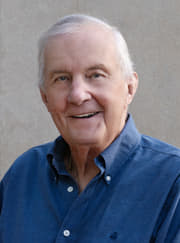


Tom: Good evening and welcome on the podcast. Today, everyone, we have a man who's traveled around the world for volcanoes, astronauts, some remote cultures, places that we can only read about, and somehow he lived long enough to tell us a few stories today. Bob, it's really great to see you and welcome to the show.
Bob: Thank you for inviting me. It's great to be here.
Tom: Before we start our photography talk, Bob, how would you describe this current chapter of your life being now a grandfather? What's the best part of it?
Bob: I think the best part of it is that when you get up in the morning and you can decide what you wanna do you are very close to all of your grandchildren and your children. I speak to them often. We can now in this technological times I can do FaceTimes and other things with them. We do TikTok and all of that. So we're really closer, maybe closer than we were. I just Last night with , people from the city and there were 41 of us on a on a video call. you couldn't get 41 people together 20 years ago. It would've been very difficult. And as we go through some of my pictures today, we'll talk about the fact with no GPS and no wifi and no phones, It was at that particular time.
Tom: You live a life that involves a lot of movement, be it travels or places. What means home for you today?
Bob: That's the interesting part. I'm chatted by my children and grandchildren because I eat pretty much the same breakfast every morning when I'm here in Annapolis, Maryland. But the thing is that when I was on the road, I didn't have that choice. I was in a hotel or some staying with someone. I didn't get to place the pictures on the wall. I didn't get to choose the food usually. So you're, when you have a nest, I call this actually my wifi is called nap Town, which is Annapolis Nap Town Nest. And because this is the Nest, I have.
Tom: And before photography entered the picture, Bob, what was life for you like a teenager, what you were drawn?
Bob: I did a lot of interesting things. I lived in a semi-rural area. It was a suburb, but a lot of the area wasn't developed and there were slews and little depressions were muskrat and mink were, so in the wintertime I had a trap line and I would go out on the trap line after school, sometimes during school, but don't tell my mother that. But I'd go out on the trap line and collect these. And then at the end of the year I gathered them up. The pelts. sold them Sears and Sears And Robuck at that time was buying pelts. And that's a, the big manufacturer in the us and at the At the end of the year when I sold them in today's dollars, I would make like about a thousand dollars. $1,200 a year. Yeah.
Tom: And what you bought from your thousand dollars.
Bob: more traps. No, actually what the interesting part was is that I wasn't very good student. I was a good student, but I didn't apply myself in high school, so I just barely made it outta high school. that I was much more interested in many other things. By the time I was in them, my mid twenties, late twenties, I figured out I had spent about two years. Eddie in the night Outdoors somewhere?
Tom: And you remember Bob when photography first entered your life?
Bob: Yes, I do. I went to Korea in the Army. Remember I wasn't a very good student, so I joined the Army for a while to try to figure out what I was going to do. I went to Korea, and when I was in Korea at the local exchange there they were selling a camera. the camera was a very interesting one. It was a Japanese camera that was made by Cannon. It was called a cant. And so I, it was very inexpensive there, so I bought one and I started fooling around with it. I had taken some pictures. I didn't take pictures, but I had been involved in a dark room with my parents. I took Negatives and it had a dark room in the ease of our house, and I ruined all of their negatives by my printing 'em. But anyway, that was a lot of fun. It was not actually photography at that point, but when I was in Korea, I would take the weekends and go around and photograph Korean life. And I made a couple of interesting pictures and I entered them in a army photo contest and I won a lot of prizes, I thought this is pretty interesting. Then they And they went into all service contest and I won several of 'em there too as well. So I got interested in the photography side. Worked in with some of the other soldiers to help them develop film and things like that. So I had an interest in photography. But I went back to school and I went into journalism instead of, Photographer per se. I finally got my degree in English my undergrad degree. then I went to a newspaper that was nearby that just so happened to be a really great photographic newspaper at the time. They were one of the first offset newspapers. And so the printing was very good and the photo staff was very good. I started hanging out in a dark room with that internship. when I went to graduate school at the University of Missouri in Columbia. to the dean I came here to major in journalism, but I think it's gonna be photojournalism. He said that's really when I changed and started to be a photographer rather a journalist per se. I'm still a journalist, but a photojournalist. I noticed that you interviewed Sarah Lean recently and, Have lunch. have lunch with him in Maine when I go up there every year. And we sit there at Bill Maher and Sarah and We have lunch and we toast and we say I guess it's three college photographers of the year all having lunch together, because also, and Omar was as well. So funny for us to reminisce on that. course that helps you get the jobs after. After school, if you're, have that at least something behind your name.
Tom: This was also the way you got into National Geographic with winning death.
Bob: Yes and no. I want it. And then of course, there are many people that were visiting the National Geographic from Life and geographic who were visiting the University of Missouri. So we had visiting firemen and maybe once a week that would drop by and talk to us. And so they got to know who I was. After the, my Master's program, I went to the Geographic and met with Bob Yoka and said, hey here's my stuff. And what do you think? And he apologized. And I looked at trying to figure out why he was apologizing and what he said was I don't have any staff positions open at this time, but I can offer you a contract position. That's all I can offer you. Hey, that was a job. said, okay. So after the next semester of school, I went to the Geographic. So I never went to a newspaper anywhere. I went straight to, a magazine. And that was really tough because man, you can imagine I had only shot black and white 'cause that's all I could forward in school. Now we're all in color. We've got all kinds of issues with ISOs. 'cause they were very low at the time, when I actually started in photography. The ISO for Kodachrome was 25, so was pretty slow. didn't have light meters in the cameras, we didn't have motor drives. It was it was not archaic, but I You had to be a bit of a bit of a mechanic to be able to run the cameras at that point.
Tom: You liked working with Koda Chrome. Bob,
Bob: I did up until Fuji Chrome came out, when Fuji Chrome came out the color of course was much more brilliant than it was with Kodachrome or Ectochrome. And many of the geographic photographers started moving toward Fuji
Tom: what you,
Bob: and, the people at Kodak couldn't believe it. They said 'cause we used to get whole lots of film. In other words, an entire group of film would come and then they would allow it as, with any kind of film, even if it's in the cassettes or it's, it is always still degrading a And of course, once you take the picture, it's starting to degrade even a little bit more. So they would try to pick a sweet point where they would put the film out to the photographers. So you would get it in packs of 30 rolls of 35 millimeter in a pack. So when you went off to an assignment, you take maybe about eight or nine of those packs of Kodachrome alone, plus Ectochrome and some other special films. So you had probably two cases just full of film. That's all. It Very interesting.
Tom: Very interesting and very difficult to travel this way, I think. No, you had to bring your own, you brought your own film.
Bob: Yeah. You brought your own film, you brought generally I would travel. If it was a long assignment, I would travel with five cameras. Five Come back one that worked because they'd all get hung up. Some or some of up in the wa in the water or something like that, and lost them. It was very interesting when digital came out. What happens now? I generally just go out with one camera. Hey. What's the deal? It's not gonna break, but those mechanical cameras broke a lot.
Tom: It's not going to break Bob, but anyway, you are not a meter away from active volcanoes nowadays,
Bob: yeah, that's true. You know that Journalist, that the interesting part because volcanoes and things like that's a lot of luck. I had an assignment on the big island of Hawaii so I was going to do a story on all of the big island of Hawaii who knew that the volcano at that time was gonna go off. That was just luck that it
Tom: You wait, Bob, because we will come we will come back to this picture anyway. Later.
Bob: okay, I.
Tom: Let's set a stage, a moment, Bob, , you went to National Geographic somewhere late sixties. You worked for some years as a contract photographer, and then you became a staff photographer somewhere around there and Yeah.
Bob: Yeah. What happened was is that all of a sudden one of the staff photographers made an announcement that he was going to retire at a certain particular time like in six months. as soon as that announcement came out, I said, that's my job. True after he retired, there was a slot for a photographer at that time. I think we had photographers, so there weren't very many of At that point. That's all they had slotted for photographers. They had freelancers of course, but was as far as the staffers were concerned. And one of my friends who's a photographer, Bruce Dale. Was at that period too. He was hired a year or two before I was. And Bruce has a very funny line. He says when I came to the Geographic, there was photographers and one vice president, and now there's 17 vice presidents and one photographer because looked at all of our benefits that we had, as far as health and all 401k, all of those different benefits. And they decided that, they had freelance photographers doing these jobs, it would be a lot cheaper. I More inexpensive. That's not the only reason. I think also we were generalists. We took on everything. I did everything from commodities to states, to nations to events like Apollo 11. they pick a photographer that has one specific idea and has been very good at that particular location and knows it well, which gives them a real advantage as far as what they produce. But on the other hand, for the photographer, let's say it's a, let's say it's a story on Lebanon. How often are they gonna do another story on Lebanon? That photographer as a freelancer can't guarantee that the geographic is gonna keep him employed.
Tom: Yeah. Yeah. And what was the culture like in those days at National Geographic, especially among photographers? Both.
Bob: Obviously you were in competition with them. But not really. The nice part was that we would meet at the end of the year every year in January and have a our seminar that we all got together, and we still do that now with the Photo Society. That's our group. Now, part is that being with those people, everyone understands what you're going through. You don't have to explain it In other words, they know how difficult it is out there and what you're going through and you understand that's what they're going through as well. And so you have that kind of bond. Between you. The only real competition was in after the stories were done and they went into the layout and design area they were slotted for a particular number of pages. So let's say you did a On the element Mercury, and it would be slotted for 26 pages or 23 pages in the magazine. They figured that each page costs 'em about $135,000 to produce. It was an expensive proposition to add pages to your story. 'cause where were they gonna come from? Come from somebody else's story. So when all of a sudden they said your story is better than we thought, and we're gonna add four more pages. that was great for you. But it wasn't so great for the other photographers in that particular issue. And sometimes the smaller stories got lost because of that. So anyway, Never had the problem where I lost pages. That was good. Good for me anyway,
Tom: You ever had a moment early on in your career there, Bob, that you say I'm not ready for this assignment, but you had to deliver it anyway.
Bob: It was the other way around. I was ready for the assignments, but the problem was, is that they would pick places that had a put it this way. At that particular point in the late sixties, they were going undergoing a real problem with who the National Geographic was. We did a story in 1970 on pollution, and the chairman of the board said, that's the end of the geographic. We shouldn't be doing those kinds of stories. So I was doing a story on Puerto Rico they wanted a fun in the Sun, Puerto Rico story, and I was doing a report on Puerto Rico the issue was, is that I was having a hard time finding any positive things going on there. They had Operation Bootstraps were the mostly pharmaceutical companies could come down and they get a 10 year tax break if they would, be in Puerto Rico. They liked it because they had Puerto Rican sorting pills, which was a kind of a mindless job, but they could get it really cheap in Puerto Rico. So they did that. The sugarcane there was a group there, it was there from Hawaii. And I said I, came to take some pictures of operation here. they said we're leaving. I said, why is that? And they said we're a mechanized operation, and the Puerto Ricans want workers in the cane fields cutting cane. They wanna hire a lot of people, and we're not gonna do that. So we're leaving. after a while I had some problems doing it. When the layouts came we didn't do a layout right away. The editor and the and the my boss, Bob Ilka looked at my pictures and then Bob Ilka sent me a memo and the memo said, we looked at your pictures of Puerto Rico today, and the editor said, the only reason the only way we would run a an article on Puerto Rico is if they dropped a bomb on it tomorrow. He said if you have the problem that you had with Puerto Rico on your next assignment, you let me know and I'll sign somebody else. So I said, whoa, That was gonna be interesting. the best part for me was when we were putting some of the layout together of Puerto Rico, this picture editor Brian Hodgson came to me, very interesting man. he said, you didn't like Puerto Rico very much did you? And I said I liked it well, but the problem is I couldn't find anything that I could report on that was positive situation. He said the next time that happens, he said, go photograph the people. If you photograph the people and you do well, you'll find that the dignity of man in those pictures. And that's really what you want to produce on all your stories, not just Puerto Rico. So that was Awfully great piece of advice. The picture editors at the geographic are secret sauce. You know that, don't you?
Tom: Yeah. Yeah. Yeah. Yeah.
Bob: The reason that they're the secret sauce is that, they're your eyes and ears. When Doing a film and you don't get to see the picture. They get to see it, and then they talk to you about it. And that can be good and bad. For instance, we talked about that Hawaii picture and the Hawaii eruption. And the deal was, is that after a while, the picture editor said to me. Go shoot something else. We got enough pictures of the volcano going off and I'm there thinking, Hey, this doesn't happen very often. I'm gonna be here a lot. Fortunately you could almost drive to it so it wasn't an issue that would take, it took me away from the rest of the story.
Tom: But we always hear that before in National Geographic, you got maybe three or four months for an assignment. Did it affect your personal life at that stage, Bob or, I think to remember you took your wife with you on the assignments.
Bob: Yeah. At first what happened was I took my wife with me but we didn't have any kids. And then we had one kid and we took the, that one on assignment, I generally, we had a backpack and we'd put the And we had a van that we had a little playpen in the back of the van so that the kid could be there. The issue was, is that we would be out, as you pointed out, three to four months. And then what happened was, is that all of a sudden the kids were starting school and they couldn't go with me. and my wife and kids couldn't go with me at that point. So for the first maybe seven years, they went with me eight years. But then after a while I said it looks like I'm gonna have to stop. 'cause I came home one time and one of my kids looked up at me and she didn't recognize me and she put her thumb in her mouth and turned away. thought, uhoh this is, this gotta stop. So I talked to my, the editor his name was Bill Garrett. I said I've been working in layout while I haven't been going out, I've been doing that when I'm not working in a, in the field as a photographer, I said I'm thinking about coming in and being the assistant director of layout and design. But the problem is that it doesn't, it's not like being a photographer. he said here's the thing. There are generals and there are corporals. He said, when you're a photographer in the field, you're a corporal and you can do what you want. When you're a general, you have to take a much more overlooking view overseeing the entire operation. I did come inside and then fortunately for me, six months later. My boss quit. So I became the director of layout and design. and the really interesting part was that I got to, really know all of the photographers and what they were doing and all of that. But it was secondary work. and I missed the primary work. work. Nobody. When you were with the geographic in the field, nobody told you what pictures to take. Nobody. So you had to figure out the story yourself. And, A lot of times what you figured out was a real surprise to them. They had no idea that was happening. Course the challenge was when you walked out of Bob Gil's office, you, he gave you that assignment and then you had to 35 blank pages that you're gonna fill with some special pictures. Good Good luck as a journalist,
Tom: but you did amazing, Bob, because , we told , we are going to talk about five pictures, the backstory to it. Then you send me your amazing two volume book and I had a very difficult time to pick only five pictures there, so you did very well.
Bob: Thank you. Obviously what you're trying to do as a photojournalist is that you're trying to produce a picture where the viewer is looking at it saying, boy, I would hate to be there, or, I really would like to be there or Some emotion. Response to that picture. in those two I tried to pictures that I thought that somebody would've some emotional response to, and also that I didn't have any excuses for the picture. In other words I wasn't saying to myself when I chose it, gosh, if I'd had just moved three feet to the right, it would've been a lot better picture. Now that was those pictures are about the best that I can do,
Tom: Yeah. Let's start with them. Let's start with the first picture. Today I want to talk with you about Bob. One of your most well-known pictures. I think an image that was also selected by National Geographic as one of the 50th best pictures, the small eight plane crash in Guatemala, I think 1976. Take us back there a moment to what happened.
Bob: It's interesting with that with that particular picture because we were actually covering an earthquake. So what happens is that, we get the editor gets information from a person in Guatemala that there's been a terrible earthquake here. And he called and said, you better get down here if you want to do coverage. I was the next person around. So the editor said, okay, you and I we're going down tomorrow morning to cover this earthquake. And I've got the map department got some maps for me and we'll look at 'em on the plane 'cause we gotta get down there right away. So what's really interesting is that we're on the plane and he's looking at the maps and he's going, oh no, I gotta throw these maps away. We got, we can't take these map. said, what's the deal? He said, they're CIA maps, that's why. And of course, the CIA had overthrown the government a couple of years before that. So Those maps from them. We land and just as we land, there's another earthquake an aftershock. it was pretty big. It was like a 5.3 on a Richter scale, something like that. Everything was shaken and the plane lands, but all the people in the airport left, they all ran away from the airport. I remember I told you we had to have our film and bags of film, Luggage. I had to go back out to the runway and climb up into the plane. back into where all the luggage was and pick out my luggage so they could get the luggage out of the plane. There was nobody to help you or anything there. then as a another story, when we left the country they looked to try to stamp our passports and they couldn't find a stamp. And we came in, I, we said, 'cause nobody was here. So anyway, now we're out. And one of the things you have to worry about in any of these natural disasters is getting hung up. If you get hung up in a place and you can't, you don't have any way to get out of there. It's a real issue. A couple of times I came close to being hung up. One Village I went in by helicopter and they had all kinds of. food and supplies. And there was almost a riot at the helicopter until one man got up on the top and said, stand back. Stand back. There's gonna be enough for everybody. so I asked this young boy, Hey, how often the helicopters come in here? And my pig in Spanish. Didn't understand for a minute, so I rephrased it. And he said, oh, you're asking me how often do the helicopters come in here? And I said, yeah. He said this is the first one that's ever come in. So was worried about not being able to get out of there. But anyway, Now we're I get into another plane, I go back to Guatemala City I find out that a city named El Progresso that's really been. Very damaged. Really badly damaged. And I wanted to get there. So I got in a light plane. Arrow Club said we'll allow you to go to these places and we'll take you there with our amateur pilots. And so myself and a doctor and a bunch of supplies were in the, in the plane. And we take off and we go, we land. I go, we're coming down on a highway. The airports were all closed. So we lands on, we land on this highway, and as we land go down to the end of the road where it was blocked off and it was on a ridge of a mountain. And so looking back and I said it might be interesting to see a plane land on a highway. And I look at the next plane coming down and because of the updraft on the mountain, this pilot was inexperienced and he couldn't handle the crosswinds. And so I starting to move over and move over. And I look and I'm in the backseat and I pound the pilot on the back saying, let's get outta here. course we were standing stop. It was like by that time the plane came down and hit the truck. And fortunately it hit the truck for us. 'cause it would hit us if it had missed a truck. There were two guys that were standing on the running boards of the truck and they jumped very high. And you can see them here in the picture. You can see this, The foreground David Allen Harvey. Another photographer calls that picture. How high can you jump? the guy's got a lot of. She's trying to get out of the way. Of course, the plane over the truck, and fortunately the pilot was pretty beat up, but obviously we had doctors in our plane and they could tend to And the doctor that was sitting next to me looked, and he turned to me after I took the picture and said, I'd like to have a print of that picture, because he saw and realized that I had captured it. So anyway then a few years back the geographic decided to pick out the 50 pictures that they thought were the best. don't know, I had two or three in the running. I don't know which ones they were because they didn't tell me, but they just told me that I might have to provide captions for some of them. so Sure enough, they picked. They picked that particular picture, that as one of the 50 best. What's interesting is that when we got to layout the picture was in that it was in the magazine for the earthquake, at first it wasn't. The editor said this is an airplane crash picture. It's not about the earthquake at all. so I made up a print and I put it on the layout room door, so everybody that went by it and would go, oh my God, what's that? so finally he decided that decided, okay, we'll put it in the magazine. What's interesting being one of the 50 best in the, of all time in the magazine, they printed it about as big as your hand. That's That was in the, but at least they printed it.
Tom: At least, yeah,
Bob: of 'em they didn't.
Tom: How you feel about. Bob carrying an image that becomes part of National Geographic's history.
Bob: I think at best was I was having lunch with four other photographers one day. One was Jody Cobb I Other two. But we were talking I said, this picture that I took in Guatemala, it's like a millisecond in my entire career, and that's the one that I'm known for. Is that one picture? Jodi reached across and grabbed my arm and she looked at me and she said at least you're known for one. Yeah. Most people I have calling cards, business cards. And I use the business cards of the front of the business card is a is a picture. And one of 'em is that picture. And I would say I don't know, five outta six times. When I say to somebody, pick one of these pictures for my card, they pick that one. However, it's not on my website and it's a picture you can buy. Nobody ever wants to buy that picture put on their wall. But I have sold here and there to other publications that wanna publish plane crash pictures.
Tom: Then let's change it. I will buy you a print. You will sign it for me. I will hang it here on my wall. Okay.
Bob: Okay let's change that out. But of course you can't buy it from my website because it is not in on the website, but yeah I can get it one to you.
Tom: We will figure it out. Bob, let's walk over to the next picture, the Apollo 11 astronauts quarantine. How did you end up , how do you end up being assigned to the Apollo 11 landing?
Bob: That was very interesting story as well because I realized that I was watching all of the Apollo around the moon with Apollo eight. And I knew that they were gonna land one, and it finally came out, it was gonna be Apollo 11. I thought this is probably gonna be a pretty historic occasion the first landing on the moon. Sent a to my boss and said, Hey Bob gpa. I'd like to get off a week, take a week off from my job not get paid. And this, I was still a contract photographer at the time, I'd like to go up to New York City and do the ticket tape parade. When the astronauts came down Fifth Avenue, I didn't realize it was gonna be in Chicago. That's when it had been, eventually ended up. So a couple of five days goes by and I get another memo back from him and it says, I'd like to have you go out and photograph. The Apollo 11 and be part of the pool. The five photographers that were in the pool geographic life group called World Book Science Service, and U-P-I-U-P-I being a Agency at that time. I thought this is pretty great. What the heck? A nice assignment to be able to go out and photograph them. I can tell you how that all transpired, but and the back end story was, I asked him later on, how come you assign me a little staff, a little contract photographer to that assignment? He said I realized that if you wanted to take a week off without pay, you'd do a pretty good job when you were out there. So that's how.
Tom: And you were told something in advance, Bob, what you could photograph or was, what was off limits once you were on the boat?
Bob: It was very interesting because first of all, the geographic never asked what kind of cameras you wanted or they supplied whatever you wanted. They didn't say you have to shoot Nik icons or cannons or Leicas or whatever. plus they gave you all the equipment you wanted. I use my excess baggage group and I had a thousand millimeter lens on board. I had a pro junior tripod, which is a tripod for cinema, it has a wooden base a circular Base. 'cause I knew I couldn't put my tripod in a deck of the ship. wouldn't work. So I had that, and I had remote infrared remote situations for cameras. was trying to do as much as I could before I left, so I'd have the equipment there. I get out on the ship and we are there for quite some time because if there was Apollo 11 a boarded up on the moon, they'd have to come back early we'd have to pick 'em up. So the problem would be out there sailing around in the area that thought that would be coming down at. Of course it didn't happen that way, but at six in the morning, they finally said that here they come, they're gonna come down. We had to move to another little area in the South Pacific, but we're ready for them. speaking about no GPS. The captain of the ship was amazingly happy that he was able to position the ship 11 miles away from where the splashdown was. Today they'd have been sitting there 45 feet from him, so we were steaming away to get to where they were. But the fortunate part was that they were getting into these biologically germ proof suits that they When they got out of the they didn't know if the moon had any gremlins on it or anything. So they had those suits that they had to put on and then be li lifted by basket into the helicopters. So I had some time and we arrived for the last one was getting out. So I got pictures from the ship, but. The ship was going, I was on the bow and the ship was going up and down so much that I had a sailor. I had a sandbag on the pro junior tripod mount. But it was still bouncing. So the sailor was sitting underneath the tripod on the sandbag It from bouncing too much. and of course, in early in the morning, I was shooting black and white there 'cause I couldn't shoot color. It was way too early. While we were fooling around for those two weeks we had simulated exercises. one of the things that they said, they were gonna put a rope up rope was gonna be 50 feet away from you remember the containment facility that Tailor, see in the picture of the Airstream trailer that they were in. And. I realized that there wasn't gonna be a very good picture there, that the best picture was gonna be taken from the containment facility, looking at the helicopters. so what happened was is that the metal shop was there. They, nobody was doing anything. And so I went to the metal shop and I said, can you build me a little tower that's out of a, of steel that had a round three foot round base and a, then on the top of the tower, put a couple of rods through there and we'll mount cameras on those. And then when we're back 50 feet away, we'll trigger those cameras with infrared which is what happened. And we got quite an interesting picture from that area. Of course, we didn't know it, we just did it. And then they said. The president was going to be there and speak to the astronauts, and we said, why are we gonna be 50 feet away? Why can't we be up the president's 10 feet away? Why can't we be 20 feet away? And they said it's the president of the United States. And the guy from Life magazine said been so close, you can't focus on the president. What's the deal here? He knows us. It's not a big deal. they were gonna drop that 50 foot rope and move us up to a 25 foot rope, or 20 foot rope, or whatever it was. And they asked the television people where they would like to be. In those days, the television camera was about the size of a refrigerator. And so the thing is that they said right here, they said, you sure you wanna be Yeah, right here. So took. A spray paint can and spray painted a big square, put TV inside that. So I looked at that for a while and I thought, that's pretty interesting. But I'm not gonna be able to get well all my cameras. I'm not gonna be able to get up to the front of the line where I need to be. so I went back to the place and said that the paint shop and said can I get the white spray paint can? So I painted right next to tv. I painted a rectangle and put NGS in it, in the rectangle. So now we got this, another simulated exercise, and we roll out this big tower. And they said to the tower was ugly. And you can't have that tower. There. It's gonna show and it's ugly. So I went back to the paint shop and they painted it battleship Gray. And the next time I rolled it out, nobody cared. Then it was fine. I guess it was the right color. So when they dropped the rope and we ran forward, of course I was in the second row and I tapped this guy on the shoulder and said, Hey you're standing on my spot. So he moved off the NGS spot and I stood on and actually sat down 'cause the lights were reflecting from TV lights were reflecting on the top of the trailer and making it not so good for shadows and stuff. That was a very interesting interesting way. So yeah they were in there we all went back to bed because, we had been up so early. I get a tap on the shoulder and a guy said, are you from the geographic? I said, yeah. I said, can I see you for a minute? yeah, go out in the hall. He said from the UDT dive team that was picking up the astronauts. And we were not in number 66, which is the prime one. We were in a secondary one. The secondary one. What happened was the parachutes came down right in front of us and we took pictures of them as they came down and movies that they came down right in front of us, we had to wait for 66 to come over actually pick 'em up. And it made him upset. And he said went to the lab here and on the ship and they couldn't find any pictures 'cause it was early in the morning. They kinda ruined the role. I said look I'll buy the role off you and sign a contract with you it's just to take a look and the geographic will go and develop all of those pictures frame by frame till they get the right exposure. 'cause I think it was Ectochrome. then if we publish the picture, we'll pay for that and then we'll give you all the film back too as well. And he said it'll be fine. I said, how come you came to me? He said, 'cause on Apollo eight, the U-D-T-U-D-T team had a picture that they took right at the castle, and you tracked down who it was and gave them credit by name, in the geographic. And I said I'll give you credit, don't worry. And we did because we had the picture of him. down. And NASA said that's that's the wrong that's the wrong parachutes. 'cause nobody got any pictures of parachute Apollo 11. We did. Anyway, you're always, as photo journalists, you're always trying to work the situation so that you can come up with the best thing. You're very familiar with that. Plan B works a lot better sometimes than plan a ever did. So when I was out on assignment I rarely ever said this is the picture I'm gonna take. I said, this is a subject matter that I'm gonna get to, but this isn't the picture I'm gonna take. I gotta wait till I'm there to try to The picture .
Tom: how did it feel, Bob, to be part of history? You got starstruck by seeing the astronauts.
Bob: I worked in a summer while I was in college for this World Book Science Service group down in Houston. And so I was photographing the astronauts down there quite a bit. They called themselves at that point, the original 21, they started out with the original seven and then they added astronauts and then they would joke about the fact that, they were the original 21 or the original 14 or whatever it was. I was able to photograph if you go to Florida now, you get on John Glenn Parkway. He was and a Gemini and then became in politics down there. And there's a parkway named after him. But all those people I knew to level just died last year all of those people I got to know pretty well. So when would be a Gemini flight, we would go to the houses and photograph the families. They call it the death watch. it was a very difficult thing to do because if you photographed a screen, then you couldn't see the people watching it. You photographed the you couldn't see the screen. And so fortunately the two wives of the astronauts that were in Gemini. met in the dining room after the landing back in the ocean and they hugged. And so that became, that was in an Picture, but hard to get those, when you're doing that kind of picture,
Tom: I was going to say you are very creative, Bob, but you also need a bit of luck. Of course.
Bob: you always need luck. Yeah. Yeah. You could call it serendipity, but a friend of mine came up with a word. I can't can't, I don't have it at my, in my lexicon right now, but the word means that something happened and not, it wasn't necessarily good. So you had a lot of those. When I Students are amazed that a lot of the pictures never turned out. most of That we were trying to were right on the edge, and so they were on the edge technically. They that the idea that you had just didn't work out. I tell, I would tell 'em that, I didn't have any film on camera for about 20 minutes, and then realized I didn't have any film on my camera. And a lot of these students are amazed, you didn't have any film in your camera. I thought you were professional. Hey, you never know.