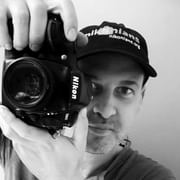


"I think actually you can take a good landscape photo with whatever camera you have in your pocket. It depends on a lot more than just equipment. And I often say, to my students, that actually buying more camera equipment is the last thing you should do."
Intro:
Dave: Spanning the globe to bring great photographers and their experience directly to you. It's 8 p.m. in Japan, 1 p.m. in Spain, and 12 noon in our guest's home in Devon, England. That means it's time for the Camera Cafe Show, brought to you by professional photographer Tom Jacob and his faithful sidekick, photography enthusiast Dave Payne. That's me.
Tom, you want to welcome our special guest and get things going?
Tom: Thank you, my sidekick. But you're more than that, Dave, you're a very good photographer. So welcome, everybody. And today we have another special episode with our guest Gary Holpin.
For people at home, if you don't know Gary from social media sites, he's from the UK, from Devon. A fantastic landscape photographer, does commercial work on the side and sometimes throws a drone into the air to get even more creative shots. He won numerous awards in the UK, been published in magazines, gives workshops and published some books, but we'll get onto that later. So, we don't keep things waiting and we get over to Gary.
Tom: Hiya Gary!
Gary: Hi guys!
Tom: Thanks for joining us today.
Gary: My pleasure.
Tom: Gary, tell us a bit about your photography journey. I mean, how you got started, where it went to and that includes telling us why you walked the 630 miles of the Southwest coastal part of the UK, not once, but two times.
Gary: Absolutely. I think like a lot of people, most of my photography for many, many years was just having a, a compact camera in my pocket and taking photos, very bad photos of parties and family and things like that. And then about 15 years ago I moved to a beautiful part of England, Devon, in the Southwest of England, and so one day I put on some walking boots and I decided to walk all 630 miles of the Southwest coast path which is a national trail that goes around the whole coastline of Southwest England.
And basically I did that in weekends over a couple of years and I took lots of very bad shots of our beautiful scenery and when I finished, I was so disappointed that those photos didn't really do justice to the scenery we have here that I decided I was going to walk it again and this time I was going to teach myself how to take a decent photo.
And wind forward 15 years and I now do it as a living. So, you know, walking the coast of the Southwest has definitely changed my mind, and my life for the better.
Tom: It's a beautiful region that I've been once or twice. I think I didn't walk much of the Southwest coastal path, but it's just beautiful there. I mean, I wouldn't know where to start to make any pictures. Everywhere you look when you are there, is almost worthy of a shot.
I guess you have your favorite places to go?
Gary: Yes. I don't tend to travel too far because even though I've been living in Devon for sort of 15 or 20 years now I still feel like I'm getting to know it. And I'm still finding new locations that are very photogenic.
Dave: What is it about a particular scene that grabs your attention and makes it, as you say, photogenic?
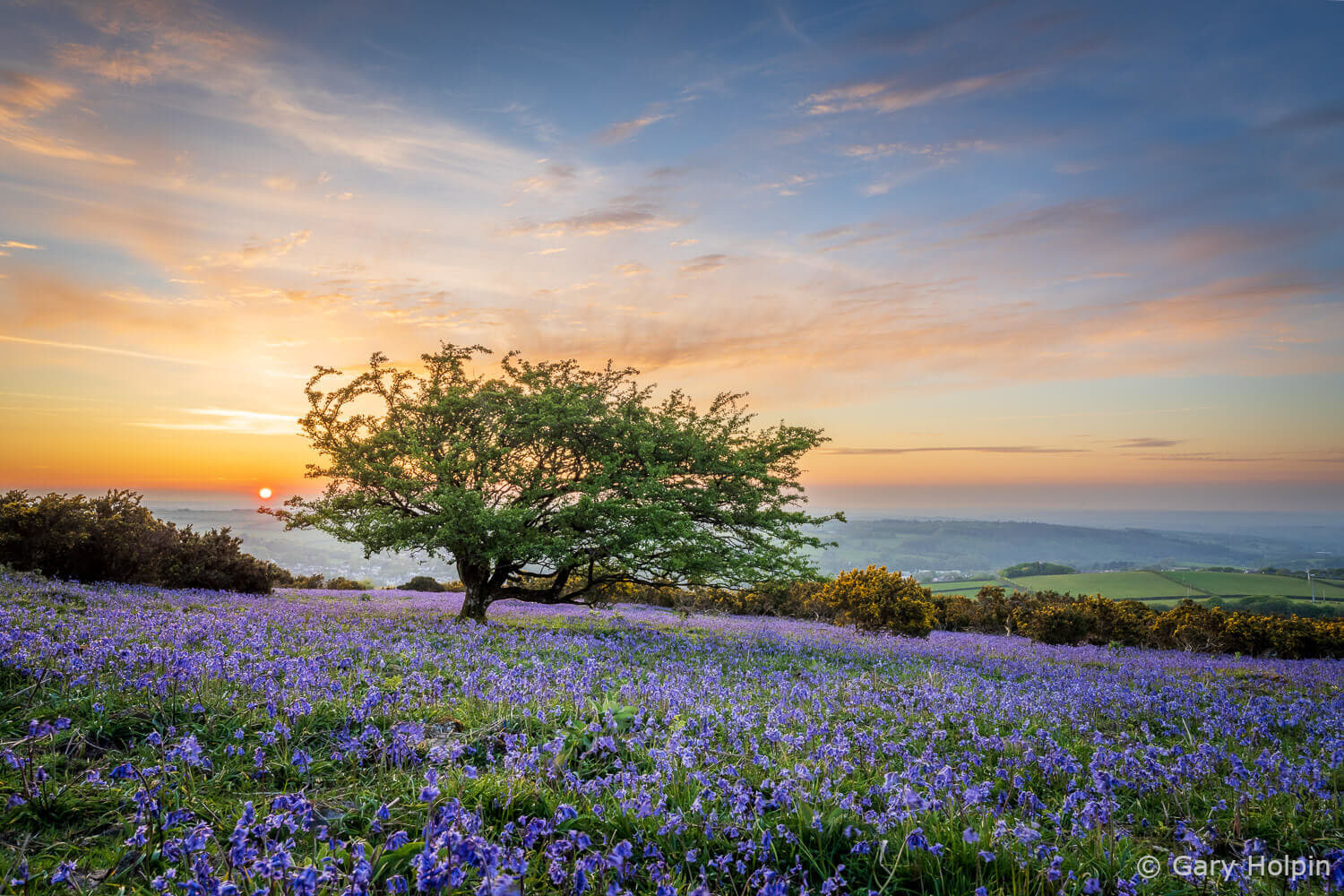
Gary: It's quite a difficult question to answer. Now, these days, after taking, I don't know how many photos I've taken over the last sort of 15 years, but now I almost immediately see in my mind's eye, whether a photo works or not.
So, it's almost become automatic. And so therefore it's quite hard to describe, I think, what it is that makes it a good scene. But I guess,to be honest, it's the same thing that would make you stand there and go, wow, that's a nice view, but actually seeing a nice view and be able to capture a good photo of it, that's the journey that I've been on the last the last 10 to 15 years.
Tom: I think it's like that with most people, when they start out in landscape photography. You see before you of what you want to make the shot off, but then you get the shot, you look at it and then you say, hmm, it's not what I saw really.
Gary: Absolutely. And that’s one of the things I teach on my training courses, actually there's a very good reason for that is because, you know, we see the world with our amazing binocular vision in three dimensions. And then we try and take a two-dimensional photo out of it, and it loses a lot in translation.
That's how things like composition rules start to help to create a two-dimensional image, which has enough interest to work as a photograph of that three-dimensional scene, if that makes sense.
Tom: Yes, that makes sense, I understand completely.
Gary, what is for you the basic equipment required to successfully go to shoot a landscape picture?
Gary: I think you can take a good landscape photo with whatever camera you have in your pocket. It depends on a lot more than just equipment. And I often say to my students that actually buying more camera equipment is the last thing you should do. You should basically learn how to use what you've got first and only spend money on equipment when you find that your current camera equipment can't do something that you really want to do.
Tom: Completely agree. What kind of camera you're shooting with Gary?
Gary: I shoot with a Sony mirrorless full frame camera. I've got a Sony a 7R4 and a Sony 7R3, for those who know their cameras. And I prefer to shoot with a mirrorless because I find that they have some technical advantages over DSLRs.
Actually, the reason I started shooting Sony mirrorless was that when I started walking the coast path the second time, I thought, right, I need to buy a proper camera if I'm going to start taking decent landscape photos. And I bought an entry level DSLR, a Canon DSLR. But the problem was it was like a brick putting it around my neck and trying to walk 20 miles of the coast path, I found that I got bruises. And so all that happened was I put it in my backpack and then didn't use it. So, I bought one of the early Sony mirrorless crop sensor cameras that was significantly smaller and lighter than most DSLRs at the time. And it meant that I could put it around my neck and comfortably walk 20 miles without it giving me bruises.
So, that's kind of how I got into Sony mirrorless and I've kind of stuck with them on their journey.
Tom: And most of your lenses are fixed focal lengths or you have some zoom lenses? You will have some longer focal length ones in your bag too because you do also commercial work.
Gary: Yes, my normal lenses are three zoom lenses. I've got a 14 to 24 millimeters, the 24 to 70mm and a 70 to 200mm. And I find that those three cover all of the focal lengths that I really need for my landscape photography. I do have a couple of primes, but the problem with primes is, obviously, if I walked 10 miles and I need a different lens, I can't just go back to the car and get one, so I tend to carry those three zoom lenses, which cover all the focal lengths that I tend to use.
Tom: A podcast listener asked the question what length of lens you prefer, he was referring that Canon brings out, I think, 12-24 mm f1.2 lens. But I think, in landscape a fast lens is not really an issue. It will be an excellent lens of course with great glass, but in your genre, you tend to stop exposures mostly down anyway, right?
Gary: Yeah, absolutely. I mean, I do think that one thing to spend money on, if you can afford it, is the best quality glass. Basically, because I remember when I was starting out, I kind of bought some mediocre lenses, and I soon found that the quality wasn't very good and ended up selling them, and buying the best quality lenses.
So I have the Sony GM range, the sort of master pro level glass. And I hope I don’t have to change them for quite a long time because they're kind of about the best you can get.
I do have at least one prime but they tend to be for specific things. So, I do have a prime that I use for astro photography. And that's because it's got a maximum aperture of f/1.4.
But you're right, normally for landscapes, actually having a wide maximum aperture is not quite so important. But for specific things like astro it is important. So that's why I've got a specific prime when I do that kind of shooting.
Dave: It's interesting listening to your lens selection. There's another landscape photographer that I follow, Andy Mumford, and in his YouTube interviews, he has almost identically the same layout, lens wise, as you do, he shoots Fujifilm, but he's got like a very wide angle to mid twenties, 20 to 80mm, and then 80 to 200mm.
He can travel light. He's got any situation pretty much covered, depending on his foreground or background and what he's got to manipulate. Is that a common trait for landscape photography, Gary?
Gary: You know what? I don't know. It's not something I've really paid attention to, but I will say that I've got to that situation purely by trial and error.
I've had various lenses over the years, and I found that those three cover almost all eventualities when I'm out and about. Now they're not particularly light, you know, especially the 70 to 200mm Sony GM lens is a heavy lens. And if I get to walk up a very steep hill and I don't think I need it, I will leave it behind occasionally.
And for things like, you know, if I want to do a moon shot, then going to 200mm isn't enough. But actually, those three do cover almost everything.
Dave: With those big lenses, then a tripod is a necessity or something nice to have in your mind?
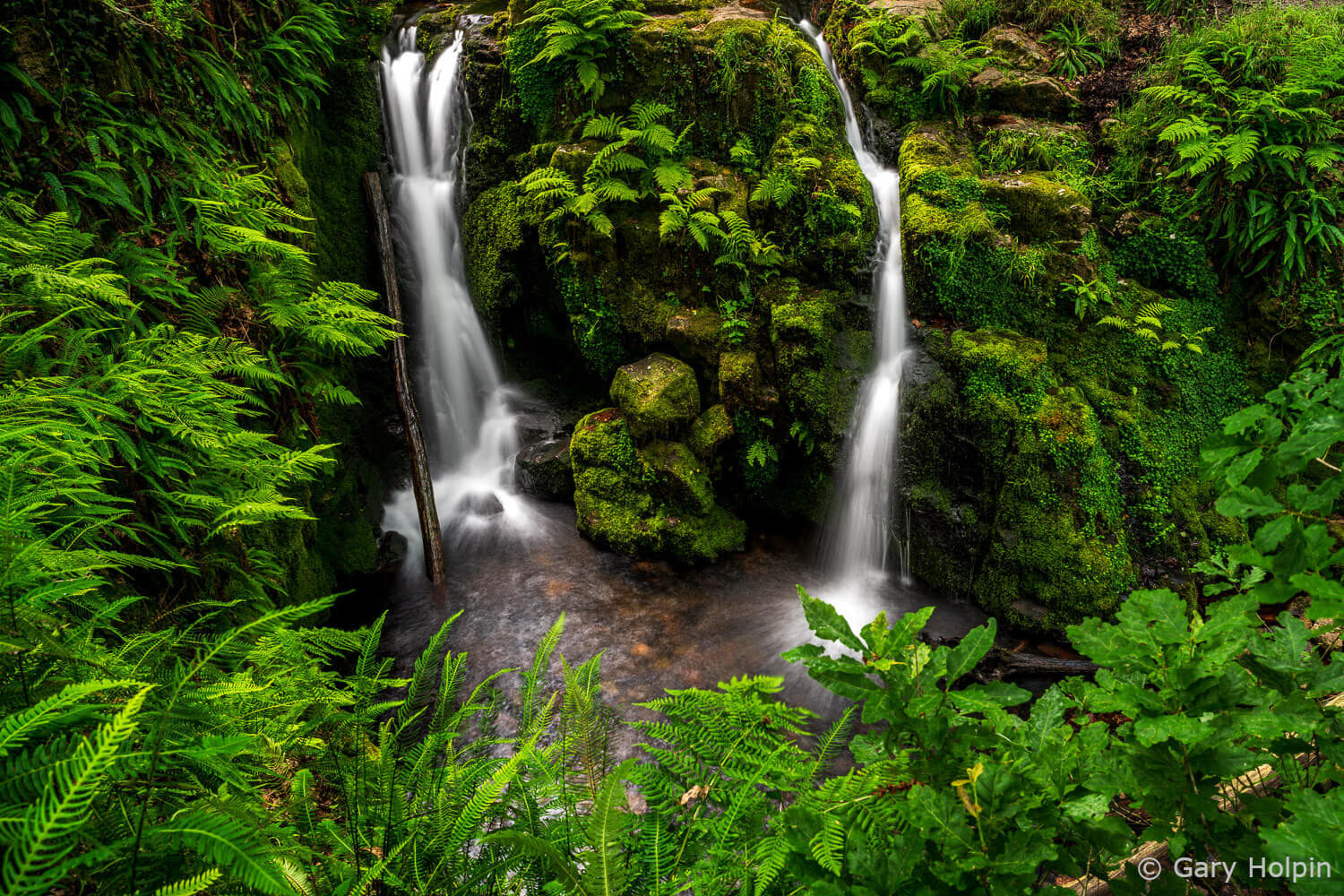
Gary: Depends what sort of photography you do. Well, even in terms of landscape, if you only ever go out on nice, bright, sunny days then you don't necessarily need a tripod. But since the best landscape photography is when often when the light is low, then a tripod is an absolute must. And also, if you like to do long exposure photography, as I do, then you know, my tripod is always attached to my rucksack.
Tom: Makes perfect sense. I think Dave, now Gary talks about long exposures, I think another listener had a question regarding long exposures with a tripod, to make seascapes pictures or shots from moving clouds.
Gary: Yes. So, the best situation is when you've got water. It could be the sea, it could be a waterfall, it could be a tumbling river. That's the usual use of longer exposures, to either slightly blur the movement of water, like you might do with a waterfall, or to completely flatten it, so you don't see any waves at all.
But I do occasionally use it for clouds, but clouds move a lot slower. So you end up having to use very long exposures of minutes. Occasionally that can be quite useful because it can actually give you lead-in lines to your photo that don't exist when you look at it with your eye.
Tom: Do you use ND filters Gary?
Gary: Yes, generally. Although as I teach my students if you want to start getting into long exposure photography without spending money on filters at first, then go to the beach at dusk or at dawn when the light levels are low. And essentially if you close your aperture right down, you should be able to get to shutter speeds of anything up to you know, half a second, two seconds, three seconds and start blurring water.
Dave: Gary, something you just said, for some of our listeners, the expression, stop your aperture down, what does that mean? Is it the lower number apertures, the higher number apertures? Can you enlighten them a little?
Gary: Stopping it down is not an expression that I use. What I mean is to make your aperture smaller. So, the difference between one aperture and the next is called a stop. So it's a stop of light. That's a halving or a doubling of the amount of light. But generally that phrase to me means that you're closing down your aperture. You're letting in less light.
Dave: So going toward f/16 or something.
Gary: Yes. One of the confusions in photography that a lot of my students have, is the confusion about a small f-number being a large aperture and a large f-number being a small aperture.
It's just one of those annoying things. It’s unhelpful when you're starting out in photography.
Tom: Now you're talking about your students and workshops Gary…can you give me three or four important tips for people who just are starting out in landscape photography?
Gary: I think the most important thing to learn, and you can do this whatever camera you've got and you don't have to spend any money at all on equipment, is to learn about composition. I think that is the most important thing that you can do is to learn a few of the basic rules of composition and start following them.
I would say the most important ones being what is your focal point? Does your photo have a focal point using the rule of thirds in terms of where you put the key elements of your of your photo. So maybe where you put the horizon, where you put the main subject and looking for lead in lines is a very powerful one in photography.
Maybe finding something like a road or fence or even ripples in the sand that can help to lead the viewer's eye. Basically make it look more interesting to look at. So that's, that's the first one is to learn about composition.
The next one is to not go out taking photos on the nicest days. I think when I first started out, I would only go walking on nice blue sky, sunny days. But actually they're the most boring days for taking landscape photos. So unfortunately, you have to go out on the days when it's showery and you might get a rainbow or when you've got stormy clouds in the sky that make the sky look more interesting. Essentially weather gives drama. So don't go out on nice days.
And the third one would probably be, this is largely how I learned actually, which is to find a photographer whose work that you like, find a photo of theirs that you like, and try and understand how they took it. And that really helped me a lot. I particularly liked photographers who were doing long exposures. So I basically taught myself how to do long exposure photography.
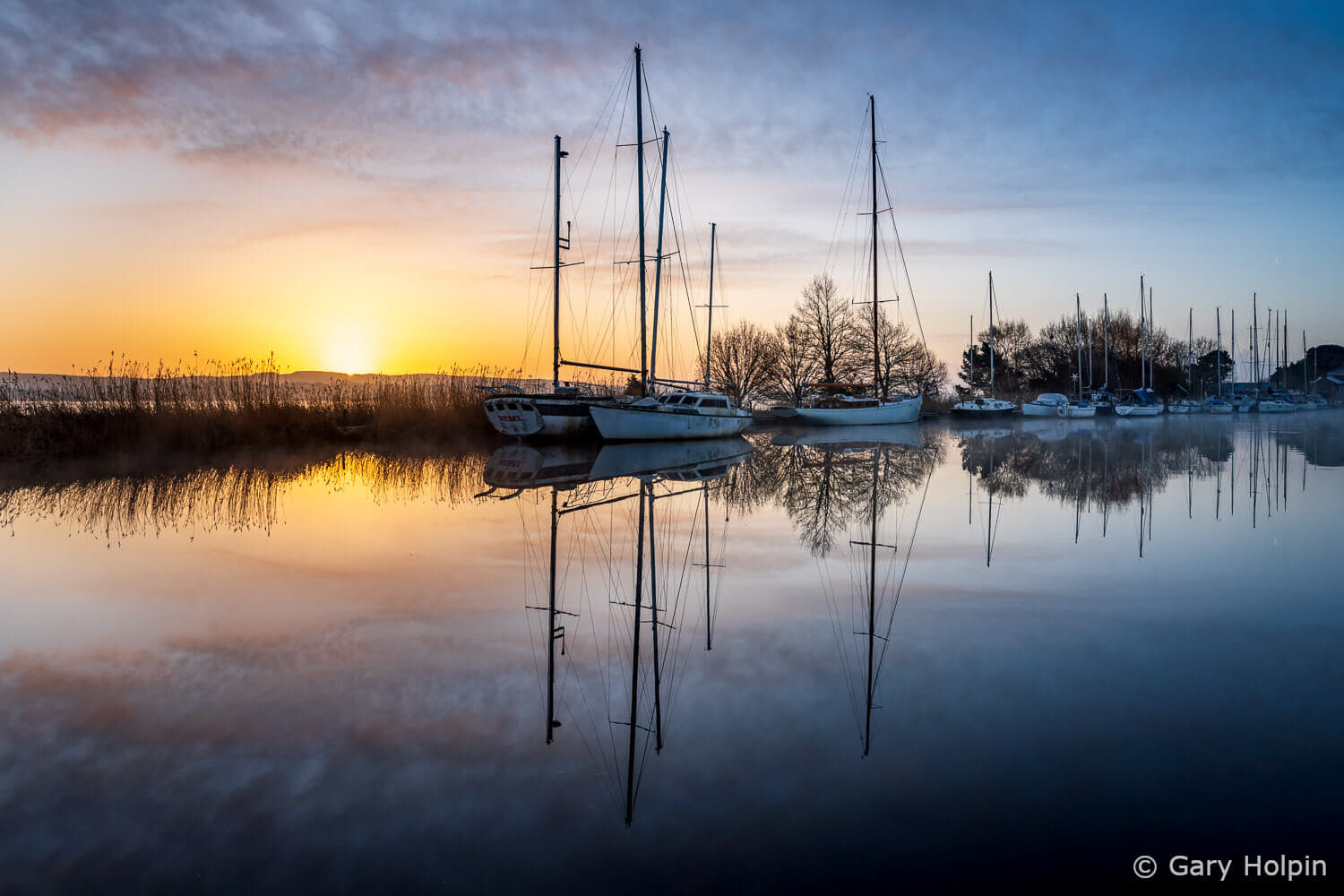
I think looking at other people's work and getting inspired by it and learning how they took it is a good way to improve.
Tom: In all the workshops you did, Gary, what are some of the key aspects of photography problems your students most struggle with?
Gary: I think there are a number of things which most people struggle with. One of the good things about the fact that I'm self-taught, is that I've been through all these struggles myself. I found the same confusions when I started out.
I think one of the things that students struggle with is that cameras, modern cameras, have far too many buttons, dials, and menu options. You know, there's literally hundreds of menu items. And so actually one of the things that I try and do in my courses is to teach students the ones that are important. There are only, if you're doing one genre of photography, like landscape photography, there are probably only about 10 settings that you really need to understand. And that means there's 190 or something that you generally don't need to know about. So that's one thing which a lot of students struggle with at first.
And the other one is how to get off automatic, understanding how to move onto the semi manual modes like aperture priority, and shutter priority, and obviously ultimately moving on to, onto manual. It is tricky.
It does take a bit of effort to get your head around it, but obviously it's the key to unlocking creativity in all genres of photography, as well as in landscape photography. So, it's something that I tend to spend a lot of time in my workshops on, is getting people comfortable with shooting on manual.
Tom: How long do your workshops take, Gary? Is it a weekend?
Gary: Yes, they tend to be weekend workshops. I would say it probably takes a good two or three hours of working on understanding what aperture all is about, what shutter speeds all about and what is ISO, until people are reasonably comfortable with knowing what they're doing in manual.
Then when we go out and do some shooting, they feel more comfortable using aperture priority maybe, but I think it's important for people to understand the basics of how to shoot on manual.
Tom: But not an easy task.
Gary: No, it's not an easy task, but I don't think I've failed. I've been doing courses now for about six years, I think, and I don't think I've failed yet with a student not understanding it. Even if maybe they weren't, you know, terribly comfortable just after one weekend with using it all the time. I think, you know, after a few hours I can get most people to grasp what it's all about.
Tom: Excellent.
Dave: Another listener wrote in a question, that I found interesting in my own efforts to begin to try to shoot landscape after seeing your work, where is the ideal focus point in a landscape image?
Gary: That is a really good question, actually. And it does come up occasionally from my students and I'm very glad when it does, because the answer is relatively simple. Actually, I assume the question means where to focus? So it depends if you have a definite focal point.
If you imagine that you've got a photo of a seascape with a with a lighthouse in it, for example, clearly the photo is going to be ruined if the main focal point, i. e. the lighthouse is out of focus. So, one approach is focus on the lighthouse. Because if that's in focus, it doesn't matter quite so much about the rest of the scene. If there isn't a definite focal point, if it's just a seascape with, you know, beach and sea and cliffs and mountains in the distance, for example, then the best thing to do is to, it's a rule of thumb, but to focus around a third into the frame. Now it's a bit difficult to define that exactly.
Tom: Which would be the hyperfocal distance in camera terms.
Gary: Well, yes, I mean, without getting into hyperfocal distance terms, focusing a third into the frame gives you roughly the hyperfocal distance and it's easier to understand for people just starting out.
So, if you imagine you're standing on a clifftop and you've got the cliffs in front of you and you've got a beach below you, and you've got some mountains in the distance. The answer is don't focus right at your feet and don't focus on the mountains in the distance. Focus maybe on the beach below. So, you know, around a third into the frame. And as long as you're using an aperture, which gives you a fairly deep depth of field, say start about f/11, f/13, then, if you focus around a third into the frame, then most of your image will be acceptably in focus. Does that make sense?
Dave: It makes perfect sense. Let me paraphrase what you just said. You mentioned earlier the rule of thirds, and I know in my camera, in the EVF, I have the option, and I have it on all the time, to put those grid lines in there, so I could focus on the lower horizontal rule of thirds line, or maybe the upper one? Is that a possibility?
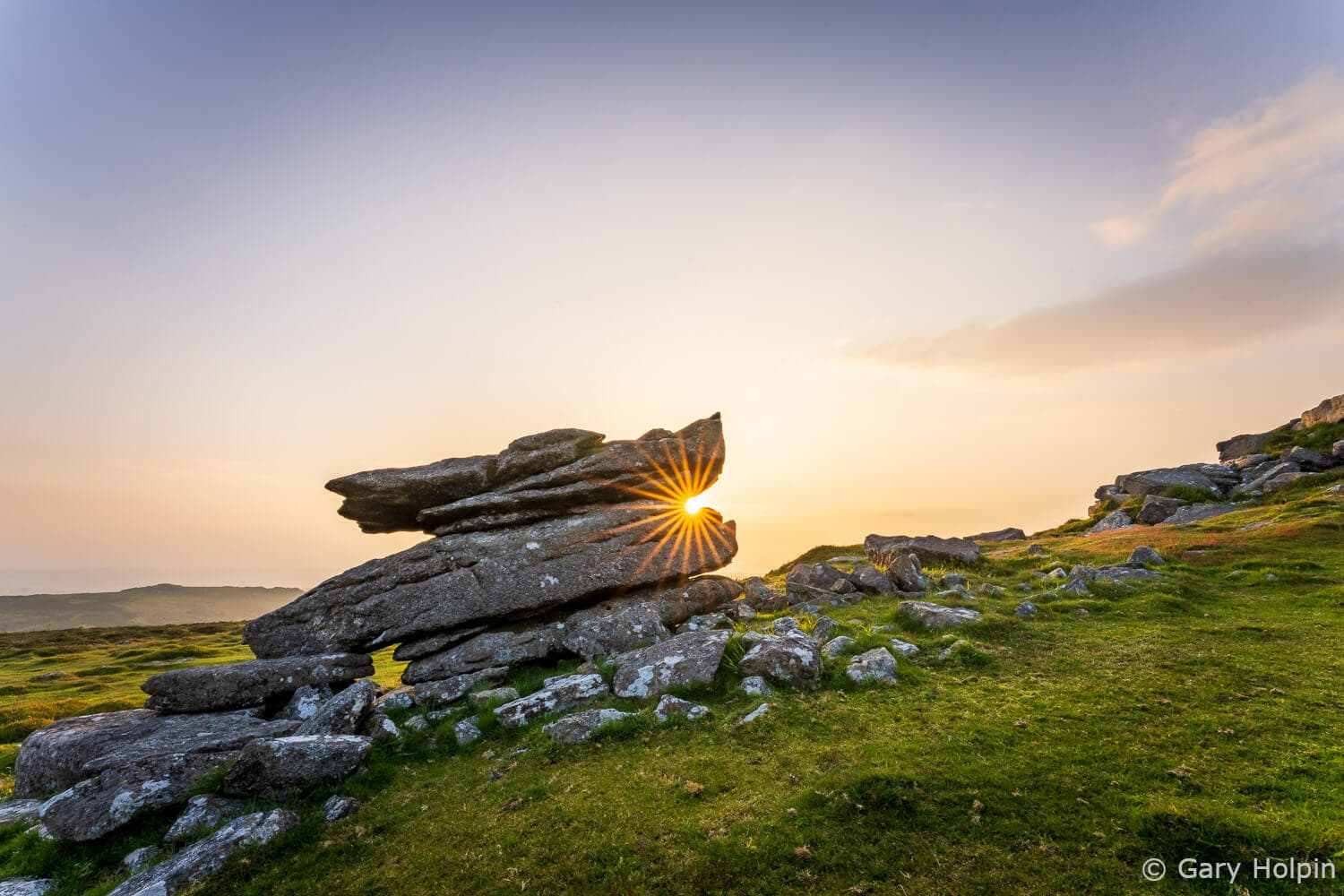
Gary: Maybe there's a slight confusion here. So, there's a rule of thirds, which cuts your frame up into two lines, horizontally and two lines of vertically. When I'm talking about focusing a third into the frame, I'm thinking about the other dimension. So, I'm thinking about between you and the distant horizon. So, forget your two dimensional rule of thirds grid, but actually if you're looking into the distance in towards infinity, then I'm talking about focusing about a third from where you're standing towards the distant mountains.
Dave: No, that makes perfect sense. Something that I tried just two weeks ago was thinking about foreground, mid ground and background. I looked at my scene through the EVF, then I looked at it at around f/5.6. Then I looked, without moving the camera, at it at f/14. I left it at f/14 and came back and focused on what was clear in f/5.6. I was trying to use depth of field as a helper. Does that make sense in landscape?
Gary: In landscape, depth of field is normally less of an issue. As I said a few minutes ago I normally say to my students shoot about f/11, f/13. The reason for that is that it's a small enough aperture to give you a deep depth of field.
But it's not so small that it cuts out too much light. And, unless you've got something very close to you, like, you know, imagine you had a nice flowering tree very close to you, then you start to get into issues. But if you've just got a big panoramic landscape, if you're on a f/11, f/13, and you focus about a third into the frame, you don't really get any issues with areas of the photo being out of focus, you only start to get into issues if you maybe taking a picture of, you know, a person standing on a cliff with a seascape behind them.
Did that answer your question?
Dave: It did really well. I mean, it's helpful because one of the things that becomes apparent is there's a lot more to creating a landscape photo than just point and shoot. I mean, just listening to you in the short time we've been together today, it's fascinating. I mean you have to think about it differently for me being a black and white shooter, primarily.
You know, can you do landscapes in black and white? Well, I look for texture and of course, leading lines and tonal changes. Like Ansel Adams, you know, about his zone or his tonal system. Does that work in landscape photography?
Gary: Absolutely does. I think some of my favorite photos are black and white. And actually, it's quite a good way of dealing with difficult light.
So, I said to you that actually the worst times to do landscape photography are bright, sunny days. When you've got strong contrast, as you do on a bright, sunny day, sometimes black and white can work really well. Because you get rid of the bright blue sky by turning it into a mono shot.
And then you start to see the textures and the shapes more. So yes, black and white is a really useful option for landscape photography, especially in certain types of light.
Dave: Very helpful. Now, I think I know what I'm doing this weekend, Gary. One last question that we'd like to bring today's episode to the finish line with for those who are into landscape photography.
What is one thing you'd recommend they should start doing and one thing they should stop doing and why?
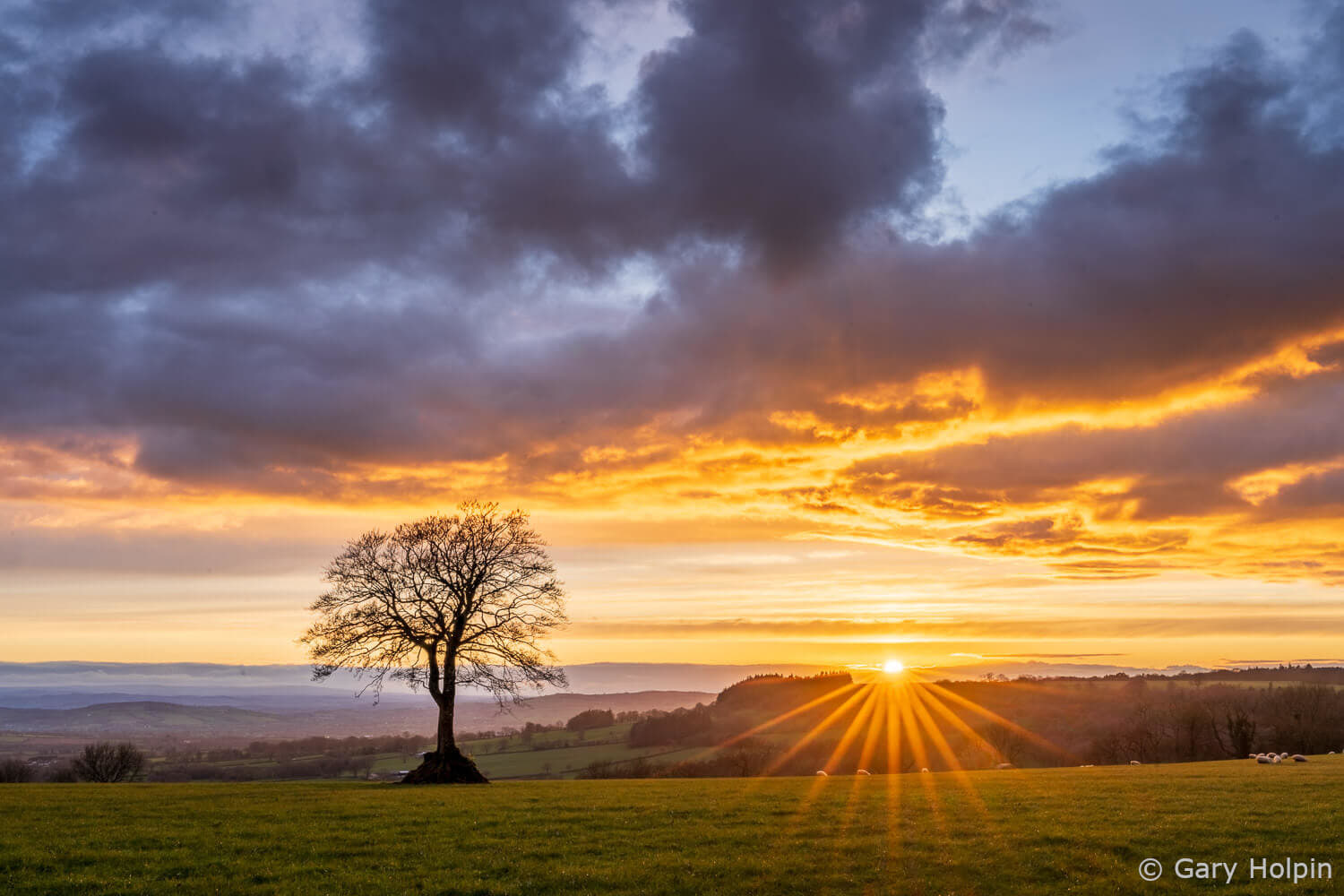
Gary: I think they should definitely start doing, if they haven't already, is to go out and watch a sunrise. And the reasons why are firstly to start to understand how light changes and how light affects the landscape.
But also, even if they don't even get a decent shot of it, landscape photography is great because it makes you get out there and watch a sunrise. And many, many people don't do that. So even if you don't get the shot, go, and watch a sunrise just because it's a beautiful thing to see.
Dave: Okay. And one thing they should stop doing.
Gary: I would say this because I do photography training, but, if you want to improve your landscape photography, go and learn how to use your current camera and stop thinking that the answer is to buy another camera or more equipment. Because I did that, and it never really helped my photography. What helped my photography was to go on a course and learn how to take a decent photo.
Obviously if you're in Devon, you can come to me, but I would say go and go and learn from any landscape photographer. How to use your current camera properly and stop just buying camera equipment to think that that's going to make your photography better.
Tom: Excellent. And how are the scones in Devon lately, Gary?
Gary: Haha, as I think you know Tom, I do like a good scone. Well, the first debate is whether it's scon or scone. That's one debate. I don't know if you're aware, but there's also a debate on whether you have it the Devon way or the Cornish way. So actually, I'm going to embarrass myself now because I can't remember which way around it is, but one of the counties say that the best way to have a scone is to have the cream first with the jam on top and the other county says that you have the have it the other way around.
So, if you ever come to the Southwest of England, you know which county you're in by whether the jam or the cream is on the scone first.
Tom: I will trust your opinion when I'm there.
Gary: I'm going to go and check which way around it is because I really should know, but in my defense, I don't actually like cream, so I only have jam.
Dave: So, in your weekend photography classes that I'm going to sign up for and fly from Japan there, you provide scones, right?
Gary: It's funny you should say that, but actually the venue where we hold the courses, the owner does occasionally drop in on a Sunday afternoon having baked some scones for us. So yes, it can't be guaranteed, but occasionally homemade scones are on the on the menu.
Dave: Gary, this has been a lot of fun and extremely educational in general. You'd like to add something for our listeners to think about when it comes to landscape photography?
Gary: I think one of the things which is quite hard to grasp and only comes with practice, but it's very important, is looking for simplicity.
One of the main issues with landscape photography is the world around us is very cluttered and very, very complex. And actually, what I spend a lot of my time doing, is looking for simplicity. So, looking for simple compositions, which make it clear where you want the viewer to look.
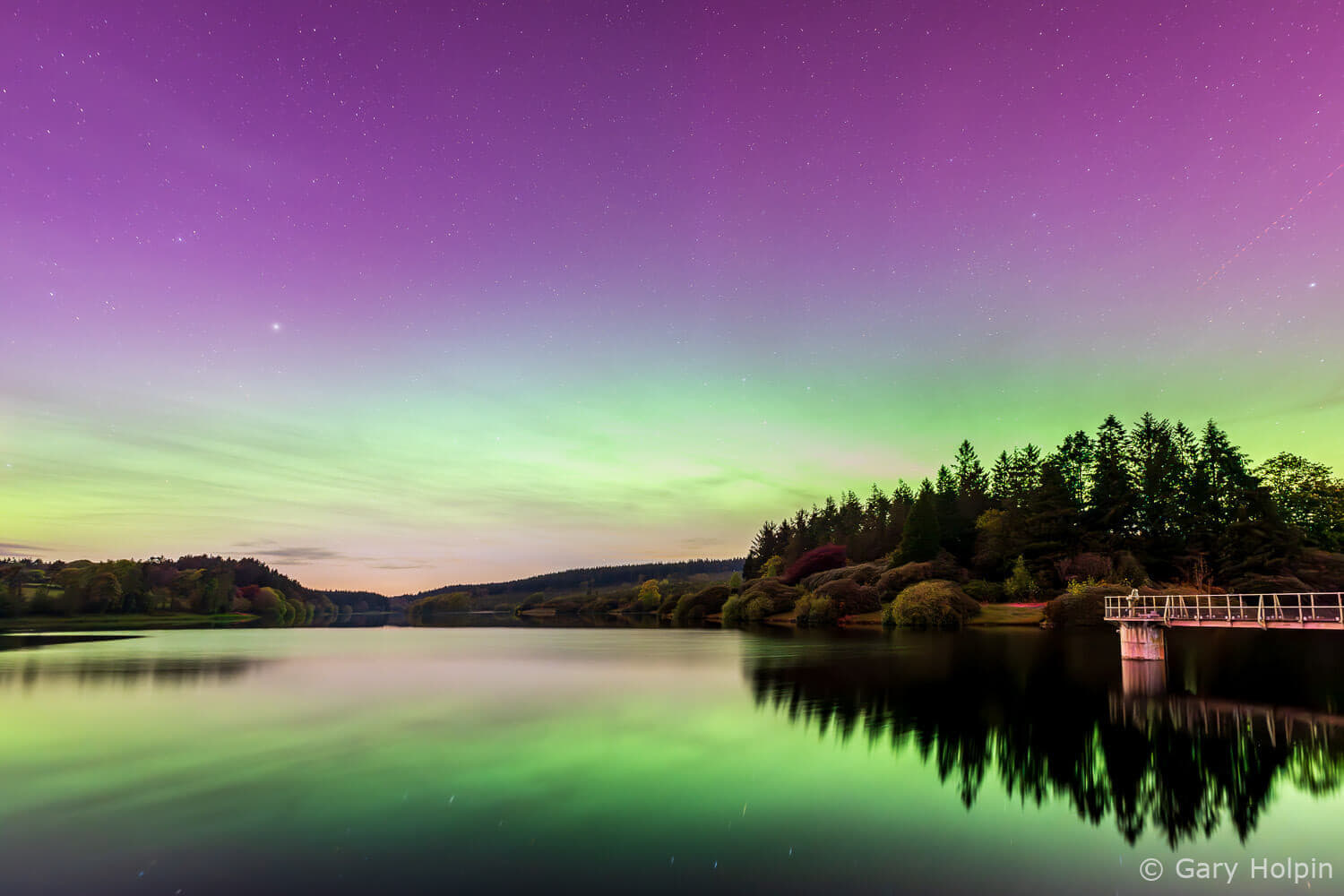
One of the reason why I use long exposures quite a lot is if you imagine a seascape with maybe appear going out into the sea, you've got waves. And if you're looking at that photo, if it's taken with a fast shutter speed, the eye is drawn to the waves and not necessarily to the pier, which was meant to be your main subject. And so the reason why I use long exposure photography quite a lot, is that by doing say 30 second exposure, you flatten the sea completely. And therefore, the eye is no longer drawn by the detail of the waves. And you simplify the scene in such a way that it's more obvious that you want the viewer to look at the pier.
So, I think teaching your eye to look for simplicity in the landscape. It's a very important skill that only really comes with practice, taking a lot of photos and see what works. And you'll usually find the simpler compositions the ones that work.
Tom: Dave, he's explaining it so good, I think even I am going to sign up for the workshop.
Dave: That's fine. You bring some of that delicious Spanish ham. He provides the scones. I've got the matcha tea and we have a sold-out course immediately.
Gary: Guys, you should come soon because it will soon be bluebell season here and I know some wonderful locations where there'll be a carpet of bluebells beneath trees with new green leaves on where we can sit and have our picnic with Spanish ham, Japanese green tea and scones.
Dave: We still got to take pictures while we're out there eating! The menu sounds great though. Gary, we really appreciate your time and want to thank you for sharing your wisdom and your wonderful views with our listeners today.
Gary: Absolutely. My pleasure. I've really enjoyed it. Thank you.
Outro:
Tom: So, there you go. This was our first podcast about landscape photography, and we thank Gary very much for being so helpful. I'm sure many of our listeners have new insights and maybe find a new way to improve their landscape photography. And I'm sure apart from that, Dave, the scones sales will go high up in Devon next month.
Dave: I think that they need to have some matcha green tea flavored scones. It's a natural. As for the landscape photography, it’s something that I've always loved. And it totally escapes me how to do it, but listening to Gary today, I think I'm gonna give it a shot. It was really helpful, at least for me.
Thanks everyone for listening. Don't forget to check out the show notes in the description where you can find out more about our guests and some links we've prepared about them, waiting for you.
If you're new to the show, don’t forget to subscribe to our podcast. We're in any of the major podcast listening apps, and maybe you can leave us a comment also. We'd really like to hear from you because it helps us a great deal to move this show forward. If you want to know more about us, check out our own links in the show notes as well and consider maybe buying us a coffee or two so we can get fresh photography content out to you each month.
We'd like to leave you with a quote today on landscape photography from the great Ansel Adams. He said: A good photograph is knowing where to stand.
Thank you so much for listening. Now get out there and make some photos. Bye!
All images used with permission and © Gary Holpin