

"Remember, the Moon is not a complete smooth ball. It's circular effectively, but with lots of rocks and craters on it, so you see lots of edges. So when the Moon is directly in front of the Sun, that's when you get these what's called, these Bailey's beads. That's a term to describe, what effectively is happening, is the light is just shining through the gaps between the rocks and the mountains of the moon."
Intro:
Greetings, and welcome to The Camera Cafe Show, I'm your host, Tom Jacob and today is the start of a new little adventure as we introduce you ShortCasts! We will get our Shortcasts out on a regular basis intertwined with our regular podcasts. They are just shorter episodes about anything news, fun or inspiring moments in the world of photography!
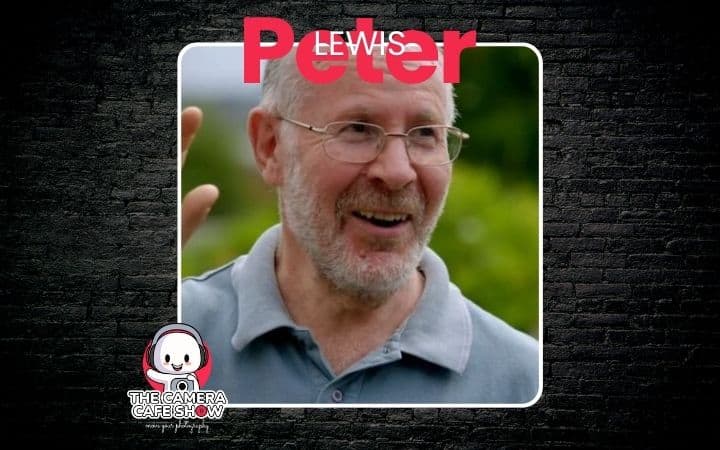
So, today, celebrating the upcoming solar eclipse on April 8 2024, we thought we start off with our first Shortcast, embarking on a little cosmic adventure with astronomer Peter Lewis from London (UK) and we delve a bit deeper into the world of that solar eclipse and try to unlock the secrets to capturing this celestial wonder through your lens. Let's get rolling!
Tom: Welcome, Peter. How was your evening last night?
Peter: Okay, it was very good yesterday. I went to a gig last night, I went to see 'The Who', you know the old rock group 'The Who', at the Royal Albert Hall and so I was rocking the night away last night!
Tom: That's a whole different thing than watching the stars and the sky!
Peter, thanks for coming on our podcast tonight and I hope we have a nice little chat about the upcoming solar eclipse in the United States. Tell me a bit about yourself and your fascination about the night sky and astro photography.
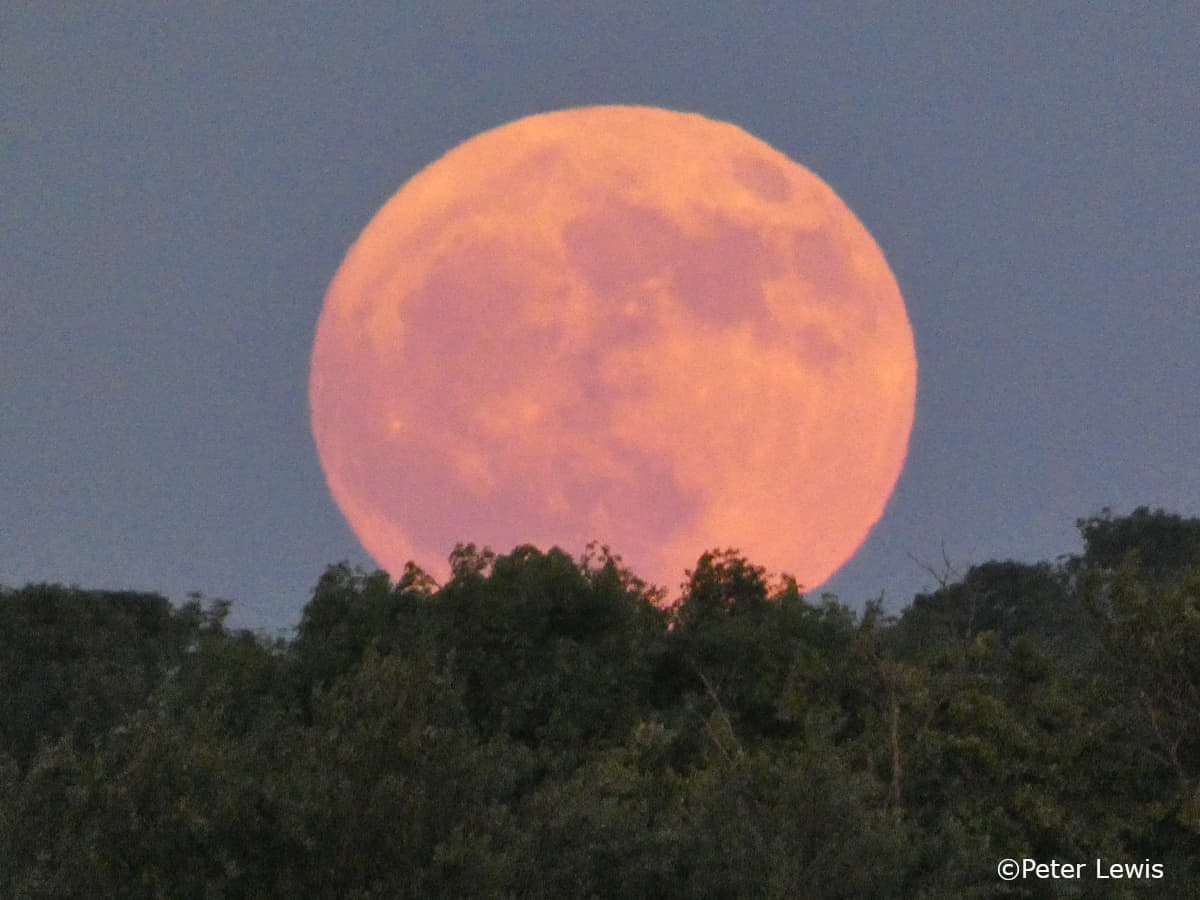
Peter: I've always been interested in space ever since I was a little boy. I mean, I live in London, and London is not always the best place for night sky watching, for looking at stars, and things like that. But you can, even in London, see the moon and you can see the sun. And they're the mainstays of astronomy as well. Where I live in London now, on the edge of London, it's not too bad here. I can do a bit of observing with the naked eye and a little bit of a astro photography as well.
I was bought a telescope by my family when I retired, as a sort of retirement present. I've still got that telescope and I still use it all the time. And I think they're quite pleased, I think they once said it's probably the most successful present they've ever bought me in their life, because most presents last about five minutes. But this one has lasted me a number of years now and I'm still using it. I'm very keen and I'm always looking up in the sky, I look out the window and check my stars and see if there's anything interesting I should be looking out for.
Tom: It sounds like a never-ending story, just like photography, Peter.
Peter: As long as the sky is up there, it's never going to be ending, is it? You know, it's going to last longer than I!
Tom: Peter, this solar eclipse. Can you just explain a bit, what exactly is a solar eclipse?
Peter: One of the things that we need to know, because the sky is always up there and we take everything for granted, the thing to remember is everything is on the move. Everything is moving. So the basic construct of a solar eclipse is that the Sun is a ball of gas that's in the universe, and we're on a planet, one of a number of planets, and we revolve around the Sun. And as we go around the Sun our position changes. And Earth is one of the few planets in the solar system that has its own moon that orbits around the Earth.
So, the moon is revolving around the Earth and occasionally you get the situation whilst the Earth is in line with the Sun, the Moon revolves around and gets in the way. So basically you've got the sun, the moon and the Earth. And by a strange quirk of, some people might say fate, some people may say a coincidence, some people might actually believe that there's a greater god that's created this, is that the Moon is about 240,000 miles away on average from the Earth, and with that strange quirk of fate, that the Moon, as we look at it, has the same circumference, the same size basically, as the Sun. Not obviously in real terms, but because of the angle that we're looking at the moon, it actually completely obliterates the Sun, just as it passes through and across it.
So obviously the moon is a lot smaller, so you get something that they call annular eclipses. It's a complicated thing, but basically the moon goes around the sun in an ellipse, it's not a pure circle. So sometimes the Moon is a bit nearer, sometimes it's a bit further away and occasionally creates a complete hole that covers exactly the Sun. And sometimes the moon is further away, and therefore the sun sort of creates a ring around the moon, and it's called an annular eclipse.
But this one, is a total eclipse. It's when the sun and the moon and the Earth are perfectly aligned, so that the Moon is exactly the same size as we look at it as the sun, and covers it up completely. And that is a total eclipse of the sun. It can happen a few times year, it can happen not for a few years. I mean, there was one in Australia last year. The last time it was in America was 2017.
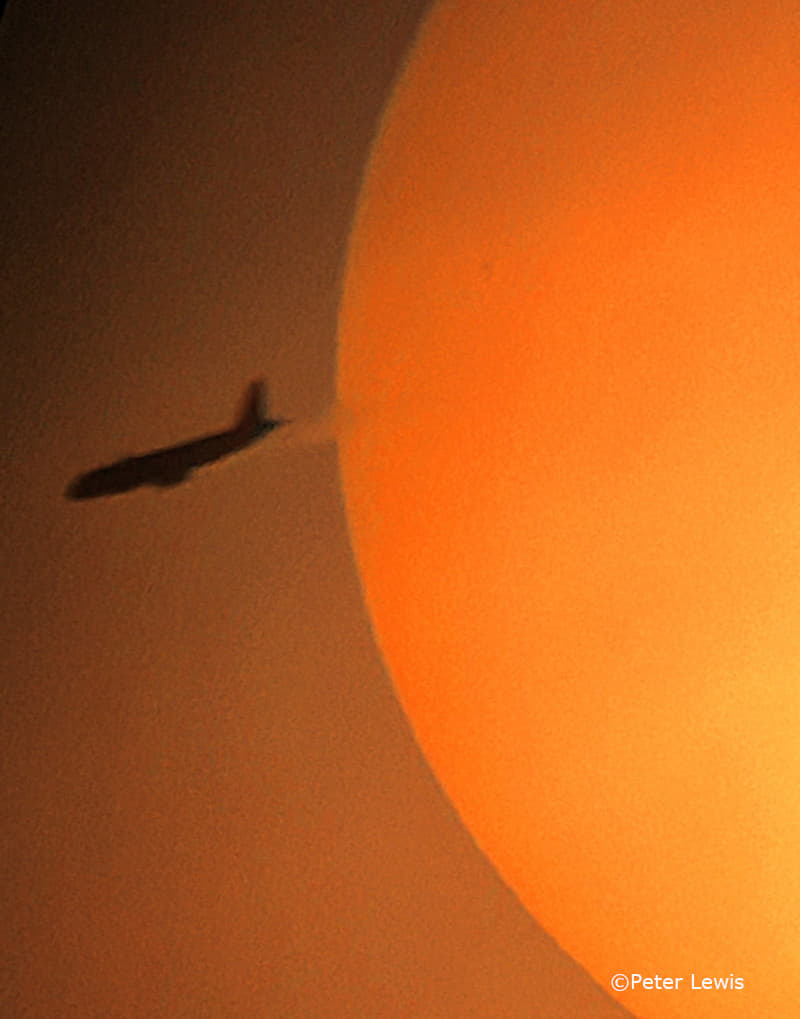
I think, where I am here in the United Kingdom, there's not going to be one for many, many years yet. And the last one was in 1999. Obviously on the 8th of April 2024, if you're in the United States, and a few number of other countries as well, there's a total eclipse. We won't see it here on this side of the Atlantic, but parts of Ireland for instance will see a partial eclipse. That's when the moon doesn't completely cover the sun, because as it moves across it doesn't cover entirely the Sun but only a portion of it. And that's called a partial eclipse. We've had a few in this country, and I've been able to take a few photos of partial eclipses, which is quite a spectacular thing to see.
It's a reminder that everything is on the move.
Tom: And solar eclipses, Peter, they can be traced back in history, right? And they can also be predicted in the future for that matter?
Peter: Exactly, because the thing is, the path of all the planets, you know, can be fairly easily calculated. Because we know now with our science, our technology and the mathematics, we can work out the path of all these planets and their paths and when they're going to meet. And it happens, you know, not just for solar eclipses, we have also what's called a lunar eclipse, where basically it happens the other way around, where it's actually the Earth gets in between the sun and the moon. So we cover the light of the sun shining onto the Moon. That's called a lunar eclipse. I've managed to take a few photographs in the past of that too. It's not quite as rare, but it's still not common as well.
Tom: I think it's good that these events sometimes happen, because for people like me, we always see all this as standing still, but in reality, everything as you say, is on the move.
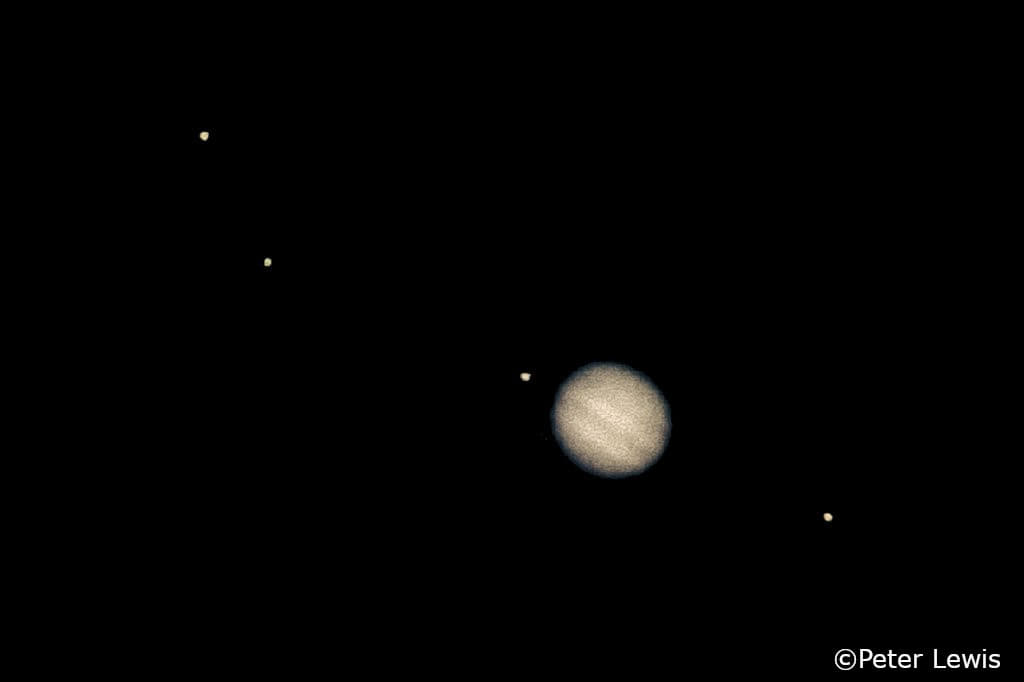
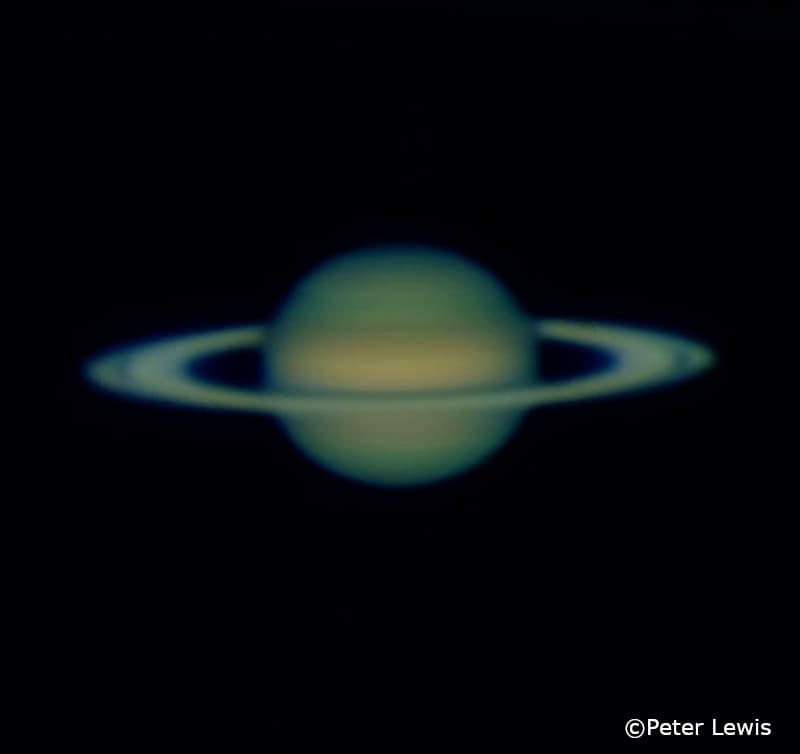
Peter: Exactly. Yeah! A few years ago, there was what was called a conjunction, where two planets appeared to be extremely close to each other but they can be hundreds of millions of miles apart. As we look at them in the sky and you would think those two little dots of light, they look like they're almost touching. But they’re hundreds of millions of miles away from each other. It was a great conjunction with Jupiter and Saturn that happened in December 2020, where they looked like a single beam of light but in fact were two planets that actually appeared directly next to or in line with each other.
Some people think actually that the Christmas star, the famous fairy story of the Christmas star, was actually a great conjunction of Saturn and Jupiter. What happened is these two planets, they're going around the Sun and they're going at different speeds, but occasionally one catches up with the other. And when they catch up with the other, you get what's called a conjunction.
As I said, the same theory, the same concept is that all the bodies in our universe, in our solar system, they're all on the move. And this solar eclipse is exactly an example where more than one body happens to be moving at the same time, and they just happen to coincide on that line as we look at them.
Tom: Let's move a bit to the gear question Peter. But let's start first with safety. Are there any kind of filters we should use not to burn our eyes or burn our equipment?
Peter: Yes. I take a lot of photographs of the sun. And if you follow me on my socials, you'll often see photographs or images of the sun.
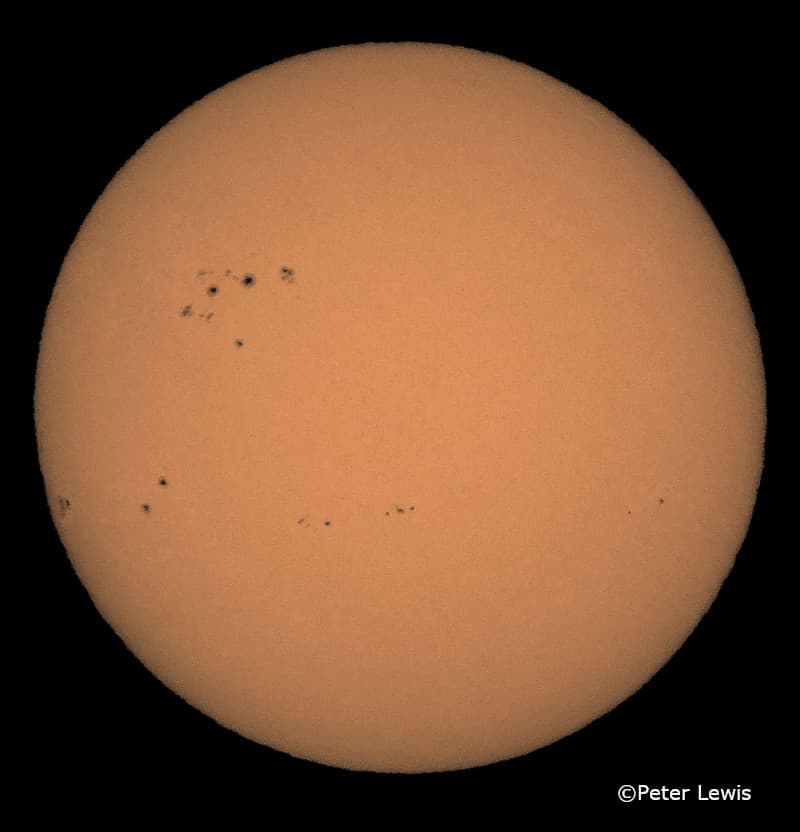
So, one of the things about the Sun is, it's not just a ball of gas, but it's there's lots of energy involved in it, and you can observe sunspots and changes in the sunspots that happens every single day. One of the most important things, well actually the important thing, is to remember safety.
Always make sure that, firstly, you never look at the sun directly with the naked eye. If I would do that, I wouldn't be looking at you on my screen right now, I wouldn't be talking to people right now. So, don't look directly in the sun. You can wear what's call eclipse glasses, they're just bits of plastic really, and they can cover your eyes, just like normal glasses. They're quite cheap, just put them over your eyes if you want to look at the sun, so you're looking with your naked eye.
Secondly, with equipment, make sure that any equipment that you intend to use to photograph or to look at the sun, you use a proper safety filter, like a solar filter or some other fabric substance, which actually diffuses the light from the sun. So that way you're not looking at the bare sun. I use a telescope to take most of my photographs, and I have a filter which fits over the front end of the telescope. That filter has a safety film that is purely for solar photography and solar imaging. You have to make sure that it does fit over the whole front of it, you have to make sure that there are no pinprick holes or gaps in the film that might have split.
Any bits of light that fall through will actually be picked up by your camera lens and could actually seriously damage your gear. If you use a phone, as most of the time I do, I have a phone connected to the telescope eyepiece as well, is that any shafts of sunlight that might come through, will actually burn through your phone's camera lens. So, imagine what that would do to your eyes, never mind a camera lens.
The other thing to also make sure with these filters is that there's different types of filters. When you're taking photographs of the sun, by and large, you're doing what's called a white light image, creating a white light image. Our vision of the sun is the sun is yellow but the sun isn't yellow, it's actually white, it's a white ball of gas. So, you have what's called a white light filter. Often you see these photographs of the sun, and I do it all the time, is I put a false color in it. Not because I'm trying to create a different color to what the sun is, but because it satisfies everyone's, how we grew up as babies that the sun is yellow. We're accustomed to seeing the sun as yellow. So, I put in a false color, but in reality, the sun is white. So this is called a white light filter. They go over your telescope or over the front of your camera as well.
So, I can't stress this enough, and I do repeat often when I'm posting these photographs, is don't look at the sun, make sure you're using a proper safety filter and make sure that actually you test it so that there's no damage and no way that any light can penetrate through the gaps. Really, really important.
Tom: I saw them for only 30 dollar or something at on-line retailers, this solar filter. So, it's a no brainer to keep your eyes healthy.
Peter: Yeah, the cost of getting your eyes repaired would be an awful lot more money than a safety filter or safety glasses.
Tom: Peter, picture wise, you've got any tips or settings when you shoot a solar eclipse?
Peter: Yeah, I mean the first thing to remember is that the solar eclipse, the actual period of totality just about, you know, three or four minutes. Okay? But the process from the time when the moon starts to creep across the face of the sun to the time it disappears, can be a few hours. And all that time is the light is changing, it's starting to get darker and darker and darker, but very slowly. After it, it comes out at other side and it's starting to get lighter again.
So, the first thing to remember is that you don't have one setting you stick with. If you're starting off to taking photographs, you have your solar filter on all the way through it, then what you're doing is you're changing the settings in your camera. You would have, when the sun is actually shining even with the filter on, you'd have quite a very low ISO. So ISO 50 or something like that, which would reduce the amount of light that's coming through the camera lens. And then you would slowly increase that as you would change the exposure time as well.
There's no precise answer to that, no one will say this is what you must do. I mean no one will say it must be this or be that setting. You can experiment and remember that happens over a period of a few hours until you get to totality. So during this period, you can experiment until you get the flavors right. Then it gets towards totality and that's the time you have to make a judgement about when to remove your solar filter. As the light disappears, because that's what happens when the moon moves across, light disappears, the filter is not going to be much good because everything is going to be too dark. At some stage you're going to have to remove the filter, because then you can start seeing the exciting bit during the eclipse, which are the shafts of light that just permeate at the edges.
Remember, the moon is not a complete smooth ball. It's circular effectively, but with lots of rocks and craters on it. So you see lots of edges. When the moon is directly in front of the sun, that's when you get these, what's called Bailey's beads. That's a term to describe what effectively is happening, is the light is just shining through the gaps between the rocks and the mountains of the moon.
But you will only see that with the filter off, and you have to make sure that you're changing your settings to get it absolutely right as well, because you only have a few minutes to see that. The Moon as it moves across, it suddenly reveals as it moves to the other side, a shaft of light, basically it's the first bits of the sun shining again as the Moon moves on. And then you get this diamond ring effect. The diamond ring effect is really a burst of sunlight that is starting to emerge, where it actually creates a ring around the moon, which is the sunlight.
You really have to have a very fast shutter speed to get the best light on that. And secondly keeping your ISO down and have your finger on the ISO button of your camera to dial it accordingly.
Two things more. Firstly, your camera really ought to be on a tripod. Some people do hand-held, but you know, it ought to be on the tripod because the less you're moving the camera around the better. And secondly, use a remote trigger, so that you don't have to press a button as well all the time. They're things that most photographers know about. And even if you don't know about it, you can find those easily.
Definitely practice as much as you can, although you can't really practice if you haven't got an eclipse to practice on. But it's not a brand-new science, you know, people have been doing this for a long time now. And the final tip I give to everyone is, make sure you're wearing your glasses, then just stand away from your camera and just look up, just look up at the sky and just take in everything that's happening because this is a remarkable event, a natural event. And people are just forgetting to actually look.
Tom: Peter, you know that this event will be watched by millions of people, but throughout history, there's been always a fascination by artists or photographers to capture this event. Why you think it captures our imagination so much?
Peter: Well, I think you have to look back to the days before people knew or understood what was happening, before people understood about these celestial bodies. You can imagine the first time it happened, and people experienced this period where the sun went out, the sun disappeared, and people would go crazy. You know it's not nighttime and it's gone. All these people actually looked up and maybe blind themselves, because you imagine they were puzzled by it. So there's always been a fascination from the days where people didn't understand it, but lucky now we do understand.
You know, a solar eclipse isn't the only thing that happens up there. I mean, a lunar eclipse, it can be tremendously exciting to see the moon being bright and then suddenly it gets very, very dark and then it turns red. When the moon turns red, it's called a blood moon, this happens when Earth's moon is in a total lunar eclipse and when Earth passes in between the sun and the moon, casting a shadow over the moon as sunlight is blocked. As the Sun's rays pass through the atmosphere, some colors in the light spectrum, those towards the violet spectrum, are filtered out but red wavelengths are least affected, so the light reaching the moon's surface has a reddish hue, causing the fully eclipsed Moon to take on a red color. Now I've taken photographs of that as well and have to say that I find that just as exciting because you think, it's a another wonderful natural phenomenon as well.
The solar eclipse isn't the only thing happening, but it can be clearly predicted unlike an aurora. It's predicted exactly when it will happen, people know exactly where to be, and of course it's hyped incredibly by the media. You know, there will be a huge amount of fuss in the media. There was one a few years ago in America, I remember my brother went over it, and you can imagine there’s millions and millions of people in the line waiting to see this. Goodness knows what the traffic's going to be like, as people try to move, towards that narrow line of totality. And they'll be selling t shirts and just about everything else in time to turn it into a commercial opportunity, but for the people who really enjoy this natural experience, it's not about that, it's about the wonder of it all.
I mean, you have to remember in a few years’ time, we'll get one in Europe. I think down in Spain, there'll be a total eclipse in August the 12th, 2026, I think. So, we'll all be going down to the Costa Brava and the Costa del Sol, looking for this total eclipse down there!
Tom: I will think I will do a live podcast by then Peter, you can sit next to me and we will explain everything.
Peter: That sounds fantastic. I'll take you up on that.
Tom: Peter, it's been a pleasure talking to you. Thank you for explaining a bit the solar eclipse and for those lucky in Mexico, the US and Canada who are going to see it, we await a lot of pictures. We will see each other in 2026 here in Costa Brava, Peter.
Peter: Definitely. Definitely. Yeah. I wish everyone a cloud free sky, you know, keep those clouds away. That's the one thing we can't predict!
Tom: Peter, thanks again, and keep in contact.
Peter: That's great, you’re welcome.
Tom: See you. Thanks, Peter. Bye.
Peter: Okay, bye.
Tom: There you go...We hope you enjoyed our first Shortcast and it helps the photographers under you who will be fortunate enough to see it on April 8. Don't forget all the advice Peter has given you and share your eclipse pictures with us of course!
Thanks again for joining us on this stellar journey through the cosmos today and keep your eyes on the skies and your camera ready. If you enjoyed today's episode, don't forget to like, comment, and subscribe to our podcast on Apple or Spotify and stay connected with us on social media for more photography inspiration and all the updates. You'll find everything back in the shownotes!
Until next time, keep clicking and Move Your Photography! Bye!