


"There's a couple really definitely, Meat Puppets was just absolutely incredible. I've got a shot of just rocking out and him just leaning back playing the guitar and the look on his face as he was just absolutely loving it! That is special because I'm a massive Nirvana fan. and I remember back in the nineties listening to Nirvana and plugged in New York and now hearing Kurt and Chris from Meat Puppets and think, oh wow, you know? And then sending the images off, and Elmo Kirkwood one of the sons, absolutely loved the images..."
Intro:
Hello, all you photographers, and greetings to yet another episode of our Camera Cafe Show podcast and we are entering season two now. So it's been learning the ropes of the podcast venture, but I think we are getting the hang of it slowly. Today it's 8:00 PM in our guest home and we are moving to the UK and get you up to speed about music photography with Richard Clark.
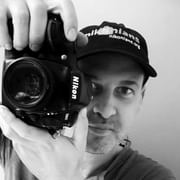
Richard describes himself as having a never stopping passion for photography and is particularly excited by music photography where he can put his skills to the test In this fast paced, low light world since 2019, Richard has photos and articles featured in popular music magazines, which has led to further commissions from music PR companies. And apart from that, he's an active member of the Harrogate Photography Society, has been featured in their annual exhibition delivering presentation to showcase his portfolio and winning the Counter Trophy for 2019 and 2020. Let's get rolling.
Tom: Good evening, Mr. Rock star. How are you doing?
Richard: Hi, Tom. I'm fantastic. Thanks and how are you?
Tom: I'm great. I'm all ready for this, Richard.
Richard: Fantastic.Thank you very much for having me, it's a massive honor, so thank you.
Tom: It's my pleasure. It's always good to hear somebody talk about his passion in photography.
Easy question Richard. You ever been starstruck?
Richard: Yes I have, and I daft things on a regular basis anyway, but it's even worse when I say it's someone who's either famous or relatively well known.
And classic one was when I was photographing a festival. It was a day with Will Robinson from, 'I'm not from London', and I'd gotten a lot of work from him. Like he helped start me out basically, but we can talk more about that in a second, but what happened was, there's Dick and Dom who are famous children's entertainers and dj, they just tour around the UK occasionally, and something went off with their photographer. I've been photographing at the front of the stage for other acts and bands and things like that and get in the crowd.
And then I just heard this whisper and this tap on the shoulder and it's like, oh, Richard, can you photograph Dick and Dom on stage? I was like suddenly thrown into something that I hadn't quite signed up for, or ready for.
So I walked up to Dick and Dom shook their hands and introduce myself, and as I introduced myself I said, Hey, it's a triple like Rich, Dick and Dom, and their facial expressions was just blank...it was just like, oh, you think you're funny? Like they hadn't heard that one before. So I was like head in my hands, sort of like thinking, well that's why you are on stage and I'm behind the camera and you are the funny people and I'm not. And so I kind of walked off just like going, oh my gosh, why'd I say that? So I told Will what had happened and he was just, he'd just found it hilarious. So, anyway, he got on stage, I was outta their way and it was a great gig.
And at the end they were like really nice and really supportive. And he said, oh, did you get a good shot? So I am like, yes, I did. By that point I'd kind of calmed down, but so I say things all the time, so I greet people like they should know me , and then I suddenly kind of catch myself and actually think, no, they don't really know who I am. So I just have to try and take a couple of deep breaths and think, okay, just introduce myself, try and be normal and do my job!
Tom: I, guess it happens to a lot of them, so I wouldn't worry Rich! It's nothing that can't go away with a good drink after, so no problem.
Richard: Absolutely. They probably encounter so many photographers. But, in the end, they handled me very well.
Tom: Rich, to go a bit back in time. When you started out, like I guess most of the people, one starts out maybe shooting landscapes pictures or family events, but then you jumped over to live music events. You remember what sparked this shift in focus and how it changed your creative approach?
Richard: So I think I always been really interested in people and yes, I'd done landscapes and I still find 'em fascinating, frustrating, but ultimately enjoyable. But I think trying to master people and just...I really wanted to capture people's energy and their character, their enthusiasm or the craft of what they do.
And I think very early on I was lucky to know Will. So I'd already done a gig, it was a fever festival in Borough, in 2013. I was photographing part of their services, it was a mental health charity, so I was photographing what they did. And part of that was this event, with musicians, DJs, guitarists, singers, you name it. So I was really obsessed from that point on and I was like going, I just thought, I really want to capture what they are doing and trying to capture them with the lights and things like that.
And so I'd said to Will that I'd done this, and so he was like, oh, come down to a couple of shows. So I took my camera and did, but it's like I was trying to get to the next level. How could I really get across to people and get some of that overall atmosphere. How could I do that? So I thought, yes, it's about the bands, but also it's about the fans, and then trying to bring the whole into photos and trying to capture what's going on. Some people will have their hands up, they'll have the phones and there'll be mouths wide open to sing and smile, there are some people maybe crying. So it's just really trying to capture that energy and that atmosphere that's there at the moment.
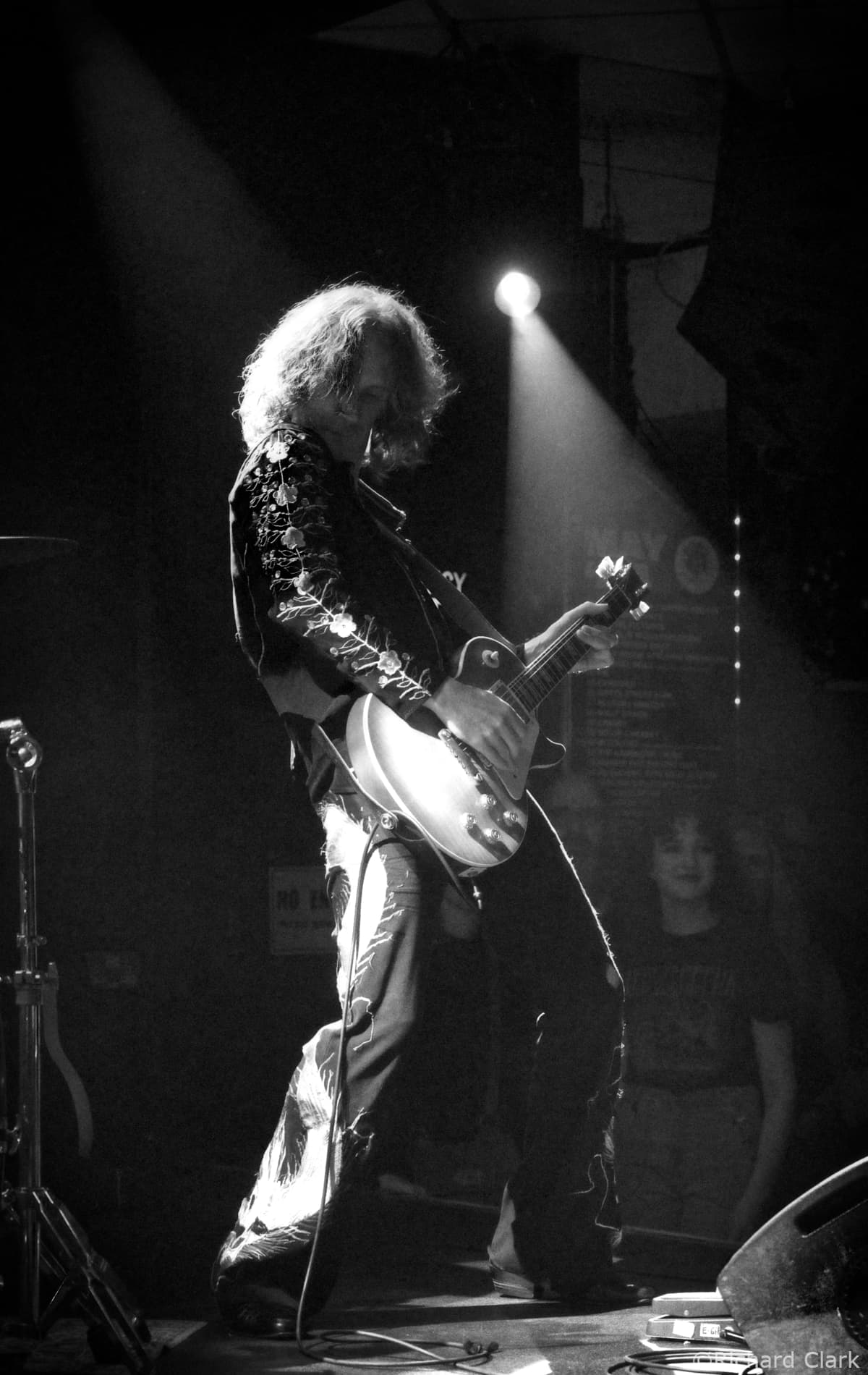
At first I tried with black and white and I pretty much just saw it black and white as well. So that was my go-to, I thought that's really gonna work. But then I start to look at things like textures in terms of clothing, I was looking at how the ligh was hitting people's faces. And I thought like Rembrandt kind of came to me, and saw the angle of the light on one side of the face and slightly more shaded on the other, and there's all these different creative ideas that had kind of seen before that I wanted then to recreate, and adopt into my own style.
So yes, it's just a fascination that started from there and it was a buzz because it's live and it's happening in front of you and there's lots of action, there's lots of jump shots, there's a lot of head banging and it's just fun to capture things like that. And sometimes don't look, and they do a quick jump and say, I've missed that one, you know, so I need to get it next time! So forever there's the drive to carry on improving and learning and developing. So it just took me to more and more gigs really, and going to all different places.
Tom: You talk a lot about will Robinson, who is he exactly Richard?
Richard: So Will Robinson he is a great mate of mine, I known him for, oh gosh, well over 20 years now. He is owner of many things, but he is like the Nottingham Music Mogul, he's like the Simon Cowel of Nottingham. He's a music promoter, a label manager, you name it, he does it.
So basically I'd always gone to his gigs, had a few drinks, dancing, tearing up the floor, all the rest of it. And then one day he asked me to bring my camera down, because I'd spoken to him about one of the gigs that I'd done for the mental health charity. And he just said, come on down and see what you can do. And I told him I'd only done one, so bear with me, I might not be great, but he agreed for the first gig and I pulled out a couple of really good shots and he invited me back to do more gigs and promo shoots. And still occasionally now I'll do a little bit of work for him.
So yes, it's just good to have someone like Will, not only is it a contact, but is also like a great mentor and gave lots of advice to me over the years. Also it meant that I could be with other music photographers like Ralph Barkla who was very influential in terms of giving me advice when I was first starting out. He was there at the same gigs working for Will. So he was telling me about what settings to use, who to shoot, look at all the lighting and how to counteract all the LED lighting and things like that. So he was really helpful all round.
It is really good to know how it's done, from putting on gigs to turning up into all sorts of different venues, to chatting with the bands and building up relationships. So it's a great package all round really. And it's just something that I've really appreciated because after I was able to build a basic portfolio to go onto the next stage. So I'll always go out and support Will where I can and take photos and promote the stuff that he does.
Tom: So Rich, regarding Will Robinson, as your mentor, what advice from him has resonated with you the most?
Richard: I remember one bit of feedback when I decided to up my editing game, and he was like, oh yeah, you've definitely markedly improved in that. But, I think it was just more about asking the right people in music scene, and like going direct to people. So particularly like in the early days, it's like going directly to talk to the bands. It's about doing research of who's in the local area, what's happening on the local music scene and things like that. So that was really pivotal.
When I moved up to Harrogate I started working for the venue Selby, and that was solely based on a very basic portfolio that I built up with Will and his gigs. It was just to demonstrate some of the stuff that I could do. And then the venue were like going, oh yeah, come down and take some photos. And then that led to making a stronger portfolio, with more experience like working with different lighting and different people. So it's just all about connections and it's about putting your best portfolio forward.
The other thing that Will said was that people, like the venues, love photos of the actual venue, showing like an all-round experience from the second you step foot through the door. So it wasn't just about getting the band, yes, they're really important, but also about, trying to play your cards with as much clients as possible. So the bands get their promo shots, the crowd gets to see themselves and also the venue gets to see their venue looking amazing and absolutely jam packed. It sells for everyone and it gets everyone that little bit of exposure. So that was really good. And that's still what I live by today for reaching out to people and showing my best work.
Tom: When building a portfolio, networking is a crucial step in photography. What strategy you use there to make connection with the venue or with a band, Richard?
Richard: For venues what I tend to do is drop like an email with like six images, and say, look here's a half a dozen of what I can do, here's a link to my website, this is who I am, I'm in the area and I can come and do some great work for you and that sort of thing. And something easy like that gets your foot in the door in quite a few places. And for bands it's the same, it's just doing research of knowing who's in the local area and what kind of shots they normally have, whether you can do something different that they might appreciate. It's like you're providing them service.
But again, through social media these days you can speak to most people. Hashtag or DM, and you'd be surprised by how many people reach back out and say yes. And it's like, oh yeah, I'd love to have you down. That's what I found. It's like a lot of venues, they love to have me down there, come in and shoot. It works for everyone.
Tom: This goes the same for bands Rich? I mean, thinking of somebody maybe who wants to start out in this. You contact them by email? I'm talking small bands of course, I'm not talking the mega rock stars.
Richard: Yeah, not the Foo Fighters or anything like that. No, you've got no chance there. But yes, you can go through Facebook, Instagram, X, and just dropping people a line. You can even like tag them and say, look, a shot of a gig I've done and just start like connecting and just like commenting on their posts, say that you like them as a band. You just need to get the conversation going, it kind of warms people up and people can be like, oh, you can do that? All right. Okay. And then they'll maybe put you in on the guest list and things like that. It all can go from there.
Smaller bands really love the attention as well, and they're like not always used to people reaching out to 'em in that way. So, yes, it's good to start those connections. Also like if you're fortunate enough to get into a gig, always photograph the support band because you never know A: who they're gonna be in a few years time, and B: where that connection could lead you. Let them know your details, like hit them up on social media and maybe they'll ask you to do promo shoots, or to go to their next gig, things like that. And by doing that, I've got extra photo passes for a gig for example.
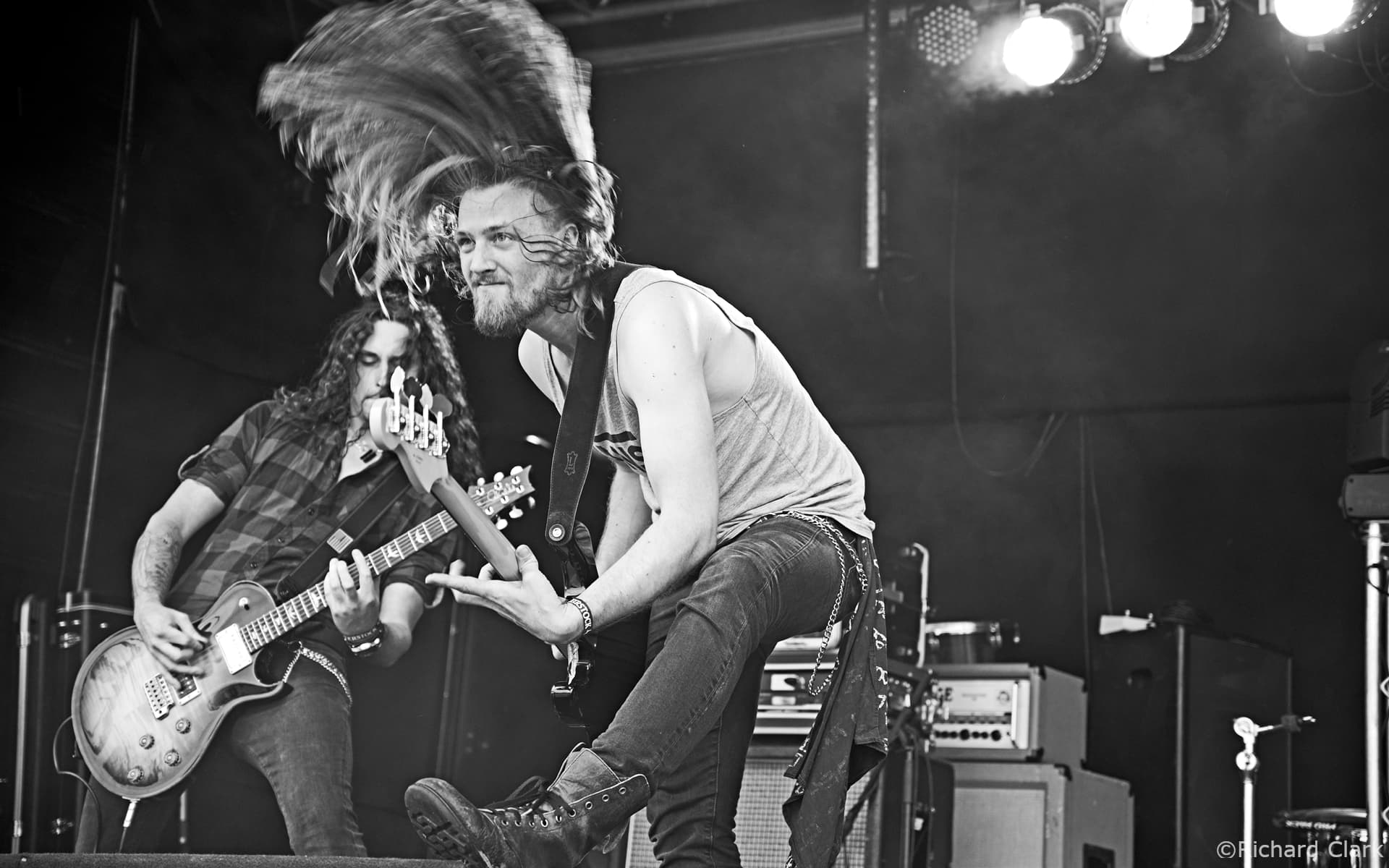
There's also other ways, maybe the weather warms up, you're gonna get more people who are gonna be out on the street and some of them they're gonna be playing in bands. There might be festivals that like going on, and there's no problems in terms of bringing camera gear. And then you're able to take photos and you don't even need to really ask permission, you can just go there and shoot. So there's lots of many ways around doing it. You can network and you can speak to people afterwards as you can show on the back of your camera, what you've just taken. You can exchange details there and say, oh, is there a way that I can send this to you and that sort of thing. So you start to build up that way. It's a lot of hard work, it takes time, but it's not impossible.
Tom: It sounds also a lot of free work in the beginning, I suppose with with little bands, Rich?
Richard: Yes. And then it gets to a point where you'll start charging but you'll probably won't charge much because bands don't get paid much in the grassroots level, especially if they're splitting it four or five ways. But yes, it is a little bit of free work at first, and then it kind of builds as your name builds and your reputation. Then you can like, say it's X amount for a gig or X amount for a couple of photos and that sort of thing. And generally bands are quite happy to pay for that.
Tom: Richard, when you are shooting the live events, you ever get asked to do behind the scenes or portrait shots?
Richard: Sometimes I do, yes. But they tend to be very quick, the ones that are like behind the scenes, you only get a matter of minutes. So you're there with like one flashlight and stand against the wall and bam, bam, bam, and then you're done sort of thing. But it depends on the access to shows that you have. Sometimes I am in the pit, so I get ushered in and out. There will be other times where I'm at the soundboard and then there'll be other ones where I can kind of hang around the gig all evening long that it doesn't really matter. So that's when you get a chance to chat to people and get those informal photos then, but also you get to do the promo stuff as well. There have been a few bands where I've done their portraits in a studio and on location, which is really good fun to do, it's a different test of skill. But usually for me it's live stuff.
Tom: Let's get to the gear question, Richard. Can you share me some insights in your camera gear and equipment nowadays?
Richard: So I have a Nikon Z6, I have a 24-70mm, the 14-30mm and the 70-200mm. So I'll cover quite a bit of range there from your wide, super wide and then telephoto. It can be a bit of a struggle with that camera, but it's about knowing it and knowing when to shoot, what's the best lighting for it and it becomes second nature at that point. I've only got the one camera body, so I am changing lenses. It's a bit like a blindfold test, you know, in the war films like stripping down a gun and like putting it all back together without look really looking. It does get to that point where I'm trying to be as fast as possible, so it can be a quick changeover and then change again. It's a great camera in low light. And in the any of the larger clubs and things like that where the lighting tends to be a lot more impressive, it does perform really well.
I hang out at between ISO 3200 and 6400, so it's quite high. There is a little bit of noise that creeps in, but I'm not worried about noise at the end of the day. If people want to use in large format there is software to de-noise and things like that. But my philosophy is just get a sharp image rather than something that looks flat and a bit horrible.
Tom: You start with some basic camera settings Richard when you go in the pit?
Richard: Yeah, so I have it kind of set baseline at about 3200 ISO, aperture f2.8, and my shutter speed doesn't tend to drop below 1/200th unless I'm doing intentional camera movement blurring or things like that. And that's only when I get a little bit more creative and a bit more wacky when I do that sort of thing.
Tom: Because the pit, I suppose we are talking about a 10 x 2 meter area where maybe two or three or four photographers are at the same time inside?
Richard: Yes. Yeah. And more. Yeah, it can get pretty busy in the pit. So it is a challenge a there isn't much space. There's plenty of width going along the stage. You get all kinds of characters that are in the pit, with some that are more polite than others. And there is an etiquette but's it's tough...like when some people will shove their hands up in the air and photographers, with the cameras trying to point down, trying to get like the bird's eye view shot, and then I've had countless images ruined because someone's camera's in my face.
So it is a challenge. You have to be aware of who's around you, always step behind people and give them like a bit of a gentle tap on the shoulders so that they know where you are. And always to be fair to other people. Don't hug the same spot, and let other people have the chance. Also, you don't want to be stood in the same place getting the same composition all night long either, so it's just being mindful.
It is really, really energetic, really exciting. And it's a massive buzz. You've literally you've got your back to all the fans that you can hear screaming, and then you've got right in front of you the band.
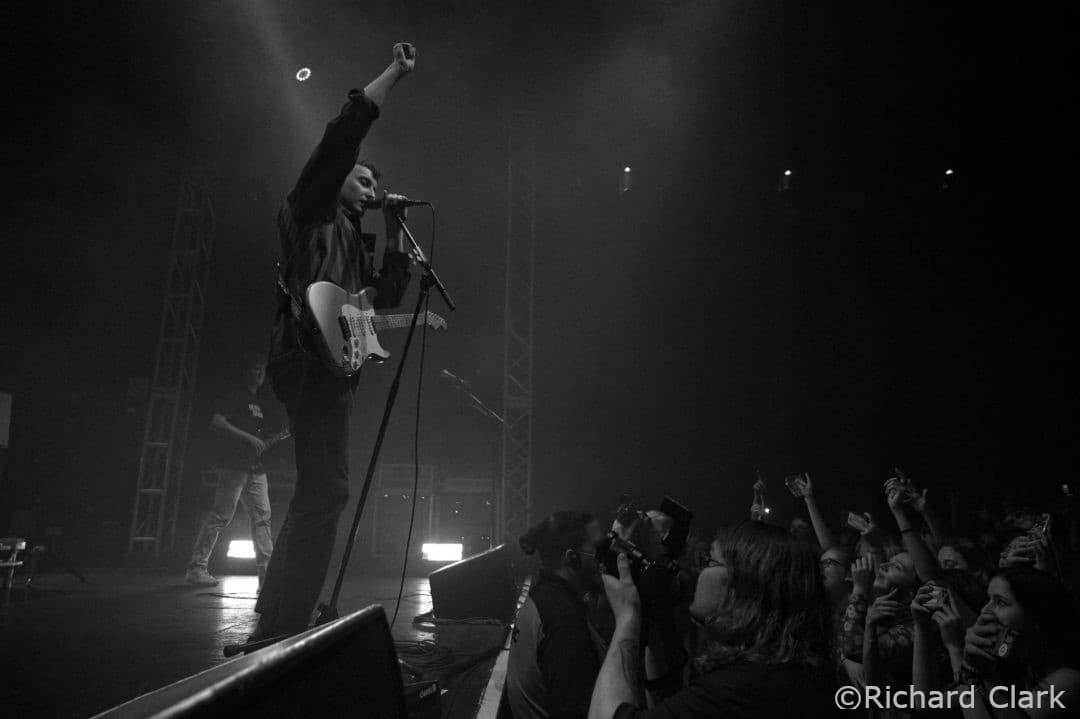
Sometimes the band runs up and get really close to you and they'll give you like a nice smile or like stick the tongue out. They'll just don't really care that you're there and they'll just carry on doing their thing which makes it a great challenge. And of course, if you have to change lenses, it can be a challenge as well, while you're a bit cramped up and stuff, but you kind of make it work in the end.
Tom: And you're wearing some special kind of earphones or something with that loud noise around you Richard?
Richard: Yes I do. I've got noise reduction earplugs and they're really good and they stop the ringing and tinnitus and things like that. So they're a lifesaver and they are definitely well worth needing. When I went to the venue Selby, I didn't have any by these point, but I did have the normal phone ones and just stuffed them in my ears and that made a bit of a difference, but they are not as good as what I have at the moment. You must get those definitely if you want to hear into your seventies being a music photographer.
Tom: Any other accessories you use Richard?
Richard: No, not really. I known people that bring in like step stalls and things like that to give them a bit of height. But no, I don't tend to have any other, like, accessories. My Z6 and my three lenses. I might do some multiple exposures, or trying to get different effects but that's pretty much it, really.
Tom: Richard, the 3 song rule, is that a thing in music photography?
Richard: Oh yeah, absolutely. It's ingrained in my soul. Three songs and no flash. I think it dates back to, although no one's really clear, Bruce Springsteen. He started it, where he didn't want people to take photos later in the concert, you know, when he acts he gets really sweaty and that sort of thing, and probably looking a bit more disheveled. So it is trying to get them when they're fresh, when they first come on. No flash came in because of yeah, distracting the music act. I completely get that.
And they are very particular about it. I did accidentally once overshoot when I was at a soundboard at one gig and a big burly bouncer came and told me off in no one certain terms. I was like, whoop, sorry. I was really apologetic and he was a lot bigger than me, so obviously I was going to listen to everything that he said!
Tom: So Rich, you are, say in half dark, a lot of noise around you, 10 photographers in the same tiny space, and you've got like say 12 minutes to get your pictures?
Richard: Yeah, 12 to 15 minutes, depending on how fast the band play the three songs. It's is a challenge.
Tom: Do you have a strategy to to ensure you get the shots you need?
Richard: Well, in the beginning when I went from a small venue to three songs, I was like Rambo shooting with a semi-automatic, you know, the spraying and praying photo style. But now with experience under my belt, it's a few deep breaths, and nailing the safe shots first. What I mean by that is get each band member individually, compose them to how you would like them, look at the lighting, the clothing, picking up some detail, the tattoos or the hands on the guitar strings and things like that. Nail those safe shots and then a quick chimp and make sure everything's okay. Then switch to another lens and go for more the creative stuff, like different angles, maybe get in the crowd and like zooming in on the emotion and that sort of thing.
I have a bit of a strategy to make sure that I've got every single member sharp, doing something that I'm really happy with, and then I go wild after that point because you've already got some in the bank. That's a good confidence builder as well, knowing that you've got some on your cards already. Particularly when you're first new to it, then it's about confidence, it's about knowing what you've got, and knowing your camera gear as well. I know my camera gear like the back of my hand, so, I know what I can nail.
Tom: I was wondering how you were doing it because if you have 12 or 15 minutes, the light is changing all the time, the position of the band members is changing all the time, and you only have one camera body. So you need a strategy, to shoot first the shots the venue or the band will want, and then go for the more creative ones?
Richard: Yes. Yeah, definitely. I get the safe ones in first and then switch lenses and change your perspective. I use wide shots sparingly because I think people can get a little bit bored of the wide angle shot. So I use that to create a more dramatic effect and I rarely use the 70-200mm unless I'm right at the back and you need binoculars to see the band, or use that lens in a shot when the crowd got the phones up recording or taking pictures. Or if I'm up on like a balcony and there's a nice bird's eye view and things like that.
So I change it up a bit. It's just acting very quickly, but with a very calm head. You know what's gonna work, what are the band gonna look for, what is the venue gonna look fo and what we'll possibly sell. It's just being as fast as possible but without rushing and then making mistakes or missing shots. If you do miss shots, then you just have to kind of shrug it off and nail it next time.
Tom: I say it's a whole other world than landscape photography.
Richard: Yeah. Yeah. But you do have to wait for the light too!
Tom: Yes. But you have just a little bit more time in landscape photography!
Richard: Yeah. Yeah, definitely!
Tom: Richard, is there a gig you remember the most, for any reason?
Richard: Oh, there's a couple really definitely, Meat Puppets was just absolutely incredible. I've got a shot of just rocking out and him just leaning back playing the guitar and the look on his face as he was just absolutely loving it! That is special because I'm a massive Nirvana fan. and I remember back in the nineties listening to Nirvana and plugged in New York and now hearing Kurt and Chris from Meat Puppets and think, oh wow, you know? And then sending the images off, and Elmo Kirkwood one of the sons, absolutely loved the images and I was a little bit cheeky to him and I was like saying, oh, well since you love the images so much, you know, I've decided that I'm gonna come out and move to America to follow you. And he is like, yeah, yeah, good one, I think Leeds need you. But it was worth a try!
That was just brilliant because I managed to stay for the whole show, not photographing for the whole show but just to sit and listen to the rest of the set. And I stood next to the support band ,Monkey Band they're called, and when Lake Fire came on we just looked at one another and said this is why we're here, this is just magical. I was like gutted that I couldn't photograph it. but at the same time I was able to really properly witness it and I never thought I'd see them live for a start, let alone be able to photograph them. So that moment in my music career for sure, something that I'll never forget.
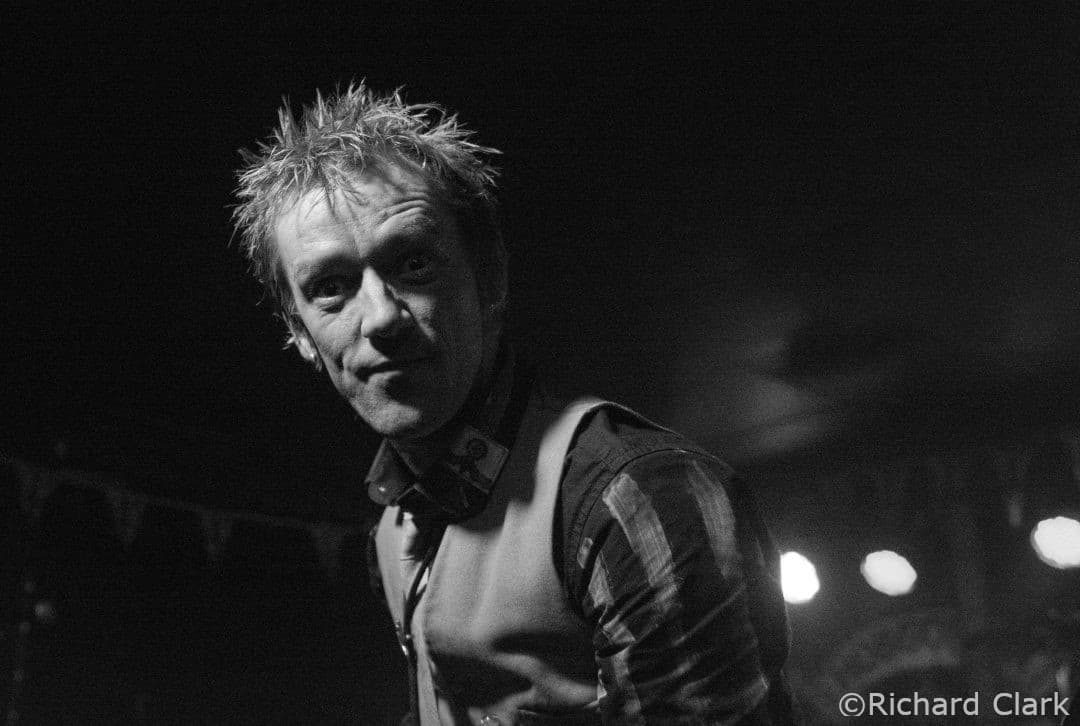
And then the other one is the Sex Pistols Experience. That was at the venue Selby and was special in many ways because Johnny Rotter, who was just absolutely incredible, he was so great in front of the camera. He well and truly had that character down. And then Kid Vicious who'd got these little jumps and stuff like that. And think I already told you this before once, but every time when he did one of these little jumps, every time I missed it! It was like really frustrating, but I was like, I'm determined to nail it!
The picture I got of Johnny Rotter, that one was published in the newspaper, and that's the one won me the award in 2019 and 2020. So, yeah, two highlights and too actually photograph them that was brilliant.
Tom: Richard, there have been many great music photographers. I can think of Jim Marshall, Annie Leibovitz which I particularly like, Mick Rock or Linda McCarthy even. Did one of them ever inspire you or did you incorporate some aspects of their style into your own work?
Richard: I think for me it was Jim Marshall and just the way that he captured people. He was there with his three Leicas around his neck and he just nailed it every single time. He is like, I don't know how he didn't miss a shot, he was just unbelievable. I've looked at some of his negatives in his sheets that he's put up and it's like there wasn't a bad shot. I just love the atmosphere, I love his photos of Jimi Hendrix or Otis Redding, BB King, quite a few people that he photographed and it's just absolutely phenomenal. I kind of particularly like his black tones in his black and white images, so I started to kind of try to emulate some of his stuff.
And there's Mick Rock and he was there with the shot of Queen for Bohemian Rhapsody, you know, when they stand tall like a diamond and with a black background. I've tried to make some of my live shots a little bit like that, not in nowhere near of the same league, but to have the background nice and black and then their faces like really well lit. And I've tried to capture some of that in some of my live gigs, like Dr. Feelgood recently, that was in that style. I had that in my head, to try and capture that but then obviously you have to wait for the lighting, and there's an element of luck in that, and a little bit of editing of course.
They're the kind of images that I kind of go for, they are phenomenal. And more recently there's Todd Young who's a Nikon USA Ambassador, I really like his style. I like the color images that he shoots and how he embraces like the red and blue light that you get, which, I absolutely hate. It makes people look like aliens, but what Todd manages with those colors and skin tones is amazing. And it kind of made me try and think in a different way and make those images in color, whatever the light is. But make that work and not look like the person's not human is not easy. I've just tried to do that as best as possible.
Then there's Matthias Hombauer, who's no longer doing professional music photography but I followed him for a long time, and how to be a rock star photographer. Some of his photography, like with Guns and Roses or the Foo Fighters and all kinds of people, I've taken a little bit of everyone and tried to kind of blend it.
Annie Leibowitz she yeah, blows my mind. All like timeless, iconic images and they will stand the test of time, you know, way after those people are gone, people will still be looking at those images and going, Wow!
Tom: They are like the Ansel Adams in music photography.
Richard: Yes, absolutely. They've certainly done the blueprint. And it's just, they'll live on definitely. There's still galleries showing their work, it's fantastic.
Tom: Richard, you touched the subject of editing, you find it difficult to do? Music photography seems a genre where a better fit would be in black and white, for the ease of editing, than in color, where I can imagine sometimes color is very difficult with the lights, with the clothing, with everything going on?
Richard: Yeah, definitely. I think that was certainly my mindset in my early days, if in doubt convert to black and white. But sometimes black and white doesn't always work, you have to get a really good, strong image with contrast and making sure that textures are bang on with the clothing and the face as well. I really started to try and work hard in color. But like you say, the skin tones, some of the editing can be really, really challenging and that's what why I tried to up my game and work that bit harder on it.
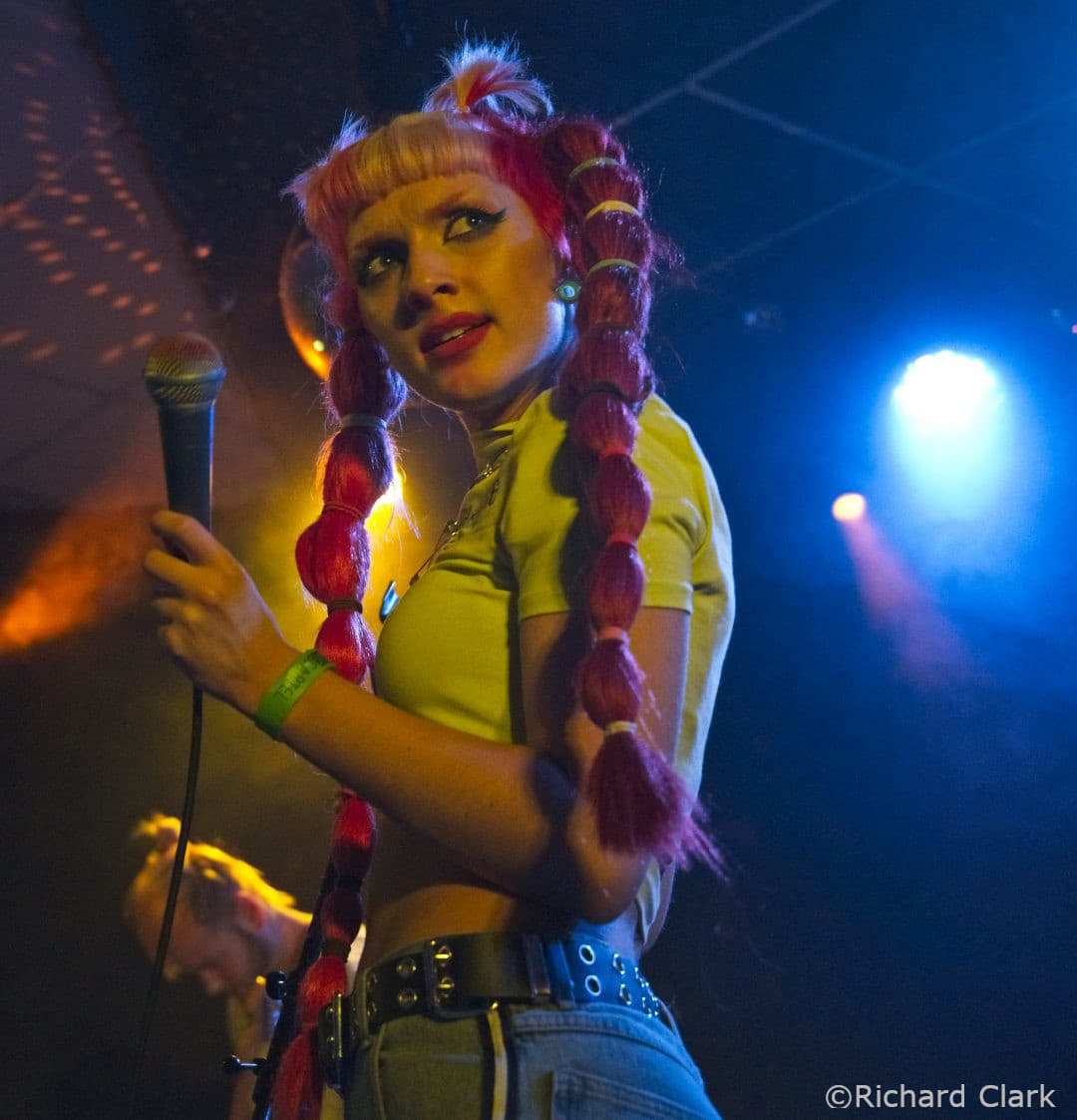
There's one gig, it was Hands Off Gretel, and Lauren Tate, the lead singer, she was there in a yellow T-shirt, bright red hair with bits of yellow in her hair and things like that, so black and white wasn't gonna work for that, you had to nail her all in color. She had great facial expressions, so she was a great person to photograph. But it's looking at skin tones and making sure they look natural, and I think that's the hardest bit for me, making skin tones look natural.
Tom: Well, maybe now with all the AI coming out, it'll get a bit more easier.
Richard: Yeah. Yeah. It'll be someone else doing or AI doing it, like click a button job. I was about to say to choose software that works for you and something that you understand, know what it does and how to do things that you want it to do.
Tom: And you have people who enjoy editing, and you have people who prefer to shoot pictures and get editing done quickly.
Richard: Yeah, absolutely. Yeah.
Tom: Rich, for any aspiring music photographer looking to get started in this photography world, you have like maybe two or three tips you could offer them on how to get off the ground?
Richard: Yes, so I'd start off by first of all, asking friends if they know anyone who's in the band, because I almost guarantee that someone out there listening will know someone who is in the band. They'll maybe say, oh yeah, come down and take a few shots. Do some research and look for your local music venue, it could be a local pub, bar or even a cafe who have music bands in. Ask them if you're able to come in, take a few shots and gain experience and just being honest about saying that you're just trying to get into it.
Offer to put them up on social media and to send them to the venue so they can use the shots as well. Ask like local music promoters. You have to do some research, see what's going on in your local music scene. They don't have to be big people. Even taking your camera out into the street can work. So if there's someone there with the guitar and singing, take a few shots of them and get half a dozen really strong images that you can send to those people and just say, this is what I'm doing.
You can put it up on Facebook, X, Instagram, whatever social network you're using. Get people to kind of get eyeballs to your photos and just take things from there. My experience is that venues and bands really want people down there to take photos because they absolutely love it. And most of all just enjoy the process, enjoy the photographing and enjoy the journey.
If people want to reach out, drop me an email on social media or anything like that, I'm happy to answer any questions as well or where to go and things like that, no problem.
Tom: It would be amazing if we could get people who listen to this episode and decide to give it a go.
Richard: Yeah, definitely.
Tom: Richard, I think we have covered the main things for tonight, we have a lot of good information here on music photography now.
Richard: Fantastic. Excellent.
Tom: Richard, thank you. It has been a pleasure talking and hearing about your experiences!
Richard: Thank you very much. Thanks for having me on, it's been an absolute pleasure.
Tom: I am sure we are going to hear a lot more from you.
Richard: Oh yes. I'll be posting, don't you worry. I'll be onto the next level soon. Rolling Stones, here I come.
Tom: Exactly. We want to see every step.
Richard: Yeah, so photographing a band next week, so back in the pit soon. I'll be posting notes straight away.
Tom: Okay. I'm looking forward to that Richard. Thanks a lot and keep in touch.
Richard: Thank you very much.
Outro:
So I think we got another great podcast episode here with Richard, and I'm very thankful for the time he has given me to share his insight and knowledge. Let's hope of course, it serves someone, a beginning rockstar photographer, as an example, and gives it a go. That would be amazing.
Remember all the info about Richard, you can find it back in our show notes. As always, if you enjoyed our podcast, you can follow us on Twitter and Facebook and give it a like, subscribe to our channel and leave us a comment. You know, it's available on all the main podcast apps such as Apple and Spotify.
Also, we are getting our podcast out now on YouTube, so check it out and subscribe there with a simple click. It would help us a lot to go forwards.
I'll leave you today with a quote from the legend music photographer Jim Marshall, who said: "How should I know what I've captured? I was just there and took some photographs. This is all about them. I didn't take pictures to make a statement, I took them to make great photographs."
Now go out, keep shooting pictures, inspire people and move your photography.
See you next week. Bye!
All images used with permission and © Richard Clark