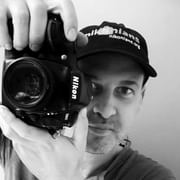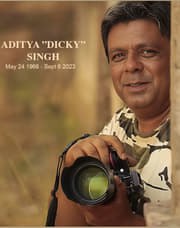


Welcome everyone to our podcast, and for those who wonder why this week we have a little different intro, it's because in the world of wildlife photography, there are a few whose lens capture the essence of nature with such breathtaking clarity and passion as Aditya Dicky Singh from India. For many years, his name became synonymous with the art of preserving the wild in frozen moments and each frame telling the story of beauty, conservation and the wonderful and fun human being, husband and a father.
So as we prepared to share with you on our podcast an interview with him, we found ourselves reflecting on the sudden profound loss of this visionary talent at the age of only 57 and just weeks after we recorded our interview with him.
He was a soul who roamed the wilderness of Ranthambore Park with boundless curiosity and reverence and his wildlife pictures transcended mere images. They evoked emotions, sparked conversations, and ignited a collective conservation call for the fragile splendor of our natural world, inside and outside from India.
I was fortunate enough to have met him twice, and though he may no longer walk among us, his legacy endures forever through the countless nature photographs that continue to inspire millions. So join us as we remember and celebrate the life, work and enduring spirit of Aditya Dicky Singh in our recorded interview.
A master of the wild, whose legacy will forever echo through the corridors of time.
[original start episode]
Intro
Dave: Spanning the globe to bring great photographers and their experiences directly to you. It's 2am in Japan, 7pm in Spain, and 10. 30pm in our guest's home in Ranthambore, India. That means it's time for the Camera Cafe Show, created by photographers Tom Jacobs and Dave Payne. Hello there, Tom. Would you want to welcome our special guests and introduce them to our listeners?
Tom: Welcome amigo, and welcome everyone for another podcast episode. And today we cross into that magical land of spices, wonderful culture, excellent food, and of course, mysterious animals. A place I've been numerous times to, and always holds a special place in my heart. Today, we move our podcast to India, and it's our pleasure to talk to one of the biggest names in wildlife and tiger photography, Aditya Singh, or Dicky, as most people know him.
He's been around tigers almost 30 years, lives at the outskirts of the Ranthambore National Park, is a master of wildlife photography, publisher of books and touring around daily through the park with photographers to look for elusive tigers. I had the pleasure of meeting him and it will be an amazing episode. Let's get things rolling.
Tom: Dicky. Good evening.
Aditya: Good evening, Tom. Good evening from the land of tigers.
Tom: Oh, I love India Dicky! A question to get things warmed up. I think I heard one time you've been bitten by a Cobra ?
Aditya: It was a dry bite. So a lot of venomous snakes they bite you but often don't release the venom.
So I did get bitten by a Cobra, but, uh, it did get me to the hospital, but nothing really happened to me. If it wasn't a dry bite, I probably wouldn't have been here.
Tom: So, you'd choose the cobra or the tiger?
Aditya: I would choose the cobra. Better chances of survival. You can still run away, and they'll probably only bite you if you step on them.
Though, to be fair, tigers are quite, you know, harmless to humans.
Tom: Dicky, tell us a bit about yourself before you began your photography journey. I mean, what made you go out from Delhi and visit Ranthambore Park so often?
Aditya: My father was in the Indian army. So I've actually lived all across India in the early parts of my life. Like I've gone to about nine different schools in my 12 years of schooling, but I did spend a lot of time in a boarding school in Delhi. And, uh, once I finished school, I'm a trained civil, I mean, I did a degree in civil engineering. Then for a short time, I was with the Indian civil services. And then at some point I decided like, this is not what, what I like to do.
So by that time I'd been married. So we decided to move to Ranthambore. This was fairly early. I just got married. And I think within a year we moved to Ranthambore. We came to Ranthambore and at that point, this was a really small town. And the only possible way to make a living was to start something with tourism, then make your way around.
So we opened up a resort where you've come and you stayed. And we ran it for 21 years till 2019. Since then we closed that place down, built a house and a really small home stay. That's open only to people we know and plan to spend the rest of our life here in this new house here.
Tom: And your photography journey, Dicky, you would say that it all started in 1999 when the BBC wildlife division asked you to help them out?
Aditya: Yes. So I got into, you know, I got keen. I was very interested in wildlife since, uh, 1984. So from then till I actually moved to Ranthambore, I had no cameras, and I mean, cameras weren't part of my life. Binoculars were. So I spent a lot of time traveling to wild areas, but photography wasn't a priority then. And then, in 1999, I was working for a documentary film, which was to be broadcast by BBC. It was commissioned by BBC Natural History Unit, and they wanted still pictures from, you know, behind the scenes. And that's where my photography, that was actually my first assignment in my life. And it was also the first time I worked with a camera.
Tom: And the cameras, they came from them or you had already a camera?
Aditya: Oh, no. So they send the cameras. What happened was, you know, most BBC shoots are a really small, lean crew. So they were four of us working on that film, two tracker drivers, two guide drivers, me, and the main cinematographer, a person called Colin Johnson, who was a big influence in my early photography career as such.
He wasn't a photographer, he was a filmmaker. So, at some point, you know, the producer said that we need behind the scenes still pictures and we need still pictures from the park. So they sent down what then was state of the art cameras, like f2.8 lenses and f4 lenses, and it was slides then you know. I remember Canon EOS 3s, which were like the best camera bodies there were, and so all the kit landed up here and then they said, okay, someone has to shoot it. So we, four of us, which is the entire crew had a meeting and Colin, who was the cinematographer, he told us that he has to shoot the main film, so he obviously can't shoot it.
So it's got to be one of us three, me or one of the two guides who were working with us, Salim and Vimal. By default it became me because the camera manuals were in English and both the guides said that their English is not very good. So I got to read the manuals.
So I actually, I did my first assignment, which got published on BBC, it was for BBC film division with cameras, which I'd never seen before. And I read the manual to learn to use the cameras.
Tom: And how long they were there?
Aditya: That shoot was for 200 days.
Tom: Wow. So you get to know each other very well, I suppose.
Aditya: Yeah, yeah, we did, we did. And, uh, in fact, Colin has come and done some six documentary films here, so I've worked with him for almost a thousand days in my life.
Tom: And apart from him, you meet a lot of other famous wildlife photographers. We will come back in a moment about that. But what do you consider, Dicky, the two or three best practices to successful shoot some pictures of tigers as elusive as they are?
Aditya: So one things is, something I'd read about a photo editor of a magazine, I'm not even sure if it's true or not. He said that the difference between an amateur and a professional is that the amateur is there for three days, and the professional is there for three months. And so for animals as elusive as tigers, you need to give them time. You can be here for like three days, and you will see tigers, but then the thing is you'll have to photograph whatever you see, like, you know, they're lazy animals. So half the time that you see them, they could be sleeping. So you have to give them some time.
The other thing, which I was taught very early in my career was that you have to have a plan. You have to have a plan, and it's better to have a plan with a plan. It means what do you wanna do with the pictures?
One cool thing I find is that, say if I go to some someplace for a week, then I generally make a plan that, okay, when I go back, I have to make a small brochure of this script. By brochure I mean like I have to do a five page photo article on this trip. So now if you come to Ranthambore and you want to do a brochure or a photo article of Ranthambore, then you need not just the tigers, you need pretty much to establish all of Ranthambore.
So it helps if you have a plan because then it, you know, that basically means that you kind of have come with some sort of an idea of what kind of pictures you need and you work towards that plan. You may not get all the pictures that you planned for, but you still end up getting a very good selection far better than just driving around and trying to pick up pictures.
Tom: Very good point. Dicky. I had the pleasure to meet you and go out shooting years ago, but for those listening at home, describe us a moment, how a typical day looks when people book at your home stay and you go out to shoot pictures?
Aditya: So, you know, tigers are like forest animals or what you call jungles in India. They also elusive unlike in grasslands or these big, you know, dry bush forests. Where you see a lot of animals and you see all pretty much all whatever you want to see every single day, in jungles in India, you don't. So your typical day goes like that. You are looking for tigers, but you essentially know at the back of your head that you will not find them, particular on that particular day. So you basically keep picking up pictures every day. You pick up a few good pictures every day. It could could be tigers. It could just be landscapes. It could be some birds. It could be some deer. It could be whatever. You keep picking up pictures and you stay for a few days, like at least, I would say at least five, six days.
And if you pick up pictures in every, every day, you will get tigers in those five, six days. That's how you build up a sort of a decent collection of everything. So when you're not finding tigers, instead of just rushing around. I generally try to, and I make sure everybody with me, does that.
We pick up pictures, whatever we think we find in good light. I mean, like we say here don't waste good light. If the light is good, shoot the first thing you see. It's better to get a common animal in good light than to get a rare animal in really bad light.
Dave: Dicky, when people come to your stay with you and to do tiger photography, do you give them any kind of coaching or discussions about tiger behavior, do's and don'ts, that kind of thing?
Aditya: We do, we do a quite a lot. Like, I mean, I'll be all aware that, you know, all photographers love to chat.
They love to talk and talk is mostly about photography. So that's pretty much all you're talking about while you are here. We give them some brief on what to expect and then on what to do when you get the stuff that you're expecting. So we do to give them a brief and more than that, it's not like a one time brief, you sort of updating them on it, like pretty much every day or every six hours.
And the other thing is almost all the people that I get have been photographers for like years, so you don't have to teach them anything about the technical part of photography or the art of photography or something. The single most important thing when you're shooting tigers or say any big cats or any big predators, is that you most probably in a vehicle. So you know, unlike if you're on foot, you're in a vehicle, you're quite restricted. You can't just go anywhere. In India, you have to, in the forest, you have to stay on the tracks. You can't go off the tracks. So the most important thing to tell them is how to line up the vehicle. When you're photographing tigers, that, in my opinion, is the single most important thing.
Where do you park the vehicle for a particular shot? And once you've got a set of shots from there, how do you change the angle so that the shot looks different? So that you get another angle and a different set of pictures. Quite often, with tigers particularly, if you see a tiger in the open, you don't drive up to it. Ideally, you shouldn't drive up very close to it, because if you drive up to a tiger, the tiger would naturally tend to start walking away from your vehicle, which is not great for photography.
So it's better to figure out which direction the tiger is moving in and park accordingly. So you have to wait in a place for like a few minutes before it becomes photographic. Once you start figuring this out, then they actually come quite close to you and you can visualize that they'll come in this gap. I mean, like some very serious photographers and a lot of documentary filmmakers hire people like us to take them inside. And they essentially hiring us for, uh, positioning skills. The single most important thing is that where do you position the car and how do you change that.
Tom: Okay. So Dicky, if you get an email from the next photographer wanting to come to your home stay and he asks about gear. What you think is essential to bring?
Aditya: So gear is a no ending, you know, like I've gone through a lot of gear over the years. Now I'm reaching a stage and it's also probably because of my age, my back is not as good as it used to be, but I would now try to carry as little gear as possible, particularly in forests in India. It's not easy to switch lenses. It's too dusty here. So ideally you should have each lens on a camera body with itself. Now you can't possibly, if you have four lenses, that means four camera bodies, which means carrying it in like, say, in a bag or two bags. And that just becomes too cumbersome. And you start missing shots because, you know, you confuse, shall I pick up the 500mm or shall I pick up the 70-200mm or whatever.
The kit I now use, or I love to use for tigers, I've switched to Nikon mirrorless, the Z mounts. So I have one camera with a 100 to 400 mm lens and one camera with a 24 to 120 mm lens. So I'm essentially covered from 24mm to 400mm.
At some point will get a bigger telephoto, but it's not so necessarily for tigers. Tigers are big animals and so a 500mm or 600mm often gets too tight, bit too tight. I just love that the flexibility that this 100 to 400mm lens gives you. The first 400mm I bought was the Nikon Z mount, I didn't own the older, you know when it was in F Mount cameras, I didn't own the 400mm. I had a 70-200mm or 200-400mm.
But for tigers, ideally the best range is somewhere between 100 and 300mm.
Tom: Would you say that mirrorless now Dicky, has helped your photography a bit in your case?
Aditya: It has. It has. Uh, it's made a it simpler, I mean, you know, a lot of things like auto focusing is far, far more advanced than it was earlier. But then, you know, like, I mean, I started with shooting slides on cameras where the auto focusing was good, but nothing compared to what it is now. So every year, every time new kit comes out, it feels like, oh, wow, this is a game changer.
So, mirrorless, the new mirrorless systems, the auto focusing is mind blowing. They have an insane amount of features, an insane amount of customization. The flip side is you end up taking far more pictures than you'd plan to. I mean, the Z9 shoots like at 45 megapixel and it shoots 20 frames in a second. So even if you try to hold, really hold yourself, you end up taking two, three pictures of each frame and, you know, it's very easy to fill up the card. Very, very easy to fill up the card. So you have to really hold back on this.
Tom: You remember the days of slide film, Dicky, when you had only 36?
Aditya: Oh, yes. Uh, and, uh, here it was even slightly trickier. We couldn't buy slide rolls locally, so we used to buy them from Delhi and that time getting them from Delhi, the drive was really long. So we had to get them in trains and then with the weather in Ranthambore, we had to keep them in refrigerators. You got like a dozen slide rolls from Delhi, like 12 rolls of 36 slides and you are planning to make it last till your next trip to Delhi. So if you had a roll in your camera, which was at something like 29 pictures and there's a tiger stalking, waiting to charge. You know, you have only seven shots left, so you really, really held yourself back.
And the other issue we had was, once we shot the slide roll, we had to send it to Delhi for developing. So you would get to see your pictures about two months after you shot them. So you had, I mean, if things went wrong, if the picture wasn't correct and slides, as you remember were was very unforgiving, you know, if your exposure was a bit off, it's gone, everything like, you know, and they were 100 ISO or 50 ISO, we had a 60 ISO pro and later 400 ISO came out. That was like brilliant. I mean, 400 ISO is what we thought was like, amazingly fast. So the slides, the other problem was we would see the slide two months later. So by that time, you've kind of half forgotten where you shot this or what you did wrong.
And in fact, I switched totally to digital in 2005. And I don't, I mean, I noticed improvement in my photography because, you know, with digital was that replay was instant if you wanted or at least a few hours later, so you knew where you went wrong.
What happened with slides? You shot it, you had no clue what settings you had used. We used to try to note some setting down in a smaller book, but because you get the slide back after processing, like it would take two months. So by that time you kind of forgotten that pocket book. So you don't even know where it went wrong, but digital the feedback was near instant and that changed things quite a bit.
And now with mirrorless, it's like things have become quite easy or standard. I mean, your standard pictures are very easy in order to shoot. So pretty much everybody can shoot very similar ish pictures, technically speaking. So it all comes down now to, I think, in my opinion, composition, composition, composition.
Tom: And mirrorless also has the advantage now of the very good low light capability.
Aditya: Amazing yes, like, you know, 20 years ago I thought a 100 ISO was fast. Now you think in 3000 ISO, you can push it even more. Yeah. But like that, that's a huge, huge difference, I mean 20 years ago getting shutter speeds of 1/500 was like your dream. Now you like, now I'm on 1/2000, 1/4000. I mean, if I'm below 1/500, it's by design. it's because I want to stay low.
Tom: Yes. Because everybody wants to get the shot of the tiger drinking in the water hole in sunrise and now with this low light capability, it's amazing.
Aditya: You know, like with slides, I remember when we entered the park, for the first hour, you didn't take a single picture because it was too dark. Yeah. True. Now that first one hour is the time when you take all your pictures, because that's like, you think that's the golden hour you know, but with slides that was really difficult. You'd only pictures of static things. But when you enter the park now, some of the light that we can capture now was unheard of 20 years ago.
Dave: Dicky, today with your mirrorless gear, what kind of ISO range do you shoot within? When you're doing tiger photography.
Aditya: I carry two mirrorless bodies, one with wide angle and is set like how default mirrorless is set.
The one which I use on telephoto, I've changed the ISO settings, I don't use auto ISO. I change the ISO manually, but I've changed it to change in full stops. So I go from 400 ISO to 800 ISO, there's nothing in between and 800 ISO to 1600 ISO. So I, by default, keep my camera at 800 ISO. If I have to switch, if I think I have a lot of light, then it's just one switch down to 400 ISO. One switch up to 1600 ISO.
The other mirrorless camera, the ISO goes up by one third stop. In fact, in my telephoto, I keep my ISO on full stops and even my aperture on full stops. So I go from f5.6 to f8, there's nothing in between. I have done this because with tigers and the other interesting, really interesting animal for me is the leopard, you need to be able to shoot really fast. You know, they don't give you so much time. They often don't give you so much time. And especially, you know, okay, portraits, if they're sitting down or resting, like tigers, particularly, you'll see them for a long time. But if there's any action, it's going to happen very fast.
And tigers can go from, like all big cats, can go from sleeping to full charge in a fraction, you know, in about two seconds. So I like it on the telephoto that I'm able to change the aperture and ISO by full stops. So I either double the amount of light that coming in or half the amount of light that's coming just to make it faster.
But with the wide angle, then it's like everything goes up by one third stops. And the other thing I have is, which was actually drilled into our heads by the other photographers we worked in the early days, was that you have to have a mental default setting. That when you pick up, say, your 100-400mm lens, you know, or even when you take it out of the bag, you know, that it's at f5.6 and 800 ISO, the focus point is bang in the center and there's no exposure compensation. If I switch any one of these settings, the moment I stop shooting, I put it back to the default mode. That default mode is very important because what if you don't go back, I mean, if you don't go back to your default, you put the camera back in your bag and you pull it out, and then the next few shots that you take, you realize that you had it two third underexposed. So the default is like kind of just ingrained in me. I have to put everything back in default. I'm guilty.
Dave: I've done that.
Aditya: Yeah. No, everyone's guilty of that. One of the stupidest things I did once was, you know, quite often you switch the preview on the back monitor off, but just to save battery. I was shooting black and white, so the camera was in monochrome. And I had some five minutes of fantastic tiger and cub action, and I shot the whole thing in black and white. And that is just, I mean, it's easy to make these mistakes. I call these schoolboy mistakes, but we keep making them once in a while. So the idea is like, don't make the new amateur mistakes.
Dave: Remember you heard it here first folks. Even Dicky makes schoolboy mistakes. So don't feel bad.
Aditya: Everybody does. And we'd be lying if you say you don't make schoolboy mistakes.
Dave: I think I've made more than my share of them.
Tom: Dicky, quick question. You do a lot of editing on your pictures in Photoshop?
Aditya: Not so much. You know, I shoot a lot. Because I live here, I'm actually like at least four or five days a week out shooting. So I have pretty little time to process the pictures. A lot of my friends would like, you know, would come here for 15 days and then they go back to wherever they are, and then the next trip is a month later. So they got a month to work on the pictures. I typically would get a weekend. So what I've started doing is, I process very few pictures and I kind of half process them in the sense that I'll just fix them in the raw stage in Photoshop and save it as is there.
So only if I need to use that picture somewhere, do I then finally tweak it. Otherwise, I just do your basic light correction, color correction, whatever, all in the raw stage and just save it. It just saves me time. And my computer, uh, my heaviest folder is called to do, I mean, these are things I have to do and, and just keeps filling up, filling up, filling up, and then reaches a stage where you've just got to delete it. You backed up the pictures, so this I'm not doing anymore.
Processing has also become far better. Processing software, it became really good now. I mean, like early, early Photoshop, you had to be quite a geek to use it. And you know, we were like, I'm a civil engineer by training, but I was one of the last generations to finish engineering without computers. So I'm not really, I'm not very, very confident with computers itself. I remember the first few versions of Photoshop were quite difficult to use for someone who is not, who is not very good at using a computer and now it's become pretty good. I mean if you ask me, like, if you take a straight picture, by a straight picture, I mean, the sun is behind your shoulder and you know, the animal is front lit or whatever the subject is front lit, in photo raw, if you just press auto, it gets 90 percent of it, right? Yeah, it's amazing. It's only when you're silhouetting or, you know, shooting back light or so, then the auto doesn't work all that well, but like for most of the cases, it just gets it right.
Tom: But it's something you enjoy, editing?
Aditya: Oh no, no, no, I don't like editing the pictures. I don't like processing them. Yes, I mean, I love to go see through the pictures and like, uh, figure out, okay these are the ones that I like. I normally, when I import my pictures, I go through them and I rarely delete pictures, even if there's something wrong because storage is, I mean, storage it's getting cheaper and it's an expense that you have to handle to save time. I don't really, you know, go through and like delete the junk and keep the keepers and things. But I like to go through just to select the pictures that I want to process.
And I usually give them a rating. So my rating system is two sets of rating. There's one star and the three star. One star is some picture for personal use or personal interest. It's not something I'm going to publish or even share with anyone. Three stars is what I would process to print or whatever, store, keep with me. So I give like say about 1 percent of the pictures that I take a three star rating and I put them in a folder called to do and the way they keep accumulating. And that folder becomes like, takes up half your computer space.
Dave: Dicky, let's take our listeners in a different direction, show them a different side of you. In our earlier discussions, it became clear that you've been active in and founded a number of key conservation groups or roles, including the Andala Plateau Water Security Project, Travel operators for Tigers, Third Tiger Crisis and Kids for Tigers. It begs the question, do you consider yourself a conservationist first or a photographer first, and why?
Aditya: So I consider myself a conservationist first. That's because a conservationist or whatever you would call it, is someone who loves wildlife or wilderness. I started off that way for about the first 13 or 14 years since my wildlife interest started. I didn't even own a camera. It was only binoculars. And the cameras came much later. I am a very serious photographer who spends a lot of time with cameras, like I almost, I don't step out of the house without a camera, but I still consider, I would consider myself a conservationist.
So, one of the things you've probably not heard about is, my wife and I, we have a farm pretty close to where we live. We bought this farmland, which is barren, barren land, not much, but about 50 acres of it. And over the last 24 years, we've converted it into a proper forest with the same, like we didn't plant trees there, we let the natural regrowth happen. It took 15 or 20 years, we protected it. And now we are proud owners of 50 acres of forest where we get tigers and leopards and deer and we have water holes and it's like, it's our own forest.
Dave: What do you see as a conservationist, what do you see as the biggest threat to tigers and their future in India?
Aditya: In my opinion, you know, like when we talk about ,say wildlife conservation, it's a small part of ecosystem conservation globally. Really speaking, pretty much all our environmental mess can be pinpointed to one word, which is consumption. So the more we consume, more power we consume, more metal or whatever, more minerals we consume, more material we consume, the bigger the mess we're landing up ourselves.
And so essentially you know, a climate activist, a wildlife activist, a landscape activist, a wilderness activist, they're actually all part of the same problem. The problem is the same, that there are too many of us and a significant percentage of us, not 80 or 90%, but like 10% of all the humans in the world, or 20%, the consumption level is far too high.
So, you know, it all comes down to like...it's just weird how things are. It's funny, like, you know, I want want uninterrupted power supply throughout my life to run my gadgets, but I also want to save my life. So it's very difficult to reconcile both of these. You know, a lot of our power comes from dodgy sources and a lot of our infrastructure is seriously damaging to the environment. Now, when you say environment, you see the ocean, the forest, the desert, everything is affected essentially by consumption and big urban centers or by the rich and rural area for everything basically comes down to consumption.
Like you know, for an average person, the thought is that the single biggest danger for tigers are tiger poachers. In my opinion, that may not be in the top three or four threats. You know, a poacher can come, or say a gang of poachers can hit Ranthambore and maybe kill half of the tigers. But tigers breed very fast. If there's enough tiger habitat for them, they'll fill up the rest of the habitat really fast.
But say a dam for power consumption. Or a mine for coal. That destroys the habitat. Once that habitat is gone, nothing comes back. The problems are, you know, the problems that get highlighted the most are the glamorous ones like poaching and things, but the real issue is somewhere else.
Dave: Well, and with India now the most populous nation in the world, 1.3, almost 1.4 billion people. And I think a birth rate that's climbing?
Aditya: No, the birth rate is actually coming down. Yeah, but 1.4 billion people. We are actually quite close to what you would call a rate at which there will be no more growth. But the number of our population will still keep going up 30 years before it starts going down. And anyway, you know, 1.4 billion is a lot. We're talking about literally some 15 or 20 percent of the world's population in two and a half percent of the world's land. You know, India is a very land hungry country, like a bulk of our population depends on primary industries like agriculture and things. So more people means they need more land.
Tom: On the other side, imagine 1.4 billion people Dicky, and still you have a few thousand tigers there.
Aditya: That is the most optimistic thing about India. There are very few countries I think, no country in the world, with a population density so high and still so much of them. It's not just tigers. We have tigers. We have rhinos. We have elephants. We have leopards. We have, I mean, we have an insane amount of wild animals and in a country which has something like 700 people per square kilometers. That's like, you know, our population density is about the same as New York. And we have about, say, 50 times more wildlife than that.
Dave: You talked about this before in our last conversation together, but is the tiger population static, declining, or climbing?
Aditya: The tiger population for the last few years, last 10, 12 years, has been climbing slowly. The problem is that the tiger habitat is going down slowly. So better management within the existing habitat is actually critical. Yeah, so it's increased the number of tigers totally, just gradually. I mean, like by a few percentage points, but overall, the habitat suitable for tigers has gone down by a few percentage points. So that is the scary part. The habitat loss is scary.
Like we need to hold whatever habitat we have and ideally build up a bit more. There is enough space, which just needs time to regenerate itself and it will be back. There's also a lot of focus on tigers now in India. Think 20 or 30 years ago, the previous generation, like our parents generation, for instance, they were all, hunting was rampant and things, but the newer generation, like the next generation, our kids generation are very environmentally conscious. That's good news.
Dave: You mentioned a couple of people early on who were the two or three greatest photography influences in your life, Dicky. What did you learn from them?
Aditya: Okay. So one of the first big influence on my photography was the BBC cinematographer I spent so much time with, Colin Johnson. He wasn't really a still photographer, but I spent so much time with him and we used to always talk about angles and lights and things because essentially he was a cameraman. He was just shooting moving images. So, a lot of my early influence was Colin and he was a brilliant cinematographer. Technically he wasn't the best, you know, in terms of the tech part of his camera. I remember with him shooting and like, you know, these professional film cameras, the whole lot of knobs and buttons all over, and you'd ask Colin, what's all this? He'd say, ah, matey, it's some, something, something, the tech guys will fix it. He used to put tapes over them so that it doesn't change. But essentially the few things he taught me, which really helped me how to see light, how to see a shot and how to get angles. He used to say basically that there are only six things about photography, which were light, light, light, and angle, angle, angle. So Colin was a huge influence in me.
And then I've worked with a lot of other professional photographers. And the other big influence was, and is still is Andy Rouse. He's one of Britain's best photographers. He and I shoot a lot together. We are like very close friends. I mean, nearly family. And he comes to Ranthambore about four or five times a year, and a couple of times a year we meet up in Africa. So he's also been a huge influence on my photography.
And a third gentleman was someone who was not known much, was a photographer who passed away. He is from near Delhi. Someone called N.C. Dhingra. When I started photography, with slides and things, he really helped me out a lot with a lot of things. And that time I'm just starting. So he was a busy businessman whose only hobby was wildlife photography. So these were the three big influences in my life.
Dave: Sounds like you had a very fortunate group of mentors to help you out.
Aditya: I did. I did. And so glad I got them really early because a lot of us are quite lost in the first two years, and we pick up some things and some techniques, which then take years to forget. I mean, we pick up some things which are not really good to pick up. I was fortunate that right at the beginning, I was like guided quite well. And, you know, generally things like don't make schoolboy mistakes were drilled in my head, like go back to default, do this, do that, were literally drilled in my head.
Dave: Something you said about Colin and his film camera, that there were buttons and adjustments everywhere, made me think of a question for you real quick.
You know, a lot of the new cameras that are out today have got, the number of buttons has doubled, the number of control wheels has climbed. If you had a choice, do you want more buttons, more possibilities, more variations, or do you want a camera that gets out of your way, that focuses on aperture, shutter speed, ISO?
Aditya: I personally would like less. But just because I would like less buttons and less tech part, does not mean that I'll get it. As cameras get more and more complicated, they are going to be more and more buttons and things. I mean, the new mirrorless looks like a spaceship. I mean, the buttons all over the bloody place. So I mean, like when I got the Z9, the manual is more than 900 pages...900 pages! I mean, that's insane. So usually what I do is once I get the camera, I go through the manual. And I go in and do my customization and everything. Once that's done, I rarely go into my menu. Very, very rarely.
I believe, you know, taking pictures is like driving a car. It's a lot of muscle memory. So for instance, when you drive a car, pretty much the own role that you have, is you have five controls. You have the steering. You have the accelerator. You have a brake. You have a gear. I mean, manual shift. We have a clutch. So these are the five settings that you have on a camera. You pretty much have just five settings. You have can change the aperture. You can change the shutter speed. You can change the ISO. You can change the focal length and you can change the point of focus. Essentially, these are the only five controls really that you need, but it helps.
A lot of the buttons, a lot of the customization actually helps you fine tune or make these five, you know, change these five settings far easier. But at end of the day, it's all just five settings that's it. And it's, you know, the thing is that a lot of us get stuck, like that includes me and it took me a long time to get his in my head that photography is not gizmo, it's not like it's not science, it's an art, you know, it's not technical, it's an art form. So essentially, you know, the single biggest thing in photography, the single most important thing in photography is composition. All the tech part isn't.
Dave: It's one of the things that I'm personally wrestling with a little bit because as I get out and shoot more and more and, and I'm shooting primarily black and white at this point, what I realize is it's fundamentals. It's aperture, it's shutter speed, it's ISO, it's seeing the shot in my mind's eye, then see through the viewfinder and make it go.
Aditya: The single big, you know, the single biggest thing is actually seeing the shot. I mean, we all struggle with it all the time. Like, you know, there are times when you're totally in the zone, you see the shot and you know exactly what you want. You know exactly the frame that you want. It's about seeing the shot. Easier said than done. You know, it's very easy to say, okay, I'll just see the shot. I guess that's probably the toughest part of photography.
Dave: And it's got the greatest benefits if you can learn to improve your vision.
Aditya: It is, it is. It's all about that.
Dave: All right. Dicky, this has been wonderful. Let me run one last question by it and kind of wrap up today's conversation. For those listeners who are already into wildlife photography, what is one thing you'd recommend they should start doing, one thing they should stop doing, and why?
Aditya: So, the thing I would recommend that they should start doing is, like I said, seeing the shot. That's the whole story.
And the one thing I would I recommend to stop doing is don't shoot too much. I mean, shoot less, see more. It's very easy to shoot a lot. I think I've seen very often in the field is that people just pick up the camera and like say there's a tiger standing in half good light, they take 50 pictures. You essentially got 50 copies of one pictures. It makes more sense to see a bit like, you know, if you could change the focal and change the angle a bit, change the point of focus, change whatever. Change orientation instead of taking 50 copies of one picture.
Dave: Yeah. It sounds a little bit like John Free the street photographer. And he says, you've got to practice, practice, practice, but that doesn't mean machine guns.
Aditya: No machine gun shooting you shouldn't.
Dave: Think it, then share it.
Aditya: You know, we have this thing, we believe that if you don't machine gun it, you're missing things. No, you're not. You know, I would rather miss the first few shots and understand what I really should be doing. Even if it means missing the first few shots, you'll end up with a better collection by the end of it.
Tom: Dickie, you still have campfire nights in your lodge now?
Aditya: This is June. It is 45 degrees centigrade. In winters we do but right now it's too hot.
Dave: And instead of the campfire night, Tom, they have soft ice cream.
Aditya: Yeah, we have a bucket of ice for everyone. But otherwise, yeah, from November to February, we sit around a lot of camp fire all every night.
Tom: Okay, if you can make me some Palak Paneer, I will be there in December.
Aditya: Looking forward to that. I'll personally make it for you.
Dave: And add Murg Malai Tikka to that order, please.
Aditya: Yeah, I think you should come here for a longer time. I prefer the Murg Malai Tikka to Palak Paneer.
Dave: Well, now he's got me hungry and it's the middle of the night here. We'd really love to thank Dicky Singh for just an absolutely delightful and insightful conversation together. And I hope that you, our listeners agree that we need to get Dicky back for another episode. What do you think, Tom?
Tom: Of course, I think he's a perfect fit for our conservation episode we are planning. Absolutely. If he's willing to come back.
Aditya: I am. It's a pleasure being here. It was a pleasure talking to the two of you. I'm looking forward to another episode.
Dave: Okay. Well, we were going to follow up on that then. Dicky. Thanks. All right, and best of luck.
Aditya: Goodbye! Bye.
Outro:
Tom: Thanks Dicky. Dave, while we did this interview and you were talking because I know have to go, I have to go back there again. I mean, I love the passion he has and, and the stories, you know, the stories that only come from years living there and making these outstanding pictures he does. And he's just another wonderful example of how, and we see it over and over again now in our podcast.
How a wildlife photographer becomes more than just a man with a camera, they turn all their intention to, let me think how can I save this? And it's, I find it amazing to talk to photographers like him and people who actually trying to make a change in the world. It's amazing.
Dave: There's three things that I have really come to admire about Dickey Singh.
One, he is self taught. The BBC sends him a camera and says you need to take photos for 200 days. Did he shrink from it? No. He learned it, got into it, but he's self taught and he's willing to share.
The second thing I like about him is his energy, just comfortable focus, but you can sense the power underneath the surface with Dickie Singh.
And the third thing just came clear to me tonight. I really liked the way he focuses on the basics that it's about composition and aperture and shutter speed and ISO, but seeing the shot before you see it in the viewfinder, that is such strong, strong advice.
Well, listeners, we're going to leave you with a quote from Paul Oxton, the founder and CEO of the Wild Heart Wildlife Foundation, who said: Never apologize for being oversensitive and emotional when defending the welfare of wildlife.Those emotions give you the strength to fight for what's right and to be the voice of those who cannot be heard.
Thank you so much for listening. Now pick up your camera, get out there, and make a difference.