

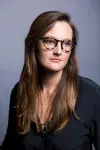
What happens when a girl from a farm in North Carolina decides she wants to become a photojournalist? Well... things move rather quickly 😄📸
Carolyn van Houten thought she was going to study physics, but after discovering photojournalism, and the different lifestyle it would involve, she went into a whirlwind — College Photographer of the Year, newspaper internships, the White House and even National Geographic came knocking on her door.
Eventually she got a call from The Washington Post, the world got bigger, and so did her career, taking Carolyn into some of the biggest stories of our time. She and her WP colleagues shared the 2020 Pulitzer Prize for 2°C: Beyond the Limit, while The Road to Asylum earned her the Robert Capa Gold Medal. We talk about her early work documenting autism, and her story Abused by the Badge about children who were abused by people who were supposed to protect them.
Then suddenly, nine years after joining the Washington Post, and in the middle of an assignment, the entire photography staff was laid off earlier this year, Carolyn included, and we talk about what it meant to suddenly see that chapter come to an end. There is plenty more in between, including some very difficult moments in her personal life and the things that helped keep her grounded through it all.
And, of course, this wouldn't be The Camera Café Show without wandering off the serious path occasionally. We talk about horses, Maryland crab cakes, whether she can milk a cow, her father's unfortunate suggestion that she look into photojournalism... or what happens when you say yes to a wildlife assignment in Antarctica 😂🐋
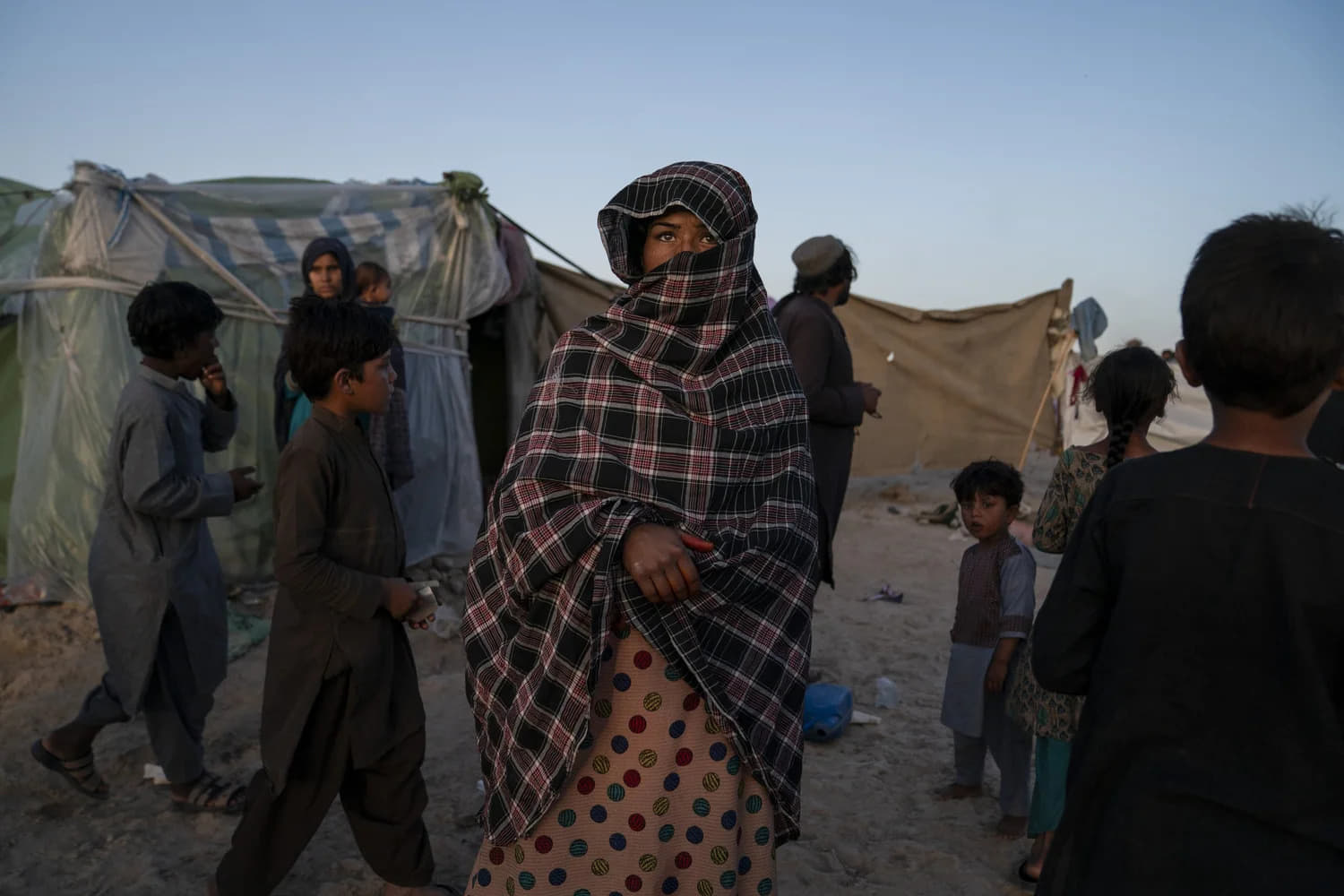
And this is only Part One. Next week, Carolyn takes us further around the world, with Afghanistan, Ukraine, Somalia, the White House and plenty more stories from a career that certainly hasn't followed the quiet route.
So grab a coffee and join us for Part One of my conversation with the amazing Carolyn van Houten ☕📸
📸 See more of Carolyn's work:
https://www.carolynvanhouten.com/
***
🎙️ Enjoyed this episode?
Follow, maybe leave us a review, or share it! You know the drill 😉🎧
***
🎧 Got any questions? Email us
Thanks for listening and look out for our next episode! 🚀
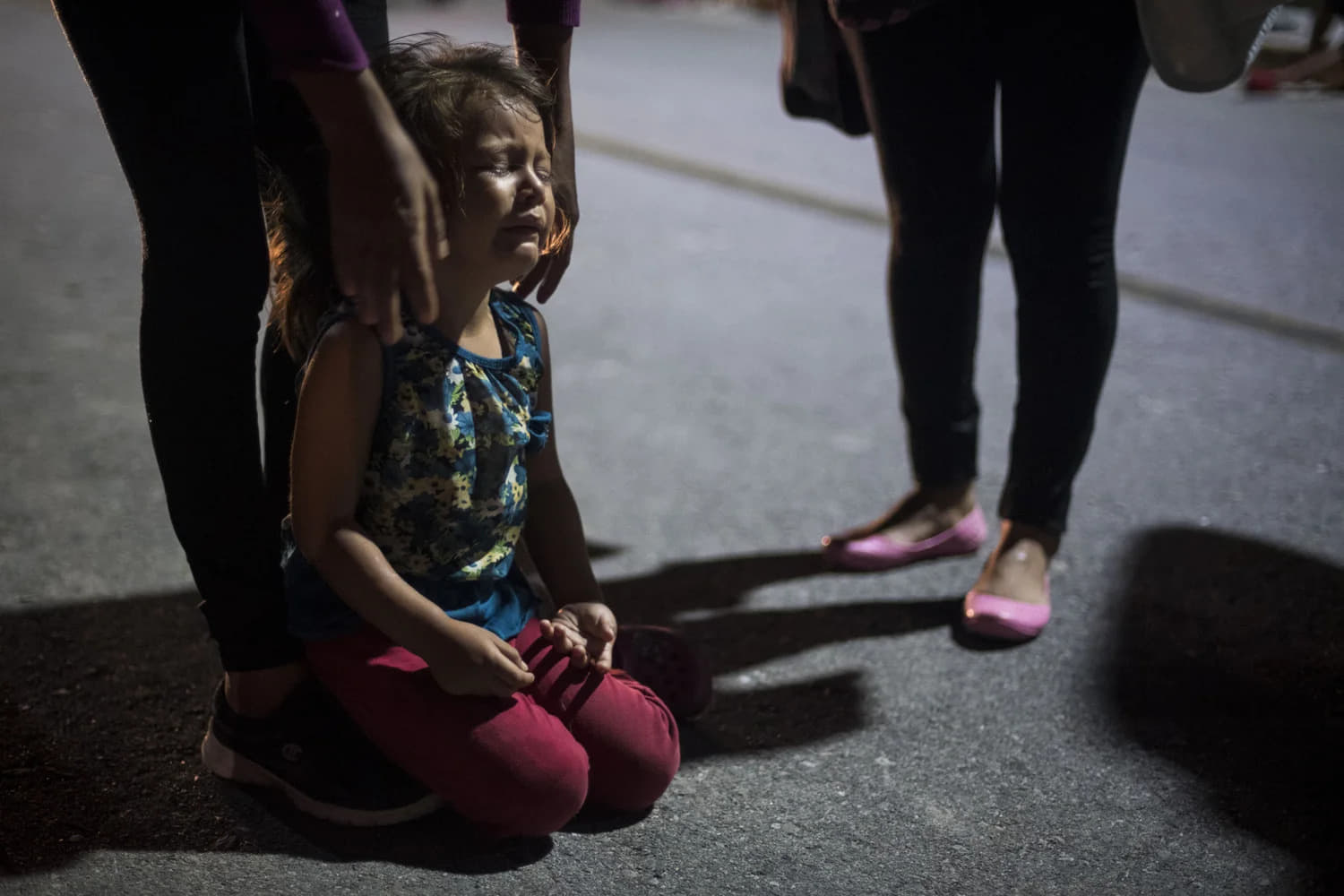
[00:00:05] It's like three o'clock in the morning because it's obviously very hot in Mexico and they would leave really early in the morning. It was also a little bit safer. We were walking along a highway just for miles and I was following a family. And Camila is this little girl, she was like three, and she was walking. I could not believe that she was still walking, just like actually the tiny little legs taking this long journey and with her mom.
[00:00:30] And at a certain point in the middle of the highway, she collapsed and she was too tired, like too exhausted to even cry. Like she was crying but there were no tears coming out. Like she was too tired. There was no screaming. She just collapsed. I have this picture of her collapsed and the photo went viral. Fast forward a couple months, they didn't have a phone so I couldn't keep track of them, right? I'd given them my number but if they lose it in the journey, there's no real way of keeping track.
[00:00:59] Thousands of asylum seekers had a mast on the Mexico side of the border in Tijuana and I was in one of these massive camps. It was really brutal. We were just covering it and walking through and all of a sudden I heard this tiny, this weeks later, tiny little squeaky voice, a little unzipped thing and a tiny little squeaky voice go, Carolina? Carolina? And I turn around and it's Camila. And she had recognized me.
[00:01:34] Greetings and welcome back to the show. We like to think of photographers as observers, people who stand back and capture what's happening. But sometimes you just can't stand back. Sometimes holding a camera means getting involved. And that's when things can get very interesting. I'm Tom Jacob and this is the Camera Café Show. My guest today, folks, is photojournalist Caroline van Houten.
[00:01:58] I've known Caroline's work for quite a while but when the entire photography staff at the Washington Post was laid off earlier this year, I thought it might be finally the time to ask if she had a moment to come on the show. Caroline has spent almost nine years at the Washington Post photographing some incredible stories and along the way winning a Pulitzer and award just as the Robert Kappa gold medal. It took us some time but we finally had time to sit down together today. In this first part though, we need to go back where it all started.
[00:02:28] Caroline growing up on a farm in North Carolina, a love for horses and thinking she was going to study astrophysics. Along the way she discovered photography and then things took a rather different direction. Working her way through internships, newspapers and even National Geographic until finally finding her own voice as an acclaimed photojournalist and traveling all over the world on assignments. Today we follow Caroline along the migrant caravans through Central America as part of her award-winning Road to a Silent project.
[00:02:58] We touch on her project around autism and her incredibly disturbing abused by the bed story about children being abused by people who were supposed to protect them. Of course, there are a few lighter stops along that journey too, including eating Maryland crab cakes which apparently are every bit as delicious as they sound. Next week, folks in part 2, we'll continue a journey with Caroline and get into some of the other stories that have taken her around the world. From Afghanistan to Ukraine and even the White House.
[00:03:27] But for now, grab a coffee, pull up a chair and join me for part 1 of my conversation with the wonderful Caroline van Houten. Greetings and welcome everybody to yet another episode. My guest today, it has taken me a long time to get her here. She's been in the most amazing places, so I'm happy I managed to get her to sit still for an hour. Caroline, it's a pleasure to have you on the show today. Thank you for having me. I really appreciate it. We're going to have a very, very amazing talk.
[00:03:57] Let's start with something completely unrelated to photography. So you're now in Maryland, close to the ocean. What's the best thing there to eat? Oh, crabs. It's very famous for blue crabs. Yes, crab cakes and that kind of thing. The seafood's amazing. I was going to ask you if this is just Maryland doing propaganda, but they are really good, yeah? Yeah, unfortunately they are. Yes, and the corn here is amazing too in the summer.
[00:04:28] Caroline, what's your idea of a really good holiday? Oh, I think a mixture of adventure and rest by work is a lot of connecting with people and being out in the world, of course. And I think having a holiday that combines a little bit of that, a little bit of the curiosity and adventure with some more reflective time is helpful because I don't get a lot of reflective time in my work. It's been a lot of go, as you know, from trying to schedule this.
[00:04:57] Yes. When was the last time you were in Spain? Oh, actually after Visa pour Limage last year, very briefly, just like a day. But yeah, Spain is amazing. Then you know your next trip for a short holiday? You come visit? Yes. Perfect. Love it. Can't wait. Caroline, I found this old bio from you somewhere that you said... You'd rather talk about your horse Spike than about your awards.
[00:05:27] So tell me about Spike. Yeah, Spike came into my life when I was 16. He basically stayed with me through high school, growing up. And then he stayed on the family farm while I was in college. Then came with me with my first job in Texas. Yeah, and he kept me sane and grounded through a lot of the harder parts of doing this work. And then he came to DC with me, or Maryland really. And sadly, he passed away a couple of years ago.
[00:05:56] But he stayed with me for almost 20 years. So how deep is your love for horse riding, Caroline? Very deep. I think my mom put me on a horse when I was like two or three the first time. So yeah, it's been my whole life. And I think it's been helpful with photojournalism too, because you have to learn body language and you have to learn sort of the unspoken clues and breed energy with a horse.
[00:06:24] And so there's a lot of that in photojournalism too, of course. Yeah, I think that part helps. And then you may or may not know this, but horses sink their heartbeats as a herd, including with people around them. And that's why when you're nervous around a horse, it gets nervous because it's a survival instinct. So I think that also teaches you to stay really calm in stressful situations, which has also helped a lot with work. Nice.
[00:06:50] So you grew up on a farm in North Carolina. There is something still of a farm girl inside you now, Caroline? For sure. Yes. I think that lifestyle requires a lot of resilience and hard work. And I think it is also very rewarding. And so, yeah, I definitely carry all of that with me. And also, I just love being out in nature and in the quiet of it. It's really lovely.
[00:07:20] You also had cows? I was just wondering something. No, sadly, we didn't have any cows. No. That would be fun though. I wish we did. My next question was going to be if you would still remember how to milk a cow, but... Actually, I do know because I did some reporting on dairy farms up north. So I do know. But and also in Australia, I think. So, yeah. But not from growing up, sadly. It was mostly crops and then some horses.
[00:07:50] And when you were a young girl, you knew what you wanted to be in life? Yes, but I was very wrong. I started... I went to college for physics, actually. When I was a kid, I wanted to be an architect. I don't know. Don't ask me why. I have no idea. But then as I got older, went to high school, I really loved the physics of optics and light. And I started studying physics. And then my high school didn't really have... It was a very small rural school, so it didn't have a physics class.
[00:08:17] So I would study it out of textbooks I got at the library. And then I went to college and majored in physics. And again, loved the physics of optics and light. But I had also started traveling a little bit in high school and photographing family portraits and things like that. And then I helped pay for college shooting weddings. Actually, I was doing photography still, but not as a career. I honestly didn't think it was possible to do it as a career.
[00:08:44] And then one day, my dad had a physics exam. And I was like... I was having a conversation with my dad where I was realizing that the lifestyle I would have after school, even if I loved the topic, would not be a lifestyle that I would want to live every day. And going into a lab, into a dark room with a computer and all of that. That's just not the lifestyle I wanted.
[00:09:10] And so he regrets this every time I go into a war zone, but suggested that I look into photojournalism. And I did. And that was it. And I got very lucky that my university had a great photojournalism program. So I could just swap halfway through. And I did. And then you did amazing, Carolyn, because where is my list? You have an impressive string of early internships.
[00:09:33] The Herald, Tempai Bay Times, Chicago Tribune, the White House, and eventually National Geographic. So you seem to attack everything with a lot of energy in the beginning. You were thinking I'd say just absolutely yes to everything. Yeah, pretty much. Yes. I felt very behind because all of the other students in my program had been doing it for a little bit. I came in late in college. Or it felt that way now. It seems ridiculous, but it felt that way at the time.
[00:10:03] And I had a conversation with my professors who are amazing, Chad Stevens and Pat Davison. And they were like, if you really want to do this, the only way to do it is to actually get out there and do the work. And the only way to do that is through internships. Yeah. And so I started applying. I must have applied to dozens the first because I didn't really have a portfolio. I had the one story, but I applied everywhere. I got the Chicago Tribune internship, did that, did a story there. And then an internship opened up for six months right after that in Tampa.
[00:10:33] I was supposed to go back to school and finish my last year of college. And I contacted the school and asked if I could do it remotely. So I worked the next two internships. So six or five months, whatever it was, in Tampa and then in Jasper, Indiana at the Herald while doing school online. So it's very intense to work full time, try and do stories and do school all at once.
[00:10:59] But yeah, I did that for a year and then finished college and got my first job in Texas. But let's stay a moment with the Herald in Jasper because I think it's there that you make your story humming a new tune. Yes, yes. Talk me a bit about Casey and how this story came to be. Yeah, backing up a little bit. Growing up, my mom had started a therapeutic riding program for people with disabilities, both developmental and physical disabilities.
[00:11:29] And so I used to train the horses to desensitize them. So basically, I would have to get in the headspace of someone, for example, with autism like Casey and make sure the horses were desensitized to the kinds of actions and sounds and quick movements and imbalance that a person with a physical or developmental disability might have to make sure it was safe. All right. So I'd spent a lot of time around people with autism and I really cared about it. When I got to the Herald, I really wanted to dig in on a story.
[00:11:58] And we were at a fair, like a state fair or something. They were very big in Indiana, like a 4-H kind of thing and connected with the family. And then it turned out that Casey's... Casey's... So Casey's story had been told by a staff photographer at the Herald 10 years before, I think, maybe even more. I think it was about 10 years before.
[00:12:18] The Herald has this special history or it did have this special history of every Saturday, the entire newspaper, like the main section of the newspaper was dedicated to a photo story. So it was like a huge spread of pictures and they really prioritized visual storytelling. It was just a really special place to work. And the community, because of that, the community really understood photojournalism too because they saw it in their niche paper every Saturday. So they knew exactly what it was.
[00:12:47] And this family had their story told a long time ago and they understood and we had a conversation and it's like, I'd love to follow up on that and show the community where Casey is now. And it happened to be that she was moving out of the house and into sort of an assisted living facility, which was quite a transition for her. Yeah. I think to read also that the day Casey moved into her new home was some of the hardest thing you photographed until that point?
[00:13:12] I would say that I had definitely seen some things by that point. So I don't know if it was the hardest, but it was definitely a memorable day. I think the hard part is knowing especially what I do about autism and how that, how for her, like routine and consistency and familiarity are very comforting. And that was the opposite of what was happening that day.
[00:13:41] And so I think sometimes knowing too much can make you feel a little bit more about a situation. And I definitely knew a lot about what she was facing and why it was difficult for her. And also she had spent time with me at that point. And so for me to be there and get something real, I had to navigate our relationship. And I think that was something that thankfully she did understand and it was part of her routine at that point. So that part was okay. But yeah.
[00:14:13] And you know something of Casey now or you followed up with? Yeah, we, I'm still in touch, like still connected with the family on Facebook. And yeah, they seem to be doing well. It's been a long time. I haven't been back to Jasper in a very long time, but I would love to go back and visit them. But time goes very fast, Carolyn. Yeah, it's true. Because then you won College Photographer of the Year and suddenly you're off to National Geographic.
[00:14:41] Was there a moment you thought like, holy moly, this is actually happening? Yeah. Yes, for sure. I, by the time I won College Photographer of the Year with the, with a portfolio from school, but then by the time the actual internship was coming up, it was my first couple of months at my job in Texas. My first staff job, I was taking a leave of absence from my staff job to get, do the internship just because of the way the timing worked out.
[00:15:09] And thankfully they were very, obviously very supportive. And I remember I was like, I think on a daily assignment for the newspaper when my editor for the internship, which I hadn't started yet, called me. And it was months before I was supposed to be there. It's normally an internship in the summer. And she called me and she was like, hey, I know this isn't what we talked about, but we have an opportunity for you to go to Antarctica. Do you want to do that? You'd have to come early. And of course, I wasn't going to say no to that.
[00:15:40] So yeah, so came up and started the internship and then went to Antarctica. And then when I got back, there was still a little time in the internship. So I pitched a story in Louisiana and did that as well. But yeah, it was quite a surprise, especially since I had never done any underwater work. I had never done any, like, I hadn't really done any wildlife work. And it was a story about whales.
[00:16:03] It was just a very intimidating endeavor, I would say, to do your first underwater wildlife story for National Geographic. But it worked out. Yes, but it almost didn't work out because what did happen to your camera casing? Yes. So at the time, a wonderful man named Kenji was the, I forget what his official title was, but basically it was like the photo, I think it was photo engineer is what his title was. But basically what he did was he would solve problems for photographers for the magazine.
[00:16:33] So if you had the situation where you wanted a photograph, but camera technology as it is, didn't really allow that photograph to happen, like he would come up with a solution. So I'm dive, scuba dive certified, and I was at the time, but the boat didn't have the infrastructure to allow me to dive in Antarctica because obviously you need a dry suit and it's a very different situation. And they just didn't have that infrastructure and there wasn't anyone able to allow me to do that.
[00:17:02] So we had to figure out a way to photograph the whales underwater without me getting in the water. And so he had made this housing and basically drilled into it, into the top to put like a monopod, an extendable monopod on it and a weight and then this like cord up. And it essentially went into this pelican case that had a screen and then it had the button and anyway, whatever.
[00:17:29] So basically I could see what the camera saw and I could take pictures with this pelican case screen in the Zodiac. The first time we put it in the water and I had tested it a million times. Brian's scary, very kindly. I'd never met him, but he got on a call with a video call with me and talked me through tips about underwater photography and how to do it. And all this stuff before I went down and then I got there and put it in the water. I had sealed it. I had tested it.
[00:17:56] I had done all the things and it immediately started leaking. Cue panic because obviously if a camera doesn't... First of all, I need the whale's picture because it's literally a story about whales. So if I don't have a photo of a whale underwater, like what are we doing? And then second, if I lose a camera, I only have so many cameras on the boat, right? Like I can't go to a camera store in Antarctica. The lens as well, right? So anyway, I caught it because thankfully I was being very careful. So I caught it and kept...
[00:18:24] If you keep the housing kind of when it starts to dome down, then it keeps the water away from the camera and the lens. And so I managed to pull it up and keep it that way and then drained it, took everything out, brought it back to the ship. And then the kitchen staff was very sweet. They had a huge sink because we don't have bathtubs or anything. So they had a huge sink for washing dishes and they would plug it for me and then fill it up with water. And we would all be standing around and there'd be like the chef just like cutting vegetables.
[00:18:53] And I was in there with the camera housing trying to figure it out. And thankfully, this really nice researcher was friendly with everyone. And he found out that there was a guest on the ship who had training with underwater housing and helped build underwater housings. And he convinced him to come into the kitchen with me. And the two of us rebuilt the whole housing, resealed everything. And yeah, and then it was, it worked. It was great. And then I had to wait for a whale, which took another week.
[00:19:23] I was like, camera works. Now we don't have any whales. What are we going to do? And then finally on the last day, the whales showed up and I got really lucky. Yeah, so it worked out. But very stressful. Don't recommend it. Because through all this time, I suppose you were thinking what you were going to tell your editor in the next phone call. So you talked a little bit.
[00:20:12] Very stressful. But I also knew that if you're stubborn enough, you know, persistent enough and a little bit of luck and you're going to be okay. So, yeah. Yeah, it worked all out. Then let me think, Carolyn, you joined San Antonio Express as a staff photographer.
[00:20:30] When working as a staff photographer at this newspaper, how you find the balance between having to do the assignments they give you and the time to work on personal stories? Yeah, it's tough.
[00:20:47] I made a very conscious choice to go to Texas, to go to that job, even though I had other offers on the table, because I knew that editor, Luis Rios, was a real advocate for photojournalism and for real storytelling and digging in deep with things. And I was going to be joining Lisa Krantz, another amazing photojournalist on staff there who had done incredible work.
[00:21:10] And so I knew that it would be a balance between daily stuff and stories, but I also knew that the support was there. I think I was willing to work hard and work overtime and do things on my days off and fit things in. And also, you can go from a daily assignment and then still, depending on what kind of daily assignment it was, like if it was a portrait or something that didn't take as long, then I could still go pick at a story afterwards or before, right? So, yeah.
[00:21:37] And it also helped that San Antonio is an amazing place and my coverage area, unlike at the Washington Post where the coverage area is like the whole world. In San Antonio, it was south and west Texas. So, you know, you could circle back to things a little bit more easily because it was in your community. Yeah. And then also that job required a lot of reporting. So I learned a lot of like boots on the ground journalism, did a lot of the reporting myself and the editors were incredibly supportive of that.
[00:22:05] I was going to ask if they were supportive of your personal projects, but it seems they were, yeah? Incredibly supportive. Yes, it was a dream. It was a dream first job. Yeah, we had this idea to do a story about abortion on the border because there had just been a Supreme Court case coming up about it and it was going to really change the landscape of access in Texas. And so we had decided to do that story.
[00:22:31] And when we did, yeah, it was one of those things where it was like, go chase after it, do what you need to do. I'm here if you need me, but go get it. And that kind of support and time and trust, especially in a young photographer right out of college, was really special. So, yeah. And then you were there two years, maybe? Yeah, two years, two and a half.
[00:22:56] Then you moved to the Washington Post, which was your dream job and your life's calling. What did you imagine your life was going to be like, Carolyn? I was really unsure. Yeah, Marianne called me actually while I was on assignment. I'll never forget. I was like in an abortion clinic parking lot when Marianne Golan called me, the director of photography at the time, called me about that job.
[00:23:23] My grandparents lived in Maryland, so I was familiar with the area and spent a lot of summers up here. I always loved the Washington Post, and the legacy of photojournalism there was, of course, long and storied, but I didn't really know what to expect. I think I was, let's say, 26? Yeah, I was 26 when they hired me. So I was young still, and yeah, just really eager to do whatever was needed.
[00:23:47] And then the Post, I think, it took me a second to realize, oh, this, at the time at least, this is a whole different ballgame of. My first pitch at the Post was to Olivier Laurent, and he was like, what do you want to do? He was on foreign. And I had just been doing a lot of reporting on abortion in Texas, and so I was really curious about maternal healthcare access, and Trump had just taken office and put in some new restrictions.
[00:24:13] So I pitched this story about maternal healthcare in Madagascar, and so that was my first story, was flying to Madagascar for this story I pitched. And that was, it was definitely like, oh, wow, this is, we're in the big leagues now. This is very different than Texas. But no, it's very special, and I feel very lucky for my time there. It was an extremely privileged and unique job. And you also talk about the people working with you as family.
[00:24:41] What was it that made that photo team so special, Carolyn? Yeah, we all really care about each other. I think it was very clear that I went through some very, very tough times while I had that job. And I lost most of my family, and I also was very sick, and all of these kinds of, you know, other things happened. And anyway, and through all of that, every time they showed up, and they were incredibly supportive.
[00:25:10] And I think that was true for everyone there. And some of the staffers, like Jabin, I've been friends with Jabin since we were in college. We didn't go to college together, but we knew each other during college and grew up with him. And I knew Salwan before we both were on staff. Olivia and I started the same week, and so we went through getting used to a new place together. All of that yielded a very supportive environment of just watching out for each other and genuinely caring about how we're all doing.
[00:25:40] And I still see that now, even though we're all scattered at this point and take care of each other. So, yeah. We will come back to three or four stories later. You did, Carolyn. But before we go there, the final story you were doing for them, I think, was in Nigeria. And then out of the blue, everybody got called back because you were all laid off. Talk to me about this day.
[00:26:07] There were any signs that something like this was coming, or you were really blindsided by the news? I think both can be true. My first internship at the Chicago Tribune was, I think it was my first week at the Chicago Tribune. I've got to check that. But it was when the Chicago sometimes laid off its entire photo staff. So I think from the very beginning of my career, I knew that layoffs were likely.
[00:26:35] So in that way, it was not unexpected, right? But at the same time, I was coming off of probably the biggest year of my career. I worked and networked all over the world. I think it was like five or six continents last year in multiple war zones. We just like really full throttle ahead on things that we felt like were important to cover. So in that way, it was a little bit surprising because it felt like things were going well, right?
[00:26:59] But before we left for Nigeria, the rumors had started online about the sports department is probably going to get laid off. And then there were rumors about international getting laid off and things like that. So we thought that something might happen. But we also had been, I think a lot of photo thought that we were, that photo was safe.
[00:27:22] We were a very small department and the amount of output that did, the amount of work, the volume of work that we did for how much we cost was a pretty good deal for them. But it is what it is. And I think I always just felt very lucky every day I got to do that job. It was a privilege and it was something that very few photojournalists today get to experience that kind of work and resources and things like that. So I'm just very grateful for any amount of time I had there.
[00:27:51] And I tried to be thoughtful to the best I could with how I use that time and those resources. Because your assignment in Nigeria was finished or you were in the middle of it? We had two stories and we got one of them done, but we didn't get to do the other one. So, but it's okay.
[00:28:17] You think that news organizations today, they still understand the value of having photographers that can spend weeks or months in the field doing a story? I would like to think so. The one thing I would say is that I never got to spend the post. We didn't spend weeks on in the field on one story usually. It was occasionally, but not often. What we would often do is we would go in for weeks at a time in a place and do multiple stories that perhaps were interconnected.
[00:28:47] But yeah, I would like to think that there are still people in those organizations that value it. In fact, I know there are. I think it's not so much that. It's about whether or not leadership in a place values it enough to keep it right.
[00:29:03] But it's something that all I can do is do the work and advocate for the work and put as much heart as I can into being thoughtful about how I'm photographing, how I'm interacting with people, not contributing further to their trauma and not trying to have as positive of an impact as possible in the situations that I'm in and do the best work I can. I try to think a lot about what I have control over and what I don't.
[00:29:32] I think it's, yeah, this is just a hard moment for that. When you think back to the Washington Post era, what's the thing you miss the most about it? So many things. So many things.
[00:29:46] Honestly, I really, it was incredibly special to have so many unbelievably smart and tenacious colleagues from local producers and staff in the countries we worked in to the reporters I worked with, to the editors. They were family, but they also were incredibly inspirational people.
[00:30:14] And I really miss collaborating in that way. And I love collaborating on a team. And I think that the journalism is better for it. When we have more eyes and hearts and minds on a story, then we get a more accurate picture of it. And I really miss that. You find it difficult to talk about this, Carolyn? No, I think there's grief, of course. There's grief there.
[00:30:40] But again, I try to lead with gratitude rather than sadness. Because, yeah, I mean, I was just really lucky. I was really lucky to get to work there at all. So, yeah. I think it's sad for photojournalism, obviously. But there's still a lot of work to be done. There's always going to be work to be done. And I think it's important to just find new ways to do it.
[00:31:08] But then you did already amazing work, Carolyn, because that's why you are here today. Oh, gosh. Yes. Let's see. Let's talk about some projects you did. You won, of course, the Pulitzer Prize 2020 Explanatory Reporting as part of the Two Degrees Beyond the Limit team. But the one I want to touch upon just a moment is the Robert Capa Gold Medal for Road to Asylum.
[00:31:39] Maybe you can talk a little bit about the project, but I want to know what this recognition means. Because this is like one of the best awards a photojournalist can receive almost. That story, it was, I think, the best of what being somewhere like the Washington Post could be, right? That story came about because there was an incredible editor at the time, many incredible editors, but one in particular.
[00:32:06] Basically, we strategized about doing a bigger story like that because that was one of the biggest news stories of that time. It was the asylum and immigration crisis, what they called the migrant caravans at the time. And so we would do daily stories. There was always a news story, some longer form stuff. But that story was not me just going down there and working on that story and then us publishing a big thing at the end. It was just like a constant daily.
[00:32:32] We were just picking at it on the side as we did all this other coverage, right? I think it was one of those special collaboratory moments. And there was one part of it that I talked about in the speech for the Kappa medal a little bit. I talked about this moment, but there was a moment where it's like three o'clock in the morning because it's very, obviously, very hot in Mexico. And so they would leave really early in the morning. It was also a little bit safer. It was like three or four o'clock in the morning.
[00:33:01] We were walking along a highway just for miles. And I was following a family. We would do like different sort of things. And for this week, I was following this family. And Camila is this little girl. She was like three. And she was walking. And I could not believe at the time, I could not believe that she was still walking, just like actually the tiny little legs taking this long journey with her mom. And at a certain point in the middle of the highway, she collapsed.
[00:33:30] And she was too tired, like too exhausted to even cry. Like she was crying, but there were no tears coming out. Like she was too tired. There was no screaming. She just collapsed. And I have this picture of her collapsed and her mom is like reaching down towards her. And the photo, the photo went viral. I don't even know really why. But anyway, because I was in it, I was on the caravan. So I wasn't paying attention to the internet. So I don't actually know in hindsight how that happened.
[00:33:59] But CNN did a story and Brooke Baldwin did an interview with me about it and all this stuff. Long story short, her family back in Honduras found out that they were okay because of the photo. They saw the photo on the news and they didn't have a phone. So their family back home had no way to know they were okay. And fast forward a couple months, they didn't have a phone. So I couldn't keep track of them, right? As much as I wanted to, I'd given them my number.
[00:34:28] But if they lose it in the journey, there's no real way of keeping track. And all of these thousands of asylum seekers had a mast on the Mexico side of the border in Tijuana. And I was in one of these massive camps. It was like in an old sports complex. And I was with an entirely different reporter than I was with when this photograph happened. And I was walking through. They had this little tent city and it was really just squalid condition. It was just, it was really brutal.
[00:34:56] Anyways, we were just covering it and walking through. And all of a sudden I heard this tiny, this week's later, tiny little squeaky voice. The little unzipped thing and a tiny little squeaky voice go, Carolina? Carolina? And I turn around and it's Camilla. And she had recognized me. And so I went and talked to her and her mom. And it turned out that a bunch of people who had seen the picture had contacted organizations
[00:35:22] that work with the migrant caravans and had donated a bunch of money and a stroller so she didn't have to walk and food and things like that. And anyway, it was just a really special moment. And I think to me, that was much more important. That was the thing that came out of that story and that moment rather than an award for me. That was the award, right? Seeing that impact. So yeah, having said that, the legacy of the award is incredible.
[00:35:48] And I felt unbelievably honored to receive it. Yeah, and it was very special because at that time as well, of course, a lot of journalists have been killed in Mexico and in Central America. And yeah, it was a time to talk about that too, which I think was really important. Yeah. All that to say, I don't really feel like as much of an honor as it is to receive those awards. And I'm incredibly grateful for them because they helped me continue to do the work.
[00:36:18] Those are not about me. It's about the people who share their stories with me. And I think that's the most important thing. And keeping those people at the forefront is my job, right? It's the whole job. So yeah. You're an amazing person, Carolyn. Oh, thanks. Don't know. I'm just trying to do my best.
[00:36:45] Let's talk a moment about the project you work, Abused by the Badge. Yeah. Which looks into something incredibly disturbing when girls being sexually abused by somebody who was supposed to protect them. Take me a moment to this project, Carolyn.
[00:37:08] So Abused by the Badge is an investigative piece about police officers who sexually assaulted, sexually harassed, and even sex trafficked young children, mostly young girls, but also some boys, while on duty in the U.S. And obviously not all these cases are reported because of the nature of it being a police officer. It's very complicated.
[00:37:34] And what we found is a lot of the officers had actually been reported and then gotten away with it and not been punished and then gone on to continue to abuse other children in other precincts, police precincts elsewhere. And so one in particular, he had worked in several police stations all in the state of Texas. And he had harassed one girl so much and then harassed her father when her father tried to protect her.
[00:38:04] And eventually the father was... Anyway, it's a very dark story. And the project was very difficult because when you're talking, some of these girls were not minors anymore by the time we talked to them, but some of them were. And ultimately, these stories stay with them forever. When you put something like a journalism piece like this online, of course, it stays with you. So we had to be very thoughtful about how we identified them, whether we identified them. And we had constant conversations with them.
[00:38:33] And from a photographic perspective, I, as a photographer, I hold a lot of power in how these women are portrayed, these women and girls. And their bodily autonomy had been taken from them by the very nature of the abuse that they suffered. So when I go to photograph them, suddenly I hold the power in how their body is portrayed, how their story is portrayed.
[00:39:02] And that power dynamic is a very stressful one for certain types of sexual assault and sexual abuse survivors, right? And so I had a lot of conversations with them. I call them survivors rather than victims. With the survivors, having conversations about how they, what they felt like their story was,
[00:39:28] how they were comfortable being portrayed, how they were comfortable or not with being identified, all of these kinds of things, what their concerns were. And then it was a very collaborative process. And I photographed all of them both identifying them and not identifying them visually. Then we would talk through how that, what they were comfortable with or not all the way up until publication date. So even if 90% of the way they were okay with showing their faces, if the last week before
[00:39:57] publication they changed their mind, then we changed the edit. And we did not, we were very careful with where those photos were and all of that, because obviously it's a very dangerous thing to go up against police officers. Yeah. One particular story, and just a trigger warning because it refers to rape, but one girl, she had been raped. And when a police officer was sent to get the rape kit, the police officer then groomed her and later also sexually assaulted her.
[00:40:28] And in that case, a story helped her win her case against the city of New Orleans in that situation, which was a really amazing thing to come out of it. But not everyone, of course, had in the way that they wanted. But yeah, it was a very, probably one of the most incredible things I've worked on. Yeah. And how much of it do you take home, Carolyn, when you work on a story like this?
[00:40:58] Yeah, I think, I think many women, especially female photojournalists, because of the nature of our work have had our own experiences, including myself for sure, with sexual harassment and sometimes even assault. And so in some ways, it's close to home because it's something that is familiar. But at the same time, I think it was healing as well, right?
[00:41:23] To be able to empower these women lifting their stories. I'm not a big fan of the term, like, giving voice to the voiceless. I think everyone has a voice. It's just not everyone is heard. And I think with this story, they were not being heard. And it was a really powerful opportunity to lift up their voices in a way that they felt comfortable with.
[00:41:49] And I don't see going into the hard, difficult stories as something that needs to constantly be heavy. It can also be empowering. And I think it's all about how it's framed. And I think this story particularly was a good opportunity to help all of us reframe that, right? And sometimes it works and sometimes it doesn't. And of course, it's brutal. It's really hard.
[00:42:12] And I do a lot of work to minimize the weight of that on my own family and friends who interact with me and how I go through my life. But yeah. What change came after the story got out? What change came out of it? Because I think to remember something of the Justice Department introduced some new guidelines and one officer got decertified or something like this. Yeah, a lot of things.
[00:42:42] So each story had its own sort of impact. Yes, there were changes about how these things are regulated, how they're tracked. I think, yes, one of the officers lost his certification. One of the women was awarded damages. Actually, yeah, I think it was just one. And then another one after telling her story became an advocate and she and her dad introduced new law in Pennsylvania.
[00:43:10] And it was really amazing to see her go from someone who wasn't cautious about telling her story, but was definitely trying to figure out what that looked like to then feeling empowered to actually go and do something about herself and become an advocate. And yeah, I think the impact was all of those things. Yeah. Does it make you feel, Carol, proud in a way to have worked on a project like this and
[00:43:38] that maybe it has some positive impact? Sure, I think so. I don't really think of it that way, though, to be honest. I think of it as like I'm a translator and I'm trying to translate the emotions and facts and story and narrative and all that into something visual and more universal that help people
[00:44:06] connect, whether in a good way or a bad way. That's not my job to determine. Right. But but I think. Yeah, it feels weird to say that you're proud of something like that because it's it's their story. Right. I'm just the translator. Have a drink because it's a very difficult story. This one. Yeah. That's a wrap, folks, for part one of my conversation with Caroline van Houten.
[00:44:33] From growing up on a farm thinking she was going to study astrophysics to finding her way into photojournalism and eventually traveling the world with a camera, Caroline certainly didn't take the most predictable route. As she says, with being a little bit stubborn, persistent and a bit of luck, you sometimes don't really know where photography is going to take you, but you simply need to follow it. Of course, we're only halfway through Caroline's story in part two next week. We're heading even further around the world with Afghanistan, Ukraine, the White House,
[00:45:02] plenty more adventures as Caroline continues her journey. As always, you can find everything we talked about today, along with more information about Caroline and her work back in the show notes. And folks, you know, if you enjoyed this conversation, don't forget to follow, leave us a review or share the episode with someone who loves photography and a bit of adventures. Or anyone who enjoys a photography journey that takes a few unexpected turns. Until next time, keep shooting and keep on moving your own photography.
[00:45:29] I see you next week here for part two with Caroline van Houten. Adios!