

What happens after the image is made?
In this second part of our conversation with Chris Johns, we continue right where we left off — moving from the field into the stories behind the stories.
We begin with a series of moments from photographers working out in the field — the kind of experiences that don’t always make it into the final image, but are very much part of what it takes to tell meaningful stories. These are the moments that reveal what photography really looks like behind the scenes: unpredictable, human, and often shaped by circumstances far beyond the photographer’s control.
From there, the conversation moves into Chris’ role as Editor-in-Chief of National Geographic. We explore what it means to guide the storytelling of one of the most influential publications in the world — how decisions are made, what defines a strong story, and how photographers are supported in bringing those stories to life.
We also talk about expectations — what Chris looked for in photographers, how trust plays a role in long-term assignments, and why patience and persistence are often just as important as technical skill.
But this episode goes beyond roles and titles. It’s also about people — about family, legacy, and how storytelling can carry across generations. Chris shares how his daughter followed a similar path into photography, and how figures like Jane Goodall have inspired them both along the way.
And while the themes are deeper in this second part, there is still a sense of curiosity and lightness throughout the conversation — a reminder that even in the most influential roles, the work remains deeply human.
So grab a coffee and join us for part two of this conversation with Chris Johns.
*****
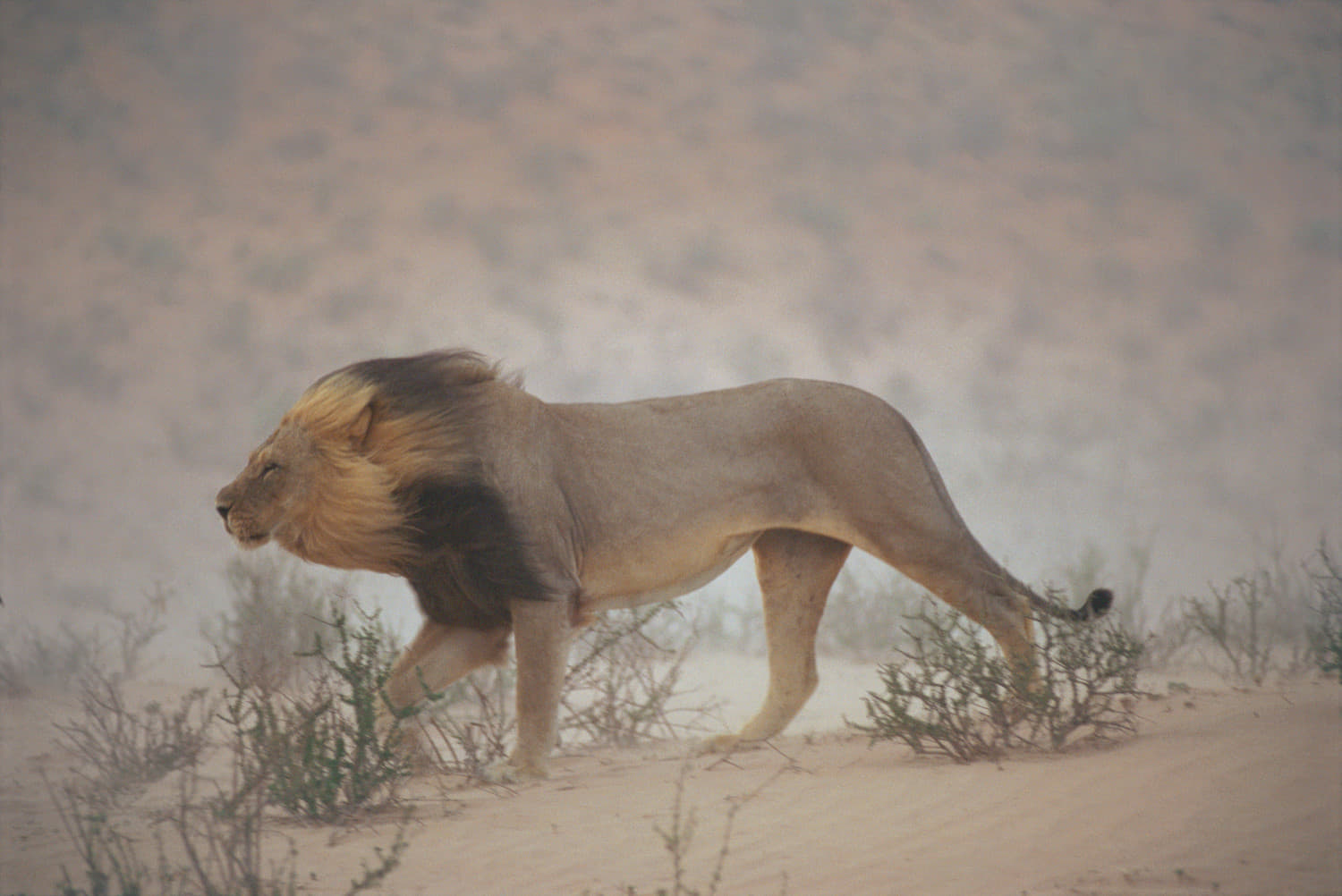
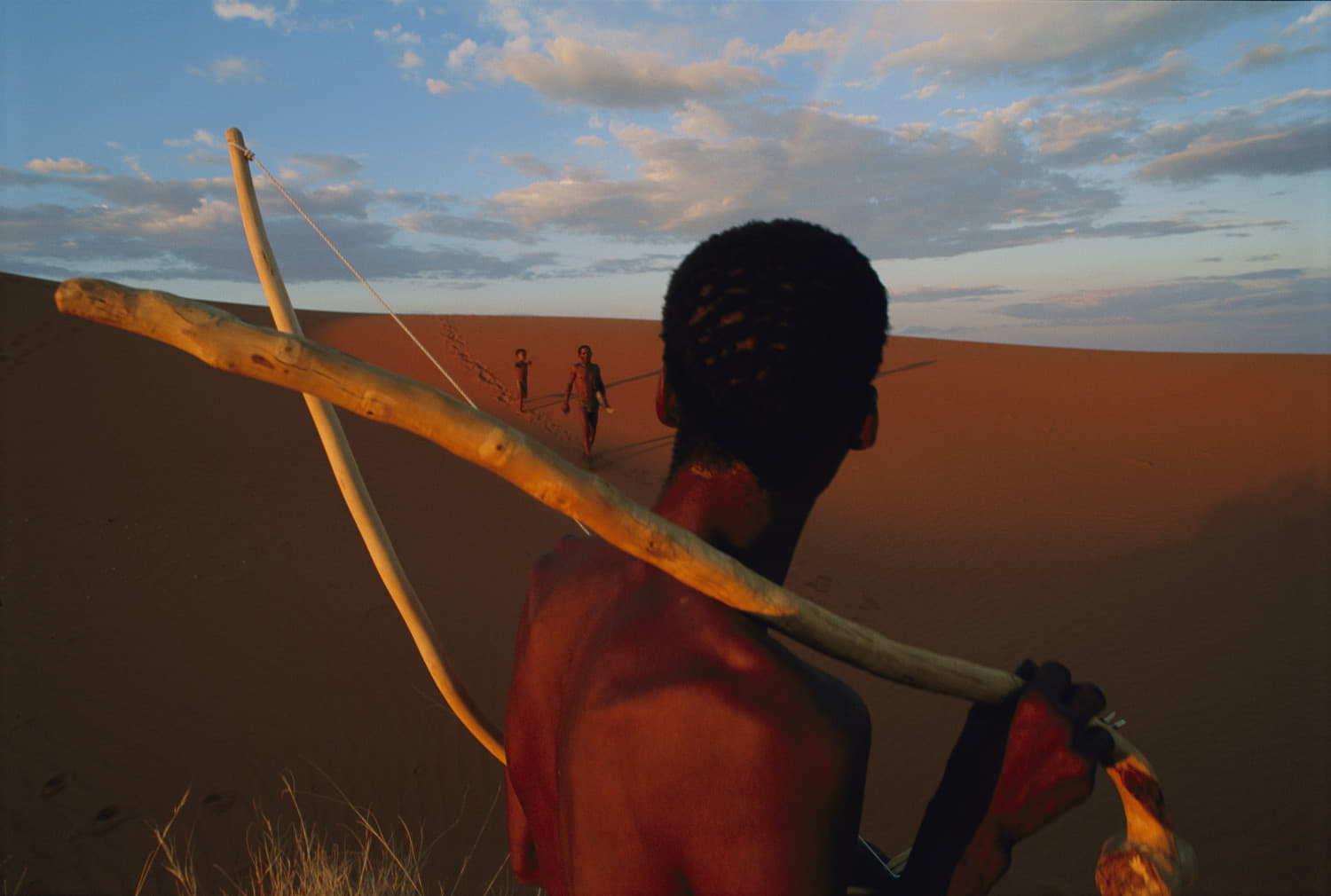
📸 See more of Chris’ work:
https://thephotosociety.org/member/chris-johns/
*****
🎧 Got any questions? Email us
Thanks for listening and look out for our next episode! 🚀
[00:00:05] I expected them to work their butts off. I expected them to be honest. I expected them to have integrity in the field. I expected them to operate under the highest journalistic principles. I expected them, if I asked them an uncomfortable question about a picture or how the picture was made, what it meant, I expected them to be honest. Most of the time they were, but there were some times they weren't. And because that's hurtful.
[00:00:33] Tom Jacob, Ph.D.: If on rare occasions that honesty is breached, because one of the most important things in journalism, important things in life is trust. They have to trust you as the editor that you have their back and that you have your best intentions for them. I know you've got to trust them in the field. That, you know, they're going to make good decisions, they're going to make the right decisions, and they're dedicated, totally dedicated to tell the story.
[00:01:02] Tom Jacob, Ph.D.: Truthfully and honestly.
[00:01:12] Tom Jacob, Ph.D.: Greetings and welcome back to the show. What happens when the stories you help tell don't just inform people, but begin to shape how they see the world. Because at a certain point, photography is no longer just about making images. It becomes about responsibility, about decisions, and into how the rest of us understand the world. As usual, I'm Tom Jacob, and this is The Camera Cafe Show.
[00:01:36] Tom Jacob, Ph.D.: Now, folks, before we dive in, if you haven't listened to part one of my conversation with Chris Johns yet, I really recommend going back and starting there first. It gives you the full picture of how this story unfolds. Because today, we picked things up right where we left off.
[00:01:52] Chris Johnsson, Ph.D.: We move straight into some incredible fun stories from colleagues working out in the field, and what happens behind the scenes of some images we know so well. We will move deeper into the responsibility of being editor-in-chief of National Geographic, how decisions are made behind the scenes, what he expected from photographers, and how storytelling can influence the way people understand global events.
[00:02:14] Chris Johnsson, Ph.D.: And of course, just like in part one, there are some great stories, some wonderful, fun moments. We talk about his daughter following in his footsteps, and how Jane Goodall inspired them both. Grab a coffee and enjoy part two of my conversation with Chris Johns.
[00:02:29] Chris Johnsson, Ph.D.: Then I got a long email from Jim, and he basically told me, you can ask him about you playing the trombone in Cuba, Kansas, which involved a lot of beer, or you can talk about the Friday that you spent in the Mill Creek Tavern. Any of these stories would be good, he told me.
[00:02:51] Chris Johnsson, Ph.D.: Yeah, Jim was a huge, as Sarah was, Jim was a huge influence on me. And he was doing, at Topeka, he was doing extraordinary documentary work. And the kind of documentary work that resonates with me today and has resonated, always resonated with me. And it was Rossville High School that he was documenting, Life at the High School. And then it was a little town he documented close to where he grew up, Cuba, Kansas.
[00:03:22] Chris Johnsson, Ph.D.: And so I went over with Jim. It was a couple hour drive from Topeka. And yeah, in high school, junior high school, I played the trombone. Jim was a tuba player. I picked up my trombone again and joined Jim in the Cuba band.
[00:03:39] Chris Johnsson, Ph.D.: I sat on the tailgate of an old pickup truck with the other trombone player. He was first trombone, I was second. But if you do, if you play brass instruments, it takes a long time to get back in shape to play the instrument with any skill. And Jim, not too long ago, introduced me and mentioned this and let the crowd know the truth.
[00:04:03] Chris Johnsson, Ph.D.: And the truth is and was, I was a terrible trombone player in the Cuba band. But damn, I had a lot of fun. Yeah. And I had a few beers. Yeah. Yeah. We had a lot of fun there. And yeah, occasionally might disappear on a Friday afternoon.
[00:04:22] Chris Johnsson, Ph.D.: And he'd be kind of working on his projects. I'd be working on a project. I say that very loosely. And yeah, we got in hot water a few times. But we survived and it was all good. You mentioned two colleagues who are very dear to my heart, Sarah and Jim, and had a big influence on me as a photographer and me as an editor.
[00:04:48] Yeah. Yeah. No, they speak nothing but nice words about you, Chris. I have a very long email from both of them. Robert Madden, I was talking with him the other day and he told me, remind Chris the time, I think it was a rodeo.
[00:05:07] Chris Johnsson, Ph.D.: Yeah. Robert, he couldn't get in and you lent him his press vest to go inside just to do a quick tour so they knew his face. And then he gave you the jacket back. And then something happened with the yogurt bottle because you were trying to eat healthy? Yeah. Yeah. But I had going to Oregon State and Landgrave College and being in the school ag because I was a pre-vet major. So I knew a lot of people in my FFA days and stuff.
[00:05:37] Chris Johnsson, Ph.D.: And so I was working for the Sunday Times actually and doing a story in the Pendleton Roundup, which is something I'd gone to as a kid. And I just loved the Pendleton Roundup and had a lot of close friends, as I mentioned, whose families have been involved in it for decades.
[00:05:52] Chris Johnsson, Ph.D.: Yeah. I had a press pass to go inside the field, which they don't give to everybody because it'd be chaos. And then when you're in the infield, you got to have your wits about you. You got to be watching what's going on. So anyway, I met Bob before at the Geographic and always loved Bob. Chris Johnsson, Ph.D.: And so I just thought he was working for National Geographic and he's getting the runaround to wear rules and I appreciate rules, but I'm not always a rule follower.
[00:06:18] Chris Johnsson, Ph.D.: Yeah. I Bob to some people and he used my press pass some. And then, yeah, then he was, Bob's a great guy. Everybody likes Bob. Chris Johnsson, Ph.D.: So we got in and we're shooting away. And then Bob and I wanted to go get some lunch. And both of us have never been huge fast food people because of the road show. Chris Johnsson, Ph.D.: There's a lot of bad food, man. So we went over to the local Safeway and we both got yogurt because I've always liked yogurt and I got raspberry yogurt.
[00:06:46] Chris Johnsson, Ph.D.: And we were back in the rodeo grounds and there were these kind of plastic pipe, pretty fragile fences that sort of contained the bulls during bull riding. And so we're on the other side of that fence. And a series of things happened. One of the bulls bucked off a cowboy and he came up pretty close to me and a couple of other people and looked at us.
[00:07:09] Chris Johnsson, Ph.D.: And I've spent so much time with cattle. I looked at this bull and I thought, this guy's drawn a bead on me. And that fence between us, that little plastic fence, that side going south. So sure enough, that's what happened. He kicked it over and he drew a bead on me. And I'd played with bulls. Again, I guess it's part of that wild streak as a kid growing up on the farm and stuff.
[00:07:34] Chris Johnsson, Ph.D.: So I thought I could turn faster than he can turn. So I put my hand out. The problem was when I used to do that as a kid growing up, I wasn't carrying three or four camera bodies with a 300 to eight and a 400 to eight, maybe, and everything in between that and the 20.
[00:07:52] Chris Johnsson, Ph.D.: And I spun, but the bull hit me and flipped me end over end and then took off for somebody else. But what happened was a bunch of, they got medics all over there and emergency. So they came over and he'd hit square that raspberry yogurt. So it exploded.
[00:08:12] Chris Johnsson, Ph.D.: It was raining. It exploded all over my raincoat. And I think they thought that it was internal injuries. It ripped open my stomach or something. And so they're telling me, lay down. Oh, no. I said, no, I'm fine. I just got bumped. So Bob was there and witnessed all that and everything turned out fine.
[00:08:32] Chris Johnsson, Ph.D.: But yeah, it was, that's one of the wonderful things about our careers is all these great colleagues you have. Chris Johnsson, Ph.D.: Yeah. Chris Johnsson, Ph.D.: And to help each other and to lift each other. And I've been so fortunate to have that my career. And so that really makes me feel strongly with what I do now with teaching students and stuff to give back because I've been given so little.
[00:09:01] Chris Johnsson, Ph.D.: Being given so much in my career. Yeah. Chris Johnsson, Ph.D.: Yeah. Chris Johnsson, Ph.D.: That's funny that Bob's still talking about that. Chris Johnsson, Ph.D.: He sent me by WhatsApp a picture and he says, Tom, this is the story I was talking to you about, but I don't remember if it's you with the bull in the picture or not, but I will check it and I will let you know. Chris Johnsson, Ph.D.: Yeah, I don't know. I will say this. Bob and I, with a bunch of my buddies from Oregon that night, went to have a few beers.
[00:09:31] Chris Johnsson, Ph.D.: And I was amazed how many people recognized me and kept coming up to me and asking me how I was, especially, yeah, men and women. It was, I was, I had my moment in the spotlight as a Pendleton Roundup celebrity for until about midnight. Chris Johnsson, Ph.D.: Yeah. Chris Johnsson, Ph.D.: So Chris, then things got a bit more serious and you became editor-in-chief of National Geographic. Chris Johnsson, Ph.D.: What's the number one worry for an editor-in-chief of National Geographic?
[00:10:01] Chris Johnsson, Ph.D.: Day to day, the number one worry is the security of the people who are out there on assignment. Chris Johnsson, Ph.D.: Hmm. Chris Johnsson, Ph.D.: That they're safe, that they're giving what they need to be safe and to complete the assignment to the best of their ability.
[00:10:25] Chris Johnsson, Ph.D.: And to also protect the time and the resources that people have. Chris Johnsson, Ph.D.: I'm a product of the field, obviously. Chris Johnsson, Ph.D.: So we started to have to deal with a lot of the transitions that have occurred in media. Chris Johnsson, Ph.D.: And so we had to, any excess fat, we had to cut. Chris Johnsson, Ph.D.: And then, of course, you start to cut muscle. Chris Johnsson, Ph.D.: And that's taxing.
[00:10:53] Chris Johnsson, Ph.D.: That's difficult to say the least. Chris Johnsson, Ph.D.: But the thing we tried to do was preserve that thing that made National Geographic a little special. Chris Johnsson, Ph.D.: And that was time in the field and having the resources that you needed to tell meaningful stories in unforgettable ways. Chris Johnsson, Ph.D.: That was our job.
[00:11:15] Chris Johnsson, Ph.D.: To nurture that, protect that, to grow that as storm clouds were on the horizon financially was a big challenge. But we had, I had a great team working with me. And we were all rolling in the same direction. And we did a lot of stories that we should all be proud of.
[00:11:37] Chris Johnsson, Ph.D.: Because having been a photographer yourself in the field before then, what did you expect from photographers working for National Geographic? Chris Johnsson, Ph.D.: I expected them to work their butts off. I expected them to be honest. I expected them to have integrity in the field. I expected them to have, to operate under the highest journalistic principles.
[00:12:03] I expected them, if I asked them an uncomfortable story about an uncomfortable question about a picture or how the picture was made or what it meant, I expected them to be honest. Most of the time they were, but there were some times they weren't. Chris Johnsson, Ph.D.: And because that's hurtful if on rare occasions that honesty is breached.
[00:12:28] Because one of the most important things in journalism, important things in life is trust. And you've got to trust, they have to trust you as the editor that you have their back and that you have your best intentions for them. Chris Johnsson, Ph.D.: And I know you've got to trust them in the field that they're going to make good decisions, they're going to make the right decisions.
[00:12:53] And they're dedicated, totally dedicated to tell the story truthfully and honestly and powerfully. The other thing you want is a term we used to use is you want money pictures. You need storytelling pictures, but you're all in that context. You need stories that take your breath away. It just go, oh my goodness. I don't know if I would have seen that.
[00:13:20] A thing that I came to really love as being editors was given, let's say, Michael Nichols an assignment in the Serengeti Alliance. And him coming back with pictures that just blow your mind, that you couldn't anticipate. To see that was probably an even bigger rush than when I would make a picture that resonated.
[00:13:51] That was, for me, that was the great pleasure of the job. Because in a way, Chris, you are like responsible for the way you show the magazine to millions of people and you shape how they see the world. You think about this responsibility? Yes, of course. You do. You can't. That's a lofty thought.
[00:14:19] And lofty thoughts can drive you to do great things. But you also need the ingredients to tell great stories. And a lot of it's more nuts and bolts. And then you create an environment where photographers are challenged. They're given the resources, the backing they need to go do great work.
[00:14:43] And we did a lot of research as to what our readers expected from us, what they liked, what they didn't like. We did a lot of research relative to just the numbers of newsstand sales, especially with our international partners, because a bigger hunk of their circulation is newsstand sales. And I was always fascinated with that.
[00:15:06] But still, what you're doing when you put together a magazine such as National Geographic is you're balancing wonder and worry. We used to use that phrase where you've got pictures that celebrate life, celebrate a place, celebrate a species, celebrate a culture. And that's a real important part of the mix. It's a symphony of a magazine.
[00:15:32] And then the stories, you may hire Jim Noctoway to do a story on South Africa and what's going on post-apartheid. You do stories that are pretty tough stories that may be dealing with endangered species and poaching.
[00:15:50] So you're always looking for a balance between that wonder of the world, which you want to celebrate, that you want to bring forward, and then the worries that we should be worried about as citizens of planet Earth. And that relates to the health of the environment, as nurtured us, and also social justice and how we treat each other.
[00:16:16] Were there moments, Jim, when you were editor that a decision kept you up at night? Oh, sure. Yeah. Especially in editing stories and then situations where photographers are like Pascal Matry, one of my favorite photographers, one of my favorite people, came to me and said he could go and photograph in Mogadishu.
[00:16:45] And we talked about that for years and I said, man, Pascal, this was not too long after Black Hawk Down, Adid, and just a lot of turmoil in Mogadishu, but throughout the nation of Somalia.
[00:17:02] And I'd worked in Djibouti, I'd worked in Djibouti, I'd worked in that neck of the woods and in Eritrean stuff and knew that you really got to have great minders, guides, advisors, interpreters you really trust. But even then, things can really go south. And Pascal said, no, I can do this.
[00:17:28] And Pascal's one of the few people that when he told me that, he was working with a really good writer too, a wonderful guy, Robert Draper. And he said, no, I can do this. And he did. He made extraordinary pictures. And then I'd ask him about those pictures. And he'd say, yeah, we were there for five or six minutes and we had to leave. It was that dangerous.
[00:17:51] It was true with a wonderful writer, Paul Salopec, who was actually kidnapped and held for ransom when he was working in the Sahel area on the Chad-Sudan border. And I had to go to Khartoum and Al-Fashur and, with the help of many other good people, negotiate his release. So, yeah, those things, they are serious and they should be treated seriously.
[00:18:17] And Paul's another, he's still working for National Geographic doing the Out of Eden Project. But he was a very strong, accomplished African hand. As George Steinmet used to say, yeah, he was working in southern Sudan. And he said, he did an extraordinary job, as George often did. Always did, really. And he said, that Sudan area, that southern Sudan, that's not for ambassures. And boy, that's true.
[00:18:46] So, yeah, those things would keep you up in mind. It's fun because I just think three weeks ago I wrote an email to George. And he says, Tom, I'm just about to take a flight to, I don't remember where, so we talk when I come back. I think he worked with Jim on this story with feeding nine billion. Yes, yeah, that was. And George kept at that project and did an extraordinary book, too, about feeding the world. Got it on my coffee table, yeah.
[00:19:16] Yeah, George is a remarkable photographer. Chris, has there ever been a photographer that has driven you crazy about a job, but he still delivers something brilliant in the end? Oh, sure, yeah. Yeah, the thing you learn with experience is don't give up on people.
[00:19:41] And we all work at different paces on stories, have different strengths and weaknesses. But perform, be honest with them. But try to bring them along. And that doesn't always work out. But more often than not, it does. And for me as an editor and now more as a teacher, there's just great pleasure in that. Because you can be surprised.
[00:20:08] The point being, don't be too quick to judge. Be patient. The one thing to trip a photographer up, any of us up, is hubris. You know, and not that hunger to learn. That hunger to become better. And when that hunger, if that hunger leaves and you start to fall in love with your pictures, then that's a pretty precipitous path.
[00:20:33] I was thinking more, Chris, in a way that a photographer comes to you with a story and you say, nah, I don't see it. And he kept coming back and back. And then in the end, yeah, you had to tell that, yes, he did a great job. Yeah. I'm glad you brought that up, Tom, because there are very good examples of that. Where a photographer is so passionate, so driven, so obsessed.
[00:21:03] Because it's an obsession. They're telling that story. And they come back and they come back and they come back. And then eventually you go, wow, okay. And then, you know, what Sarah and I used to do a lot was look at photographers' work, identify it, a body of work, and then maybe approach that photographer. Aaron Huey would be an example of that. He was working at Pine Ridge Reservation near Rosebud. Really tough place. A place that needs a voice.
[00:21:32] The people who need a voice, the Ogallala. Sarah, Sue. And we saw these pictures he was making really on his own that were extraordinary. So we went to Aaron and said, hey. And we talked to him in the past about various things. And are you interested in, we'll give you some more seed money, spend more time there. You know, and he produced an extraordinary story for us. So that was another way we used to. Sarah was really good at finding talent.
[00:22:02] Oh, my goodness. That's one of her great passions. And coaching that talent. And she's been an incredible mentor to my daughter. As Susan Walshman has as a picture of her to this day. And really helped my daughter Louise grow tremendously as a photographer. Yeah. Well, now you mentioned Louise. That's the question I had because there is this wonderful documentary about you and your daughter, the wonder and the worry.
[00:22:33] Yes. So it's also that Sarah told me it's a phrase that got used a lot while I worked at National Geographic. Yes. Yeah. I went to Oregon State University and they gave me one of those alumni awards, probably with the help, the hope that I had some money and attribute to their foundation. Of course, I'm a journalist, so I don't have much money. But anyway, I've met some people, a wonderful filmmaker named David Baker.
[00:23:00] And he started out to do just, I don't know, five to ten minute alumni film or something. And so he started talking to me about transition in journalism and the business. And I said, David, you should talk to my daughter because she's in the middle of that. She's, you know, on the front lines like so many young emerging photographers are. And so he talked to Louise and before you know it, it becomes a 90 minute documentary.
[00:23:31] And a lot of it, of course, explored our relationship. But it was still that balance. We talk about consistently of, you know, you don't want to bludgeon the people who come to your online work or your printed work or film or whatever the case may be in media.
[00:23:54] Whatever platform you're using where you're just depressing them with all the worries of the world. But to celebrate the wonders. And that was the theme of the film is finding that balance because they're both equally important. And Louise is actually quite good at that. It was a joy.
[00:24:15] I've worked on that film for more than two years with Louise and went to a lot of places, especially in Oregon where I grew up. And places like the Redwoods that I flocked to when I was a child, those landscapes influenced me. And same with Louise. And her body work is largely documenting ranch life in Montana with her husband and her son and her little daughter to be here in another couple of months.
[00:24:45] And she's hung with that. And again, I emphasize she's had great mentors helping her. So that's great. You see similarities at how you both look at the world or you think she brings something different to it? She brings something different for sure because she's a woman, because she is a mother. We also share a lot of the same loves. The love of family.
[00:25:15] The love of wild landscapes. The love of rural life. So, yeah, we share the same values. But what's beautiful about it is we see differently because we're different people. And, you know, she, I would say at this point in her life, she's a better photographer than I was at that point in my life because she's found her voice.
[00:25:43] And she's had to find her voice to make a living. Because it's really challenging out there. Yeah. Can you convince her to come on the podcast? Of course. Yeah. Yeah. She'll probably want to do it after she, a few months after she's had her little baby girl, which would be mid-July. Yeah, of course. Yeah, she would love to. That would be amazing. Yeah.
[00:26:07] Chris, what piece of advice, it's a classical question, but what piece of advice would you give to someone who starts out with photography now? Oh, photograph. What you really care about. I think it's as important as ever, maybe more important now to have a distinct voice as a photographer and as a writer.
[00:26:31] Not at the expense of great journalism, because it's not about you, but to have a voice that's shaped by the things in the world you really care about. And Louise would be a good example of that. She really cares about ranch life. She cares about ranchers who have learned to live with grizzly bears, who've learned to live with wolves, not lions.
[00:26:59] And how you negotiate that dance. That's really important to her. And how ship and the kinship you have with the land. Those were things that Jim Richardson was working on when he was photographing near his hometown of Belleville in that little community of Cuba. And the importance of community and people working together. It's, yeah, you've got to shoot a lot of pictures.
[00:27:26] You've got to look at those pictures with clear eyes and how they can be better. And, yeah, seek mentors, colleagues who you can draw inspiration from. But it just keeps coming back to persistence, to resilience. And T.S. Eliot says, for us, there is only the trying. The rest is not our business. Even though it's hard, keep trying.
[00:27:55] And what drives the trying is the things that you deeply care about. Yeah. You remember the moment that maybe you found your voice, Chris? That exciting moment that you say that something changed and this is who I am now? Yeah, I think that occurred. There was a confluence of a couple different things.
[00:28:24] That occurred in Africa, I think. And where it occurred in Africa was I realized that I couldn't compare myself at that point to other photographers because I was the only one there. I might be the only one who's in Djibouti photographing the far people.
[00:28:47] I was the only one there who was in Gorgor Crater photographing elephants or in South Africa when they were culling elephants. So I had to treat that access and that gift with respect. And really take it as far as I could.
[00:29:06] I think that coupled with becoming a father, being in a quite meaningful, happy marriage, and just saying, I want to document things that I see and feel for my kids. And I want to try to make a difference so they can have some of the experiences that I've had, especially in particular in wild places. So I think that was, yeah, the pivot.
[00:29:36] The combination of those two things was a pivot point for me. Now, you mentioned before the Gorongoro Crater in Tanzania. I was going to ask you, Chris, to end our talk today. Tell me one story, one moment in your life in photography that would be a great ending for our conversation today.
[00:29:59] But maybe when you had the encounter with the bull elephant in the crater would be a good story? Yes, that was a seminal moment, Tom. There's no question about that. I was early into my first Africa assignment, the Rift Valley. I'd been at it for several months.
[00:30:19] And I was camped in Angora Crater in Tanzania, one of the most spectacular wildlife areas in the African continent, or in the world for that matter. And it was very early in the morning, and I was with a Tanzanian guy from Arusha, Godfrey. And it was just at first light, and it was a fog bank. And there was an image in the fog bank, but it was hard to read.
[00:30:50] And then this image came out of the fog bank and started to rub. He started this bull elephant and started to rub his tusks across yellow-barked acacia trees. And I was in our Land Rover, and we had a big roof hatch, and I climbed up on top of the roof hatch to get a better angle on him. And I was shooting him with an 80-silloward zoom. That was pretty close to him. I was probably 40 or 50 yards from him.
[00:31:19] And he wasn't used to that silhouette. He raised his tongue and turned, raised his trunk and turned towards me. And then I slid down into the back seat again. He was shooting through the rolled-down window. And he went back to just grazing on this tree and on the grass. And then his curiosity was piqued again. So he walked over towards us, and I looked at Godfrey in the rear-view mirror.
[00:31:50] This guy was a big boy. But the thing was, we recognized him because we'd been in that crater for roughly a month and seen him almost every day. We decided to stay put and just see what he was going to do. And sure enough, he came right over to the front of the Land Rover, laid his tux on the hood of the Land Rover.
[00:32:10] And through that big roof hatch that I climbed through, his trunk came through and started searching and touching my left side, tickling me with his hairs. And then came around the back of my head and touched my temple. And then even, I think I had a Leica M6 around my neck and touched that.
[00:32:31] And I had this, I could hear him breathe and smell this rich, humus, sweetgrass breath through his trunk. And then he lifted his trunk, sauntered off towards another fog bank, and then turned and looked at me and flapped his head and disappeared in the mist. And yeah, I was spacious.
[00:33:00] I just had to take this in. And, you know, so one of the questions you may ask is, well, why did he do that? And I don't have any idea why he did it. Curiosity, I don't know. To me, the ultimate question is, what am I going to do with that experience? Am I going to use that to drive me to tell his story?
[00:33:23] And to tell the story of his species and that species relationship with human beings and how we treat elephants? So that was a real driver for me. It also made me wonder what it's like to be an elephant. What it's like to be an elephant in Gorogar Crater, like him.
[00:33:46] Or what it's like to be an elephant in Kruger Park that's being pursued by a helicopter on the park border and eventually shot in the back of his head, which all things I witnessed and photographed. Yeah, it was about giving voice to a creature that gave you an incredible gift. And that's the other thing I would say about that encounter was that it really helped me trust a wild animal.
[00:34:15] Not foolishly, but to a degree that you feel you're probably going to be safe and to not pursue them, but let them come to me on their terms. And I have other experiences similar to that where after spending a lot of time, extraordinary things can happen and being patient. And that's also true with people. That's not exclusive to wild animals.
[00:34:43] If you're a good listener and you're willing to spend the time and you really care, extraordinary things can happen. Now, you make me remember, you ever met Jane Goodall, Chris? Oh, yes. Yeah. Jane, a few years ago, came here to Missoula and filled the big grassy expanse that's the center of campus. On a Sunday, thousands of people came with really no publicity and Jane spoke. And I got to introduce Jane and then do a Q&A with her.
[00:35:13] I've known Jane for a long time and have respect for her that is so deep it's hard to express. I haven't spent the time with her that St. Nick Nichols has. I mean, Nick has extraordinary stories about Jane. But, yeah, Jane is a, was and still is a beacon for me, for my family, especially for my daughters, my wife.
[00:35:42] Also, my students, so many people we know, she's enriched their life so much. Yeah, I went to her celebration of life at the National Cathedral in Washington, D.C. and was so moved with all the Jane's done. But the stories you, like you just told now, you tell to your own grandchildren, Chris? Oh, sure. Yeah, of course. And they love to hear the stories? Yeah, especially as they get a little bit older. Yeah. It continues.
[00:36:10] You give them a good example, Chris, and it will all work out well. That's what one hopes, yes. Chris, this has been such an amazing conversation. Thank you so much for sharing the stories about your life, about National Geographic. And I hope we can stay a bit in touch. Maybe if I make it to the U.S. this year, we can continue our conversation with a beer. I don't want to get in trouble with your wife, but I hope we can make this happen.
[00:36:38] I would love that, Tom. Thank you. Yeah, please come. You always have a place to stay in Montana. Yeah. Chris, then I see you around and have a nice day still there. Same to you, Tom. Thank you. Bye. Bye-bye. And that wraps up the complete episode of my talk with Chris Jones, folks. What stays with you after a conversation like this is not just the scale of the work, but the people behind it. The photographers in the field, the story they carry, and the quiet decisions that shape
[00:37:06] how those stories are eventually seen by all the rest of us. It's a reminder that photography doesn't just show us the world. It helps us to understand it. If you'd like to explore more of Chris' work, be sure to take a look at his projects and the incredible body of work he has created over the years. You can find everything back in our show notes. And of course, folks, if you enjoyed this episode, have a look at our website, and don't forget to subscribe, leave us a review, and follow us on any podcast platform or on YouTube.
[00:37:34] Until next time, keep shooting and keep on moving your photography forwards. I'll see you next week here for another wonderful talk about photography and life. Adios!