
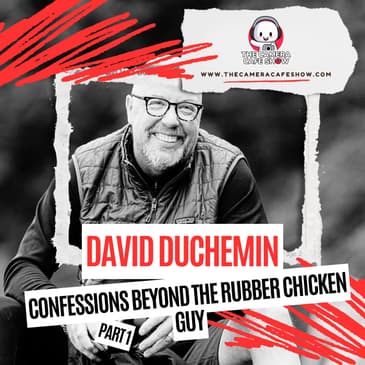

“Elvis has left the building…” — and somewhere after the stage lights went dark, a camera slowly took the place of the rabbit and the magician’s hat.
In this first part of my conversation with David duChemin, we explore the unusual and deeply human journey behind one of photography’s most thoughtful creative voices.
Before becoming known for books about vision, creativity, and storytelling, David spent years performing comedy shows, learning magic tricks, juggling bananas, and entertaining crowds. But somewhere along the way, photography slowly stopped being just an interest and became something much bigger — a way of making sense of the world, and of himself.
We talk about discovering photography as a teenager, building darkrooms in bathrooms, and the surprising reality that someone who would later become a bestselling author was once almost flunking out of English class. It’s a conversation filled with unexpected turns, small moments, and the kinds of experiences that only later reveal how important they really were.
David also shares the story of the trip to Haiti that completely changed the direction of his life — the moment photography stopped being about cameras and became about stories, people, curiosity, and connection.
And while photography is always present in this conversation, this episode reaches far beyond the craft itself. We talk about reinvention, fear, travel, creativity, and how sometimes the most meaningful paths are the ones we never originally planned to take.
Stay tuned for part two next week, where we go deeper into creativity, finding your own voice, social media, artistic identity, and why making work that feels truly yours matters more than ever.
So grab a coffee and join me for part one of this conversation with David duChemin.
*****
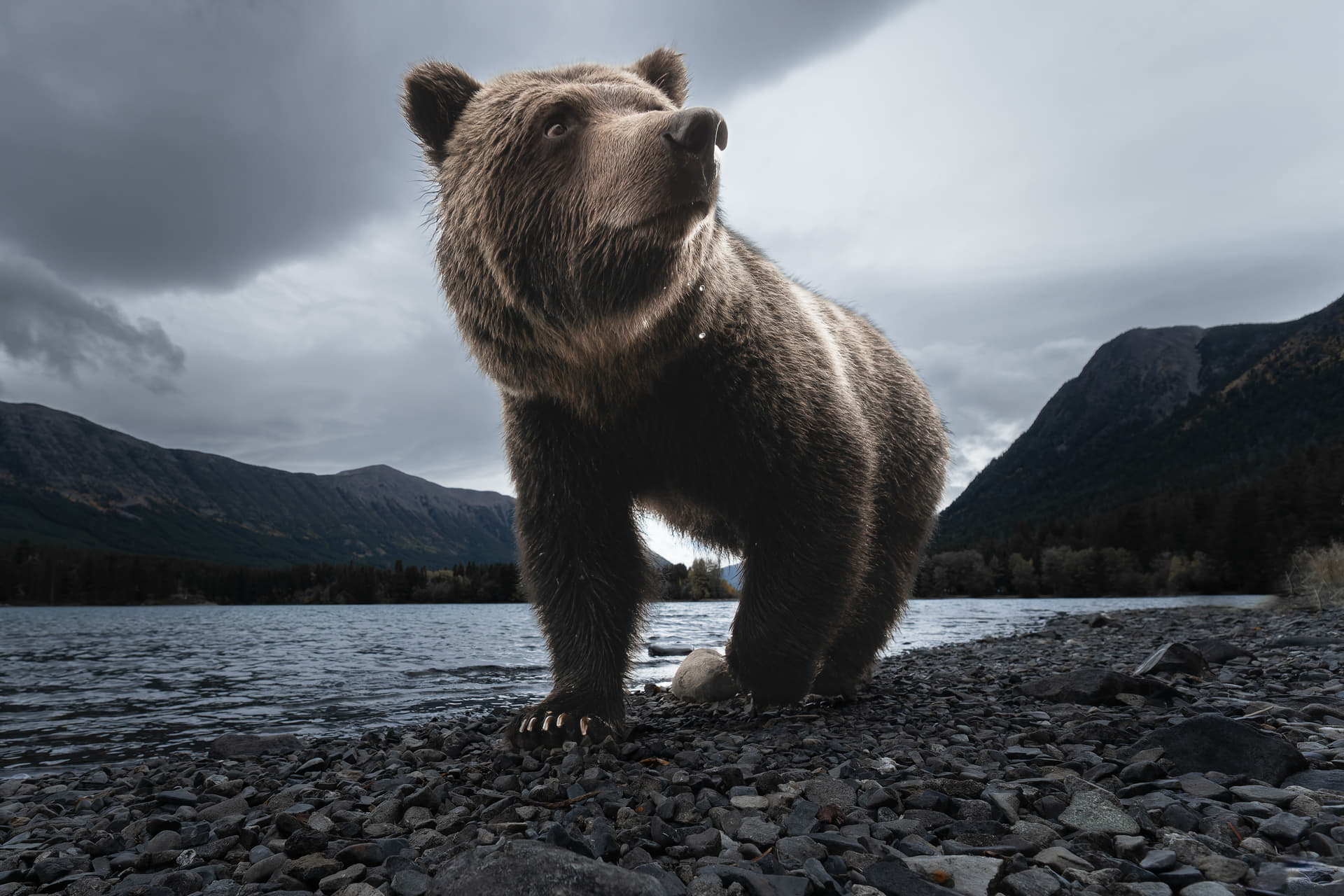
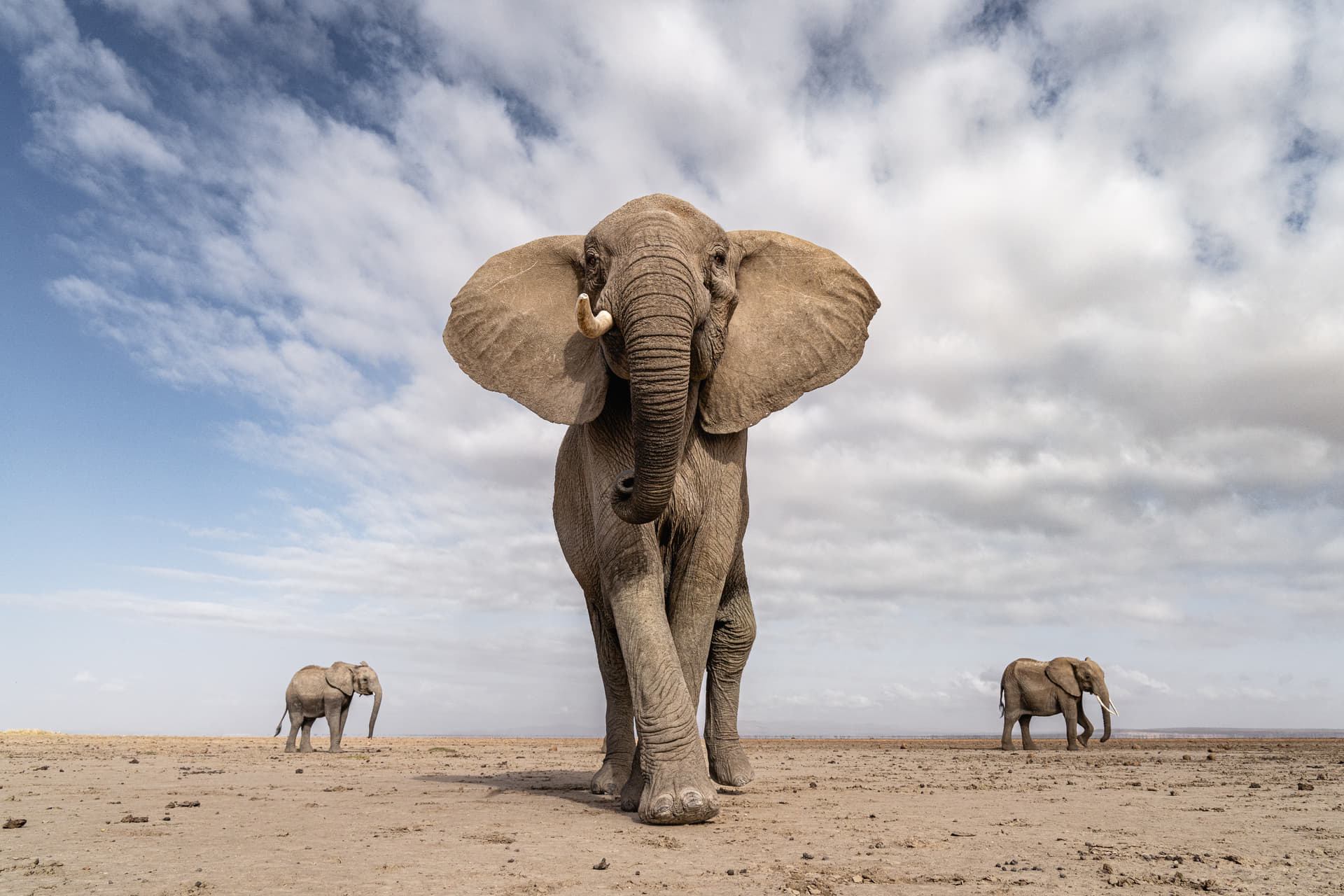
📸 See more of David’s work, books, workshops, and writing:
https://davidduchemin.com/
*****
🎧 Got any questions? Email us
Thanks for listening and look out for our next episode! 🚀
[00:00:03] And it just came at the right time when, as a kid, really you're figuring out what the world is like and what you're good at and a lot of what you're not good at. And I was not good at athletics. I was not good at music. I was not even good at school. I wasn't even good at writing.
[00:00:20] I look back now and I think after writing all the books that I've written, I can't believe there was a time when I was almost flunking out of English class. There were a lot of things I wasn't good at, but when I picked up the camera, I found something that I was good at, that at least made sense to me and challenged me enough that I wanted to continue to explore this, that just set me to dreaming.
[00:00:45] This was the thing. Everyone else in my school, they all had their thing. They had music, they had drama, they had athletics. I had photography and it was, and I was, it was the one thing that gave me hope that I could be good at something. And so I dug into that. So I had to discover my own way and photography was that journey for me. And I never looked back.
[00:01:15] Greetings and welcome back to the show. Sometimes finding your creative voice starts in the motions. First unexpected places. For my next guest, it began with cameras, comedy, juggling, magic tricks, and someone along the way, a rubber chicken too. As usual, I'm Tom Jacob, and this is The Camera Cafe Show.
[00:01:35] Today folks, I'm joined by David Duchemin, a photographer, author, educator, former comedian, and someone who has spent years encouraging photographers to think less about gear and more about vision, creativity, and what they actually want to say with their images. But this conversation, as most of our podcast episodes go far beyond photography, of course.
[00:01:57] In this first part, we talk about discovering photography as a teenager, building dark rooms in bathrooms, almost flunging out of English class before later writing multiple award-winning books, and the unusual journey from performing comedy shows and juggling bananas to becoming a humanitarian photographer working around the world. We also talk about curiosity, fear, creativity, and how sometimes the things that shape us the most are the path that we never planned to take in the first place.
[00:02:27] And next week, folks, in part two, we dive into his wildlife passion for now, and go deeper into finding your own voice. Not just in photography, but creatively and personally as well, with, of course, the usual laughs. Grab a coffee and enjoy part one of my conversation with David Duchemin. David, so good to see you on the show tonight. Thank you. I think I kind of know your voice already from all your writing, and it's nice to see you in person.
[00:02:57] Yeah, it's lovely to meet you. Thanks for having me. Mm-hmm. David, before we start, what's the best joke you heard recently? The best joke. I spent 12 years as a comedian, and I am probably the worst joke teller. I don't know if I lost my sense of humor somewhere along the way. God, the best joke. I'm going to have to think about that. I don't... You've caught me very unawares on that one.
[00:03:26] Yeah, I'm going to have to think about that. Well, let's come back in the end, maybe. Okay. Okay. So, David, you're heading to Zambia in a week from now? I am. A week from now, I'll be on a plane to Johannesburg, and I've got three weeks. Three weeks in Zambia all by myself, photographing in Lower Zambezi and the Kafue regions. So, I'm very excited.
[00:03:53] It's one of those trips that is just for me. No one else is joining me. It's just me and my camera and a guide. Very much looking forward to the time just to see where it all leads me. Yeah. But I want to know, David, you're the kind of person who packs everything the week before, or you leave it for the last minute? The week? No. God, no. I packed like the month before. I think the adventure starts when you start packing.
[00:04:23] And so, I came back from a month in Kenya at the beginning of March, and I did my laundry, and then I immediately started putting everything back into the bag. I really didn't even unpack from the last trip. No, my bags are zipped. I'm ready to go. I'm staring at the door at this point, just waiting to go. And you feel that exciting mix, David, of, on one hand, the pictures you hope to make,
[00:04:52] and on the other hand, the experience you hope to have? Oh, absolutely. And it's more of a, it's less about on one hand, and on the other hand, it's more of a triangle. Because if I had a third hand, there would be that fear and that worry that it's not going to work out the way I expect. And the, there's also the curiosity. I'm going to places on this trip that I haven't been before, and so there's a component of
[00:05:17] excitement about the photography and the experience, but also of the complete unknown. And I think that makes the excitement a little bit, a little bit greater, because I, you know, I carry into this the expectation of those photographs, of those experiences. But you never know. And usually I come back and those expectations have been completely bypassed and something
[00:05:45] else, something extraordinary has happened, but it's almost never the thing I expect. Yeah, it's, I'm very excited about it. I like that you're walking into the unknown and then everything else is improvisation. And that's exciting to me. Mm-hmm. And we talked just before the food, you're excited about the food? Yeah. Safari is interesting because most of these camps, they cater to Western travelers.
[00:06:14] And so you're not really getting a taste of local cuisine. I've spent the last 20 years working in sub-Saharan Africa, so I'm very familiar with the food. I like the food now, but mostly we're getting pretty world-class Western style cuisine. But yes, the food is fantastic. The accommodations are fantastic. But the food doesn't have the same as we were talking earlier. And if I come to Spain, I'm eating food that's different.
[00:06:41] It's very specifically, it's specific to that local region. And I like that part of the exploration. Safari is usually not that. Safari is excellent food, but it's usually not local cuisine. Okay. David, let's take you out of the box one moment, but let's walk back maybe 10 years, 12 years, 14 years. Talk me about the moment you started first being interested in photography, David.
[00:07:10] Yeah, when I was 14, exactly. So I was 14 years old and my father had been a photographer in the Canadian military. He was a tank commander, but also did some photography. I was surrounded by cameras. I was familiar enough with cameras. But at 14, I got my own camera and I purchased it at a neighbor's yard sale. They were selling some of their old stuff. And I bought this camera for almost nothing.
[00:07:38] And not long after that, that same neighbor sold me a bunch of darkroom equipment and traded it for babysitting services. So I got this whole darkroom worth of stuff in exchange for babysitting for them. And it just came at the right time when, as a young, as a kid, really, you're figuring out what the world is like and what you're good at and a lot of what you're not good at. And I was not good at athletics.
[00:08:08] I was not good at music. There were a lot of things I wasn't good at. But when I picked up the camera, I found something that I was good at that at least made sense to me and challenged me enough that I wanted to continue to explore this. And it was right about that time, too, that I've always subscribed to the National Geographic magazine as a kid. And I had somewhere, I had a cover.
[00:08:37] I had the copy of the magazine on the cover of which was the photograph that Steve McCurry made of Sharbat Gula. Most of us refer to her as the Afghan girl. And there were other pictures, too, from the cover of the National Geographic with people climbing mountains and adventuring to far-off places. And there was something about that mix of adventure and the exotic and the travel
[00:09:03] and the photography, especially, that just sent me to dreaming. This was the thing. Everyone else in my school, they all had their thing. They had music. They had drama. They had athletics. I had photography. And it was the one thing that gave me hope that I could be good at something. And so I dug into that. I was not even good at school. I wasn't even good at writing. I look back now, and I think after writing all the books that I've written,
[00:09:30] I can't believe there was a time when I was almost flunking out of English class. But I just was not. So I had to discover my own way. And photography was that journey for me. And I never looked back. There have been times when it has been a little less important to me in my life. But I have always had a camera at my side. It's always been the thing that I have fallen back on.
[00:09:55] As my most successful way of expressing myself creatively. The way that, you know, because I've drawn and I've painted and I've done all kinds of things. But it never stuck. It was never me in the way that photography has been. Something that I also found interesting, David, is that you spoke about that you went out with your father, I think. And he told you, hey, look at this. You both went out with the camera.
[00:10:26] And it's nice because my starting in photography, I think I was also 12. And basically, I think my parents got a late wedding present of a Nikon. I think it's an FE with three lenses. And they just saw it. Take it. And I think they wanted me out of the house. So, lucky you. This is the kind of way I started in photography.
[00:10:51] But your father, what do you think he was really teaching you in those moments when you went out together? He was... I don't actually know what he was trying to teach me. My father and I had a very complicated relationship. And I think the episode that you're referring to stands out in my mind because it was so rare. It was not a common thing for my dad and I to spend time together. I lived with my mother.
[00:11:19] But in that instance, what I got out of it was this way of seeing just differently than I would normally see. I was seeing this sort of big picture. And my dad, in this particular instance, there was an ice storm where I grew up. And all of the trees and there were some mountain ash trees with berries. And they were covered in a thick layer of ice.
[00:11:44] And I think what he showed me, while my dad never really did much to help me see my own potential, I think he was showing me in that day we had with our cameras the potential in a scene, the potential to see photographically. Because again, I was looking for that big thing, that big obvious thing. What can I take a picture of? And my dad was looking at things on a much smaller scale and saying, look at that. And looking a little closer, I could see, okay, it's a berry-covered nice.
[00:12:14] But really, it's about the contrast of color and tone and the shape. And so he, in that one instance, though, like I said, there weren't many of them, he really helped me see a little bit differently. And years later, I looked through a number of his slides that he left behind and kind of got a sense of his own photographic vision. And it's been interesting to compare the two.
[00:12:42] But I think on some level, though, we didn't spend much time together. I think he was responsible for at least the beginnings of me seeing the world and seeing the possibilities in a scene for more than what I first judged them to be. Well, my parents, they let me mess up all their editing and build a dark room. So I'm eternally grateful for this part in my life. Yeah, I had a wonderful dark room, but it was, I had to take over the bathroom.
[00:13:08] We had two bathrooms in the house, and I took over one of them for every Saturday and Sunday for at least for a couple of years when I was in high school. And I would just close the door, and I would seal it up and turn the red light on, and I would spend hours in there. And I didn't have to come out because it was a bathroom. So if I needed to use the toilet, it was right there. So I would spend all day in there. I'd bring a sandwich and some milk in there or something, a soda.
[00:13:34] And I would spend all day, and they really did put up with me because now that I think back, I think, God, the smell of a dark room is not something that goes away quickly. But they did what they could, especially my mother in whose house I lived. She did what she could do. She really did put up with me. And it's never gone away. Years later, this is the thing that has stuck with me the longest and the thing that gives my life such meaning.
[00:14:03] So I'm very grateful to my parents, even though they didn't teach me photography. It was ultimately my mother who got me my first real camera. She got me a used SLR and a couple of lenses and was very patient with me. I'm sure she funded most of my film purchases because I didn't have the money for years.
[00:14:27] But, yeah, I owe her a great debt of gratitude for, at very least, for putting up with it. Nice. Then, David, photography became a part of your life already, but then you didn't dive straight into it professionally. You became, or you went in... Yeah, I went in... That's a good question. So I wanted to become a professional photographer. I wanted that to be my career.
[00:14:59] And in our high school, we had a program where we could go and take a week off and job shadow someone in the career that we thought we wanted to be a part of. And so I found a photographer in Ottawa who would take me for a week. And after a week working for this photographer, I had not picked up a camera once. And I had filed negatives in the dark room. And I had cleaned the dark room. And I had swept the floor.
[00:15:26] And I moved light stands from here to there and then moved them back. And it was all very educational. But what I really learned was this is not what I wanted to do. Not at that point in my life. And I think that was a good choice because I probably would have lost the passion for it. I probably would have taken any gig that was available. I would have ended up in weddings and no dig against wedding photographers. I think good wedding photographers are really...
[00:15:55] They're really good at what they do. But that wasn't for me. That was not my path. And so I ran off to school. I followed a girlfriend to a theology school, of all things. And as a younger man, my faith was very important to me. And I followed this girlfriend to theology school. I ended up spending five years out there. Our relationship ended after the first year. But I kept going. And somewhere in there, I learned how to juggle. And I became a part of...
[00:16:24] I had always worked with children. And so I became a part of a drama, comedy drama troupe for children. And I did juggling and magic tricks and some clown stuff. And by the time I graduated from college, I was almost full-time doing my own comedy show. Yes, doing birthday parties and shopping malls and that sort of thing. But also doing festivals and churches and school events.
[00:16:51] And it just grew to the point where I don't think if I had to go to school one more year, I would have had to choose between doing comedy or going to school. And unfortunately, it was doing comedy that paid for me to go to school. So I couldn't have dropped the one. Fortunately, I graduated and I continued to do comedy for several years before coming back to my first love, coming back to photography. But the comedy was wonderful.
[00:17:20] I think I learned a lot about perception, especially when you're learning magic, sleight of hand and illusion. And it's all about perception. It's all about how the other person will see what you're doing, the assumptions they make, the feelings they will get from the experience. And I think I've carried that into that as a priority. I've carried that into my photography. So it was not wasted time. It was excellent time.
[00:17:43] And when I did become, when I came back to photography, I was photographing children and families in international contexts in Southeast Asia and Sub-Saharan Africa. But I was working with kids. And so that skill set of being able to make kids and families comfortable with me, to relax, to laugh, that was pretty important. I leaned very heavily on that for years.
[00:18:09] And if it got really difficult, I could do a coin trick or something or juggle three bananas and break the ice. And I think that, like I said, it wasn't wasted. It was good. It was good time. But I did finally come back to photography. But when I came back, I knew exactly what I wanted to do. I knew that it wasn't wedding photography. I knew that it wasn't sports or corporate stuff. I knew very specifically when I came back exactly the stories I wanted to tell.
[00:18:37] So I think that 12-year hiatus was a luxury in terms of figuring out who I was and what kind of photography I wanted to do. David, I'm now so sorry that you don't have three bananas there that you can juggle. Let me tell you, when I stopped comedy, I stopped completely. And I wonder, this may be why I'm so resistant to the idea of telling a joke and can't remember them.
[00:19:06] Because I really, when I left comedy, it wasn't because I was tired of comedy. It was because I was tired of playing a character on the stage. I was tired of being someone that was part of who I was, but not completely. And so when I left, I really, I haven't done a magic trick. I haven't, other than for a kid in Uganda who refuses to smile, I've left that part behind me.
[00:19:32] But yeah, if I had three bananas, I would be happy to entertain you. It's really not, bananas aren't that exciting unless you light them on fire and do a chainsaw as well. But I think we could make something with it. Be careful with your nice studio. David, then you worked for some NGOs. You did humanitarian photography. I think it started all after a trip back from Haiti. I hope I pronounced this right.
[00:20:01] Yes, absolutely right. Yeah, it was Haiti. And I had gone as a comedian, the organization, I'd met the founder of this organization. And he had this idea that maybe during my comedy shows, I could, at the end, talk about his organization and maybe be part of their fundraising. So he said, come to Haiti, see the work that we do. And just before I left, he said, hey, I found a website of a photographer with the same name as you. Is this you?
[00:20:31] I said, yeah, that's my work. And he said, could you bring your cameras? I'd like to extend your trip. Have you stay a little longer and maybe you could shoot for us. And I said, yeah, sure. That sounds fun. And so I brought my cameras. And it was on that trip that I suddenly realized the stories I wanted to tell. I was probably there for only 12 hours. And I said, I remember saying to myself, I probably even wrote it in my journal. This is what I want to do for the next part of my life.
[00:21:00] However long that is. This is the next chapter. I was tired of comedy. I was tired of playing a character. And suddenly all of the things that I had learned about this craft, about using a camera, it was like I'd learned to use a microphone. And suddenly I knew what songs I wanted to sing. Suddenly I knew what message I wanted to use the microphone for. And I went home and I told my family, I said, this is what I want to do. I want to become a humanitarian photographer. And most of them said, what's that?
[00:21:28] And I said, I actually don't know, but I'm going to find out. And then they said, can you make a living at that? And I said, I can. I don't know, but I'm going to find out. I figured if I could make a living as a juggler, I could probably make a living as a humanitarian photographer. At least the perceived need for the one is probably greater than the other. And so I immediately told my agent that I was done. I did my last performances through the end of the year.
[00:21:56] And then I got off the stage for the last time. And in that transitional period, I got a call from someone who read my blog. And they said, we've seen your work in Haiti and Ethiopia. They said, are you interested in doing some assignment work? And so I said, yeah, absolutely. And they sent me to Democratic Republic of Congo and Malawi. And over the years, Uganda and Mongolia and India.
[00:22:24] And a huge long list of places, Rwanda, Kenya. Just an astonishing number of places on assignment for them. And suddenly I was up and running. That became my career for many years. And absolutely loved it. It was the time of my life. Really enjoyed that work.
[00:22:47] But it all began with that trip to Haiti and having that spark and going, this is what I want to do with my cameras. The cameras were not the point. Learning that there was a bigger story I wanted to tell, that was the point. The cameras were just a tool to get me there and allow me to tell those stories in the way that made sense to me. Would you say, David, that this was maybe, and this is this magical word, that you reinvented yourself? Yeah.
[00:23:17] Yes. I would choose a different word. I think I was already evolving as a person. And there was an opportunity that I took, unaware of how it would further that evolution. But yeah, I think life is full of opportunities to recognize that. Because we're all, we never stay the same person. Much of our core, I think, remains the same. But we're evolving, I hope, in a life well lived.
[00:23:45] We're evolving into the person that we are becoming. And there's lots of little opportunities. I could have come back from Haiti and not picked up this career opportunity and done something else. And who knows where I could be a, I could be an entertainer in Las Vegas now. Who knows what would have happened. But I followed the thread, really, of my curiosity.
[00:24:12] It just felt like, of all the opportunities, this was the one that excited me the most. And I followed it. But on some level, yes, it was a pivot. It was an evolution. It was a reinvention. But like I said, it was already happening within me. It wasn't a conscious decision to change who I was and what I did. It was a decision to recognize what I was already becoming. And seize an opportunity that I had no idea where it was going. But it seemed pretty exciting. And it made a lot of sense to me.
[00:24:41] And I think because I was already, because I'd spent all that time learning my craft, not being a professional, but learning, just learning my craft for the love of it. I think when it finally clicked, I already had the skill set to then do what I do at the level that I needed to do it competitively in a world where everyone's got a camera. Everyone's got half camera will travel.
[00:25:06] I needed to bring a certain skill set that other people didn't in order to get the jobs that I did. But then you wake up one day, David, and you say, I think I'm a wildlife photographer now. Well, it wasn't quite that. It wasn't quite that dramatic. I if if I look back in my portfolio for years, there were opportunities for me to there was certainly a moment in time.
[00:25:35] If you look back and I would have said I even wrote in one of my books that that wildlife doesn't really interest me as a photographic subject. I think what I really meant, because I've been when I first picked up a camera, I was photographing ducks on the pond and I've always been an outdoors person. But for a long time, I just had a story that was more important to me, and that was the humanitarian story.
[00:25:59] But increasingly, I realized that where there was the greatest humanitarian need, there was also the greatest environmental destruction, the greatest environmental exploitation, human wildlife conflict. That sort of thing. And I had this big accident in Italy years ago that changed my life. I fell off a wall. I shattered my feet. And that for a while took me off of the field as a humanitarian photographer and pushed me deeper into education.
[00:26:29] And when I eventually went back, things had changed in my mind and in my heart a little bit. I was growing cynical. I was finding humanitarian photography. It was a wonderful job, but it's a hard job. And it's a difficult, it's quite a dark corner from which to look at the world. And so I started to spend more and more time photographing wildlife.
[00:26:54] It's not much of a stretch when you're photographing in sub-Saharan Africa and places like Kenya and Rwanda and Uganda. There are often opportunities to get out and do safari, do a game drive, see the wildlife. So it's not quite as dramatic as you make it seem or maybe as it appears. But then COVID happened. And COVID really put the last sort of nails in the coffin, if you will.
[00:27:22] Because I really, like a lot of people, got a little anxious about being with crowds and didn't really want to be in big crowds. And so the appeal of going to places like India or on the crowded streets of Italy to do the work that I was doing as a cultural photographer, as a travel photographer, that appeal got less and less.
[00:27:45] It was much more attractive to me to sit on a rock in the rain and wait for a bear or to sit in a Land Rover and photograph a leopard. And increasingly, I realized that was what I wanted to do. The stories I wanted to tell had shifted. But I don't put a lot of stock in the idea of genre, a humanitarian photographer, a wildlife photographer. Fact is, the stories that I tell are still infused with adventure. They're still exciting to me.
[00:28:13] I still, I believe my photographs feel very similar from one subject matter to another. It's just that the story has shifted a little. And I think I really do believe you need to follow your curiosity in life. You need to follow your whims. And when I recognized that I just would rather be doing this than that, and it was commercially viable, I could still make a living at it and fund these adventures through that.
[00:28:43] But I just, it was a continuation of, let's see where this leads. And it has led me for now to photograph wildlife. And I'm thrilled. I love it. I have fascination with big subjects, with bears and lions and rhinoceros, elephants. I'm really interested in that. And so for now, that's what I photograph. But will that be the thing I photograph for the rest of my life? I don't know.
[00:29:10] I should, I, because none of us know who we are becoming. We don't really know where we're going. And I think we need to stay a little bit open to that. When I left the comedy world. So my stage name was the rubber chicken guy. That's how I marketed myself. That was my show. When I left, it was very difficult because I had given myself this label. I was a magician, a juggler, a comedian. I was the rubber chicken guy.
[00:29:41] And it was very difficult for me emotionally and mentally to wrap my mind around the idea that I wasn't that thing anymore. I was now a different thing. And I'm keen to avoid the labels now because if I do shift, if I do become a different kind of photographer, maybe I give up photography entirely. Maybe in 10 years, I'm not photographing. I'm only writing. Why? I don't know.
[00:30:10] Maybe I suffer some horrible injury and I can't see and I go blind. Who knows? It's terribly morbid to think about, but life happens. And I would shift maybe just to writing or some other thing. That doesn't change who I am. And so I'm a little nervous about putting myself. In fact, I haven't really. I don't think on my website I've even changed it. Like it doesn't now say wildlife photographer.
[00:30:37] I'm just a photographer who right now in this moment of time is really interested in stories that are in the natural world and involve wildlife. And I think that's important because I don't think the photographs we make are dependent entirely on the subject matter. Photographs are not about is it an elephant? Is it a bear? Is it a human being? It's about the emotion. It's about the story. It's about color.
[00:31:04] It's about what it's about the story that we can make from the elements of the photographic language. That it is a person or a sports event or an elephant is really not the point. If you know how to operate a camera and you're interested in the story, no matter what the subject is, you can do something compelling with it. The question is, David, you think your voice changes because your life changes?
[00:31:34] Or your voice is what drives those changes? Yes. Yeah, it's both. It's absolutely it's both. It's I think there's a circle, a wheel of cause and effect where the person that I am, the things I'm interested in determines the things I do. The explorations that I have, the explorations that I have, the adventures, the work that I create.
[00:31:58] And that drives me forward into growing in my craft and seeing new possibilities and wanting to explore new things. So I think it's both. But it all comes from a very internal place. Your voice comes from your preferences, your curiosities, the things you love and your willingness to explore those and not distract yourself with everything else.
[00:32:23] Not distract yourself with the amazing work that other photographers are creating. Not being jealous about it, not being swayed by it and looking, going, oh, I should be doing that instead. Look at the success they're having. That's wonderful. But they're having that success because they are who they are. And that's not your path. And so I think all of it comes from a very internal place. But not just everyone's got that internal place.
[00:32:50] Not everyone has got to the point yet where they can, with courage, say, I don't know if this is even going to work out, but I'm going to follow it right to the end. I'm going to see where it leads. That's where all of the great artists and I don't place myself in their midst, by the way. But if you look at musicians like Bono of U2 or Prince or, I mean, name a performing artist that really stands out.
[00:33:15] They stand out because of what makes them different from everyone else, not what makes them the same. And so it takes a certain amount of courage to pursue that. Courage that I have to talk myself into every day, by the way. It's not an absence of fear. Or it's the willingness to try anyways in the face of that fear. Because I'm nervous, like everyone else. I'm nervous that the stuff I'm making isn't going to resonate. It's not going to work the way I hope. It's that I'm not going to get the success or whatever.
[00:33:44] I'm just as nervous as everyone listening to this. But you've got to try anyway because life is too short otherwise. Life is so short. And I don't want to get to the end and find that I wasted my life trying to be other people. And it makes it so much more exciting to wake up in the morning, David. So much more exciting. In fact, there was, I think it was like, was it Google that for a while they had, where do you want to go today?
[00:34:14] Or maybe it was Microsoft or I don't know. There was some company used, where do you want to go today? And I love that because it's like you wake up and it's like, what do I want to do today? Who do I want? And who do I want to be? And how can I do that? Yes, you still have to pay the bills. You still have to do what keeps the lights on, puts food on your plate. But you can do that in a million different ways. How are you going to spend your time today?
[00:34:37] And God, I hope it's not doom scrolling on Instagram or checking the news relentlessly because that's not life. Life is truly what you make of it. And I think it was, I think it was Seneca who said, and I may be wrong about this, but it said, it's not that life is short. It's just that we waste so much of it. I also think life is short, but I think it's short because we waste so much of it.
[00:35:05] I think if you live a really full, I'm 54 and I feel like I've lived three lifetimes. If I found out tomorrow that I was on my way out, I have no regrets about the way I've lived my life. I feel like it's been so full. And I would wish that on everyone. That's not to say that I wouldn't change some things, but they're in the past. I love the way that my life has turned out. And you're talking to someone whose life has not been easy.
[00:35:35] I've gone through bankruptcies. I've gone through divorce. I three years ago got my leg amputated. We're not talking about someone who's been handed. I'm not a trust fund kid. I grew up in a single family, a single parent household, low income housing. I know what it's like to struggle. I still have absolutely no regrets. I think maybe even because of the struggle and the challenge, my life has been more interesting. But that's all a function of what we make it.
[00:36:05] There's a lot of luck involved. I'm just saying, don't waste it because it's going to be over so quickly. I look back, 54 is not old. There are people listening going, you're just a kid. I acknowledge that. I am just a kid. And yet, I also know that it's going to feel like it's going to be so quick when I'm 75, looking back at this and going, wow, where did that 20 years go? It went so fast.
[00:36:31] So I beg you, if you're watching and listening, don't waste it. You just, it goes so quickly. We just put my mother into a long-term care home and she's losing her memories and she's not making new memories. And it's so hard to watch. And not long ago, she looked in the mirror and she said, I don't even recognize this old lady. Like she still sees herself as a 20 year old Royal Air Force nurse from London who's gone off to see the world.
[00:36:59] And she met a Canadian tank commander, my father. And she still sees herself as, as this young person. She said, where did the time go? It goes so fast. Don't waste it. We get so embroiled in these conversations about which lens is better and which camera. And I try so hard to hold my tongue because in the face of our own mortality and that making really good work and taking creative risks, all of that good stuff.
[00:37:29] And we're arguing about which lens has corner to corner sharpness or how many angels can dance on a sensor pixel. I don't know. It's, it seems silly to me, but maybe that's just me. And that wraps up part one of my talk with David Duchemin. Conversations like this are the reminder that creative journeys are rarely straight lines. Sometimes the things that shape us the most are the unexpected detours, the years that
[00:37:55] seems unrelated, the moments that don't make sense yet, and the experience that later become part of the voice we slowly grow into, while we find a way to make sense of the world and ourselves through images. Next week, we continue this conversation and go a bit deeper into creativity, vision, fear, social media, and how to stand out as a photographer in a world that constantly tells you who you should be. If you'd like to explore more of David's work, books, workshops, writing, you can find all the
[00:38:25] links back in our show notes. And of course, folks, if you enjoyed this episode, have a look at our website. And don't forget to subscribe, leave us a review, and follow us on any podcast platform or on YouTube. Until next week, keep shooting and keep on moving your photography. I'll see you here next time for part two of my conversation with David Duchemin. Adios!