

Somewhere between the stories that break your heart and the ones that make you smile, there is a whole world of unexpected stories waiting to be told.
Tommy Trenchard is an independent photographer and writer based in South Africa who has spent more than fifteen years documenting life across the African continent and beyond. His work has taken him into conflict zones, epidemics, conservation projects and communities facing enormous challenges, but also into stories of resilience, creativity and people finding ways to make things better.
Originally from the UK, Tommy moved to Sierra Leone with a one-way ticket and gradually built a freelance career through photography and writing. Over the years, his work has developed into something much broader than simply documenting difficult stories. He is interested in people, the places they live, the problems they face and the often surprising ways they respond to them.
That range is perhaps one of the most interesting things about Tommy's work. He can spend months documenting the humanitarian crisis during the Ebola outbreak in West Africa, to another following elephants through the streets of Zambia, photographing child shepherds going to school after dark in the mountains of Lesotho, or spending time with young magicians in Cape Town. The subjects may be completely different, but there is always a human story at the heart of them. And somewhere along the way, Tommy's work has received recognition and awards from organizations such as World Press Photo, Wildlife Photographer of the Year, Visa pour l'Image and Amnesty International.
In our conversation, we talk about some of those stories, but also about the choices behind Tommy's career, why he wanted to broaden the kind of work he was doing, the relationship between writing and photography, working as a freelancer, and how becoming a father has changed the way he approaches his work.
And, as always, there are a few unexpected stories along the way that help reveal the real person behind the camera.
So grab a coffee and join me for my conversation with Tommy Trenchard ☕📸
📸 See more of Tommy’s work:
https://www.tommytrenchard.com/
🎙️ Enjoyed this episode?
Follow, maybe leave us a review, or share it! You know the drill 😉🎧
🎧 Got any questions? Email us
Thanks for listening, and look out for our next episode! 🚀
[00:00:03] The early stages were particularly chaotic. I'd been in Sierra Leone about a year and a half, a little over. It was a crazy time and incredibly busy as a journalist. The airlines were announcing that they were stopping flying one by one and a lot of people who could afford were scrambling to get out. I think a lot of media outlets initially didn't have a very good sense of the risks involved
[00:00:29] in covering Ebola. People weren't immediately sending their correspondence. So for a freelancer, I went from covering tiny features for whoever I could flog them to, to just having my inbox full of requests from media all over the world. And so I pretty much spent the next year and a half solidly covering that outbreak. There was once in Liberia I got very sick and all the hospitals were closed,
[00:00:58] the whole kind of health system had collapsed. So I couldn't, it was very hard to get treated by anyone and I had symptoms that could have been Ebola. So I ended up confining myself to my room for a few days and just really wasn't sure what was happening. Greetings and welcome back to the show. We tend to
[00:01:24] remember the big stories, the disasters, the conflicts, the epidemics. They're the stories that fill the headlines. But there's a whole spectrum of stories between the things that break your heart and the things that make you smile. And sometimes they're happening in the very same place. I'm Tom Jacob and this is The Camera Cafe Show. My guest today is Tommy Trenchard, an independent photographer and writer based in South Africa. And for more than 15 years he's been documenting stories across the African continent and
[00:01:54] beyond. Conflict, wildlife communities, environmental issues, people trying to make a difference, his work covers an extraordinary amount of ground. And along the way he's received recognition from some of the biggest names in photography and journalism, including World Press Photo, Wildlife Photographer of the Year or Ernestee International. A young Tommy arrived from the UK in Sierra Leone with a one-way
[00:02:19] ticket, eager to begin his new chapter of life, learning photography and writing along the way as he started to cover assignments across the region and eventually developing a growing desire to tell the wider stories that could be found on the African doorstep. And that's a big part, folks, of what we get into today in our chat. We talk about a few of his amazing projects, be it documenting the Ebola outbreak in West Africa, following elephants through the streets of Zambia with a small task force
[00:02:47] intent on making sure no one, including the elephants, gets hurt, which is a project that won him a WordPress Photo Award. We meet child sappers in the mountains of Lesotho who go to school after dark, a story that became a 16-page feature in Geo France magazine, and spend some time at the wonderful, quirky College of Magic in Cape Town. And somewhere between all the disasters and wonders, we also
[00:03:12] talk about writing, friendships, working freelance, fatherhood, or giving your best impression in a karaoke session. If you're listening to learn how to become a spy for MI6, well, I'm afraid this probably isn't the right podcast for you. Grab yourself a coffee, settle in, and join me for my conversation with the amazing Tommy Trenchard. Greetings and welcome back everybody to the show today with
[00:03:36] somebody all the way from South Africa who has spent 15 years and more documenting stories across Africa and beyond, conflict, epidemics, wildlife, and the lives of people whose stories might be otherwise forgotten. Tommy, welcome to the show. It's a pleasure to have you here today. Thank you so much. It's a pleasure to be here. You are right back now in South Africa and we have a chance to record this good this time?
[00:04:05] Yes. Yeah. Third time lucky. Yeah. Been a busy few months, comings and goings. Nice. Now, Tommy, before we start, apparently photography was, if I remember well, was not your plan A because once you were applied to MI6. Yeah, I did. Let me ask you on a scale, from James Bond to Johnny English, what kind of spy would you have been?
[00:04:33] I would have been heavily skewed towards English, I'm afraid. In hindsight, it was a terrible idea. I don't know why I did it. But yeah, probably good for national security that I failed. I would have made a very bad spy. What do you think had been your greatest strength as a spy? I'm not sure. Maybe I would have seemed so unspy-like that I would have flown under the radar.
[00:05:00] Maybe I got the job. Who knows? Who's to say? No, I feel very lucky that I, yeah, ended up, well, doing what I'm doing now. If not, we were not talking here tonight, Tom Jacob. Exactly. So let's walk a moment all the way back. How was young Tommy when he was growing up? You were like the adventure kind of boy, always looking for something new or you were like
[00:05:26] quiet observer? No, I think I was probably quite, quite middle of the road, but probably a little on the shy side. Yeah, I was more from my kind of mid to late teens, I think that I started becoming more interested in exploring other parts of the world. And yeah, I came later than it does for some, I think.
[00:05:50] We all have our journey. Me also, Tommy, I live, I'm from Belgium originally, but I live so many years now in Spain. When you go back to the UK, does it feel like home still for you? Or has the relationship changed with the UK when you go there? Yeah, I think, I think it feels like home just because of, just because of the people, like family and old friends and the house that I grew up in. But yeah,
[00:06:18] the country itself, I feel like I, I don't really have a very good sense of anymore. I think it's changed a huge amount since I left. Yeah, just kind of culturally and had a pint of beer costs like eight quid now in London. It's wild. It used to be two. And the internet is not good last time we tried in there. Yeah, apparently not. It seems to be a thing. I think rural England is, that can be
[00:06:47] pretty bad. It's pretty patchy. Tommy, if I remember well, you went on to study African studies in London? Yeah, I did a master's in African studies at SOAS, School of Oriental and African Studies, which was a mix of kind of politics and governance and anthropology unit, a bit of Swahili language. It's quite a broad course. Yeah, it was very, it was an interesting formative time.
[00:07:14] But what were you thinking or hoping that your future might look like with that? I think I was hoping it would look a lot like it does now. I, I'd become interested in Africa a few years earlier after finding a book about the Rwandan genocide by a journalist called Philip Gurevich. That was probably when I was about 19. And I kind of sparked a kind of decades long
[00:07:43] interesting interest in Africa. And I, I went to Bristol University to study modern languages. But by the time I wrapped up, I was pretty sure that I wanted to be doing something. I wanted to be living on the continent. I was still toying with a couple of different options. I flirted with development work briefly before realizing that the reality was very different to the kind of naive image I had in my
[00:08:09] mind of what that would entail. So yeah, ended up going, becoming a journalist and photographer. Don't go too fast because first we have to bring the camera into the picture and to bring the camera into the picture, you went abroad, you went to Venice and you worked as a kind of postman on a gondola. Yeah. So if you, when you do a language in the UK, it's typical to take your third year
[00:08:37] abroad studying the language in situ. So I was studying Spanish and Italian. So I, I spent half the year in the Dominican Republic, which happened to be there when the, the big earthquake happened in Haiti in 2010. So I ended up covering that. I was working for a, a tiny one, one man, newspaper, English language newspaper in the Dominican Republic called Dominican today. And when the
[00:09:05] earthquake happened, I, yeah, I went over the border and tried to cover it. I had absolutely no idea what I was doing. That was my first kind of exposure to those kinds of like crisis environments. But yeah, the second half of that year, I was, I found a job in Venice. It was, I was actually employed by a travel company, but my job was to deliver letters all over the city. So I would just walk around Venice
[00:09:33] for hours and hours. And I had a, I coming from Haiti and the Dominican Republic, I was newly enthusiastic about journalism and photography, and I would carry my camera everywhere. And in those postal walks, I would just take thousands and thousands of photos. I think that was probably where I started to actually learn
[00:09:55] more about the kind of technical side of photography. The other way around had been more the easier route. But then if you started out in Haiti with the earthquake, with no experience as a photojournalist, how did you know where to go or with who to speak? I didn't, it was, I was not at all equipped to be there. I just, so I was in a hotel quite near
[00:10:22] the border when the earthquake hit and the building started shaking around and the ceiling fan was smacking against the ceiling. I checked the news and I saw that there'd been this enormous earthquake. And a few days later, I got on a bus that was heading for the border and I didn't have a visa, but when everyone else stopped at the border post and got off the bus, I just stayed in my seat and
[00:10:44] nobody questioned me. So ended up going through to Port-au-Prince and the city was total chaos by that point. But I met a couple of, a couple of volunteers from the Dominican civil defense on the bus and they said, come along with us. You can stay and stay in our camp. So yeah, I ended up sleeping in a tent with some of the civil defense guys and mostly tagging along with them. They were going around the city,
[00:11:12] trying to locate survivors and extract them from under the rubble. Had a tiny little point and shoot camera. God knows what the megapixels would have been on that thing. Just stayed with them and explored the city over the next week or two. Did a few very, very dramatic, overly dramatic stories for Dominican today. Not that the situation wasn't dramatic. It was terrible, but my writing was
[00:11:40] equally terrible and my pictures. But yeah, that was my first kind of experience of real journalism, I suppose. But you got paid for them, Tommy? I think for my two weeks, I might have been paid like $30. It was, yeah, I'm trying to remember what the setup was. But I think it was basically like, they were kind of giving me enough to keep me alive. But I do remember having so little money,
[00:12:10] I, all I could afford was avocados for quite a long time, which were just cheap in the Dominican Republic. And they were like the size of a, I don't know, as long as a banana. Just, I could still taste them. Best avos. Then Tommy, after university, instead of following a more conventional career path in Britain,
[00:12:36] I think you bought your one-way ticket to Sierra Leone. Why Sierra Leone? So I think a few different reasons. I mentioned that I'd been looking into aid work for a while. I think two years earlier, I had, I'd applied for internships, just sent out cold emails to about 50 UN offices around the world. And Sierra Leone was the one that had got back to me and said,
[00:13:04] sure, you can come work here for a couple of months. So I'd done that in a summer holiday. And I'd actually already been, I think the year before that, I'd gone backpacking through Sierra Leone and Liberia. And yeah, I was, it was also, I think I was naive and looking for a place that felt adventurous and very different to what I'd known up until that point. And Sierra Leone
[00:13:32] at that stage was still emerging from its civil war. It had been safe for a while, but it was very much like a post-conflict setting. And I was also conscious that there were very few other journalists there working for international media. I guess by that point, I'd also fallen in love with the country just from my brief early experiences there. It's my favorite place on earth
[00:13:58] to this day. It's an amazing place. So you arrived there with some more professional photography equipment or still a point and shoot? No, I had, so just before leaving, I bought a little DSLR, like a little crop sensor one. I think it was, oh, I can't remember what it was. One of the Nikon, like D5000 something. And yeah, so I was using that. I didn't, I still had really no idea about like
[00:14:26] proper photography. I remember learning about raw, shooting in raw about two months after I arrived until then everything was just JPEG. And yeah, I found a pretty dingy place to stay for a little bit and then managed to crash on someone's sofa for a couple of weeks and eventually found what would become
[00:14:49] my home for the next four years, which was not, I'd gone even back, obviously now we hear it every day, but even back then people who I had asked when embarking in this industry had been saying like, oh, the industry is dying. Like it's just, yeah, not really viable anymore. So I was expecting to be heading back home in a few months, but I thought I'll give it a try. And if it doesn't work out,
[00:15:14] then I'll yeah, have a rethink and find something else to do with my life, but to work out and ended up staying for the next four years. Also, Tony, for much of your career, you didn't only make pictures, but you also wrote stories, researched stories. Did becoming a writer and a photographer happen by choice or it was the way, the only way that your stories could get published?
[00:15:44] No, really, it was by choice or by accident, maybe. I think I, yeah, I think I'd always in my mind, a foreign correspondent did both. I, I imagined myself as a writer, I guess, but then increasingly got more and more into photography. And by the time I went to Sierra Leone, I was already just assuming I'd be doing both. I still do that today. These days I collaborate more with writers,
[00:16:11] but I think I still probably about one in one in three stories I'll write myself, which I really love. I like, I think the, the two mediums go very well together, find it very satisfying, right? It can be infuriating, is always infuriating, but the final product once you've got the written story and the photos, and if they're tying in nicely together, yeah, I enjoy it.
[00:16:39] So it's clear that the pictures you take while you were on the story, but you're writing to me, when does it happen? You take notes and write later or you start to write when you're already inside the project? Yeah, I, I take notes. If my interviewees speak too quickly, then I record as well on my phone. And at some point, usually after I get back, I'll start writing. And I started out,
[00:17:06] I was working on faster turnaround stories, often just start writing up a story that evening. These days, it's more kind of magazine features. There's less rush. So yeah, I tend to just come back, edit pictures, get down to the writing at some point in the next couple of weeks. Let's stay a moment in Sierra Leone. Now, over this past 15 years, Tommy, you have documented an
[00:17:31] extraordinary range of stories. And for our conversation today, I chose four stories you made. And I hope that it gives our listeners a bit of a sense of variety and the depth that your work has done. And I have to tell you, this has not been very easy. Okay. You will want Sierra Leone take us back there, the country you had arrived with your one-way ticket. You built your career,
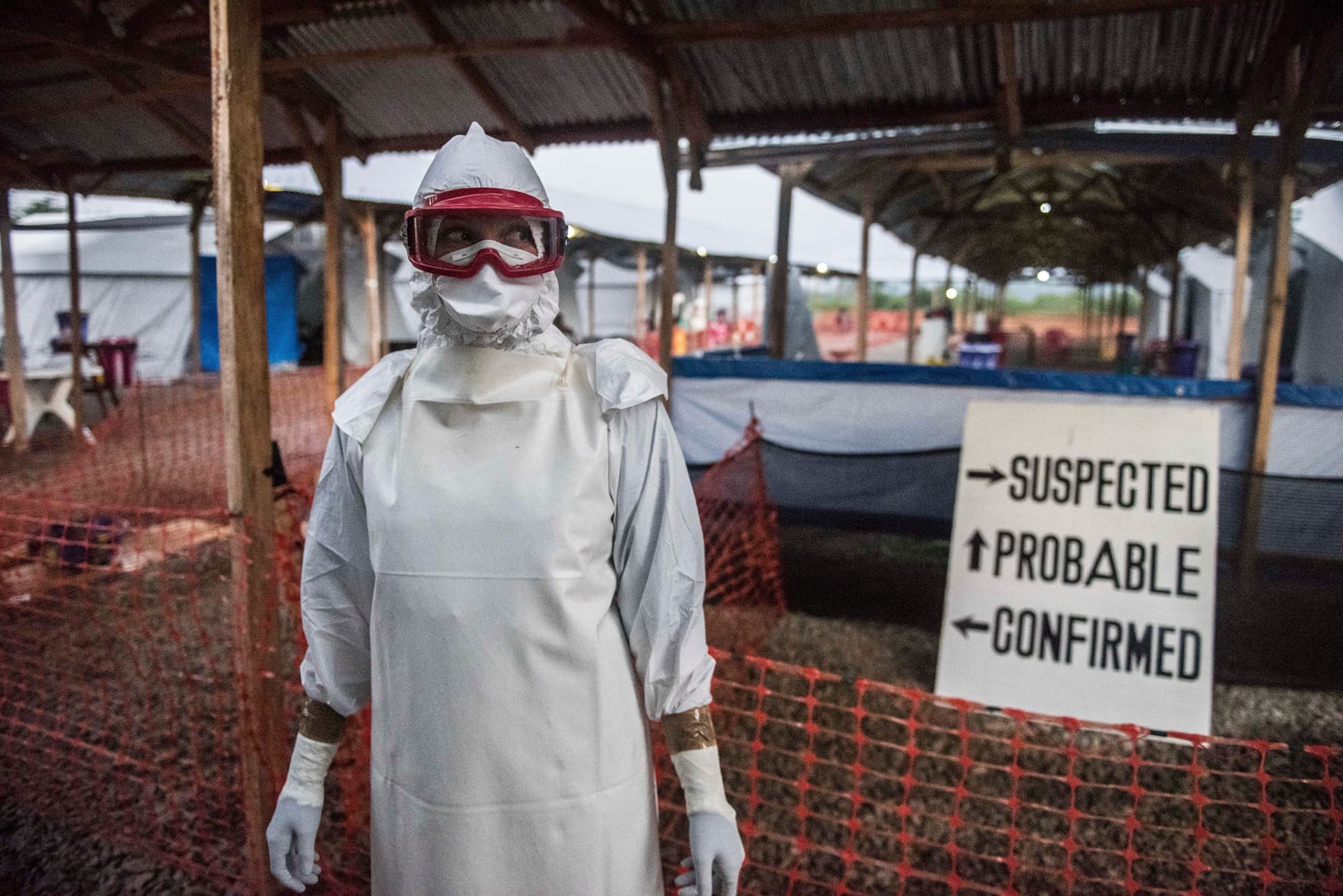
[00:17:59] you made your home for some years. And then 2014, Ebola arrived. It began as an outbreak and became one of the largest Ebola epidemics the world had seen until that time. Before we go into your experience of documenting it there, we all know this word Ebola from the headlines, but maybe we don't understand.
[00:18:24] Maybe you can clear it up a bit. What exactly is Ebola, Tommy? And how does it spread? So it's a hemorrhagic virus that is spread through fluids, like say through touch effectively. And it is, yeah, it's incredibly deadly. Different strains have different survival rates, but I might be wrong, but I think the current outbreak in DRC, I think four out of every 10 people who are contracting it die from it.
[00:18:54] So it's quite a scary, it's quite a scary condition. But no, that outbreak in West Africa is still to this day, by far the largest there's ever been. Though the current one in DRC is not looking great, the way that's been spreading. That began in the spring of 2014. I'd been in Sierra Leone about a year and a half, a little over. And yeah, it was a crazy time and incredibly busy as a journalist.
[00:19:24] The early stages were particularly chaotic. All the airlines were announcing that they were stopping flying one by one and a lot of people who could afford were scrambling to get out. And then others, like I had a lot of friends working for NGOs there at the time, staying behind and just diving into the kind of the fight against, against Ebola as it started spreading towards Freetown. And as a journalist, it was,
[00:19:50] I was in a very unusual situation being there on the ground in a country where there were very few others. And unlike a conflict or something like that, I think a lot of media outlets initially didn't have a very good sense of the risks involved in covering Ebola. So people weren't, weren't immediately sending their correspondence. So for a freelancer, there was just, yeah, so I went from covering tiny features,
[00:20:17] whoever I could, whoever I could flog them to, to just having my inbox full of requests from media all over the world. It was, yeah, it was quite a, quite an adjustment. And so I pretty much spent the next year and a half solidly covering that outbreak. If this starts, Tommy, the first phone call you do to your parents, they don't tell you to come back home?
[00:20:45] I think by that stage, my parents knew I would never have, I would never have gone back home. They've actually been incredibly understanding and supportive throughout my, yeah, over the last 15 years, but especially at the beginning when, yeah, I really didn't. As far less experienced than I am now. And looking back in hindsight, they were actually just remarkably supportive. They didn't put pressure on me to come back or anything like that. Yeah.
[00:21:14] You were ever seriously afraid, Tommy, that you might become infected maybe? Or did concentrating on your work push that thought into the background? There were a couple of times. There was once in Liberia, I got very sick and all the hospitals were closed. The whole kind of health system had collapsed. So I couldn't, it was very hard to get
[00:21:40] treated by anyone. And I had symptoms that could have been Ebola. And so I ended up confining myself to my room for a few days and just really wasn't sure what was happening. In the end, decided it probably wasn't and came out, but turned out to be a rare kind of malaria that doesn't show up on the usual malaria, like self-malaria tests. But there was a few nervous days there. I was, yeah, no,
[00:22:08] there were a couple of times when you just, you start questioning yourself, like that guy who was unusually sweaty on the bus next to you, stuff like that. But on the whole, I think it was definitely a little nerve wracking at the beginning. Nobody was quite sure how transmissible it was. And, but yeah, after the first couple of weeks, once it became clear that it was, it really could only be transferred through fluids that you would somehow have to get in your eyes, mouth or nose,
[00:22:39] then yeah, it didn't feel too much kind of personal risk. Hmm. What kind of misunderstandings about Ebola did you encounter the most when you were living there in Sierra Leone at that time? You mean like among people in Sierra Leone or from all the same? It's, there was a lot of kind of disinformation and suspicion, a lot of conspiracy theories. And obviously everyone in the
[00:23:08] global north was saying like, ah, these, these people, why don't they accept that it's real? What are all these crazy theories? And then a few years later, COVID hits and the exact same stuff is happening in the US and Europe. But yeah, I mean, there's really a mix of reactions. I felt like often when Ebola first arrived in a place, it was quite hard for health workers to convince people to take the required protective measures. There's quite a lot of initial suspicion. And then as,
[00:23:37] as people started dying, that would change and people would start to like really distance themselves. And yeah, I mean, it was a really, it was a really like horrendous tragic time. It killed about 11,000 people, I think in West Africa. And yeah, I have really just strong memories from Freetown. And at that time, whenever I go to a public swimming pool, the smell of chlorine still like instantly takes me
[00:24:06] back to West Africa or Ebola days. And we've just been spraying ourselves like wherever you went, every time you went into a shop or whatever it was. Yeah. Interesting time. But during this, you were freelancing too? Yeah. Yeah. I was freelancing. I've never, I've never not freelanced since, since I left England in 2012.
[00:24:30] 2012. So I was working for a, yeah, a mix of, a mix of publications in the US and Europe mostly. I spent, yeah, I mean, the client I worked for most back then was NPR in the US. And they actually, they're still one of my main clients today. So that, that relationship kind of dates from that time.
[00:24:53] And it's been an amazing mainstay ever since then. But yeah, I was doing photo things and some written things, some, a combination of both. Occasionally taking a few days to, to shoot for an NGO, working on a kind of personal project. Like at the same time, there was no, no particular order. It was just, yeah, wake up and figure out what I was going to do that week and, and who for.
[00:25:23] I already touched a bit on it before that we are recording this now, August, 2026. And this other major Ebola outbreak that is in the Democratic Republic of the Congo happening now. So you think that there are some, some warning signs or maybe lessons from West Africa that you recognize in this current situation? Yeah, definitely. You see a lot of the same patterns, a lot of the distrust and even like
[00:25:52] hostility and violence towards health workers, which is entirely understandable in a region like Eastern DRC that has been just caught up in so much turmoil as a history of such like turmoil and exploitation. I mean, what's different in this time is that the, the global aid funding has been slashed
[00:26:17] since the beginning of 2025. And I think that played a huge part in, there was a huge reason why this outbreak wasn't detected until it had already been running for two months and hundreds of people had already contracted it and that had already spread over like a wide area. So yeah, I mean, it's definitely challenging. I covered the, there was another outbreak there in 2018, 2019,
[00:26:44] which I covered briefly. And like one of the, one of the added complications in DRC is that you also have so much insecurity and instability and like getting around is incredibly challenging, sometimes impossible between the infrastructure and the security. And that all, I think just makes it a lot harder to get these things under control.
[00:27:08] But of course you also live there. So it's like, it's not like somebody sent you to do a story there. You're living there on a daily basis. There came a point that you felt like you needed to distance yourself a bit from Ebola stories? Yeah, yeah. I think in the end, that's a part of why
[00:27:28] I left Sierra Leone. So the outbreak didn't like fully wrap up until 2016. And I mean, this often happens, especially in Africa, I think, but if there's a disaster that tends to dominate the news headlines from a particular country for the next decade. When I arrived in Sierra Leone, they were still really battling this perception that they were still in the middle of a
[00:27:56] blood diamond fueled civil war, just because that had been such a big story for a time in the 90s and early 2000s. And then nothing that big had really come in to displace it since. Like, it's really hard to change that perception. And they were just getting over that. And then Ebola hit. And after Ebola, I was just getting asked to do endless, endless post Ebola stories and stories
[00:28:21] about survivors. And I mean, they're like all important stories, but I just got to a point where I felt like I was doing the same thing over and over and needed, yeah, needed something new. And there was also Sierra Leone is an incredible country. Like it's full of interesting things to write about and photograph, but it's not good as a base to cover the wider region. In fact,
[00:28:48] it's absolutely horrendous. The flight network is back then at least, and still today, I think, is a nightmare just trying to get around. Like I once took a flight from Freetown to Monrovia, which is just a couple of hundred kilometers, I think, along the coast. And that involved crossing the Sahara to Morocco and down again. So I wanted to be able to cover things beyond like the immediate,
[00:29:16] beyond Sierra Leone and its neighboring countries. So yeah, in 2016, I met my wife, my now wife by that stage, met in Freetown. And then, so we moved together to Kampala, Uganda, and set up, set up there for a little while, which was amazing country.
[00:29:37] Yeah. I want to take you somewhere else. The next one is the elephant whisperers of Livingstone. It earned you recognition in 2025, World Press Photo. We will come back to this later, but first take me to Livingstone in Zambia, where elephants, wild elephants, of course, sometimes walk to residential neighborhoods after dark. How did you discover this story?
[00:30:05] So I'd been looking into human wildlife conflict stories for a while. I'd actually been looking into some in South Africa. And then I was chatting to a journalist friend in Cape Town who mentioned that there was this situation in Livingstone. So I started looking into it.
[00:30:23] And then I was in Zambia. I was going to Zambia anyway for another story about lead poisoning in Kabwe, the city that's known as the world's most toxic town, a legacy of colonial era mining.
[00:30:37] And yeah, I decided to go down to Livingstone. My story was about this local organization that runs a response team, which is basically three or four volunteers who just drive around town nonstop, basically trying to keep elephants and humans apart and prevent that could lead to conflict because that is a serious issue there.
[00:31:04] There's a large, a very large elephant population very close to the town and successive kind of poor rains have left them with not enough to feed on inside their national parks. And at the same time, the town has been expanding rapidly into land, kind of peripheral land that would once have been grazed by elephants.
[00:31:27] And so you have this situation now where in the dry season, every single night, elephants, dozens of elephants come wandering through the suburbs of Livingstone looking for food. And just by virtue of their size, they are incredibly destructive. I mean, they're not aggressive animals, but if an elephant wants to eat the fruit on your tree, it will probably destroy it by accident.
[00:31:52] And people's homes get destroyed. When the elephants get startled, they can lash out. And the year I covered that story, I think 11 people had been killed by elephants just in this one small town. So yeah, I spent a few days driving around with the elephant response team and meeting people impacted by this kind of meeting of humans and wildlife did it for NPR.
[00:32:20] Take me a moment there inside. Tommy, what happens when this team receives a phone call? This happens only in the night. You went with them. Take me through it. What happens when they get the phone call and they jump into the Jeep? Yeah, I'd be basically hanging out with them from the evening, like in the daytime, was meeting people and finding out more about their experience of living with elephants.
[00:32:47] And then in the evenings, I would join this response team. They had a base, which was just a few tents on the edge of town and an incredibly battered old pickup truck. And these guys were on call just all the time. Like they didn't rest. They didn't sleep. I don't even know how they were still standing. And I think it had been a particularly bad year. So the dry season went on months longer than it should have.
[00:33:13] And the elephants were still coming into town in just huge numbers, sometimes herds like 40, 50 strong. So they'd get a call. Someone would call and say, there's an elephant in this. There's an elephant like on my street. Help. It's ransacking the gardens. The guys would leap into the truck. I'd jump in the back and they'd go zooming off through town.
[00:33:36] Then they'd get into this kind of incredible game of like cat and mouse with the elephant where they were basically trying by whatever means they could to divert them and channel them back towards the national park and away from harm's way. Because it's not just the humans that end up losing out in these interactions. Like often, yeah, often people retaliate. They're throwing stones.
[00:34:04] People use firecrackers to scare them off. And that terrifies the elephants. And they sometimes just go nuts and end up injuring themselves. They would go and they'd try to position their vehicle like they'd use it kind of like a sheepdog. So like just zipping this way and that, trying to like just gently persuade the elephant to go in the right way. And they'd be doing this for so long. They knew a lot of the elephants like individually.
[00:34:30] Some would even respond to these specific guys and they would talk to them constantly just trying to persuade and coax them back. And occasionally you'd get like a stubborn elephant who didn't want to go. And then they'd push a little closer in their car, start revving the engine a bit. And yeah, a couple of times I thought the car was about to get trampled. But apparently it was just a mock charge, which I didn't know about. This is all at night and the only light they have were the headlights from the car.
[00:35:00] Yeah, headlights from the car. Some of it was in suburban streets where there'd be a little bit of ambient light spilling around. But yeah, pretty much just car lights. And you were sitting in another car or you were outside? No, I was riding in the back of the pickup. Half the story was shot in the daytime meeting people who had lost family members to elephants or had their homes destroyed or just exploring the relationship between people and elephants in the town.
[00:35:28] And then somewhere we're at night. I love shooting at night. It's always interesting. I love the colors and the colors and lights. But yeah, I know that one was definitely a little challenging at times. Because this human-wildlife conflict is often presented to me as if one side is only the problem. But you also have to respect the people that lost, of course, livelihoods. How you worked on this story? You looked at both sides of the story?
[00:35:57] Yeah, absolutely. It's a situation with no winners, really. The people living in these areas of Livingston, typically, they had their subsistence farmers with small plots of land to rely on what they grow. And in some areas, it had just got to the point where they weren't even planting things anymore because they just wouldn't survive. It's one of those situations where you just feel for both sides.
[00:36:23] There are just more people and in that area, more elephants and fewer resources, especially with all of these dry years. It just inevitably leads to these incidents of conflict. But then there are organizations who are trying to address it and work towards coexistence in one way or another, including the elephant response team in a very direct way.
[00:36:51] There are other organizations that were working with chili fences. Elephants don't like chilies, so people have been devising these other ways to try and protect their properties without harming the elephants. The same with chili bricks that an organization had been developing. It's like a brick of chili engine oil and, I think, cow dung. You burn it and it burns slowly for a few hours and the smoke keeps elephants at bay.
[00:37:18] But yeah, it's a complicated story with no simple solutions. Because you didn't go in it to make this as a conservation story, no, Tommy? No, I think I pretty much approach all stories as primarily human ones. I don't see myself as a conservation photographer. Often stories are both, as in this case.
[00:37:45] To me, I think people are always what I feel more drawn to. But it was an interesting story, just being able to look from both sides. And it just wasn't a story with a nice, neat solution. I mean, the work that the elephant response team were doing was amazing. And it's definitely saving lives. But it's a band-aid. It's treating the symptom, not the cause.
[00:38:13] But then, of course, you caught recognition of the World Press Photo in 2025. What did it feel like to me? It was a big surprise. I really didn't think the story had any chance. I think there were two or three other stories I'd done that year that I thought would be more worth entering. But I figured, why not give it a whirl anyway? And yeah, yeah, I got lucky. But you never know.
[00:38:42] With World Press, it's quite a mixed range of stories that they award. So you never really know. I guess it's just always worth submitting something if you've done work that year. But yeah, it was a big surprise. And I felt it actually was just not nearly as strong as any of the other stories that won that year. So I felt a little bit weird in Amsterdam. But it was a great experience.
[00:39:10] What I really do respect about World Press Photo is that they really go above and beyond to support their winners. Like generally, these prizes, they might give a few hundred dollars or something and then never hear from them again. If you're lucky, it's World Press Photo. They fly you to Amsterdam.
[00:39:29] They arrange all these workshops and portfolio reviews and give you basically, I think the nicest thing for me was just having a chance to spend a week with probably 30 other photojournalists and documentary photographers, which is something most of us don't really get to do that often unless we're based in a major hub somewhere. Yeah, so I'm very grateful for that. Good.
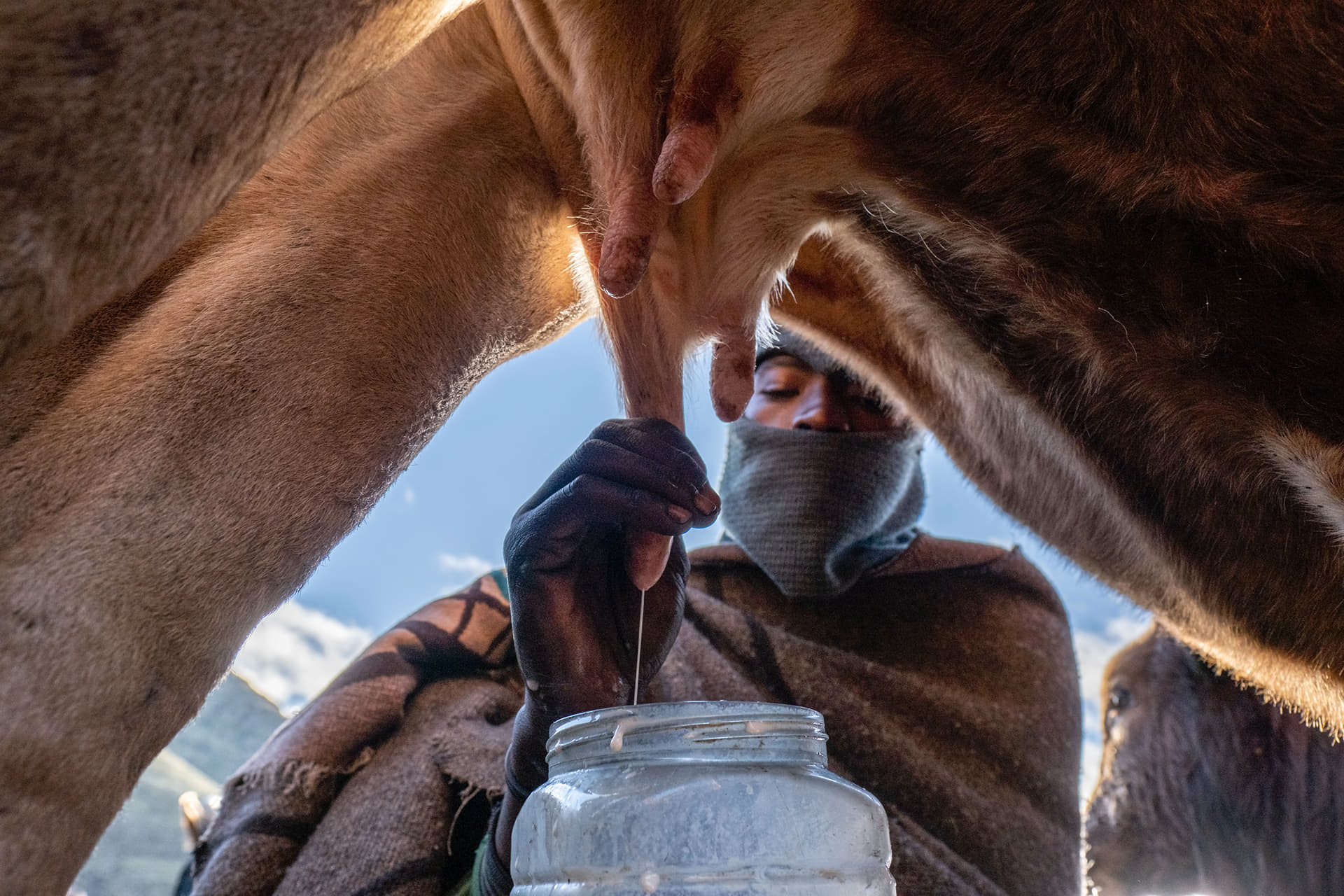
[00:39:58] Let's jump to the next story. Now, it's been a while ago we last talked, but then your latest work had been published as a major 16-page feature in KO Magazine in France. This project takes us high into the mountains of Lesotho, where children, some as young as 12 years old, spend months herding livestock.
[00:40:21] But at night, they walk for hours through the mountains to their only chance to attend school. It's a very interesting project. Talk to me about this, Tom. Yeah, so as you say, it's about the situation in Lesotho where, so first, Lesotho is a tiny country entirely within South Africa. It's the only country in the world that's entirely above 1,400 meters. And so it's incredibly mountainous and incredibly beautiful.
[00:40:51] It's hard to take a bad photo there. It's just mountains everywhere you look. And yeah, herding is a huge part of the culture and the economy. But a lot of it is carried out by really young children, which is partly a legacy of apartheid era, kind of migrant labor systems in South Africa, in which, yeah, Basutu men would be sent to work in mines in South Africa. And that legacy is still ongoing.
[00:41:19] So you've got a lot of adult men leaving to find work in South Africa. And a lot of very young kids end up being tasked with looking after the livestock. It's a really, like, brutal spot in existence. They live up in the mountains sometimes for months, months at a time, barely seeing other people.
[00:41:41] They live in these things called cattle posts, which are basically very basic huts built out of rocks and kind of straw. And bear in mind, in the winter in Lesotho, it's mountains that are covered in snow and it's well below freezing. Yeah, so these kids are up there doing this incredibly tough work. And obviously, they miss out on their education. So not all of them. Some kind of help out their parents. And some are working closer to towns.
[00:42:10] But quite a few do these much longer stints, much further up in the mountains. And for them, it's very hard to access. They can't access school in the daytime, conventional school. So you have this network of kind of volunteer-run, well, usually volunteer-run night schools that have set up just to cater to the shepherds.
[00:42:30] So basically, at the end, once they've been grazing their herds all day, and then they'll get back in the evening and they'll put them in these kind of stone-walled crulls or enclosures in the mountains. And then they will trek down, often for over an hour, two hours, to attend class. And classes are very basic. They're learning basic writing and reading, a little English, maths, very basic maths.
[00:42:58] And then when it's over, they walk another two hours back up into the hills in pitch darkness, just along these little rocky paths. I mean, that was a story where there's obviously a serious issue with all these kids missing out on education. But it was also very nice to be able to focus on this very positive kind of solution that's being implemented. The education is very basic, but it's enough that maybe 10 years down the line when they are no longer shepherds,
[00:43:28] they actually will have a chance of getting some other work. And another big thing is that, yeah, just the social isolation of herding work is a lot of these guys find it very hard to reintegrate when they come back down. And so the school gives them a chance to interact with their peers and hang out. Also, there's usually food, so there's that as well.
[00:43:53] So they're really, yeah, they're amazing institutions, just run usually on like a total shoestring. By some really committed people around the country. And that story I didn't come up with. That was my writer colleague, Julie Bourdin, who I work with quite often these days. Each of us had a story in Lesotho, one about the shepherd night schools and another about flying doctors. So we decided to go there and do both.
[00:44:23] But yeah, since that geo story came out, we've actually been back to build on it, build on it more. It was actually nice being able to take that magazine back to a couple of the shepherd schools where some of the students were to show them. But yeah, there'll be other versions of that story coming out over the next few months. Nice. But we are talking here about young children, no? Maybe 12?
[00:44:54] Some. Yeah, most older. I think it's like a sliding. People often start very young, just helping out a bit and then take on more and more responsibilities. But yeah, some as young as 12 end up doing serious, like isolated hiding work. But most start a bit older than that. But what is a typical day? How far they walk? Because I suppose you spend all the day with them. They're walking all the day up in the mountains?
[00:45:23] Pretty much, yeah. Just roaming with their herds. I don't know how far they walk. But yeah, I was thinking at the time that these guys must just be incredibly fit. And just going up and down the mountain, like every day, not just herding, but then after that, just to get to class and back as well. It's, yeah, phenomenal. It was pretty hard to keep up.
[00:45:50] And I suppose in the night school there are volunteer teachers? Yeah, I mean, it depends. And so the government is trying to support some night schools and they were paying some teachers for a while. But it's, I mean, it's very little. It's, yeah, really barely enough to survive. Other schools are run entirely by teachers outside of the government system. There was one that's run by a group of nuns, Catholic nuns.
[00:46:15] It's really like a mishmash of different little institutions, some more formal, some less. But it's a network that somehow gives, yeah, it provides opportunities for a lot of kids. The education they get there, Tommy, it's adapted around the reality of their life or? Yeah, yeah, it is. And I mean, it's pretty basic.
[00:46:42] So reading and writing and maths for us are pretty crucial. It can be really hard for these guys to carry out transactions, like buying stuff, change, even counting their flocks. So yeah, there are real tangible benefits, even in the short term. But then it also gives them much more flexibility further down the line. They're looking to start doing something else and just keeps them connected to society.
[00:47:10] I think that's one of the most important parts of it. Because when they have the time to meet, let's say, a partner. Oh, to meet like a romantic partner. Yeah, it's a good question. I guess they come down every now and then into the towns, some more frequently than others, the ones who live closer by. But yeah, I'm sure it's an issue. I thought maybe you had recorded the first night school romance somewhere. I know, it would have been good.
[00:47:39] I should have asked more about the love lives. But yeah, I didn't get into that. But they were happy when you came back with the magazine and you showed them? Yeah, they were really interested. Yeah. So sadly, none of the people whose photos made it into the magazine were in class that day. But the guys in class knew them. They were friends. So I think it was nice for them to see.
[00:48:03] And nice for the teachers as well, because they'd gone out of their way to help us out, welcome us, deal with logistics and planning ahead of our trip. So I think it's nice for them to see that it actually led to something concrete. And that the story of the work that they were doing was being spread overseas.
[00:48:25] This is something you do on a regular basis, Tommy, that if a work of you get published, you try to show it to the people who make the pictures of? I mean, it's pretty rare that I will revisit a story once I've finished it in my mind or once it's at a point of kind of where I feel ready to publish it. So no, it's very rare that there's an opportunity to take a physical copy of a magazine to people.
[00:48:54] So usually it would just be sending a link to an online version. That said, you've reminded me, I think I will be revisiting a story in a couple of weeks' time. So I should probably try to get a hold of a physical copy of a previous story. But I'm pretty sure the last story I want to talk about, you did this because it's in Cape Town, the College of Magic. Let's talk about something completely different now.
[00:49:23] Yeah. So as a matter of fact, that's the story I was just saying I was planning to revisit. So I covered that during COVID and that time with everybody in masks, it just killed the life in photos for me. I've been wanting to go back and redo it ever since. But sorry, I'm jumping ahead of myself. So the College of Magic, yeah, it's this very cool institution in Cape Town that's been running since the 80s. And it's basically a school for illusionists, like stage magic.
[00:49:52] But it's a lot more than that. It has a real social function as well. Not only in giving a lot of people... I mean, firstly, there's people who end up working in the performing arts and that's great. But also there are so many skills that you learn, it turns out, through learning to become a magician. It's like the confidence you need to stand up on stage and perform.
[00:50:19] And there are just so many little things that these guys benefit from. And a lot of the students are people from very marginalized communities. And it really seems to just open up a lot of possibilities for them. And they go on to do really interesting things. So the students are a real mix. All walks of life and races and social worlds, which I don't know how much readers know about Cape Town,
[00:50:49] but it's an incredibly divided, segregated city. Under apartheid, that was institutionalized. Races were designated different areas to live in. And 30 years later, there has not been a huge amount of change. So people live very much in their own worlds or the vast majority of people.
[00:51:14] And so this is a very rare institution, even now in Cape Town, in that it is a kind of bridge where you'll find people from all over the city, all just kind of learning sites. But I mean, it's not unheard of now. There are mixed schools. But even during apartheid, when it was actually illegal, when schools were segregated, these guys back in the 80s were kind of defying that system to hold racially mixed classes.
[00:51:44] And so it has a real history, this place. And as far as I know, it's pretty unique, at least in Africa. Yeah, I had an incredible time covering that. I mean, it was a very quick story. It was just, I think I spent two days at the school. And then one day at an event, like a magic show they were putting on in a local venue. But it just was such a fun place.
[00:52:12] Just, I mean, everything was so quirky. And all the people just having such a great time, so much laughter. And yeah, it was nice to just be surrounded by so many positive, confident kids who you could really tell were going places. Because this is not only, this program that they're doing is not only to learning a skill, but I think it's also finding new friends or a place to belong, no?
[00:52:42] In a way? Yeah, absolutely. It gives people so much in different ways. I've done similar stories about social circuses, which seem to have a very similar effect. Like you become part of a community and a community that's bigger than the world you grew up in. And you develop confidence and skills. And I mean, in the case of the circus, kind of health and fitness.
[00:53:08] And you just end up having so many things that are good for your self-esteem. And just really give people a boost. But yeah, as I was saying, covering it during COVID just felt like such a shame. Not being able to see anyone's expressions, especially with something like magic. Everything is in kind of the delivery. And so I'm really excited to get back to that story in the next couple of weeks.
[00:53:32] But also a bit for yourself, Tommy, because many of your stories, they are crafted around maybe trauma. And then you get suddenly into a more creative story filled with color and performance and laughter. It's a pity you were only there two days. Yeah, I know. I know. I'm going to fix that now. Well, it's something I consciously try to do to tell a real range of stories.
[00:54:02] There was a time when I was doing a lot of kind of disaster reporting, a lot of coverage of refugee situations, natural disasters, conflict, epidemics. And it really was kind of starting to get to me. And I reached a point where I just had to kind of make a conscious decision to, well, firstly, to slow down and stop bouncing from one story to another without stopping to look around and breathe.
[00:54:32] But also to go out of my way to cover a more diverse mix of stories. I think they're all important. I think the kind of serious issue-based stories obviously need to be told. It's one of the primary functions of journalism and photojournalism to document these things and make sure there is a historical record and that people see them through your lens.
[00:54:56] But then I think it's important on so many levels to also cover the other side, especially in a place like Africa, which was, I think, for a long time. And it was, the kind of scale was heavily tilted towards these negative stories, poverty porn era. I think that's really changed. I think there's so much positive media coverage coming out of Africa these days.
[00:55:22] I think it's like, it feels good to me to be trying to cover things from right across the spectrum, from like the fairly depressing to the incredibly inspiring. And it also feels good just because it's like an accurate representation of the world that we live in, which is all of those things and many more. Nobody teached you a magic trick when you were there? Something you can reveal now on camera? I would know.
[00:55:51] They did magic tricks on me. I had to pick a lot of cards. And yeah, they always guessed what I had magically. At this time, I'll try to learn. I'll try to get them to teach me some tricks. When I shoot, I typically go into my own little world and I'm just laser focused on what's in the viewfinder. But I'll try to, yeah, I'll try to learn some tricks this time.
[00:56:17] Tommy, when people say that a photograph made an impact, what does that impact mean for you? I think it can mean anything. I think there's a lot of ways for a photo to make an impact. And I guess if we're talking on a day-to-day basis, that impact is tiny.
[00:56:36] It's maybe just some reader somewhere just having a slightly better understanding of a place they didn't know about or maybe challenging a preconception that someone had. Occasionally, a photo makes a much bigger impact either on a personal or bigger level.
[00:56:54] I think it's always nice getting, like every now and then there's an email after a story's gone out from someone who says that something's really resonated with them, like either the image or the story. And that's always nice to know that somebody's really like consciously been thinking actively about the subject of the story or the person in the photo. And that's, yeah, it's always nice to get that feedback.
[00:57:19] And I think on the highest level, it is obviously still possible for an image to have a bigger impact. I mean, it's incredibly rare and even more so now in an age swamped with images.
[00:57:32] But you've got the kind of napalm girl situations and the photo of, was it Aylan Kurdi, the Syrian kid who was found on a beach in Europe, which like those occasionally you get those moments that just spark a massive continent-wide outrage.
[00:57:52] And those can help to bring about change or not that a lot of the time, obviously you're just putting stuff out there and disappears into the other and life goes on as normal. But I don't think you can do this job because you're expecting to change the world. I think you'd end up just getting going crazy. I think for me, it's enough to be informing people and hopefully shifting some perspectives a little bit.
[00:58:21] And anything more than that is fantastic. But I'm aware that it isn't, yeah, it's not an everyday thing. Shifting perspectives, Tommy, now we talk about this. You became a father a few years ago. Oh, has that changed the way you yourself look at life or maybe at your work? It has.
[00:58:49] I mean, it's, it hasn't really changed the way I see my work in that I'm still interested in the same things and I still want to tell these stories in the same ways. And I feel like my, like, creative journey has just continued on a straight line through all that.
[00:59:12] But it's definitely changed how I work just in terms of, I guess mainly in terms of time and the time I, I can spend on stories. Because I do want to be a present dad to my kids and, and it is hard trying to balance it. There are, I think there are some stories that just you can't tell in a few days.
[00:59:35] I think any kind of conflict situation for a start, you just, you really need, yeah, you need time to, not only for logistics and paperwork and that kind of thing, but also just getting a feel for a place, like there are stories that, like there are stories I'm happy to jump into. Like I'll turn up at the College of Magic and just immerse myself and try to learn as much as I can in a day.
[01:00:01] But there are others where I would not feel comfortable just turning up and reporting straight away. So those stories, I think in this phase of life are on hold because realistically I don't have, most, most of my stories take about, I'd say three, three or four days is typical. And also just in terms of like trying to make a living in this, in this media climate, I often will try and do two stories in a trip.
[01:00:31] So yeah, it does, it affects which stories I'm able to choose, but it hasn't really changed my perspective on the work. It's more just kind of practical considerations. It didn't make you more emotional? It definitely does. Yeah, absolutely. I was in South Sudan a couple of weeks ago on a story about child malnutrition and yeah, no, I definitely notice it now.
[01:00:56] It is, it really does hit you pretty hard when you see a kid who's the same age as yours, but just living in different universes. It, yeah, it just, it makes you, well, fills me with all sorts of emotions, including kind of a little guilt and then also just anger at the way the world is. I think it definitely has made me more emotional. I think I was already quite an emotional guy.
[01:01:26] I'm always welling up in romantic comedies and that kind of thing. Really embarrassing. Wait, because I have something better to end this, Tommy. Let me take you back to 2016, 2017. You were based in Erbil in Northern Iraq, covering the battle of Mosul and the war against ISIS. Yes.
[01:01:53] Yeah, I wouldn't say I was based in Erbil, but I made several trips there during that period for a couple of weeks each. That's good enough for my story because during that time you shared a house called The Castle, which was a meeting place for journalists, photographers and aid workers in the regions. And one of the people you shared the house with was, of course, Claire Thomas, the fantastic British photojournalist, a former guest and also a friend of mine.
[01:02:24] How did you and Claire first meet there? Yeah, that's right. Well, we met at the castle. The castle, what an incredible institution. I miss the castle days. Yeah, I think it was maybe on my second or third visit. I was looking for a place to stay in Erbil and just asking around and somebody put me in touch with someone else and told me about this house where they had a room free.
[01:02:50] Someone had left and yeah, just turned up. And there was a handful of journalists and photographers. And as you say, aid workers there, Claire among them. And I was there, I think I was probably only there for three weeks or so, but it was, yeah, it was a very memorable time. It was a real institution, that place. It was just constantly, constantly people coming and going. I think that the turnover was pretty quick, but it was always interesting.
[01:03:17] And it became this, yeah, this kind of like hub, I think, for freelancers. But you know that Claire is now listening to this episode for sure. How was she to live with? Claire was great. Yeah, we had a lot of fun. Yeah, I think there was maybe five of us. But yeah, no, it was a good time just meeting a lot of, it was just a collection of really interesting, quirky characters all doing their own thing.
[01:03:47] And I think that that kind of environment is also conducive to just, you get to know people very quickly. It was great. And we ended up working together on a story in Mosul. That was actually later. That was after the end of, after the city had been retaken. But yeah, no, good times. Yes, good times. Because of course, you know that Claire has been helping me with this research. That makes me a lot of sense.
[01:04:15] She sent me some photographic evidence from your days together at the castle. Oh, God. And some of them, they show highly respected photojournalists relaxing after work. But in one picture, you guys are performing, I think you are three, you are performing karaoke. And I asked Claire, and she thinks to remember it's the song of Hero by Enrique Iglesias.
[01:04:44] And Tommy, I think the only way we can settle this properly and to end our podcast today, you have to sing a bit of Hero of Enrique Iglesias. Oh, you know what, Tom? I got such a sore throat today. I just don't think I'll have to come back on the podcast sometime. But from my recollection, yeah, I could have been Hero. It might have been Robbie Williams.
[01:05:09] I remember quite a lot of Robbie Williams' Waterfall and the soundtrack from The Sound of Music. I don't know what was going on. It was a weird time, but very fun. Fun in the fun times. Fairly, yeah. Really heavy, as you would imagine, in other times. I think that's one of the ways people deal with those situations. Letting loose a little every now and then. There we go.
[01:05:39] Tommy Trenchard, everybody. Award-winning photojournalist, writer, former MI6 applicant, and apparently a man who keeps his greatest talent classified for now. No singing, no karaoke. Okay, but Tommy, this has been an absolute pleasure. Thank you for taking me through your stories tonight, your journey, and I really enjoyed our conversation. Likewise. Thank you so much for having me on. I appreciate it. It's great to chat. Yeah.
[01:06:08] We will be in touch. We will surely meet up maybe in the UK or maybe somewhere else, and we have a real coffee sometime. That would be great. Hit me up if you ever make it to Cape Town. Yeah. I would have been glad, maybe. I do, yeah. That would be great. I'll see you around, Tommy. Bye. All right. Yeah. Bye. And that wraps up my conversation with Tommy Trenchard, folks.
[01:06:32] From stories that take you into some of the darkest corners of the world to those that remind you of resilience, creativity, and the sheer determination of people, Tommy's work has taken him across an extraordinary spectrum of life. And somehow, after all those years and all those stories, there always seems to be another road to take, another story waiting at the end. Tommy, thank you so much for joining me today and sharing your journey, your adventures, and a little bit of the life behind your camera.
[01:07:01] It was a pleasure having you on the show, although I must say I'm very disappointed you didn't give me your best karaoke performance. As always, folks, you can find all the links to Tommy's work along with everything we talked about today in the show notes or on our website. And if you enjoyed this conversation, don't forget to follow, leave us a review, or share the episode with someone who loves photography. Or simply enjoy discovering where a camera can take you next.
[01:07:27] Until next time, keep shooting and keep on moving your own photography forwards. I'll see you next week here for another wonderful talk about photography and life. Adios!