


War doesn't end when the photograph is taken. For many people, that's where the story begins.
In Part 2 of this special two-part conversation, I once again sit down with Ukrainian photojournalists Oksana Parafeniuk and Iva Sidash. While our first conversation focused on photography, home, and the personal journeys that brought both photographers behind the camera, this second part moves deeper into the human realities that continue long after a photograph has been made.
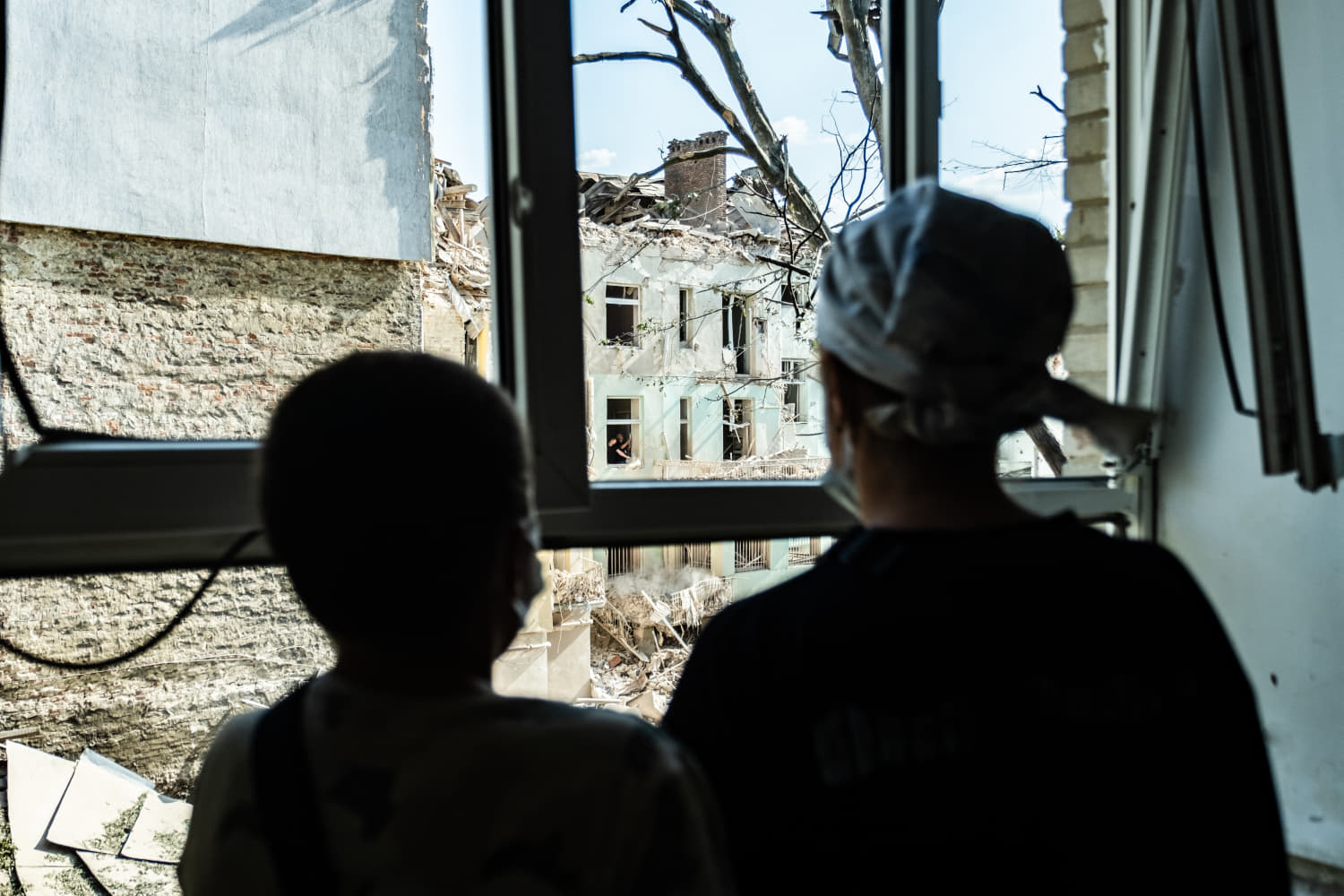
Together, we explore what it means to document stories that don't end when the assignment is over. From children growing up in a country at war to families trying to rebuild their lives, Oksana and Iva reflect on the people they have met, the relationships they have built, and the responsibility that comes with carrying these stories over time.
The conversation also touches on the emotional challenges of working so close to home. Unlike many photojournalists who travel to conflict zones and eventually leave, both photographers continue living alongside many of the same realities they document. This creates a unique connection to their work, but also raises difficult questions about distance, responsibility, and how to keep telling these stories year after year.
Yet despite the weight of the subject matter, this is not a conversation without hope. Throughout the episode, we talk about resilience, human connection, unexpected moments of joy, and the ways people continue moving forward even in the most difficult circumstances. There are moments that are heartbreaking, others that are inspiring, and even a few that will make you smile.
More than anything, this episode is a reminder that photographs are often only the beginning. Behind every image is a story that continues long after the shutter is pressed, carried by the people who live it every day.
So grab a coffee and join us for Part 2 of this conversation with Oksana Parafeniuk and Iva Sidash.
*****
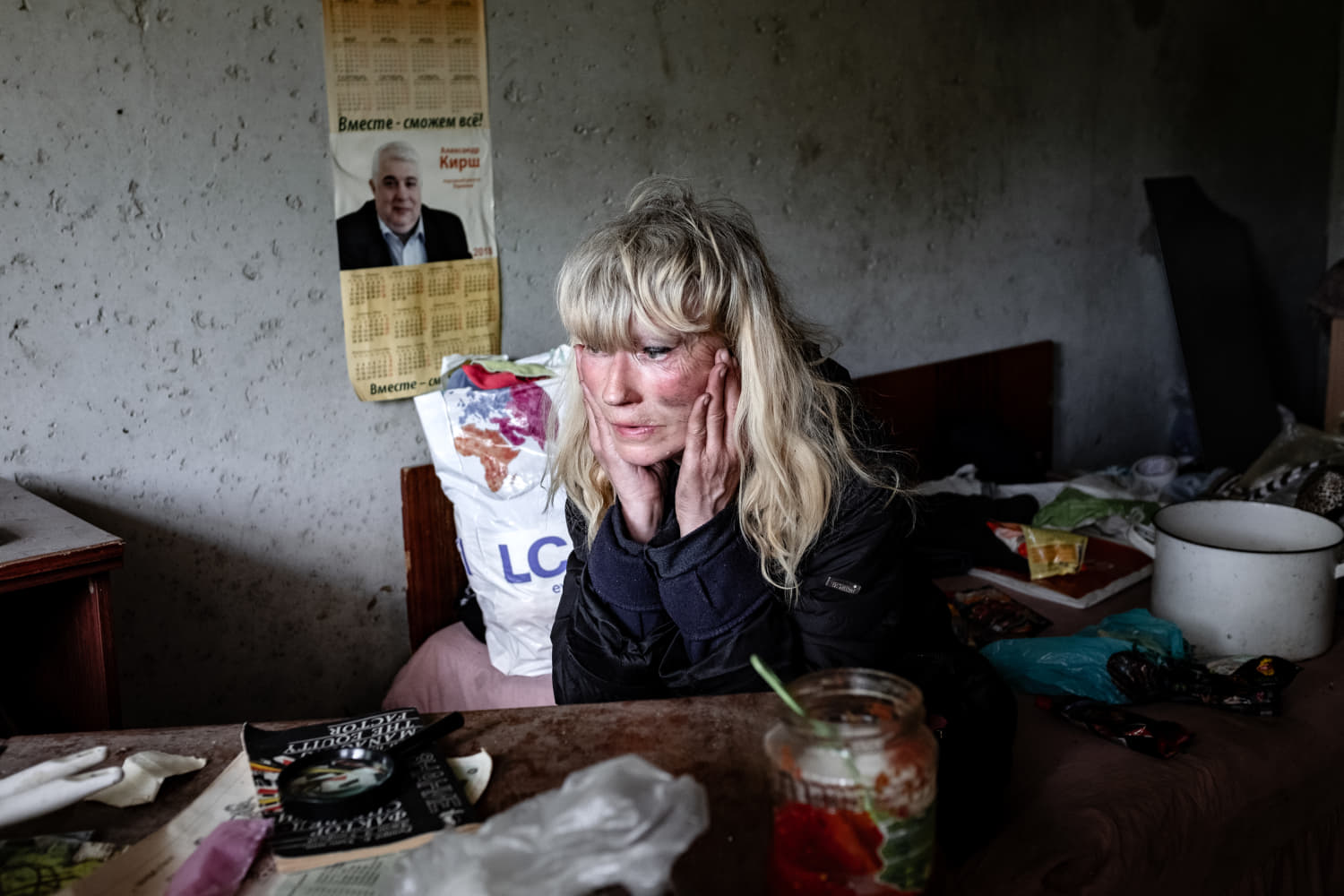
📸 See more of Oksana and Iva's work:
*****
🎙️ Listen to my first conversation with Iva Sidash, recorded in May 2023:
https://thecameracafeshow.com/ivasidash
*****
🎧 Got any questions? Email us
Thanks for listening and look out for our next episode! 🚀
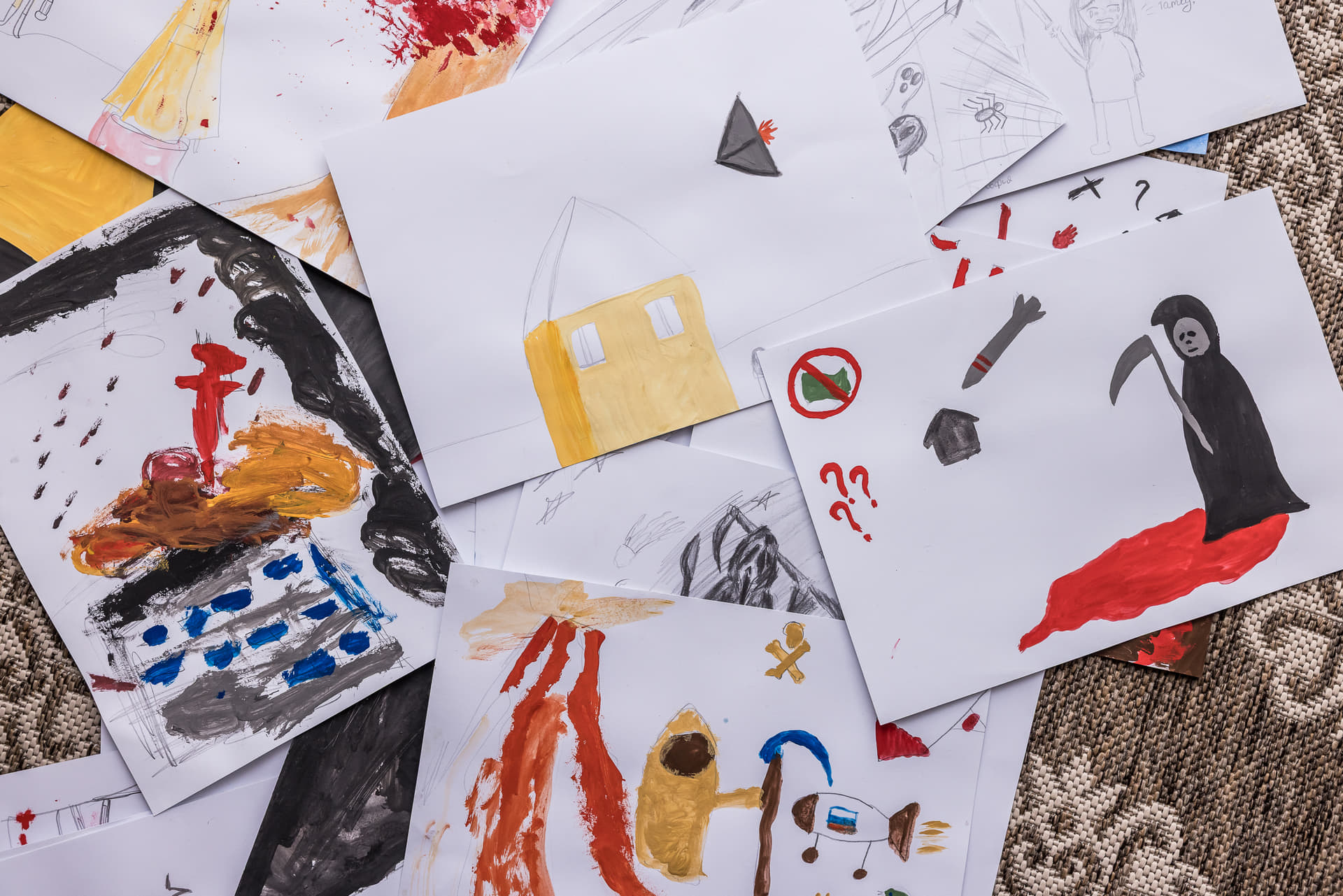
[00:00:04] Often kids would draw different pictures and then talk about some things. And one boy, he painted a picture of two graves. And there's two graves and I think clouds. And he drew like a skeleton in the grave. And he wrote, I think it was in a, I think it was date, date of birth and date of death of his father. And then the second grave, he wrote date of birth of himself.
[00:00:34] So he basically drew a picture of his own grave thinking that if he dies, he will meet his father in the sky or something symbolic like this. And that was like a really crazy moment because I think it's the first time during the entire camp. So some kids open up much faster about their problems and what they feel. But it was just also very, there were so many other drawings of acid and blood and explosions.
[00:01:01] And you just, it just breaks your heart to see that it's kids painting this. Greetings and welcome back to the show. Some stories don't end when the photograph is taken. In many ways, the photograph is only in the beginning. I'm Tom Jacob and this is the Camera Cafe Show.
[00:01:30] Today folks, in part two of this special two-part conversation, I'm once again joined by Ukrainian photojournalists Oksana Parafeniuk and Eva Sidash. If you haven't listened to part one yet, I would highly recommend doing that first as it sets the stage for where we're going today. In that first conversation, we talked about photography, home and what it means to document your own country while living through many of the same realities yourself.
[00:01:54] In this second part today, we move deeper into the stories behind the photographs and the lasting impact work can have on individuals, families and entire communities. We talk about children growing up with conflict, the emotional weight of documenting difficult stories and the responsibility that comes with telling them. But of course this wouldn't be the Camera Cafe Show if there weren't also some lighter moments along the way, a few giggles and even a surprise visit before the conversation is over.
[00:02:21] Beyond photography, this becomes a conversation about memory, healing and what happens long after the camera has been put away. Grab a coffee, settle in and enjoy part two of my wonderful conversation with Oksana Parafeniuk and Eva Sidash. Oksana, with you I want to walk a bit into your project, the summer camp for war-traumatized children. What place is this? What have you been through, the children there?
[00:02:50] Yeah, so this wasn't really my personal project. It's a story that I was assigned to do for the Washington Post with writer Lizzie Johnson and producer Kostentin Kudov. All last year I was actually working on quite a lot of stories of children and for me also being the mother, it was just very interesting and something I wanted to explore more. And so this camp brings together, it's organized by an organization called the Gen Ukrainian.
[00:03:19] It brings together, we only visited one camp, but they organize a lot of them through years. It brings children who experienced some really traumatic events in the war. All of them lost one parent or both parents. A lot of them parents' fathers were soldiers, but some of them lost parents in a missile or drone attack.
[00:03:43] There was a boy who lived in occupied territory by Russia and his mother was raped in front of him and killed as well. And really some was very dramatic stories. There was a little boy who's, they were already displaced. So they moved from some more dangerous part of Ukraine. And then I think missile or drone hit the building where they lived and both of his siblings died. So like their bedroom collapsed and he survived with his parents. So like all kinds of really difficult stories.
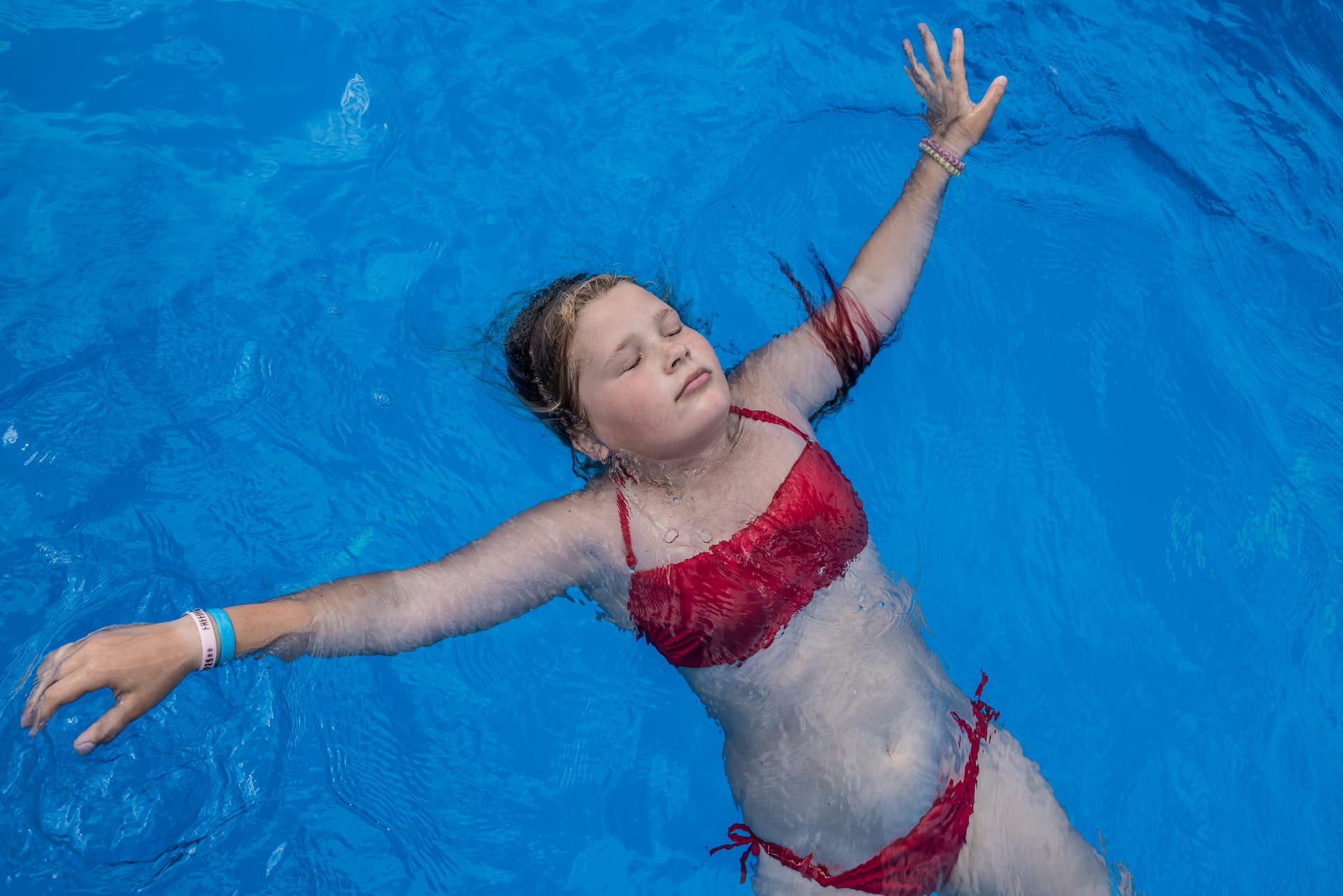
[00:04:12] And this camp is built around the idea of therapy. You might see it as just a regular summer camp. They go to the swimming pool, they go for hikes, they like play different sports, they have disco parties. But every day in between all of these activities, they have group therapy and they have individual therapy. Every day for, I don't remember, two or three weeks. So really this camp means to, goal is to heal as much as possible traumas of these children.
[00:04:41] And give them back a little bit of real childhood that they lost because of the war. And yeah, we were there for a few days just following around kids, just making friends with them, just trying to see what their life is like. And I think this is actually like you picked one of the stories that I think is like perfectly what I think is my, I'm like best at. Because not all of the stories you do, you always feel like the most comfortable.
[00:05:07] But for me, just being someplace and just watching and waiting for real moments and we could spend long days there. It wasn't just a few hours. And you could just wait and see and listen and just be there. And they get used to you after some days. And that's why I think it turned out in, I think it turned out really beautiful. And the story, the writer Lizzie, she wrote it was amazing.
[00:05:34] And actually, the best part about it was also sometimes when you take pictures and if you take really good photos, they can also determine if it goes on the front page. Not always, but sometimes they want to put it in. Of course, it means more visibility for stories from Ukraine. So they actually put the story on the front page on the independence day, Ukrainian independence day on August 24 and the Washington Post. So I think it was really good because then you have more views and more people.
[00:06:03] And actually, the other interesting thing. So often when I work on stories for media, I sometimes you feel like you went and you did a story in a team of reporters published and then you don't know what. I'm just always so interesting. What is audience thinks like? What do they feel when they read it? What does it make them feel, think, act? What does it do? So at least one of the ways to do it is that I try to read comments under the article.
[00:06:31] I mean, some of them are not real, but a lot of them are real people commenting. And I think for this story, there were so many comments and I think people were just profoundly touched. Especially after four years of full-scale invasion and many more years of war in Ukraine, people, especially abroad, get really tired of reading about really terrible things. But a story of children is still something. It's hard to just avoid.
[00:06:56] And I think a lot of people probably who maybe don't, maybe they don't read much about Ukraine anymore. But because it was about children, it made them rediscover what war is like in some other way. Yeah, and then actually after I photographed another camp, it was for the New York Times. A slightly similar, different, but slightly similar camp. And yeah, I'm actually, I'm not really doing a project about children, but I'm thinking about it.
[00:07:24] And I think to do a really deep project, because you can follow children growing up in the war, it just requires a lot of time and a lot of commitment and resources. But like following how children change through years, like over a long period of time. I don't know if I will succeed in it, but I'm just like thinking that it could be really powerful to do something like this.
[00:07:48] There was also a story inside of, now the name, Quirillo and Elvira, something like this? Yeah, so they, yeah, first when we just arrived, of course there is camp. There was, I think, 51 children. And for a writer to do a good story, like she wanted to choose like a main character or something. You have to base your story on something because you can't write about so many children. And so we were just first day sort of meeting different children and listening.
[00:08:17] And very quickly, other people started telling us. We were like asking what kind of interesting connections were made of, tell us about what kids, their stories. But very quickly we learned there is Elvira and Quirillo and they fell in love. And there's like a love story for 12 year olds, that kind of a love story. And so we met them and both of them were really amazing and open. And so we just started.
[00:08:46] The story is not just about them, but actually the picture on the front page is them dancing together. And the whole story, the way Lizzie wrote it, was how you can find some connection again, even have to experience in really traumatic events. For example, Elvira, she lost both her parents. If I remember correctly, her father was in a border patrol service and was killed. And then her mom went to, so they lived in a town close to the border, not too far.
[00:09:15] And her mom on the eve of Elvira's birthday went to buy her a cake and was killed in a shelling. So she lost both parents. And Quirillo lost his father. So anyway, yeah, the way the story was built, of course it talks about all of these really difficult things, but it also shines with this light of love and connection. And how children can still be children and dance for the first time together.
[00:09:43] So I think it was just really beautiful. That's why I really, I mean, there's a lot of good reporters, but some of them really just write such beautiful stories. And when you work really well as a team, as a photographer and a writer and a producer, if there is one, it's really, I think, then gives stories really powerful. Was it the moment that surprised you the most, Oksana? You mean about Quirillo and Elvira?
[00:10:13] Well, yes, while you were there in the camp. No, I think, no, I think it's like every, I remember every time the camp organizer will tell us some story of a child. I feel like every time you hear a story of a different child and what they went through, it surprises you. So it's just like they, all the stories I heard, most of them stayed in my head, even if we didn't even write about them.
[00:10:39] I just remember, oh, there was this other girl, maybe 10 or 11, and the drone hit their apartment in Sumy. And she was like dragging her brother, I think, out of here. The wall or ceiling fell on him and she was trying to rescue him. She was like 10 or 11, just a child. So each of the stories, I think, was really striking for me.
[00:11:06] And of course, yeah, the fact that, you know, Elvira's mom was killed when she went to buy her cake. It's just hard to imagine what it is for those children to experience this. And all of them still live in Ukraine. It's not like the traumas they experience is really profound, but it doesn't just, it didn't go away. It's like they can re-experience other traumas and they live in this stressful environment with missile drone attacks. Kids go, some kids don't go. It depends where you live.
[00:11:35] Some places you don't have school because it's too dangerous. So kids study online. Some places they have to study, but they need to go to a bomb shelter during the day. All these kids don't have normal childhoods. Go ahead, sir. Would you like to help them in the camp? Yeah, they mostly, they did a lot of therapy. So we were not allowed in most of it because it's a psychologist talking to kids one-on-one. We couldn't be present. There was art therapy.
[00:12:03] All kinds of other activities, group plays, different scenes. Actually, I have another story about art therapy. They often, kids would draw different pictures and they would talk about some things. And so we were present during one of, they let us just be there. They were drawing pictures. And one boy, he painted a picture of two graves. And there's two graves and I think clouds.
[00:12:31] And he drew like a skeleton in a grave. And he wrote, I think it was in the name, I think it was date, date of birth and date of death of his father. And in the second grave, he wrote date of birth of himself. So he basically drew a picture of his own grave thinking that if he dies, he will meet his father in the sky or something symbolic like this.
[00:12:59] And that was like a really crazy moment because I think it's the first time during the entire camp. So some kids open up much faster about their problems and what they feel. And some kids are very closed and therapists, psychologists were telling us this. And so I think this boy, he never like really shared much about himself. And there was like in the end of the camp, they finally just crazy picture, you know, what's in his head came out.
[00:13:26] And I think they followed up with him and talked about it and stuff. But it was just also very, there were so many other drawings of ass and blood and explosions. And you just, it just breaks your heart to see that it's kids painting this. But that's how they process all these events as well. Yeah. It helps you, Oksana, when you come back home and you play with Luca? Yeah, actually a lot.
[00:13:56] I sometimes think, where would I draw my happiness from if not for Luca? That's what I was talking about, that even if you live in a time of war and you experience, like many people, a lot of really tragic events. Even if it doesn't touch you, you read in the news, it's about your country, it's about people, about your city.
[00:14:18] But then also some of these moments when I was Luca and we just playing, going somewhere, you just somehow, they just feel like so amazing. I don't know, I guess just because you never know what's going to happen, they just feel so precious every day. So yeah, and having a child, of course, is not easy. But we sometimes talk with my husband, how people ask us, like, is it difficult to have a child in a country at war or something?
[00:14:47] And we're like, look, we never knew having a child not in a country at war, so maybe it will be easy to have a child not at war. And maybe it will be easier to live in a country at war and not have a child. But we don't know. So we have both. This is our experience. But yeah, it makes me really happy, but it also makes it more difficult because, especially when I work on stories of children,
[00:15:12] and difficult stories of children, and I did a big project or also a big story for Washington Post as well about killed children in the war. So, of course, also inevitably in your head, psychologically, you project all of these possible things happening to children in Ukraine to my own son, because we also live in Ukraine. And that makes it incredibly difficult to process it and then just recover psychologically and move on.
[00:15:39] And so, yeah, that is, I think, really difficult for me. So, like, on one hand, I want to work on stories about children, and I feel I hopefully can do a really good job and bring in my sensitivity for this matter. But at the same time, it makes it quite difficult to then come home and separate at least a little bit the stories from my life. Yeah.
[00:16:08] I ask you this because, Eva, you remember when we talked years ago, you told me that when you came from a difficult assignment, I think you took the dog of your parents and you made the walk with the dog to just have an emotional countdown? Yeah, I feel that it's important to find time when you have this safe space.
[00:16:34] Either it's your son, either it's your friend, or even when you're alone. But I think when we experience all these very stressful situations, and not just situations, but also we experience others, people pain, what just Oksana was describing, it's very important to find some time after that to recover of that.
[00:17:02] Because it's difficult to be, not to be attached to the stories you photograph, to the stories you tell to the world. Because I think empathy in photography is very important. And if you try to be cold, not attached to the subject, personally, I don't know how to do this.
[00:17:25] Because for me, I'm an emotional person, and I take the stories of others personally, because I just can't otherwise. Maybe I should, but I can't. And I think we are all humans, and some things, same things are important for us and matter for us. And of course, when we hear other stories, we take them personally.
[00:17:48] So that's why it's important to find some time, some way in your life when you can just think about something else. And when you can breathe without all this pain that is around you. And especially when we talk about the state of war, which is still happening every day, and we still feel the pressure of this.
[00:18:17] But the kind of mental health and how we care of ourselves is extremely important. And I think I talk about this so much because I still haven't learned how to process it in the way we should, and how to deal with some things. But emotionally, at least what helps me now is to find time to be on my own and to think about something else.
[00:18:45] Because there are so many stories, and with the time passing, the stories are even more. And I value every story I make. I feel that this is so important, and I'm so grateful that I'm able to do this. But of course, from another angle, it is difficult, and it is painful.
[00:19:06] But that's the path we chose, and I think, of course, it will have two sides of something good and of something that hurts you to some extent. Listening to both of you, I keep coming back to one question I have. What does it mean to photograph your own country when it's at war?
[00:19:39] It's a question that is hard to respond. Because I don't think we think, you know, much about it. It's just our lives. It's not that we can just choose it or something. That's one thing. But the one thing I can say is to speak about some more practical terms. I think it's much harder to be a Ukrainian and photograph your country at war, or if you're in any other country that is at war.
[00:20:08] Because you really cannot just take a break. Sometimes you get recommendations when you go, and some photographers that come from abroad. And I'm not like comparing who does a better job. It's really just about the way you can do it. That you come, and then you go home, and you take a break, and you take some distance, and you don't think about it. And I think when you live in this country, you come from a time, and the war doesn't go anywhere. It's still part of you. It's still there. Your family is every day at risk.
[00:20:37] Your friends get mobilized or join fighting or get killed, like Eva said, her friends. And it's something that is just 24-7. Like, you think you can maybe get a little bit distracted. Like, you can go to the gym, or maybe you can watch a movie. But it really, fundamentally, is always there. And I think that's why it's just... I was thinking now that... And maybe it's not a good analogy, because in the marathon, you know exactly how long you have to run.
[00:21:07] But it's all Ukrainian photojournalists. We are, like, running this long-distance run that is very difficult. But you don't know when it's going to end. And so you just try to endure as long as possible. Emotionally, it's just... And I just remembered one other person, like an artist, he was saying also that on one hand, of course, we want to do stories about the war. It's important. But on the other hand, it's not like we can choose to do something else, because there is nothing else. There is just war.
[00:21:37] And you can't really start doing some other art that is not related to the war. You can't really... Because not only does it make sense, while the war is still happening. So... I totally agree with everything, Oksana, what you're saying. And I feel that... Yeah, when we talk about photography in war, I would say that it's always something different. And you anyway take it personally.
[00:22:05] Either you are from this country or you are not, because we are all humans and we have something the same. But I think what the biggest difference is what Oksana said, that we live through this war. We live our life here. And we have friends to worry about. We have dear family to worry about. And that's why it maybe gives you another level to experience.
[00:22:32] And maybe you can show it somehow through photography. Maybe not. I'm still figuring this out. But I think that this process of living your life through the war is something very unique. And recently I had a conversation with the Australian filmmaker. And he was making a movie about Ukraine. And he asked me...
[00:23:02] We were talking about all this war thing. And he said... He told me that, Eva, I keep thinking about this, what you're experiencing. And I keep comparing people in Ukraine I meet and people in Australia. And this is like such a big difference, which I've never... It was his first time he came to Ukraine and he had these conversations with Ukrainians.
[00:23:30] And he was saying that, talking to you, to Ukrainians, I feel this... Maybe I can't say like this, but maybe you have something much more because of this war. And maybe that's why you became much deeper. And this is something very important to get when the war is over. And I understand what he meant, but I didn't agree with him.
[00:23:59] Because talking about what we have and how it affects us and that we can get anything positive from this war... It's very difficult to talk about any positive sides because how you can talk about positive sides of all the death and tragedy that is happening. And when the war is over and you keep living your normal life, we will never be the same as we were before. Because we all have lost so much in this war.
[00:24:29] And yes, does it change me? Of course. Do I understand something more? Maybe. But I feel that the price we are paying is really high. And I think what is left, what we can do is to maybe understand it and to value just the life even more.
[00:24:53] Sorry, sometimes I get too hard to talk to it. I completely understand you. And I was going to ask more questions, but I think... Well, the question I want to ask is related to women in photojournalism. Because this traditionally has been a very male-dominant field.
[00:25:24] How do you experience this today, both of you? Is there change in this? I think it was hard for me to start to get enough confidence and believe in myself. And it was not always related to it being a male-dominated industry, but partially. Because when you're just starting out, you're looking for role models. You're trying to find some people that can support you in this past.
[00:25:54] And somehow, for the first meetings I had, some of the photojournalists were not very supportive. And I didn't feel like they encouraged me or the belief that I could do it. And I was a little bit lost. And then I met my husband. And he was actually very supportive. But I also don't like to talk about the fact that my husband helped me so much. Because then it just also somehow makes me feel like the man had this really important role in my life. But he did.
[00:26:18] Because actually, even though he's also a photojournalist, somehow, and sometimes people ask us, like, how do you don't feel competitive? When we work for the same publications sometimes. But with him, it was just never the case. It was never about competition. He just believed that I was talented. And now we are basically on equal foot. In the very beginning, actually, what helped me, I was a member of Women Photograph. And I won this mentorship program. And I had two mentors. And they were just photographer and photo editor.
[00:26:47] Like, really famous. Kirsten Luz was photographer. And Elizabeth Christ, she was photo editor of National Geographic for many years. And that sort of gave me another boost in the industry. And then once I joined Women Photographs, then I saw how many women photographers there are. And what they do, it gives you a lot of power. And of course, there's also, like, a lot of men journalists who are also, you know, supportive and great. And it's just that sometimes you don't really see a clear path.
[00:27:12] And I think it's also partly for me why it was so difficult, not just being a woman, but also being Ukrainian. And I grew up in a very poor family. So even it took me very long to just earn enough money to just buy a camera. Like, and then I bought a camera and I didn't have a good lens. So then I was collecting money to buy a lens. So it was a lot of challenges to overcome. But right now, I don't know.
[00:27:37] Yes, sometimes you feel like maybe some photographers, some male photographers maybe get some riskier assignments, more on the front line. But like, for me, it's hard to say it's a problem because I never really wanted to be on the very front line. Like, I am scared to go in the most dangerous places.
[00:27:56] And I think my stronger side and what I'm more interested in is a little bit away from the front line and more about, you know, life of people and more about all of this emotional difficulties, which is also very traumatic stories, just in a different way. And I do sometimes go close to the front line, but not always. So anyway, for me, this is hard to compare that it's because I'm a woman maybe that I don't get this assignment, but also partly because I just don't feel like that's exactly what I want to do.
[00:28:26] So maybe Eva has a little bit different perspective on this than me. Yeah, I think if we talk about photography as male-dominated profession, which still is till today, but exactly what Oksana was saying that I feel that's why I value this support of female photographers, photojournalists so much.
[00:28:50] And I believe that this is so important to, yeah, to unite with each other, to support each other. The Women Photograph Organization helps so much. Oksana was telling about the mentorship and my mentorship when I won this program was Anastasia Taylor-Lind. And she's always incredible in the way she feels this justice and how to talk about this.
[00:29:20] And I feel that she was giving me always this boost of confidence of me because, yeah, I mean that this lack of confidence sometimes makes things more difficult. Or maybe, I don't know, some kind of, I wouldn't say because I'm a woman or not, maybe, I don't know. But she was always like saying that, Eva, you need to support each other.
[00:29:45] There is such an incredible circle of female photographers and this is so important to be together. And I had another case which is too long to talk about and I don't want to, about male photographer who kind of was not very nice to me in one situation.
[00:30:06] And Oksana was the one who supported me so much and gave again this kind of example that, like, Eva, we are together. And, like, we will, we face things together, we overcome it together. And I think that this magic of female support is very important. And it just, I think that in general female energy is strong.
[00:30:34] And especially when we talk about something that is related to us, I think that's good to pay attention to at least. Because I think really, girls, that some stories are way better told by women photographers. And I don't mean the pictures, I don't mean the technical side.
[00:30:59] But I think that sometimes when they, it depends the story, people will open more up to you. Yes, I think it's also not just about women. It's just that in this industry overall, for a long time, it was not just male-dominated, Western, white, if you will generalize, male-dominated. And I think, and I mostly work in Ukraine. Of course, there's a lot of photographers who travel to other countries also.
[00:31:29] They tell a lot of stories of all kinds of people, different ethnicities, backgrounds, who are like all kinds of experiences. But if storytellers that tell those stories only have limited experience, then they would be telling the stories in some one-sided way. So the more diversity and the bigger, like the more storytellers have diversity, women, men from different cultures and countries, the worse and profoundly told stories will be.
[00:31:58] So it's just about how many different voices the storytellers should be. Just as many as the people that they tell stories about. Because it's another conversation about objectivity in journalism, but also I just believe that there is really no objectivity. You can be fair and truthful. All of our backgrounds, experiences, how we grew up, what we believe in, all of these shapes we report to stories.
[00:32:24] And what details we pay attention to that someone else wouldn't pay attention to. I think, yeah, it's not just about being a woman or not. It's just about what kind of person you are. And just the more diverse people there will be, with more diverse backgrounds, the more profound stories will be told, I think. Yeah, very true. So, Oksana, what exciting news you have or you want to talk about?
[00:32:53] It's more just, I don't know if you were, I thought maybe if you will ask. But you didn't ask, so maybe I don't need to talk about if you were going to ask about the future plans. This was my last question, but go ahead. Yeah. No, it's just, I think for the first time in so many years of being a freelancer, I will have 10 months of stability in my life.
[00:33:16] I won a Nieman Fellowship for journalists and I will be spending 10 months in Harvard University, Boston, Cambridge, Massachusetts, studying, taking courses. And when a group of journalists and just thinking about what to do next, because I did feel like Eva was saying that she was, while I also don't want to leave Ukraine.
[00:33:37] But I also felt like I need, it's like really hard to process everything that happens to you and in your work while you're still in Ukraine. And I felt like I really need to be abroad and have this time to just think, read, talk to other people and just understand what's next and how I can do meaningful work in the future. And so luckily I got this fellowship.
[00:34:06] So we will be moving in August to Cambridge, Massachusetts. But yeah, it's still confidential. I'm not supposed to share it until they publicly announce it. So I hope this will run after it. It should be sometime in the middle of May. Yeah. We will make sure, but I'm very excited for you, Oksana. It's very good news. Thank you. Yeah. I'm a little bit scared that I wouldn't be taking pictures for 10 months. I'm like, will I just forget how to close my camera?
[00:34:34] But I profoundly believe, and I was always, there's photographers who take pictures every day and carry their camera with them all the time. And I was always just a bit less productive in some ways because I always felt like I need to think a lot. And I would like, it takes me a long time to just, I always felt like I'm not prepared. So maybe after 10 months of thinking, I will photograph some good pictures. So maybe I will forget how to take pictures. We'll see.
[00:35:05] You won't forget. You make amazing work. It will be always there, Oksana. Thank you. Also, I think that sometimes it's wonderful to have a break, Oksana. So just congratulations. This is incredible news. I'm really happy for you. And I'm sure 100% that it will give you huge opportunities in the future. And for your photography, it will be like the best.
[00:35:35] Hopefully. I also want to take a class on writing. So maybe I can write better texts than girls. They go with my pictures. Yeah. And for Eva Sidash, what is holding the future? For me, I would say that I want to be as much as possible in Ukraine now because I feel the need to document more.
[00:36:00] And I also feel that I finally, all these years gave me more experience, of course. And all these years gave me a little bit more confidence. And I know better how to navigate with this and how to navigate with my life. I think the fact that I moved to Kyiv makes things easier for me because I will be able to go more often and to go for a longer time to eastern Ukraine.
[00:36:27] And so I just really feel the need to work more on documentary projects, on my personal project. I'm still thinking what exactly I want to do because I feel it's very important to, when you think about projects you are doing or you want to do, is to understand why you're doing this and to have this deep interest in this.
[00:36:53] And sometimes it's just important to think before. Because sometimes I was doing like in sake of doing and now I understand it's important to be more grounded in what I really believe in and what I want to show with my photography.
[00:37:10] So I try not to push too much on myself, but I am sure that I feel this need to make something new, to start something from scratch. Probably in eastern Ukraine, of course, but who knows, maybe in Kyiv. But yes, I think that I will keep going and keep working in Ukraine and we'll see where it goes next.
[00:37:39] I'm sure it will work out. I have no doubt. But Oksana, you see how much that Eva talks because I was really expecting she was going to say, I'm going to do a cooking course and I'm going to make borscht much better next year. Yeah, no, actually the way to learn how to make borscht better is you need to have a child that really loves borscht.
[00:38:04] Because I only learned how to make borscht when I finally had Luca and turns out he really loves borscht. So I had to learn how to make borscht. Now I know. Because I don't actually like to cook, so you don't have choice. Oksana, what's the most funniest thing that Luca has done that has made you laugh a lot? Oh my god. I have notes of all the things he says that are really funny.
[00:38:34] Recently he, wait, let me see. Oh my god. I need to pull out my notes. But one story, it's not the funniest. I will try to find the funniest. He recently, I asked him, we were sitting on the couch and I asked him to bring me something. Labor. He was like, Luca, can you please bring me something? And he looked at me and he's like, what, don't you have legs? He's three and I was like, okay. That is very unfortunate. Oh, and then the other day, of course, kids shouldn't eat potato chips.
[00:39:02] But he noticed that we had potato chips. So then he asked for a little bit of potato chips. So my husband, Bren, gave him a little plate of potato chips. And I was like, oh, Luca, potato chips. What flavor? And he looks at me as if I was stupid and he's like, potato? Potato. Because like in Ukraine, we have all kinds of flavors like cheese, paprika, like whatever. And he's like, potatoes? Anyway, I have lots of stories in my notes. But yeah, it's fun. It's every day now when he talks.
[00:39:32] So you can just enjoy moments. Well, I had hoped to see him, but he's maybe already sleeping. I'm not sure he is sleeping. If you really want to see him, I can bring him. Go to take Luca. And in the meantime, I'm going to ask Eva. If you get a cat, what will be the name? I think I will not get a cat because I cannot allow myself having a cat.
[00:40:02] Maybe I will have a dog in the future. I don't know. But I feel I can't betray him. I'm sick with this, honestly. But it's, oh, hey, Luca. He's so sweet. There he is. Oh. And Luca speaks English, of course. Yeah, he does. Say hi. Say hi. He's very skeptical. Okay, I'm bringing you back.
[00:40:32] That's so lonely. That's not a New York joke. He is asking, what are they doing? Tell me, go. Oh. Okay. He was half sleeping. No, he is. My husband's reading him books. He goes to bed really late, unfortunately. And he's a good photography model? No.
[00:41:02] He doesn't like to be photographed really much. And I bought, I was trying to get him interested in photography. And I bought him this like really small, very basic, like for kids, digital camera. And he really wasn't doing much with it until just recently. Suddenly, he decided he wants to take it. And we were like going somewhere. And he took it. And he was taking pictures of everything outside. And of the subway. And of people. And I was like, wow. Like suddenly he discovered it.
[00:41:31] And then never took the camera again. It was just the one time. But we'll see. He's still very small. He likes video. It's every time he wants to see video. And I'm like, no, photo and his video. I don't like taking video. Well, art is important. You have to encourage them in whatever way you can, Oksana. Yeah, for sure.
[00:41:58] And I know he, yeah, he likes trucks more as an excavator. So his art is going to evolve around that kind of stuff. Very traditional boy interests. Yes. Eva and Oksana, thank you both. Really, I'm very grateful we had finally the time we could make it work to sit together. You shared stories with me.
[00:42:21] And I hope really that one day outside of this internet, we can catch up in the Ukraine, have a coffee and have another wonderful conversation. Thank you so much for the work you're doing because it really matters. Thank you for very lovely questions and for your interest. Yes, it's always great to talk to you. So maybe in a few years we will meet again. No, it won't pass many years.
[00:42:48] Because I have to try the borscht and now I know that Oksana is a master in it. I will make it happen. Yes, 100%. It sounds like a plan. Okay. I see you girls around. Take very good care there. Okay? Bye. Yeah, okay. Bye. Bye. And that was our folks, the complete episode with Eva and Oksana. War has a way of reducing people to headlines, statistics and events.
[00:43:15] But conversation like this reminds us is that behind every photograph are individuals trying to live their lives, raising their families, hold on to hope and make sense of a reality they never chose for themselves. And before we go, I would like to thank you so much Oksana and Eva for taking the time to join me on the show, for becoming friends and for sharing their stories so openly. I know many of these subjects are deeply personal and I truly appreciate the trust they placed in me and in all of us listening today.
[00:43:44] To both of you and your families, I wish you safety, strength and brighter days very soon, hopefully ahead. If you'd like to see more of Oksana's and Eva's work, you know you can find everything back in our show notes. And of course folks, if you enjoyed this episode, have a look at our website, don't forget to subscribe, leave us a review about this episode and follow us on any podcast platform or on YouTube. Until next time, keep shooting and keep on moving your own photography forwards.
[00:44:12] I'll see you next week here for another wonderful conversation about photography and life. Adios!