

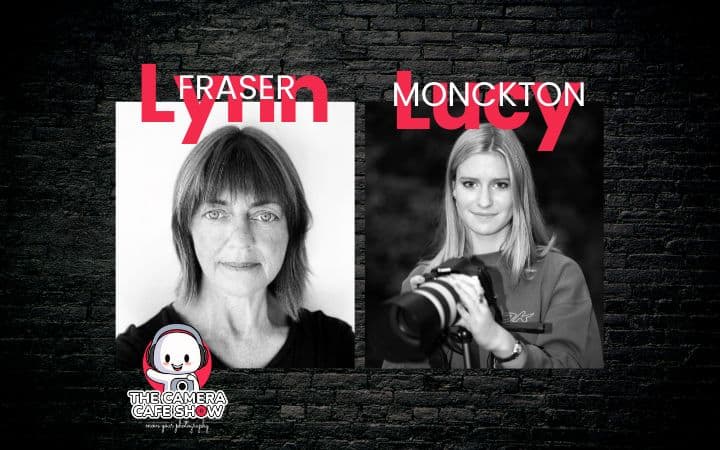
Tom: Welcome everyone, as today we have two superheroes of photography with us. Winner of the amateur photography of the year, 2024, run by Amateur Photographer Magazine, Lucy Monckton and Lynn Fraser on the other side. Get ready for a double portion of inspiration tonight. Welcome girls on the podcast. It's a pleasure to see you.
Lucy: Thank you.
Lynn: Hi, Tom. It's lovely to see you.
Tom: Mm-hmm. I know we are going to have an amazing talk about live photography and your awards. Of course. Lucy, let's start as we have running on Instagram, a bit of a superhero team. If you could pick any superpower you want, but you had to use it for photography, what would you pick?
Lucy: Oh my goodness. See, thought about this. I mean, it is so basic, but I would say teleportation because you know, imagine you are able to
Tom: Okay.
Lucy: any country anywhere at any time and just, you know, bring your camera and just shoot. It would be incredible. It would take out all the travel time, all of everything, you know, that gets so expensive and take so much time. So I think that would be, that would be super cool.
Tom: Mm-hmm. Good choice. And for you, Lynn, do you know that every superhero has his sidekick? Yeah. So if your camera could talk, what it would say about you.
Lynn: She's a bit scatty. She doesn't
Tom: You.
Lynn: know what she's doing.
Tom: Mm-hmm. But you take good care of the camera or it's just a tool.
Lynn: I do try to take good care of it, but I do consider it a tool, not too precious about it.
Tom: And you bump it into things or not.
Lynn: Oh, it's bumped into lots of things. It's fallen off the tripod and bumped across the ground and almost into water.
Tom: There you go. Well, we'll keep the stories for, later. Lucy. Just how would you introduce yourself outside of, photography? Who is Lucy Moncton?
Lucy: Oh my goodness. How would I introduce myself outside of photography? I'd say I'm a university student. I'm going into my second year at the University of Exter, and I'm actually studying psychology, so no photography there. But I think it's nice to have a sort of broad understanding of things, so, yeah.
Tom: Mm-hmm. And you are analyzing all this podcast now, Lucy.
Lucy: Oh,
Lynn: Oh.
Lucy: Yes. I'm reading your minds through the
Tom: Hmm. So you know already my questions I have in mind. And Lynn, what would you do if we take, or what would you say if we take photography out of the equation? Who Lin Fraser?
Lynn: Goodness me, I wear so many different hats. I'm a wife, I'm a mother. I work in our own business with my husband. I'm interested in history and archeology. to keep busy, interested in lots of things.
Tom: And you are based in the Highlands of Scotland. You have the fruit farm, you have the shop, you have a lot of things going on.
Lynn: Mm-hmm.
Tom: How does a typical day look for you there, Lynn?
Lynn: Chaos. I don't have any structure to my days usually. It just depends what needs doing. I don't tend to work on the farm or in the shop. I work I do the changeovers in our accommodation. I administration, the payroll. do all the running about messages, and then if I can sneak off, I do with my camera.
Tom: But I suppose summer doesn't give you much time to sneak off. No.
Lynn: No, no, it's very busy. This is our busiest time of year, so actually the camera just really gets put away. I haven't, I've barely touched it since March, so I'm looking forward to autumn arriving and things getting quieter at home, and then I can get back out with my camera.
Tom: Mm-hmm. And Lucy, how you are going to combine studying and photography. You have a, you made a plan there.
Lucy: Yeah, well I, the great thing is I've got a parking permit for next year, so an Exeter is such a beautiful area, so there's loads of national parks. I'm gonna just drive off. See where my car can take me and make some plans. I've heard actually that they're they've introduced beavers to a, I can't remember the name of the river, but a river nearby. So I'm gonna go and try and have a look at that. I don't know whether it's, you know, get, but I think, yeah, there's so much wildlife, so much beautiful natural landscapes, all of that. I think no, no shortage of stuff to photograph at university.
Tom: And what's another hidden talent you have, Lucy, that people maybe don't know any good cooking skills.
Lynn: Not so.
Lucy: I do a lot of music. I sing a lot. Not so much anymore, but I used to, at school, I did a lot of singing, so I guess that could be a hidden talent.
Tom: And you, Lynn, any other hidden talents?
Lynn: Hidden talents. Oh goodness. I like cooking.
Tom: Okay.
Lynn: I knit a little bit at times. I dunno if I call those talents though. They're just things that I do.
Tom: How is the, what's this famous food from Scotland?
Lynn: Venison, haggis.
Tom: Haggis? Yes. I still have to try it.
Lynn: It's very good. You have to, you have to get a good haggis though. got, we've got an award-winning butcher very close by and they sell very good haggis. So come and visit and I'll feed you. Very good Haus.
Tom: Award-winning photographer. Award-winning Butcher,
Lynn: Yeah.
Tom: Lucy. You ever tried it?
Lucy: I've never tried it. Actually, I can't even picture what it looks like.
Lynn: Oh, well, traditionally it was, sort of the heart and the lungs of the liver, bits and pieces that were left over from the animal mixed in with oatmeal and spices and various other things. And then stuffed into the stomach
Tom: Mm. a sheep or something, and then you would steam it or boil it. It sounds horrendous from that description, but it actually tastes lovely. I'm sure. I'm sure it is because Let's walk a bit over to photography. Who wants to go first? I want to hear your first real memory of picking up a camera , where it started.
Lucy: Lynn, do you wanna go first?
Lynn: Oh goodness. Well that means me casting my mind back many years. I think I must have been maybe around about or so, and I was gifted a Kodak Instamatic 110, so it was the of rectangular. ones that you could put a flash bulb in that would every time you used a flash. So those are my, I think those are my first memories of actually picking up a camera and using it. And I do have, still have some of those horrible, blurry photographs that I took with it. And I went into railing and that's what I took with me when I went into railing in 1985. And I do still have those photographs.
Tom: Mm-hmm. It's also a different kind of film. No, because I think I also, I even had one here. It's a smaller size of film maybe that goes inside.
Lynn: Yes, it was a cartridge. It was,
Tom: Yeah. Mm-hmm.
Lynn: that you just fitted in then you'd get home and you'd post it off in a prepaid envelope and then wait for about a week or so for the photographs to come
Tom: Yes.
Lynn: I still remember the disappointment of. The blurry photos and the missed shots and the black images. But it was of anticipation, just waiting to see
Tom: Yeah. Lucy, you know what we are talking about? Or you went straight to digital.
Lucy: So I mean, I've done a little bit of film photography when I did photography, GCSE. but apart from that, I've never really done it, but I really enjoyed it. Then sort of spending all that time in the light room, it's, it's a very rewarding process I found.
Tom: Mm-hmm. What was your first camera, Lucy?
Lucy: So my first camera was this tiny little cannon power shop that I got given for Christmas one year when I was, when I was quite young. And I think my
Lynn: My parents
Lucy: you know, we'd sort of take photos of the family with it. My brother and I got the same thing. And then there was a school photography competition where they had different categories and one of them was, you know, nature. So I thought, okay, I'm gonna go and take some pictures of the flowers in my garden. And I got really into it. I absolutely loved it and I've never looked back. Yeah.
Tom: Well, I think this was the wildlife photographer of the year you went to visit with school
Lucy: Yes. So that's
Tom: and then
Lucy: Wildlife photography specifically I'd never considered, I'd seen beautiful wildlife photos, but I'd never considered that someone my age. do something like that. That was very much, when I grow up, I will be this. It wasn't something that was accessible in my mind and I saw Ashley Scully's image of a Fox, I think titled, stuck In and it was, it had its head in the snow saw that she was, I dunno how old she was at the time, about 14. And I thought, my goodness, you know, maybe I can do this. so yeah, then I , turned to wildlife and yeah, it's, I absolutely love it.
Tom: And Lucy, I think last time we talked, you told me that you had a bit like a, like a health issue when you were a child. You think that photography helped you dad in, a way.
Lucy: Definitely a hundred percent. So I was, I was especially ill over lockdown. the great thing was that with wildlife, people think you need to travel far and wide, and yes, it's lovely to do so, but it meant that I had something to do every day because I could just go and photograph the spiders in my garden. flies that were landing on leaves, even inside you get moths. So there's always something to do, and photography gives you this thing to build on and practice. It's a skill that you can polish. So that really helped for sure.
Tom: And you learn more about nature. Of course. I think that,
Lucy: Yeah.
Tom: yeah, that's the other very positive of our hobby Lynn. Then you went from a solicitor to an archeologist and now a fruit farmer. Creativity has always played a role in your life for this.
Lynn: It has in different ways. I'm not artistic in that I can't draw, so I is. My way of being visually creative, but as a was always into doing things with my hands, like pottery and macrame, that sort of thing. as I say, the knitting cooking, I think that's all a creative activity. So always been there, but I've always felt that I wasn't particularly creative until I started to take my photography more seriously. And then I started to see that. I could, I could do something with it, but actually I was maybe not too bad at it.
Tom: And for your both, because you both have linear working. Lucy, you are going to study a lot. You think that photography is this passion that you can always find energy for?
Lucy: I'd say so. Yeah, I think, and especially with wildlife, I don't know how you fill in, 'cause I feel like, you know, I think you more with yours travel and it's sort of quite a big commitment.
Lynn: Hmm.
Lucy: But especially with wildlife,
Tom: I.
Lucy: just sit in my garden for an hour and hope that, you know, I'll see some butterflies or something. So it's quite relaxing. It's a bit of downtime.
Lynn: Yeah, so I would agree with that. I mean, the travel is tiring physically and mentally, but I don't always travel. So can go up to a local wood, which is just a mile away and go for a walk with my camera and take three to four hours to do a walk. That should take an hour because. I'm just walking so slowly, or I sit down just looking at the trees, the dragon flies that are flitting about. Sometimes I don't even lift my camera up, but I think the fact that you've gone out with a camera and you're looking and you're slowing down, I think there's a really good health benefit there.
Tom: Mm-hmm. I'm,
Lynn: if you go out and you're feeling tired, I think you come back feeling rejuvenated.
Lucy: definitely.
Tom: I'm very happy, Lynn, you brought this up because nobody understands. Sometimes when I tell this. , They say you went out with your camera one hour, you come back, you have five pictures. I say, yeah, it doesn't matter. I don't need to take more pictures because I know I'm not going to like them, so I don't need to take more. But it's always, I mean, you always learn something and, it's a good way of, spending your time.
Lynn: Oh, definitely. It's the same with the travel photography. I don't always lift my camera because I've maybe sat and had a conversation with somebody, and to me that's more important than getting. The image, it's the experience rather than the photography. If I get some photographs as well, that's great, but I think it's just making that connection.
Tom: Mm-hmm. And Lucy, your connection is with wildlife , and macro.
Lucy: Yes, exactly. So it's, yeah, a bit of a different connection. Not many conversations to be had there, but I completely agree with the you know, not always lifting your camera. So I've done some work at a safari lodge and I remember guests who I was, I would. Sometimes I was able to sit in guest safari cars and they'd say to me, they were like, you know, I was very interested that, you know, we were seeing this beautiful line and you weren't taking photos.
Lynn: And I think
Lucy: to a
Lynn: it.
Lucy: where you've taken enough photos through your camera that you can see exactly how the image is going to look. Sometimes it looks, you know, different to how it looks in real life, but you can see how it's going to look on the LCD when it eventually comes out. And if it's not something you want in your portfolio, as you said. There's no point. You might as well enjoy the moment. So sometimes it's more valuable. I completely agree to sit there and be in the moment rather than raise the camera when you know you're just going to end up deleting the result.
Tom: Hmm. Lynn, you are a bit like me that when you do some travel photography, you have your camera out or it's in the back first.
Lynn: Usually when I get somewhere it takes me a little while to get the camera out. It takes find my feet and just to see. I just like to observe and see what's going on because I feel I. Almost self-conscious because you're, you're the odd one, eight. you've got your camera out immediately, I think people just hone in on you. Whereas if you take your time, leave the camera in the backpack watch what's going on, they get bored. you know, they stop seeing you and then that's when you can get the camera out and start taking some images. by that time I feel a bit more comfortable as well. I self-conscious lifting the camera and taking the photos.
Tom: Mm-hmm. Well, this problem, you don't have Lucy. Of course, because you're
Lucy: this is good advice actually because I've, you know, I try to do a bit of people photography, especially for contests like amateur photographer, where you've got so many different rounds and I honestly, as you say, I get so self-conscious and so sort of, it makes me so anxious. So I think that's, that's very good advice to keep the camera in the bag for a while to blend
Lynn: Mm-hmm. Just sit and
Tom: That. There isn't always time for it because it happens also, maybe if you want to do a certain kind of street photography, you will need to have it out, but otherwise, yes, I totally agree. I prefer to have in any language possible first the kind of conversation and then just see where it, where it leads us gear, because now we are talking about cameras. I think you guys both use Canon, right?
Lynn: Mm-hmm. Yeah.
Tom: Talk me a bit about the, most used lenses and the gear.
Lynn: Okay.
Lucy: fast.
Lynn: So up until recently I was using a Canon five D Mark four, and that's what most of the images that I entered into amateur photographer were taken on. Last year, I went up to an R five and the last few years, the lens that's been on my camera most of the time as a 24 to 70 F 2.8 because it's just so versatile when you're out doing travel photography, you're not having to. Constantly change your lens, especially when you're in a dusty environment. So that one.
Tom: I.
Lucy: very similar. So I had the five D mark four as well, and my most used lens was actually a 500 millimeter F four prime. But then also for macro I'd used, I had an a hundred millimeter prime, which was F 2.8. But I've actually very recently, same as you switch to the R five, although I have, I don't think I've published any images from that just yet. I've got some sitting in the bank. But so we'll see. We'll see how that goes. How much that changes things.
Tom: Hmm. Would you, Lucy, would you tell that you are, that you are a technical photographer or you kind of know what you want and you go from there?
Lucy: Oh goodness. I think it's, it's a mixture for me sometimes. I kind of, well, with wildlife, you can't plan too much. You can. You can plan for the optimum, but it doesn't always happen. So I'd say I definitely, I always have an image in my mind that would be the optimum. And I always like to plan for that, even if it's not the most likely scenario. So imagine we've got two sides and I can only face one side. If the light was better on this side, even if it was more likely that an animal was going to come from the other side, I'd always face a side where the light was better because I'd rather have, you know, imagine then I was facing the side where I was more likely to come and it came from the better light side. I'd be theming. I think always planning for the optimum is the way I go about things. And I always, yeah, I always do have a shot in mind. Sometimes that changes while I'm photographing because I see new elements and new behavior and things to consider. But I think planning that shot beforehand is also important.
Tom: I think this is for you a bit more difficult in planning really a shot.
Lynn: Yes, it is. Yeah, I tend to be more reactive with the travel photography. But having said that, I'm in a location for any length of time, like Lucy, you start to see shots on your head and start to try and plan, especially if you're watching, people working, and it's quite repetitive. It's the same as wildlife You study the behavior, don't you? So essentially you're doing the same thing, watching people working, seeing where they're coming from, seeing what the pattern is in terms of what they're doing. Then you can start to plan for the short. And then hopefully get the shot that you want.
Tom: Hmm. What's your most amazing travel moment until now? Lynn,
Lynn: Oh my goodness me.
Tom: pick one.
Lynn: that's such a difficult question because every country's different, every situation's different. people are different. I dunno that I can actually pick a fa, you know, a really, really big one. I've just so enjoyed being with some people. Spending time with the Kazak Eagle hunters in Mongolia was just fantastic because there were such wonderful people. Spending time with the oyster ladies and in The Gambia was lovely as well. Just sitting in a boat with one of them, watching them working, chatting, it is just, I think it's just when you've made that connection with somebody and even though you can't speak the language, there's been some sort of spark between you, whether it's a bit of humor or just, it's very difficult to explain. You just seem to feel that natural rapport between yourself and somebody else despite the language barriers. I think that's what I really enjoy. I think that those are the special moments.
Tom: Mm-hmm. And if you have to pick a picture, because when this comes out on YouTube, you will see we, you have already two in the back. This too means something very special for you.
Lynn: No. Well, yes they do. They are special, but I'm really bad at not printing my work, so I don't have many of my images printed. So. tried to find two that I'd actually entered into the amateur Okay. So these two have both been in, I think in terms of an image though that is really special to me is one that I took I was with the Mongolian eagle hunters, that's about nine years ago. And I've got a lovely, lovely portrait of shock who is an eagle hunter. that's the first image I think I took where I sat and thought. Oh, I could actually really take some spectacular photos that I'm really proud of. So I think that one is really special to me. Yeah.
Tom: Mm-hmm. I talk about Mongolia. You girls have to listen to my interview with Jni Ade. He's the cultural ambassador for Mongolia.
Lynn: Hmm.
Tom: He has a lot of stories for from Mongolia, so when you have time in the weekend, it's a very good podcast episode. Of course. Lucy, tell me your best, most memorable moment where the hairs got up from excitement,
Lucy: Wow. So I had an incredible one in Bran Conservancy in Kenya where there was an elephant carcass had died of natural causes a few days before, and we were next to this carcass looking for predators, and we found one because this hyena had crawled inside the stomach cavity of the elephant and kept peeking his head out. Looking around and then went back in. It was truly extraordinary. And I can't, I cannot describe the smell. It was, experience was amazing.
Tom: Mm-hmm. Because how far you were away.
Lucy: Oh, very close. Very, very close. In these sort of smaller conservancies, you can get so close to the subjects and they're, you know, they're used to it, so they don't mind, and there's not many safari cars around, so it's causing minimal disturbance, which of course is very important. And this one we were, yeah, I mean, a couple of meters away.
Tom: Mm-hmm. And what's an animal on your wishlist? Lucy?
Lucy: Oh my gosh. Every animal, honestly. Oh
Lynn: Oh, wow.
Lucy: think Lynx. I'd love to do links. Tigers would be amazing. I'd love to do more work with leopards 'cause I've only got one leopard photograph, but I'd love to love to see some more leopards.
Tom: Mm-hmm. Lynn, you were in, you were in India, right? Yes.
Lynn: Mm-hmm. Yeah.
Tom: You went, you went to see the Tigers?
Lynn: No, no.
Tom: No.
Lynn: No. No. It was a, it was a sort of street people type photo
Tom: Hmm. I have to tell you have to go to run and board park. It's an amazing experience to be there three or four days and see tigers.
Lucy: Oh my goodness. I'd love
Lynn: Mm,
Lucy: I was a trip for this summer actually, to India. But it ended up not happening.
Tom: I will give you a contact both. You can write and it's a very good, very good home. Stay there and you will love it. So,
Lucy: Amazing. Thank you.
Tom: Let's walk over to amateur photograph of the year. Lucy, first you already won In 2021. If I'm right in, a joint first place win
Lucy: Yes, I did.
Tom: Then you won again last year. So , you also tried in 2022 and 2023?
Lucy: I
Lynn: I have.
Lucy: I have years when I really go for it. So 2021, when I won for the first time, that was the inaugural year of the young category. So I really went for it in that year. I entered all my best photos and I got the joint win. Then. Then the next couple of years, I knew my portfolio wasn't as strong. So I, you know, I entered. Some photos just 'cause, I mean, I'm so competitive. I love competitions and it's fun. So I entered for fun. And then year I'm sort of semi going for it. And then next year when it's going to be my last year in the young category, I'm hoping I'll have really built up my portfolio and I can have a load of fresh images. That none of the jury will have ever seen because a lot of, so one thing that I think people really need to consider with competitions is that it's important to have your, IM that to be the first time that the jury's seeing your image. So a lot of the jury for amateur photographer now follows me on Instagram after I won in 2021. So they've seen a lot of my images already, so it will take away from that. the novelty of the image. it's important if you're, especially if you're entering big competitions, to have not posted them
Tom: mm-hmm. Yeah.
Lucy: So hopefully next year I'll have had a really fresh portfolio that I won't have put anywhere and I can put that into the competition. So fingers crossed.
Tom: Of course. And Lynn, this was your first time winning the overall title, but I think the year before you came, ninth or something like this.
Lynn: Yes, that's right. Yeah.
Tom: So what made, what made you make the plunge to enter the competition?
Lynn: Really for me it was just to learn maybe how to curate my images. So it could be because when you're entering the images, you really, you do actually have to sit and think about them and be objective, because we're obviously all very subjective about our own images. So trying to take that step back view them critically, I mean, it's not an easy thing to do. So that was one of the reasons. And also just to see if the images that I thought were good, somebody else would think were good. again, it's subjective, you know, it's, it's, it's. one person likes, another person doesn't. And I think you remember that when you're entering things into competitions, that essentially you put them in and then I just forget about it. I don't get worked up about it. I forget about when the results come out. I mean, I am competitive, but maybe not quite as much as Lucy. But it's just, I think it's just really for me, and I use it as a learning process.
Tom: And you both have someone or maybe more people that you first screen the pictures before you send them in, or you just go with your own judgment.
Lucy: So I always, I always talk to my parents before and I, you know, I consult with my friends, but my
Lynn: My parents.
Lucy: they often have a very different viewpoint for me, which sometimes go like, is very good. And sometimes, so with two of the categories, actually the wildlife category, the image that won that category, they told me not to enter. the travel category, they said Definitely don't enter that image. But I ended up, I was, I was like, no, I really do like these images. I'm gonna put them in. And then they won. So I think it's. It's important to listen to people because there are loads of categories that I would never have entered an image that did really well, but they told me to. So you need to listen to people, but take it with a pinch of salt. If you really feel confident about an image, if you really like it and you think this is, this is what I want to enter, then enter it.
Lynn: Yeah, I would agree with that. I don't tend to speak to anybody. I've, I've learned through past experience just to go with my gut and if I'm wrong, I'm wrong. If I'm right, I'm right. And I don't, I can't ask my husband 'cause he just tells me everything's great or or he'll say, did you take that image? Let's talk a moment about planning because. I don't think that most people realize when you go to competitions like this, you should plan a bit ahead what you're sending and maybe what pictures you still need to make. Let me hear from both a bit how you, how you, plan the contest. So when the new competition goes live, I'll go onto the website and have a look at it, and I'll look at all the different categories. And I get a notebook, a paper notebook, and a pen, and I sit and write, list out all the categories, and I'll write down the dates that the closing dates for the entries. And then I just start jotting down from memory. Images that I think will fit into each of the categories. And then I have to think, because some images might fit into more than one category, and of course you can only enter an image into one category, so then you have to figure out which category is going to be strongest. And so it's a bit but it changes as the months go on. But there is a bit of thought goes into it. I tend to work from my archive, but I will try and shoot. Sometimes shoot new images and if I know I've got trips planned that are going to happen well before the final categories, I'll keep in mind what the categories are and see if I can maybe shoot some new images for those.
Lucy: So my planning process is almost identical, going onto the website, checking the categories, getting a notebook, I also, so because I have such a limited portfolio and for the travel portraits, kind of all of those sorts of categories, I do tend to plan around those ones, particularly if I have time to go out and shoot something for those categories. So for instance, last year for the travel category, I thought it'd be really cool to photograph the Huskies and Svalbard. I emailed. One of the places that kept a load of huskies and I asked if I could do that, and they said, yeah, of course. Come along. And so, yeah, that image was one of the ones that won the category. So that was, that was really good.
Tom: Mm-hmm. And if you make your list and you realize, you say, I don't think I have a strong enough image. Would you go with your gut feeling to shoot the image that you think is good, or will you look at what won in the previous years and go for an image like this?
Lynn: I don't think you can second guess. What the judges are going to like. I think you just have to go with the way that you shoot what interests you. Because if you don't, you don't produce a good image, I don't think.
Lucy: I With that.
Lynn: Mm-hmm.
Lucy: you images that have won in previous years, the judges, they've, they've seen that image. There's, you know, that image already exists. There's no point in trying to replicate it. So I think they're, they're looking for something very different. So I think just going completely with your gut and your own creativity is definitely the way to go.
Lynn: Definitely. And for like macro is definitely one of my weakest categories I've just gone through my archive and picked out images that fit the description of the macro and I've not been confident at all, and I've been surprised that I've had images shortlisted. So it just shows. I think you can't second guess, and that you should just enter every single category and just in. they're not good enough, which is what I thought, I still got some shortlisted.
Lucy: Exactly. 'cause the judges are looking for a whole range of things on their short list and then the top 10. So I mean, anything that you can put in will definitely be up for consideration at least.
Tom: Mm-hmm. So the hardest one for you to send in Lin was Macro.
Lynn: It's not something I do. So, that was definitely the hardest one. What else? Yeah, that's been or two categories over the last two years that I've just not been very confident about. Street photography's another one because I don't really do street photography. I just, I'm just find that too uncomfortable. yeah. But I can usually find images that I think, well, hopefully they'll meet the standard and I'll put them in. And
Tom: you, Lucy, if you have to do street photography, for example, which is also not normally your team you look for inspiration somewhere.
Lucy: I do,
Lynn: do, yes.
Lucy: also think about, you know, what's near me, what could I make out of. The things that are near me. So for instance, I don't think, I don't think any of the images actually got shortlisted, but you know, at least it was something to enter time. So I used to live near Birmingham and I knew that dig birth has some incredible street art. So I thought, okay, street photography, I really hate doing street photography of people, so I'll just do it off the street. I know it's not entirely on brief but you know, it was something to enter, which is what's important. And I think actually one of them got shortlisted. So it's Every point is a point. So every point counts
Tom: Yes, because I think the main thing is at least enter a picture in every round. If not, it's impossible to win. I suppose,
Lynn: Yeah, I, that was the mistake I made in the first year that I entered. I actually didn't enter the macro round because I just didn't Any images. So was, that was a bit of a learning curve for me. So I made sure I entered every single category last year, if I hadn't, I wouldn't have won because I only won by 10 points. So that was one shortlisted image in a category. me the title. It was so close, so yeah, absolutely. Just go for it. Just enter every single category.
Tom: Mm-hmm. 'cause I have to look it up, but how does the pointing system go?
Lucy: So I think it's 10. It is
Lynn: It's 10 points. Yes.
Lucy: then I can't remember how many points it is for those sort of lower top 10 places, but a first place will be a hundred points, second 90 points, third 80 points, and so on.
Tom: Mm-hmm. Mm-hmm. Okay.
Lynn: it doesn't matter how many images you have either placed or shortlisted in a category, it's only the top image that you get the points on. So say you entered five images in a category and you had 10 shortlisted, you would still only get 10 points for that reign, despite the fight that you've had for images shortlisted.
Tom: So girls now winning, Lucy, how did it feel, or when did you know that you won the competition?
Lucy: So I actually,
Lynn: I actually, it kind
Lucy: I
Lynn: of, I,
Lucy: round nine of turnarounds 'cause I, my image won the travel category, which was round nine. And that put me enough points ahead that no one would be able to catch up.
Tom: Okay. Uhhuh.
Lucy: But,
Lynn: but
Lucy: so it was
Lynn: its a wait.
Lucy: knew I'd won at that point, but I didn't know my final point tally and I didn't know whether I should really like, say anything. 'Cause you know, they like to sort of announce So it was, yeah, it was kind of surreal 'cause I really was not expecting that. But no, it was amazing. I was so happy.
Tom: And your parents were happy,
Lucy: My parents were so, I was them who actually, they were the ones who did the calculation and they were like, no, no, you are far enough ahead that you want. I was like, what?
Tom: and for you, Lynn, it was a bit more nervous? No. Maybe if you won only by 10 points.
Lynn: Yeah, so it was completely different going into 10. I knew I had a chance of winning, but of course you don't ever think that you're going to win, and it very much depended on whether I got placed in round 10, did. So I actually got an email before the results came out because needed to organize the. The ceremony. So they needed to know if I could go, which I couldn't, but I was asked not to tell anybody at that stage because the results hadn't come out.
Lucy: I had in 2021 and
Lynn: Mm-hmm.
Lucy: got my I got the email when I was in a doctor's
Lynn: Oh.
Lucy: at waiting, got the email, you know, they're checking your heart rate and they're like, your heart's beating very fast.
Lynn: Yes, it does give you a quite a thrill actually. I mean, I was just so surprised 'cause I saw the email flash up on my phone and I thought, oh, what's this? And read the few first few sentences and told my husband, oh, I've won. And then read to the bottom of the email, which, and that said, please don't tell anybody. So, and he's not very good at keeping secrets.
Lucy: That's the problem with my parents. You know, you tell them anything and they, all they wanna do is sort of post it all over their Instagrams and it's like, no, like, this is confidential.
Tom: Mm-hmm. Mm-hmm.
Lucy: dad especially, honestly, can't, can't keep a secret at all.
Lynn: Well, I have to, I have to say my husband did very well, and he managed to keep it to himself, so he too. Okay.
Tom: Mm-hmm. He bought you a nice lunch.
Lynn: No, he didn't. He actually asked me how he could take credit for it. But actually I have to say he does deserve some credit because he's quite happy for me to go for my travels. I have
Tom: I want to ask you girls also, what advice would you give to someone considering to, enter it, but it's a bit hesitant to do so.
Lucy: I'd say, I mean, just give it a go. Go for it. Like. As we've already discussed, the judges are looking for something new every year. So even if you're looking at your images and you're thinking, oh, but that's not even remotely similar to what's happened in previous years, or, I don't think this is quite up to scratch. You know, it's, as Lynn said, she didn't even enter the macro category one year and then entered the next year and you've got shortlisted or placed, you know, got points. And it's just, it's so important to just give it a go. And even if you don't get any shortlist, at least you know, then you've tried for yourself.
Tom: Lucy, photography in the future. What will it mean for you personally, you think you think you will step it up a game or, it'll stay like, a hobby?
Lucy: I really want to try and turn it into a career. Even if it doesn't work out, I want to know that I've tried. 'cause I don't wanna be looking back in however many years and think, oh, what if So I
Lynn: I really.
Lucy: go. All in, try and turn it into a career and then if it doesn't work, I'll still have as, have it as a hobby. So I won't be losing anything, I definitely want to try.
Tom: Mm-hmm. And Lynn, what it means for you this, win, because I know you parted up with. Neil James and founded the Journey Beyond, what's, what's your goal there?
Lynn: Our goal is to provide creative retreats using photography, sound writing, and also to take people to different countries but not provide the sort of tripods of torn type. sort of more immersive with human connection and creativity on all sorts of different levels. And photography is a part of that, but it's not the only part.
Tom: Okay. But I understand it's, a photography trip. You arrange everything or people still have to arrange their own accommodation.
Lynn: No, no. We arrange the accommodation. They really just need to arrange their flights and insurance. Everything else is taken care of.
Tom: Mm-hmm. And what's the next trips you're going to do?
Lynn: For me personally, I'm going to Pakistan and Afghanistan in October for about 3, 3, 3 weeks, maybe almost four weeks, in Pakistan and then moving on to Afghanistan.
Tom: And with who you're going, Lynn
Lynn: I'm going with Trevor Cole who's a, an Irish photographer.
Tom: Okay. And for the journey beyond, what's the first trip you have planned?
Lynn: The first, well, I'm helping Neil in India next year. But the first trip two of us are running properly together is to Mongolia. Next September, and part of that is to go and see the eagle hunters and go to an eagle festival, which is gonna be very exciting.
Tom: This is this September or next year?
Lynn: year, 2026. Yeah.
Tom: Okay. Lucy, you see? You have time to sign up still. Then look.
Lucy: That sounds incredible. So the eagle hunters, whereabouts is that again? Sorry.
Lynn: Western Mongolia. Okay.
Lucy: Amazing.
Lynn: Yeah. I went in 2016 I didn't see an eagle festival, but we did alongside a lot of the eagle hunters and took part in their daily lives. So whether they were rounding up the sheep or milking, I tried milking sheep. It's much harder than it looks. They're yaks, they're just such lovely people. And all they're making cheese, that sort of things.
Lucy: Amazing. And what does an Eagle festival.
Lynn: They all, the hunters travel because they all live in different areas that just live in sort of family groups. So they all come together to show off their skills as hunters. So the Eagle Festival is an opportunity for all the hunters that live in the region to come together to show off their skills.
Lucy: That sounds amazing.
Lynn: And yeah, on horseback and the eagle handling skills and how well the eagle hunts and how well it returns to them. So it is all gonna be very exciting, I think.
Lucy: Wow. That does sound incredible.
Tom: You've got any tips planned? Lucy?
Lucy: Nothing
Lynn: Yeah,
Lucy: at the moment, but I'll see. I think just everything
Lynn: think.
Lucy: the UK at the moment. I'm trying to plan places that I can go with an Exeter. And I'll see what I can find around there. 'cause the closer to home you can do stuff, the easier it is to really work on something over a long period of time. I'll, I'll have to see how that goes.
Tom: Hmm, you haven't been to Komer Island and see the puffins.
Lucy: I'd love to do that. That's such like a bucket list thing, but I've never done it so far, but I'm, maybe I'll do that next year.
Lynn: We've got puffins about two hours away from us. Sorry I didn't get to see them this year, but they're such wonderful little birds.
Tom: Mm-hmm. And who knows, it might be your winning pictures for the next awards.
Lucy: Maybe.
Tom: There you go, Lynn, with all your travels, what's the weirdest food you ever ate?
Lynn: We are just food. Oh my goodness me. I think in China, actually, I was eating this amazing broth thing and I was looking in the bowl and I was thinking, that's a bit odd. That looks like an eye. So I got my chopsticks and fish around and they pulled out half a chicken's head that had been cleaved. and right through. So it was the beak and everything. So I just put it on the table next to me and continue eating because it was so delicious and I was hungry.
Tom: There you go. Nothing for you, Lucy.
Lynn: How.
Lucy: Well so I mean, I've, I haven't eaten anything weird, but I've seen, well, I mean, I guess. Not considered weird, but when I was in Svalbard, you know, I was out all day photographing the reindeer and I thought, you know what? I'll treat myself tonight to go to a restaurant. And all of the things on the menu were sort of roast reindeer, reindeer burger. And I was like, I can't eat that. Like I've.
Tom: You would call yourself adventurous. Lucy, let's say if you get a free ticket to space, you're going or not.
Lucy: Ooh. say, I'd say semi adventurous space I'm not so sure about because I don't know. I mean, what is there at the other end? That's what depends on what the ticket's for. But in terms of, you know what, like I really want to travel to a lot of different places. So adventurous in that sense, I'd say, yeah.
Tom: And your comfort food after a long day.
Lucy: Oh, spaghetti bottle of eggs.
Tom: Lin, why you are laughing. It's the same for you.
Lynn: What food? No. I think it would be something like Apple crumble and custard.
Lucy: That's a good one.
Tom: A good decision. If you look back to this whole a matter photographer award journey. What's one thing you will always remember the most? From the whole experience?
Lucy: I think for me just sort of, you know, the gamble of putting in images that I wasn't particularly confident about into categories that I didn't think I stood a chance in, and then it paid. Off with placings or winning and it, you know, it's just, it's very rewarding.
Lynn: Yeah, I think pretty much the same for me in that validation that what I've been striving for in terms of trying to improve my photography has worked and that there are other people out there that value my work as much as I do.
Lucy: Well, so I dunno
Lynn: I dunno about you.
Lucy: me, seeing my photos in magazines is always, it's so, it's so rewarding.
Lynn: Yeah. So it was super, yes. 'cause I think if the photography show was on round about the same time as the ceremony awards and while I was traveling I was getting messages from people saying, oh, I've seen your images at the photography show. 'cause I had someone in three different stands, I think. Sorry. It was lovely.
Lucy: some as well on the amateur photographer stand, and I didn't go actually, but I remember my aunt sending me a picture being like, this is yours, right? I was like, yes.
Lynn: Yeah, so that was lovely getting little videos and pictures, so yeah.
Lucy: Hmm.
Tom: Hmm. And of course, Lynn, you were not in the ceremony, but Lucy, I think when you're playing this for a whole year and you always see the same. Names popping up behind you or in front of you, and then finally comes a day you can meet them and has to be nice not to find the other ones who took the pictures.
Lucy: So lovely. And also like the thing I love about the photography community is everyone is so supportive of each other, even in a competition sense. Whenever I did well in a category or anything like that, I'd always get messages from people who are also competing in the competition saying, well done. Like lovely image.
Lynn: And it.
Lucy: because I feel like you don't get that in many other art forms or or any competitive thing where people are so supportive of each other, even when they're in competition with one another. So it's lovely to put some faces to the names as well.
Tom: Mm-hmm. And now you both saw each other here on the podcast. There you go. I think we can wrap it up. We had a great talk, a bit of live, a bit of photography, and a bit of inspiration for the next year if people want to go to the amateur photography contest. Thank you for this little chat and have a peek behind the lens of your winning journeys. Congratulations again to both of you and I can't wait to see what is next step
Lucy: Thank you so much.
Lynn: Thank you, Tom.
Tom: Have a nice evening still. And Lucy study very well. Okay. Don't do silly things. Okay.
Lucy: Yes,
Tom: Mm-hmm. I see you girl soon. Bye.
Lynn: Thank you. Bye.