
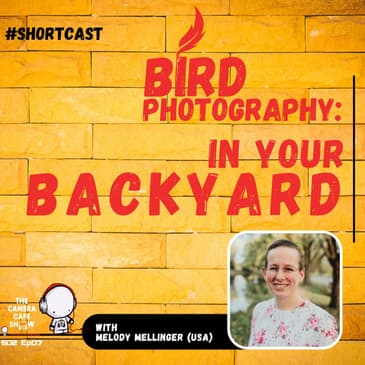

Are you passionate about bird photography and looking to capture stunning images right from your own home? In this insightful ShortCast episode of The Camera Cafe Show, we delve into backyard bird photography tips with Melody Mellinger, an accomplished photographer from Pennsylvania, USA. Melody shares her journey from using a simple point-and-shoot camera to mastering the art of bird photography with Canon DSLRs, all within the comfort of her own backyard.
In this episode, Melody provides essential backyard bird photography tips for creating a bird-friendly environment and capturing breathtaking images. She explains how to strategically place feeders and branches, optimize lighting, and overcome challenges like roaming cats to make your backyard a perfect setting for bird photography.
In this episode, Melody Mellinger shares comprehensive backyard bird photography tips:
Patience and Observation: Melody emphasizes that patience is key. Spending time observing birds in your backyard allows you to learn their behaviors, helping you anticipate their movements and capture stunning shots.
Strategic Backyard Setup: Learn how to arrange your backyard with feeders, branches, and perches in the best locations for photography. Proper placement can attract birds while ensuring they feel safe and comfortable, increasing your chances of getting the perfect shot.
Essential Equipment and Techniques: Melody dives into the gear and techniques that make a difference in bird photography. She discusses the importance of using the right focal length, adjusting camera settings like aperture, shutter speed, and ISO, and how to freeze fast-moving birds to achieve sharp, detailed images.
Through personal anecdotes and practical backyard bird photography tips, Melody inspires photographers of all levels to explore the wonders of bird photography right in their own backyards. Her advice helps foster a deeper connection with nature while also contributing to wildlife conservation.
The Transcription of Melody's Episode is Available on our Website Here.
Enjoyed our show? Support us with a $2 coffee! 😉
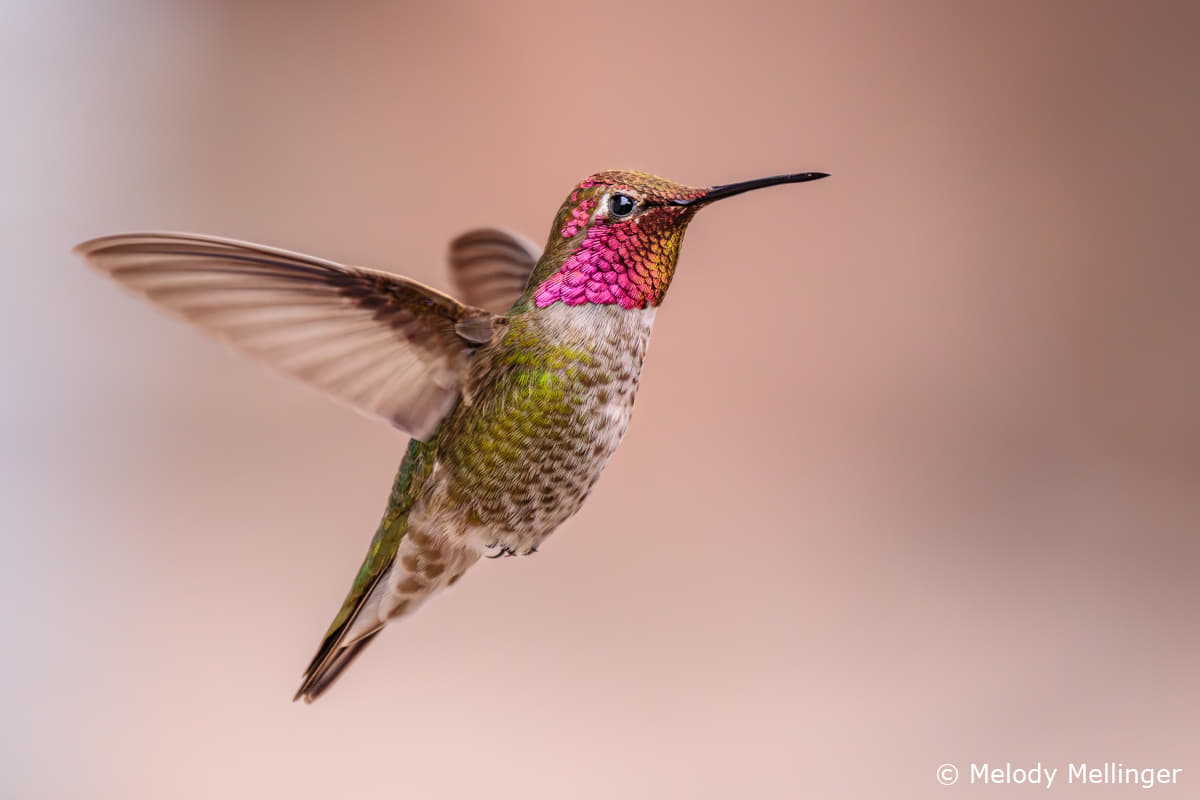
Check out more of Melody's work:
Website: https://melodymellingerphotography.mypixieset.com/
Instagram: https://www.instagram.com/melody_anne_m/
Facebook: https://www.facebook.com/StoriesWrittenInLight/
Twitter: https://twitter.com/MelodyAnneM
Connect with The Camera Cafe Show and don't forget to Follow and Subscribe!
Website: www.thecameracafeshow.com
Twitter: www.twitter.com/CameraCafeShow
Facebook: https://www.facebook.com/thecameracafeshow
YouTube: https://www.youtube.com/channel/UCgwLbH5yWiYYd-dFeu1s_vQ
Got any questions? Email us
Thanks for listening and look out for our next episode!
[00:00:00] What can I do to encourage them to go exactly where I wanted them?
[00:00:04] Do I need to move the feeder or do I need to adjust the perch or, you know,
[00:00:08] I'm usually sitting there watching the birds plotting what I can do to convince
[00:00:13] them to do what I want them to do.
[00:00:22] Greetings everyone and welcome to another Camera Cafe Show Shortcuts episode,
[00:00:26] your podcast where we brew up inspiration for your photography journey.
[00:00:30] I'm your host Tom Jacob and join me here this week as we fuel your creativity behind your lens.
[00:00:37] Today we're diving into this enchanting little world what many of you out there love.
[00:00:42] Bird photography and in this episode more specific we are looking at something more
[00:00:46] close at home. How do I get those marvelous shots of these tiny visitors in my own backyard?
[00:00:53] For this I looked and I found an amazing nature and bird photographer especially for you,
[00:00:58] Melody Mellinger. Melody joins our podcast tonight from Pennsylvania in the USA to uncover a bitter
[00:01:05] secret behind our outstanding bird images and gets you up to speed with some helpful tips and tricks.
[00:01:11] From our humble beginnings with a point-and-shoot camera to mastering full-grown DSLR cameras,
[00:01:16] Melody's passion for capturing the beauty of birds in her own backyard is sure to inspire
[00:01:21] and motivate photographers of all levels so just sit back and get ready to move your
[00:01:26] photography to new heights as we uncover the secrets and joys of shooting birds in your own
[00:01:31] backyard. Let's get rolling! Welcome tonight on our podcast Melody I'm very happy to find you here
[00:01:40] on the other side. Yeah it's good to be here too Tom. How was your day today? Very good,
[00:01:46] busy but so far very good and how about yours? My day very busy. I'm happy to sit in front
[00:01:54] of the podcast because this is my relaxing moment then. All right very good. So Melody tonight we
[00:02:01] are going to talk about birds in your backyard I think it will be an amazing little short cast we
[00:02:08] are going to do. Melody tell me a bit about yourself how your photography journey started.
[00:02:15] Well it's not a whole lot to tell there, I have had an interest in photography. I would say
[00:02:21] ever since I got my first point and shoot camera as a teenager but I didn't get my first DSLR until
[00:02:29] 2015 and when I pulled that camera out of the bag and saw all the buttons on it I realized that
[00:02:37] if I was going to really master using it and all the features it had to offer I was going to
[00:02:42] have to use it a lot and really practice. So I started looking for things to photograph and
[00:02:49] there were the flowers in my garden it was spring when I got that camera and then I realized
[00:02:54] that I really enjoyed the challenge of trying to photograph butterflies and even birds and it just
[00:03:02] kind of went from there. I haven't gotten tired of the challenge of birds yet so that's still
[00:03:07] what I'm working on maybe someday I'll try something different. And what inspired you to
[00:03:12] specialize in birds photography and more in your own backyard? I think it has a lot to do with
[00:03:18] the challenge it goes along with capturing birds they're very unpredictable a little hard to work
[00:03:25] with you can't just go out and say oh there's an interesting bird I'll take a good picture of it
[00:03:29] it's not that simple so I think it's a lot the challenge and I love when you do get a good
[00:03:34] picture of a bird how you can then look at that and zoom in on the details things that you
[00:03:40] would never notice out in the wild looking at the bird. So that's the part I really love
[00:03:46] about it is getting those pictures in on the computer and really looking at that detail.
[00:03:51] And your own backyard melody how you have it set up to make your bird pictures?
[00:03:58] Okay the first thing that you're going to do if you want to set up a backyard for pictures
[00:04:03] is look for good light and so that's one of the things I'm conscious of I do move my setup
[00:04:10] around a bit I usually think of it as setting up a stage I'll put out branches near my feeders
[00:04:17] and so forth so I keep a nice feeding station and then put branches near it or sometimes I move the
[00:04:24] feeding station to where I'll have a blooming tree or bush or something that's going to be
[00:04:30] photogenic for the birds. So sometimes it moves around it's not like I have one exact setup
[00:04:36] that I work with different things for different seasons. Any particular challenges of doing this in
[00:04:43] your own backyard as opposed to going out to a nature park? Ah there can be some challenges my
[00:04:51] own yard was mostly had big trees in it initially which big trees are great for the birds they're
[00:04:59] not so great for trying to photograph the birds birds can totally disappear in them
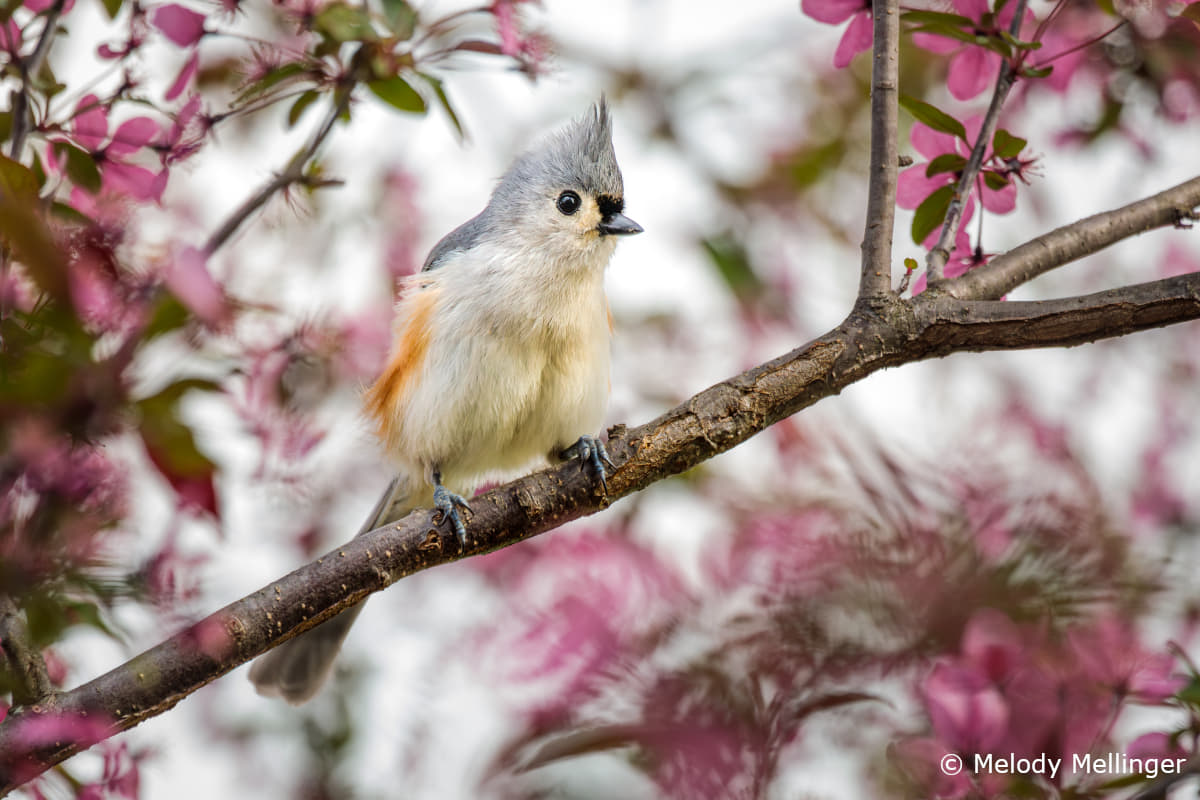
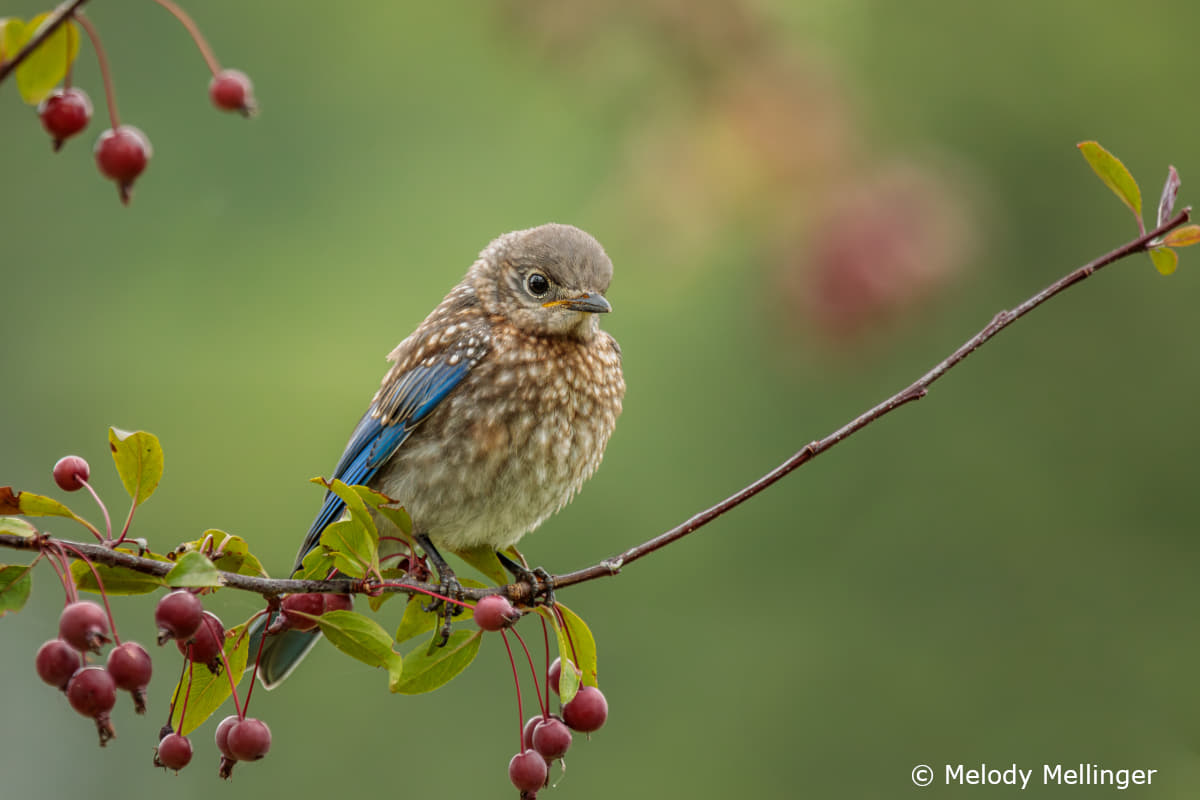
[00:05:05] that problem I solved by planting a small crab apple tree I believe it was two years ago
[00:05:12] so now I have that's at a great spot for me to watch it has nice fine leaves in the summer it
[00:05:18] gets these beautiful pink blossoms in spring that aren't so large that they dominate the bird you
[00:05:24] know they're nice and small birds can sit in between them and the bird still is the subject
[00:05:30] of your photo not the flowers now when we get into fall and winter it gets these really great
[00:05:35] little red apples that the birds like to come eat plus they look nice on photos so yeah sometimes you
[00:05:42] have to plant things in your yard to attract the birds and and things that will look good in
[00:05:48] photos that's something always to keep in mind is what's going to look good along with the bird
[00:05:54] in your photo and do you think that by doing this in your own yard it's easier to
[00:06:02] to anticipate their behavior than being maybe outside it might actually be simply because
[00:06:10] I have the benefit of being able to watch them a lot the crab apple tree I mentioned is actually
[00:06:16] planted where I can view it from my kitchen window so I'm observing the birds and their
[00:06:21] behavior in that tree on a regular basis even if I'm not out with my camera the more you observe
[00:06:28] the birds the better you are predicting what their behavior is going to be and knowing where
[00:06:33] they're going to land and how you might be able to get that shot and I was thinking for people
[00:06:39] or photographers that have domestic animals like cats there are any precautions to take
[00:06:46] yeah that is one of the challenges in my yard we're in a farming community and so
[00:06:51] cats roaming free is just a thing we have to deal with they serve their purpose with rodent
[00:06:57] patrol and all but yeah they can be an issue with the birds I mostly put my feeders on what
[00:07:03] I call it the shepherd's hooks you know your wrought iron hooks that you can drive into
[00:07:07] the ground and it holds the feeder a few feet above the ground I keep most of my feeders on
[00:07:13] tall shepherd's hooks so the cats cannot reach the birds the cats cannot climb the shepherd's hooks
[00:07:19] if you do choose to hang your feeders from a tree put them out on branches that get small enough
[00:07:25] that the cats couldn't go out on those branches so yeah it is something to keep in mind now
[00:07:32] I do try to move my feeders around to get the birds to land on specific purchase sometimes
[00:07:39] and I will move feeders down where the bird wouldn't necessarily be safe if I left that feeder there
[00:07:47] all the time but if I'm going to be sitting out and watching and I really want the bird to
[00:07:50] land on a specific branch I'll move the feeder to a location that will encourage the bird to go
[00:07:56] there but then when I'm ready to take my camera and go back inside the feeder has to go back
[00:08:01] up into a safe place also it is surprising how good the birds are at looking out for themselves
[00:08:08] oftentimes I'll realize the birds have all disappeared and then I start looking and
[00:08:12] oh sure over there in some corner was a cat lurking too far away to harm the birds at that point so
[00:08:19] the birds do a good job of looking out for themselves but I try to do my part with that
[00:08:24] as well I do not want the cats getting my birds I also have some cats at home and I'm pretty
[00:08:30] sure that the birds seen my cats before I saw before I see them yes they usually do
[00:08:36] melody let's go a bit to the gear question that people always like what equipment are you using
[00:08:42] nowadays okay at this point I'm using a canon 5d mark 4 with a 100 to 400 millimeter zoom lens
[00:08:53] width now in just the last couple of months the addition of a 1.4 times extender as well
[00:08:59] so that's giving me an effective focal length of I believe 560 millimeters so yeah focal length is
[00:09:06] important birds are hard to get close to you do need a bit of reach with your lens other than
[00:09:13] that no special gear just some good focal length what would you say for it depends the garden
[00:09:19] of course but to make pictures of birds in your own garden what would be the minimum focal length
[00:09:24] you need I probably wouldn't want to be out with much less than 400 millimeter I did start some of my
[00:09:32] very first bird photographs were on a crop frame camera with a 250 millimeter lens so you know being
[00:09:41] crop frame you are getting a little more reach there it would have been slightly less than
[00:09:47] what I have now with the extender on the full frame so it depends on the body you're using
[00:09:54] of course whether you're a crop or full frame but you should have an effective focal length of at
[00:09:58] least 400 millimeters if you're wanting to photograph anything small you're talking larger birds
[00:10:04] ducks geese etc you can handle a shorter focal length and still get nice shots but songbirds are
[00:10:10] pretty small you need a bit of reach we all saw your own still see of course your amazing
[00:10:17] bird pictures your social media you've got any camera settings you can share with us maybe
[00:10:24] sure it camera settings are always kind of a balancing act I like to keep an aperture that's
[00:10:31] fairly wide open so that you get the nice soft backgrounds but you also want enough of the
[00:10:39] bird in focus to get really good detail so even that's a little bit of a balancing act choosing
[00:10:46] your aperture and then the next important thing is your shutter speed if you're trying to photograph
[00:10:53] some of the really small birds that move very quickly obviously you need a high shutter speed
[00:10:59] I like to have at least a shutter speed of 1 500th of a second if I'm hand holding it's
[00:11:05] better if it's higher I do use a monopod some of the time to help with the weight of the camera
[00:11:11] my whole rig weighs a little over six pounds so it gets pretty heavy pretty quickly other than that
[00:11:18] then of course I balance that with the ISO whatever it has to be to keep the shutter speed where it
[00:11:25] needs to be I try to keep the ISO as low as possible of course to avoid noise you can lose
[00:11:31] feather detail very quickly if your image is noisy so it's kind of a juggling act keep your
[00:11:36] shutter speed high enough to freeze the action and keep the bird acceptably sharp and then balance
[00:11:43] aperture and ISO as needed and I understand that when you're sitting in your garden you're using
[00:11:50] a height I suppose most of the time yes I have a small hop up blind it's basically a chair with
[00:11:59] a canopy that pulls completely over it and then a window that you open that's usually what I sit in
[00:12:06] the birds know I'm there I'm I'm quite sure they do but just if you have a barrier between you and
[00:12:12] them they're much more comfortable if you have bushes and things that you can kind of just sit back
[00:12:18] between to help break up your outline that is sometimes good enough sometimes I will simply
[00:12:24] go sit between my rose bushes just right out in the open on a small stool and you sit there for
[00:12:29] 10 to 15 minutes the birds will come back however they're much quicker to fly away than with slight
[00:12:36] movement where when you're in the hide you can move a little bit more adjusting your camera's
[00:12:42] position and they're not going to immediately fly off and then of course sometimes I just use
[00:12:47] my house for a blind to open a window and take pictures from inside works great so the height
[00:12:55] actually is not always in the same place you just move it around you move your height around
[00:13:00] depending the kind of pictures you want to take or the kind of birth you want to photograph
[00:13:06] yes I can move the hide around for wherever I want to be I move the hide as needed
[00:13:13] for wherever I want to be taking pictures the birds will sometimes not come right away when
[00:13:19] I set the blind up you might need to set it up and just let it sit for a day until they get
[00:13:24] used to it once it has been in the yard at a spot I can often move it to somewhere else and start
[00:13:31] using it the birds will come back within a few minutes but if it hasn't been out for a while
[00:13:37] they might stay away for a day or two until they get used to it again so you know a brand new
[00:13:42] hide don't get discouraged if birds don't come right away it just might need to adjust to the
[00:13:48] idea of it in your yard melody looking at your pictures you know that in photography most of the
[00:13:55] time composition is very important you have a certain composition like say in your style or
[00:14:03] you have it up in front the idea or you just wait where the bird moves and then change your
[00:14:09] composition when I set up my stage for the birds whether it's a branch on a living bush or
[00:14:16] whether I have cut one in place that near my feeding station I usually have an idea of what
[00:14:21] I really would like the birds to do but if they come and land somewhere close I'm probably going
[00:14:28] to take a picture of them whether or not it was my ideal positioning for them and sometimes I'm
[00:14:34] pretty happy with what I get even if they didn't land exactly where I wanted them but if they
[00:14:39] didn't land where I really wanted them then I'm usually trying to figure out what can I do
[00:14:44] to encourage them to go exactly where I wanted them do I need to move the feeder or do I need
[00:14:50] to adjust the perch or you know I'm usually sitting there watching the birds plotting what I can do
[00:14:55] to convince them to do what I want them to do and I think in your genre photography I think
[00:15:03] patience is also a virtue sometimes yes it takes a lot of patience somehow birds just don't always
[00:15:11] do what I want them to they do not sit still long when that you usually only have a second or two
[00:15:17] to get the shot if they do land where you wanted them to you need to get the shot immediately so
[00:15:23] it's really important to know your gear because you cannot fumble for settings at the last minute
[00:15:28] when a bird lands on the perch where you wanted it you need to know your gear and be able
[00:15:34] to get the shot immediately you've got any memorable moment you remember you say I waited
[00:15:41] so long and in the end yes I got this nice shot yes actually there is one I have a photo that if
[00:15:48] you look back through my social media I took it in early 2020 so it's back through a little ways
[00:15:54] now on my instagram I had observed the behavior with the eastern bluebirds over the years of
[00:16:00] watching them that in the spring when during breeding season the male will take seeds or worms
[00:16:07] or insects whatever food and offer it to the sea male in their courting ritual and that was the
[00:16:13] behavior I really wanted to capture but it would happen very quickly and neither one bird or the
[00:16:19] other wasn't in a good position but one day there in early 2020 I was watching birds from my
[00:16:25] house that time just from an open window I had a lilac branch which has purple flowers on it in the
[00:16:31] branch holder and sure enough they actually did that behavior right there in front of my camera
[00:16:38] on the lilac branch I have the male feeding the female some worms so that was a shot I was really
[00:16:43] thrilled to finally get and I haven't managed to replicate it again either and what's your most
[00:16:50] favorite garden bird my most favorite songbird that's a little bit hard to answer probably the
[00:16:58] eastern bluebird I have them here to watch year round they stay here winter and summer so
[00:17:04] they're probably my favorite but there's a few summer visitors that are right up there with
[00:17:08] them and very fond of the baltimore orioles we have them for a few months each summer
[00:17:14] and they're a very vivid colored bright orange bird with a loud pleasant song and so I really
[00:17:19] enjoy when they are here and to which place you want to travel maybe one time to capture
[00:17:26] a special bird that is on your list well right at the moment I'm looking forward to going back
[00:17:32] to Arizona to photograph the hummingbirds there again I was there recently and had some fun
[00:17:39] photographing hummingbirds but we only had a few days on that trip we are going back again in a few
[00:17:44] more weeks and I'm going to have a little more time so really looking forward to that right now
[00:17:48] hummingbirds are the challenge that has me intrigued one last question melody since you
[00:17:56] started doing bird photography you feel that you changed in a way leaning more to nature
[00:18:05] conservation probably yes I am more interested in the practices that are good for the birds
[00:18:12] I'm probably more conscious now when I am taking care of my flowers I do have to spray my roses
[00:18:18] etc for insects and I'm much quicker now to read the labels and decide oh is this a spray I want
[00:18:24] to use in my garden or not yeah I probably think about that more now than I used to
[00:18:29] do I think it happens to most of us that we start one photography show and then we get
[00:18:36] really into it and then we start reading reading reading about it and we change for the for the
[00:18:42] good yes absolutely melody one final tip for somebody who wants to start bird photography in his
[00:18:50] garden what would be the most important aspect oh that's a little hard to decide what would
[00:18:56] be the most important probably just spend time watching the birds for a little find out what birds
[00:19:03] are in your area what even are the possibilities and then start putting out feeders to attract
[00:19:11] specific birds rather than just general seed blends mean it's okay to use those as well but
[00:19:17] I feed for specific birds I put out mealworms for the blue birds they love those so do a few
[00:19:23] other birds specifically the blue birds this will seed for the finches oranges and jelly for the orioles
[00:19:30] that way you'll get the birds you really want in our area we have trouble with the English sparrows
[00:19:36] they're a nuisance bird here I know they're a lovely bird in Europe here they're not they're
[00:19:42] really a problem so I avoid seed blends that have millet in because the sparrows love the
[00:19:48] millet and so if I put that out then there's just sparrows everywhere and they will actually
[00:19:53] chase off the native birds obviously I don't want that so yeah find out what birds are in your area
[00:20:00] attract the birds you have to have them first or you have nothing to photograph and then go from
[00:20:05] there and just practice watch them and practice and learn how they behave learn your gear and
[00:20:11] after a while to all come together you see excellent advice there I promised one day I will
[00:20:18] I will give it a go I will send you the picture of my very first songboard I will make melody
[00:20:24] okay very good I hope you have success with taking some bird pictures and I hope your listeners do
[00:20:29] too melody thanks a lot for coming tonight on the podcast forgive us this short talk we
[00:20:35] will be in contact and I hope to see many more pictures now of you well thanks for having me
[00:20:41] I enjoyed it and I'm sure there'll be a lot more pictures for you to see I'm sure we will melody
[00:20:47] have a good day still and I talk to you later all right thanks you too bye bye bye and that wraps
[00:20:56] up another exciting short-casse episode of the camera cafe show I hope you enjoyed our
[00:21:00] conversation about bird photography with melody as much as I did if you want to find out more
[00:21:05] about melody you know you can find all that back together with the transcript in our show notes
[00:21:11] just remember whether you're a seasoned photographer or just starting out there is
[00:21:15] always something new to discover or to explore or to change in this great world of photography
[00:21:20] of ours you should never get bored or stand still all you need is a little bit of passion
[00:21:25] I'm sure this episode sparked some curiosity and you can share your backyard bird pictures soon
[00:21:31] with us just don't forget to tune in next time for more captivating discussions and insights
[00:21:37] because we've got such an amazing agenda with top photographers booked for all coming episodes
[00:21:42] stay connected with us on social media for behind the scenes contents and updates
[00:21:47] and if you haven't already be sure to subscribe our channel April's potify and you never
[00:21:51] miss an episode this is Tom Jacob signing off for today until next time keep shooting
[00:21:57] keep sharing and keep moving your photography bye