

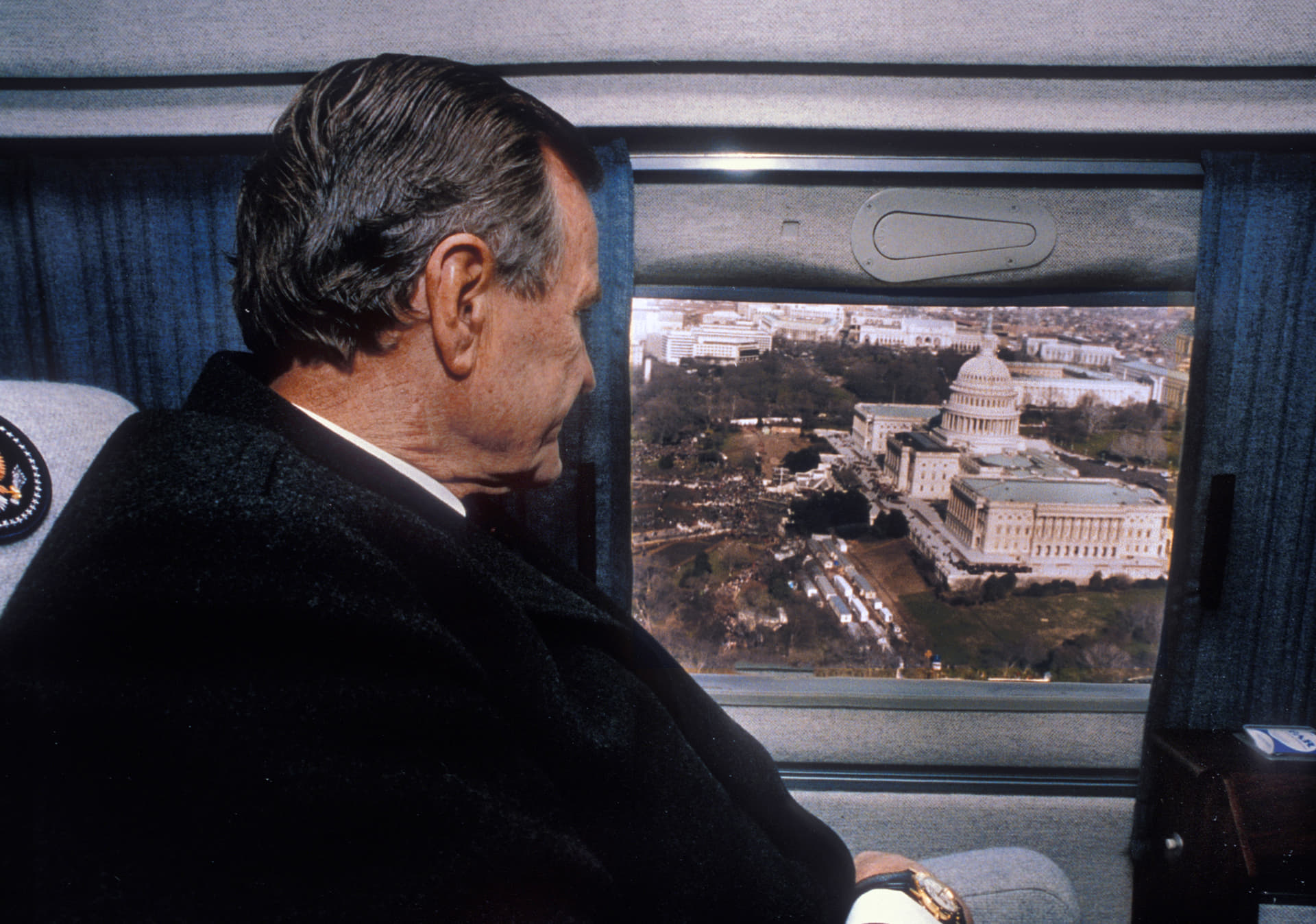
History remembers the President. But what did the photographer standing beside him see?
Plenty, as it turns out—from moments that made history to moments the history books somehow forgot to mention. Like why photographing George Bush occasionally required a swimsuit.
In Part One of "My Years with George H.W. Bush", I sit down with American photographer David Valdez, who spent eight remarkable years alongside Bush—first as his personal photographer during the vice presidency, and later as Chief Official White House Photographer when Bush became President.
But David’s road to Washington was anything but planned. Photography entered his life almost by accident while serving in the U.S. Air Force, eventually leading him to Washington, D.C., and into a job that would put his camera alongside one of the most recognizable political figures in the world.
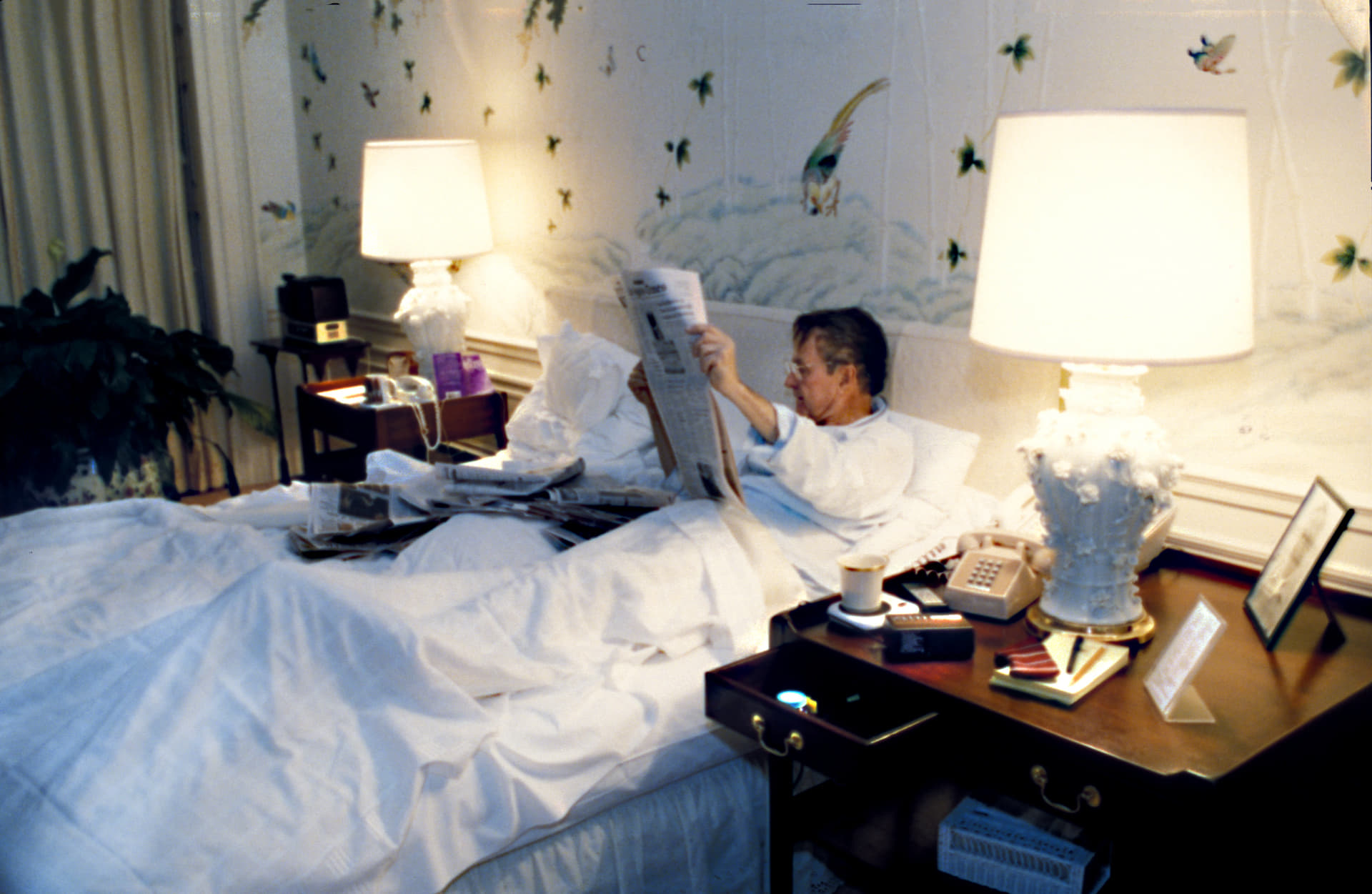
In this first part, we go back to those early years with George H.W. Bush. As the assignments, travels and miles added up, so did the trust. David found himself photographing not only the politician and public figure, but also the husband, father, grandfather and friend—and capturing private family moments when the other cameras had gone.
Of course, spending years around the Bush family also meant that life occasionally wandered well beyond the official schedule. David takes us from Kennebunkport to Buckingham Palace and around the world, with practical jokes, unexpected adventures and plenty of stories along the way. We even find him in the Bush family kitchen eating homemade tamales straight from the pot with George W. and Jeb Bush.
And this is only Part One. Next week, George H.W. Bush becomes President, David becomes his Chief Official White House Photographer, and a whole new chapter begins.
Grab a coffee and join us for this wonderful conversation with David Valdez.
📸 See more of David’s work:
https://www.davidvaldezphotography.com/
*****
🎙️ Enjoyed this episode?
Follow, maybe leave us a review, or share it! You know the drill 😉🎧
*****
🎧 Got any questions? Email us
Thanks for listening and look out for our next episode! 🚀
[00:00:03] We always had a lot of fun together. The very first time I went to his house up in Kennebunkport, Maine, that house and the property they had his house on had been in the family for generations. And he was walking around their property and it's right there on the Atlantic Ocean and we get down to the boat docks. He loved to drive his cigarette raceboats. And we get down to the boat dock and he says as a little boy he used to go swimming there.
[00:00:32] And he said, you and I ought to do that. And I'm thinking to myself, that's the Atlantic Ocean and it's going to be freezing cold. And I had all my camera gear with me and I was saying, yeah, that's okay. And he said, no. He said, look, I have a couple of swimsuits up at the house. Let's go back. And so we walked back up to the house. We go into his bedroom. We both stripped down. We both put on swimsuits. We walked back down to the boat dock and he says on the count of three, we'll jump. So one, two, three, I jumped and he walked back to the house.
[00:01:01] So, so that was my initiation into working with him.
[00:02:19] And this being the camera cafe show, we also somehow end up in the Bush family kitchen eating homemade tamales.
[00:02:39] Next week in part two, the story continues as George H.W. Bush becomes president and David steps into the role of chief official White House photographer, documenting a presidency through hundreds of thousands of photographs. Grab yourself a coffee, keep your camera dry and join me for part one of my chat with the wonderful David Ardase.
[00:02:59] Welcome to the show, everybody today. And I have a guest whose job has taken him from military bases to Air Force One, from photographing generals to the president, and now is inspiring the next generation of photographers. We have plenty to talk about, so let's get started. David, it's a pleasure to have you on the show today. Thank you so much for having me. I'm really looking forward to this. I love to share my stories and maybe inspire some younger folks to get into the business.
[00:03:29] I know we're going to have an amazing talk, but before we dive into this history, the podcast is in Spain, David, but me originally, I'm from Belgium and Belgium just knocked out the U.S. of the FIFA World Cup. I hope you're not too upset that we are doing this interview today. Oh, no, oh, no, no. In the United States, everybody's been so excited about the World Cup being in the United States.
[00:03:56] But more importantly, we just celebrated 250 years of being a nation. And so with all of that stuff going on, there's just been a lot of celebrating and excitement throughout the country the last several weeks. And one thing that I find funny on YouTube, all these young Europeans coming to the United States and they're in shock with how the United States looks and the food.
[00:04:23] And a lot of people are going and eating Texas barbecue, just saying, wow, they didn't realize the United States was like it is versus how the media portrays the United States around the world. But I've traveled to 75 countries and people always ask me, what's my favorite country? And I always say, for me, it's the United States just because it's home and I feel good and comfortable here.
[00:04:50] But I've been blessed to be able to travel so much in my photography career and see so many other countries and so many other cultures and learn so much about so many different people with different religions and different backgrounds. It's just I've been really, truly blessed to have that experience in my life. Mm-hmm. And this is what we're going to talk about tonight.
[00:05:19] And there will be some amazing stories. Before we go to your younger years, I want to hear the first amazing story. And let's keep it on this side of the Atlantic and tell me the story the day you were kicked out of Buckingham Palace. Yeah, that's too funny.
[00:05:36] When I was the president's photographer and heads of state would visit, it was always a tradition that I would do a photo album of the head of state's visit and the president would present that. And so Queen Elizabeth was here and we had a state dinner and big ceremonial event on the south lawn of the White House. And we also took her to a baseball game over in Baltimore, which is just down the road from Washington, D.C. And she knew nothing about baseball.
[00:06:06] It was pretty funny. So we did the album. We presented it. And then a few months later, President Bush was visiting Queen Elizabeth at Buckingham Palace. And like everywhere we would go anywhere in the world, I would ride in the motorcade and we would arrive. I would jump out of the car and run in and start taking pictures at Buckingham Palace. They prefer posed photos versus the candid photos that I was taking.
[00:06:34] And so one of the fellows that was working there at Buckingham Palace came over and tapped me on the shoulder after I'd taken some pictures. And he said, may I invite you outside? In other words, I was getting kicked out of Buckingham Palace. And in my mind as a photographer, I was saying, I've got a picture of the Queen and the President together, so I'm good. So walk back out of Buckingham Palace where we had pulled up.
[00:07:01] And when you pull into Buckingham Palace, you come in on the front side and it's the side that everybody sees. And the gates are there and there's a park across the street. And we drove in. But when you actually drive up, there's a little tunnel driveway through that you go through and you actually get out of the cars on the other side of Buckingham Palace.
[00:07:23] So when I finished taking the pictures and I walked outside, the motorcade had already moved around and they were parked over in the park. So I had to walk all the way around Buckingham Palace and I got to the motorcades and I'm waiting there with the Secret Service and some of the staff and some British bobbies came looking for me. And they were saying, looking for Mr. Valdez. And I said, it's me. And they said, well, you've been invited to Buckingham Palace. And I said, well, I was just there. And they said, no, you need to go back.
[00:07:52] And we had an embassy car and I literally got in the car and literally drove across the street and got to the gate and the guard greeted me. And he said, Mr. Valdez? And I said, yes. And he said, welcome to Buckingham Palace. So we go back in and the Queen's aide greeted me. And he said, oh, I wanted to thank you for the photo album. And I said, oh, great. And he said, the Queen and the President are having lunch.
[00:08:19] Would I mind if he gave me a tour of Buckingham Palace? And I said, sure, let's go. So we're walking around Buckingham Palace and he's showing me all his stuff that people normally don't get to see. Who do we run into? But the guy that tapped me on the shoulder and invited me out. And he goes, yeah, how you doing, buddy? Good to see you. And we kept on walking. So that was a lot of fun.
[00:08:43] Now when I get thrown out of places, I can legitimately say I've been thrown out of better places than this. So that was my getting thrown out of Buckingham Palace story. President Bush, he laughed when you told this story? Yeah. Well, we always had a lot of fun together.
[00:09:02] The very first time I went to his house up in Kennebunkport, Maine, that house and the property that they had his house on had been in the family for generations. And he was walking me around their property. And it's right there on the Atlantic Ocean. And we get down to the boat docks. He loved to drive his cigarette race boats. And we get down to the boat dock. And he says, as a little boy, he used to go swimming there. And he said, you and I ought to do that.
[00:09:32] And I'm thinking to myself, that's the Atlantic Ocean. And it's going to be freezing cold. And I had all my camera gear with me. And I was saying, yeah, that's OK. And he said, no. He said, look, I have a couple of swimsuits up at the house. Let's go back. And so we walked back up to the house. We go into his bedroom. We both stripped down. We both put on swimsuits. We walked back down to the boat dock. And he says, on the count of three, we'll jump. So one, two, three, I jumped. And he walked back to the house.
[00:10:00] So that was my initiation into working with him. But we had a lot of fun doing stuff together, traveling around the world. And sometimes he would even, he was from Texas also as am I. And sometimes we would be standing there getting ready to meet some king or queen or the pope or somebody just moments before. And he'd hit me with his elbow. And he would say, can you believe it? Us two guys from Texas here doing this?
[00:10:31] And he looked at the presidency as he was to be there. And he knew that it was a temporary position. And so he was president of the United States. But there was the institution of the presidency, which he felt was greater than him. And so he knew that he had to show respect for the office.
[00:10:57] And I think that spilled down into how he treated people and how I saw him treat people from around the world. Like when the Berlin Wall came down. And years earlier, President Reagan had gone to Berlin and gives a speech in front of the Berlin Wall. And he says, Mr. Gorbachev, tear down this wall. A few years later, George Bush was elected president. And the Soviet Union collapsed. The Berlin Wall came down.
[00:11:26] And President Bush's political advisors said, you need to go to Berlin and stand on the wall and say, hey, look at us. Look at the United States. We won the Cold War. And he said, no, it's not our victory. It's their victory. And let them celebrate. And then he said privately in the Oval Office, if I go to Berlin, some rogue Russian general will launch missiles. And 30 years later, I'm in Georgetown, Texas.
[00:11:56] And I'm listening to a Christian missionary speak at a church in Georgetown. And he had been in the Soviet military. And he was talking about the fall of the Berlin Wall. And he said he was so proud of President Bush for not going to Berlin. And he said, having been in the Soviet military at the time, if he had gone, we would have launched missiles.
[00:12:20] And then he said, I'm so proud of President Bush that I've kept this photo of him in my wallet all of these years. And this is literally 30 years later. And he pulls out this photo and shows it. And it was one of my photos. And I was in the audience with 300 or 400 other people. And I had to raise my hand. And I had to tell him that story.
[00:12:42] And everybody was amazed that on one side in the Oval Office, President Bush was saying privately, if I go, a rogue Russian general will launch missiles. And on the Soviet side, here was a guy in the Soviet military saying, if he had gone, we would have launched missiles. So it was like so intuitive of the president. But it was also his character where he always gave credit to the other guy.
[00:13:12] I'll never forget him telling a story about when he was a little boy playing Little League baseball. And he came home bragging that he had won a baseball game. And his mother said, did you congratulate the other team for a game well played? And I think that stuck with him. And so he would always give credit to other people and never felt like he should be singled out or stand out.
[00:13:40] Because he was really just, he was the president of the United States. But he was really just the holder of the presidency of the United States for a short period of time in history. This is an amazing start of our podcast, David. David, let's go a bit back. Let's talk a moment about you. So you grew up in a Mexican-American family.
[00:14:02] If I ask you to close your eyes, David, what's one meal that your mother cooked that brings you instantly back to your childhood? Tamales, just right off the top. And there's a funny story about tamales. In the past, President Bush and Barbara Bush had a nanny that helped them raise their boys, including George W. Bush, who went on to become president of the United States also. But she was from Mexico, and she cooked tamales.
[00:14:32] And one day, we were at their house up in Kennebunkport, Maine. And I was with George W. Bush before he was president. And their other son, Jeb Bush and Paola, the nanny, had just cooked a big pot of tamales. And when you cook tamales, you steam them. And so they were still in the pot, but they were finished.
[00:14:54] And so there, George W. and Jeb and I, pulling the tamales out of the pot still on the stove and eating them right then and there. And Barbara Bush walked into the kitchen, and she saw us, and she slammed her hand down on the counter, and she said, I don't feed animals in my house. And I was horrified because I'm just a staff guy. And she said, if you're going to eat in my house, you're going to sit at the table.
[00:15:22] And so I was like, I'm getting out of here because I don't want to be a part of this. But, yeah, tamales are the one thing. And it's funny, it's been decades since my grandmother passed away who used to make the tamales. And I can still remember that taste.
[00:15:44] And every time I eat a tamale anywhere, my mind always goes back to, how does this compare to her tamales? Yeah. How were you as a little boy, David? Because your father served in World War II. He was in the Air Force. And you moved a lot, quite a bit, no? Or you lived in Albuquerque. Yeah, we didn't move that much. It just kind of happened that way. A lot of military families move a lot.
[00:16:15] We didn't. And we lived for a little while in St. John's, Newfoundland, up in Canada. But twice we were stationed in Albuquerque, New Mexico, with just a year's separation. And so I kind of grew up in Albuquerque. And honestly, I thought I was, when I graduated high school, I thought I was going to go to the University of New Mexico. But that was during the Vietnam War. And there was a draft in the United States.
[00:16:44] And President Nixon was president at the time. He would send out these letters to young men for your draft notice. And the letter from the president of the United States, President Nixon, would start out with greetings. And everybody knew if you got the letter from the president that started out greetings, that you were getting drafted in the military. My brother was already in the military. My older brother was already in the military and already serving in Vietnam.
[00:17:15] And when I graduated high school, I immediately got my draft notice. And you had a couple of choices. You could go in being drafted into the Army and serve two years and get out. Or you could join and serve four years. And since my father was a career Air Force person and I knew the Air Force culture, I said, I'm going to just join the Air Force.
[00:17:44] And so I joined the Air Force. So I knew I had to serve four years. So I go through basic training. When I graduated basic training after six weeks, I got my orders. And they said, you're going to be a photographer. And I turned to the guy next to me. And I said, what is that? I don't even know. But what's funny is decades later, we were doing an event with George Bush, President of the United States.
[00:18:11] And we were in San Antonio, Texas, where my parents were living. And my parents invited the White House staff over to their house for a barbecue. And my mother said, hey, everybody, I have to show you something David did as a little boy. Well, I'm the president's photographer and hotshot guy. And it's like, oh, no. What's my mother going to show? She pulls out a photo album that I had done as a little boy.
[00:18:35] And in crayon, on the front of this folder, I wrote pictures I have taken by David Valdez, literally in crayon. So I was a little guy when I did that. And they were just little black and white snapshots. Actually, that camera right there was my very first ever camera. And so as a little kid, I was taking pictures.
[00:19:03] And as a photographer, you know, everybody's different in how you think. And I think visually. When I talk to somebody and somebody describes something, I can see it in my head. Or I can see light and angles and geometric shapes and expressions and moments in time. And that's just how I think.
[00:19:29] I can't add two and two together and get a right answer because I don't think that way. But I can visualize what two plus two looks like. But in the military, they needed a lot of photo people because in the Vietnam War, the military photo people were getting killed because they were doing a lot of aerial photo reconnaissance. And so there was a big turnover of photo people.
[00:19:58] And so you could get aerial photography or motion picture photography or photo lab work or still photography. I got still photography. And I was actually photographing the generals who were running the Vietnam War. And so it was highly classified. And they just kept me there. I was at MacDill Air Force Base in Tampa, Florida. And I did that for four years. And then when I got out, it was like, I still wanted to go to college.
[00:20:27] And the military paid for your college. And so I thought, I'll go up to the Washington, D.C. area. And the University of Maryland is in the suburbs of Washington, D.C., and they support military programs. So I thought, I'll go up there and I'll finish. And I wound up getting a degree in journalism and radio and television production.
[00:20:50] And once I got that degree and I was living in Washington, D.C., I thought, I'll go work for Time Magazine or the Washington Post. But I didn't have the journalism experience. And they weren't interested in hiring me. But I kept sending out resumes. And I wound up getting hired as the chief photographer for the United States Chamber of Commerce, which published Nations Business Magazine, which at the time was the largest selling business magazine in the country.
[00:21:20] So now my photo assignments were photographing presidents of major corporations around the country and going up to the U.S. Senate and photographing Senate hearings and business stories all over the country. And one of those assignments was to photograph Barbara Bush, who was the wife of the vice president of the United States,
[00:21:42] and one of the press photographers told me that Vice President Bush's photographer had quit and had gotten a job at Time Magazine. So I thought, wow, that's where I want to go work. So I'm going to apply for this job. I wrote a cold letter. I did a little research and found out the vice president's photographer reported to the vice president's press secretary. Well, that person happened to be from Texas. So I had that Texas connection.
[00:22:10] And it was a very easy interview just because it was more social than anything. Then I got called back to interview with the vice president's chief of staff, and he was a retired Navy admiral. And he was pushing all my buttons and trying to make me upset. But having had been in the military myself and been in a military family growing up, I was saying, yes, sir, no, sir, I understand, sir.
[00:22:39] But when I left, I thought, man, this guy just hates me. But what I had done was I had passed his pressure test. He was testing me to see how I would respond under pressure. And so then I got called back to interview with the vice president of the United States. And he's showing me around his office and telling me I'm going to be with him in public and private. And we have to have this trust relationship.
[00:23:05] And I'm thinking to myself, at no point has anybody offered me a job yet. And we hadn't talked about salary. So I asked him, I said, do you know what the salary is? And he said, I have no idea. Let's call up Admiral Murphy, the chief of staff, and ask him. So he picks up the phone and he says, hey, Dan, I'm in here with Dave Valdez. And he's asking me what the salary is. And I could hear the guy screaming through the phone saying, what?
[00:23:34] He's talking to you about salary? Well, they hired me anyway. And so now I had to go back to the U.S. Chamber of Commerce and tell them I'd just been hired at the White House. And I had to get clearance from the Secret Service. George and Barbara Bush had gone down to Miami. And so I had to fly down to Miami on a commercial flight and got picked up at the airport by a White House advance person.
[00:24:01] And he said, look, I'm going to take you out to where the Bushes are tomorrow morning. And you're going to have to get on a helicopter because they're out on an island off the coast of South Florida. And so I said, fine, let's go. So we get on the helicopter the next morning and fly out to the island. And the only person I had ever met at that point was the vice president. He came out and greeted me. He said, come on in. Let me introduce you to Barbara Bush, his wife.
[00:24:30] And I go into the house and sat down. And the three of us had breakfast together my first day on the job. And then he said he was going to a, had to go to a meeting up in Miami. And they were going to take the race boats they had there on the island. And he asked me, he said, why don't you get back in the helicopter and take pictures of us? And of course, I had done that in the military. And so I said, sure, let's go. So we go up and I'm hanging out, open door of the helicopter and I'm taking pictures.
[00:24:59] And we get up to Miami and go up to the hotel suite. And there were all these people in the hotel suite. And it was like secret service and staff. And his son, Jeb Bush, came by with his new son to introduce his son Jebby to his grandfather, the vice president of the United States. And no one was telling me what to do.
[00:25:23] And I noticed when Jeb came in and he was interacting with his dad, that people started leaving the room. And nobody said anything to me. So I got to thinking about the history of White House photographers. And Yoshi Okamoto was the first presidential photographer.
[00:25:42] And you think about the famous photos that Yoshi Okamoto took and David Kennerly, who was President Ford's photographer, and the behind-the-scenes photos that they took. So I thought, those guys can do that, even though I'm not the president's photographer. I'm just the vice president's photographer. I'm going to stay. And the vice president took his new one into the bedroom of the hotel suite. And I went back in there and I took some photos. And he was playing with his new grandson.
[00:26:12] And at the time, I was using film. And the White House communications agency would process the film and give me a proof sheet. And then I would order prints from the proof sheet. And so it was a week or so later that I got some prints and I gave them to the vice president. And a couple of days later, I got a note from Barbara Bush. And she said, I love the pictures that you took of Gampy and Jebby. And she said, as long as you take pictures of my grandchildren, you can go anywhere and do whatever you want to do.
[00:26:42] So that was kind of my ticket. And off we went. And we traveled all over the world together and had a lot of fun. When you got this letter from Barbara Bush, David, was it the moment that you felt that more family and not politics was the center of their world? I learned that over time. He used to always say the most important things to him were his family, his faith, and his friends.
[00:27:11] And I actually saw that in how he interacted with his family, how he displayed his faith, and how he interacted with his friends. And there were even times, like with me, we were in Jordan one time and we were meeting with King Hussein of Jordan. And the king was looking at me like, who's this guy?
[00:27:41] And President Bush said, oh, this is David Valdez. He's my friend. And he's going to be here and just take a few pictures. And once he said that, the king was fine and I could take all the pictures I wanted. And we did. But it was that kind of a relationship that he and I had.
[00:28:00] And there was even so much so that I could just look at him and know how he was feeling or how he was going to respond to something. Because I was with him so much. I've done a lot of media interviews. And one of my first interviews was on the Today Show in New York. And when they introduced me, it was funny.
[00:28:26] They said, you probably don't know the name, but he's a man who spends more time with George Bush than Barbara Bush. And then they introduced me. But also in that introduction, they said, and he's the man who taught Gorbachev how to play horseshoes. And so that's a whole other story. But we had that relationship. I'll never forget when his daughter had her first baby. And we went to the hospital.
[00:28:53] And when you see a new baby for the first time as a family member, they put the baby behind a window. And you can't really go in to the nursery and touch the baby. You can just look through the window. He was vice president at the time. And the nurse was talking to the vice president. And her back was to the window. And the Secret Service pushed the door open. And I leaned my head in. And I took some pictures of the baby.
[00:29:22] And, of course, the vice president's watching all of this behind the nurse's back. And as soon as he saw the door close and I was out, he said, we got to go. And we left. But I got the pictures of the new baby. And he said, we're going to see. So that was just a fun little thing. And one of his sons one time had a very serious operation. And when George and Barbara Bush were younger and early married, they lost a child to leukemia.
[00:29:51] So here, they had already lost a child. And now one of their sons, who was an adult, was having a very serious operation. And it was really weighing heavy on both of them. And when their son came home from the hospital, he went into the bedroom, the son, to get in bed. And the vice president, he was vice president at the time, wanted to go into the bedroom.
[00:30:16] But he was so emotional and getting ready to cry that he asked me to go into the bedroom first. And I was just in there just for a few seconds, but it was just enough for him out in the other room to compose himself before he came in. And as soon as he walked in, I walked out. But for him to have that trust and faith in me in a moment like that was pretty amazing to me.
[00:30:45] But I went back and looked at my job description. And I don't remember reading a line in the job description about having to do something like that. So I was like, hey, wait a minute. How does this happen? But that was just one of those intimate times. But you had another one like this because now you talked about the previous White House photographers.
[00:31:11] I will have Eric Draper and I will have David Kennerly later this year on the show. But I talked to Pete Souza, Dave, and he told the story when 1986 when the challenging disaster happened and Reagan was watching it on a little TV screen. What you did with vice president Bush then? Well, so the challenger blows up and President Reagan was watching it on TV.
[00:31:39] And President Reagan called Vice President Bush into the office and he said, you need to go down to Florida and meet with those families that day. So we literally walked out of the Oval Office and went out to Andrews Air Force Base and got on Air Force Two and flew down and met with the families. And it was just an incredible day and experience, one that I'll never, ever forget.
[00:32:08] And it was just one of those times. It's unplanned and spontaneous and you just go do it. And it was very emotional. And it's kind of like 9-11. On 9-11 when the United States was attacked and it had a terrorist attack, I was at that time working at the United States Department of Housing and Urban Development in Washington, D.C.
[00:32:36] He is a photographer and we were up on Capitol Hill at a Habitat for Humanity home build just a couple of blocks from the U.S. Capitol. And I was driving up there with two other guys and we didn't know at the time what had happened in New York. And we didn't know what was about to happen in Washington, D.C. And we get up to the Habitat for Humanity build site and there were a bunch of volunteers there.
[00:33:06] And as I pulled up in my car, they came running up and said, did you hear what happened? Did you hear what happened in New York City? And we hadn't. We turned on my car radio and all these people surrounded the car. And we were listening to the news about what had happened in New York City.
[00:33:25] And then we heard the explosion from the Pentagon because in Capitol Hill is up on a hill and goes down and the Pentagon's down at a much lower elevation. So when the plane crashed into the Pentagon, the sound came up and we heard it. And so everybody panicked and scattered. And I was going to drive back and take those two guys that I was with back to the office. And we had to drive past the Capitol.
[00:33:53] And the Capitol police were outside on the street yelling at people to turn around because they thought a plane was headed towards the Capitol building. So cars were literally turning around and driving on the sidewalks, going the opposite direction, going against oncoming traffic. And it literally, literally that day took me 12 hours to get home and normally would have been a one hour drive.
[00:34:17] But that was just another one of those things that happened that was so surreal. And that was the same way with the Challenger. We were in the Kremlin one time with President Gorbachev. And we were signing a nuclear arms agreement. And we had finished all the ceremonial stuff. And when two presidents go anywhere, there's always staff and security and gaggle of people.
[00:34:46] And we're walking down one of the hallways in the Kremlin. And President Gorbachev stops and he says, wait, I need to show you something. And we turned around and we went down this other hallway. And we get to this room and there are these two big gold doors. And Gorbachev pushes the doors open and we walk in. And it's the Tsar's Chapel. And it was pristine, like it had been used that morning.
[00:35:13] And 70 plus years of communism and being atheist. But they kept the chapel. And it was interesting that Gorbachev wanted to show the President of the United States that they had that in the Kremlin. And that goes back to that family, faith, and friends thing that he had talked about now. It described him.
[00:35:40] And we even saw one time in the early 80s when he was vice president, there was a period in the Soviet Union where just about every year one of the Soviet leaders would die and we would go to the funeral. And we were standing there in Red Square and it's a military processional open casket and no expression of any kind of religious faith at all.
[00:36:07] And they would bury the casket there on the wall in the Kremlin. And just before they closed the top of the casket, the Soviet leader's wife, I believe it was Andropov, made the Christian sign of the cross on her chest. And we're standing there with Vice President Bush and Margaret Thatcher and Fidel Castro and Yasser Arafat.
[00:36:30] And we all saw that and I actually got a still photo of her with her hand up and making the sign of the cross. And it was one of those really amazing moments where there was an expression of faith. And there's another story that happened before George Bush was in office. He was the United States liaison to the People's Republic of China and he was meeting with Chairman Mao.
[00:37:00] And they're having discussions and they're having interpreters. Chairman Mao in Chinese says, when I die and go to heaven. And that's what the interpreter said. And that's what George Bush heard. And then Chairman Mao realized what he had said. And then he said it again. He said, when I die. And the interpreter said that. But Chairman Mao said, and it was in his heart, when I die and go to heaven. That's what he was thinking about.
[00:37:28] And it's just interesting how people's faith is maybe suppressed. But how they think about those kind of things subconsciously. And that wraps up part one of my conversation with David Beldes, folks. Buckingham Palace, homemade tamales and a freezing at landing ocean. Not quite your average day at the office, is it? And we're only halfway through David's story, of course, next week. George Bush becomes President of the United States.
[00:37:57] David becomes his chief official White House photographer. And we follow them into four remarkable years inside the White House. With plenty more stories and photographs waiting for us there. Such as how you tell the President of the United States that, technically, he didn't actually catch the fish he was so proudly holding. From there, we'll go beyond the White House, from working for the Disney Corporation to founding the Texas Photo Festival. In the meantime, folks, have a look at David's work. And as always, you'll find all the links back in our show notes.
[00:38:26] And of course, if you enjoyed this episode, follow, maybe leave us a review or share it. You know the drill. Until next week, keep shooting and keep on moving your photography forwards. I see you soon here for part two of my conversation with David Beldes. Adios.