

Some Presidential photographs become history.
The stories behind them? Those are the ones you'll only hear over a good cup of coffee ☕📸
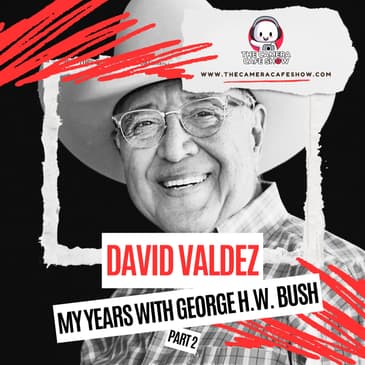
And David Valdez has plenty of them. In Part Two, we follow David as he spends four remarkable years as Chief Official White House Photographer, photographing Presidents, world leaders and history itself from just a few feet away. But David's journey doesn't end when he leaves Washington. From a whole new chapter at the Walt Disney Company to founding the Texas Photography Festival and inspiring the next generation of photographers, this conversation proves that his greatest adventures were still to come.
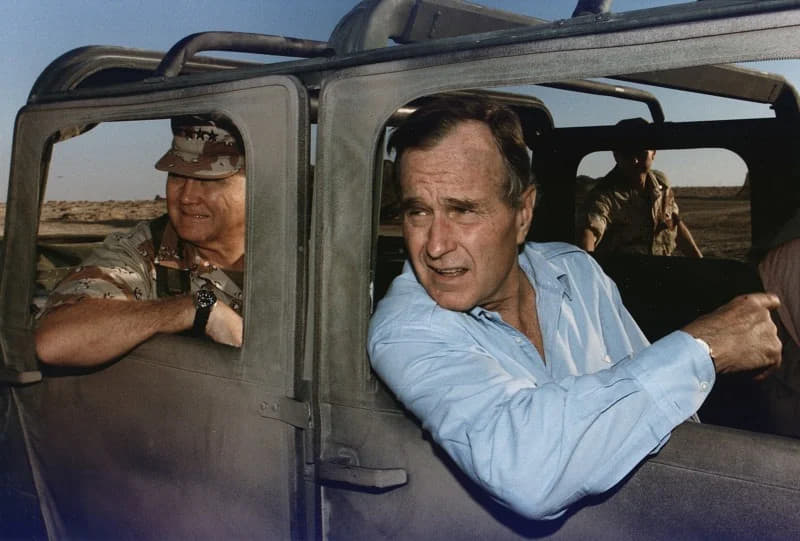
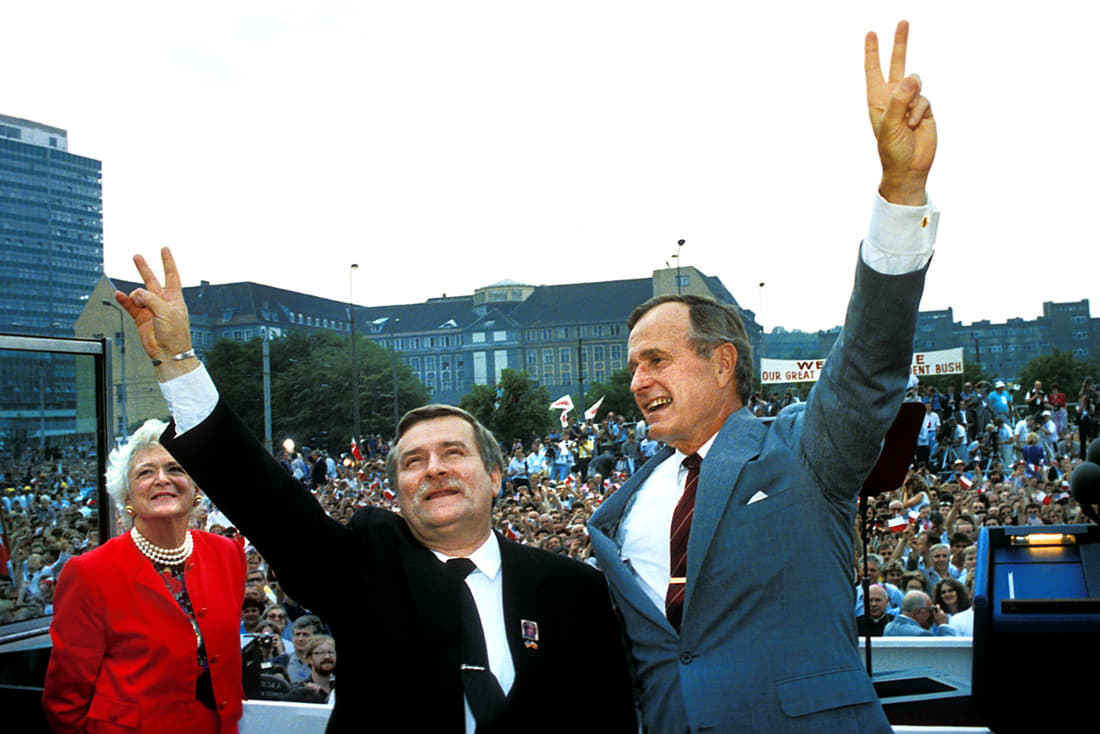
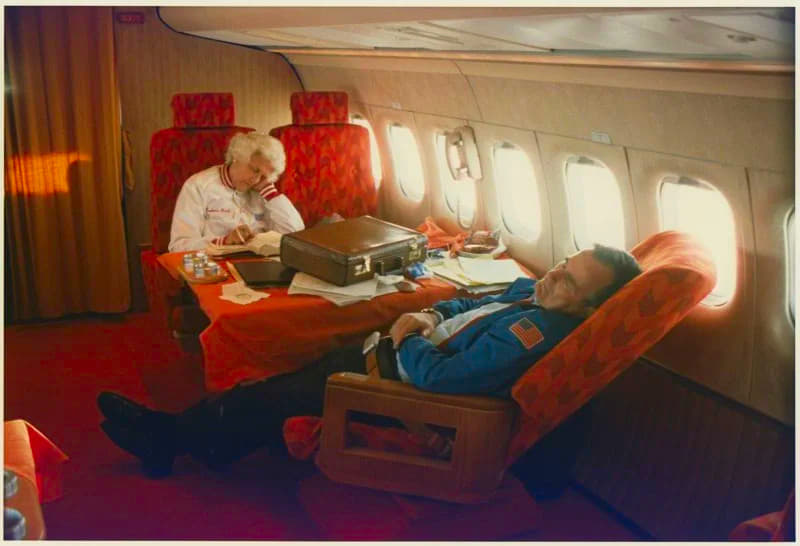
David takes us behind the scenes of a presidency unlike most of us will ever experience. We talk about life inside the White House, travelling with President George H.W. Bush around the world, photographing historic moments as they unfolded, and the trust it took to quietly document those years from just a few feet away.
But as always on The Camera Café Show, the conversation isn't just about photography. It's about the people behind the photographs. Along the way, David shares stories that range from touching and deeply personal to downright hilarious. One moment we're reflecting on emotional milestones in his career, the next we're talking about Texas barbecues, fast Corvettes, and proving that even a President of the United States doesn't always get the last word. 😄
Whether you've followed David's career for years or you're discovering his story for the first time, this conversation is a wonderful reminder that photography is about far more than the images we make—it's about the people we meet, the experiences we collect, and the stories we carry with us long after the shutter clicks.
Grab a coffee and join us for the final chapter of my conversation with the wonderful David Valdez.
***
📸 See more of David Valdez's work:
https://www.davidvaldezphotography.com/
📸 The Texas Photography Festival:
https://www.thetexasphotographyfestival.com/
***
🎙️ Enjoyed this episode?
Follow, maybe leave us a review, or share it! You know the drill 😉
***
🎧 Got any questions? Email us.
Thanks for listening, and look out for our next episode! 🚀
[00:00:04] We used to go fishing all the time up in Kennebunkport. He went one summer, 20 plus days without catching a fish. In the United States there was a newspaper called USA Today and they started putting up on the banner, Day 5 no fish, Day 6, Day 7, and it was getting embarrassing. So one day we're out off the coast of
[00:00:29] Kennebunkport there in his boat Fidelity and he catches a fish and he's bringing the fish in and it's looking kind of funny. It was a big blue fish and he finally gets the fish in the boat and we noticed that the hook was in the fish's gills. And so it's like he didn't catch the fish swam by and got tangled in his hook. So the fish is in the boat and he's telling me, call the media.
[00:00:59] I got a fish. And I said, no, actually you didn't catch a fish, you snagged it. And he said, look, I'm president of the United States. This is my boat, call the media. So... Greetings and welcome back to the show. Last week George H.W. Bush convinced David to jump into the
[00:01:27] freezing Atlantic Ocean. This week we discovered that becoming president of the United States didn't make him any less competitive. And trust me, that fish story has still another chapter to go, so be sure to stick around. I'm Tom Jacob and this is the Camera Cafe Show. Today, folks, we pick up where we left off last week. George H.W. Bush is now president of the United States and David steps into one of the most extraordinary jobs, chief official White House
[00:01:54] photographer. For the next four years his camera follows history as it unfolds, from world leaders and international summits to quieter moments behind the scenes that few people ever got to witness. But David journey doesn't end when he leaves the White House, from the Walt Disney Company to embracing the digital revolution with his iPhone and eventually founding the Texas Photography Festival. This second chapter is just as much about reinvention as it is about history.
[00:02:22] And of course, if you came for the stories, don't worry, we've got plenty of those too. There are moments that will make you smile, moments that are surprisingly emotional, and somewhere in between. We'll also find ourselves at Texas barbecues and calling shotgun in fast corvettes. Keep yourself a coffee and join me for part two of my conversation with the wonderful David Balbés. When he became president George Bush, 1988, maybe like this? Yeah, in January of 1989 he was sworn in.
[00:02:51] What changed for you when he moved into the Oval Office? Did that day feel different for you, David? Oh yeah, yeah. So first of all, when you're elected president, they call you president-elect. And there's several months before you're sworn in as president of the United States. The election's in November, but you don't get sworn in until January.
[00:03:18] And so during that period of time, they're hiring new staff. I was there photographing all the people getting offered jobs. And in my own mind, I was like, am I going to get offered the job as president's photographer? And people were saying, yeah, don't worry about it. It'll come. One night we were in Washington, D.C., and we were at the National Geographic Society. And we were getting back in the motorcade.
[00:03:47] And so he's still vice president, but he's president-elect. And we're going back to the vice president's house and he asked me to ride in the limo with him. And he offered me the job to be the president's photographer. And when you're one-on-one with the president or president-elect of the United States, and you're having a one-on-one conversation, you only have one shot. So I thought, maybe I said, I wouldn't mind being an ambassador somewhere.
[00:04:16] I figure, you got a shot, you may as well ask. And of course, the Secret Service almost crashed the car because they were laughing so hard. But that was the kind of relationship that we had. And so I wound up becoming the president's photographer. And at that point, I was the only fifth person in the history of the United States to actually become the president's photographer.
[00:04:39] Well, one thing that I noticed traveling around the world, especially when we would do world summits with other world leaders, other countries had official photographers, but they weren't close to their principal like I was to mine. And so they were always hesitant to do things.
[00:05:06] If I walked across the ballroom to go get a different angle, five or six guys would follow me. Japan, France, England, and Germany. So they would follow me. And so people would laugh at me and say, oh, I'm like the Pied Piper. And so they started joking and calling me the photographic Supreme Allied Commander U.S. And it was like, I wasn't telling those guys anything. It was just, if I could do it, they could do it.
[00:05:36] One time we were going up to Camp David to meet with President Gorbachev. And there was a rule at Camp David where only the White House photographer could go and take photos unless there was something open to the media. And then the media photographers could have limited access. But we get up to Camp David and we're waiting for Gorbachev to arrive on the helicopter.
[00:06:03] And President Bush turns to me and says, where's Yuri, who was Gorbachev's photographer? They wouldn't let him in the gate. He was in a car outside the gate. And so the president says to the base commander, go get Yuri and let him in because he can take photos here too. And so that's how the president was.
[00:06:24] So a few months later, we're in the Soviet Union and we go to Gorbachev's personal house and we pull up in the motorcade and we get out. And we noticed that Yuri wasn't there. And President Bush said, we can't have the meetings until Yuri's here. And Yuri had never been to Gorbachev's house. And so they went and got Yuri and he came out to the house. And so it was fun.
[00:06:52] I know we had some conversations about Yuri expressing interest in maybe defecting to the United States. And it was like, I don't know about that. But that was one of those things that just kind of came up privately and nothing ever came of it. But when the Soviet Union collapsed, Yuri was not in Moscow at the time. So he never made it back to Moscow.
[00:07:22] And years later, I saw former President Gorbachev in Austin, Texas with his interpreter, who was actually the same guy who had been his interpreter when he was president of the Soviet Union. And I asked about Yuri and Yuri had passed away a few years earlier. It was fun to have that camaraderie with someone from such a different country and background.
[00:07:52] What does a typical day look like? The president photographer, how is it a typical day, David? So I used to get three schedules. One was a monthly schedule. And on the monthly schedule, you might see a two or three day trip somewhere in the United States or maybe a quick trip to Riyadh, Saudi Arabia or to London or Paris or something like that. And then you'd get a weekly schedule, which was a little tighter.
[00:08:21] And that would show maybe a cabinet meeting and meeting with some senators, your congressmen, political people. And then a daily schedule, which was literally minute by minute of everything that the president did, literally minute by minute. And I would photograph every line on that. It would usually start at about seven o'clock in the morning and could go to seven, eight o'clock at night or longer.
[00:08:48] I always joke and say when people ask me, how long was your day? And it was like, it was no more than 15 hours a day, but it was only seven days a week. Because on the weekends, we'd go to Camp David or go fly someplace. And it was, so you're always on, even on vacation. When he went on vacation up to Kennebunkport, he's still the president. You're still the president's photographer. You're still out there doing other things.
[00:09:16] Now I had some staff people that worked for me. Susan Biddle, Carol Powers, and Mike Sargent were my key backup people. And Carol Powers mostly photographed Barbara Bush. And Susan was really my number one backup. Mike quit early on to go head up photography for AFP, a French press agency. And so we had a lot of fun together.
[00:09:44] And without them, couldn't have done it because it's just physically, it's too hard. And gear-wise, let's insert a quick gear question, David, because I think your job must have come with the finest of all equipment. You could choose what camera brand you wanted, or you brought your own cameras, or how it was? Yeah, yeah. When I worked for the vice president, I kind of got the hand-me-downs from the presidential photographer.
[00:10:12] And so I was using Nikon FMs and their film cameras. And at that time, they were pretty good cameras. When I became the president's photographer, we switched to Nikon F5s. And they were, at the time, the top-of-the-line cameras. Now, Canon came to me and said, they gave me a whole bunch of Canon gear. And they said, you're the president's photographer.
[00:10:40] Here's this gear that you can have and use it as the president's photographer. But at the time, that wasn't the time to be learning a new camera system. And so it literally sat on my desk for four years. And at the end, we left, and I took the gear with me. And a month or two later, Canon called and said, we were thinking about you and wondering about that camera gear. We need to get that back. And I said, fine.
[00:11:09] So I packed it up, and I'm going to take it down to Washington, D.C., and take it to the Canon office and turn it in. And while I was packing the gear, Nikon called, and they said, we've been thinking about you. We were wondering if you needed any gear. And I said, funny you should say that. And so I went down to Canon. I dropped off the stuff, and then I went over a couple doors down to the Nikon office,
[00:11:36] and they gave me a whole slew of Nikon gear. I've been a Nikon guy. And then when we lost the re-election in 92, and I lost my job, it was like, now what am I going to do? And I wound up heading up photography for the Walt Disney Company. So I get down there, and lo and behold, they're using Nikons. So off we go again for another eight years or so using Nikons again.
[00:12:06] And then George W. was elected president, and I got asked to go back to work in his administration. But I took a little break in there, and I was vice president of a company called Blue Pixel. We got the contract from Nikon to write the curriculum for the Nikon Digital School of Photography. And so Nikon gave us one of everything they had so we could learn how to use all their Nikon gear.
[00:12:33] And so we had that and used that quite a bit. And actually, we had a team that taught for Nikon, the Nikon Digital School of Photography. So to this day, you know, I'm still a Nikon guy all these years later, but I do love my iPhone, and I take a lot of pictures with my iPhone. And I've actually, a few years back, Amtrak, which is the national train system in the United States,
[00:13:02] called me up out of the clear blue sky and said, hey, we've been thinking, we're wondering if you want to take photos of the Amtrak trains for us. And I said, sure. I said, what do you want? And they said, take the central part of the United States and ride the Amtrak trains and just take photos for us. And they gave me kind of a shot list of recommended things to take pictures of. And so off I went with all my Nikon gear. But one thing is when I photographed a person, I had to get them to sign a release.
[00:13:32] And it was always intimidating. But I realized that the finished product for Amtrak was Instagram. So it was going to be that big. So why am I taking all this gear? So I started taking some photos on my iPhone and just sending them in, and they loved them. And you could be more candid and spontaneous. And when I would ask people if I could take their picture, they'd want to do a selfie together.
[00:14:01] And it was a lot more comfortable. I started just using my iPhone, and it was great. And I love it. And I've actually taught several iPhone classes. And I'm actually getting ready to do another class here in the next two weeks or so. And it's a lot of fun. I've embraced AI. People get all squirrely about AI. But when I worked at the White House, it was pure documentary photography.
[00:14:29] When I went to the Walt Disney Company, it was, if you can think of it, we can create it. And so it was really two different worlds. Also, when I got to the Walt Disney Company, it was really the beginning of the early stages of Photoshop. And it was nothing like it is today. But it was enough that we could really be creative with it. And now with AI, and I'm not doing journalism anymore, it's like, let's just have some fun with it.
[00:14:59] And I don't overuse it, but I do use it. And I embrace it. And I look back. People look at Ansel Adams and say, oh, Ansel Adams is the premier photographer and shoots black and white. And he has these beautiful black and white photos. But he had a zone system. And he manipulated his chemistry and would dodge and burn.
[00:15:25] And he'd get in the darkroom and rub his prints and bring out areas and dodge and burn. He was doing image manipulation. And now you can do image manipulation easier. And it's that pole sticking out of somebody's head. It's gone. And when I'm just having fun with photography, and like this one class that I'm going to be teaching,
[00:15:51] I think most of the people who are going to participate are small business owners. And so they're probably more interested in product photography for catalogs and social media. An iPhone is a great tool. And honestly, I'm an old guy. But I always value learning more and listening to other people.
[00:16:12] I think that's why one of the reasons why I started the Texas Photography Festival was to give back to the photography community and inspire other people. I never go around and say, oh, look at me. I was the president's photographer. It comes up. But it's not what really identifies me. I think what I like to say is that I've mentored and helped younger folks in their careers.
[00:16:41] And I've seen them become very successful in their careers. And somebody opened a door for me, and I try to open a door for somebody else. And if learning AI is one of those things, have at it. Yeah. While you were talking about this digital now, David, before at the White House, when a roll of film is finished, you take it out of your camera. What happens to this roll after?
[00:17:11] So we had little film envelopes. And so you'd put the roll of film or two or three or four or five in the envelope. And you would look at your daily schedule, and you would write a caption based on that, what was written in the schedule. And you always had the date, everybody's name. So that envelope would go to the White House Communications Agency photo lab.
[00:17:39] They would process the film. It was colored negative film, Kodak Bericolor, colored negative film, usually ASA 400. And they would send back an 8x10 color proof sheet, and you would order photos from that. And then the proof sheet would go back with the grease pencil markings on it. And they would make the prints.
[00:18:04] And then kind of depending on if they were for the political people, they'd just go to the political office or it was for the president. And he wanted to sign one, you'd just go to the Oval Office. When we left the White House, I had exposed 65,000 rolls of film. And all of that went to the U.S. archives, which are at each presidential library. So a presidential library is kind of divided into two sections.
[00:18:34] The archives part, which is run by the federal government, and then there's a foundation that runs the library and the exhibits. And they do all the events. But all of my photos are there in the library.
[00:18:47] And today, if you called up to the Bush Presidential Library at College Station, Texas and Texas A&M University and asked for a photo of the five presidents together, they would go in and look at the one that I circled all those years ago and order that and give you a digital file of that image.
[00:19:10] And so it's fun that even all these years later, that they're still taking the photos that I edited years ago. Now, when all of that would come back from the photo lab, there was a librarian who typed all of that information into a database. And the U.S. archives, archive office, they had that database.
[00:19:33] And so you can go into the database and say, President Bush meeting with Gorbachev or anybody in the world that he met with and type it in. And it would take you to those particular rolls of film. And then when we would travel on Air Force One and maybe do a multi-country stop, the White House Communications Agency, which is a military operation, they would send teams.
[00:20:00] And when we would leave London and go to Madrid or go to Paris or something, that local team would go back to Washington, D.C. So I could just leave my film from the Madrid stop or from the London stop with that team and that would go back.
[00:20:22] And then I could be on Air Force One flying to Paris on the phone with the photo lab in D.C. and saying, oh, we met with whoever. And they had a meeting in such and such a place. Order one of those and then make a big, large, or they used to call them jumbos, and hang it on the White House walls in the hallways. And so when we would come back from a trip, there would be images of the trip hanging on the wall in the White House.
[00:20:51] And that was always fun to see. I would take a photo and I would never know. I wouldn't know if for weeks sometimes it was in focus or anything. And so I think in those days, you probably had to be a little sharper, your photography, than these days. Because now you can throw your digital camera up in the air and you're going to get a decent image.
[00:21:17] And you can look at it immediately and say, oh, I need to do something different. It's like I didn't have that luxury because I couldn't see it until after film was processed back in the United States. Have a little drink, David, from your magnificent cup.
[00:21:39] When it became clear, I think 1992, that President Bush wouldn't serve another term, what did you feel? How did President Bush feel at that moment? He was an athlete and a very competitive guy. And it hurt that he lost. And he used to always say in the campaign running against Bill Clinton that character matters. And he really felt that.
[00:22:04] And he felt that maybe Bill Clinton didn't have the character to be President of the United States. And when he lost, it really hurt. And I'll never forget that that night that he found out he lost and he had to call President-elect Clinton. We were in the Houstonian, at the Houstonian Hotel, and they're in Texas. And the room was full of people. And he told everybody, go get in the motorcade.
[00:22:33] We got to go make a concession speech. But before he does that, he needs to call President-elect Clinton and congratulate him. I stayed in the room with him. So it was just he and I together when he picked up the call. I started to cry because I was sad for him. I was concerned that I had just lost my job too. But I took a photo of him on the phone.
[00:22:59] And in the background on the television, on the television screen, it said Clinton wins. And he lost. And then on Inauguration Day, when Bill Clinton was going to be sworn in, the tradition is that the new President-elect comes to the White House to meet about 10 o'clock in the morning with the current President and Bill Clinton and Hillary Clinton and Al Gore, the vice president-elect and his wife, Tipper Gore,
[00:23:30] all came to the White House for a little coffee and get ready to go in the motorcade up to the capital. But as we were getting in the motorcade, the Clinton side, the Clinton staff, a whole bunch of them came, people that weren't necessarily invited, but they all came anyway. There was a lot of people there. And that's typically not what happens. And as we were getting in the motorcade, some of the people were yelling and saying,
[00:23:58] good riddance, go back to Texas where you belong. And it was like really rude to the still President of the United States, but soon to be the former President of the United States. And it was like, wow, that's not really an appropriate way. And I think probably George Bush was thinking so much for character matters, if that's what his staff is going to be like. And that was sad.
[00:24:26] But that day, that particular day, I went up and I was up on the stand with him because he was still President of the United States. And I photographed him standing there and Bill Clinton getting ready to be sworn in as President. Then once Bill Clinton was sworn in and said, my due, or I was unemployed at that moment, but I was still standing there. So I took a picture of President Clinton saying goodbye to former President Bush.
[00:24:55] And then we walked back through the Capitol and got on the helicopter, which now it was the same Marine, it used to be Marine One, but now because he's not the President anymore, it was just a Marine helicopter. And we got on it and flew back to Andrews Air Force Base. And while we were in the air, I got a picture of him looking out the window of the helicopter with the Capitol in the background. But then we get to Andrews, get on what used to be Air Force One,
[00:25:25] it wasn't called Air Force One then, and flew back to Houston and said our goodbyes there at the airport. And I, along with a handful of others, got back on the plane and flew back to Andrews and got a military driver to take us back to the White House that night. I still had my White House cameras because I'd been using them all day. So I had to turn in my cameras.
[00:25:50] And I literally, as I walked out the door that night, I turned the light switches off and I left. The next morning, I actually had to do an interview on NBC about the last day. And Bryant Gumbel was the person who interviewed me that morning. Then it was a few months before I wound up going to Florida to head up photography for the Walt Disney Company.
[00:26:17] And this is funny, but the very first event that I ever did for Disney was a National Teacher's Award. It was a big black tie dinner and they had Disney entertainment and it was really a neat high class event. And at the end of the evening, people would walk out and they'd walk into this room and there was Mickey Mouse dressed up in a tuxedo and people would walk in and they'd say, oh, I get my photo with Mickey Mouse.
[00:26:46] In my head, I'm thinking, man, just a few months earlier when I would be here, people were walking in the room saying, oh, I get my picture with the President of the United States. And so I was like, okay, yeah, off on a new adventure. But I guess I'm always going to be a former White House presidential photographer. People still have interest in it all these years later and it's fun.
[00:27:11] I don't talk about it much, but I go places to this day and I'll see people over off to the side pointing at me. And you know that they're saying, oh, he used to work for the President of the United States. And that's not all I've ever done in my life, but I guess that's what impresses people. When I think it was 2018, Barbara Bushy passed away and then a few months later, George Bushy passed away.
[00:27:41] What's the first memory that came into your mind when you hear that George passed away, David? When I work for the Walt Disney Company, Disney bought ABC News. And because I was working for the Walt Disney Company, ABC News put me under contract to talk about his life when he passed away. So from the time I signed that contract till he passed away, it was probably 10 or 15 years.
[00:28:12] Once a year, I would get a call from an intern at ABC News in New York City and they would say, just check and make sure your contact information is still correct. So he passed away on a Friday night and I saw it on the news and I was like heartbroken. But the next morning, ABC News sent a car to pick me up at my house and drive me down to the studios in Austin to go live.
[00:28:42] When I heard, I really, that night, I just went to bed. The next morning, I got up, got dressed, got in the car and went down. So the first time I articulated anything was live on ABC News. And that's when it really hit me. And I started to cry. And I could see the zoom, the camera zooming in on my eyes. I was like, oh man. So I pulled it together and just started talking about his life.
[00:29:09] And that whole week, every day, I was doing a media interview because there was a funeral service up in Washington, D.C. And there was one in Houston that I went to. And it was just really, it was really hard because during the day, I was having to do all these media interviews. And I was just getting exhausted, mentally exhausted.
[00:29:33] And finally, when it was all over and I was in my car and I was driving from Houston back to Georgetown, Texas, which is about a two-hour drive. And about halfway in between is College Station, Texas, where it was actually going to be buried. And somebody from ABC News called me and said, can I do live commentary of the burial? And so I was like, oh man. So I went to College Station.
[00:30:03] A friend of mine is a lawyer there at an office. And I called him and I said, I need a conference room and I need a TV and a phone. And so they accommodated me. And I went in and had to talk about the burial. And it was like, oh, geez. This is just, emotionally, it's just draining. And the Bush Foundation, somewhere in there, had asked me to photograph the funeral.
[00:30:34] And I felt like I was a little too close to really do a good job. Plus, I also had this contract thing that had been going on for years before they ever even asked me. So I was like, technically, I really couldn't do it. And Eric Draper, actually, who was George W.'s photographer, wound up photographing his funeral. And I was happy that it was somebody I know that did it. But yeah, I had to do all those interviews.
[00:31:04] And it was just like, just draining emotionally. It was just draining. I have all these little behind-the-scenes stories. Just another part of history, I guess. Yes, David. Because my original plan was to talk with you and then to end, maybe have a chat about the backstories of some famous photographs you made.
[00:31:30] But I think the better plan is this week, keep it for another time because you have so many good stories. And we can fill another podcast episode. But to end it, David, the one I want to hear is that one time you had a little disagreement with President Bush over what officially counts as catching a fish. So we used to go fishing all the time up in Kennebunkport.
[00:32:00] And actually, even after he was out of office, we used to go down to the Florida Keys. And he had a bone fishing tournament. And I was fortunate enough to get invited to go to that. But he went one summer, 20-plus days without catching a fish. And in the United States, there was a newspaper called USA Today. And they started putting up on the banner, Day 5, no fish. Day 6, day 7. And it was getting embarrassing.
[00:32:30] So one day, we're out off the coast of Kennebunkport there in his boat, Fidelity. And he catches a fish. And he's bringing the fish in. And it's looking kind of funny. And it was a big blue fish. And he finally gets the fish in the boat. And we noticed that the hook was in the fish's gills. And so it's like he didn't catch.
[00:32:57] The fish swam by and got tangled in his hook. So the fish is in the boat. And he's telling me, call the media. I got a fish. And I said, no, actually, you didn't catch a fish. You snagged it. And he said, look, I'm president of the United States. This is my boat. Call the media. So I did. So then the very next day, I catch a fish.
[00:33:25] And the fish line got tangled in the fish's tail. So as I'm bringing the fish, he's coming in tail first. And I'm saying, oh, I caught a fish. I caught a fish. And he says, no, you didn't. And I said, wait a minute. So that was pretty funny. But we had another time when we were out fishing. Brian Maroney, who was the prime minister of Canada, was going to come down for a visit. And we were killing a few hours. And so he and I went out on his boat to go fishing.
[00:33:56] And when he got the call from the Secret Service that the prime minister was about 15 minutes out, he's on the phone. And I'm over here. And I caught a fish. And I'm reeling in this fish. And he's saying, we got to go. We got to go. And I said, I got a fish. And I'm reeling in the fish. And I'm reeling in the fish. He said, no, we got to go now. And I said, let me get the fish in. So I finally get the fish in the boat. And we race off. And we had to run to the dock.
[00:34:22] And the prime minister's photographer has this great photo of me explaining to the prime minister the size of the fish that I caught. And the president said, oh, Mr. Prime Minister, I'm so sorry. It was Valdez's fault. He caught a fish. So there I am going like this. I was saying, let's get this big giant fish. And I was like, okay. So, yeah, we had a lot of fun with that kind of stuff.
[00:34:47] David, to end this, because you touched already a few times and we talked a little bit before we started recording about the Texas Photo Festival. Just quick, what inspired you to found this, David? And what excites you the most about the next generation? I'm an old retired guy. And I'm always getting asked to freelance work all the time, I think, just because of my background.
[00:35:11] But I thought, I just thought about the idea of doing a festival, a photography festival. And it was originally the Georgetown, Texas, photography festival. And it started that way because I was having lunch with the mayor of Georgetown and his wife, Mickey Ross. And I was talking to the mayor. And so I got this idea for a photography festival. And I call it the Georgetown, Texas Photography Festival.
[00:35:37] His wife was the director of the Williamson Museum, which is the museum for our county in this central Texas area. And she says, oh, you can do the photography festival out of the museum. So I said, OK, great. And so off we went. And it was really just me and Mickey and one or two others on her staff. And we had a couple hundred people show up for our first one. And we thought, wow, that's great. And we started building the staff a little bit.
[00:36:02] And then I saw that I wasn't getting just people from Georgetown, but I was getting people from around the state of Texas. So I just decided I'm going to change the name to the Texas Photography Festival. And this past year, we had 1,400 photographers show up. We're getting national sponsorship and Precision Camera, which is one of the largest camera stores in the state of Texas,
[00:36:26] sponsors us in a company called Art Direct, a gallery in Cedar Park, Texas, and Westcott Lighting. Nikon's been a sponsor. And it's just been great. But for me, it's giving back to the younger folks and inspiring young people and saying, I was just like you at one point. I was young. I didn't know anything. For me, when I was 18 years old and I was like starting in photography, I was like really doing photography because I was in the military doing it.
[00:36:56] At 18. But even as my mother showed, I was doing it even as a little kid. And I like the idea of one of my committee members just today said, we ought to start a scholarship program for young folks. And yeah, that's not a bad idea. You got to dig up some money for that. But it would be a fun thing to do. Julie Copenhaver has been the CEO the last several years.
[00:37:24] And she's done an incredible job keeping me out of trouble and keeping it going. And I really appreciate everything that she's done. And we'll see what the future brings in terms of organization and how we grow. So I still do it under the umbrella of the Williamson Museum. And without the Williamson Museum, none of this would happen. And we're going to be moving the museum into a historic building here in the next couple of months.
[00:37:53] And that's going to give us a lot more space. And I think it'll really highlight the fun of the photography festival and what we can do there. And the museum does a lot of stuff with children. So we get involved with a lot of schools. Let's just see where that goes. But in my career, I've helped a lot of young folks get their start in photography. And they've all gone on to be very successful.
[00:38:19] And so I'm really proud of all of those people that I've touched their lives and gotten them involved in doing professional photography. And maybe one or two out of all of these people will come along and get inspired by anything that I might touch and have a great career in photography. It's something that I'm just really proud of. When is the next one, next year? Yeah, it's the third week in March every year in Georgetown.
[00:38:47] So now you have time free to drive your Corvette, David? Yeah, actually next weekend is the Corvette Invasion. It's the largest Corvette show in the state of Texas. And so I'll be down there with my C5 Corvette. And I do their Instagram. It's the Corvette at Corvette Invasion. And it's a lot of fun to do that. We have people coming from 15 different states to the Corvette Invasion. So that's fun.
[00:39:15] And here in Georgetown, they have a little ad hoc Corvette show every third Saturday of the month. And for years, I was the only guy that went down and took photos. And now there's a gaggle of photographers that go all the time and take some pretty incredible photos. So it's fun to see other photographers getting involved with taking pictures of cars. And so it's fun.
[00:39:44] I always enjoy getting in my Corvette and driving around, seeing the beautiful Texas hill country scenery, and sometimes stopping to take a few pictures of Blue Bonnets or Longhorn. So if I can make it next year to the festival, you will drive me around in your Corvette? Oh, sure, sure. You got to call a shotgun. That's the term they use. When you want to ride in somebody's car, you say, I call shotgun.
[00:40:12] It goes back to the old stagecoach days when there was the guy driving and the guy sitting next to him with the shotgun. So if you want to ride in somebody's car, you say, I call shotgun. And let's keep in touch, David, because we can possibly make this happen. David, thank you so much for spending time with me tonight. I didn't get to ask all the questions I had in my head because you have too many amazing stories.
[00:40:41] And I just let you talk. I think it's the interview. I talked way less than normal, but I think it was the best way to do it tonight. I wish you all the best for what is ahead, and I hope that our paths cross again. If I can make it in March, I would really like to catch up there in the photo festival. David, thanks again, and have a nice evening still there. Thank you so much. I really enjoyed sharing some stories and meeting you, and we'll see you in Texas someday.
[00:41:12] Yeah, and you will have more amazing stories, I'm pretty sure. Oh, yeah, plenty. By the way, you brought out one book when it's coming out, the next book. So, actually, I got a book here somewhere, all these books here. But there's a guy writing a book about me right now, and I'm helping him write it. So, like stories that I just told you, I'm actually writing down.
[00:41:36] And then there's a film producer who has approached me about producing a documentary film, and we'll see if that comes around. Doing a film is financially a whole different ballgame. But I think we can raise the money to do that, and it'd be fun to do that. So, we'll see this coming year where that heck goes. That sounds amazing, David, but there won't be enough time in your life to do all of this, I think.
[00:42:03] Yeah, I'm always thinking about, oh, what's next? I've got something to do. I just finished four years as the chairman of the Georgetown Arts and Culture Board. This is funny. During President Bush's inaugural speech, he talked about people who volunteer around the country, and he called them a thousand points of light. And then he started a points of light foundation.
[00:42:29] And the points of light foundation honors people who go out of their way to volunteer. And it's been going on for years now, decades. And just last year, they recognized me for all my volunteer work. So, I volunteer at my church. I'm one of the dishwashers. I volunteer at Habitat for Humanity. I volunteer at the Williamson Museum. I was on the Arts and Culture Board. I volunteer with the organization.
[00:42:59] So, I do all that. So, I got awarded to be a points of light honoree for my volunteer work. So, in between all of this, I do that kind of stuff. So, that's fun, too. It sounds amazing, your life, David. We will catch up another day. We will talk about all this. Already keep me a copy of your new book. And have a nice day still. I talk to you soon, David. All right.
[00:43:28] Thank you so much for having me. I really appreciate it. I had a great time. I see you around. Okay. Bye. And that wraps up my conversation with David Valdez, folks. I think it's fair to say that David has officially proved that the camera can take you absolutely anywhere. One day, you're photographing the President of the United States, and the next, you're hanging out with Mickey Mouse. Before you know it, you're inspiring the next generation of photographers through the Texas Photography Festival.
[00:43:57] That's quite a journey to make. A huge thank you, David, for taking us along on that journey today and sharing so many wonderful stories from a truly remarkable career. As always, you can find everything we talked about today in the show notes, including links to David's work and the Texas Photography Festival. Folks, if you enjoyed today's episode, I really appreciate if you could follow the show, leave a review, or simply tell another photography-loving friend about the Camera Café Show.
[00:44:25] It really does help more people discover our conversations. Till next time, keep shooting and keep on moving your own photography forwards. I'll see you next week here for another wonderful conversation about photography and life. Adios.