
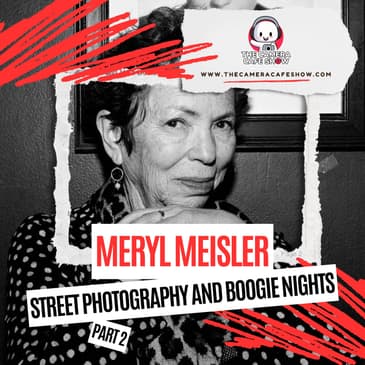

Retirement usually means less work, fewer surprises, and a cleaner attic. Unless, of course, you're a photographer with a lifetime of negatives waiting upstairs. And that's exactly where we continue our conversation today. 😊
In Part 2 of my conversation with photographer Meryl Meisler, we explore the remarkable second chapter of a life that had already been quietly filled with photographs for decades. After spending more than thirty years as an art teacher, Meryl found herself opening old boxes of negatives and rediscovering an extraordinary visual archive that would eventually become books, exhibitions, and an international audience she never expected.
We talk about the changing face of Bushwick, the making of her first books, teaching art for more than three decades, and the strange and wonderful experience of seeing photographs from another era take on a completely new life. It is a conversation about persistence, creativity, and the realization that some images simply need time before the world is ready for them.
And of course, being Meryl, the conversation also wanders into New York hotdogs, lifelong friendships, terrible singing voices, and all the little stories that make life in New York so wonderfully memorable. Because sometimes the best conversations—and the best photographs—are the ones that take a few unexpected turns along the way.
More than anything, this episode reminds us that photography is not always about immediate recognition or success. Sometimes it means carrying a camera through everyday life, storing away the negatives, getting on with teaching, raising friendships, and trusting that the work will find its moment when the time is right.
So grab a coffee and join me for Part 2 of this wonderful conversation with Meryl Meisler.
*****
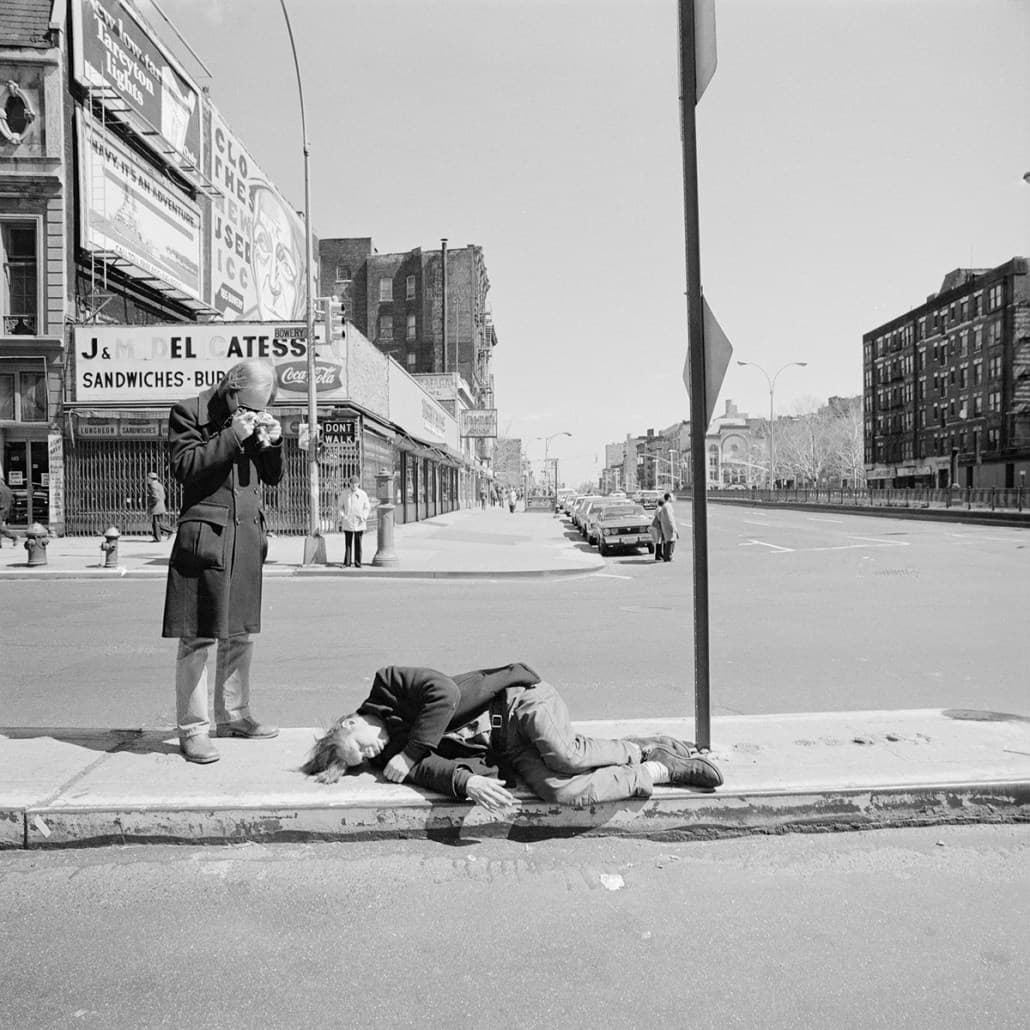
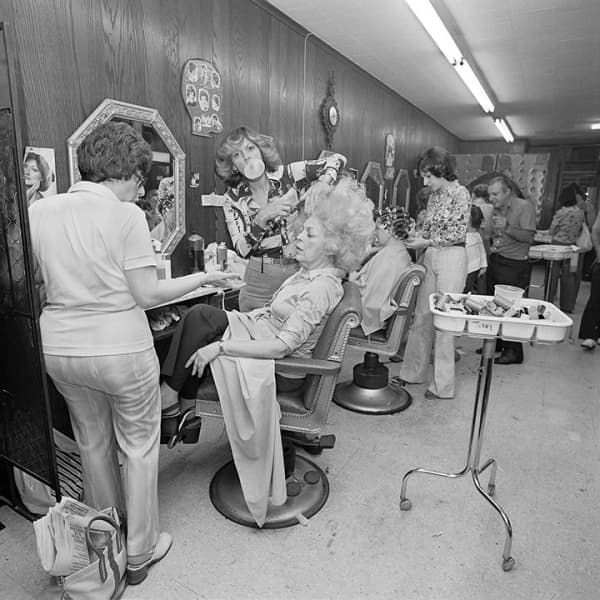
📸 Meryl Meisler:
https://www.merylmeisler.com
*****
🎧 Got any questions? Email us
Thanks for listening and look out for our next episode! 🚀
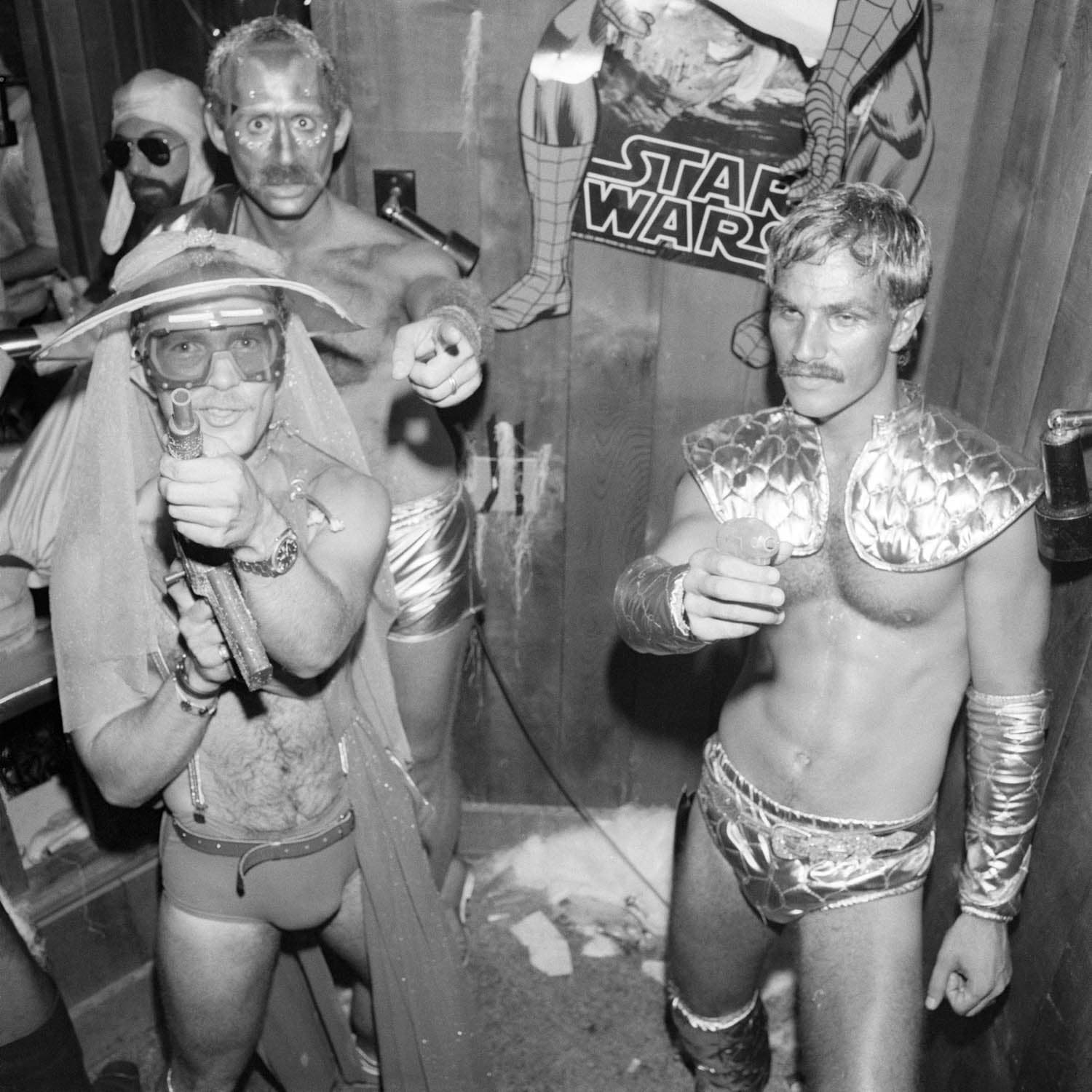
[00:00:06] And he said, this is my place. Come downstairs. You're gonna make a gallery. I want to show people like you. And go downstairs in this black box and he had photographs on the wall of his work because he's a filmmaker and these are stills from his film. And I said, oh great. How's it going showing your work here? He says, what is a bar? People do get drunk so they take the work off the wall or break it.
[00:00:33] And I was like, oh great. We go upstairs and have lunch and I'm talking to Vanessa and I said, that's great. I had shown my own work and my student work in the Brooklyn Museum, different group shows. Grand Central had shows in real galleries, real museums. And I said, that's great. Here I am in this drag burlesque bar in Bushwick with a gallery in the basement when people steal the work of the wall, wants to show my work.
[00:00:59] And she goes, she looks at me, she goes, don't be such a snob. Greetings and welcome back to the show. It turns out that for some retiring from being an art teacher can be a dangerous thing.
[00:01:21] You open a few forgotten boxes of photographs, open a few dusty boxes of negatives and somehow end up starting an entirely new adventure in life. I am Tom Jacob and this is the Camera Cafe Show. Today folks, I continue my wonderful conversation with photographer Meryl Meisler. Best known for her street photography and photographs of New York's disco era,
[00:01:42] Meryl has spent more than three decades teaching art while quietly building an extraordinary archive of images that remain largely unseen by the world. In this second part of our conversation, we leave the dance floors of Studio 54 behind and enter a completely different chapter of her life. We talk about teaching for more than 30 years, balancing creativity with everyday responsibilities, dealing with rejection,
[00:02:07] and the unexpected journey that began after retirement when old negatives started finding their ways into books, exhibitions and galleries around the world. Along the way, of course, we talk about things such as New York hot dogs, good friendships, hitting the clubs again, and everything else that happens to pop up in her mind, which, as you'll hear, is never a boring place to visit. Grab a coffee, settle in, and enjoy part two of my wonderful conversation with the amazing Meryl Meisler.
[00:02:35] Let's go a moment back to teaching. Meryl, you teach for 30 years, something like this? 31 years. 31 years. And more, because after retiring from full-time teaching in the public schools, I was part-time teaching at NYU for future art teachers. So I taught 36 years. What's, Meryl, what's the biggest change you noticed in young people from then and until you retired?
[00:03:05] I think kids are kids. Kids are kids, no matter what era. There's something similar about being an adolescent. The world that they were living in changed. Being in New York City, 9-11 changed all of us. The attacks of September 11th changed New York City forever. Society changed.
[00:03:33] And the fact that I could be a teacher and be in a school, even before I was in a progressive school, we had a coming out day and people talked about that every teacher wore a pink triangle. Then we could talk openly about who we were and who we lived with or not live with. And so society changes for the better. Technology changed kids.
[00:04:01] The invention of computers and cell phones and social media, that's changed people's childhoods. And they were a reflection of what's popular in popular culture. I witnessed the coming of the hip hop. You know what the new trends are. You know what's in style.
[00:04:25] And then children, of course, unfortunately also affected by the ills of society. You know, a crack epidemic. You're infected by poverty. Those things still go on. I think kids are kids. Children's arachment by social media. Even when I was teaching in my last few years, she's like, put away your phone. Because all of a sudden phones were allowed in school because the parents were worried about their kids. And all of a sudden there were phones everywhere.
[00:04:53] Or I was teaching digital art. I had to focus on the school. There's more distractions. Yeah. And so your students, Meryl, they knew you were into photography? Or you kept this? No, you keep work. The nightlife work I did not show for decades later. I did, throughout my teaching career, not only did I show work with the students,
[00:05:22] and I got my students work in the Whitney Biennial, in the New Museum. I was an award-winning teacher. But that was also my superpower because I'm not a big person. Classroom management is not my gift. Like, cooking is not my gift. But throughout my teaching career, I showed students my work in terms of my drawings, my paintings. Mm-hmm.
[00:05:52] My illustrations were being published in newspapers and books. I would show that because I could show them my superpower. It's something I could teach them to do. Most of my teachers are artists.
[00:06:07] And so I always shared notices about exhibits I was in, showing what I was working on, showing printed pieces of work in, say, the magazines of books, and teaching them how to draw perspective. And then when I had a photography program, how to do it, I had a thought room program. I had a mixed movie. So I was always showing work.
[00:06:35] Did I show things that would then and now, I would not. A teacher has to be professional. No, it didn't. I would never, even now, I would never show children photographs of adult material.
[00:06:58] Or would I, and I just want, I said, I still separate that even though I'm long retired. Like when I published these four books, I would even put a picture of children next to someone using drugs or being sexually explicit. I don't think it's appropriate. And I still have that mindset. And I always will have that. It's my training.
[00:07:26] And I separate that. By precedent, when that's an inappropriate thing that I do, still that person. And I wouldn't, you have a private life. But it also think it's kids and you influence them. And even when, for example, I, later on in the nineties, I wanted to work with my students about health, using art to learn about health.
[00:07:55] And we even had to prevent AIDS. I got certified to talk about it. Because that's what you do. But that's what I, that's part of your profession. What you say to kids matters. What you say to anyone matters, but especially children. And they're not your children. That's part of my ethics. I know, Meryl, you would be my favorite teacher. I studied art school for six years.
[00:08:24] And my art teacher was by far my most favorite person. Well, there's a bit. Thank you, I think. Thank you. Thank you. I feel being an artist, lucky most people like that. Whereas, and some people like Jim, but he's a creative outlet. It's certainly a creative outlet. Yeah. And it could be used. I worked in programs where art was used to help literacy. And later on, I'd like to collaborate with my other colleagues to do science with art.
[00:08:55] Like language with art. It makes sense. Yeah. It's part of life. One thing about when you were a teacher that I couldn't get the full story, Meryl, was something you were selected for an exhibition in the New York subway. I don't remember, as a finalist, and it didn't come true and it make you feel very sad. Oh boy, thank you. Okay. Well, you did your homework. Yes.
[00:09:22] When I was in 2000, I was already, no, in 19, around 1996 or 97, I'd had a public artwork in Grand Central Metropolitan Transit Authority. I think it went very well. And then the MTA, Metropolitan Transit Authority, they actually asked me to be one of, I think
[00:09:51] it was like four or five people to submit, do very heavy research to submit proposal for permanent artwork in a station in Brooklyn. And I worked so hard on that. And I knocked myself and kept my job during the day, kept my job. And when I, the email came that I didn't, was not the chosen project.
[00:10:17] And this would have been like several hundred thousand dollar permanent artwork. It would be amazing. I wasn't chosen. Thank goodness it was between classes because I literally got down on the floor and saw it. I don't take rejection well. And I was like, if I didn't have to work full time, maybe I would have had more time to have done even more in the proposal. And I wasn't selected.
[00:10:47] But I did at the time feel like, let's also because I have a full time job. You can't stop your job because you have a deadline proposal and you just sleep less. This still doesn't mean I would have been chosen one anyway, but surely. But I did cry. I agree.
[00:11:09] But then Meryl, fast forward to 2014, because you lived all this parallel life being a teacher and having all this amazing photo archive sitting around. What made you decide that you said it's time to put this out in the world, your first book, A Tale of Two Cities? All right. I retired from teaching in 2010.
[00:11:34] I had always, I've got backpacks to 1978, 77. And I said I went to that Copacabana first disco night by myself. At that time, I was taking a class with this guy, Bob Edelman, how to publish a photo book and do your own photo book.
[00:11:52] And he chose me to develop a proposal to have a book published of my Long Island photographs that you was going to be the publisher for. Long story short, it was not. He did not accept it at the end. Because really, it's because something between him and the writer, he set me up. And I was like, I shut down. I didn't try again.
[00:12:21] Before I retired in 2010, 2007, I had received an email from a stranger, someone named Adam Schwartz, a teacher in Bushwick, who wanted to submit a proposal to the Brooklyn Historical Society about the changes in Bushwick, which is a neighborhood I taught for 14 years. And he, a colleague had told him about my work because he had trouble finding photographs in that period. We had a show together.
[00:12:47] I realized I had this unusual body of work that I thought was beautiful. And I wanted to continue digging into it, showing it, printing it, getting it out there. And when I was retired, this is my time. I continued doing that. And Bushwick, the neighborhood started becoming not just burnt out, but a hot neighborhood for artists. I'm showing my work.
[00:13:17] It had a show where I collaborated with a young writer named Vanessa Martier, who found herself in one of the photographs. And we had, we showed together. I could go on and on, so you have to go. And in a place called the Living Gallery, a new gallery that was for under-shown, under-known people. At that gallery, a Frenchman shows up.
[00:13:47] We curl it here and he says, I just bought a building, you know, a filmmaker, and I bought a building in here. And I was researching. Just because he reached in to learn about the neighborhood. And he found my pictures and wanted to see them. And he bought my work. I said, oh, thank you. And next year we have another show with this living gallery and take a break and go to a place called Bazaar that opened up.
[00:14:11] It was actually a drag burlesque house in Bushwick, which was shocking because when I taught in Bushwick it felt very homophobic to me. And we could walk into this place where they served lunch during the day and we took a break from this. And the same French guy at the door said, oh, welcome. This is my place. His name is Jean-Dephane Sauvère.
[00:14:35] And it's the middle of something called Bushwick Opera Studios, which at the time was like a grand festival for like a Mardi Gras. And he said, you know, this is my place. Come downstairs. Is it going to make a gallery? Want to show people like you? I'm going downstairs in this black box. And he had photographs on the wall of his work because he's a filmmaker and these are stills from his film. And I said, oh, great.
[00:15:05] How's it going showing your work here? He says, what is a bar? People do get drunk. So they take the work off the wall or break it. And I was like, oh, great. We go upstairs to have lunch and I'm talking to Vanessa. And my sis, that's great. I had shown my own work and my student work and I've gotten into the Brooklyn Museum. I had different group shows, Grand Central. I've had shows in real galleries, real resumes. And I said, that's great. Here I am.
[00:15:35] And this drag burlesque bar in Bushwick with a gallery in the basement when people steal the work of the wall wants to show my work. And she goes, she looks at me, she goes, don't be such a snob. I was like, okay. Then I come back a few weeks later and I visited the space because they're having a party launching a book of a French photographer, the John Stephan Sauvier, the owner of Bizarre's John Stephan Sauvier.
[00:16:04] And I'm like, wow, this is interesting. The place is packed. It just goes, a small version of the discos I went to and I used. There's a show downstairs. I asked him, how's it going? I know before that, I go into the bathroom to fix my lipstick and there's a disco ball. There's a disco ball out there and I have like a Eureka! Aha moment. It's like my worlds came together.
[00:16:34] Bushwick has now become the nightlife center. So he couldn't even predict this. And I went up to John. I said, how's it going with exhibiting downstairs? What the problem was with the staff? He said, oh, we figured it out. We bolted the work to the brick walls. I said, are you still interested in showing my work? Because I knew the living gallery was changing their format. They wouldn't be able to have one month shows. He says, absolutely. Yes. It's history. So I wait.
[00:17:03] Because I had this idea that this is the perfect place that I knew I had not just special work, but this nightlife work. And this is the perfect place to show it. And I come back a few weeks later because he had a business partner, Greg. And he also, I wanted to make sure it wasn't just a thrill of the night. That he was just busy. That you, are you really, are you interested in showing my work here? He said, absolutely. Yes. You know, it's important. It's history.
[00:17:33] And I went, great. I'm going to have a show there next year in the basement. He didn't know I had this super plan to show my nightlife work as well. And then he calls me in. We talk about me's decision in September, October, that there'll be a show in June. This is September of 2013. It'll be showing June, 2014. And then around January, I'm just going through work, my work. I didn't do anything. I don't know what I was doing.
[00:18:03] I was looking for stuff, printing things, scanning. And he calls me in the middle of a snowstorm to come meet with him, go to some nightlife awards event. And he says, I want to publish a book. A book? Yeah. By work. It's like, you made a catalog. Because here we are in January. It might have even been February. And we're talking about June. He said, nothing happens that fast. You made a catalog.
[00:18:33] And he takes a hard book and goes, shows me a photo book he's been looking at. And he goes, a book. It might even have been Dan Golden's work. I was like, oh, interesting. He didn't know that people, I had been showing my bushwick work and getting a lot of press about it. I actually had submitted it to some real publishers to a book about my bushwick in the 80s. And I was still waiting to hear from them. And I said, I don't want to just show my bushwick work here.
[00:19:03] I want to show my nightlife work too. It's a long story. But it goes together. He said, nightlife? I said, yeah. I was in the discos a lot. And I photographed it. He said, really? He said, can I see them? I said, I have to find them and scan them to show you because I've never shown them to anyone. And John was, I was familiar with my bushwick work.
[00:19:29] And I was quickly picking up my pages and my negative pages and thinking, that's a match with it. That's a match with that. I just instinct. And I scanned some email to him because he's working on a film project in South America. And he says, I got it. He understood. And then we started playing with it, the idea of this and that. And I was like, okay. I thought this guy's crazy. He can't do anything that fast.
[00:19:56] My wife Patricia, she's a designer for broadcast television. She'll design the book. We'll go through the motions. Just do it. To see if it's a lead, there's much work to do. The book is just doing the show. Of course, that is not. And doing it both at once. But we did it. Vanessa Martier wrote an essay. Wrote an essay. A friend of mine, Catherine Kirkpatrick, part of her photography, who were professional women photographers, wrote an essay.
[00:20:26] A poet I met through Vanessa, Emmanuel Xavier, who grew up in Bushwick. And submitted some poems. Put the work together. John and I communicated back and forth about this, making decisions. And it came out in June. 1,500 copies. It went viral. So that's how it happened. And then it paid for itself back.
[00:20:53] It was obviously, he very generously laid out the money for having it printed in China, taking it back. And without having a distributor, we were selling out the book. And it paid for itself. And then Navji says, let's do another one. And we did one a year later. And I said, I know exactly what I want to do. I want to do this book. It was really the book that was rejected in 77. Okay.
[00:21:23] That I was upset about. My Long Island pictures, but I had the idea of comparing and contrasting it with moving the city. The two things together. Yeah. And again, that was a huge hit. And again, the distributors turned us down and it didn't matter. It's still sold. And then the third book, there was a stall in between. There was a tragedy in my family.
[00:21:51] And things were changing. And then I got a third book called Purgatory in Paradise Lost. I wanted to do so much from this era that I hadn't shown yet. First of all, that first book, I didn't even think it would ever be published. I didn't even want, and I was approaching field publishers. I was holding back the best work. I didn't even think. There was so much from this period that I wanted to deserve to be published.
[00:22:22] And when I went into the school pictures inside the school and some of the nightlife work that I was like scared to show. And at the time, Bazaar was closing. He was closing it to focus on his own Hollywood film that I was working on. I had applied for a grant for someplace called the Leonian Foundation. And they gave me a grant.
[00:22:48] And the third book, even though John said, I just can't do it. I have to focus on my film. I was going to publish it no matter what. I got the grant. And during the pandemic, John Stefan Sauvere helped me edit that book, even though he wasn't a part of it anymore, because he's a great person and a great friend and believed in my work. And we would lay it out.
[00:23:15] We would have masks in the backyard, lay it out and play with it and go, we'd make decisions and go, why not? Yeah. It made us laugh. We understood each other. I learned so much from editing. If you want to learn about editing, from a film editor, oh boy. And that came out. That sold out as well. And the fourth book was done with eye shot in Italy. And it's called Street Walker.
[00:23:44] And it has street photography from different areas I've been in. But they also chose to include work. Some of, I was surprised, from my nightlife work and some family photographs. Yeah. And so, all four of my books sold out. So there's, and I know many people will stop in boxes and boxes of books. So I'm very glad. So I'm ready to do it for it. And I know- You're ready to do your fifth book now. Fifth, yes. What was this, five books?
[00:24:14] I want five books. I want more than that. But yeah. So publishing a book was really made a big difference in my life. And also helps you understand, it helps you package your work. Conceive it. Admiral Schoen does that as well. It's nice to have a solid object. It's more than nice. It's divine.
[00:24:43] Meryl, let me ask you a moment about your photographic. I talked a long time ago. I'm a friend with Harvey Stein. You will meet up with him soon. And just as his pictures, your pictures aren't always candid. You want to have this human connection always in your pictures. What's something that make you stop and think, I want to photograph this person or this scene? What makes me want to take a photograph? Okay.
[00:25:12] Yes, I am interested in human beings. I'm interested in human beings. This is true. My still lives are landscapes. Human beings are really fascinating. I photograph things that, I say, besides personal things, people in my life and events that I'm going to, if I'm... I photograph things that either... I've never seen anything like it before in my life. This just amazes me. I've never seen this.
[00:25:41] But, and I might even, if it's a strange, I might even say it. I've never seen it. Like, literally, I've never seen this happen. I've photographed things that look so typical. It's almost, in the United States there's an artist called Norman Rockwell who painted Americana, like the Americana scene. It's almost like an Americana scene come to life.
[00:26:08] Or like, and let's pick something like the Pieta. Like you see, you're just like, oh, this is like the Pieta. And it looks so typical that you feel like you're seeing iconic work in real life. Or I photograph people, things that literally makes me laugh. Seeing it happen, like, it makes me smile when I see it.
[00:26:33] And I'm also attracted to people expressing pure joy and exuberance. I shy away in sad situations. I want to be present. It doesn't mean I've never done that, but I want to be present. And I don't tend to photograph people who are down and out. Because I feel a little fucking better.
[00:26:58] I'm not expressing that it's wrong for somebody to do that at all. But I like people to, and as I say it doesn't mean I've never, but I tend to like people to be able to say yes. Not that they're unconscious. Not that they're unconscious. But I do have some photographs of people unconscious, but not too many. And you go out, Meryl, specifically to shoot pictures?
[00:27:27] Or you just, as you say, you shoot pictures wherever you are going? I used to say that I don't go to photograph. I photograph where I'm going. I still photograph where I'm going or special things. But now when I'm shooting nightlife, because I'm decided to go back to it, going with the intention of photographing nightlife. When I was a younger person, I was dancing at the same time and socializing more. Now I'm going with the purpose of doing that.
[00:27:58] Mm-hmm. With a medium format camera. I'm going back crazy with my medium format camera and flash and film, which is a little nutty. And to me, the clubs seem darker than when I was younger. But again, it could be my eyes. And you have to stop and you have to slow down and you have to change the film. And it takes forever to develop the film.
[00:28:24] But I want to show what's changed. Stay the same. Looking through the same lens, I've come to appreciate the aesthetics of the work I printed back. And as an artist, you think you always have to be changing something. Maybe I don't have to change. Maybe I can go back. There's no one hard rule. And does it mean I'm going to do this forever? No, but I do have seven bodies on my camera.
[00:28:53] I didn't want to. Because I like it. And I've come to another philosophy about photography. Is that just the fact you enjoy doing it is reason enough to doing it. You don't need permission from somebody else. Unless you need permission to go into the private venue, which I do now. Just for the fact, okay, it's not popular or you've been here, done that before.
[00:29:23] People are doing this. I enjoy doing this. That's reason enough. So it's easy to be insecure. I don't like rejection. I don't solve it anymore. That was a big one. That was a solve. No. Disappointed. But yes, I still get, but I do get acceptances as well. And invitations are even better. Yeah. So artists, photographers, photographers, all the way out.
[00:29:53] Keep just doing it. Keep doing it. And why not go out with your adventurer camera? I don't go out with it. I did try it again a couple of years ago, but I said, it's in my home on a beverage place. It's right on my creed, a special place. And it reminds me what it was always about. Photography is an adventure for me. An art of art in Vendor, but a bunch of art form.
[00:30:22] I actually love, I think about that. I love exhibiting work. Being there in person, having physical objects that are framed or however you present them, and thematic and curated. And I have, I'm going to be an opening this Saturday at, I just came back from Dublin, right? For the Street Photography Festival, and the Des and Paul who run it are just amazing. They do a fantastic job curating and installing the work.
[00:30:52] And the experience of meeting people in person and talking and them reacting and you talking, seeing each other's work, I love that. I love exhibiting. And then Saturday night on the beginning of the show that opens at the Center of Photography Woodstock up here in Kingston, it's a biennial of state photographers. And it's the first time since I started uncovering my work,
[00:31:22] since retirement when I'm starting to show work that's never been seen, this is the first show since 2009 that I'm showing only new work. That's thrilling for me. Yeah. And it's, that's exciting. I go, ooh. And I'll do, it's fantastic. It's on my solo show. I'll have a significant amount of work and the work is printed in my darkroom here and it's presenting it in a form.
[00:31:51] And friends, family and strangers. In Dublin, 12 of my family members and family and close friends came over. We had an entourage. To me, showing actual objects, so really objects, objects so hard is very exciting. Yeah. And books are exciting. And my mind is... And teaching is exciting, Meryl, because you have in, when we are recording this now, I think in two weeks, the pavement symposium in New York about state photography.
[00:32:20] You get an A plus. Yes, you get an A plus. But I'm just, I don't teach that much because I did. Like, we have people that ask me to and it's like, I've been there and down. Not people who've been asked to study with me far, but they say, I don't like I'm going to focus. But this definitely appeals to me because it's street walking and taking a group through Bushwick.
[00:32:46] And the people in the pavement festival are people I know. If I know them, I respect them. If I don't know them, I know of them. And I like David Brahma, who's running it. Just a really nice guy. And let's see, and it's going to happen. Especially like teaching situations where I've had the opportunity to travel.
[00:33:11] Like when I had a show in Berlin, a gallery, photo gallery, Friedrichstein got a grant from the German government to bring me over. And I taught high school students here street photography. It's like, even better. Yeah. So I was like, I forgot to Spain. Yes, I'm up to go. I was thinking we need to find a gallery here in Barcelona. I would love that. Mm-hmm. Let's see if we can make it work.
[00:33:40] I'll show with you. I would love that. Mm-hmm. To end our nice talk. Yes. Where can I find the best hot dog in New York? Oh, that's, I'm not going to. I'm not going to do an ad for anyone. Nathan's is famous. And going to Coney Island is good. Yeah. Okay. But I don't know because of the atmosphere. Hot dog. I thought you had the famous, you have the favorite place? My God, I love my cooking.
[00:34:10] I'll barbecue you a hot dog. How's that? Yeah. The best hot dog is the atmosphere. It's not, it's just having, the atmosphere of having it is good. But I like them grilled. Yeah. And just being outside the backyard, being in a beachy atmosphere, that's fun. I look forward to that. And you will sing a bit, Meryl? Because I think I read you like to sing also sometimes.
[00:34:38] Oh, and I sing very poorly, but I love to sing. Okay. I'm one of those rare people who actually can't carry a tune. But I love to sing and I like to go to the piano more. Yeah. Sing. We will make it work in my visit to New York. Okay. I look forward to it. Meryl, I think this was an amazing talk. Thank you for bringing your little world to me today for spending time.
[00:35:04] And I feel we need to put on a disco track now and have a Guinness together soon. Okay. Okay. That sounds good to me. Sounds good to me. I like that. I like that. Meryl, keep in touch with me and we see each other soon around. Okay? Thank you. Have a lovely evening. Hasta la vista. And that's it, folks, for my conversation with Meryl Meisler. I hope you enjoyed our talk about street photography and everything in between.
[00:35:32] Talking to Meryl, I kept reminding myself that we should never throw away our pictures. Because sometimes a box of old negatives or files on your computer isn't the end of a journey at all. It's just waiting patiently for the right moment to begin again. What I love the most is that while all of this was happening around her, she was simply living her life. Being an amazing teacher for more than 30 years, making friends, photographing the people around her.
[00:35:59] And then one day, the world finally caught up with the work she had been making all along. And of course, folks, if you enjoyed this two-part conversation with Meryl, be sure to check out our website and try to go to see one of her exhibitions. As always, all the links are in our show notes. And of course, folks, if you enjoyed this episode, have a look at our website and don't forget to subscribe, leave us a little review, and follow us on any podcast platform or on YouTube. Until next time, keep shooting and keep on moving your own photography forwards.
[00:36:27] I'll see you next week here for another wonderful conversation about photography and life. Adios!