
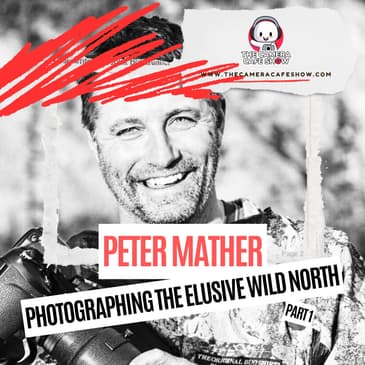

Once upon a time, Peter Mather was a maths teacher. These days, his office is the Yukon wilderness, his subjects have claws, and some of them are remarkably good at hiding 😄
Peter grew up in the Yukon, surrounded by a huge landscape and a family that loved getting out into it. His early adventures with his dad, his love of sport and his curiosity about the natural world all became part of the story, although nobody probably expected that one day they would lead to a career as a wildlife photographer. And yes, before all the snowshoes and wolverines, Peter really was a maths teacher.
In this first part of my conversation with Peter, we go back to those early days and talk about how photography slowly became more than something he did for fun. We get into the Yukon itself, conservation and Peter's approach to wildlife photography. For him, the picture is often the end of a much longer process involving months or even years of research, exploration and figuring out where the animals actually are.
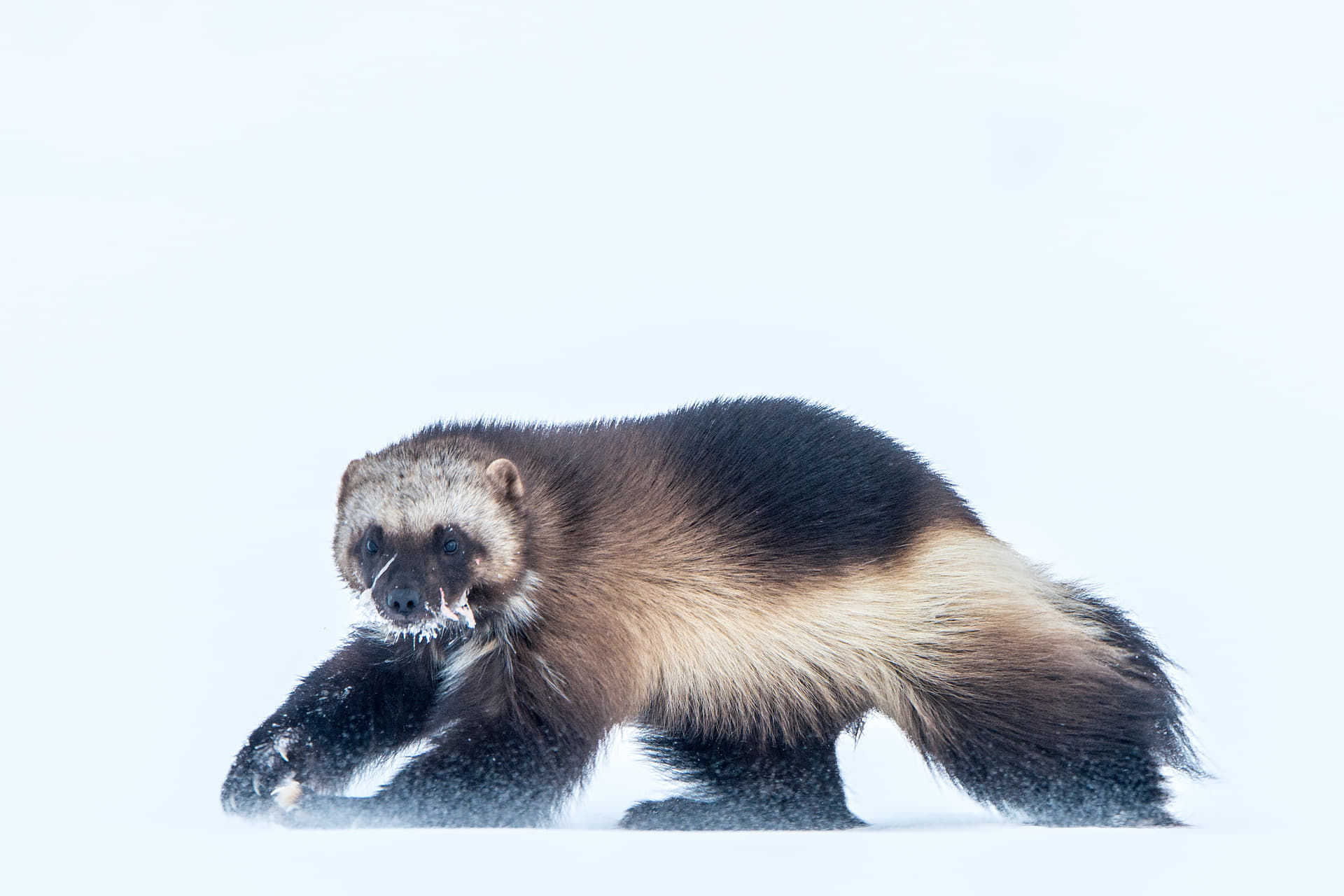
And then there are the wolverines. Peter's Wolverine: Arctic Snow Machine project earned third prize in the Nature category at World Press Photo, but getting those photographs was anything but easy. He spent three springs in the far north trying to photograph an animal he describes as almost impossible to find — an animal that, according to Peter, seems to have been designed without an off switch.
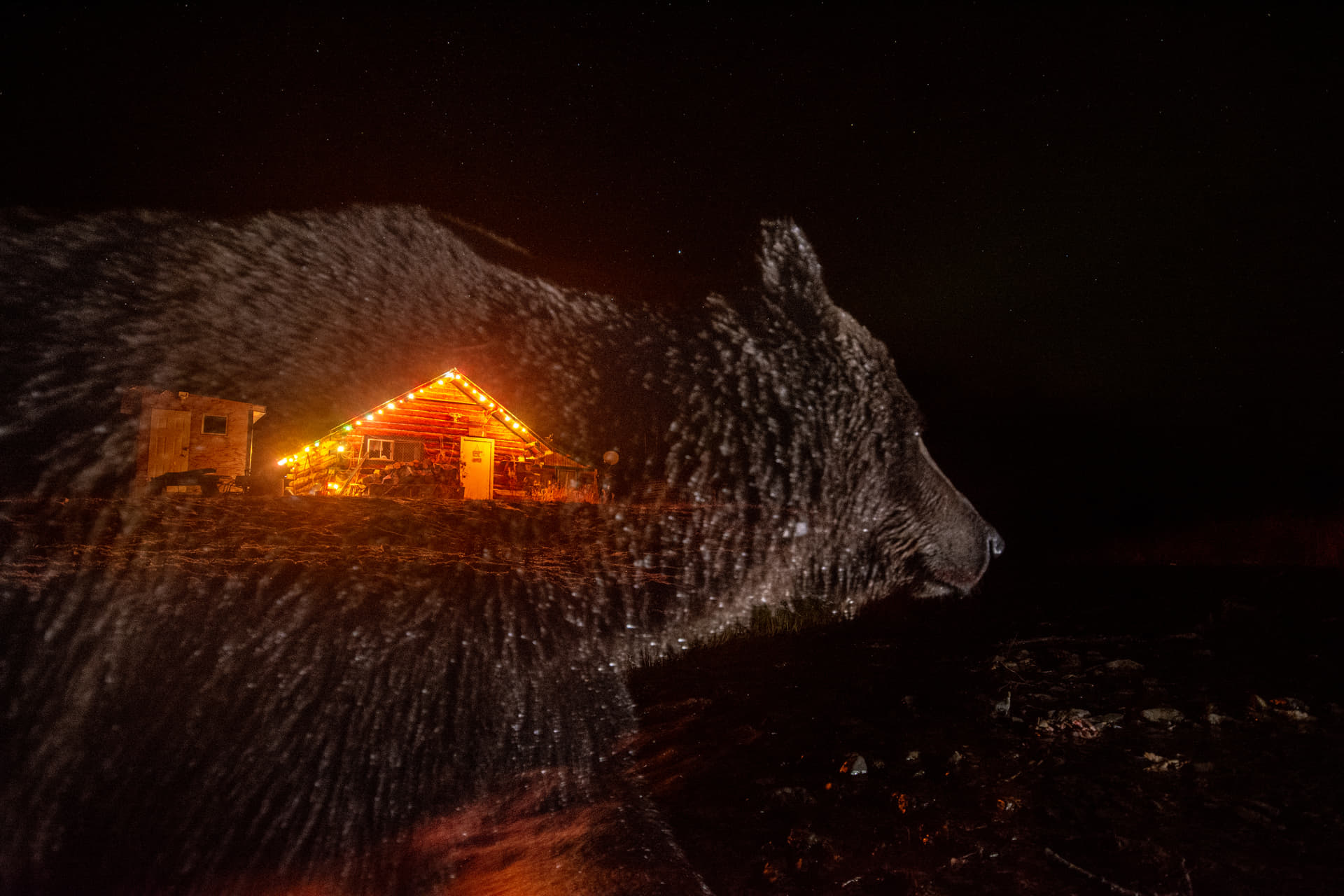
And this is only Part One. Next week, we'll carry on with Peter and get into even wilder adventures: bears coated in ice, lynx escaping his camera skills, the secret behind setting up camera traps without them tumbling over in an icy river — or yourself — plus photography gear and plenty more stories from the wild North 🐻❄️📸
Grab a coffee and join me for part 1 of my conversation with Peter Mather.
📸 See more of Peter Mather's work:
https://petermather.com/
Peter’s documentary film “Kings of the North”
https://www.youtube.com/watch?v=2e9GYGfUGNw&list=LL
🎙️ Enjoyed this episode?
Follow, maybe leave us a review, or share it! You know the drill. 😉🎧
🎧 Got any questions? Email us
Thanks for listening, and look out for our next episode! 🚀
[00:00:03] One time I went out onto the coastal plain and the pilot dropped me off at a place where he found a dead caribou when a wolverine had been eating it. Now what they do, wolverines, is they'll often find caribou that are killed by wolves and they'll steal those caribou. The wolverine will take that caribou and will rip it into pieces like this dead caribou in 24 hours. So the pilot dropped me off and I skied a couple of kilometers to the site and I set up a tent and I just waited and watched for this wolverine.
[00:00:32] And everything up there is just flat white, okay? So it's really hard to tell context. And the caribou were migrating through at the moment and it's 24 hour light, this is spring, so it's snow, temperatures are like minus 10, pretty warm really. And I'm just waiting for this wolverine to return to this dead caribou to finish eating it and hiding it. And I was surprised because they usually come back pretty quick but he was gone, this wolverine was gone for 24 hours.
[00:00:57] And when he eventually, I see off in the distance, I see this grizzly bear. And he's running towards me, he's coming towards this dead caribou. And I'm getting really scared because the bears are just coming out of hibernation. They're really hungry and I've camped 100 feet from this dead caribou. That screams conflict.
[00:01:27] Greetings and welcome back to the show. If you ever wondered how you photograph an animal that can disappear into one of the biggest, wildest landscapes on earth and occasionally might come for you, you're about to find out. And trust me, this will not be your average day at the office. I'm Tom Jacob and this is the Camera Café Show.
[00:01:47] My guest today, folks, is wildlife photographer Peter Mater, who grew up in the Yukon in the northern Canada and has spent much of his life exploring, photographing and telling stories about the wild places he calls home. And rather wonderfully, he was once a math teacher before his job got to involve rather fewer equations and considerably more snow, wildlife and occasionally freezing body parts.
[00:02:11] Peter's photography has taken him into some pretty remote corners where he'd spent years following animals that are not exactly known for making themselves available for photographs. His work has earned him some serious recognition along the way, including a WordPress Photo Award and getting published in National Geographic. But the stories behind the pictures and Peter himself are every bit as interesting.
[00:02:34] In this first part, we'll go back to where it all started and talk about early adventures in photography, conservation, a wedding, exploring the Yukon with his father and of course, we'll get into the stories. Because that's why you're here. And today we start with some elusive Wolverines, animals that seem to have perfected the art of making wildlife photographers and Peter work very, very hard to get the shot. Lucky he's got his trusty sidekick Luke Skywalker along for the ride. And of course folks, this is only part one.
[00:03:04] Next week we'll carry on with Peter with even wilder adventures of bears coated in ice, links escaping his camera skills, ghosts but not that kind, the secret behind setting up your camera traps without them tumbling over in an icy river or yourself, and way more things that await you while you're looking for amazing animals in the Yukon. Grab yourself a coffee, put on your warmest coat and enjoy this conversation with the amazing Peter Mader.
[00:03:31] Greetings and welcome back everybody for another episode. Today we're heading all the way up into Canada in the Yukon, where it would be freezing cold if this would be the winter time. And my guest today has spent years doing things that most of us probably consider a good reason to stay indoors. He's chased Wolverines, thought of grizzly, spent months for the ride animal to pass in front of his camera traps,
[00:03:56] frozen himself along ice bears and somehow managed to turn all of this into extraordinary photography. Along the way, he's been a math teacher, which is a first one for the show. Peter, welcome. It's a pleasure to have you here today. Thanks, Sam. I'm so glad to be here. Appreciate it. We're going to have an amazing time. But first of all, congratulations.
[00:04:19] One of your daughters, they got married past weekend, and you didn't go only as a dad, but also as a photographer. It's been some days now. Have all the emotions and nerves settled down, Peter? Yeah, now I'm like spending my time on the computer processing all the images nice and slow. And I know everybody at the wedding. So every time I get a good photo, I like make it into a JPEG and I send it to people. So those people are slowly getting photos like one or two a day for the next two weeks.
[00:04:48] It's been cool that way. It's really fun because it's a different type of photography for me. And I have to know, Peter, after spending most of your life in Gore-Tex jackets and snowshoe boots, how does it feel like to put on a smoking and some fine Italian leather shoes? It feels uncomfortable. I'm not much for fancy clothes.
[00:05:16] And my daughter got married on top of a ski hill. And so I bought some fancy clothes just for the wedding. And we took the chairlift to the top of the ski hill. And I got a bunch of grease from the chairlift, some thick grease all over my fancy clothes. And it's all ruined. I bought it for one night. That's it. Bummer. But look, the memories you can have now, Peter. Yeah, they're good memories.
[00:05:42] I got drunk probably for the first time in four years after the rehearsal dinner, like two days before the wedding. So the day before the wedding, I had the most horrible hangover. It's a horrible headache, getting sick. And I'm glad to be done with that part. So everybody survived. Nobody blinked in the family photo. And then we can start talking about you, Peter. Who is Peter matter when he doesn't chase wildlife?
[00:06:13] I guess I'm like a family person. My biggest things I like most in life is just spending time with my family. And so we just had that rehearsal dinner for my daughter's wedding. And it's like all close family. We went and spent the whole night together. And that's probably the highlight of my year was just having everybody in one place and just spending the days talking. And then the other highlight of the year was my two daughters gave speeches for my oldest daughter who got married. And they were just beautiful speeches.
[00:06:43] They made me cry. That's how I am. I used to be a math teacher. I used to be a big soccer player, like football. And now I'm a photographer. Now you say of making you cry. We are roughly the same age, Peter. Has getting older changed you in ways that you didn't expect? No, I don't think so. The hardest part for me about getting older is I have a hard time remembering people.
[00:07:13] And that's really tough when you see people and they remember you and you don't remember them. Like that's the thing that I find the hardest. What's the hardest for you? Not hardest, but I'm definitely more emotional than I was when I was younger. Yeah. This is what I feel the most, yeah. I find to get more anxiety. When I was young, I had anxiety, but I didn't realize it was anxiety.
[00:07:43] And I would just push through it and not think about it. And now as I get older, I feel uncomfortable in a situation. And I'm like, why am I feeling uncomfortable? And then I slowly unpack it. And I'm like, okay, I've got anxiety about this thing that I don't have completed, that I have to do. Like I'm more aware of it now. And that's tough anxiety. If your daughters would be sitting here with us, Peter, how would they describe you?
[00:08:09] They would describe me as sensitive and irritating. I'm funny mixed. I'm like a little kid. I'm like a, I have the sense of humor of a 12-year-old. So at the wedding, I was hanging out with my nieces and my nephew who are like 12 and 14. I spend a lot of time just playing games. We had a lot of yard games, like golf ladder in the backyard. And so I just spent time playing with them. And so they have, I've got the sense of humor of a 12, 13, 14-year-old teenager.
[00:08:39] And so my daughters were getting a little irritated with me at the wedding. And then they get snappy, but then I'm really sensitive. And so I get hurt feelings. So it was one of those situations. I think they would describe me as very sensitive, very empathetic, but also a child. I've got the energy and the enthusiasm and the sense of humor of a small teenage person. Let's take that a moment, Peter. When you think back to your childhood, what are some of your happiest moments there?
[00:09:11] I guess doing stuff with my dad. There's two things that really stand out to me when I was a kid. One of them is playing lots of sports. We play ice hockey and then lots of football, what we call soccer. But then the other thing was my dad. I'm very similar to my dad, of course. And so my dad would take us on adventures all over the place. And he had a very immature sense of humor. So he's always making us laugh and telling us stories.
[00:09:35] And so we grew up in the Yukon and it's this giant area. It's the size of California. But whereas California, say, has 25 million people, we have 45,000 people. So there's a lot of adventures. And so we grew up hunting and fishing. And my dad was always a horrible hunter. Because he was never hunting to kill something. He was hunting as a purpose.
[00:10:00] It gives you the reason to go out into the wild and see animals and camp out and spend time with your family. So I really picked that up from him. And so I just have really good memories of being with my dad and my dad talking and telling stories and making me laugh. And having adventures in the Yukon in the bush with wildlife. I think it's an amazing place to grow up. Cold, but amazing.
[00:10:26] And also, if you aren't the best hunter or the best fisherman, it looks like it's the perfect way to learn the outdoors, no? Yeah. It's neat because my dad still hunts and stuff. But they never get anything. And he's old now, too. He's 80. So he has rules. If we don't see the bison before noon, then we can't hunt it because it's too much work and it'll get dark. So he's got all these rules.
[00:10:54] But in my photography, most of my photography projects, projects where I spend more time doing research and exploring than photographing. They'll spend years and months out, you know, tracking down where these bears are and what they're doing and trying to find a place to set up a remote camera and a place to photograph them. And my dad has often come with me. He comes with me for, let's say, the first month of a project.
[00:11:20] And we'll just walk around exploring these places, trying to find something cool to photograph or trying to find this thing we're trying to photograph. And then once he leaves, then I'll just stay out for another two months on my own. And that's when I'll really start getting the photographs after a month of research. But half my life is researching these stories, which is probably just as fun as photographing them for me. I just am doing all the same stuff. I'm just not carrying a camera, so I'm not so weighted down.
[00:11:48] Do you remember, Peter, the first animal that left you, first wild animal that left you speechless? I don't know. Let me think. Nah, I can't. Not off the top of my head. The first animal that left me speechless. I remember the first encounter I had with a black bear. And so I was a little kid, maybe 10 years old. And we were doing a hike in the Yukon. It was a four-day hike. And we're on the trail. And us kids went ahead.
[00:12:18] And my parents were always very careful about bear stuff, so they gave us warnings. And we went ahead and we were walking down the trail. We saw a bear and we just spotted it. I just remember the excitement of the whole situation. So we had to stop and we had to go back to my parents and tell them about it. And we weren't really afraid because we grew up around bears and stuff. And so they were not that uncommon, but it was the first time I was on my own. And I just remember them being so excited to go back and tell my parents and how proud we were that we'd seen this bear.
[00:12:46] And of course, like 99.99% of all bear encounters, the bear sees you and gets scared and runs away. And so I just remember the excitement. I don't even remember in my mind seeing that bear anymore. I just remember the feeling of excitement and how proud I was and tell my parents about it when I went back and found them on the hike. You see what a different youth we had, Peter, because we are the same age, but my most exciting encounter maybe were feral pigs in the wood with tiny babies.
[00:13:16] Yeah. What did you grow up in? What was your home? Well, I grew up in Belgium, so we don't have a lot of woods. It's a tiny country. I don't even know how to compare this to the Yukon. We did a lot of nature walks, but of course, there aren't any amazing, wild, dangerous animals like a blackberry would encounter. Yeah. It's interesting you're from Belgium because my mom is from Holland. Okay.
[00:13:43] And I'm, what I love, one of my favorite things in life is history and historical fictions. So books that are like about history but have stories in them, but read a lot of history books. I read a lot of books about World War II. And my family has this really interesting stories about World War II. And I didn't learn about them from my family. I would read all these books about them.
[00:14:08] And then after I'd read the books, I'd find later that my family was engaged in these objects. Like my great-grandfather was like arrested by the Gestapo and put in prison in Holland for being part of the resistance and helping fake like medical excuses so people didn't go to war camps, prison camps or work camps. And I find that part of the world where you guys are in Belgium and Holland and the history of it
[00:14:36] and just some of the most fascinating stories I've ever come across. This isn't this kind of podcast, but if you like stories like this with my grandfather's stories of the war, yes, I have because I asked them everything. And I think it's just good I did it and they wanted to talk about it because then they stay with me. Yeah, yeah.
[00:15:01] I find that it's from over here where we're very disconnected from the war in a way that you can't be in a Europe, I imagine, but it's, yeah, some of the stories about it are amazing. And then to find out your family's involved in all these big humongous parts of that war in the world, I find it, it's really inspired me. Now, Peter, somewhere along the way, a camera has to appear in our story.
[00:15:30] When did photography become something more than something fun to do? When I think about photography, I think of two things. I think of, I would go to university in the South. And in Canada and in the Yukon, we're used to driving a long way all the time. So we would drive to university in a place called Edmonton. And it would be a 24-hour drive, which for us is not, you know, just a normal expedition drive. Because our country's so big.
[00:15:59] I remember driving home in the winter one year for Christmas. And just we were driving through the mountains and you see these creeks we would go by and the creeks would have rocks in the middle. And there would be snow on the rocks, but the water's still open. And I still just remember driving home one year and seeing scenes like that and just taking a picture with my mind. Or seeing scenes where it's a black forest fire burned out forest with snow all over. And the trees are all at beautiful angles as they fall down.
[00:16:30] And so that's the first thing I remember about photography, even though I wasn't a photographer. And then I was at university and there was a fellow who was an environmentalist and he came to do a presentation. And he was friends with one of my, he was from the Yukon and he was friends with one of the girls that I grew up with. Or it was, sorry, it was her dad. So my friend is a girl named Polly I grew up with. Her dad came and did a presentation. His name was Ken Madsen.
[00:16:59] And it was about environmental issues in the Yukon, but it was in the form of a slideshow with music. And I saw that and I was just inspired because there's all the adventures I wanted to do, but I was not really ever into hunting. And so he would canoe across the Yukon and kayak and take photos of this wildlife. And then he would work to try to protect some of the areas where all this wildlife thrived.
[00:17:24] I was in engineering at the time and I dropped out of engineering and I went into education instead. And I started doing these adventures and taking photos of these adventures with a camera that I ended up getting. And he would still use my mentor in terms of becoming a wildlife photographer. And he was like a big, a big person, a big famous person in the Yukon because we're so small. But cool, because I ended up following in his footsteps and have carried on that tradition.
[00:17:53] And I hope he feels honored. He just had a stroke. He lives in Vancouver area now and he just had a stroke. So I'm thinking of him a lot lately. He has needs. He's my dad, 18 years old and yeah, really good person. Well, let's hope he's listening now, Peter. I'll send this to him.
[00:18:17] So you started then being a teacher, figuring out photography on your own. At what point did your colleagues in the staff room realize you weren't spending your weekend solving mathematical puzzles, but chasing bears and caribouge with the camera? When I was teaching, I started out teaching full time and I'd have the summers to do photography. So I'd have three or four months to do photography. It was great. And then I got a little more into photography. And so I started working. I changed my job to three quarters time.
[00:18:47] So I had a little more time to spend on the business. That would mean instead of teaching four classes in a day, I would teach three classes and I'd have an extra class time, like an extra hour where I wasn't teaching. But then that wasn't enough for me after a while because I was trying to do projects where I needed to go out to see the caribou and I need to go out in spring or in fall during the school year and I'd have to spend three or four weeks out. I went to halftime.
[00:19:12] So I'm only teaching one semester a year and I'm teaching three classes instead of four. Then all of a sudden I'm doing a lot of photography and chasing caribou and I would have the springs off. But then I started to do stories more. I'm doing these stories on caribou and I need photos of fall caribou. So I started asking my school if I could get a month off. I'm only working four months of the year at three quarters time.
[00:19:40] And then I'm asking my principal if I can have a month off to go and do a photo story. And they were good. They would give me that time off. And they gave me that time off basically because I was a teacher who got along with students who didn't thrive in school. So those students are really hard to teach. The ones that have a little bit of trouble, they get in fights with teachers. They're not really interested in school.
[00:20:05] When I started teaching, I was given all those students because the teachers in my school would, they didn't like teaching those students. So they would be mean to them. And so those students would be like, okay, I really don't like these other math teachers. Who can I go to? And they would come to the new math teacher, which was me. So I was always teaching those kids and I got good at it. I really liked teaching those kids. And so I think that the school gave me a little bit of leeway. They're like, okay, we'll let Peter take off for a month, even though he's only teaching for four months,
[00:20:35] because he's good with those students who struggle with school and that the other teachers don't want to teach. And so it worked out really well. But then at one point, I was like, I'm hardly teaching. I'm taking, you know, I just had to make the jump. And so I just made the jump to full-time photography. And it took me maybe a year or two before I started pulling in money that's similar to a teacher, except for, I think, like all photographers. I make about as much money as a teacher, but I don't have a pension. I don't have a retirement.
[00:21:02] So I worry about how I'm going to retire because I don't have that much money saved up. And eventually I won't be able to keep making money off photography. I always thought stock photography would be how I'd retire and I'd live off my stock photography, but that world has died. And so my retirement kind of just evaporated. Mm-hmm. Yes, that world has died down whole. So we need backup plan B.
[00:21:30] Maybe your backup plan B is at some point becoming a teacher again. Yeah. Yeah. I would love to go back to teaching. I really miss the kids. And so I might do that. Or I might. My other backup plan is now there's a lot of money in video. And I'm doing, as a photographer, I don't know if you're doing video too, but I'm doing a ton of video now and that pays really well. And so I'm starting to make money from video. And then I just photograph to make a little bit of money,
[00:21:57] but mostly for the love of it and the stories. We will come back to this in a moment, to your fantastic documentary movie. Peter, most photographers, they dream of traveling the world with their camera, but you are doing the opposite. What is it in the Yukon that feels that it's enough for you there? I don't even know what it is. I don't know why. Maybe this is why. When I was a kid growing up in school,
[00:22:27] everybody always talked about wanting to get out. The small town in a very, there's not a lot of things here. It's not a big city and people love all the energy of a big city. So everybody wanted to get out. And I never understood that. I always loved where I was from. I couldn't imagine a better place on the planet. And that comes from my dad. And it's probably that. I just instinctively just love this place more than anywhere else. And I love travel. I travel all the time. I really enjoy it. But when I go, I brought cameras before,
[00:22:55] but I just don't have the passion to photograph in these places. It's just not there. And when I go, when I'm here, I just want to pick up my camera and document it and try to share this place with the world, but also try to protect this place. The environment all across our planet is threatened, endangered, changing so fast. And I've got that purpose of trying to help this place, to try to keep it the way it is, as well as the love of this place and the love of exploring this place. And it's just the perfect combination
[00:23:23] that gets me out on the land here that I don't feel when I go other places. When I go other places, I just enjoy being there, but I'm not so in love that I have to photograph it and tell everybody about it. When we talk about conservation, Peter, what's the biggest change you yourself saw in the Yukon over all these years? I guess the biggest one would probably be climate change.
[00:23:51] And so we see it sooner in the north. So I've seen big changes in the climate. And I work with all sorts of scientists all the time, and they're always documenting the wildlife and studying the wildlife. And that's where I see it. When you talk to these guys, but you also notice it, it's pretty tough on a lot of the animals, all the forest fires, but also just changes. Like when all of a sudden there's way more snow than normal, it's really hard on a bunch of animals.
[00:24:21] And then they don't make it through the winter. And then the animals that depend on those animals are affected. And then the animals that like, it's a kind of a big circle. That's probably being the biggest change is just the climate so far. And then the other changes, we've got a lot of mining up here, like tons of mining. So like areas that used to be pretty quiet. You get a couple of roads that go in there and then these roads have trails that go off them. Before an area can be, get a lot, see a lot of human activity
[00:24:51] when before it saw very little. Before we will jump to photography in the end, no worry, but let's say I could come for a weekend. What would be the first place you want to show me, Peter, there in the Yukon? We have this road in Northern Yukon and it goes from Dawson City all the way up to the Arctic Ocean. And it goes through a bunch of First Nations communities
[00:25:21] and it starts in the forest and it goes up into the mountains and then after the mountains, it gets into the tundra and the treeless landscapes of the north. And then it goes into the kind of the willow forests of the coastal plain of the Arctic Ocean and then gets to the Arctic Ocean. It's called the Dempster Highway. And that's a really, that's something I would want to show you if we just had a couple of days. And it goes through a bunch of First Nation communities, Gwich'in communities, and then it goes into the Inuit communities too.
[00:25:51] So you get a little taste of everything if you did that highway. It'd be a cool trip to do. So if you come this way, you're going to want to do that. That means Andrew also pick up Pat Kane then and we come together. We could bump into Pat Kane, yeah. He's up in those areas all the time. I think I was getting pretty jealous of some of his adventures that he gets to do. He does a lot of really neat things with the kind of the indigenous people of the North.
[00:26:20] I often see them and I'm like, I wish I could go do that. Yeah, I know. We will make it happen one day. He has the photo festival. Yeah, yeah. Next year. Are you going to go? Yes, I'm planning on if he confirms me the date because he was not sure of the weekend still. Yeah, I'd love to go to that film festival or the photo festival up Pat Kane's up in Yellowknife. So if you go next year, please send me a message. That'd be a fun way to meet up.
[00:26:49] But he will make us jump with a swimming suit in the water. If you're up here. That's popular up here. Like people in the winter do that all the time. Okay. Peter, now let's start with the stories. They are right outside your own front door almost. Let's dive inside the first one. Let's do the Wolverines. Yeah. Your project Wolverine Arctic Snow Machine
[00:27:19] earned you third prize in Nature Category and World Press Photo. Before we start talking about how to make pictures of a Wolverine, let's start with the obvious question. What is a Wolverine, Peter? And what is so fascinating about them? A Wolverine is... The first time I saw a Wolverine, I thought it was a badger. Because it looks like a badger, but we don't have badgers in the Yukon.
[00:27:49] I was just a kid. So I saw this Wolverine, I thought it was a badger. And they're somewhere between like a cross between a badger and a grizzly bear. And so they're kind of known in the North as being like the toughest animals. And they're known for being nonstop. They're like ADHD. Like they never stop moving. When you see them, they never move in straight line. They're just wandering around, sniffing every little bush, always and just constantly moving. So they're really neat animals.
[00:28:19] And so when I did a project, I was actually trying to do a story for National Geographic. And I was like, oh, I'd like to get a story published in National Geographic. I was trying to figure out what would be a really neat thing to photograph. And in my mind, I was like, what's the way to get a story into National Geographic? I was kind of using Steve Winter. Do you know Steve Winter? I was using him as like a, as a concept. Because he did a story on snow leopards about 40 years ago. And nobody had ever seen a photograph
[00:28:48] of a snow leopard before. And then all of a sudden, he had five of the best snow leopard photos that will ever be photographed just out of the blue. It was so shocking to never see a photograph than to see these incredible photographs of them. You normally, your first photographs of something you don't see are just capturing the animal. But this is a beautiful art. And so he inspired me. So I was like, okay, if I want to do a story for National Geographic, I've got to find something that's impossible to photograph.
[00:29:18] And I was thinking, what's impossible to photograph? In my life, I'd only seen up to this point two or three wolverines. And so I'm like, okay, that's impossible to photograph. Wolves are very rare. Wolves are really rare up here. And I think for every 100 wolves I see, because I see more wolves than anybody else in the north because I'm always trying to photograph them. So for every 100 wolves, I see one wolverine. People who live in the Yukon, they'll go their whole lives with only seeing two wolves. They're very rare.
[00:29:48] So it's incredibly rare to see the wolverines. So I started doing some research and I found some guys in Alaska who were studying wolverines up on the kind of the flat coastal plain that leads into the Arctic Ocean. And I reached out to them and I said, can I come work with you guys? And they're like, yeah, we'd love to kind of get you to help us tell the story of the wolverine and how they depend on snow. And I just went up and spent three springs up in the far north, you know, where there's no trees,
[00:30:16] just snow and cold. And I spent a couple of years, some of the best years of my life, so exciting up there, just looking for wolverines and getting wolverine photos, which was really hard. What's the craziest thing you saw a wolverine do? I didn't get to see this, but we found its tracks, okay? So you know how I'm talking about how tough they are, right? One day, I was with one of these wolverine biologists and we're like, we're flying around in a plane
[00:30:45] following wolverine tracks. And we see these tracks, these wolverine tracks, we're following them and they come across a couple of caribou tracks. And then they turn and start following these caribou tracks. And then we see at one point the caribou and we can tell from the tracks that they've kind of interacted with each other because all of a sudden both animals start running. You can see the caribou start running. And we follow these tracks for 40 miles. So the wolverine chased a caribou for 40 miles
[00:31:14] until that caribou was so tired it couldn't run anymore because caribous are sprinters. They're not used to going long distances. And it just collapsed. And then that wolverine just got it. And a wolverine catching a caribou is kind of like a house cat killing a deer because wolverines are small. They're like 30, 40 pounds. Caribou are like 300, 400 pounds. And so they're incredibly tough animals and they survive
[00:31:43] by just working harder than everybody else. And another cool thing about wolverines is wolverines don't seem to understand that the planet's not flat. So you'll see an animal in a valley, right? And all the animals will, they want to go to another valley so they'll walk around a mountain to get to the other side of the valley. But wolverines won't. They'll just go straight up over the mountain and down the other side and they won't change their pace. Their pace to go on the flat ground is the same as going straight up a mountain. They're like,
[00:32:13] they're just really tough and strong and they have no idea that they are because they're just so busy just doing their thing. And there's a whole bunch of moments, like crazy moments like that. And the pilot dropped me off at a place where he found a dead caribou. So there's this dead caribou and a wolverine had been eating it. Now what they do, wolverines, is they'll often find caribou that are killed by wolves and they'll steal those caribou. The wolf will kill a caribou,
[00:32:42] they'll eat a bunch and then they'll keep going on their rounds and they'll come back three or four days later and eat some more and then they'll keep going and so they just keep returning to it. But if a wolverine finds it, the wolverine will take that caribou and it will rip it into pieces like this dead caribou in 24 hours and they'll hide it in holes all over in snow holes all over so that when the wolverine wolves come back the caribou's gone and then the wolves get really mad and try to get the wolverine and they have to hide in these snow holes.
[00:33:13] But there was this one caribou that was found and there was a wolverine there. So the pilot dropped me off and I skied a couple kilometers to the site and I set up a tent and I just waited and watched for this wolverine. And everything up there is just flat white. Okay? So it's really hard to tell context. And the caribou were migrating through at the moment and it's 24 hour light. This is spring so it's snow. Temperatures are like minus 10. Pretty warm really. And there's caribou going by all the time and I'm just waiting
[00:33:43] for this wolverine to return to this dead caribou to finish eating it and hiding it. And I was surprised because they usually come back pretty quick but he was gone this wolverine was gone for 24 hours. And eventually I see off in the distance I see this grizzly bear and he's running towards me. He's coming towards this dead caribou and I'm getting really scared because the bears are just coming out of hibernation. They're really hungry and I've camped 100 feet from this dead caribou.
[00:34:12] That screams conflict. And I'm in the States, right? And whenever you do anything in the States they don't carry a gun with me in Canada but in the States whenever you do anything people are like here take this gun with you. So somebody had given me a gun that I never used before. It was like a .44 Magnum like those guns they use in Harry, like a dirty Harry those big huge handguns. So I'm like putting these bullets into this handgun in my tent and trying to get ready because there's this bear running over to get this dead caribou and he might come up and confront me about it
[00:34:41] and try to get me. So I'm really nervous so I load up with this gun there are bullets flying all over the place my heart's beating at a thousand miles a minute and I go out and I look and I'm watching and as this bear gets closer I realize it's not a bear and it's a wolverine but because the landscape's all white I couldn't I thought it was a bear like a kilometer away but it was a wolverine like and they're so similar in shape it's just the size where you could tell the difference
[00:35:11] but out on the landscape there you can't tell size because there's no reference there's no trees there's no rocks it's just white snow and so there was a wolverine so I just got my camera out and it came and ate that caribou for a little while and I got a couple photos and a little bit of video it was like three in the morning so it was really dark so I didn't get very much but it was a really neat experience because you know even like you know what it's like even if you don't get photos just to watch a wild animal do its thing such a rare wild animal too it was really special
[00:35:41] I ate that caribou for a while took a couple pieces hit it and then kept going on its way I was busy doing something I don't know what it was special yeah very special I think you could use a drink after this moment yeah I could have used yeah I was pretty scared and that's a wrap folks for part one of my conversation with Peter Mater there you go from a mad teacher to chasing wolverines through the Yukon Peter's story is a pretty good reminder
[00:36:11] that sometimes the best career plans are the ones you don't actually make and if spending your working life freezing various body parts while waiting for an animal to appear sounds like a good idea then perhaps wildlife photography is the career for you Peter thank you so much for being a fantastic guest already and sharing these stories your adventures and a little bit of the madness that comes with photographing wildlife in the Yukon and of course we're not finished yet in part 2 next week we'll go even deeper into Peter's adventures
[00:36:41] from ice-covered bears and elusive flings to camera traps conservation and plenty more stories from the wild north as always you can find everything we talked about today along with more information about Peter and his work back in our show notes and if you enjoyed our conversation folks don't forget to follow us leave us a review or share the episode with someone who loves photography wildlife adventure or simply has an unhealthy tolerance for cold weather until next time keep shooting and keep on moving your photography I'll see you next week
[00:37:10] here for part 2 with Peter Mater adios I'll see you next week