
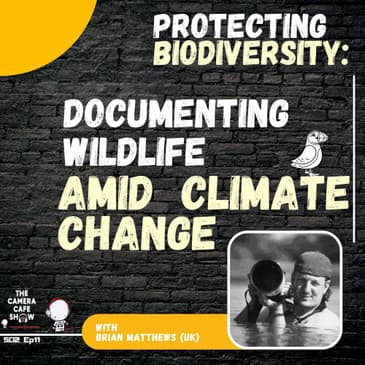

In this compelling episode of The Camera Cafe Show, host Tom Jacob sits down with renowned wildlife photographer and nature conservationist Brian Matthews. With over two decades of experience capturing the beauty and fragility of our planet's wildlife, Brian shares his transformative journey from the nuclear industry to becoming a passionate advocate for nature conservation.
Brian discusses the critical role of wildlife photography amid climate change and how his images powerfully raise awareness about climate change and biodiversity loss. He explores how his work documents the delicate balance of ecosystems and the impact of human activities on wildlife, including his latest project, "Genesis," which will be a book for the UK schools to educate about climate change and the beauty of our planet.
Brian’s work, showcased at events like the UN’s Climate Change Conference (COP21) and multiple prestigious photography competitions like being Highly Recommended in the Wildlife Photographer of the Year a few times now. He will share invaluable practical tips for aspiring photographers on improving their chances in major wildlife photography competitions like the Wildlife Photographer of the Year (WPOTY).
Some Key Takeaway Moments in Brian's Episode:
· Climate Change Impact: Discover how Brian uses his photography to document and communicate the effects of climate change on wildlife, emphasizing the need for urgent conservation efforts.
· Storytelling Techniques: Learn Brian’s techniques for creating compelling images that tell impactful stories about wildlife and the environment, balancing aesthetics with important scientific messages.
· Conservation Projects: Brian discusses his key conservation projects, including efforts to protect endangered species and critical habitats, and his upcoming educational book project for UK schools.
· Tips for Aspiring Photographers: Brian offers practical advice on pursuing a career in wildlife photography, including tips for entering major photography competitions like Wildlife Photographer of the Year.
· Future Vision: Gain insight into Brian’s vision for the future of conservation photography and his hopes to inspire the next generation of photographers and conservationists.
Join us to gain expert advice on wildlife photography amid climate change, including Brian’s approach to capturing compelling stories through his lens and his vision for inspiring future generations of conservationists.
The Transcription of Brian's Episode is Available on our Website Here.
Enjoyed our show? Support us with a $2 coffee! 😉
Check out more of Brian's work:
Instagram: https://www.instagram.com/bwmphoto/?hl=en
See Brian's picture in WPOTY: https://www.nhm.ac.uk/wpy/gallery/2023-storm-warning
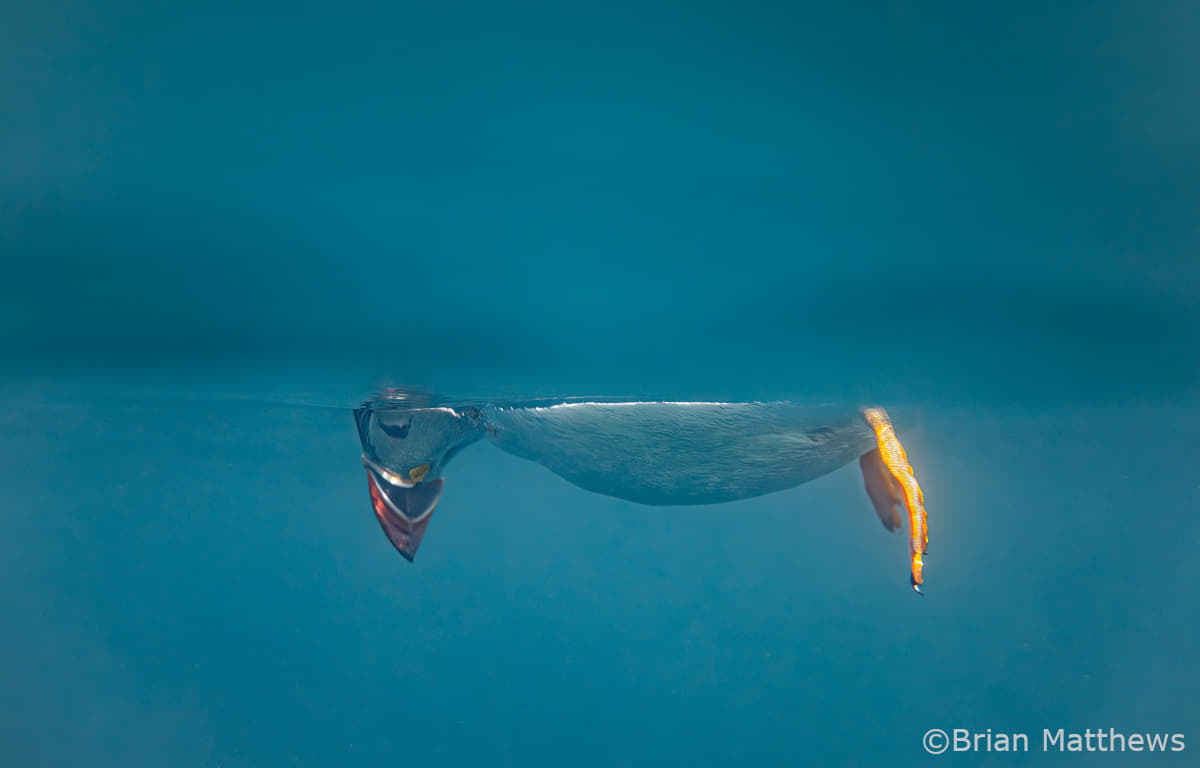
Buy a Puffin print to support the Wildlife Trust: https://bwmphoto.myshopify.com/products/puffin-meadow
Facebook: https://www.facebook.com/bwmphotowildlife/
Twitter: https://x.com/bwmphotoUK
Connect with The Camera Cafe Show and don't forget to Follow and Subscribe:
Website: www.thecameracafeshow.com
Twitter: www.twitter.com/CameraCafeShow
Facebook: https://www.facebook.com/thecameracafeshow
YouTube: https://www.youtube.com/channel/UCgwLbH5yWiYYd-dFeu1s_vQ
Got any questions? Email us
Thanks for listening and look out for our next episode!
[00:00:00] Slightly more interesting, or not a more interesting, more fun things. We spent a week on St Kilda, which is known as the islands at the edge of the earth, which are the most westerly point in the UK.
[00:00:11] So you have to get to the western isles of Scotland and then keep on going west to get to St Kilda. And on the island, in addition to 300,000 puffins, many, many gannets, fulmers and all the other seabirds that you see, there's basically a million seabirds on the islands.
[00:00:29] There's one snowy owl called Sned, who got presumably blown off course from Greenland somewhere like that and has lived on the island because there's very, very large mice that live there that are endemic to St Kilda. You get a St Kilda film house.
[00:00:44] And, thus, he's probably the loneliest owl in the world. So you pick up these weird and insightful stories. Greetings everyone and welcome to another episode of the Camera Cafe Show, your go-to podcast for all things photography with some amazing guests.
[00:01:03] I hope you all had a marvellous week and you all have been very busy with photography and growing new skills or mastering old ones. I'm your host Tom Jacob and thanks first of all for all your folks, writing us emails and leaving us reviews.
[00:01:16] It's amazing to hear you're all enjoying so much the show. Today we were able to capture for you, never better said, and take him out from floating in the waters around the Farn Islands in the UK with his camera and some puffins for a talk with us.
[00:01:31] The renowned wildlife photographer and passionate nature conservationist Brian Matthews. As you can see on the social media accounts, Brian is known for captivating nature images from all those wild places around the world and his innovative thinking in underwater photography.
[00:01:48] Shooting pictures for almost 20 years following the path of animals for book projects or assignments, being published along the way in numerous magazines. Brian was also, and again, highly commanded in the prestigious 2023 Wild Love Photographer of the Year competition.
[00:02:06] Today we'll explore Brian's unique journey from his early days with an engineering background to becoming deeply committed to conservation efforts in and outside the UK, using his art to raise awareness and inspire action to protect our natural world.
[00:02:20] So grab your favorite drink, sit back and get ready to be inspired by Brian Matthews on the Camera Cafe show today. Let's get rolling. Good evening, Brian, A.K.A. Puffin Derry. You made me smile when I read this on your Instagram profile. Evening to you as well.
[00:02:38] Unfortunately, I can't. That was one of the UK papers christened me that a few years ago. I think it was either the Daily Mirror or the Daily Star, which are tabloid newspapers that like to run my photos quite frequently.
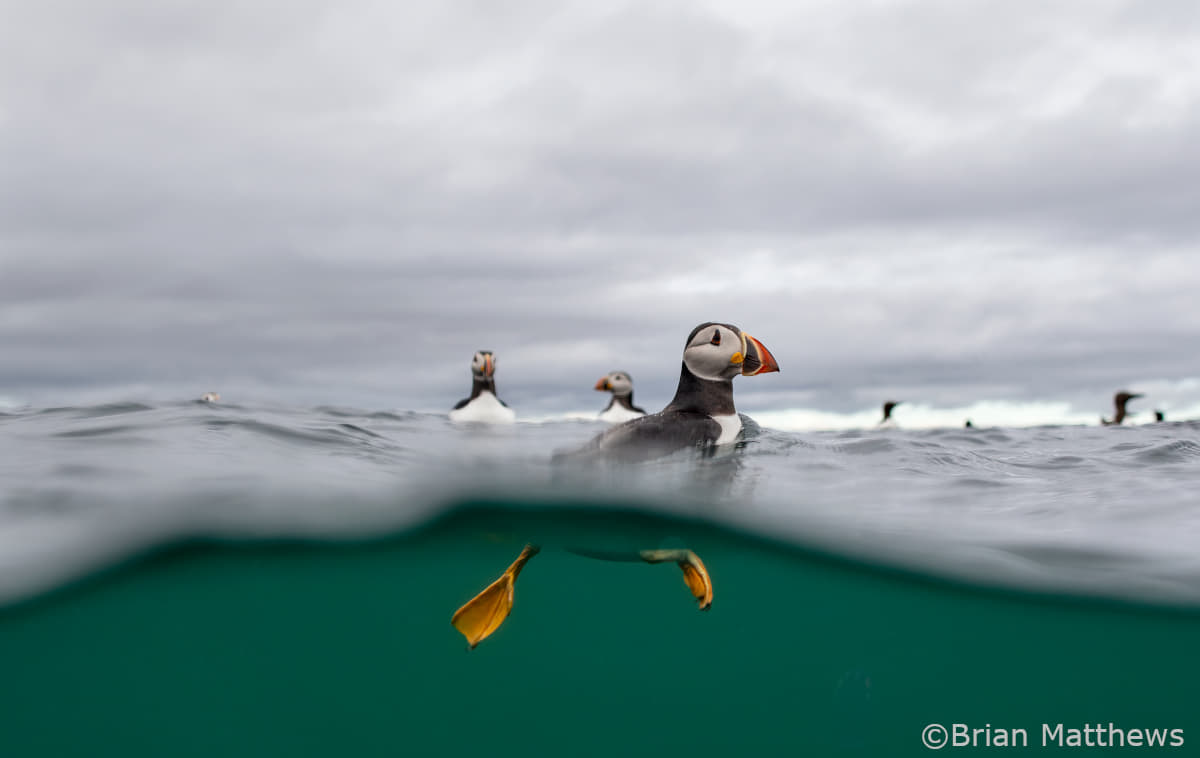
[00:02:54] So they picked up on that and enjoyed the puffin decoys and one with puffin, daddy. I was going to ask, have the puffins been behaving this week while you were floating in the sea, Brian? The puffins have been great. The puffins, Gilly Mott's and Razor Bulls.
[00:03:09] At the minute there's lots of really young puffins about. They sort of come around. They're not breeding, but they're trying to find a partner. And as I found out yesterday, a few of them thought my puffin decoys might be an option, but they eventually left me alone.
[00:03:22] But I literally had puffins within 30 centimeters of me yesterday. It was pretty incredible. Okay, we've come back to this amazing story a bit later in the show. But now, Brian, we're going to start with highly commanded in the prestigious
[00:03:37] wildlife photograph of the year and having your image storm warning in this exhibition that will go around the globe. We will also talk in depth a bit more later about this, but I want to know what goes through your head, Brian,
[00:03:52] when you get the email or they phone you to say you have been selected. But it's pretty amazing to be selected out of that volume of people. I think there was nearly 60,000 images entered and ultimately they pick 100. So it's pretty special just getting in.
[00:04:11] I've been lucky enough to be in three times now recently. It's been very, very tough to get through. And what was really good and we'll talk about a little bit as we go through
[00:04:22] the link with climate change and the work I've been doing around the UK coast and islands to talk about the impact of climate change, global warming and the need to do something about it. The image had all the qualities of being a good image
[00:04:37] and being a really poignant relevant story at the time. It was taken during that very, very hot summer of 2022 where even the UK got warm. It actually exceeded its hottest temperature, got over 40 degrees and all of those temperature and weather related changes resulted in this bizarre tropical storm
[00:04:58] of the Scottish coast. So it was actually between two islands, Mull and Tyree off the west coast of Scotland a bit north of Glasgow. And I wasn't expecting to photograph a tropical storm. I was trying to photograph basking sharks but we didn't see any.
[00:05:13] But you just always have your camera out, don't you? And I was fortunate enough to press the shutter at the right time and ended up with a really impactful shot that has gone from the National HIST Museum
[00:05:25] all around the world and was actually at COP28 last year as well as part of the UK delegation over there used it, talk about climate change, net zero and the need to do something about it.
[00:05:38] So it was nice to see it having a positive impact in that way. You see, we always have to be ready with our camera a bit because it can come at any moment, Brian, good picture. Yeah, and equally so we've all missed many, many good photos from Robin.
[00:05:54] Exactly. Brian, I'm going to read this a moment because it says, your working life brought you senior roles as running of nuclear power stations, developing plans for new nuclear energy projects, teaching and inspiring people into the fusion of science, technology and engineering,
[00:06:11] founder and managing director of Terra Ursa, a company focused on climate change. So the question, Brian, your wildlife photography, it came as a result of things you saw in your work or you have been always fascinated by photography as your kid?
[00:06:30] No, I've always, well, I've always been fascinated by wildlife. So I think when I was about four years old, my parent lived near a farm and there was a gardener on the farm called Jack and he gave me a bird book
[00:06:46] and I've still got it actually in the other room. And ever since then I've always had an interest in birds and my dad was particularly interested and I remember climbing up a ladder when I was about four or five and looking into a barn owl box
[00:07:00] and ever since then it's been a factor in my life but didn't become really important until I finished school, I went to university and as the little intro suggests that I did more of a sort of scientific background so I've got a physics degree after I finished school
[00:07:18] but after that I went travelling, bought an SLR, so first proper camera back in the good old film days and some travelling focus on wildlife sort of linked it to my bird watching and that was in 2001 and then it sort of perpetuated from there with me
[00:07:34] either doing lots of photography or doing work in the sort of science and engineering world to save up some money, to buy some more camera kit and vice versa but I was just fortunate enough to be able to weave the two together
[00:07:48] and about I've, I should say I've not worked on a nuclear power station quite a number of years but I was lucky enough to be part of the team that ran one really, really interesting as you can imagine from an engineering physics point of view
[00:08:02] but with a backdrop of a climate change positive benefit and I've been able to then weave the two, the photography and my knowledge in that area together into various projects working with various people like linking COP28 to the National Hitch Museum
[00:08:19] and having that climate change imagery and storytelling as an important factor in what I do. So we are talking now about 20 plus years wildlife photography in Brian more or less so you have in the meantime visited multiple countries, you have won a lot of awards
[00:08:40] you've done multiple projects we will come back to them later You have noticed in all these years a change in wildlife yourself? I've certainly seen a shift in species and numbers of species and weather found but also the sort of more general impacts of climate change
[00:09:01] either being sort of the change in weather patterns the retreating of glaciers, the reduction of snowfall and the increase in rainfall the warming of the seas you know might not feel like it in the UK when I'm diving in sort of 13, 14 all the way down to 10 degrees
[00:09:20] but last year at one point the sea off the west coast of England was heading towards 20 degrees which is just unheard of and of course that has an impact so one of the things we've observed and we talk about a little bit is as seas warm fish move
[00:09:41] and the easiest way for a fish to move the likes of certain temperatures to move down but if birds feed at the top of the water and can't dive like a bird called the black-legged kitty-wake it can't get access to that food anymore
[00:09:57] and it's those sort of things that we've seen over the last 20 years you know really simple example could be linked to climate change linked to natural sort of movement of glaciers but the Fox Glacier in New Zealand on the west coast of the south of the island
[00:10:16] I remember visiting that about 12 years between and the car park had moved like a kilometer up the road type thing so you see a lot of these observations as you go around and equally so the image in wildlife photography
[00:10:30] you know I think if anyone had told me that in 2022 the UK would see temperatures over 40 degrees and you'd be recording tropical storms off the west coast of Scotland you would have said you're a lunatic but the fact is it was
[00:10:46] and you can almost directly line it up with the increasing concentration of calm dioxide and other greenhouse gases in the atmosphere so we do see stuff and I think sometimes the images can add something to the storytelling and make it a little bit more relevant
[00:11:09] one of the big shifts I've seen personally is the need to sort of have video alongside the image you know some sort of document of how you did it, what it looked like type thing and that then again supports the climate change story
[00:11:24] we managed to get some video of the storm in storm warming literally engulfed the boat we were in into like one of those typical you've ever been to Singapore or Malaysia, Thailand that sort of area
[00:11:36] where you get these incredible just delusional like literally the water drops out the sky it was like that across the boat and it was pretty warm war so it was been unusual but we have seen quite a lot of impacts
[00:11:48] as a result of some sort of climate change it was hard to quantify because climate's assessed over 30 years you know it's not in 2023 we saw a temperature increase of 1.48 degrees against free industrial levels but it could be a blip
[00:12:05] it probably isn't but climate's going to be assessed over decades rather than individual years and if we talk about animals in itself Brian you have, because I remember when I talked to Moose Peterson that of course he shoots longer, maybe 40 years
[00:12:23] I remember that he has in his files pictures of birds in his case that don't exist anymore now yeah yeah so well certainly even in the UK I've spent a lot of time photographing common starlings in their massive memorations you know when they dance across the sky
[00:12:41] and blacken the sky in the north of England there used to be a number of big starling roosts and they've literally disappeared and we've seen a decline I think of 85% of the starlings over the last 30 or 40 years in the UK that could be linked to temperature induced food
[00:13:00] changes so they've not got the food or just impact from other things like toxins associated with chemical injuries or cars and even garden birds you know you look at the RSPB do an annual garden survey and there's some science project
[00:13:18] and if you took one bird like the greenfin which used to be pretty common 30 years ago and everyone's feeder the decline on that's been pretty stark equally so the common house sparrow that everyone thinks is everywhere actually the numbers have gone down
[00:13:34] an awful lot and we've seen similar things for different reasons with seabirds so you've got a climate change impact but equally so I've been sort of chasing the bird flu pandemic around the UK and I was in South Georgia before Christmas
[00:13:50] and unfortunately saw it move through South Georgia and that ultimately came from a duck farm in China I think best part of 20 years ago so it's all just moved around the world so you see in these human impacts with climate change alongside a number of other things
[00:14:06] in truth I think one of the biggest impacts on wildlife I've seen is habitat loss you know you'll revisit a place and it'll have starkly changed particularly when you go to India or Africa Madagascar was pretty bad
[00:14:19] you know you just there's just nowhere for the animals to go in certain places and that's getting smaller and smaller and smaller and that's probably the thing I see the most and one of the best ways of course to tell a story like this is not
[00:14:32] in single pictures but in projects and something I wanted to discuss a bit also with you Brian because you did many projects list us a bit through the ones you remember the most except for the Genesis project we will come back to this one later
[00:14:49] well over the years I've done a number of things with and we're going to talk about my work with charities and NGOs but often they're quite project related so looking at how things change so I actually met with the orangutan foundation last week in London
[00:15:05] quite a lot of work with them about 15 years ago and that project was around how you give sustainable livelihoods to people who live in Oniya forests to remove the need to cut the forest down and this included digging ponds to allow them to have fish
[00:15:27] so they had something to eat and equally so something to potentially sell and that then resulted in a bit of a buffer onto the forest and an opportunity for the orangutans and other species in this was in Southern Borneo and Kalaman Tan Indonesia inside
[00:15:43] in Tanjuan Putting National Park and a place called LeMando and to see both the sort of conservationist work the work to try and support the local communities in a positive manner and then either the development of forests to support orangutans sun bears, monkeys, gibbons, clouded leopards
[00:16:07] which was recently spotted in one of the areas they've been working in that's been really really cool so I enjoy particularly doing those sort of things some of the things that I've started and not succeeded with a few years ago we start a project called The Last Eight
[00:16:24] which was around photographing and storytelling on the last eight bear species so we started working around that we were working well with polar bears I was in Canada and then I came back on the day of lockdown
[00:16:41] in the Covid pandemic in the UK and that project hasn't restarted though I have started reading a new book about a journalist who's just travelled and recorded the eight bear species in the socio-economic value the impact from a conservation point of view
[00:17:01] how they're held in, regardless of the local communities etc so it's been a bit of an inspiration that after this project that we're going to talk about in a second I might rekindle that one and see if there's something we can do
[00:17:14] particularly if we can get some support from a foundation or something to work on that and then I mentioned the bird flu I did some work both on seabirds, geese in the UK that wasn't particularly nice that was taking photographs with dead birds too
[00:17:32] and that ended up in a BBC article so we do, I try to do little projects alongside something quite large and then have a bit of an overlap as well where you get a bit of mutual benefit for them both
[00:17:47] and then see if there's a step towards another project so the project we're doing at the minute in the UK hopefully will lead to another project which we'll talk about too in a second So Brian, when you start a project
[00:18:02] you already have like a certain audience in mind to who you can publish it or you keep them like personal projects and you look for the funding afterwards It depends, sometimes I'll get invited to do things that then either grow or exist as a sort of project there
[00:18:23] more often than not, certainly with this UK project it started actually as a result of the bear project finishing only being able to travel in the UK so it was out of opportunity but sometimes there is a sort of real endpoint
[00:18:38] with a personal project like The Last Eight where I would try and get either funding through images during the project or ultimately culminating in something of use at the end which would be say a book or a short film or something like that
[00:18:59] Would you say that even a little thing would make an interesting story you would work on? Yeah, I mean during lockdown I spent a lot of time photographing things in a garden just while away the hours a little bit but also when you start digging into something
[00:19:19] and spending time on something you learn a lot, you develop photography techniques you identify lots of little bugs even in the smallest gardens you'll find hundreds of different things attached to different plants and under different stones so you can identify all sorts
[00:19:36] I'd always advocate to people if they're one of the things we're going to talk about is how would you suggest people get images good enough to have a chance of getting into big competitions like wildlife photography for the year and certainly if you're not lucky
[00:19:52] like you and I have been to travel a little bit and see the world a little bit and you've only got your backyard or your local area if you spend the right time doing the right stuff in a small area you'll get surprisingly good results
[00:20:05] and you don't need amazing camera kit either so I think really focusing down on something you'll be surprised at what you can do and find and get a little bit of inspiration from so even the small things are quite good
[00:20:20] and I spent a lot of time as I mentioned doing starlings and that then resulted in working with different charities on how they've been impacted over the years and these other things the pure art of the images but it's nice to have something at the end of it
[00:20:37] even if at work with the National Trust of Scotland I did as part of the Coastal Islands project was just being able to support their storytelling and educational work and engagement with images, stories and video sometimes that's enough as long as
[00:20:57] you're getting a little bit of money along the way and how have been your experiences with working with charities and Geos, Ryan? It varies if I'm honest I think if you can get yourself in front of them in person you have many many many more times
[00:21:17] chance of doing something with them I think nowadays getting your message in front of the right person is really difficult even if you're fairly well established and you need to use the links the best you can and it does vary
[00:21:35] in general the larger the charity the larger the NGO it's much much harder to get in and find the right person to talk to that's why sometimes some of the sort of government trade events or like the bird fair in the UK
[00:21:48] which is a big sort of wildlife holiday charity nature event going to things like that and talking to people I find is the best way of doing it and the only other thing is a bit of speculative sometimes you get the odd email based on social media
[00:22:05] so as an example recently the National Hist Museum of Iceland has been in contact with me to use some of my puffing images and videos for a project that they're pulling together there that was directly through a social media channel then an email
[00:22:24] that happens a bit but not much if I'm honest and I think you have to be pretty well established and have some very very good images to do that and and hope the weird algorithms on social media work for you
[00:22:36] which 99 times out of 100 they do not work for you so you have to be real clear one of the things I would say is develop yourself for a rate sheet so how much you charge for either image use or use of your time
[00:22:53] and lots of charities and NGOs will ask for that rate sheet they'll give you some feedback on it so if you say you're £12,000 a day and you're going to work for a small charity they'll say that's probably out of our budget
[00:23:10] but there's a bit of a balance there so you have something you're going to stick with and be very very cautious about giving your images away for free I am mesmerised that well established websites, companies, NGOs and magazines still offer image use for exposure
[00:23:34] I got an email the other probably about six weeks ago with a magazine that wanted to use again it was the Puffin store and I said can you send the contract terms of reference and pricing, should I deal over and this was a photo magazine said
[00:23:50] we don't have a budget for photo projects I was like oh that's quite interesting you don't have a budget and they were like oh no we rely on exposure and I'm sure you've had plenty of those you do not get any exposure from these things
[00:24:05] so anyone who gets an email saying you do not get any exposure you will make no money out of that exposure I can promise you so avoid it like the plague I actually got really grumpy it sort of technically drifts into the modern slavery act
[00:24:20] but that's a separate conversation so yeah it really annoys me that sort of thing that's very disrespectful but that's life so face to face, develop a rate sheet and just keep on trying and get ready for 99 failures about 100 unless of course you talk about a charity
[00:24:40] that is maybe close to your heart and you want to do something and help them out maybe they can give you a special access to a place you cannot get sometimes No I totally agree I've done work with a number of charities
[00:24:53] where you get access as a result of working with them that you normally wouldn't and you've just got to figure out if that's worth your time and then giving them the images you know I'll always say commercial companies, magazines etc always have to pay but
[00:25:11] in certain cases when the charity is worth working for reducing your rates is a good thing but if it's WWF and Greenpeace the answer has always got to be no because they've got plenty of cash so there's always a bit of a balance
[00:25:28] but there's no problem in helping if you help all yet you won't be putting food on the table Of course Brian which animal is now still on your list or maybe a project Well in general the bear stuff was really important because I've got real affinity with bears
[00:25:48] I really enjoy watching them filming them taking images of them learning about them working with people who work with them and that was one of the reasons I really pushed into that project and the spectacle bears on the list which is the only bear that's in South America
[00:26:05] it has a bizarre link into the UK and it is Paddington bear even though Paddington and the spectacle bear look very very different that's really up there on the list and then equally so the Asiatic black bear or Moon bear very very difficult to see
[00:26:22] except in bear bile farms in some parts of Southeast Asia I'd love to see that and then we were going to have a chapter called It's Not a Bear in the book and that included the red panda which you can find in sort of Eastern India Bhutan
[00:26:41] sort of north of Bangladesh a Sam area into Maya and into China and that sort of area that's very high on the list and despite spending probably years in total on the water I've never seen an orca and I'd love to see an orca or kill a whale
[00:26:58] I've tried and failed many many times and seen many many other whales and dolphins but I've never seen an orca so I'd really really like to to see that and that would be absolutely amazing and then maybe the giant salamanders in Japan just because the completely bonkers looking
[00:27:16] these are like massive amphibians giant lizard things that live in the rivers in Japan and they're very very strange things I'd quite like to see them if I could but I could probably spend a whole podcast talking through various animals that I'd really like to see
[00:27:33] because it's just fantastic and some of them are higher priority because there's a real risk that they might not be there by the time I get round to trying to see them so there's a bit of a potential prioritization there as well
[00:27:46] I see you're making still a lot of little decoys, I see you're still making a little decoy orca to follow your work yet I'm not sure if I'd want an orc 30 centimetres away trying to mate with a decoy I think that might be foolhardy
[00:28:03] I'll leave that to someone else you can buy inflatable orcas for your swimming pool so maybe I could Brian let's get a moment back to the wildlife photographer of the year with your image like you said before try to give me some tips for people
[00:28:20] entering these competitions and never seem to have luck or what would be like three tips they could use to enter the image do a bit of research so find out what images have been in the last five books in general if you enter an image
[00:28:39] of the same species that's been in the last five years it has to be significantly better than those images to get to have a chance so one of the examples I got some feedback from the judges who I sort of bump into every now and again
[00:28:55] was there was a phase of people entering snowy owls taken from Canada in the winter and Vaughn Seum Wunni had also entered an owl a few years ago and got in and no offence to most people you're not going to take a better picture than Vaughn Seum Wunni
[00:29:15] so it's all about a bit of research I've got every single wildlife photographer of the year book on my bookshelf and I go through them before the competition just to make sure that you're hedging your bets a bit by picking the right subjects
[00:29:28] one of the really important, so number two have a very strong story behind it so even in the first phase of judging so this is wildlife photographer of the year if they see an interesting image that they're not 100% sure
[00:29:43] as it's an automatic go through to the next round they will read the description so if I has a cool story or an interesting story that's relevant to climate change and global warming or biodiversity loss or people and wildlife interaction or habitat loss
[00:30:02] make sure you write a good description of your image and then lastly unfortunately it is purely about the quality of the image you know it has to have everything going for it and the more it blurs the line between a wildlife image and art
[00:30:23] the higher likelihood of it being successful you know if you look through the last five years of wildlife photography the composition and art section has now sort of infiltrated into the other sections and particularly if you look at some of the other
[00:30:41] competitions, if you look at European wildlife photography the year that artistry has now filtered through into all the sections so it's what next with the camera that said you know these competitions exist to make money so they want everyone to enter everything
[00:31:01] but if you want a really good chance of getting through even to the final stages which is like 100 images per category or maybe the last sort of 1000-2000 images you need something novel new and interesting or much better than the previous years have a good story behind it
[00:31:20] and it has to be absolutely phenomenal as an image and it's a bit hard to swallow sometimes but if you go through the last book and have a look at it or go online and your images aren't as good as those keep on working on it
[00:31:34] save your think so you were saying actually that a good story of the picture is like equally important as the picture almost Brian yes, yeah, yeah something that they can use the big competitions are all about storytelling as much as the image people stop, look at the image
[00:31:56] and then read the story and put the two together and they see that as really important I would make the mistake 10 years ago of entering competitions usually last minute so you've got 2 hours to put your images in you can't be bothered to write anything
[00:32:13] you can't use your option to put some text in you don't bother stick it in so you're only relying on the quality of the image which sometimes works but often doesn't Brian, let's move a bit to the gear questions always people like those
[00:32:30] give me a bit of an outline of the gear you're using nowadays camera kit, I have used that since about the first SLR so I'm using Canon 1DX Mark IIIs and 5D Mark IVs with pretty much all the lenses from 14, 2.8 through to 500
[00:32:50] F4, my main lenses I use are probably my 14, 2.8, my 70 to 200 at 2.8 and my 500 at F4 they're sort of 3 go-to lenses and I don't use a great deal of flash I use F-stop bags which are quite useful for longer trekking type stuff
[00:33:13] they're a bit more comfortable on the back even though there's not really a comfortable camera bag out there certainly not one I've tested I don't use tripods I do have them but they always stay in the back of the car
[00:33:24] because I think you lose a bit of flexibility certainly the stuff I do I always have a pair of like binoculars with me and my underwater stuff that a lot of people are interested in at the minute I used to use the sort of standard diving type cameras
[00:33:40] which would go down to 30 or 50 meters but for the puffing stuff that I've been doing and we'll talk about a second I use Quatek kits and the reason I use Aquatek is that you there's a port available for Aquatek that
[00:33:56] allows me to use my 70 to 200 in the water which is really really unusual for underwater underwater base photography using our in essence a telephoto lens but if you look at the images I've got on the puffings the reason they look so different
[00:34:12] from other peoples is because I'm using that setup and it makes a huge difference but it is incredibly difficult to use in the water because you've got such a tight range of view particularly at 200 the water doesn't stay still unfortunately the puffings don't stay still
[00:34:32] you don't stay still so you have to have the strength to be able to sort of paddle in the water, keep your camera up lots of arms and back and neck and having just recovered from ripping my left bicep it's been a good test over the last week
[00:34:48] getting back in the water with the big heavy kit but I really enjoy the Aquatek stuff because it's light it's quick, it's easy to use, it's simple they've got triggers on them so you're not reaching over to do the sort of standard shutter position
[00:35:04] connects to your remote switch and they've got a longer lens but it's tough but you can use the wide lens stuff with a wider and that's what I've been using for the split image stuff I've been doing over the last week or so Canon still using digital SLRs
[00:35:23] which are those people probably don't even remember them now they're the noisy digital cameras not like the cool, the mirrorless things so I've gone through, sort of slide film through to and now I am thinking about but it's waiting for the Canon R1
[00:35:39] but I've got an awful feeling that I'm probably going to have to sell my flat in my car so it's going to be a tough tough shout I think I'm not sure what to do it's bonkers anyway you think about if you have two R1s
[00:35:56] a telephoto lens and a few other things you'll have like 30 to 40,000 euros in your backpack but it's bonk it's crazy you think about my insurance is £1,000 a year on the stuff I've got now so it's a bit of a head scratcher to be honest
[00:36:16] I am actually looking at Nikon and Sony as alternatives because they're as good cheaper I've got lots of friends who use them by itself it's going to be an interesting few months in terms of looking at the Switch see how the R1s perform at the Olympics
[00:36:31] talking to Canon, talking to Nikon, talking to Sony and then making a decision and then talking to, hopefully talking to Phil at Aquatec because I'm good after I've got four Aquatec hours in this there all 50 to Canon kits if anyone's interested in a second hand kit
[00:36:48] it's fairly well used but I get it serviced all the time give us a shout Brian, if you're out diving and making I suppose you are with a little team you're not alone there bubbling in the water and that's one of the really important things
[00:37:01] lots of people have asked me how I got the shots so over the last few days I've been based out of a place called Seahouses which gives you access to the fun isles working with Billy Shields Boats which is run by William Shield
[00:37:15] who is the son of Billy and I've actually been working with William's son Oliver Ollie and me and Ollie go out in the rip so Ollie is my boat driver and safety man and he does a fantastic job of
[00:37:30] to get me where I sort of lost my bearings and the tides literally just move me 400 meters down past all the islands the next part of call is no way so you need, you cannot do this sort of thing and you know snorkeling in rock pools
[00:37:45] just off the coast and these sort of things that's fine but as soon as you get offshore you need people around you to help and anyone can drop me a line and I'll tell them how to do it I don't keep these things secret
[00:37:59] but you'll know as a diver Tom that the sea is a very very powerful place even in what most people like you and I who are used to the North Sea the people would consider the Mediterranean very benign but it's not
[00:38:14] you only need a bit of wind, a bit of tide a bit of currents, a bit of cramp and then you're in bother so be very very careful about it but we are looking at potentially doing some like tutorial workshops next year with Aquatec
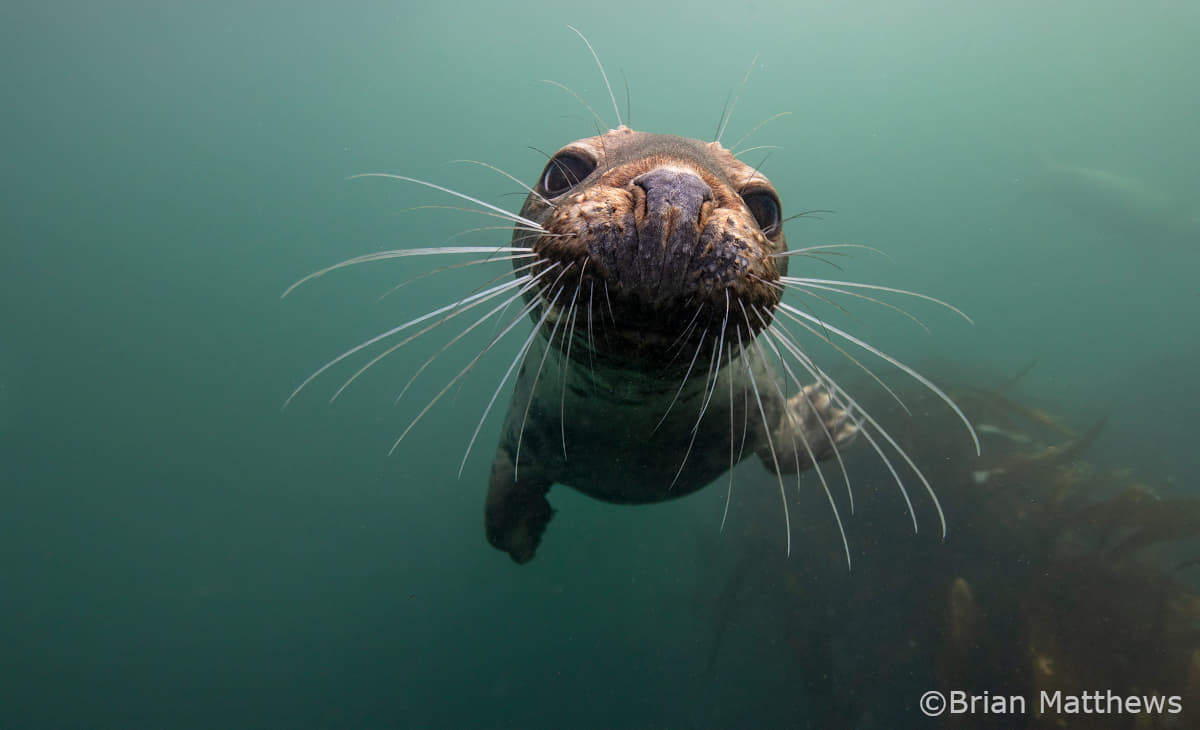
[00:38:27] if I can find a nice safe spot to do some wildlife underwater learning photography might give luck to go which is fantastic for seals in Devon and a very safe spot to go for a bit of a dive or a bit of a snorkel
[00:38:43] I think if you can get a group of already diversy that sounds like a fantastic idea but as you say it's definitely not something for someone who only can swim with a wetsuit because he will end up in Norway Yes, yeah, I think it's
[00:38:58] even if you're a good swimmer like you and I are being in the open ocean is a different experience and I know a lot of people panic when they can't see the bottom they can't see land you have to practice and get used to it
[00:39:12] it's not a thing you can just do but equally so it's an amazing experience isn't it being in the sea is just fantastic Of course and then you have also 1000 curious puffins around you Brian Yes, yeah, yeah, there is that slight advantage
[00:39:29] and I think a lot of people are quite jealous of what I've been doing Brian let's go over to your project Genesis What is the book you want to bring out in the schools of UK concerning climate change
[00:39:46] So this is a project linked to my travels around the UK capturing stories and hopefully a few good photographs and looking at how there's a link between people nature, wildlife and the environment what's happening to the wildlife what's in the UK as well
[00:40:06] if you know people are very surprised when they see some of the images from the great photographers around the UK of colourful fish or otters or seagulls or gannets so there's loads to see but there's lots and lots to learn and we've picked a few interesting stories
[00:40:23] and projects around offshore wind as an example looking at how that impacts wildlife how you can use things like bird nesting towers to offset losses we did some work with the sand eels and the puffins and the recent ban of sand eel fishing in the North Sea
[00:40:47] which caused a few issues in Denmark because that's where the bulk of the sand eels were fished they used them as a protein source for animal feed particularly in the bacon industry it fattens pigs up quicker so it's just an interesting link isn't it
[00:41:04] how a food source for puffins is fished by humans to support the bacon industry by fattening pigs up and you would never think never thought you would see or find a story like that off the North Coast of England slightly more interesting
[00:41:21] well not a more interesting more fun things we spent a week on St Kilda which is known as the islands at the edge of the earth the most westerly point in the UK so you have to get to the western isles of Scotland
[00:41:35] and then keep on going west to get to St Kilda and on the island in addition to 300,000 puffins many many gannets fulmers and all the other seabirds that you see there's basically a million seabirds on the islands there's one snowy owl called Sned
[00:41:53] who got presumably blown off course from Greenland and has lived on the island because there's very very large mice that live there that are endemic to St Kilda you know St Kilda film house and thus she's probably the loneliest owl in the world
[00:42:09] so you pick up these weird and insightful stories similar story on St Kilda we met this group of people working with storm patrols and they were walking up and down the hills and they were walking down the mountains because it's very very steep on St Kilda
[00:42:28] so 300, 400 meter cliffs and they were walking backwards and forwards and they spent 20 days and they walked twice the height of Everest just to try and cap a couple of small seabirds put little radio collars on them and record where they were going
[00:42:45] and how long they were away from you know the dedication of some conservationists these guys were working for the RSPB it's a sort of culmination of all these little stories hopefully giving a little bit of positivity into the world of sort of biodiversity and climate change
[00:43:05] highlighting some of the issues like storm warming you know tropical storms of Scotland the moving of fish and food for the birds and how that impacts breeding stocks bird flu and then bringing it all together so it's more of an educational book
[00:43:23] with very very good photographs and nice stories but also some relevant research that's going on in a minute and the aim is to get the funding to put that into the about 30,000 primary and secondary schools in the UK over the next 12 months so that's the plan with that
[00:43:42] heavily sort of educational bias but hopefully with a bit of a different slant on it nice images to maybe inspire a few people to become rangers, conservationists, naturalists or even wildlife photographers in the future
[00:43:57] and we want to do it in such a way that it doesn't cost the schools anything And how far is the project now Brian? We are talking that you already have like a book form or? Yeah yeah so the bulk of the work
[00:44:10] in terms of images and stories are done there are a few gaps and I don't think I'm going to be able to fill them all this summer so we're probably going to go and ask a few photographers and buy some images of people to fill those gaps
[00:44:23] rather than wait another year and then working with a number of foundations and sources of income to either pull it all together from a single source or multiple sources depending on what we want to do but very cautious of assessing the sources in a proper way
[00:44:41] so you know there's no pseudo link to greenwashing or anything like that as well we just need to be really cautious of all of that and it's a bit of a sad thing that you have to think about these days
[00:44:53] because there's money out there but it has to be from the right place This is an immensely large project Brian Yeah it's probably taken five years I think and hundreds of days in the field hundreds of days of travelling lots and lots of time a few injuries
[00:45:13] a few wet days a few broken down cars and broken down boats and various other things but it's coming to a conclusion now so a little bit more work and we'll hopefully get there And with all these things done with broken cars, broken boats
[00:45:30] with money in the back with all your own money what makes it worthwhile doing it in the end Brian? I think the fundamental bit is that I really enjoy it I get a lot out from being in the field but there's you know
[00:45:46] I spend a lot of time wondering about climate change and biodiversity loss and I think the closer you get to it and the more you understand it having a bit of a science background it can be quite overwhelming and depressing to be honest
[00:46:02] and it's trying to maybe stick something under someone else's nose that can do something more about it than I can because it's pretty difficult and it's not going in the right direction so I think it's trying just to maybe give someone else a little bit of a nudge
[00:46:21] and a bit of a push to say oh maybe I can do something about that and then try and do something in my own little way as well but as I've found out over the last 20 or 30 years it's very very difficult and nothing much has changed
[00:46:36] I mean last year global emissions were the highest they've ever been coal and oil use were 2% higher we produced at 1.100 million barrels of oil in one single day which was the highest ever on record last year so despite all the renewables that are coming on
[00:46:54] despite all the sort of efficiencies that you see in your houses and how much people know more about it the actual on a global scale not much is changing so it's a few little nudges and just inspire people to protect even their little bit of nature
[00:47:10] and that could be let your grass go in your garden a little bit more than you normally would to encourage insects and have a little bit of a wild patch in your garden use your local woods and reserves to make them relevant, make them interesting,
[00:47:24] clear your head, good for your mental health maybe volunteer doing something or maybe be inspired to actually work in that area like many, many young people are at the minute going to university and actually studying climate change and net zero and sustainability and environmental science
[00:47:41] and then move into the world what's interesting is that there's a huge it's quite cool to see lots and lots of young women moving into nature, conservation becoming wardens, working with charities I'm doing a little bit of work with the wildlife trust
[00:47:58] at the minute in south and west Wales and the bulk of their team are young enthusiastic women who want to make a difference and it's very, very cool to see so there is a little bit of hope out there
[00:48:09] but some days when you see the facts and figures it can be pretty demoralising when you understand what they mean we've just had, well we've had the opposite of you, we've had the wettest six months on record, you've had a phenomenally dry
[00:48:23] six months with a bit of rain recently it's all the weather and the climate it's all over the place at the minute and it's making it quite uncomfortable in a few areas I mean a bit of rain in the UK is fine
[00:48:34] but when you can't grow any food in Spain it's a bit of a problem for the rest of Europe yes, it has been a very tough six months here and even not only for us as humans but I can see it very clearly
[00:48:48] making a wildlife of our micro pictures I see it goes backwards and they all need the water so I think we will need the younger generation to read your book and get a bit inspired there, Brian yeah, hopefully that's the aim
[00:49:04] so a few images and stories to make him think wonder and do something about it Brian, I think last time when we talked you had a bit like an unfortunate event with your arm you could not pick up really the heavy camera and you tried shooting nature's pictures
[00:49:22] with your telephone, how did that work out? I'm not going to lie I'm probably like you, I'm a bit of an affectionist and I've got very lucky, I've got an iPhone 15 Pro which is a ridiculously expensive phone
[00:49:36] when in its good fun to take the videos fantastic on them and I do quite a lot of little videos to spot my work in the field but actually when I'm spending a little bit more time taking photographs with it
[00:49:49] and it's going to sound a bit harsh but it's dreadful it's like the quality and whenever you've got difficult light in any shape or form like so slightly darker, slightly lighter, too bright they're not great so if anyone's got any suggestions of a better camera phone
[00:50:05] that you can have in your pocket I've been pretty disappointed with the iPhone 15 Pro the wide angle is quite good fun it does this sort of 0.5 wide angle which gets a lot in the image when you're used to a good quality camera
[00:50:20] and you can zoom in on stuff the great to have in your pocket, the great to do I've been chatting about the Natural History Museum about how to promote getting more young people out there taking images with their phones to enter into the competition
[00:50:33] and for the first time last year phone image got into the last batch of images before the final cut-off so someone got very very close to getting into the exhibition with a phone shot so I think a bit of artistry, a bit of thinking
[00:50:48] a bit more knowledge than I have of these phones and I'm sure you can get amazing shots one of the things I did play with alongside the phone was a GoPro they take much better images and you can get them for about 300 pounds a year
[00:51:06] so if you want to get into wildlife photography and test yourself with a wide angle lens and see what you can do it's a really good way of stepping into it and they're much much cheaper than most mobile phones I'm not sponsored by GoPro
[00:51:21] I think you're using a GoPro now for some images I'm not sure you have like a dual GoPro or something like this yeah so I've set up a rig for my puffing both images and video but predominantly video where I've got two GoPro's
[00:51:38] one that, and I've got a float that's actually a swimming float that you put between your legs when you're training to swim, pull by the cold cut that in half, stuck it on with a carbon pole put two GoPro's on the end with an attachment
[00:51:54] that allows you to put two on and you get images and video above water and below water but you can synchronize them together so you've got the puffing on the surface the puffing under the surface which is basically smashing around underneath and then bringing together
[00:52:12] and that's the sort of thing hopefully that will be in the National Hitch Museum in Iceland in Ekivik so you know have a play with that sort of stuff because you know having something to sit alongside your images
[00:52:25] is really useful and the GoPro's are fantastic at doing it so again if anyone wants some tips and tricks on that work really well because I can actually let go of it and the GoPro stays at perfect flat level
[00:52:37] and the only movement is the movement of the sea which is the same as the puffings anyway so it's a very stable shot as a result rather than trying to hand hold it type stuff so you've just got it and that's trial and error
[00:52:49] this is the first year I've used that previously I've used long poles, stuff on sticks on the camera and that sort of stuff so I will report back on how successful it is but it looks like it's been pretty good today
[00:53:04] and your puffing decoys you should start taking a patent out of something Brian, how well this is yeah some combined puffing decoy there was previously a duck decoy but modified and double GoPro's and stuff like that
[00:53:22] I need to write it all down but I'm sure someone's already done it or someone's copying me anyway people are struggling to find a puffing decoy so it would appear that between me and a guy called David Miller
[00:53:34] who makes them in Wales for a company called Celtic Deep for Richard where the only people with decent puffing decoys at the minute, we've cornered the market you see Brian we still have five minutes I think left talk me about puffings because I really love them
[00:53:51] sell me puffings and moreover sell me the print you have on your website for the wildlife trust yes so alongside all the UK coast and island stuff puffings are obviously the highlight for most people the UK is home to probably a million puffings
[00:54:12] so big chunk of the world's population but most of them live or come to breed in Iceland they're a pretty small bird, people are always surprised how little they are they're only about 30 centimetres long with about a 50 centimetre wingspan so on the water they're tiny
[00:54:29] my puffing decoys are about three times as big as a normal puffing but that doesn't seem to stop and I've been doing a lot of work in Skoma Island in Pembrokeshire and Wales and on the back of that
[00:54:42] myself and the wildlife trust thought it might be a good idea to do a print collaboration so we're working together to try and raise a little bit of money £10,000 which is a sort of amount of money that would pay for a ranger over a season
[00:54:56] to look after the puffings to help the puffings and help the wildlife trust across all the areas they work in in south and south-west Wales and it's not just puffings they work after they do all sorts of work across Wales from reserves on land to other islands
[00:55:14] to supporting educational work to going into schools and colleges giving young people opportunities to volunteer all these sort of things while operating in a very difficult environment of industry closing in Wales understanding the impact of offshore wind in Pembrokeshire and the Irish Ocean
[00:55:35] so they're doing lots of great work so we're trying to raise a little bit of money for them and it might become a bit of an annual thing if it works there's huge opportunities to see puffings around the UK
[00:55:45] so if anyone wants to come it just dropped me like I get lots of emails around where's their easiest and best places to see puffings the fine isles are fantastic in North-Northamland about 100,000 puffings there so that's why I like going there
[00:55:58] so I can bob around in the water in sort of early July, mid-July as they're all about to leave and some days there's tens of thousands of puffings just sitting on the water all having a bit of a chat all getting ready to go
[00:56:14] most of them go north towards Iceland but some of them end up in the Mediterranean there's all sorts of a scatter as they go so they're a fantastic little bird and live alongside some amazing sea birds razor bills, kitty wakes are my personal favourites
[00:56:31] and the Arctic turn that travels tens of thousands of miles between Northamland and the Antarctic every year for up to 30 years so there's loads of cool little wildlife stories that you can learn about as you take your camera to all of these fantastic places around the UK
[00:56:48] so puffings are pretty amazing and the puffing decoy that little project as part of the bigger project has gone fantastically well over the last two years and hopefully I'll have a good next two or three weeks balance between puffing decoys doing a bit of work
[00:57:06] and watching the Tour de France it's going to be a good three weeks I was thinking you were going to watch the football but no unfortunately I've watched some of the football though Belgium haven't suffered much better they've not been very good either so it's between
[00:57:22] England, Scotland and Belgium it's been bit of an embarrassment but who knows the knockout rounds are here to come now and England might turn their fortunes around who knows but I prefer nature anyway Brian so as much rather than the sea than watching a football game
[00:57:41] so the farm island you go there because it's good for diving but for all those photographers who aren't diving what's the best place maybe landscape wise to make picture of puffins to make the best place is probably if you don't like boats Benton cliffs in North Yorkshire
[00:58:02] and the Escarbra is fantastic it's a beautiful landscape the puffins are a bit difficult because they're a bit pointy down but there's lots and lots of gannets there boat trips to Scoma fantastic but as with most of these reserves
[00:58:14] they're during the day but you can stay on the island in Scoma so Drew Buckley Kev Morgan and a few other people do trips on the island so you can book through those guys the Scottish islands are amazing so the Trishnish islands like Lundga, Staffa are fantastic
[00:58:32] Shetland is amazing if you can get that far north Shetland's got an advantage of it is on land once you're there you can drive and walk to the puffins site rather than getting a boat and then the ultimate bird experience in the UK well there's two
[00:58:47] there's Bass Rock which is volcanic cap covered in gannets with a few puffins and St Kilda which is also volcanic which is covered in very, very high cliffs gannets and 300,000 puffins but there's history so much history there it's the only place in the UK
[00:59:08] I think that has UNESCO World Heritage sites both for nature and anthropology and people because of the stories there inhabit that island over the years so there's a few places that are worth visiting if people are interested in puffins but people can drop me a line
[00:59:26] on Instagram or email or whatever and I'll do my utmost to point them in the right direction and I will write you an email for next year we will have to meet up there somewhere you have to go to show me the puffins and then you go diving
[00:59:40] definitely you can borrow a decoy and we'll get you surrounded by them Brian I think we had an amazing talk a lot of things to think about and a lot of useful information I think for photographers out here it's been a pleasure talking to you
[00:59:54] and listening to your stories thank you a lot for coming on the show well thanks for the invite I hope people find it interesting and useful at least a little bit and I'm more than happy to chat ok Brian we'll stay in touch have a nice evening still
[01:00:12] and go support your football team yes I think Belgium is playing at this right moment so I should maybe watch it yeah get off the podcast go over to Elvim, say for garlic brand Brian thanks again and I see you around so folks
[01:00:30] I think that wraps up another fascinating episode of the camera cafe show this dedication to wildlife photography and beyond all of his stunning images it's Brian commitment to nature's conservation which is incredible inspiring to hear and showing us how photography can be such a powerful tool
[01:00:48] for environmental advocacy and try to make a change in our world if you want to see more of Brian's work and follow me around in all of his projects or buy that amazing puffing print to help the wildlife to grow and to help the wildlife conservation trust
[01:01:04] you know check out all his links are in our show notes I hope you enjoyed our conversation today remember to follow us on your favorite podcast platform so you never miss an episode because we have many coming for the rest of the year keep watching our social media
[01:01:20] platforms too since we are upgrading our website soon with much more information and our little podcast team is growing so watch out for this too until next time this is Tom Jacob signing off you keep capturing those moments and we keep moving your photography
[01:01:36] and we see you next time here for another inspiring interview adios