

Dive into the captivating world of Wildlife Photography with legendary Nikon USA Ambassador and John Muir Award winner, Moose Peterson. In this episode of The Camera Cafe Show, we explore the awe-inspiring artistry of Moose Peterson, a renowned figure in the photography community known for his stunning wildlife, landscape images and bring attention to nature conservation.
Moose Peterson’s career spans decades, with 29 published photography books and countless magazine features showcasing the untamed beauty of wildlife and landscapes—from his American backyard to remote corners of the globe. He shares invaluable insights into his remarkable career, the evolution of his techniques, and the profound impact of his work on conservation.
Join us as we delve into Moose's extraordinary journey and learn how his breathtaking photographs and compelling stories contribute to a greater understanding and appreciation of our planet's wildlife. This episode is a powerful reminder of the beauty and fragility of the natural world, and an inspiring call to action to safeguard it for future generations.
Read the Transcript of Moose’s Episode here.
Enjoyed our show? Support us with a $2 coffee!
*****
Check out more of Moose's work:
https://www.moosepeterson.com/blog/
"The Moose Podcast" :
https://www.moosepeterson.com/blog/mooses-podcasts/
*****
🎧 Got any questions? Email us
Thanks for listening and look out for our next episode! 🚀
[00:00:00] Well, end up coming over and sleeping next to us like a dog, literally. Because it thought, I don't know if it's he or she, that between the moms and the one dad that the safest group to be with was us. So, this is a three-and-a-half four-year-old
[00:00:18] that's probably weighing 400 pounds and it curled up literally right next to us. I have a photograph of our guide right there on the ground and right on the other side of him is this goober just laying there. So, that's the big scary bears.
[00:00:35] Greetings and welcome everyone this week to another episode of our Camera Cafe Show podcast. I'm your host Tom Jacob and I'm glad you tuned in today to listen to amazing photographers, their stories and move your own photography. Our guest from today needs little introduction
[00:00:51] as we have a master from the craft and storytelling with us. We move the podcast today to the USA into Montana where on the other side a Nikon ambassador, a John Muir award winner, the epic wildlife and conservationist Moose Peterson is waiting for us.
[00:01:07] Moose is shooting for decades the most amazing wildlife both in the United States as outside has been published in too many magazines even to count and by now has written 29 books about photography. He is also a research associate with the Endangered Species Recovery Program
[00:01:24] and of course a wonderful storyteller. It will be a bit longer podcast but I urge you to stick around until the end because I know it will be worth it. Enjoy our talk. So Moose welcome, it's a great honor and a pleasure for me
[00:01:38] being with you here tonight on our podcast. Well thank you so much I'm humbled to be asked and glad we have a little time to chat. I think it will be a very enjoyable talk. Moose to start off a bit first Nikon ambassadors.
[00:01:54] Could you just detail that a little bit because I think people always think you get all the goodies for free but you still have to buy them anyway. Yeah that has haunted me since day one all that free gear but you know that thing called taxes.
[00:02:12] You know if you sing it logically if you get a bunch of free gear you have to declare that and then you have to pay taxes on it and then you don't have any ride off. So yeah no Nikon ambassador.
[00:02:26] First of all I gotta tell you I have no clue why I'm a Nikon ambassador. I'm quite humbled and honored by it but a funnel too. I'm just an old shooter but Nikon is very kind and has empowered us ambassadors to go out
[00:02:43] as much as we physically can to mentor and inspire and get other people involved in photography. It's really quite that simplistic. It's just getting out and talking and I like to do that as much as possible like we're doing right now.
[00:03:02] I was going to say it's the meaning also of the podcast we started just to get people inspired and go out and make pictures of course and I have to mention your podcast Moose if anyone is interested every week Moose is there on his podcast
[00:03:18] and it gets sponsored by Bedford's camera where you buy all your gear. So that's why I buy all my gear. Yep, so you can give a little shout out to them because I think it's very important to have a shop
[00:03:29] where you can go people that know their stuff. Well Bedford's is a marvelous mom and pop camera store even though they're you know they have many locations they give you basically that very personalized service and because of that they have a great inventory, great prices
[00:03:47] and for those who go there and mention my name you'll see a 5% discount when they check out but more importantly than all that which of course is important and photographers are gear heads whether we need something or not we're gonna go buy it that's our very nature.
[00:04:05] The thing about Bedford's is they've got some marvelous marvelous people who will spend as much time as you want and require to get the answers you need. And as we both know one of the challenges of photography is
[00:04:21] knowing the question to ask to get the answer you need or the gear which is one of the reasons why I really love Bedford's. It's very important. So Moose I want to go a bit back to the 80s when you started out.
[00:04:36] You remember what was the moment you told your wife let's go let's try to make this photography adventure work. Well, it's like much of my career. I would like to say there was that kind of a moment but it was just the way life kept directing us.
[00:04:56] It wasn't like also the light switch clicked on. I was already since as long as I can remember outside. I've never been a great person inside four walls. I do much better outside. So that was already part of my DNA and then taking photographs
[00:05:15] started with my grandfather who was doing it back at the turn of 1900s and then my father and brother and uncle and I mean it's just that was part of the DNA as well. I thought I was going to go into more lucrative let's say
[00:05:32] end of photography doing advertising fashion but that didn't work. So it just the way life evolved for us. The fact that we were going to do it together that might have been click moment but I don't think so since Sharon got her degree in business
[00:05:49] and her senior project was on starting a photographic business. So it just like I try to tell a lot of people who try to get into business today plans are great but life is how it unfolds for me personally
[00:06:03] when I decided I was going to become self employed literally the next day the Gulf War started and this is president number 41 and there was a single person when a critter pictures from you know North America when that Gulf War started
[00:06:22] they wanted pictures of animals you know covered in oil and things like that. So you know right off the bat I put myself you could say behind the eight ball and it just it just taught us the process which we kind of still work through today.
[00:06:37] Yeah, apart from all your awards the winning of the John Muir award. I guess it has a special place in your heart. It's environmental award program focused on wild places and encourage people to connect and care for nature aiming to own the legacy of John Muir.
[00:06:55] What did it mean for you to receive it most well kind of goes back prior to actually being a photographer. There is a long section of backpacking trail that starts in Southern California and goes all the way up to Yosemite.
[00:07:09] It's called the John Muir Trail something that I did with my father. We did about 500 miles a year backpacking it and we had walked the entire John Muir trail and I read all of his writings.
[00:07:22] He's a marvelous writer and I don't know how many years I have to do the math. I can't think of it right now but we started off Sharon I throwing slide carousels and projectors in the back of the Camaro and
[00:07:35] we drove up and down California getting paid $25 to go speak to this Audubon group with that Audubon group for their evening programs. We did that for many years and then the Sierra Club had us come to
[00:07:48] Yosemite and we would spend as much as 45 days at a stretch in Yosemite Valley and I would do evening programs for the Sierra Club and the whole idea was to get people involved with their wild heritage.
[00:08:02] So the John Muir Award was a culmination of doing that for many years, many miles, many hours presenting and it was just a really nice way of saying all your efforts are appreciated and have been noticed. But you know wildlife photography requires a lot of
[00:08:20] patience and persistence and I think you are an advocate for the photographer not interfering with the animal just waiting and let it do a thing. Yeah, I don't chase critters. I let them come to me on their terms.
[00:08:36] I kind of liking it like being a guest at someone's house. When I go out I feel like a guest in their world and I try to be the best guest I can be and then they they tend just to let life unfold and that's where the photographs
[00:08:52] happen. And how you stay motivated because what we are missing always is time and I guess you will spend a lot of time waiting. Yeah, people think wildlife photography and myself particularly have to be really patient but you just ask my
[00:09:08] sons you'll find out not really that patient. When I'm out there it is a true love affair watching what's unfolding in front of me always fascinates me questions always come to mind. I worked for decades with biologists pretty much hand-to-hand
[00:09:26] all the projects and I think especially my mentors I drove them nuts with all the questions that I would have but that's how I got the honorary you know college degrees was being out there and asking questions and one of my
[00:09:42] biggest honors is one that no one really knows about and that's I was put on as a part of the group who wrote the first multi species federal recovery plan for endangered critters. So you know it's I say motivated because I'm always
[00:09:59] asking questions I ask questions of everything whether I'm woodworking or trying to you know I put a new firmware and a camera to a new beta software I'm always asking questions and the reason simple I just want a better way to
[00:10:17] tell a story because our critters are disappearing and I don't my photographs to be the last record for any species. Going back to the story side moves aside from all the technical aspects we have to come over as photographers what
[00:10:33] you think sets apart and be an exceptional wildlife photographer you think it's telling a story more than just making a picture. Well one of the beauties of photography no matter the genre is that we have the ability to insert ourselves into that photograph the biggest manipulation of any
[00:10:53] photograph is is our heart and our mind. And it's just like again none of those many fortunate things that that unfolded in my life and my very first teacher I guess probably elementary school who was given the first lessons about how to write.
[00:11:10] She was very insistent that to write about subject you have to know that subject and it's one of those lessons that I took the heart. And then it's something that I really apply myself to especially when it comes to critters.
[00:11:25] You know they do so many different weird bizarre things and not that I or anybody is going to know all the answers about what we're seeing but when you have some sort of a hand or idea what might unfold in the next few seconds or minutes.
[00:11:43] A lot of times for myself puts me in the right space place and frame to make that click then bring back whatever that story happens to be and I've been doing it for a long time so I start off in stills and I
[00:11:59] still stills of my still my main medium is how I think you know I shoot a lot of video most of video doesn't tend to be the the peak of the action or the the crescendo of the story it's kind of like the
[00:12:14] the B-roll most of the time the heart of the issue in the story will always be in those stills. I find it also very important and I see it with every interview I do with photographers me myself included you start in a genre and more like
[00:12:32] wildlife or macro or anything that has to do with wildlife that you start out taking pictures and you become like almost obsessed in the end of learning an animal you saw and trying to trying to understand it and trying to bring this next time into your photography.
[00:12:51] I think it helps a lot and I tell it always to people that the first thing you have to know is is the animal you're going to make pictures of it helps really a lot. Well it all starts though also people have to remember
[00:13:03] with your passion if you've got passion for whatever your subject in your genre is that'll carry you through a lot of things and that's really quite a cornerstone to to successful photography. Was while many wildlife photographers they always drawn to very exotic places and you are drawn to
[00:13:24] the American wildlife and more over I think most of Norm most but around your home it's where you like to make pictures is there. That's true. Is there any place you have on your calendar you say you need to go because time is running out
[00:13:42] for an animal or something there. Well you know there are there are lots and every day kind of you know the list kind of grows a little bit I mean just look at some of photographs that come of critters like everything from Scotland to Japan and China Vietnam.
[00:14:00] Borneo I mean I've said it million times I'll say it again you know North America got the shorter than the stick of really colorful critters. You know we do shades of brown shades of gray a couple spots of black and white and we're done.
[00:14:13] You go outside North America and you've got the entire color wheel practically on every single bird in different ways so those colors kind of really get my attention I'm going back down to Costa Rica here I guess in about a month and
[00:14:29] I'm going specifically for the snow cap hummingbird but Costa Rica has got a lot of amazing crazy looking birds and you know we are very color centric species as humans and if you want to get someone's attention color makes a big difference.
[00:14:48] So that's that's part of it and then there's a lot of that that I've not seen but keep in mind that moose does not do well in heat and humidity that you know even though I really want to see those birds the idea having to shower multiple times
[00:15:05] in a day because it's just pouring out of me. I really go where it's minus 40 then so that's that's a little bit of a barrier for me is that now heat and wet wall. Costa Rica is also very good for macro.
[00:15:20] I think you should take me with you moose. It's a lot of tiny little animal shore. Then last time I was there which has been a number of years we put out a light cloth at night and
[00:15:33] we had a lot of fun with all the insects that came in it's it's just a biodiversity explosion when it comes to wing critters be it insects or birds or mammals. I have to go because I see too many pictures
[00:15:49] of such amazing crazy tiny animals have to be there. Moose let's go on to the gear question because I think photographers that listen are waiting for that. I think moose you are one of the first ones who embraced digital or first wildlife photographers
[00:16:05] who embrace digital know with an icon D1 I suppose yeah 99 I was yeah 99 and now you've gone all to mirrorless. Yeah we are we've been completely mirrorless now for 14 18 months. What's the biggest step that made you go all mirrorless was a couple things the first is that
[00:16:30] with a flip of a lever without even removing my eye from the ELV that I can actually go from stills to video and for my aviation work for example that ability to have the camera up against my eye so I use proper hand holding and I can shoot
[00:16:50] video and stills seamlessly back and forth. That was huge. The next thing about mirrorless is the weight savings smaller size. You know I hate the this whole idea of getting old I don't know who invented it they should have their head examined but you know I used to
[00:17:09] really like carrying really heavy backpacks and photo packs and I don't like that anymore. So less weight is great. The other thing is that you know mirrorless has is taking the whole sharpness quality of file to another level the mirrorless lenses that
[00:17:29] are now offered for the Z 9 Z 8 would have you or just I can't get over the like the Z 600 f 4 or the Z 50 1.2 the what's coming out is just absolutely spectacular. So all of those things combined just and the one
[00:17:49] thing which to be honest with you which has absolutely nothing to do with the file or the photograph or the story but the one thing I absolutely just love is the fact there's no slamming mirror noise anymore no clickety
[00:18:05] shutter noise you know you shoot and I can still listen to the birds or the water there's absolutely no interruption to that sensual overload that comes when you're when you're outside and I really really love that I mean when I go somewhere
[00:18:23] and those other shooters and I hear that clackity clack of a mirror it always a little bit jarring to me and it's like wow you know for 30 plus years I I listen to that and I guess I just tuned it out because I didn't have a choice but
[00:18:37] boy that silence it's golden. I think many wedding photographers will think the same in the church and golf photographers because now they can photograph that backswing was I do a gear list question but there is no use because everybody I mean if you look at your website you
[00:18:55] have it all such marvelous detail there your main lens this I would like to know Moose what you use the most nowadays. Well it's still probably gonna be the big glass the Z600F4 that's my main quitter lens and it's
[00:19:13] probably very few days out of the year that I'm not behind it you know I was out shooting with this morning and yesterday I mean it's a very valuable tool so but if you head to the to the website and you look at the picture at the
[00:19:30] top of my locker you'll notice I really don't have a lot of gear when I take clients out shooting I'm usually low man in the totem pole and it comes to amount of gear it's simple business right there's a lot of gear I would
[00:19:45] just love to have but it's not gonna pay the bills and so I can't justify having it in my locker so I have just the tools that I need to tell my story and no more. And I think this comes with your craftsmanship
[00:19:59] also Moose because if you go out you just don't know which tools you will need. Well we like to think we know but there are many times that I'll grab the first lens I go and I have to go back at another lens but yeah you
[00:20:15] hit it on the nail head craftsmanship is a big part of it for sure that's part goes back to my old schooling when you know you shot a slide and when you went click you're done there was no there was nothing else and you could not
[00:20:28] stay in business sitting in that 35 millimeter slide with a bunch of silver tape on it cropping down the image to say this is really the picture you had to be what you saw inside that cardboard you know mount so that very true economic pressure
[00:20:45] right because without a sale is no check out check yeah nothing that everybody knows what happens if you don't have any money so that has carried on and I still go by those same things today with digital. I don't crop and post people always find that
[00:21:01] hard to believe and they wonder how but it's it just it's just how I was trained it's how I shop for decades it's how I think and it's also the knowledge that if I don't get the photograph the sun will still come up tomorrow.
[00:21:18] So it's I try to make every click count. It's very important this thinking of course you don't crop because we are playing with wildlife and wildlife can be very finicky of course and you need the right tool to make the
[00:21:32] shot I mean if not you people just can crop in edit of course it's each is his way but I was wondering was you you enjoy the editing part do I enjoy it there is I wouldn't say something I look forward to I mean even though
[00:21:48] Photoshop is the adult video game you know the whole process is for me at the camera. Now with that said the camera still has limitations for example you know our vision just steering off we can see 14 stops of light
[00:22:06] the camera you know it's at five so if I want you to see all that I I'm seeing with my eyes which are these incredible tools we have to jump through some hoops to make that story come true. I've done a number of classes for Kelby one
[00:22:24] on finishing aviation photographs and it's just that basic you know I shoot for the subject and I finish for the light so if the lights not there then I don't take the picture to start with I'm I don't raise the ISO I'm not that kind of shooter.
[00:22:42] You know I just take it if the light is gone that's just a sign from God just smell the roses and enjoy the moment but if the lights there and if there's a deficiency in that light or the camera
[00:22:56] itself because it has you know it is I call it affectionately the cold heart of bastard doesn't isn't able to get all that information then I will go into post and deal with that and to get to the heart of your question is there
[00:23:12] enjoyment there only in the fact that I guess I in my own mind I've actually won the game I've taken this picture I tend to always look at the photograph and say as I take the picture I can finish this by doing that that and I never
[00:23:30] spend more than two minutes on an image anyway if it doesn't work I just take notes how I failed because that's how I learn is by failing and if I win that's where you could say the satisfaction comes from being in post is the fact that
[00:23:44] the thought process behind a camera actually worked out in post. What can you walk me a bit through on the Z9 with settings you have when you leave home as opposed to you have the same ones more or less active.
[00:23:59] Well just so folks know I publish all my settings for the camera so you can see every single setting on my website for the Z9 Z8 but I do have what I call a null set or a set that the camera
[00:24:12] is always going to be at so at the end of the day I put all my settings back to these settings. So I pick up the camera tomorrow I know exactly where it's at I don't get a member I can't walk
[00:24:25] and chew gum so if I try to do everything I can not to put a landmine out for myself to step on with that mine so the camera the lens will be set so the lens is wide open. Are we typically shoot a wide open the ISO is
[00:24:43] going to be 100 I like to shoot in the basement. The camera will be shot set to aperture priority that way I control the depth of focus the camera in a stepless manner will take care of the shutter speed. I have exposure compensation set to zero and I use
[00:25:02] exposure compensation liberally to tell my story because to me exposure equals emotion. The camera is going to be set to continuous high so it's going to shoot 20 frames per second if if I hold that button down but I do practice so I can just take
[00:25:19] one shot or 20 shots and that's simply pressure the finger and then when it comes to auto focus mode. It's always I should say always wrong word the vast majority of time it's going to be set to 3D and they'll be
[00:25:34] probably put to either animal or bird eye detection and now one thing about eye detection just keep in mind that the camera is not really looking for a retina and a pupil stuff it's looking for those shapes. It's not looking for that exact I and it's looking at
[00:25:49] the pattern of those shapes. So in 3D eye detection for critters and for birds I could photograph a turn around turn photograph a person or a plane and still going to grab the focus for me and that's all cards going to be wiped in the battery
[00:26:07] will be charged. That's basically how my cameras go to bed every night. Of course they're cleaned and sensors been checked. I don't have the Z 9 but it's beast of a camera moves. You think you will ever need something more apart from
[00:26:24] one thing is something else but you do you think you will need something is that well you know I had a D6 and I thought that was the the cats meow after replaced the D5 which I thought was the most marvelous
[00:26:36] camera which you know the F5 the F4 the F3 and I started with an F2 you know I'm not that the guy is going to be able to invent all these great features but boy when the Nikon engineers bring stuff out and I see their
[00:26:52] imagination it lights mine up. So to answer your question directly. I have absolutely no doubt there's more great stuff coming down the pike and they will come up with something that my imagination never thought of but it's a problem that I need solving and they're going to
[00:27:09] solve it elegantly and I mean for quick example the Z 9 has GPS built into it which for some things for what I do is essential when it comes to because I collect a lot of data about critters via the photograph and that location information some different points
[00:27:28] of time can help biologist researchers. Well connected to that is GPS log. And you turn that on the GPS is on and it's going to log all of your your motions and one thing I use that for is
[00:27:45] what I'm doing air to air photo mission I'll turn on when we launch and then I'm going to exactly know where because it's going to keep track of all of the flight until I land again turn off so then you just quickly
[00:27:57] map it you know exactly your everything about your flight and it's like before I would never thought that would be like really cool or I needed it and now I've got it is like wow that's great I need this so that's that's kind of how
[00:28:16] you know after the fact I just love diving in that stuff figure out all these these new solutions for problems that I had that really didn't think about and then applying those things so yeah whatever you know the Z
[00:28:29] 8 that's a great example I had no clue that for lack of better terms that you could shrink down a Z 9 into the package of the Z 8 and and just have a great time rock and roll in other than losing your GPS and you have
[00:28:47] a smaller battery and the small battery only really of text if you shoot a lot of video because video no matter what you've got eats up battery I mean it's just a power hungry kind of process other than that the Z 8 is basically
[00:29:02] a Z 9 in a smaller package I would never thought I would need or really love a smaller Z 9 but I do I love that Z 8 it's a great for lack of better terms dock around camera. It's a wonderful camera and teleconverters you use them and no moves also.
[00:29:22] I have since the very beginning yep and I think now we can finally put to rest this the photographers always think that it might degrade your image quality. We can never put those myths to rest that is that's not that wouldn't be photography because then what we discussed
[00:29:41] we'd have to talk about what good light good stories so it's better to talk about those things but no I've used teleconverters since the very beginning as in since 1981 they're an incredible good tool and as far as the ones for the
[00:29:58] Z the 1.4 the 2x yeah I use them all the time and in there is the quality is it's still spectacular and they still serve a great tool especially when it comes to limiting depth of focus so yeah I always use teleconverters they are just
[00:30:16] a great tool for storytelling. Then let's move on a bit to your storytelling moves. I know you told me in another talk we had you don't like to discuss it a lot but in the years you've been capturing
[00:30:29] wildlife you have on your own files what you told seven extinct species alone which is both sad and it's a big eye opener for what's happening. Well you know they they just as you know seven or eight
[00:30:45] bird species in Hawaii last year were said to be extinct now so the number of critters disappearing is worse than a pandemic kind of state most folks don't realize that since 1970 the globe has lost 50% of its wildlife as in it just
[00:31:07] gone less so if for easy terms of there used to be a million everything now there's only 500,000 and it's it is you know there's a proverb the Japanese proverb that's on all my emails that I think sums up the best you
[00:31:24] know nature can live without man but man can't live without nature. Yeah I'm going to pick you up on the 70s what you just told I had to this week attack for a future podcast with Will Harks who is entomologist from the UK and now works
[00:31:40] in Switzerland and he studies insect migration and he was talking to me about overflies you know these tiny things you know they migrate moose you ever I never thought and he told me that they did a study in the 70s
[00:31:56] and they did a study back now and you know the percentage of how much they have declined just a wild guess. At least 50% 95% 95% moose so we are doing something wrong and it's better we start reversing it as fast as we can.
[00:32:16] Well I did a project back in the 90s with film with the black swift one of the fastest flying birds on the planet and they went we were their nesting cave was at about 3,000 feet altitude and then they would fly up another
[00:32:32] 8,000 feet and that's where they would forage on these high flying insects and they would open their big mouth and catch these insects and then it does they come crashing back down just screaming back into the cave to feed their
[00:32:48] kids and they had to have those insects up there. They weren't going to like feed on insects right outside the cave entrance or in the cave they had to fly up 8,000 feet to catch their prey so yeah there's a lot
[00:33:03] about this world that we take for granted and we abuse and it's going to come back and bite us. Yeah, I was not going to ask you for a favorite animal because you will have so many but there is one a bit related
[00:33:21] to the other question before you feel you have an urge of capturing before it's too late you have one on your list. Well there's actually there's quite a few but there's a lot of critters out there from the Blackfoot or Farret
[00:33:35] to a number of critters out there I'd love to get and photograph before you know I think they disappear. You know I had a should say it makes it sounds as simple as a project for over two decades I worked with the
[00:33:49] Salmon King Kit Fox which is one of the first critters to be listed as endangered here in the United States and and you get attached to things when you spend you know sunrise sunset in a blind watching them and you
[00:34:04] watch the the whole their biology unfold and then you see the you know I had this one photograph of this densite and it's the two adults in seven pups and then you fast forward two years and that entire densite is now parking lot it's all black asphalt.
[00:34:22] So it's no there's there's a lot of critters that I would love to have photographs of and spend time with but that they call time tends to get in the way more often than not than not. But then you always have your nemesis still moves tell me
[00:34:39] a bit about your white tailed hair who keeps escaping your lens. Well we have actually call them a bastard and white tailed hair is it's not in danger anything like that it is actually a common rabbit.
[00:34:55] It's a hair that I spent a lot of hours on snow shoes trying to get photographs of it. I have only two pictures one kind of is smallish the frame and it's looking at me in the second frame is its butt as
[00:35:09] it's hopping away from me but it's it's it's critter it's here in my backyard it's been in my backyard now for 30 years 30 years and I see its tracks. I see it's I see it's poo and I have no pictures
[00:35:26] and some point in time it's going to offer itself up and I'm going to make it even though it might be reluctant to it famous. Your wife is not making fun of you with this snow. Oh my family make keeps me humble by making fun a lot
[00:35:41] of things that I do so yeah this is just one of many things that dad gets to eat crow about moves if you have to choose between going out for the burst of going out for a mammal which one you choose.
[00:35:56] Well I'm very fortunate I don't have to make that choice but it would be birds probably you know I've been into birds since I was eight years old so it's you know the one thing about mammals you just can't just walk
[00:36:13] out your door or you just can't just drive to some place and you're just going to see you know you just can't drive to say oh there are grizzly bears or who there's pronghorn you know mammals are not as numerous
[00:36:27] and they're not as just not as plentiful where birds you know you can see them anywhere and everywhere so that's probably why I have always been into birds you know North America there's what over almost 400% more bird species than mammals so in North America most of the
[00:36:49] mammals are small little guys which I enjoy photographing and I've always found it's a challenged and so but yeah birds be it. I think because maybe we don't have any grizzly or bison or whatever here so it would be amazing to see it
[00:37:05] although it might be dangerous of course if you do your workshop moves say you go to Yellowstone to make pictures you give your students like a class how to behave also in case of something should happen.
[00:37:21] Well I it's not like a direct class on that but you know field ethics is something that I think most of my attendees learn from osmosis as much as anything else. When we go and do any kind of adventure we take a select
[00:37:37] group of people for example photograph Kodak brown bears twice a year there's a I write a huge paper and that is given to them long before they get up there and then we have a zoom call prior to gathering at location
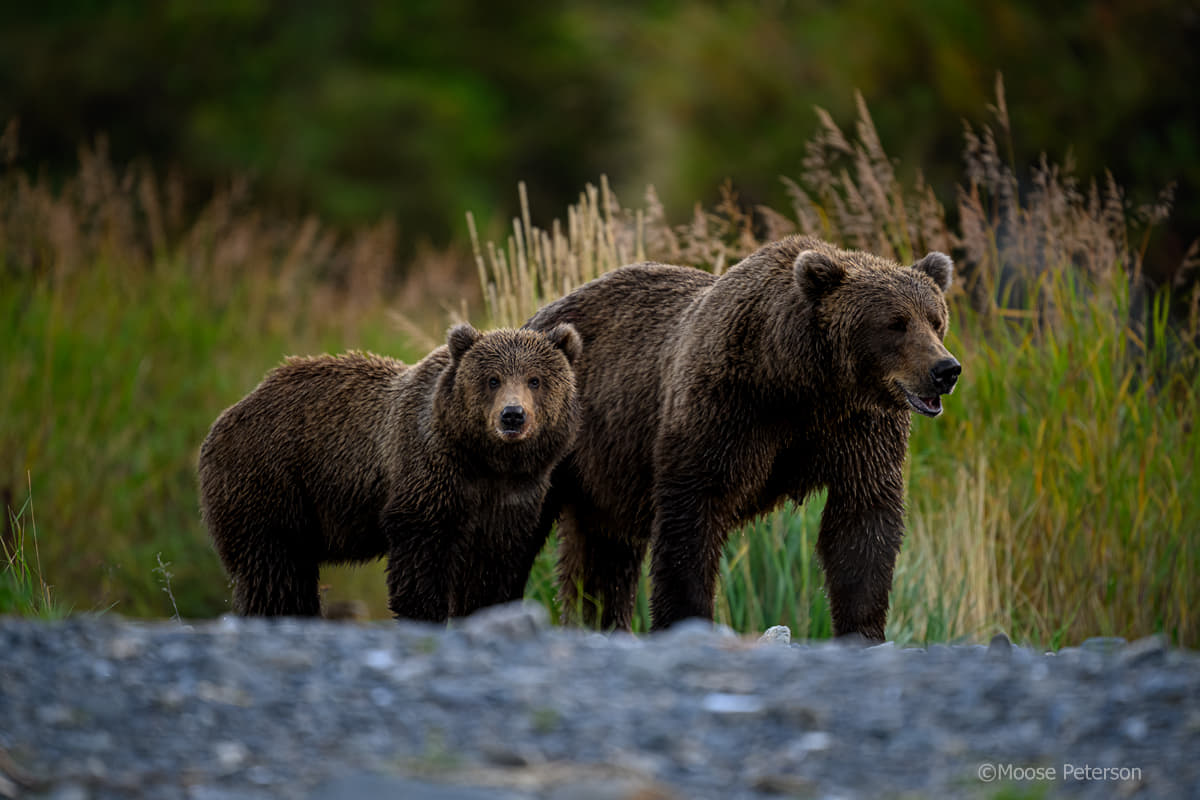
[00:37:54] and there's little mystery on those things and for bear or worse I have a well earned reputation that no photograph is worth sacrificing the welfare of a subject. But bears aren't scary I mean I've been working with them for three decades.
[00:38:12] Never been bluff charged never been scared by him never been frightened by him you know they are just incredibly amazing critter most people don't realize that the bears will do one or two things when you see you majority of time they just disappear they can they can
[00:38:31] disappear in a whisper of nothing and if they don't disappear they just hang around so they don't go and look at us and say boy dinner serve it's not it doesn't work that way that just sells a lot of papers it doesn't
[00:38:45] translate to the incredible experience it's you know it's hard to understand unless you actually go out but when I take someone out for the first time to be with like the Kodak brown bears you know you're out in the middle
[00:38:58] of nowhere and there's no I don't make guns I don't carry bear spray I just I have some basic biological knowledge that's been passed along me by biologists and some that I've learned in the field. And that's it and the people after the first time with
[00:39:15] the bears they've changed they they have an incomplete new appreciation for everything because you know Kodak brown bear can stand almost 11 feet tall it's hard to imagine but when they stand up in their hind legs come about 11 feet almost 10 9 is a 10 9 or 10 10 I think
[00:39:34] it's the record but you know it's it's a lot of animal and you're talking about. 1250 100 pounds. And you look at them and you might have we might have them. I don't know 30 feet away. 40 feet away sometimes and they just look at you and
[00:39:54] they just kind of do their thing and you do your thing. And you're a really good guest they don't care what your thing is the if it's photography man just shoot it up all you want and they funny story is so bears.
[00:40:11] Basically they they're with their mom for the first 3 years and this is generalizing it could be less could be more and then they the day comes when mom says hey you know I touch everything time to go on your own.
[00:40:24] And it's kind of a brutal separation it's not really a kind thing and then they become what the biologists call a goober and they're three and a half 4 years old they're scared of their own shadow. And so a couple years ago or on the flats of Kodiak
[00:40:41] and there was a goober and there's a couple big females couple of big male and there we were and we weren't at all nervous rain like that we're just taking pictures and this little goober didn't know which way to turn well into coming over and sleeping
[00:40:56] next to us like a dog literally because he thought it thought I don't know if he or she that between the moms and the one dad that the safest group to be with was with us. So in this is a three and a half four year old
[00:41:13] that's probably weighing 400 pounds and it curled up literally right next to us I have a photograph our guide right there on the ground and right on the other side of them is this goober just laying there so that's the big scary bears.
[00:41:30] I was going to ask you a moose for a special moment you had somewhere a moment where you forgot to take even maybe a picture but I think this is already good answer to my question. Well, I'm afraid there are lots of those moments
[00:41:45] it just I you know I get wrapped up to it in when I'm watching and the story and I do forget to push that button. A very old saying from a very old poem says that it's forever exposed on the thin emotion of my
[00:42:00] mind so that's where it resides. We can always call it back and have memories was countless magazines and 29 books by now. Yep, yep, yep. Any new project in mind for another book number thirsty. Oh just not really per se you know books that there's
[00:42:24] not money to be made in books so I try not to do many books. I have yeah look at my my list here I have I have four book ideas sitting there that really haven't done much with I spent more time though generating
[00:42:39] articles for magazines that are just easier to do but yeah I I would love to do a lot of books but that that comes back to that time thing you know that time things just a killer. Most despite your success I read somewhere you mentioned
[00:42:55] that you feel you didn't had a definite breakthrough moment still. No, no. You know I read about those things I wonder how I missed the boat. No I don't have that one like I was sitting at the bar and some director came in and said I'm gonna make
[00:43:16] you famous I never had that kind of moment. I don't think that's ever was in the cards for me. I just I just keep plowing forward despite how I might put my foot my mouth I just keep going right foot left
[00:43:29] foot and put in the photographs out there. Hopefully that I keep grabbing heartstrings that you know I'll make the difference I'm hoping to make. Moose to come back a moment to that breakthrough moment what would you define a breakthrough moment
[00:43:47] for a photographer and how we can then push his boundaries in his own work. Well you know the that breakthrough moment I always in my own mind was looking for that that one phone call that someone's going to say you know we saw your
[00:44:04] image we see all this potential let's just give you a bunch of money do your thing. And that's kind of like the daydream kind of thing but it doesn't work that way in fact talking about this strictly business I always was especially
[00:44:21] that before the days of the cell phone. I would be in a front when the phone bill will come and the phone bill was lower than the month before because it meant I wasn't on the phone making phone calls making something happen.
[00:44:34] It's there's a lot of misinformation that comes I think to the business side of photography that a lot photographers since they don't know any different kind of get sucked in by and that always kind of it makes me sad I know of a lot of really really good
[00:44:52] photographers who didn't stick it out because they kind of got the wrong information they thought they're going to get that great breakthrough moment. And didn't realize that photography is really when it comes to business is not all about fame
[00:45:08] and riches it's about a lot of hard work and a lot of you know you have put your heart into it every day and it's a full time you know 80 hundred hour a week job it's it's and the thing is like I mentioned
[00:45:22] earlier if you have a passion it never feels like a job and that's that's the beauty of in the far as I'm necessarily allure of the whole photographic process. And then of course you have the advantage that you make a package like you make the pictures
[00:45:40] and you also write a text I suppose is something for editors is something like marvelous because they have it all in in one go. You hit the nail on the head that's always been you could say the key to my success because there's a lot
[00:45:54] more money made in multiple image sales and a text rather than just one image. But it's you know it's important you know you ask about a breakthrough moment there wasn't one as far as the business concern but there was definitely one the same morale booster or confidence booster.
[00:46:16] When I I worked at a camera store for a number of years and the somehow I got the attention of the regional Nikon sales manager not the rep for the store but the actual manager and to say he encouraged me is an
[00:46:34] understatement he really I'll say probably push more than anything else and not that he ever said this photograph is great or you should buy this lens was nothing like that it was like you know you need to work harder
[00:46:48] and you need to perhaps try this and and you've got some talent so you should go this way and it was just a it's just a credible source who gave the pattern the back multiple times when I needed most and if there
[00:47:07] ever was a breakthrough moment for me it would have been just that one important person saying the right word to keep me going right foot left foot right foot left foot and truth be told that's probably a big big reason
[00:47:21] why I have always shot Nikon I always will shoot Nikon is because when I needed support Nikon is there supporting me and I don't forget those things ever. I should Nikon because it's the camera that never let me
[00:47:38] down but in a way that it can stand a bum I mean travel a lot and I go on donkey carts or bus or boat and I think swings around I broke lenses yes but I never broke camera
[00:47:48] body so it's I can trust it and it's what is most important for me and I know what it can do and I know what I can do and then we'll make it work. They're a great tool no if and buts about it was looking
[00:48:01] towards the future what legacy do you hope that you will leave behind in your conservation and photography. It's a great question because it actually for long too long that really kind of concerned me the legacy I might leave
[00:48:21] and I don't doesn't even in the back of my mind anymore. You know the photographs that I take the stories that I'm fortunate to witness and to share some of those stories are in the moment there's no even buts about it and some of
[00:48:37] them are timeless and if the stars align and I've done some things right then those timeless ones will continue and it's it's be honest with you it's totally out of my hands things come up that when I say things a phone
[00:48:55] call an opportunity you know they come out of the blue it's not like he can plan for and when they happen it's like what's created happened then you go. Okay last 10 years why didn't that happen you know and then
[00:49:12] you go okay I don't know why didn't happen then it happened now can I make it happen again. That used that asking those questions like I said I like I ask a lot of questions asking question like that is is is almost pointless because it's just the way.
[00:49:29] You know the world turned when people get involved in editorial photography and editorial business which a lot of people need to do and they're really scared to because they read about that rejection letter but what most people don't understand that rejection letter is not a rejection of you
[00:49:48] as a person or as a photographer or if your photography it just means that that particular moment when your material hit their desk they didn't need it doesn't mean they don't need it tomorrow doesn't mean they didn't meet it yesterday
[00:50:02] just means that that moment they didn't need it so you get rejected so you know comes my legacy it's it's not really up to me it's up to the moment. Well I think it's true like you said I'm worried much
[00:50:15] about it it comes as it comes but for the moment moves I think we can all enjoy already all these marvelous pictures you make I mean I can go to your website and I can spend two hours looking to your pictures instead of doing
[00:50:28] two hours podcast thank you. I think we can wrap it up moves but one thing I still have to know how is your macro photography. How is my macro photography. Yeah it's suck it sucks. You know my hats off to you for what you do and others
[00:50:46] but sticking my butt in the air waiting for the wind to stop blowing to take a picture some small thing yeah that is just not in my wheelhouse at all. Now I like one of the things that's in my files that's that
[00:51:00] six that is extinct which is doulins how's it go doulins Dune bullweevil or weevil it's a little bug that was briefly just discovered it was thought to be gone the rediscovery this and we're next to the I five freeway which is a major corridor going through central California.
[00:51:25] And this little patch of I don't think it was even grass but it was it was still native for somehow it had survived and the little level weevil was there and how big a weevil this one.
[00:51:42] It's a little bit better than like half a P a little bit bigger than maybe a ladybug and you know I was asked hey can you photograph it I'm like sure and man I was that in my foray into doing California's endangered butterflies just yeah macro not me.
[00:52:04] If we meet up in Costa Rica I will show you was no problem I'd be grateful I would I would I would listen to every pearl wisdom and and then hopefully not let you down with my execution.
[00:52:17] You will do fine I'm sure well I hope we can catch up one day there. I will be on the lookout for your workshops I would love to do one and I will be in contact with you. Moose thank you very much for this interview it has been
[00:52:33] look we are talking for for one hour it can go on but we have to do other things. Thank you very much and we'll stay in contact. Thank you my friend I appreciate appreciate the time and the
[00:52:44] in the space and you you take care you take really good care you take care give greetings to the family and keep making pictures likewise. See you soon bye. Well I think that was an eye-opening interview with Moose Peterson and the way he sees photography and the
[00:53:01] world through his own eyes so don't forget to think about all what he just told and share your own photography maybe in stories next time. Talking about sharing you know our podcast is available on our podcast players such as Apple and Spotify and we are
[00:53:15] uploading to YouTube now too so please give it a like a comment and subscribe of course so you don't miss anything for the next episodes. I leave you today with the quote of the great Ansel Adams who said there are no rules for good photographs there
[00:53:30] are only good photographs think about that now go out make your own story and move your photography thanks for joining us and see you soon.