
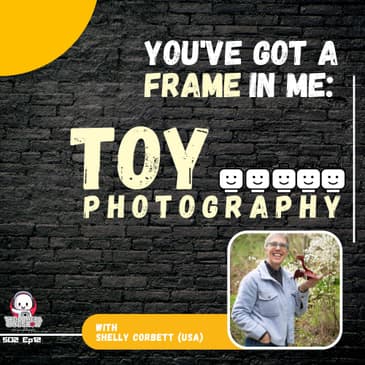


In this playful episode of The Camera Cafe Show, host Tom Jacob sits down with Shelly Corbett from Seattle, USA, who is a pioneer in the niche world of Toy Photography. Shelly shares her unique journey from traditional photography to capturing the whimsical world of toys, discussing how a chance encounter with a Lego party sparked her creative transition. With over a decade of experience in the field, Shelly dives deep into her creative process, including LEGO toy photography, her favorite gear, and the art of storytelling through miniature figures.
Shelly explains how she connects with global communities of toy photographers, including groups she co-founded like Stuck in Plastic, Brick Central, and Toy Photographers. She also offers valuable insights into her photography workshops, which help budding photographers explore toy photography as a unique way to hone their skills. The episode is filled with inspiring stories, practical tips, and a deep dive into the creative potential of using toys to tell compelling narratives. Enjoy it!
Whether you're a professional photographer looking for a fresh perspective or a hobbyist eager to explore a new genre, this episode offers plenty of insights and inspiration. Learn how to turn everyday toys into powerful storytelling tools, discover the importance of community in creative growth, and hear Shelly’s advice on finding your own voice in the colorful world of toy photography.
Key Takeaways:
Transition to Toy Photography: Shelly shares how she moved from underwater portrait photography to toy photography, driven by a love for creativity, play, and community.
Building a Global Community: Shelly discusses her role in founding and participating in toy photography groups and how these communities help photographers find their voice and inspiration.
Storytelling with Toys: Learn about Shelly's approach to using toys to create unique, emotionally resonant stories, including tips on how to choose the right toys and themes for your projects.
Mastering Toy Photography Techniques: Discover Shelly’s favorite gear, from cameras to toy setups, including her use of Lensbaby lenses, and her tips for handling lighting, posing, and composition to create lifelike images. A breakdown of the essential.
Workshops and Learning: Shelly talks about her workshops and courses, which guide participants through essential photography skills, composition, and storytelling techniques tailored for toy photography. I yo love LEGO, why not give this a try!
.
The Transcription of Shelly's Episode is Available on our Website.
Enjoyed our show? Support us with a $2 coffee! :)
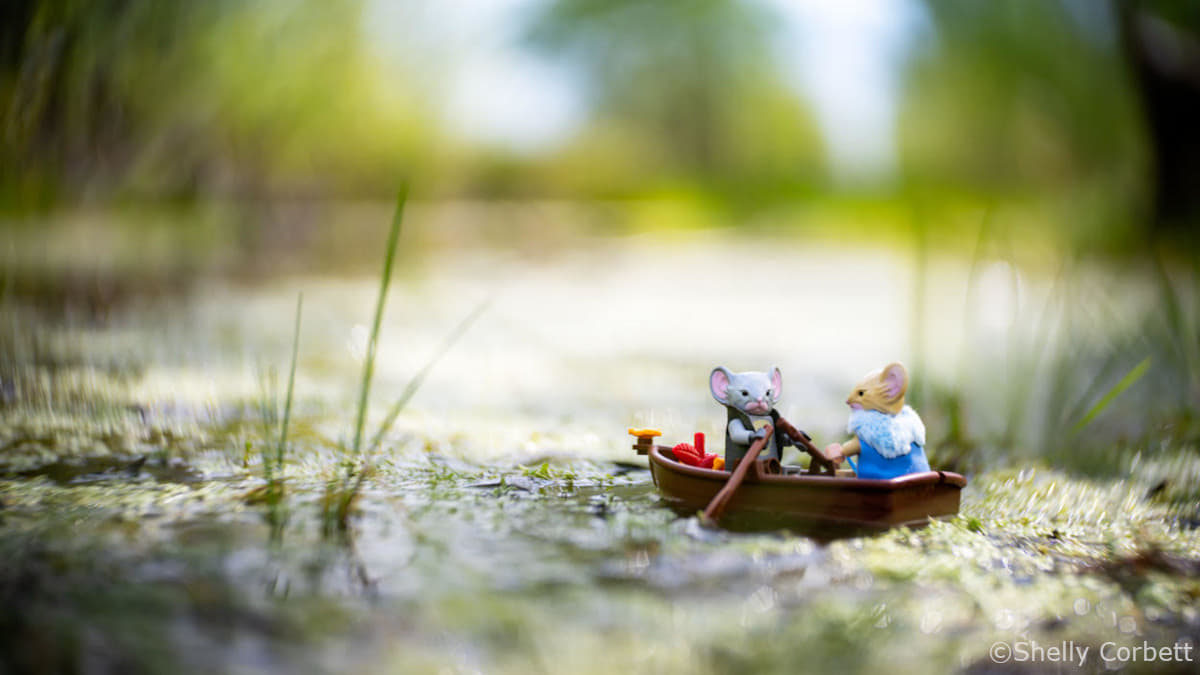
Check out more of Shelly's work:
Website: https://shellycorbett.com/
Instagram: https://www.instagram.com/shellycorbettphotography/
Facebook: https://www.facebook.com/ShellyCorbettPhotography
Stuck in Plastic: https://www.stuckinplastic.com/
Connect with The Camera Cafe Show. Follow and Subscribe:
Website: https://thecameracafeshow.com/
Twitter: https://x.com/CameraCafeShow
Facebook: https://www.facebook.com/thecameracafeshow
YouTube: https://www.youtube.com/channel/UCgwLbH5yWiYYd-dFeu1s_vQ
Got any questions? Email us:
Thanks for listening and look out for our next episode!
[00:00:00] [SPEAKER_01]: For me, it's who am I and what toy am I connecting with and what adventure do we want to go on together?
[00:00:08] [SPEAKER_01]: Because ultimately that toy is a gonna be a reflection of me.
[00:00:13] [SPEAKER_01]: Like I would not be attracted to, I mean, a toy that like hellboy.
[00:00:20] [SPEAKER_01]: That's not toy I would ever work with.
[00:00:22] [SPEAKER_01]: Because those are not stories that I want to tell.
[00:00:23] [SPEAKER_01]: I'm rarely worked with Darth Vader because again that's not a character that I connect with.
[00:00:30] [SPEAKER_01]: But if you connect with a toy and you think about what makes sense for them to do,
[00:00:37] [SPEAKER_01]: what would I do if I was them and where would we go? What would we do?
[00:00:43] [SPEAKER_01]: Who am I gonna connect with? You know, what makes me tick?
[00:00:47] [SPEAKER_01]: I'll be there so I think you need about that and I think it's worth a worth.
[00:00:55] [SPEAKER_00]: Greetings and welcome back everybody to the camera cafe show I'm your host Tom Jacob
[00:01:00] [SPEAKER_00]: and today after just a short summer break, we're venturing into this ingenious
[00:01:05] [SPEAKER_00]: ball of toy photography.
[00:01:08] [SPEAKER_00]: What imagination transformed and creativity knows no bounds.
[00:01:13] [SPEAKER_00]: On the other side with the incredible Shelley Corbet from Seattle,
[00:01:16] [SPEAKER_00]: you were say, who's a pioneer in this unique genre turning every toy into extra ordinary
[00:01:22] [SPEAKER_00]: subjects to work on a lens.
[00:01:25] [SPEAKER_00]: From creating very like scenes with Lego minifigures to building global communities of toy photographers.
[00:01:33] [SPEAKER_00]: Shelley's work is all about finding joy and creativity in the smallest of subjects.
[00:01:39] [SPEAKER_00]: Will dive into how she got started, her favorite gear and her secrets to make tiny toys tell big stories.
[00:01:48] [SPEAKER_00]: Hey everyone, before we jump into the make sure to check out our brand new website.
[00:01:53] [SPEAKER_00]: We spent a lot of our free summer time building it and you'll find all our episodes now back that with improved information
[00:01:59] [SPEAKER_00]: behind the scenes content, transcripts into two and two photographs, our YouTube channel,
[00:02:05] [SPEAKER_00]: by our fears about our past guest and useful resources to help you move your photography forwards.
[00:02:11] [SPEAKER_00]: So check this out and leave us a comment of course.
[00:02:14] [SPEAKER_00]: Now, get a bit of coffee, get comfortable and let's have some play fun with Shelley Corbet on today's episode.
[00:02:21] [SPEAKER_00]: Let's get rolling.
[00:02:22] [SPEAKER_00]: Good morning Shelley, how is Seattle today or this morning there?
[00:02:27] [SPEAKER_01]: Good morning, it's quite lovely we have mid-60s and sunny so life is good.
[00:02:32] [SPEAKER_01]: Today is definitely going to be a photography day.
[00:02:36] [SPEAKER_00]: Shelley, one funny thing, you know that YouTube when you watch it says,
[00:02:41] [SPEAKER_00]: you have to watch this or this might be interesting for you and it showed me by coincidence the story of Lego.
[00:02:49] [SPEAKER_00]: So I say, oh, it might be interesting so I watched this documentary about Lego.
[00:02:55] [SPEAKER_00]: They talked with a group of people and I think they called themselves A-Faults like adult fans of Lego.
[00:03:03] [SPEAKER_00]: You are an A-Fault, Shelley?
[00:03:06] [SPEAKER_01]: Yeah, I am an A-Fault, yes.
[00:03:08] [SPEAKER_01]: The Lego umbrella, the Lego community umbrella is very big and there are people in it that do many different things.
[00:03:19] [SPEAKER_01]: Building is one of them I have a friend who is a jeweler and she makes jewelry out of Lego parts.
[00:03:25] [SPEAKER_01]: I do photography with Lego parts.
[00:03:27] [SPEAKER_01]: I think there are other people who do are pushing the envelope on sculptural aspects of it, mosaic which are more patronally in nature.
[00:03:39] [SPEAKER_01]: A lot of movement oriented, building cities and recreating the universe in Lego is just one piece of it.
[00:03:48] [SPEAKER_01]: Does that make sense?
[00:03:49] [SPEAKER_00]: Yeah, it makes sense and I can see it in the back of your room that is full with boxes neatly classified, I suppose.
[00:03:58] [SPEAKER_01]: Sort of neatly, I'm in the middle of moving my studio so I have a lot that still needs to be organized and put away but it's always organized chaos.
[00:04:09] [SPEAKER_00]: I know exactly what you mean.
[00:04:11] [SPEAKER_00]: Shelley, talk me a bit about how you first got into photography like your early influences before photography.
[00:04:18] [SPEAKER_01]: So I was at university and I was getting degree in graphic design and I didn't make it into the program and they said, well a nice sort of parallel track would be photography.
[00:04:34] [SPEAKER_01]: So I went and did a summer in photography through there and really enjoyed it and just stayed.
[00:04:39] [SPEAKER_01]: So that's how I got into sort of like deep dive.
[00:04:44] [SPEAKER_01]: So I got an infatography through university which the program that I was in was pretty free form do what you want.
[00:04:52] [SPEAKER_01]: So that's kind of where the photography started and it's interesting that even in the work that I'm doing now, there are, I see inspirations that go all the way back to the early days of what I was being introduced to at that time and how I was approaching it.
[00:05:09] [SPEAKER_00]: Yes and your early days weren't at all toy photography.
[00:05:14] [SPEAKER_00]: There were more human inspired subjects.
[00:05:17] [SPEAKER_01]: Photography has always been a form of personal expression and personal understanding and my early work was all around nudity, the female form and I was photographing underwater because I was inspired by Brett Weston and one of Weston's many sons.
[00:05:36] [SPEAKER_01]: I think he had three of them and then postcard I saw on the wall of somebody who had been doing these underwater more like compositions because those is film days away before digital composition or any kind of stuff.
[00:05:50] [SPEAKER_01]: And the those two ideas came together in my mind and it was just a matter of finding a pool, finding some models figuring out what they were going to wear.
[00:06:03] [SPEAKER_01]: Professor said why are they even have clothes so that was like a whole another genre of just going you know another track to explore which was the whole idea of nudity how do you present that in a way.
[00:06:14] [SPEAKER_01]: And and they still creating an alternate universe of a magical place where this other reality exists because when you're but I was photographing underwater I was using a rage finder which means that you can't actually see what you're doing and then also you're underwater got a mask on your floating around their floating around lighting to weird.
[00:06:35] [SPEAKER_01]: It's I was like flying by the seed of your pants and so what I would get was always when if I got something it was like it was always like a holy F moment to that was delightful.
[00:06:49] [SPEAKER_01]: And I love that happen stance that magic the magical quality of seeing into a world that you can't necessarily see from this world that we're in so photography for me is a literally a lens into another world.
[00:07:06] [SPEAKER_01]: Does that make sense? It's a portal.
[00:07:08] [SPEAKER_00]: Yeah, I think in a way it's a bit the same what you're doing now you're showing a portal into another world by using toys.
[00:07:19] [SPEAKER_00]: So you build like to say your own particular style in this underwater ported photography celly and then suddenly came a moment that you said, it maybe this toy can give me another idea.
[00:07:33] [SPEAKER_01]: You didn't matter what it started. I do I remember really specifically we were throwing legal parties to be in my family around that time and I watched another sort of creative person.
[00:07:45] [SPEAKER_01]: Take her phone because it's like this is like 12 13 years ago wait at the beginning of all of that Instagram was barely even on anybody's radar just taking some figures and sitting in a monitor lap and just sort of like playing with them in photographing and and that scene heard do that was a light bulb moment for me.
[00:08:04] [SPEAKER_01]: Being surrounded by Lego getting some minifigs as a Christmas gift and taking a photo loading it up on Instagram and then accidentally connecting with the toy photography community which was super small at the time and I just met some super fun supportive people and about the joy the joy photography back to me.
[00:08:23] [SPEAKER_00]: I was going to us because 12 13 years ago of course we had already the internet but then you wanted to start with a new genre like toy photography.
[00:08:33] [SPEAKER_00]: How did you connect with other people or how did you learn yourself the process of toy photography celly?
[00:08:40] [SPEAKER_01]: Very much self-taught and just watching what other people were doing. I mean at the beginning it was just play it's just literally play toys photos phone fun check them with me capture some be silly whatever that would be and then as I started moving more into the community which was like seeing like following a hashtag when hashtag she missed something.
[00:09:07] [SPEAKER_01]: To a photography connecting with other people. They're a super fun group everyone was super friendly reaching out because we're all from all over the world and nobody had knew that other people were doing this so it was like super fresh and that time in the internet when everyone was like oh my god I'm connecting with people is Singapore and Germany and in Japan and they're all doing the same thing oh my god right so that's.
[00:09:33] [SPEAKER_01]: That fun of it and just the sharing and then learning I'd seen what they were doing and going I like that. How do I get to that how do I do that and then and then just keep bringing it in and then wanting to pursue my own style whatever that was which was a deep dive into photography what kind of lens that I want to use.
[00:09:55] [SPEAKER_01]: Exploring pinhole and and plastic lenses and holga and just figuring out what would work stumbling into lens baby realizing oh my god that's too much backing away and then and then about six years ago just.
[00:10:10] [SPEAKER_01]: I'm pressing that whole line of lenses completely so it's it's a bit of stage and through time of course because it takes time to find your own style.
[00:10:20] [SPEAKER_00]: We will get back to gear in a moment, but talking about a bit more about groups or how important they are to find maybe to find your own voice in the end you go found it groups like I think stuck in plastic brick central toy photographer's block.
[00:10:37] [SPEAKER_01]: So started out to in the toy community there was a lot of feature is your gram communities, but they were really focusing on action figures and when you start delving into toys there's like a lots of different major brands or lines and action figures is one Lego many figures is another.
[00:10:55] [SPEAKER_01]: Fuckel pops and then nenderoid or anything and then just like it just explodes after that then you get into the dolls and Barbie and customs and Mike it just I mean in my mind to spin so I like trying to iterate it less is more.
[00:11:09] [SPEAKER_01]: Less is more it's better big choices hard choices so they were focusing mostly on action figures and actions shots don't star wars and just really like as like that's not to Lego community the Lego communities very silly sort of and we just felt like we were since it's so associated with children or at least it was then the whole company has shifted.
[00:11:31] [SPEAKER_01]: More towards adults in the last few years especially so it was like at this poor stepchild so I was tasked with three other people to sort of start featuring more Lego we started.
[00:11:42] [SPEAKER_01]: The brick central and it was just Lego only feature site and that just connected me with a lot of amazing people in that community and then someone came along and said hey that's cool let's start a blog called St. plastic I said yeah that sounds fun I would love to write so I had to learn how to write.
[00:11:56] [SPEAKER_01]: And blogs that was a whole another learning curve did that for a few years and then Lego like what we were doing in task and we became the first online.
[00:12:05] [SPEAKER_01]: To a photography community to be recognized as a community by them so recognize Lego fan community which was super cool and then we started working with them helping them launch the ideas line by doing interesting photography around Lego sets above and beyond what I refer to as plastic on plastic which is more plastic in the natural world.
[00:12:27] [SPEAKER_01]: And then from there I got a little frustrated because I think there's a lot to be learned from action figure people to Lego and then Lego back to action figures there's a lot of cross over I don't like the limit myself.
[00:12:39] [SPEAKER_01]: But just one community so that's when I saw a toy photographers which was all about just all toys and and it's functions both as a place for people to learn.
[00:12:51] [SPEAKER_01]: How to do it as well as just feature interesting people who are pushing the genre in interesting directions and then also feature community members.
[00:13:02] [SPEAKER_01]: And after this many years is also a bit of a time capsule of just how much the community has changed in grown and as people drop in and also drop out.
[00:13:12] [SPEAKER_01]: So it's been a lot.
[00:13:13] [SPEAKER_00]: It's been a lot and it's been a long long drive I think but it's great to have something apart from your photography that runs simultaneously and is helping other people.
[00:13:25] [SPEAKER_01]: Oh absolutely I've always I mean I don't know if you noticed but there's been a lot of community building along that time line so it was on Instagram and then through the blog and then on G plus and now we've moved over to me we which is like nobody the online platform no one's heard about but it's all about community connecting people.
[00:13:48] [SPEAKER_01]: Helping it because any hobby toys photography is just a great release and a diversion from whatever is in your life and I like toys because it forces people to tell personal stories or at least I like to force them to do that.
[00:14:06] [SPEAKER_01]: And because I do that and I find it to be really mentally helpful and emotionally helpful.
[00:14:13] [SPEAKER_01]: I think any time you play with toys is has a therapeutic mental health component to it whatever you want to call that so it's.
[00:14:23] [SPEAKER_01]: It's a lot of giving back and getting back from the community.
[00:14:27] [SPEAKER_00]: And as fun of course you're playing with the toys I'm doing the podcast so it's all about helping people.
[00:14:33] [SPEAKER_01]: Number one rule of thumb is if you're not having fun you're not doing it right.
[00:14:37] [SPEAKER_00]: Of course of course.
[00:14:39] [SPEAKER_00]: Let's dive into the into the gear let's talk about what gear are you using nowadays to make your pictures.
[00:14:47] [SPEAKER_01]: So I have my trusty Sony with a 7 3 is what I have.
[00:14:54] [SPEAKER_01]: I haven't upgraded beyond that because once you start upgrading it's just pixel size and for me it really comes down to pixel size and video and I'm not interested in doing video so I'm like.
[00:15:06] [SPEAKER_01]: I've done that I did that for seven years of my interesting going down that road and pixel size it's great but then it also says storage nightmare so I'm like I'm fine with my 26 or whatever it is.
[00:15:18] [SPEAKER_01]: And then I'm a big fan of lens baby and this is why it's because I can do this with it which is like super fun and also I'm a bit of a cost cost cost conscious sort of person so I can have one what they call the composer protein which is this element.
[00:15:36] [SPEAKER_01]: And then from there I can just switch out the optics and so I can get a lot of bang for my buck.
[00:15:42] [SPEAKER_01]: I like to refer to as my lenses as brushes each one has a different effect they don't take up very much room in my camera back which means I get to take more toys with us exactly.
[00:15:55] [SPEAKER_00]: I was just thinking.
[00:15:57] [SPEAKER_00]: Shelley just just for people maybe listening that aren't aware what is lens baby tell me a bit about them what is a lens baby lens how you came to use them.
[00:16:09] [SPEAKER_01]: And lens baby lenses is a lens baby is a small company out of Portland Oregon which is just down three hours from Seattle which is where I live and it's the lenses that they create are all special there aren't lenses specifically in each one has.
[00:16:27] [SPEAKER_01]: And in fact it's going to bring to your image it could be a what they call a sweet which is a sweet spot of focus that that spot of focus you can move around your focal plane there's the edge which gives you a line of focus that you can literally move up and down or back and forth across your focal plane.
[00:16:48] [SPEAKER_01]: Then there's the twist which is like that's a lens which gives you an edge of twist your bokeh around the edges until like this lovely surrounding your image and then there's like the double glass and that you can effect and then they have the Omni is like all these yeah it's a beautiful system of just exploration.
[00:17:07] [SPEAKER_01]: And a lot of people start with a velvet which gives the I mean if you've ever edited your photo on your phone and you can do the glow which gives it kind of like a glow around your image that whole lens as all it does is give a glow and to paint on how.
[00:17:22] [SPEAKER_01]: Why it open or stop down your aperture is you can control how much the glow is and all the effects are adjusted that way if it's wide open you're going to have maximum effect if it's stopped down to 11 or 16 you're going to have a minimal effect.
[00:17:36] [SPEAKER_01]: I'm being the extremist that I am go wide open all the time so I'm usually photographing somewhere between.
[00:17:43] [SPEAKER_01]: To four or as wide open as it can and maybe four or stop down it'd be like a five six so what that creates for me is.
[00:18:20] [SPEAKER_01]: A.
[00:18:22] [SPEAKER_01]: I can't oh I know what it was is before the pandemic they had put out a call for entries to apply to be and it wasn't an ambassador was a lens maybe something else like master I can't remember what it was and I remember being on a plane to Hawaii and time my husband at the time going I'm going to play for this and I.
[00:18:44] [SPEAKER_01]: Center my application and and then they said yeah I was like one of 10 people that was chosen to be part of this and then the pandemic hit life as we all know shut down and then because they couldn't do this program they started up the ambassador program and I was just rolled into that which is lots of fun.
[00:19:04] [SPEAKER_00]: I'm sure so you have any kind of promo code I can use if I buy when I get a discount.
[00:19:10] [SPEAKER_01]: It's W Corbit and it's 10% off any lens or product that is not something that they've just introduced and then also if you use my code.
[00:19:20] [SPEAKER_01]: I will happily walk you through the lenses I have on my website a page that's just about lens maybe which talks about what each lens does and how I use it and then if somebody comes to me and says hey this is what I'm photographing this is what I want to do.
[00:19:37] [SPEAKER_01]: What would you recommend I will give them some options and then support them I mean I'm like I might I love it and anyone I can inspire to try it I will support you because I was a bit of a learning curve because they're manual lenses and I know a lot of people are get really they rely on manual focus so much.
[00:19:58] [SPEAKER_01]: And the camera doing so much work and I'm like here let me help you let me help you with their first 30 days so you feel confident that you can just keep going with it.
[00:20:09] [SPEAKER_00]: Don't give me too many ideas now shall leave a question go to a tap by anyone I think one time after do a podcast about how photographers can find more hours in the day to have free time.
[00:20:21] [SPEAKER_01]: I'll watch that help me.
[00:20:23] [SPEAKER_00]: Yes I know.
[00:20:26] [SPEAKER_00]: Shall we talk about maybe challenges gear wise I mean I think we went already to we have the camera we have the lens whatever maybe you want a macolons or lens baby lens any other equipment I should have to start off.
[00:20:42] [SPEAKER_01]: I some sort of it depends on me it's everyone has their own way they're working and it depends on if you want to go studio and work in a studio or if you're going to work outdoors they require different tools but that ones that overlap with toys.
[00:21:00] [SPEAKER_01]: Is it how are you going to support your toys that's pretty much starting so some kind of wire tack some sort of tools to cut and shape your wire how are you going to attach them to your toys and and to find your toy choice that's going to change a little bit like I've already working with the soft toy like felt I have one of the people I work with she literally stitches her toys into where she wants them and then on on clips them when she needs something to do something else so versus an action figure wire Lego wire.
[00:21:29] [SPEAKER_01]: wire Lego parts hot glue works pretty well and kind of hard tack so it really depends so that's how to pose your toys that's like the first thing to learn.
[00:21:40] [SPEAKER_01]: How to make them look realistic and then how are you going to a realistic pose in a toy that has limited articulation and what does that look like so that's kind of the first step and then camera gear it's like.
[00:21:55] [SPEAKER_01]: Some sort of bounce card because your toys are hard plastic they're going to be super reflective so you really really.
[00:22:01] [SPEAKER_01]: Cognizant of hot spots how are you going to minimize it how are you going to bounce your light around how are you going to do used to fuzures and then are you going to do that outdoors or indoors extra lighting there's what since I've been in the.
[00:22:14] [SPEAKER_01]: God down this route the range of lighting from any kind of macro photography is just blossomed you can get inexpensive stuff for around 35 dollars or you can do high in.
[00:22:26] [SPEAKER_01]: 150 for a single light it really depends on your budget what you need how waterproof it needs to be how long your battery life is or you can do something as a make your own DIY bounce card similar to what you might you know like a.
[00:22:44] [SPEAKER_01]: professional or like a portrait figure for my have one of those great things have flop you know spring out and big round the flexors you can make your own because you look working on such a small scale.
[00:22:54] [SPEAKER_01]: You don't need professional equipment but you can make that for scale to your figure size.
[00:23:02] [SPEAKER_00]: I was kind of thinking that maybe lightning would be important because I also do macro but of course my subjects they move so I use the flesh because it makes my life much easier.
[00:23:13] [SPEAKER_00]: But I think you are working with sunlight now in your work.
[00:23:18] [SPEAKER_01]: I'm working with sunlight but so things in the natural environment like flowers bugs they're going to absorb the light.
[00:23:26] [SPEAKER_01]: Plastic reflects it such as bounces right back off so it's hard to use I know some people use an off camera flash and that's great if it's if you're looking at capturing movement.
[00:23:38] [SPEAKER_01]: Water drop with splashing lots of people do toys like running feel like they're running through water or in rain that kind of stuff so that's.
[00:23:47] [SPEAKER_01]: So yes understand flash it's great but usually I'd like an LED especially one this RGB is going to be.
[00:23:56] [SPEAKER_01]: It might work better and then use that in combination with either a reflector or a diffuser of sub kind so that you can just minimize the light you don't want it at full power because then you're going to get hot spots and that's just an editing nightmare down the road.
[00:24:13] [SPEAKER_00]: Now we have gear sorted in our backpack celli now we need to put it inside the toys.
[00:24:20] [SPEAKER_00]: If I want to start out I suppose there are like different little levels of toys you can use would you recommend some kind of toy over another one to start out.
[00:24:32] [SPEAKER_01]: I never recommend any kind of toy but I do recommend people think about when they're thinking about toys is what was important to them as a kid because we're all of an age that toys were around when we were children right and many people will have toys in their universe they may not have been noticed it like what movies that you like as a kid.
[00:24:54] [SPEAKER_01]: What what toys did you play with as a kid or what toys your children play with or your grandchildren play with kind of start there to get your your your footing on and working with toys start with was available because.
[00:25:09] [SPEAKER_01]: You think cameras are expensive you think the camera the photography that be hot is expensive so just pair that up with toys and how many toys you would buy I was like it's a yeah so.
[00:25:21] [SPEAKER_01]: So you got to I like to encourage people to gravitate towards toys that inspire them and start with that whatever that may be everybody's different.
[00:25:33] [SPEAKER_00]: So you're saying that if I would be a Lego or about big it's you I Joe action figure.
[00:25:40] [SPEAKER_00]: I mean the process will be this set but a difficulty level is also the same.
[00:25:46] [SPEAKER_01]: They have different limitations and different so like a G I Joe action figure you're going to get more realistic posing you're going to it's going to be a larger figure it's going to be easier to photograph because it's got more texture you're going to be able to get light and dark you're going to be able to approach it more like you would a portrait photographer.
[00:26:05] [SPEAKER_01]: And being able to light it along those lines so I would look towards.
[00:26:10] [SPEAKER_01]: That as to your inspiration for lighting with a G I Joe and there's like what stories can you tell what G I Joe are those stories you want to tell is though are those images you want to put into the world.
[00:26:21] [SPEAKER_01]: And then if it's a of the Lego mini figure then it's going to be a little goofier they don't take themselves so seriously.
[00:26:28] [SPEAKER_01]: They're highly reflective they's not a lot of possibilities you're going to have limitations along those lines but you also have a lot of customization so it's like I kind of kind of like what inspires you and then go with that.
[00:26:43] [SPEAKER_00]: And our heart is it to deal with with toys on a scale to make them look life like silly.
[00:26:50] [SPEAKER_01]: Well if you want to go really life like I would look to one fourth scale which is literally their 24 inches tall which is like one literally one fourth of your standard human.
[00:27:02] [SPEAKER_01]: On person that's really tall I mean that's really big there's so much detail and it if you're at the one six scale which would be like a bar B GI Joe you're going to get a lot more detail and a lot more realism but once you start getting down into.
[00:27:19] [SPEAKER_01]: Lego which I think is 148 scale or HO which is like 164 or 180 something you're going to your.
[00:27:29] [SPEAKER_01]: You're painting very broad brushstrokes but what's interesting is diving into understanding comics which is amazing book by this gentleman named Scott McLeod been around forever and he talks about.
[00:27:41] [SPEAKER_01]: How the more abstract of faces the more we as an audience can relate to it.
[00:27:49] [SPEAKER_01]: So if it's a action figure that's based on a particular actor like Iron Man Robert Downey Jr. when you see that photo you're going to relate to Robert Downey Jr.
[00:28:00] [SPEAKER_01]: But if you take a photo of an Iron Man that is a Lego it's so abstract now you're connecting with the idea of Iron Man.
[00:28:11] [SPEAKER_01]: Does that make sense?
[00:28:13] [SPEAKER_00]: Yes making making sense because I was thinking that the smaller they get the more difficult this part gets of getting them life like I guess you have to think in a whole new level of making toy photography.
[00:28:26] [SPEAKER_01]: It's making toy photography but it's also how are you connecting with your audience because as all photographers regardless of what your subject is it's how are you connecting with your audience.
[00:28:37] [SPEAKER_01]: And what are your tools at your disposal to make that connection and that's when you get down to lighting lens choice.
[00:28:44] [SPEAKER_01]: What's the story you're trying to tell and how are you using composition and all those photography tools to tell that story and then toys you just have one more layer which is nostalgia and the toy there that stories or original story that it comes with.
[00:29:06] [SPEAKER_01]: And then you can start layering other even more in-depth things on to it. How are you twisting it? How are you changing more for it standing in his own head and how is that going to affect your audience.
[00:29:18] [SPEAKER_00]: And we are talking that these are the standard toys everybody can buy in any toy shop. There are any specialized companies that make toys for toy photographers.
[00:29:30] [SPEAKER_01]: There are very specialized toy companies out there that make toys for toy collectors and toy photographers are often toy collectors.
[00:29:41] [SPEAKER_01]: And people say that Lego is expensive but in many figures your average standard many figures going to cost in the US dollars anywhere from eight.
[00:29:50] [SPEAKER_01]: And then when they start getting it's collectable you might be fifty dollars and then up right but depends on how collectable it is or how old it is.
[00:29:58] [SPEAKER_01]: Versus an action figure straight off the shelf is twenty bucks right out of the you know brand new and they start collect when they start collectable they get it to a hundred pretty fast.
[00:30:10] [SPEAKER_01]: And then you get into some of these specialty companies that make really beautifully articulated super hyper realistic soft goods which is clothing.
[00:30:19] [SPEAKER_01]: You don't see the joints really beautiful that's starting you at three hundred US that's starting and then they go to a thousand so this is why I say choose carefully do a little research and.
[00:30:33] [SPEAKER_01]: Yeah a toy that's going to cost you.
[00:30:36] [SPEAKER_01]: Four five hundred dollars is clearly got a photograph more realistically than toy that costs you twenty right I mean it's just what you're working with as a professional versus you know an amateur but you can take a good photo of anything.
[00:30:50] [SPEAKER_00]: Just to end gear question here a bit silly we have the camera we have the lens we have a backpack full of toys.
[00:30:58] [SPEAKER_00]: Anything else you take when you go outdoors.
[00:31:01] [SPEAKER_01]: So my kid is always toys already staged because I find that when I go out in the universe if they're not if I don't already have my idea ready to go I'll get out there and I just I lose my brain because I are I'm thinking too much about lighting location.
[00:31:16] [SPEAKER_01]: So I got a a bend of toys ready to go my camera some spirulence optics a bounce card what additional lights and hand clamps.
[00:31:27] [SPEAKER_01]: And a knee pad because the ground is hard and I tend to be on it quite a bit.
[00:31:32] [SPEAKER_01]: I travel light because remember I talking about the underwater stuff that was literally taking an entire van full of dry fabric into a swimming pool and wandering out of it after six hours with a van full of very wet.
[00:31:45] [SPEAKER_01]: And I'm just like I so much so much went into that and I just like now that I'm doing toys if it doesn't on my back and I can't carry it in and out in hike five miles.
[00:31:55] [SPEAKER_01]: I'm not it's just not it's not happening.
[00:31:58] [SPEAKER_01]: So I don't do it I don't do a tripod I know a lot of people do and there's lots of good options and I can guide people towards good solid choices there but I find that the line between a toy looking like it's alive and a little plastic.
[00:32:12] [SPEAKER_01]: You need to play with that line and when you're on it when you've assigned yourself a spot using a tripod it's very hard to find that.
[00:32:23] [SPEAKER_00]: Let's talk a bit silly about creativity and ideas.
[00:32:28] [SPEAKER_00]: What do you would say you get your ideas from?
[00:32:33] [SPEAKER_01]: It's a combination of I've given this so much thought I mean I could I can list off all these different things that you know the universe I come to
[00:32:41] [SPEAKER_01]: but it's a delving deep inside who I am what I believe in what I love this a child and accessing the little inner child in there brain or how to play in combination with the toys.
[00:32:56] [SPEAKER_01]: And then being aware of pop culture I don't consume a lot of pop culture because I just literally don't have the time but I'm aware of it.
[00:33:04] [SPEAKER_01]: So I know who the characters are kind of idea with the story lines are and then combined that with who I am and what I'm exploring which is all about independent childhood, childhood themes what it means to be a child and then interpreting that through the toys.
[00:33:25] [SPEAKER_01]: And then also just having a really cool toy and going I want to photograph that and that's enough.
[00:33:31] [SPEAKER_00]: Because I always relate toy photography to the more funny side of photography.
[00:33:38] [SPEAKER_00]: But can it also relate to maybe like say bad things that happened in your life you want to show in through your toy photography?
[00:33:49] [SPEAKER_01]: Oh absolutely okay so I have I should there's two different things I will do I never get tired of having my many things be chased by my favorite two wrecks
[00:33:59] [SPEAKER_01]: And then running away screaming never gets old. It's fun to do it's very silly it always makes people laugh so it's it's like who am I going to make scream this month?
[00:34:09] [SPEAKER_01]: But also it's like if I'm having a really bad day or a really good day is like grabbing the toys and coming and going like how can I express myself and photograph that and then putting those emotions in the photograph and then processing those emotions even if it's on a subconscious level.
[00:34:27] [SPEAKER_01]: It's yeah it's a place to put them as if as a vessel to just hold it and it's both good and bad.
[00:34:36] [SPEAKER_00]: And how you keep your photography fresh Shelley how you avoid repetition?
[00:34:42] [SPEAKER_01]: I was listening to a good podcast the other day and it was about the difference between nuance.
[00:34:49] [SPEAKER_01]: So how is it said of going after the new the the most exciting fresh toys always helpful but it's also nuance and playing with the toys pushing I mean I the last couple years I've really tried to learn studio photography so I'm learning new techniques playing with new toys try new things new lenses.
[00:35:14] [SPEAKER_01]: I just learn try to look at the world in a different way trying to be curious always trying to be curious and then being open.
[00:35:24] [SPEAKER_01]: Do like if I'm walking around walking the dog or playing with the toys or it's just being conscious of what's bubbling up.
[00:35:34] [SPEAKER_01]: And then writing that down always having an idea book so if I get stuck I can go back to like years of ideas and go oh man those are good ideas I should bring those forward now I have time so it's like it's a combination lots of things.
[00:35:48] [SPEAKER_00]: And maybe challenge yourself no a bit I mean I think it's also a good job and you can challenge yourself with speaking maybe more difficult toys.
[00:35:58] [SPEAKER_01]: More difficult to I also once that are not attracted to because I saw my work which is as a whole another layer of being aware of what my customer wants versus what I want and trying to find.
[00:36:10] [SPEAKER_01]: Some some overlap there and I get a lot of requests from Minecraft which has their very very square heads their best that's hard so finding some beauty enjoy in a particular toy so.
[00:36:28] [SPEAKER_01]: But requests and then like okay what can I do with that and then also just standing there while I'm selling and just letting the ideas come so yeah always it's always a challenge every every single photo is a challenge.
[00:36:42] [SPEAKER_00]: Every single photo is a challenge but many people are enjoying this because.
[00:36:47] [SPEAKER_00]: Tell you give a lot of workshops you have a lot of workshops on your website including a total masterclass around toy photography which are very successful.
[00:36:57] [SPEAKER_00]: I always thought as toy photography as like a kind of very very niche for kind of photography.
[00:37:04] [SPEAKER_00]: But I think this world is slowly growing now there's more and more people picking this up.
[00:37:09] [SPEAKER_01]: It is it's still pretty niche but what I tell people is everything that you learn in toy photography all the things that we talk about.
[00:37:22] [SPEAKER_01]: Composition posing location setting how are you connecting with your audience all of that 100 is a one to one correlation with any subject that you choose to photograph so so toys are an absolutely delightful place to practice photography skills on a grander scale.
[00:37:40] [SPEAKER_01]: And it is very niche but it's very addictive ask anybody who's like dip their toes and do it and then they get it's like quick sand you get stuck really fast.
[00:37:51] [SPEAKER_00]: You get stuck first and you end up with a toy room like the one I see in the bank.
[00:37:56] [SPEAKER_01]: Oh, that's it we as a constant conversation is like oh my god what do I do with all my toys how do I organize and what am I going to do with them.
[00:38:05] [SPEAKER_01]: I've got now I had this room and it was full of my music gear now suddenly it's my toy room I mean everything we all have those stories.
[00:38:13] [SPEAKER_00]: Shall we walk me a bit quick through the kind of workshops you you give.
[00:38:18] [SPEAKER_01]: So it's so it starts out with a master class which is two days of just making sure everybody has that skills that they need the tools that they need to tell the stories that they want to tell and then a little practice and so feedback and just experience it so that they have it's really good.
[00:38:35] [SPEAKER_01]: So it's really nice to start from and then you can jump into my idea factory and I've one two and three.
[00:38:40] [SPEAKER_01]: It takes about nine months to get through all of the way meet we always made every two weeks just so people have time to process and get their toys and then create I don't like to push people too hard because it's supposed to be fine not a chore not an assignment.
[00:38:54] [SPEAKER_01]: I and those are just all practicing composition basic photography skills as well as where do ideas come from every single one of them is just and I is a place that you can go to get ideas some are going to hit some art.
[00:39:08] [SPEAKER_01]: And then from there we can jump into things like I just a deep dive into composition or lighting so people understand what those concepts mean when I start talking about what's in your photography toolbox use your tools people go like, I don't know what that means.
[00:39:22] [SPEAKER_01]: So here's a chance it just really like explore them and understand them and then we can jump into archetypes which is like a really great way to understand beginning storytelling and just who is your character what do they represent and what kind of stories can you tell with them because these are concepts that we all regardless of what culture you're in are kind of steeped in.
[00:39:43] [SPEAKER_01]: And then from there we can sort of like move into like storytelling and symbolism and then once you hit storytelling it's like you've got all all the balls in the air you're working with toy choice and photography skills and myth and metaphor and and just.
[00:40:00] [SPEAKER_01]: Story arcs and just really creating a series of images that connect with your audience and really profound ways.
[00:40:08] [SPEAKER_01]: I's delightful to see what people choose but what they create but when by start working at that level it's definitely challenging.
[00:40:16] [SPEAKER_00]: So storytelling you're talking a lot about storytelling I think it's very central in your own work silly how does one start developing your own story.
[00:40:27] [SPEAKER_00]: You would say that the toy chooses a story or you have a story in mind and then you pick the toy.
[00:40:34] [SPEAKER_01]: It can go both ways I it's not crazy that storytelling is just worth that we all throw around now it's a storytelling what kind of story you try to tell you here at a marketing photography and writing everything is a story for me it's it's who am I.
[00:40:50] [SPEAKER_01]: And what toy am I connecting with and what adventure do we want to go on together because ultimately that toy is going to be a reflection of me like I would not be attracted to.
[00:41:04] [SPEAKER_01]: I mean a toy that.
[00:41:06] [SPEAKER_01]: Like hell boy that's not toy I would ever work with because those are not stories that I want to tell.
[00:41:13] [SPEAKER_01]: I'm I rarely work with Darth Vader because again that's not a character that I connect with but if you connect with a toy and use think about what makes sense for them to do.
[00:41:25] [SPEAKER_01]: What would I do if I was them and where would we go what would be do.
[00:41:31] [SPEAKER_01]: Who am I going to connect with you know what it what makes me tick I be they should think about that and ideas will bubble up.
[00:41:40] [SPEAKER_00]: I mean a story can come from everywhere of course it ever happens to you that maybe you're watching a movie.
[00:41:46] [SPEAKER_00]: You get an idea and you complete the forget about the movie you're thinking about your toy photography setup.
[00:41:53] [SPEAKER_01]: Absolutely well I toys yeah watching movies reading books anything that you're thinking about books that you read as a kid and and looking at the going and then going how can I do that with a toy what toy would I choose how.
[00:42:10] [SPEAKER_01]: What would that look like where when I put them I mean there's definitely some books that I'm thinking about like what what could I do.
[00:42:17] [SPEAKER_01]: And then sometimes the toys will just come to you and go make me like I have had this plastic wolf on my desk that I picked up last year at Yellowstone on vacation and it's been sitting there just sitting there causing nothing but angues because it's always in the way.
[00:42:34] [SPEAKER_01]: And then the other day I looked at I'm like oh wait a minute that's the wolf.
[00:42:38] [SPEAKER_01]: That goes in the movie princess mononoke and let her ran downstairs and put together my little princess and then painted her little cheeks and everything with the red you know that she paints herself with blood and I'm like okay.
[00:42:51] [SPEAKER_01]: This works they're scaled perfectly together so now I just have to go and photograph them which is one of the things I'm going to do today because it's not raining so that's how the stories come to you literally that's that's what happens.
[00:43:04] [SPEAKER_00]: I think that storytelling is in any jargon is is any way very important and is an important aspect to learn Shelley.
[00:43:11] [SPEAKER_00]: Also what I find interesting is that through your workshops, I think you are like stimulating people not only take one good picture of one idea but to work around a concept and to take more pictures of that concept.
[00:43:26] [SPEAKER_01]: Absolutely the power of photography is not only just one image but what's happened when you put a series of images together.
[00:43:35] [SPEAKER_01]: So every summer I do kind of a one off workshop and this one, this summer is the six image narrative which comes from camera another podcast for many years ago about putting in what happens when you photograph the same subject over six images or many images into an edited down to six.
[00:43:55] [SPEAKER_01]: So I gave them a list of 60 topics they had to choose one and then they had to do spent all summer exploring that and absolutely fascinating.
[00:44:07] [SPEAKER_01]: What's coming up out of it and how the ideas are morphine and changing and growing deeper and I think that's is helping and supporting other photographers take that deep dive into something that someone who's working like you and I around a subject that we are naturally.
[00:44:24] [SPEAKER_01]: I'm very attracted to and it's easy to stay motivated is to help other people support them learn that same joy.
[00:44:33] [SPEAKER_00]: I was thinking of something else now, Shelley, talking about maybe emotions.
[00:44:39] [SPEAKER_00]: For many photographers it's all about giving the viewer some kind emotion they want to evoke so in toy photography.
[00:44:51] [SPEAKER_00]: How hard is this to evoke emotion because your subject is already a medium that is playful in itself.
[00:45:01] [SPEAKER_01]: It's playful but a lot of them aren't shockingly.
[00:45:06] [SPEAKER_01]: I mean Lego is a mischievous and silly and pretty playful but it doesn't take much to with a tilt of the head or the lighting to sort of darken the mood and add a layer of mystery or danger or sadness loss.
[00:45:26] [SPEAKER_01]: I've seen some really profound images around astronauts, skeletons.
[00:45:33] [SPEAKER_01]: Again see these are toys that might be from a specific line intellectual property but they have a meaning to us as people that go beyond that like the lone explorer.
[00:45:46] [SPEAKER_01]: I mean like by themselves in a strange place they're going to convey a sense of loneliness and adventure and excitement and anticipation since of loss.
[00:45:58] [SPEAKER_01]: You throw a skeleton in there with the two skeletons embracing with some dark, moody lighting and you're going to get this sense of love and humanity and end of life.
[00:46:10] [SPEAKER_01]: It's like yeah you so so much can be expressed and what makes it more powerful is because you and I they're toys.
[00:46:21] [SPEAKER_01]: So we view them as a child's play thing but then you start layering them with these human adult emotions and I think they throw a stronger punch.
[00:46:29] [SPEAKER_00]: I was thinking about it because you're using something that brings us back like childhood memories they're mostly fun and it must be hard to photograph something that is the other way around to photos something.
[00:46:45] [SPEAKER_00]: Set if this is the emotion you want to bring over to the viewer.
[00:46:49] [SPEAKER_01]: So it's just a great way to reclaim childhood and create it how you want it to be and reconnect with whatever either work out the sadness or reconnect with it and transform it.
[00:47:04] [SPEAKER_00]: That's a very good point. You ever did some particular project that was especially meaningful for you with toys.
[00:47:13] [SPEAKER_01]: I wish I could say that. I just like really I'm so I'm not ADHD. I think that's a that's a bit of a cop out a little bit of the shiny bubble syndrome.
[00:47:25] [SPEAKER_01]: So I have lots of ideas of things that I would like to create around my toys. I did recreate an entire book one of my bunny with toys a few years back which was a lot of fun.
[00:47:36] [SPEAKER_01]: There's another book that I would love to recreate all of it.
[00:47:40] [SPEAKER_01]: I've been working in the last year and a half around Luke and Leia recreated their childhood as if they had one which has been a lot of fun.
[00:47:48] [SPEAKER_01]: That hasn't really amounted to much because I haven't put them all together. So it's taking all these disparate ideas and and
[00:48:10] [SPEAKER_00]: you think the last year said brought a lot of new superhero movies. This influenced the toy photography community in a way.
[00:48:21] [SPEAKER_01]: Oh, absolutely. Those toys are everywhere. Yeah. And then the community, honestly, is at least 70% male and skewing older than anyone but think.
[00:48:34] [SPEAKER_01]: And I would like to make sure that there's a room for women to tell their stories, whatever they may be and connect with the toys that are important and meaningful to them.
[00:48:48] [SPEAKER_01]: But we are 100% intertwined with pop culture in every way shape or form.
[00:48:54] [SPEAKER_01]: I think our closest relative as a creative genre is actually graphic novels and this is just one form of that.
[00:49:04] [SPEAKER_01]: So yeah, superhero movies all of it. Oh, yeah.
[00:49:08] [SPEAKER_00]: And if I want to recreate, like say, like you've told before, and I don't men seen how long would it take to set me up all this?
[00:49:17] [SPEAKER_01]: Well, you'd have to decide what Iron Man you wanted or which version of Iron Man. I took leave there's at least 10 or 12 different versions of Iron Man out there.
[00:49:28] [SPEAKER_01]: So which mock whatever Iron Man original or one of the many iterations that they came up with and then what do you want to do with it?
[00:49:38] [SPEAKER_01]: One of my favorites photographers is in Barcelona, David he goes by super duper 666 and this is many years ago. But he recreated the last supper with only Iron Man with Tony Stark in the middle.
[00:49:52] [SPEAKER_01]: Just delightful and then he did the thinking, the sculpture, Rodan I think is Rodan the thinker but he did that with Iron Man.
[00:50:02] [SPEAKER_01]: And I'm like that kind of stuff it's just this is when you start getting the fun is when you start layering pop culture with the super classic themes and ideas that have been ready through our society worldwide forever.
[00:50:17] [SPEAKER_01]: And at one another some person I really enjoy is a German name Jan and goes by Spidey goes Huga. He's actually in Australia and he takes the figures from Spie family, but he takes that little girl that's on yet is about the same age as his daughter and recreates just little family dynamics that are in his family but through his toys and recreates them.
[00:50:43] [SPEAKER_01]: And it's just there's the most heartfelt images that you could ever see. They just tug at all the heartstrings.
[00:50:52] [SPEAKER_00]: I'm recreating this Iron Man a bit in my mind that exists something like a mini smoke machine.
[00:51:00] [SPEAKER_01]: Yes, when again when for starters you'd have to go to a major smoke machine, you know, a big one like for a party or kind of situation now there's all these many ones out there which are delightful.
[00:51:11] [SPEAKER_01]: But you can you so smoke could be created with canned like whom who amazures aerosol so you can use that but that to sleep a film on your toys.
[00:51:23] [SPEAKER_01]: You can use a mini smoke machine which is delightful, which works really well for your one six one twelve scale because the swirl of the smoke kind of scales well.
[00:51:33] [SPEAKER_01]: It's a little much for like a little to small guys also if you don't want to go that route you can actually use a facial mister doesn't give you the swirls of smoke, but it gives you a volume and a dimension to your light if you backlight it so and that's super dirt cheap.
[00:51:49] [SPEAKER_01]: You can get those and use a facial mister so you can add that depth to your lighting that you're looking for that you're going to get with a smoke machine.
[00:51:59] [SPEAKER_00]: I see. I tell you all by tricks and now you tell them to ball the world is rather a big backpack you take outside when you go silly.
[00:52:09] [SPEAKER_01]: What I'm out photographing outdoors, I don't I tend not to bring any of that stuff. I know people who do and I really appreciate it and admire them.
[00:52:19] [SPEAKER_01]: But that's not what makes me happy and that's not what I what I get out of my photography journey.
[00:52:27] [SPEAKER_00]: Shelley talking about your own photography journey any exciting projects or you're working on something different now maybe.
[00:52:37] [SPEAKER_01]: I still the still the same.
[00:52:39] [SPEAKER_01]: I have some requests from customers.
[00:52:41] [SPEAKER_01]: I need to I need to push through and see what I can what I can do there so I've got that kind of like hanging over my head.
[00:52:48] [SPEAKER_01]: I'm going to Sweden in a couple weeks, I'll bring some toys.
[00:52:52] [SPEAKER_01]: It'll be a big travel adventure. So I was thinking about who is coming with me and what kind of stories I can tell.
[00:52:59] [SPEAKER_01]: But I think after that I'm going to take that kids book and really look at it and sketch out what all those images would look like and start gathering the props and make that my winter project.
[00:53:11] [SPEAKER_01]: And just see if I can if I can really just do and do what I need to do, you know, push myself in a way that I have it in a while.
[00:53:21] [SPEAKER_01]: And that's what I need to do. It's been a couple years of it a lot of people in my life and now I'm like everything feels really settled. So I think I've read.
[00:53:29] [SPEAKER_01]: I feel almost ready for the next big challenge and that's what it will be. It's a big project and finish it.
[00:53:37] [SPEAKER_00]: It sounds very exciting, surely. It sounds very good.
[00:53:40] [SPEAKER_00]: So the last question if money is no object, what toy would you take to which part anywhere in the world?
[00:53:52] [SPEAKER_00]: What picture is really on your mind say I want to have a toy with the I felt out in the background and put us I don't know.
[00:53:59] [SPEAKER_00]: Where would you go?
[00:54:01] [SPEAKER_01]: One toy. Oh my word. It had a pretty versatile toy. The iron giant comes to mind.
[00:54:08] [SPEAKER_01]: I just think you could just tell so many interesting stories.
[00:54:11] [SPEAKER_01]: Another of my hairls, the holy grail toys which is just really making the choice is the skeleton from Jason and the Argonaut that skeleton.
[00:54:23] [SPEAKER_01]: And I think that would just be super fun.
[00:54:27] [SPEAKER_01]: I have a kit-bashed death that I wish he was a little bit better and he's definitely going to swim with me.
[00:54:34] [SPEAKER_01]: I did a whole series a couple years ago death on vacation, that was a lot of fun.
[00:54:38] [SPEAKER_01]: So I would definitely would like a really solid skeleton death with the scythe, the whole nine yards to take on vacation or just explore what does that mean?
[00:54:51] [SPEAKER_01]: So those are kind of like where my thoughts go when that comes up, how's that for dark?
[00:54:59] [SPEAKER_00]: It sounds good. But you don't have any place you would really want to travel to make certain pictures?
[00:55:06] [SPEAKER_01]: I mean anything is possible but does the location really make for a better story?
[00:55:12] [SPEAKER_00]: But for your creative vision maybe.
[00:55:16] [SPEAKER_01]: I'm not sure if you're going to be able to work on a macro level and once you get down on the ground on your hands and knees and you're down there everything looks the same.
[00:55:24] [SPEAKER_00]: Yes, it does.
[00:55:25] [SPEAKER_00]: It doesn't come up but not in your head, silly.
[00:55:27] [SPEAKER_01]: So I have a friend in England, Tom, and he travels to all sorts of amazing places that look like their otherworldly.
[00:55:37] [SPEAKER_01]: And I guess if I was going to go anywhere and I had infinite funds, I would go on holiday with him and just tag along because he just goes to his locations that literally feel like you just went to another planet.
[00:55:51] [SPEAKER_01]: And that's probably would be the holy grail.
[00:55:54] [SPEAKER_01]: But there would be places that look like lunar landscapes or amazing mountain ranges that just take you to more of a fantasy sci-fi element.
[00:56:04] [SPEAKER_01]: So that's where we go.
[00:56:08] [SPEAKER_01]: No, I felt our, yeah it's cool but it's not going to scale well with any toy I can think of.
[00:56:13] [SPEAKER_00]: Okay.
[00:56:14] [SPEAKER_00]: I was thinking more like Iceland and Star Wars figures, I think I have a good starting point there.
[00:56:19] [SPEAKER_00]: I just need to get to Iceland.
[00:56:21] [SPEAKER_01]: Oh yeah Iceland is incredible.
[00:56:24] [SPEAKER_01]: Paul is already done Iceland.
[00:56:25] [SPEAKER_01]: We're toys.
[00:56:29] [SPEAKER_01]: But yeah, I'll be the waterfalls and that's the volcanic landscape and then if you can get anywhere near like the volcano itself when it's erupted.
[00:56:37] [SPEAKER_01]: Oh my god, the toys, the amazing, having great for like any dragon would be incredible.
[00:56:44] [SPEAKER_00]: You see, you get your creativity spinning now.
[00:56:48] [SPEAKER_00]: Shelley, an amazing dark really enjoyable talking to you getting to know a bit more about toy photography.
[00:56:56] [SPEAKER_00]: I will have all the links in the show notes, people can check out everything about you can contact you with any questions.
[00:57:04] [SPEAKER_00]: They have because we have left a lot open but if not we will have a podcast of two hours I think one be really start talking.
[00:57:12] [SPEAKER_01]: I have enjoyed this whole process very much. Thank you so very much for giving me this platform to talk about what I love and what really creatively gets me excited
[00:57:22] [SPEAKER_01]: and it's been a really pleasure getting to know you and what you guys are doing with your podcast and helping people just become better at what they do
[00:57:31] [SPEAKER_01]: and and open to all the different possibilities that's this amazing hobby has to offer.
[00:57:37] [SPEAKER_01]: So thank you so much for inviting me on.
[00:57:40] [SPEAKER_00]: No problem. We try to inspire anybody to get maybe into a new genre I think toy photography is really exciting new genre to try out because most of us we have some toy near and we can start already tomorrow.
[00:57:53] [SPEAKER_01]: And don't blame me if you empty your your bank account, not my problem. I always tell people have limits but so tread carefully.
[00:58:01] [SPEAKER_00]: Okay, you're not liable for that part.
[00:58:04] [SPEAKER_00]: Shelley thanks a lot and we keep in contact and have an amazing day still.
[00:58:10] [SPEAKER_01]: Thank you very much you too. Thank you. Bye.
[00:58:13] [SPEAKER_01]: Bye bye.
[00:58:15] [SPEAKER_00]: And that's all of this episode of the Kamakafeshow. I hope you all enjoyed this creative adventure with Shelley so much as I did and that the questions have let you to some answers.
[00:58:26] [SPEAKER_00]: Remember whether you're shooting landscapes, portraits or just setting up this little tiny toy scene in your backyard.
[00:58:35] [SPEAKER_00]: It's all about finding joy in your own craft folks.
[00:58:39] [SPEAKER_00]: If you love today episode don't forget to subscribe to us on your favorite podcast platform so you never miss a moment of inspiration.
[00:58:46] [SPEAKER_00]: Follow us on social media for behind-the-scenes content and head over to our new website for more tips, resources and links from today's episode to which I leave you today with a quote from no one else than the great man itself Einstein who told
[00:59:02] [SPEAKER_00]: To play is the highest form of research.
[00:59:06] [SPEAKER_00]: Until next time keep those cameras clicking and move your photography please. Thanks for listening everybody.
[00:59:12] [SPEAKER_00]: Adios
[00:59:20] Thank you.